We supply IQF frozen cauliflower and broccoli mix made from selected cauliflower florets and broccoli florets. Each vegetable component is trimmed, washed, cut, blanched when required, cooled, individually quick frozen, inspected and blended according to the agreed order formula.
For importers, foodservice distributors, catering suppliers, ready-meal factories, retail frozen pack brands and bulk frozen vegetable buyers, we help confirm blend ratio, floret size, color standard, broken and fines tolerance, packing format, certificates, documents and cold-chain plan before production or shipment.
IQF Frozen Cauliflower and Broccoli Mix for Foodservice, Ready Meals and Bulk Vegetable Supply
We supply IQF frozen cauliflower and broccoli mix made from selected cauliflower florets and broccoli florets. Each vegetable component is trimmed, washed, cut, blanched when required, cooled, individually quick frozen, inspected and blended according to the agreed order formula.
For importers, foodservice distributors, catering suppliers, ready-meal factories, retail frozen pack brands and bulk frozen vegetable buyers, we help confirm blend ratio, floret size, color standard, broken and fines tolerance, packing format, certificates, documents and cold-chain plan before production or shipment.
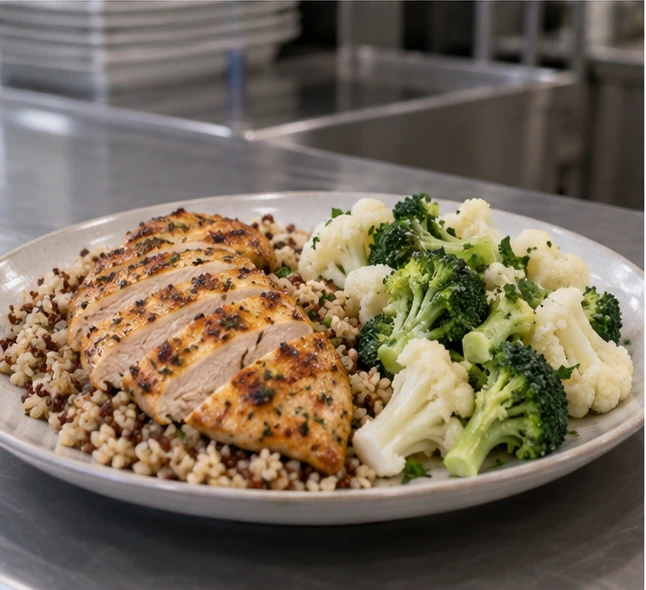
Product appearance image for checking frozen floret condition, color and sizing before sample approval.
Frozen Cauliflower and Broccoli for B2B Buyers
IQF broccoli cauliflower mix is a two-vegetable frozen blend, not a single cauliflower item. The purchasing value depends on the agreed broccoli-to-cauliflower ratio, the floret size of both vegetables, the color contrast, the free-flowing IQF condition and the final packing plan.
Foodservice and Catering
We prepare bulk or foodservice packs for kitchens that need a ready-to-cook vegetable blend with less trimming labor and more stable portion planning.
Ready Meals and Side Dishes
We help factories match floret size, blanching level and blend ratio with tray meals, soup bases, frozen side dishes and further processing lines.
Retail and Private Label Packs
We review bag weight, label language, visual ratio, carton plan, certificate scope and mixed-container loading before a retail or private-label order.
Buyer Risks & GreenLand-food Controls
A broccoli cauliflower blend may look simple, but order differences often appear in ratio, floret size, stem content, color, broken pieces, clumping and documents. We connect each buyer concern with a confirmation point before quotation.
Buyer Concern
Product / Order Risk
GreenLand-food Control
Buyer Result
Unclear blend ratio
A 50/50, 60/40 or 70/30 blend creates different visual balance, cost and label planning.
We confirm the broccoli and cauliflower percentage before quotation and sample preparation.
Clearer comparison, repeat-order standard and private-label formula control.
Floret size mismatch
2-4 cm, 3-5 cm and 4-6 cm florets perform differently in cooking time, bag appearance and tray meals.
We confirm broccoli size and cauliflower size separately before production.
Better application matching and fewer complaints about uneven pieces.
Color variation
Yellowed broccoli, dark spots on cauliflower or weak color contrast may affect retail display.
We inspect natural green broccoli color and white to cream-white cauliflower color by batch.
Cleaner visual contrast for retail packs, foodservice and ready meals.
Broken pieces and fines
Too many fragments reduce bag appearance and may change portioning yield.
We define broken pieces, loose buds, small fines and stem tolerance in the specification.
More stable usable yield and clearer receiving standard.
Clumping or surface ice
Temperature fluctuation may create frozen blocks, frost and poor dosing performance.
We keep frozen storage at -18 C or below and review loading temperature and reefer plan.
More reliable free-flowing IQF condition after shipment.
Product Overview: Two-Vegetable IQF Blend
The main ingredient is 100% broccoli and cauliflower, with no additives unless a buyer's approved specification requires otherwise. Broccoli brings natural green color, while cauliflower brings white to cream-white color. The contrast helps the blend work in frozen vegetable packs, mixed vegetable programs, tray meals and foodservice side dishes.
We usually review 50% broccoli + 50% cauliflower, 60% broccoli + 40% cauliflower, 40% broccoli + 60% cauliflower and 70% broccoli + 30% cauliflower formulas. A custom ratio is possible after confirming target price, final application, packaging plan and sample standard.
Nutrition values and label claims should be confirmed according to batch testing, final recipe, local labeling rules and the buyer's destination market. We keep the page focused on procurement confirmation, not medical or consumer health claims.
Frozen florets are reviewed for appearance, color and free-flowing condition.
Blend Ratio Options
The ratio should be confirmed before pricing because broccoli and cauliflower have different raw material costs, visual weight and application value. We prepare sample reference according to the final order formula.
50/50 Balanced Blend
Equal broccoli and cauliflower ratio for general foodservice, retail packs, side dishes and mixed vegetable programs.
60/40 Broccoli-Forward Blend
More broccoli for buyers who want stronger green color and a broccoli-led visual impression.
40/60 Cauliflower-Forward Blend
More cauliflower for price planning, white-color balance or product concepts that need larger cauliflower presence.
70/30 or Custom Formula
Customized blend ratio is reviewed according to target price, pack design, label claim, cooking use and order quantity.
Sample image for checking visual balance before confirming a blend ratio.
Bulk vegetable blend image for checking floret identity and color contrast.
Custom formula image for comparing floret size, surface condition and frozen appearance.
Floret Size Selection
Floret size affects cooking time, bag display, tray-meal fit and yield. We confirm broccoli and cauliflower size separately because the two vegetables may break differently during cutting, blanching, IQF freezing and packing.
2-4 cm
Smaller florets for ready meals, soup mixes, tray meals, retail bags and faster-cooking foodservice use.
3-5 cm
A common middle size for retail packs, side dishes, catering and general bulk frozen vegetable supply.
4-6 cm
Larger florets for visible-piece foodservice, premium retail bags and applications where whole floret identity matters.
Custom Cut
Custom sizing is reviewed after checking raw material, target packing, broken tolerance and final use.
Product Features of IQF Frozen Cauliflower and Broccoli Mix
Dual Vegetable Blend
Broccoli florets and cauliflower florets are combined in one ready-to-cook IQF vegetable mix for streamlined menu, retail and processing use.
Custom Blend Ratio
We adjust broccoli and cauliflower percentage according to buyer formula, target cost, pack appearance and finished product plan.
Blanched and IQF Frozen
The vegetables are prepared through trimming, washing, cutting, blanching when required, cooling and individual quick freezing.
Free-Flowing Condition
IQF freezing helps florets remain separated, making the product easier to weigh, portion, bag and use in production.
Color Contrast
Green broccoli and white cauliflower provide a simple two-color vegetable blend for packs, menus and side dishes.
Export Packing and Documents
We prepare carton, foodservice, retail or private-label packing with order documents according to destination-market needs.
Applications & Quality Requirements
We match Frozen Cauliflower and Broccoli to your processing or packing line. Product form to confirm: Broccoli and cauliflower floret blend. Tell us the intended use and target texture so we can review the relevant size, grade, preparation and packing requirements before quotation.
Application illustrations. Product form, preparation and suitability follow the confirmed specification. Open the overview to inspect the image.
Soup & Sauce Bases
For: Soup and sauce manufacturers
Form: declared blend
We review declared blend for your soup & sauce bases programme. Confirm Floret ratio, cooked solids and blending behaviour. Confirm the two-component formula and required preparation; finished meals may include ingredients added by your team.
Oven Meal Components
For: Prepared-meal manufacturers
Form: declared blend
We review declared blend for your oven meal components programme. Confirm Floret size, water release and oven texture. Confirm the two-component formula and required preparation; finished meals may include ingredients added by your team.
Ready-Meal Assembly
For: Central kitchens and meal manufacturers
Form: declared blend
We review declared blend for your ready-meal assembly programme. Confirm Component distribution, portion yield and reheating texture. Confirm the two-component formula and required preparation; finished meals may include ingredients added by your team.
Two-Component Retail Packing
For: Retail brands and contract packers
Form: declared blend
We review declared blend for your two-component retail packing programme. Confirm Blend ratio, floret integrity and frozen pack separation. Confirm the two-component formula and required preparation; finished meals may include ingredients added by your team.
Match the Application with the Purchasing Specification
Application
Selected form
Quality points to confirm
Soup & Sauce Bases
declared blend
Floret ratio, cooked solids and blending behaviour
Oven Meal Components
declared blend
Floret size, water release and oven texture
Ready-Meal Assembly
declared blend
Component distribution, portion yield and reheating texture
Two-Component Retail Packing
declared blend
Blend ratio, floret integrity and frozen pack separation
Send us the product, required form, final application, key quality requirements, packing, quantity and destination market. We will review the supply programme and confirm the order specification with your team.
A useful quotation should define the vegetable components, ratio, floret size, processing method, defect tolerance, packing, MOQ, documents and shipment plan. The final specification is confirmed after sample approval and order details.
Trimmed, washed, cut, blanched when required, cooled, IQF frozen, inspected and blended according to formula
Freezing Method
IQF, individually quick frozen
Color
Natural green broccoli and white to cream-white cauliflower
Flavor and Aroma
Typical broccoli and cauliflower flavor, free from abnormal odor
Texture
Frozen florets prepared for cooking or further processing; not seriously mushy after proper handling
Grade
Grade A, foodservice grade or processing grade according to confirmed order requirement
Defect Control
Discoloration, black spots, yellowed broccoli, damaged florets, loose leaves and uneven pieces controlled by agreed specification
Stem Ratio
Controlled according to buyer grade and floret standard
Broken / Fines Tolerance
Confirmed by sample, product grade and final packing format
Foreign Material
Controlled by washing, sorting, inspection and metal detection
Residues
Reviewed according to buyer target market food legislation and order requirement
Microbiology
TPC, coliforms, E. coli, yeast, mould, Listeria and Salmonella controlled according to agreed specification
Storage Condition
Keep frozen at -18 C or below
Shelf Life
24 months under proper frozen storage
Bulk Packing
1x10kg/carton, 20lb/carton, 30lb/carton or customized
Foodservice Packing
2.5kg bag, 5kg bag, 4x2.5kg/carton, 5x1kg/carton or customized
Retail Packing
400g, 500g, 1kg or private-label pouch according to MOQ and market requirement
MOQ
10-12 tons or 1x20 ft FCL according to formula, packing and stock; mixed container plan is reviewed by order
Loading Capacity
10-12 tons per 20 ft FCL; 18-26 tons per 40 ft FCL depending on carton size and loading plan
Supply Period
Frozen stock planning available throughout the year, subject to crop and component availability
Crop Season
Confirmed by raw material area and annual harvest plan
Origin
China, subject to raw material sourcing plan
Certificates
HACCP, ISO, BRCGS, FDA, KOSHER, HALAL, ECO CERT or other certificates according to factory status and order requirement
Documents
Specification, blend ratio sheet, COA, packing list, commercial invoice, certificate of origin, health certificate and other export documents upon request
Delivery Time
Confirmed after specification, packing and order quantity are approved
Delivery
By reefer container and sea shipment
Brand Option
GreenLand-food brand, neutral packing or private label after artwork and MOQ confirmation
How We Prepare Broccoli & Cauliflower Blend for Frozen Supply
We prepare Frozen Cauliflower and Broccoli to the agreed product form, pretreatment, grade and packing specification. The diagram shows a typical production process; we confirm preparation and step order for your order.
Typical process flow. Final processing and step order follow the confirmed specification. Site photos show the captioned subjects and may illustrate a representative form; process illustrations show typical operations. Storage and loading photos are generic frozen-food references.
Production and handling stages
Raw Material InspectionWe check identity, condition and the agreed raw-material criteria.
Component SortingWe sort each declared ingredient separately.
WashingWe follow the confirmed cleaning and water-control route.
Component PreparationWe trim, cut and grade each component to the agreed form.
Component Pretreatment & CoolingWe apply the agreed pretreatment, cooling and draining for each component before freezing.
Component IQF FreezingWe quick freeze each prepared component under its confirmed program.
Controlled Blend AssemblyWe weigh the frozen components to the approved blend formula.
Frozen Product InspectionWe review the agreed defects, form, separation and frozen condition.
Weighing, Packing & Metal ControlWe check net weight, pack integrity and agreed metal controls.
Batch Review & ReleaseWe match lot identity and records to the agreed release checks.
Frozen StorageWe maintain the agreed frozen-storage conditions and lot identity.
Reefer LoadingWe review cartons, lot records and refrigerated shipment arrangements.
Frozen Cauliflower and Broccoli Processing Video
Video for Process Understanding
We use processing and product media to help purchasing teams understand washing, cutting, blanching, freezing, inspection and packing. The final production line and product photos should be confirmed by order, factory status and available batch evidence.
Quality Control Points for IQF Broccoli Cauliflower Mix
Quality control should match order risk, not only production steps. We focus on raw material condition, trimming, floret size, blanching, cooling, IQF condition, blending accuracy, foreign material control and frozen shipment condition.
Control Point
GreenLand-food Action
Why It Matters for Buyers
Raw material selection
We remove seriously damaged, yellowed, rotten or unsuitable vegetable material before processing.
Better color, cleaner appearance and lower defect risk.
Trimming and cutting
We trim excess stems and leaves according to grade and cut florets according to the agreed size range.
More stable piece identity and cooking performance.
Blanching and cooling
We manage blanching and cooling according to vegetable condition and product process.
Helps maintain process consistency before IQF freezing.
Color inspection
We check green broccoli, white cauliflower, discoloration, dark spots and abnormal pieces.
Important for retail bag appearance and meal presentation.
Blend ratio check
We prepare the blend according to agreed percentage and sample reference.
Supports repeat-order consistency and formula cost planning.
Metal detection and packing
We use inspection, metal detection and packing checks according to factory procedure and order requirement.
Supports QA file review and import receiving control.
Factory and product image for explaining broader GreenLand-food frozen vegetable supply capability.
Processing equipment image for discussing washing, freezing, inspection and packing capacity.
Application Matching for B2B Buyers
We match the blend ratio and floret size to the buyer's intended application so the same order standard can be repeated across purchase cycles.
Foodservice and Catering
Bulk packs for restaurants, hotel kitchens, canteens and distributors that need reliable portioning and reduced preparation labor.
Retail Frozen Packs
Private-label bags or branded retail packs where color contrast, floret identity and bag appearance matter.
Ready Meals and Meal Kits
Smaller or medium florets for tray meals, frozen dinners, prepared vegetable sides and central kitchen lines.
Soup and Stew Producers
2-4 cm or customized florets for soup bases, stew mixes, broth packs and further processed vegetable blends.
Stir-Fry and Roasting-Style Packs
Medium or larger florets for packs that need visible vegetable identity and a cleaner two-color presentation.
Industrial Processing
Customized ratio, grade and packing for factories using broccoli and cauliflower in prepared foods or vegetable mixes.
Related mixed vegetable image for ready-meal and larger-piece vegetable blend planning.
Custom frozen vegetable blend image for formula, packing and mixed-container discussions.
Packing Options
Packing should be selected according to distribution channel, target market, carton loading and final handling method. We confirm bag material, carton weight, artwork, label language and pallet plan before production.
Bulk Carton
1x10kg/carton, 20lb/carton, 30lb/carton or other bulk packing for importers, distributors and industrial users.
Foodservice Pack
2.5kg bag, 5kg bag, 4x2.5kg/carton, 5x1kg/carton or customized packs for catering and kitchen distribution.
Retail Pack
400g, 500g, 1kg and private-label pouches are reviewed according to MOQ, artwork, market rules and label approval.
Mixed Container
We review broccoli cauliflower mix together with other IQF vegetables when the buyer needs one consolidated shipment plan.
Certificates, Documents and Export Readiness
For each order, we help prepare a document package according to the buyer's QA and import requirements. Common documents may include product specification, blend ratio sheet, COA, packing list, commercial invoice, certificate of origin, health certificate, certificate copies and shipment records.
Certificate availability depends on the factory, product scope, destination market and order date. We recommend checking certificate scope before using any claim on retail labels or buyer documents.
Certificate and document image for buyer QA file planning.
Cold Chain and Shipment Confirmation
Frozen broccoli cauliflower mix should remain in stable frozen condition from warehouse to reefer shipment. We review carton condition, loading temperature, container setting, route, delivery schedule and destination requirements before shipment.
Frozen Storage
Keep product at -18 C or below and avoid repeated thawing and refreezing during storage and transfer.
Loading Review
We check carton condition, container setting and shipment plan according to order requirement.
Destination Planning
We confirm port, documents, label needs and delivery schedule before the buyer arranges import clearance.
Mixed Shipment
Broccoli cauliflower mix may be combined with other frozen vegetables after checking MOQ, carton size and stock.
Why Choose GreenLand-food for Broccoli Cauliflower Mix
Specification Before Price
We confirm ratio, size, grade, packing and documents before quotation so the price comparison is meaningful.
Practical Export Packing
We prepare bulk, foodservice and retail packing options for importers, distributors, factories and private-label buyers.
Sample-Based Confirmation
We recommend confirming sample appearance, size, ratio and packing before moving to repeat bulk orders.
Broader Frozen Vegetable Range
We can review broccoli cauliflower mix together with carrots, peas, corn, green beans, spinach, okra, edamame and other IQF vegetables.
Export communication image for catalog, documents, sample review and order planning.
FAQ for IQF Frozen Cauliflower and Broccoli Mix
What is IQF frozen cauliflower and broccoli mix?
It is a frozen two-vegetable blend made from broccoli florets and cauliflower florets. The vegetables are prepared, IQF frozen and blended according to the agreed ratio.
Can GreenLand-food prepare a custom blend ratio?
Yes. We review 50/50, 60/40, 40/60, 70/30 and buyer-specific formulas after confirming application, target price, sample standard and order quantity.
Which floret sizes are common?
Common options include 2-4 cm, 3-5 cm and 4-6 cm. Final broccoli and cauliflower sizes should be confirmed separately by sample.
Are the vegetables blanched before freezing?
The vegetables are washed, cut, blanched when required, cooled and IQF frozen according to the confirmed product process.
What applications use frozen broccoli cauliflower mix?
It is used in foodservice packs, catering, retail frozen bags, ready meals, frozen side dishes, soup mixes, stir-fry blends and industrial processing.
How do I choose 2-4 cm or 4-6 cm florets?
2-4 cm works better for smaller portions, soups and tray meals. 4-6 cm works better when visible floret identity and larger-piece presentation are required.
How is broccoli color controlled?
We inspect broccoli for natural green color, yellowed pieces, damaged florets and abnormal appearance according to the agreed sample and grade.
How is cauliflower black spot risk handled?
We review raw material condition, trimming, sorting and visual inspection to reduce dark spots, discoloration and damaged cauliflower pieces.
How are broken pieces and fines controlled?
Broken pieces, loose buds, small fragments and stems should be defined in the specification and confirmed by sample before bulk order.
What packing options are available?
Bulk cartons, foodservice bags and retail pouches are available after confirming MOQ, carton weight, bag size, label language and destination market.
Can GreenLand-food prepare private-label packing?
Yes. We review artwork, label information, barcode, bag material, carton mark, MOQ and certificate scope before private-label production.
What is the shelf life?
Typical shelf life is 24 months under proper frozen storage at -18 C or below, subject to final specification and packing.
What storage condition is required?
Keep the product frozen at -18 C or below and avoid repeated thawing and refreezing during storage, transport and distribution.
Which documents are usually prepared?
Specification, blend ratio sheet, COA, packing list, commercial invoice, certificate of origin, health certificate and certificate copies may be prepared by order requirement.
Can this item be loaded with other frozen vegetables?
Mixed container planning is reviewed according to stock, MOQ, carton size, destination, documents and loading schedule.
Plan Your Frozen Food Purchase
To prepare an accurate quotation, please share your expected broccoli and cauliflower ratio, floret sizes, packing format, order quantity, destination market, certificate needs, private-label plan and target shipment schedule. If your team is comparing several vegetable blends, we can also review a mixed-container plan and related IQF vegetable items.
We review the selected form, grade, process and packing against the technical schedule below. Published and TDS values are specification references for order review. External benchmarks apply only within their stated scope. Acceptance is governed by the signed SKU specification; the identified lot COA reports actual measured results.
Form: Broccoli and cauliflower floret blendProduct category: Frozen Mixed Vegetables
01 / Physical & Sensory
Parameter
Specification / reference
Verification & order basis
Broccoli Size
2-4 cm, 3-5 cm, 4-6 cm or customizedPublished reference
Measure a defined frozen sample with caliper or size gauge; report distribution and tolerance.
Cauliflower Size
2-4 cm, 3-5 cm, 4-6 cm or customizedPublished reference
Measure a defined frozen sample with caliper or size gauge; report distribution and tolerance.
Color
Natural green broccoli and white to cream-white cauliflowerPublished reference
Compare with the approved sensory reference using the stated frozen/thawed/prepared condition.
Flavor and Aroma
Typical broccoli and cauliflower flavor, free from abnormal odorPublished reference
Compare with the approved sensory reference using the stated frozen/thawed/prepared condition.
Texture
Frozen florets prepared for cooking or further processing; not seriously mushy after proper handlingPublished reference
Compare with the approved sensory reference using the stated frozen/thawed/prepared condition.
Grade
Grade A, foodservice grade or processing grade according to confirmed order requirementPublished reference
Confirm method, representative sample and acceptance basis in the signed specification.
Stem Ratio
Controlled according to buyer grade and floret standardPublished reference
Confirm method, representative sample and acceptance basis in the signed specification.
Origin
China, subject to raw material sourcing planPublished reference
Reconcile source declaration, intake lot and shipment documents.
Size-grade inspection
Use the selected diameter, length, piece mass or count-per-weight grade; state the proportion permitted outside the range.
Measure the named anatomical dimension; count and weigh the same representative sample.
Declared product form
Broccoli and cauliflower floret blend
Match approved sample, pack label and order form. Published page identity; approve selected grade before order.
02 / Physicochemical & Residue Controls
Parameter
Specification / reference
Verification & order basis
Residues
Reviewed according to buyer target market food legislation and order requirementPublished reference
Use a validated analytical method for this matrix; report sample basis, unit, preparation and lot result.
Pesticide residue schedule
Named active ingredients and commodity-specific limits are selected for the destination market. EU source
Link farm spray history, laboratory LOQ and batch result to the destination MRL. EU database is one market reference; apply the actual destination rule.
Lead, cadmium and other contaminants
Apply the limit for the exact commodity and processed form in the destination market. EU source
State analyte, preparation basis, method, LOQ and lot result. Do not transfer a fresh-commodity limit to a processed form without the required assessment.
03 / Microbiological Criteria
Parameter
Specification / reference
Verification & order basis
Microbiology
TPC, coliforms, E. coli, yeast, mould, Listeria and Salmonella controlled according to agreed specificationPublished reference
Report the named organism, analytical method, sample mass, sampling plan and lot result; use CFU/g for enumeration and a stated mass for detection.
Hygiene-indicator panel
Select aerobic count and relevant Enterobacteriaceae, coliform or E. coli indicators for the declared process and intended use. Codex
Report each quantitative result in CFU/g, method/reporting limit, sample plan and lot identity.
Pathogen acceptance programme
Define Salmonella and Listeria criteria when applicable to the destination, ready-to-eat status and buyer programme. Codex
State analytical portion, sample-unit plan, method and detected/not-detected reporting; identify the treatment and release basis.
Acceptance schedule
Select the test panel and limits by intended use (ready-to-eat or further processing), product form and destination. EU source
State organism, analytical method, sample mass and n/c plan; report actual lot results. A universal APC, coliform, Salmonella or Listeria limit is not assigned to every frozen product.
04 / Freezing & Cold Chain
Parameter
Specification / reference
Verification & order basis
Freezing Method
IQF, individually quick frozenPublished reference
Confirm method, representative sample and acceptance basis in the signed specification.
Storage Condition
Keep frozen at -18 C or belowPublished reference
Confirm method, representative sample and acceptance basis in the signed specification.
Separation & loose-ice assessment
Keep inherent moisture, loose ice and permanently frozen clusters as separate inspection categories.
Weigh separated loose ice and welded clusters against initial sample mass; distinguish natural paired pieces or blocks.
Product thermal centre
−18°C or colder after freezing and thermal stabilization; maintain the agreed frozen distribution condition.External referenceCodex
Probe the thickest representative pack and retain storage/transport temperature records. Codex quick-frozen reference; selected product form and route must be frozen.
Frozen condition at dispatch
Hard frozen, correctly sealed and coded, without thaw/refreeze evidence or excessive loose ice. Codex
Check pack integrity, free-flow or block condition as declared, carton condition and loading temperature.
05 / Pack Size & Shelf Life
Parameter
Specification / reference
Verification & order basis
Shelf Life
24 months under proper frozen storagePublished reference
Verify unopened-pack validation, declared storage condition and production/best-before coding.
Bulk Packing
1 × 10 kg/carton, 20lb/carton, 30lb/carton or customizedPublished reference
Check approved pack drawing, calibrated scale and production records.
Retail Packing
400 g, 500 g, 1 kg or private-label pouch according to MOQ and market requirementPublished reference
Check approved pack drawing, calibrated scale and production records.
Declared net contents
Verify each selected pack format against the artwork and applicable quantity-control rule. Codex
Calibrated checkweigher or scale; defined sample and tare.
Shelf-life basis
The labelled period applies only to its validated pack and continuous stated storage condition. Codex
Review stability study or approved shelf-life file and production-date code.
06 / Process Controls
Parameter
Specification / reference
Verification & order basis
Processing Method
Trimmed, washed, cut, blanched when required, cooled, IQF frozen, inspected and blended according to formulaPublished reference
Check the approved product flow, line settings and identified production record; validate numerical critical limits within the site HACCP plan.
Raw-material preparation checks
Record formula by weight and cut/state per component; blend only identified component lots.
Verify the selected product flow and the relevant trimming, sorting and pretreatment record.
Blanching / enzyme inactivation
Time and temperature are product- and cut-specific; confirm residual-enzyme endpoint when relevant. Codex
Record validated line set-points and product sample test; assess colour and texture after treatment. Only classify as a CCP when the site's HACCP plan identifies it as one.
Cooling and dewatering
Control prompt cooling and surface-water removal before IQF to avoid clumping and loose ice. Codex
Review line time/temperature record, draining check and frozen separation.
CCP designation
Use the site-approved HACCP plan to identify true CCPs and their validated critical limits. Codex
Check hazard analysis, monitoring, deviation and corrective-action records. A quality-control step is not automatically a CCP.
07 / Ingredients, Additives & Allergens
Parameter
Specification / reference
Verification & order basis
Ingredient
100% broccoli and cauliflower, no additives unless otherwise agreed in the specificationPublished reference
Verify approved formula, supplier declarations and line-specific allergen assessment.
Formula reconciliation
Name each component and target weight percentage; define allowed component variation and reconcile the complete formula to 100%.Technical control
Compare weighed input, blend record and representative finished-blend separation against the signed formula.
Added glaze / coating declaration
Declare any intentionally added water glaze, syrup, oil or coating and the measurement basis; loose ice is assessed separately.
Verify formula/addition records; agree a deglazing or coating test and net-content basis where applicable.
Additive use
Declare any colour-protection agent, acidulant or other additive by ingredient and maximum permitted use for the target market. NHC standard
Check approved formula, actual addition record and market-specific additive category. GB 2760-2024 applies to China; export rules are checked separately.
Allergen and cross-contact assessment
Declare inherent allergens and assess shared-line cross-contact from the actual facility schedule. FDA
Review line matrix, cleaning validation and buyer label approval. Do not claim a shared-line allergen or allergen-free status without facility evidence.
08 / Defects & Foreign Matter
Parameter
Specification / reference
Verification & order basis
Defect Control
Discoloration, black spots, yellowed broccoli, damaged florets, loose leaves and uneven pieces controlled by agreed specificationPublished reference
Inspect a defined representative sample; record count or mass basis and disposition.
Broken / Fines Tolerance
Confirmed by sample, product grade and final packing formatPublished reference
Inspect a defined representative sample; record count or mass basis and disposition.
Foreign Material
Controlled by washing, sorting, inspection and metal detectionPublished reference
Inspect a defined representative sample; record count or mass basis and disposition.
Intrinsic defect classification
Component substitution, ratio drift, wrong cut, off-colour components and component-specific plant debris.
Record each defect class separately by count or mass; state sample size, denominator and combined-limit rules.
Hazardous foreign matter
No foreign matter detected in the defined inspection sample; reject and investigate any finding.External referenceCodex
Define visual-inspection sample size and detector challenge in the signed quality schedule. "None detected" is a sampling statement, not an absolute guarantee of zero particles.
09 / Packaging Materials & Label
Parameter
Specification / reference
Verification & order basis
Food-contact pack
Specify inner-contact material and obtain the applicable food-contact compliance declaration. NHC standard
Review film structure, supplier DoC, migration evidence and actual intended conditions. GB 4806 series is China-specific; EU export also checks Regulations 1935/2004 and 10/2011.
Carton and seal integrity
Define carton stacking strength, bag seal and puncture resistance for the confirmed net weight and pallet plan. EU source
Inspect pack drawing, compression/seal test and shipment configuration.
Label verification
Match product name, ingredient/allergen statement, net weight, lot/date, shelf life and storage instruction to the destination artwork. Codex
Approve artwork against the signed specification and destination rules.
10 / Detection & Traceability
Parameter
Specification / reference
Verification & order basis
Component-level lot linkage
Retain every component lot and any rework lot used in the mixed-product batch. Codex
Trace each input through weighing, mixing, packing and dispatch records.
Foreign-body detector
Validate Fe, non-Fe and stainless-steel challenge pieces for the actual product, aperture, pack and line; record the proven sensitivity. Codex
Challenge at defined start, changeover, interval and end points; retain rejection records. Do not copy generic detector sizes into a plant capability claim.
Lot traceability
Link input source lot, processing run, packaging code, test records, frozen storage and shipment to one finished lot. Codex
Trace one sample lot forward and backward in a recorded mock recall. Recall speed is stated only when the site has a validated target and record.
Order approval: Confirm the selected form and grade, ingredient formula, intended use, destination market, packing, sampling plan and test panel. The signed specification controls acceptance; the identified lot COA reports actual results.