We supply peeled IQF water chestnuts in whole, sliced and diced formats for importers, foodservice distributors, ready-meal factories, Asian food manufacturers, central kitchens and retail frozen-vegetable programs. Our order planning covers cut dimensions, white-to-off-white color, crisp bite, peel removal, defect tolerances, microbiological criteria, packing, export documents and frozen delivery.
Eleocharis dulcis24 months at ≤ −18°CFujian originMOQ reference: 12 MT
Chinese water chestnut is the edible corm of Eleocharis dulcis, an aquatic vegetable valued in commercial food production for its clean, mild sweetness and crisp texture. The "chestnut" name describes its appearance; the ingredient is not the same crop as tree chestnut. We use the full botanical and common names in product specifications so ingredient declarations and buyer approvals are clear.
We supply the product peeled and IQF frozen. Buyers can select whole pieces for visible inclusions, slices for controlled profiles, or dice for measured dosing. Before quotation, we align the form, nominal size, tolerance, blanching condition, additive statement, sensory standard, defect allowance, packing format and destination-market testing plan. This prevents a visually acceptable sample from becoming an unsuitable industrial specification.
Fast quotation data: send the required form and size, annual volume, pack format, destination, application, target delivery date, label language, certificate list and any customer microbiological or residue limits.
Fresh dark-skinned corms and peeled water chestnuts shown together for product identification.
Commercial formats
Whole, Slice and Dice Specifications
The cut form should be selected around portion control, thermal process and finished-product appearance. The values below are practical ordering references; the signed specification and approved sample define the production lot.
Form
Commercial size references
Control points
Typical B2B use
Whole peeled
Diameter ≥19 mm; or graded 20–25 mm, 25–30 mm, 30–35 mm
We convert the buyer's intended use into a written specification before production. Numeric limits below are order-planning references based on common commercial programs. Where a destination rule or customer standard is stricter, the stricter agreed requirement applies. Natural values such as soluble solids and pH vary by crop and are recorded as product characteristics or batch measurements rather than marketing claims.
Item
Standard commercial reference
How we define it in the order
Ingredient
100% peeled water chestnut
Any antioxidant, acidity regulator or processing aid must be declared in the approved ingredient statement.
Botanical name
Eleocharis dulcis
Included on technical files when requested to distinguish it from tree chestnut.
Color
Natural bright white to off-white
Uniformity and discoloration tolerance are assessed on a representative thawed sample.
Flavor and odor
Clean, mild and characteristic; no objectionable odor or flavor
Sensory condition checked frozen and after the agreed preparation method.
Texture
Firm and crisp; free from predominantly fibrous, rubbery or soft units
Buyer can provide a cooking protocol and target bite for sample comparison.
Natural soluble solids
4–7 °Brix reference range
Measured on homogenized thawed product when included in the contract or COA plan.
pH
5.8–6.5 reference range
Test method and sample preparation are stated if pH is a release parameter.
Moisture
≤80% reference
Used only when the buyer requires a compositional control point.
Major foreign matter
Absent
No tolerance for glass, metal, hard plastic, stone, wood or other hazardous foreign material.
Minor visual defects
≤5% by weight reference in a 425 g sample
Defect list can include discoloration, peel, tough units, mechanical damage and insect injury; sub-limits can be agreed.
IQF condition
Free-flowing; no abnormal ice or mass clumps
Block percentage and acceptable easy-to-separate clusters can be specified.
Shelf life and storage
24 months at −18°C or colder
Continuous frozen storage; do not refreeze after thawing.
Caliper measurement illustrates how slice thickness is checked against the order specification.
Cut-Size Tolerance That Works on Your Line
A nominal size alone is not enough for a factory purchase. A 10×10 mm dice program also needs an agreed test portion, measuring method and limits for oversize, undersize, fines and irregular pieces. A sliced program needs thickness tolerance, diameter distribution and a definition of profile slices. Whole product needs diameter grading and a limit for broken or heavily trimmed pieces.
We record these points in the purchase specification and compare representative production samples with the approved reference. For filling and sauce plants, tighter control of fines may matter more than cosmetic surface variation. For visible retail or ready-meal inclusions, white color, intact form and low breakage may take priority. We help place the strictest limits on the defects that affect your finished product instead of applying an unfocused "Grade A" description.
We prepare IQF Frozen Water Chestnut to the agreed product form, pretreatment, grade and packing specification. The diagram shows a typical production process; we confirm preparation and step order for your order.
Typical process flow. Final processing and step order follow the confirmed specification. Site photos show the captioned subjects and may illustrate a representative form; process illustrations show typical operations. Storage and loading photos are generic frozen-food references.
Production and handling stages
Raw Material InspectionWe check identity, condition and the agreed raw-material criteria.
Initial SortingWe remove visible defects and unsuitable material.
WashingWe follow the confirmed cleaning and water-control route.
Peeling & PreparationWe prepare the agreed product form and remove the specified inedible parts.
Pretreatment by SpecificationWe follow the declared raw or heat-treated program.
DrainingWe remove excess surface water before freezing.
IQF FreezingWe quick freeze prepared pieces and review separation.
Frozen Product InspectionWe review the agreed defects, form, separation and frozen condition.
Weighing, Packing & Metal ControlWe check net weight, pack integrity and agreed metal controls.
Batch Review & ReleaseWe match lot identity and records to the agreed release checks.
Frozen StorageWe maintain the agreed frozen-storage conditions and lot identity.
Reefer LoadingWe review cartons, lot records and refrigerated shipment arrangements.
Process control
From Mud-Grown Corm to Free-Flowing IQF Product
Water chestnuts require more than routine washing because the fresh corm develops in wet soil. Our production planning therefore emphasizes raw-material condition, staged washing, complete peeling, trimming around the top and base, rapid handling after peeling, controlled blanching where specified, hygienic cooling, accurate cutting, IQF freezing and post-freezing inspection.
01 Raw selection
Freshness, maturity, firmness, diameter, decay, insect injury and soil condition.
02 Wash & peel
Multi-stage soil removal, peeling and manual trimming of residual skin and damaged tissue.
03 Cut & blanch
Whole retention or controlled slicing/dicing; blanching sufficient for the agreed enzyme-control program.
04 IQF freeze
Rapid freezing and product separation to support a free-flowing pack.
05 Inspect & pack
Visual sorting, size review, metal detection, weight control, coding and frozen storage.
Water chestnut slices are visible at the discharge point of stainless steel processing equipment.
Workers visually sort diced water chestnuts on a stainless steel inspection table.
Browning, Peel Residue and Texture Risk Control
A white frozen surface is not the only measure of suitability. Buyers also need to know how color was maintained, whether the ingredient statement matches the process, and whether the product keeps a crisp bite after the customer's heating cycle. We treat these as separate controls.
Peel removal
Inspection covers dark peel fragments, top and base remnants, fibrous points and excessive trimming. A total defect limit can be divided into peel, discoloration and damage sub-limits.
Color stability
Rapid transfer after peeling, controlled processing time and blanching help limit enzymatic browning. If an anti-browning agent is required, its identity and declaration status are agreed before production.
Crispness
Texture depends on crop maturity, blanching, freezing, storage and the customer's cooking process. A preparation method can be attached to the sensory standard for repeatable evaluation.
Sulphite position: we do not use "sulphite-free" as an unsupported blanket claim. For programs that exclude added sulphites, the requirement is written into the formula and supplier approval. Where residual sulphur dioxide testing or a specific legal threshold is required, the method and limit are added to the batch testing plan.
Microbiological, Chemical and Physical Criteria
Food-safety limits must match the destination, intended use and customer risk assessment. The following values are common release references for IQF water chestnut and provide a concrete starting point for negotiation. They do not replace destination legislation or a signed customer specification.
Parameter
Reference criterion
Reporting / control note
Aerobic plate count
m 100,000 CFU/g; M 250,000 CFU/g in a 3-class plan
A simpler customer limit of ≤100,000 CFU/g can be used where specified.
Total coliforms
m 100 CFU/g; M 1,000 CFU/g
Sampling plan and release rule stated in the laboratory instruction.
E. coli
<10 CFU/g
Reported as the laboratory result for the tested lot.
Yeast and mould
≤1,000 CFU/g reference
Included when required by the customer specification.
Salmonella
Not detected in 25 g
Pathogen sampling frequency follows the agreed verification plan.
Listeria monocytogenes
Not detected in 25 g for stricter programs; destination-specific alternatives by agreement
The applicable criterion depends on intended use and market law.
Lead / cadmium
Comply with destination-market maximum levels
Exact mg/kg limits and test frequency are listed for the destination.
Pesticide residues
Comply with the destination MRL list
Active-substance scope is selected for origin, crop and buyer program; results are evaluated against the applicable maximum residue limits.
Metal detection
Sensitivity set and challenged under the production program
Fe, non-Fe and stainless-steel test-piece values are recorded in the batch documentation when required.
COA: Specification Limit vs. Batch Actual Result
A Certificate of Analysis should show what was actually measured for the production lot. It should not copy the acceptance limit into the "Actual Result" column. We can align the COA template before the order so the batch code, production date, best-before date, test method, specification, measured result, unit and disposition are presented consistently.
COA field
Specification example
Actual Result entry
Color / odor / texture
White to off-white; characteristic; firm and crisp
Observed result for the named batch, such as "Conforms," supported by inspection record.
Cut size
10×10 mm nominal with agreed tolerance
Measured distribution or conformity result from the batch sample.
Brix / pH
4–7 °Bx / pH 5.8–6.5 where contracted
Numeric value measured on the corresponding batch.
Microbiology
Customer-approved CFU/g or pathogen criterion
Laboratory value, "
Foreign matter / defects
Absent / agreed percentage limit
Observed count or weight percentage for the inspected batch sample.
Available document package by order requirement: product specification, COA, packing list, commercial invoice, bill of lading, certificate of origin, health or phytosanitary document when applicable, certificate copies, allergen statement, GMO statement, ingredient declaration, traceability record and loading-temperature information.
Bulk Packing, Retail Programs and Cold Chain
Common export packing includes 1×10 kg/carton and 10×1 kg/carton. Depending on the project, we can review 20 lb or 40 lb foodservice cartons, 500 g or 1 kg retail bags, private-label artwork, customer barcodes, multilingual labels and customized carton marks. Packaging material, net-weight tolerance, seal integrity, coding format, bag dimensions and carton strength are approved before mass production.
The MOQ reference is 12 metric tons for a single commercial program. Mixed-container supply may be reviewed when compatible frozen products, production schedules, labels and loading plans allow it. A typical lead-time reference is about 15–20 days after order, artwork and packing details are approved; crop availability, custom film and vessel schedules can extend the plan.
Product is stored and shipped at −18°C or colder. Container planning includes carton dimensions, pallet or floor-loading choice, target quantity, reefer set point, pre-cooling, loading condition and temperature records. A practical loading reference is approximately 10–12 MT in a 20-foot reefer or 22–24 MT in a 40-foot high-cube reefer, subject to carton dimensions, palletization, legal weight and carrier limits.
Peeled whole water chestnuts shown in a blue-lined bulk pack; final liner and carton specification follow the order.
Application Matching for Industrial Buyers
Ready meals & stir-fry kits
Slices or whole pieces provide visible identity. Define heat cycle, sauce exposure, target bite and acceptable breakage.
Dumpling and filling plants
5–10 mm dice support measured dosing. Control fines, excess surface ice and irregular pieces that affect filling distribution.
Foodservice distribution
Free-flowing bulk packs improve portioning. Select a cut that holds texture through the kitchen's preparation method.
Retail private label
Appearance, bag presentation, label compliance, net-weight control, barcode and carton marks become primary release points.
Mixed vegetables
Match water chestnut size to the other components so segregation, portion balance and cooking performance remain controlled.
Secondary processing
Whole product gives processors flexibility for downstream cutting; diameter distribution and peel removal determine usable yield.
Applications & Quality Requirements
We match IQF Frozen Water Chestnut to your processing or packing line. Product form to confirm: Whole peeled kernels, slices or dice. Tell us the intended use and target texture so we can review the relevant size, grade, preparation and packing requirements before quotation.
Application illustrations. Product form, preparation and suitability follow the confirmed specification. Open the overview to inspect the image.
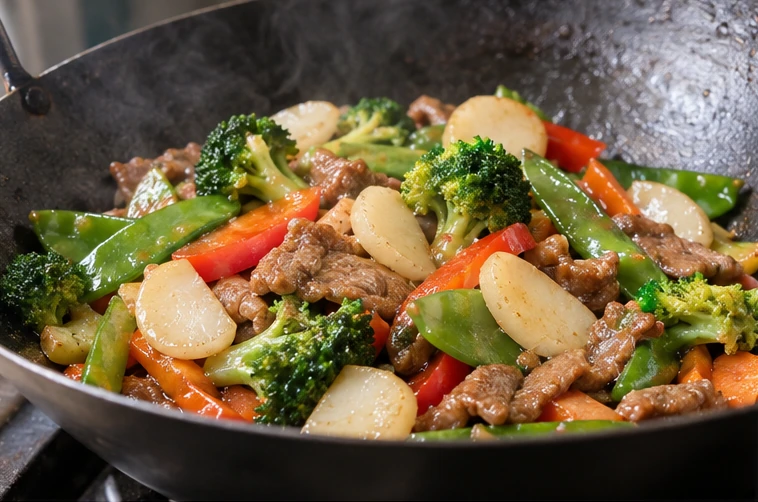
Asian vegetable stir-fry
For: Ready-meal and vegetable-blend buyers
Form: slices
We review slices for your asian vegetable stir-fry programme. Confirm cut compatibility, free water and tender texture after rapid high-heat cooking. Larger declared inputs require controlled tempering, trimming and cutting, or cooking and blending as appropriate, before they meet the ideal form; assess preparation yield and discard losses.
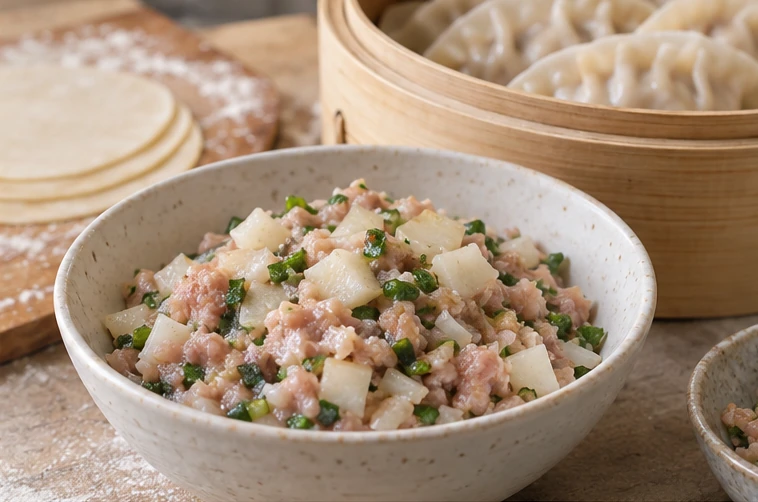
Water chestnut dumpling fillings
For: Prepared-food and bakery ingredient buyers
Form: dice
We review dice for your water chestnut dumpling fillings programme. Confirm cooked-drained yield, particle distribution and binding moisture in water chestnut dumpling fillings. Larger declared inputs require controlled tempering, trimming and cutting, or cooking and blending as appropriate, before they meet the ideal form; assess preparation yield and discard losses. Trial the cooking and drainage step, usable ingredient yield, particle distribution and moisture balance in the finished filling or dough.
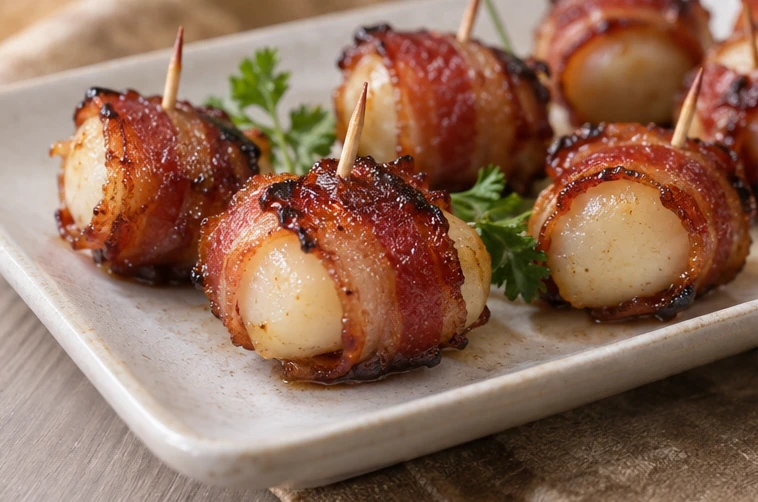
Bacon-wrapped water chestnuts
For: Foodservice distributors and central-kitchen buyers
Form: whole
We review whole for your bacon-wrapped water chestnuts programme. Confirm piece size, final cooking yield and cook-hold texture in bacon-wrapped water chestnuts.
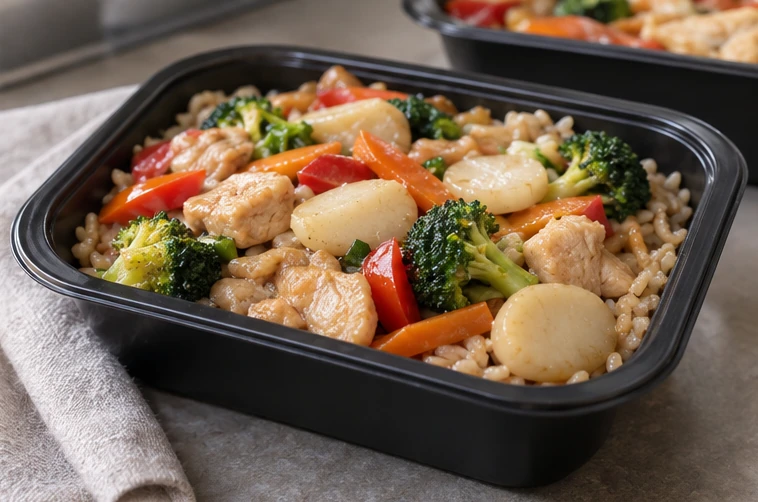
Water chestnut ready meals
For: Ready-meal and vegetable-blend buyers
Form: slices
We review slices for your water chestnut ready meals programme. Confirm piece size, final cooking yield and cook-hold texture in water chestnut ready meals. Larger declared inputs require controlled tempering, trimming and cutting, or cooking and blending as appropriate, before they meet the ideal form; assess preparation yield and discard losses.
Match the Application with the Purchasing Specification
Application
Selected form
Quality points to confirm
Asian vegetable stir-fry
slices
cut compatibility, free water and tender texture after rapid high-heat cooking
Water chestnut dumpling fillings
dice
cooked-drained yield, particle distribution and binding moisture in water chestnut dumpling fillings
Bacon-wrapped water chestnuts
whole
piece size, final cooking yield and cook-hold texture in bacon-wrapped water chestnuts
Water chestnut ready meals
slices
piece size, final cooking yield and cook-hold texture in water chestnut ready meals
Send us the product, required form, final application, key quality requirements, packing, quantity and destination market. We will review the supply programme and confirm the order specification with your team.
A detailed page is useful only when its information becomes an executable order standard. For a first shipment, we recommend dividing approval into four gates: document alignment, pre-production sample approval, production-lot inspection and loading release. Each gate answers a different risk and should identify the person or organization responsible for acceptance.
Gate 1 - Contract file
Align product name, botanical identity, ingredient statement, cut size, tolerance, defect definitions, net weight, label text, tests, certificates, Incoterm, port, shipment window and claim procedure. The purchase order, specification and artwork must refer to the same version.
Gate 2 - Reference sample
Record frozen appearance, thawed color, separation, peel residue, cut distribution and texture after the defined preparation. Photos support the record, but a written tolerance prevents normal crop variation from being judged only by memory.
Gate 3 - Lot release
Review batch identity, production date, packaging, sensory inspection, physical defects, cut-size data, metal-detection records and contracted laboratory results. Nonconforming data must be assessed before the goods enter final shipment preparation.
Gate 4 - Loading
Check container cleanliness, reefer setting, carton condition, lot and quantity, loading pattern, seal number and departure documents. The shipment file should connect the loaded lots to their COA and packing list.
For trial orders, the retained sample and finished-product test are especially important. A water chestnut that looks correct while frozen may behave differently after extended heating, acidic sauce exposure or freezing and reheating inside a prepared meal. Buyers can send their industrial preparation protocol, including product-to-water or product-to-sauce ratio, temperature, time and holding period. We then use the same procedure when comparing the reference and production samples.
Claims also need a practical route. The order file should state the notification period, required photographs, carton and lot codes, affected quantity, storage-temperature evidence and retained-sample process. This does not assume that a complaint will occur; it makes investigation faster and protects both parties from decisions based on incomplete evidence. For repeat orders, complaint findings and accepted adjustments can be converted into revised tolerances, packaging changes or inspection points.
Recommended first-order attachments: signed product specification, approved artwork, packing configuration, reference-sample record, COA template, laboratory test list, pallet or floor-loading plan, shipping-mark file and contact list for document, quality and logistics decisions.
Close product view showing the frosted surface and profile of IQF water chestnut slices.
Sample Approval and Batch Traceability
For a new program, we recommend approving a representative sample against the written specification. The review should cover frozen appearance, separation, cut-size distribution, peel residue, discoloration, damaged units, odor, flavor and texture after a defined preparation method. If the product will be cooked in sauce, retorted, steamed or stir-fried, the evaluation method should reflect that use.
Each shipment can be connected to a batch code, production date, raw-material receiving information, processing and packing records, inspection results, cold-store entry and dispatch information. The label and outer carton should use the same lot identity as the COA and shipping file. When a complaint occurs, this alignment allows the affected lot, sample evidence and production records to be isolated without treating all deliveries as one undifferentiated supply.
We can also keep the approved specification, artwork version and reference sample details with the order file so repeat purchases start from the last accepted commercial standard. Crop variation is managed through the agreed tolerances and communicated when a requested size or appearance is not commercially realistic for the available raw material.
Buyer questions
IQF Frozen Water Chestnut FAQ
1. What water chestnut forms do you supply?
We supply peeled whole, sliced and diced IQF water chestnuts. Common dice references are 5×5, 6×6, 8×8 and 10×10 mm. Slices are commonly 4–6 mm thick with a 19–40 mm diameter range. Custom cuts require a production trial and minimum-run review.
2. Is Chinese water chestnut a nut allergen?
No. Eleocharis dulcis is an aquatic vegetable corm, not a tree nut. We still provide an allergen statement based on the approved plant and cross-contact program, because the common name alone is not a substitute for an allergen assessment.
3. What is the MOQ for IQF frozen water chestnut?
Our commercial MOQ reference is 12 metric tons. A mixed-container plan can be reviewed with other compatible frozen products, but feasibility depends on available stock, production schedule, packing format, label requirements and container loading.
4. What whole-piece sizes are available?
A common ungraded reference is 19 mm and above. Graded programs can use 20–25, 25–30 or 30–35 mm ranges. The order should state the measuring direction, permitted out-of-size percentage, broken-piece allowance and whether excessive trimming counts as a defect.
5. How do you control slice thickness and dice size?
We define the nominal cut, measurement method, sample weight and tolerances for oversize, undersize, fines and irregular pieces. Caliper or ruler checks support production inspection, while the signed specification and approved sample define acceptance.
6. How is white color maintained?
Color control begins with fresh raw material, complete peeling, removal of damaged tissue, short exposure time after peeling, controlled blanching and rapid cooling and freezing. Any anti-browning agent or processing aid required by the program is declared and agreed before production.
7. Can you supply a no-added-sulphite program?
A no-added-sulphite formula can be evaluated and written into the approved product specification. If the buyer requires residual sulphur dioxide testing, the limit, laboratory method, sampling frequency and declaration rules are added to the order plan.
8. Will the product remain crisp after cooking?
Water chestnut is selected for a firm, crisp bite, but final texture depends on maturity, blanching, freezing, storage and the customer's heating process. We can assess samples using the buyer's defined cooking time, temperature and sauce conditions.
9. What microbiological limits can be used?
A common starting point is aerobic plate count ≤100,000 CFU/g, E. coli <10 CFU/g, yeast and mould ≤1,000 CFU/g, and Salmonella not detected in 25 g. The final limits, Listeria criterion and sampling plan follow destination law and customer specification.
10. What appears on the batch COA?
The agreed template can include batch identity, dates, sensory checks, cut size, defects, Brix or pH where required, microbiology and other contracted tests. The Actual Result column records the corresponding batch measurement, not a duplicate of the specification limit.
11. What packing formats are available?
References include 1×10 kg/carton and 10×1 kg/carton, with 20 lb, 40 lb, 500 g and retail options reviewed by project. We support private-label artwork, barcodes, multilingual labels, carton marks and buyer-defined net-weight tolerances.
12. What is the shelf life and required storage temperature?
The standard shelf-life reference is 24 months when continuously stored and transported at −18°C or colder in unopened packaging. Temperature abuse, damaged packaging or thawing can affect separation, texture, appearance and microbiological condition.
13. Which export documents can you provide?
Depending on the order and destination, we provide the commercial invoice, packing list, bill of lading, certificate of origin, COA, product specification, certificate copies, ingredient and allergen statements, traceability data and health or phytosanitary documents where applicable.
14. What information gives the fastest accurate quotation?
Send the form and size, tolerance, annual and trial volume, pack format, application, destination port, required certificates, microbiological and residue criteria, label language, target delivery date and whether you need samples or mixed loading.
Build a purchase-ready specification
Send Us Your Water Chestnut Program
We will structure the quotation around your exact cut, defect tolerance, cooking application, pack format, testing plan, destination documents and delivery schedule. This gives your team a specification that can move from sample review to repeat shipment without losing the original purchasing standard.
We review the selected form, grade, process and packing against the technical schedule below. Published and TDS values are specification references for order review. External benchmarks apply only within their stated scope. Acceptance is governed by the signed SKU specification; the identified lot COA reports actual measured results.
Form: Whole peeled kernels, slices or diceProduct category: Frozen Water Chestnut
01 / Physical & Sensory
Parameter
Specification / reference
Verification & order basis
Botanical name - Standard commercial reference
Eleocharis dulcisPublished reference
Check raw-material identity and variety/source declaration against the ordered programme. Programme: Standard commercial reference.
Color - Standard commercial reference
Natural bright white to off-whitePublished reference
Compare with the approved sensory reference using the stated frozen/thawed/prepared condition. Programme: Standard commercial reference.
Flavor and odor - Standard commercial reference
Clean, mild and characteristic; no objectionable odor or flavorPublished reference
Compare with the approved sensory reference using the stated frozen/thawed/prepared condition. Programme: Standard commercial reference.
Texture - Standard commercial reference
Firm and crisp; free from predominantly fibrous, rubbery or soft unitsPublished reference
Compare with the approved sensory reference using the stated frozen/thawed/prepared condition. Programme: Standard commercial reference.
Style-specific measurement
For solid cuts, report each required dimension and the in-size fraction; for minced material, report particle distribution; for moulded puree or portions, report unit mass and refining grade separately.
Apply the measurement method to the selected physical style; do not use a portion weight as a solid-cut dimension.
Sensory acceptance
Characteristic colour, flavour and texture for the declared product; no abnormal odour or visibly deteriorated material.External referenceCodex
Compare an identified frozen sample with the approved grade and defect schedule. External technical reference; confirm SKU and market applicability.
02 / Physicochemical & Residue Controls
Parameter
Specification / reference
Verification & order basis
Natural soluble solids - Standard commercial reference
4–7 °Brix reference rangePublished reference
Measure representative prepared sample with a temperature-compensated refractometer. Programme: Standard commercial reference.
pH - Standard commercial reference
5.8–6.5 reference rangePublished reference
Use calibrated pH meter or titration on the stated sample preparation. Programme: Standard commercial reference.
Moisture - Standard commercial reference
≤80% referencePublished reference
Report validated laboratory method, sample basis and lot result. Programme: Standard commercial reference.
Lead / cadmium
Comply with destination-market maximum levelsPublished reference
Use a validated analytical method for this matrix; report sample basis, unit, preparation and lot result.
Pesticide residues
Comply with the destination MRL listPublished reference
Use a validated analytical method for this matrix; report sample basis, unit, preparation and lot result.
Pesticide residue schedule
Named active ingredients and commodity-specific limits are selected for the destination market. EU source
Link farm spray history, laboratory LOQ and batch result to the destination MRL. EU database is one market reference; apply the actual destination rule.
Lead, cadmium and other contaminants
Apply the limit for the exact commodity and processed form in the destination market. EU source
State analyte, preparation basis, method, LOQ and lot result. Do not transfer a fresh-commodity limit to a processed form without the required assessment.
03 / Microbiological Criteria
Parameter
Specification / reference
Verification & order basis
Aerobic plate count
m 100,000 CFU/g; M 250,000 CFU/g in a 3-class planPublished reference
Report the named organism, analytical method, sample mass, sampling plan and lot result; use CFU/g for enumeration and a stated mass for detection.
Total coliforms
m 100 CFU/g; M 1,000 CFU/gPublished reference
Report the named organism, analytical method, sample mass, sampling plan and lot result; use CFU/g for enumeration and a stated mass for detection.
E. coli
<10 CFU/gPublished reference
Report the named organism, analytical method, sample mass, sampling plan and lot result; use CFU/g for enumeration and a stated mass for detection.
Yeast and mould
≤1,000 CFU/g referencePublished reference
Report the named organism, analytical method, sample mass, sampling plan and lot result; use CFU/g for enumeration and a stated mass for detection.
Salmonella
Not detected in 25 gPublished reference
Report the named organism, analytical method, sample mass, sampling plan and lot result; use CFU/g for enumeration and a stated mass for detection.
Listeria monocytogenes
Not detected in 25 g for stricter programs; destination-specific alternatives by agreementPublished reference
Report the named organism, analytical method, sample mass, sampling plan and lot result; use CFU/g for enumeration and a stated mass for detection.
Acceptance schedule
Select the test panel and limits by intended use (ready-to-eat or further processing), product form and destination. EU source
State organism, analytical method, sample mass and n/c plan; report actual lot results. A universal APC, coliform, Salmonella or Listeria limit is not assigned to every frozen product.
04 / Freezing & Cold Chain
Parameter
Specification / reference
Verification & order basis
Shelf life and storage - Standard commercial reference
24 months at −18°C or colderPublished reference
Verify unopened-pack validation, declared storage condition and production/best-before coding. Programme: Standard commercial reference.
Separation & loose-ice assessment
Keep inherent moisture, loose ice and permanently frozen clusters as separate inspection categories.
Weigh separated loose ice and welded clusters against initial sample mass; distinguish natural paired pieces or blocks.
Product thermal centre
−18°C or colder after freezing and thermal stabilization; maintain the agreed frozen distribution condition.External referenceCodex
Probe the thickest representative pack and retain storage/transport temperature records. Codex quick-frozen reference; selected product form and route must be frozen.
Frozen condition at dispatch
Hard frozen, correctly sealed and coded, without thaw/refreeze evidence or excessive loose ice. Codex
Check pack integrity, free-flow or block condition as declared, carton condition and loading temperature.
05 / Pack Size & Shelf Life
Parameter
Specification / reference
Verification & order basis
Declared net contents
Verify each selected pack format against the artwork and applicable quantity-control rule. Codex
Calibrated checkweigher or scale; defined sample and tare.
Shelf-life basis
The labelled period applies only to its validated pack and continuous stated storage condition. Codex
Review stability study or approved shelf-life file and production-date code.
06 / Process Controls
Parameter
Specification / reference
Verification & order basis
Raw-material preparation checks
Confirm peeled state and wash/trim controls; separate pure water chestnut from a formulated mix.
Verify the selected product flow and the relevant trimming, sorting and pretreatment record.
Blanching / enzyme inactivation
Time and temperature are product- and cut-specific; confirm residual-enzyme endpoint when relevant. Codex
Record validated line set-points and product sample test; assess colour and texture after treatment. Only classify as a CCP when the site's HACCP plan identifies it as one.
Cooling and dewatering
Control prompt cooling and surface-water removal before IQF to avoid clumping and loose ice. Codex
Review line time/temperature record, draining check and frozen separation.
CCP designation
Use the site-approved HACCP plan to identify true CCPs and their validated critical limits. Codex
Check hazard analysis, monitoring, deviation and corrective-action records. A quality-control step is not automatically a CCP.
07 / Ingredients, Additives & Allergens
Parameter
Specification / reference
Verification & order basis
Ingredient - Standard commercial reference
100% peeled water chestnutPublished reference
Verify approved formula, supplier declarations and line-specific allergen assessment. Programme: Standard commercial reference.
Added glaze / coating declaration
Declare any intentionally added water glaze, syrup, oil or coating and the measurement basis; loose ice is assessed separately.
Verify formula/addition records; agree a deglazing or coating test and net-content basis where applicable.
Ingredient statement
List every ingredient and its declared role for the selected SKU; verify any added sugar, oil, coating, seasoning or glazing medium.
Approved formula and supplier declarations.
Additive use
Declare any colour-protection agent, acidulant or other additive by ingredient and maximum permitted use for the target market. NHC standard
Check approved formula, actual addition record and market-specific additive category. GB 2760-2024 applies to China; export rules are checked separately.
Allergen and cross-contact assessment
Declare inherent allergens and assess shared-line cross-contact from the actual facility schedule. FDA
Review line matrix, cleaning validation and buyer label approval. Do not claim a shared-line allergen or allergen-free status without facility evidence.
08 / Defects & Foreign Matter
Parameter
Specification / reference
Verification & order basis
Major foreign matter - Standard commercial reference
AbsentPublished reference
Inspect a defined representative sample; record count or mass basis and disposition. Programme: Standard commercial reference.
Minor visual defects - Standard commercial reference
≤5% by weight reference in a 425 g samplePublished reference
Inspect a defined representative sample; record count or mass basis and disposition. Programme: Standard commercial reference.
Intrinsic defect classification
Peel, mud/root residue, brown edges, soft tissue and broken slices.
Record each defect class separately by count or mass; state sample size, denominator and combined-limit rules.
Hazardous foreign matter
No foreign matter detected in the defined inspection sample; reject and investigate any finding.External referenceCodex
Define visual-inspection sample size and detector challenge in the signed quality schedule. "None detected" is a sampling statement, not an absolute guarantee of zero particles.
09 / Packaging Materials & Label
Parameter
Specification / reference
Verification & order basis
Food-contact pack
Specify inner-contact material and obtain the applicable food-contact compliance declaration. NHC standard
Review film structure, supplier DoC, migration evidence and actual intended conditions. GB 4806 series is China-specific; EU export also checks Regulations 1935/2004 and 10/2011.
Carton and seal integrity
Define carton stacking strength, bag seal and puncture resistance for the confirmed net weight and pallet plan. EU source
Inspect pack drawing, compression/seal test and shipment configuration.
Label verification
Match product name, ingredient/allergen statement, net weight, lot/date, shelf life and storage instruction to the destination artwork. Codex
Approve artwork against the signed specification and destination rules.
10 / Detection & Traceability
Parameter
Specification / reference
Verification & order basis
Metal detection
Sensitivity set and challenged under the production programPublished reference
Challenge the actual packed product on the selected line with validated test pieces.
Lot traceability
Link input source lot, processing run, packaging code, test records, frozen storage and shipment to one finished lot. Codex
Trace one sample lot forward and backward in a recorded mock recall. Recall speed is stated only when the site has a validated target and record.
Order approval: Confirm the selected form and grade, ingredient formula, intended use, destination market, packing, sampling plan and test panel. The signed specification controls acceptance; the identified lot COA reports actual results.