


Baking Muffins with Frozen Mixed Berries
Oct 19, 2026
Leave a message

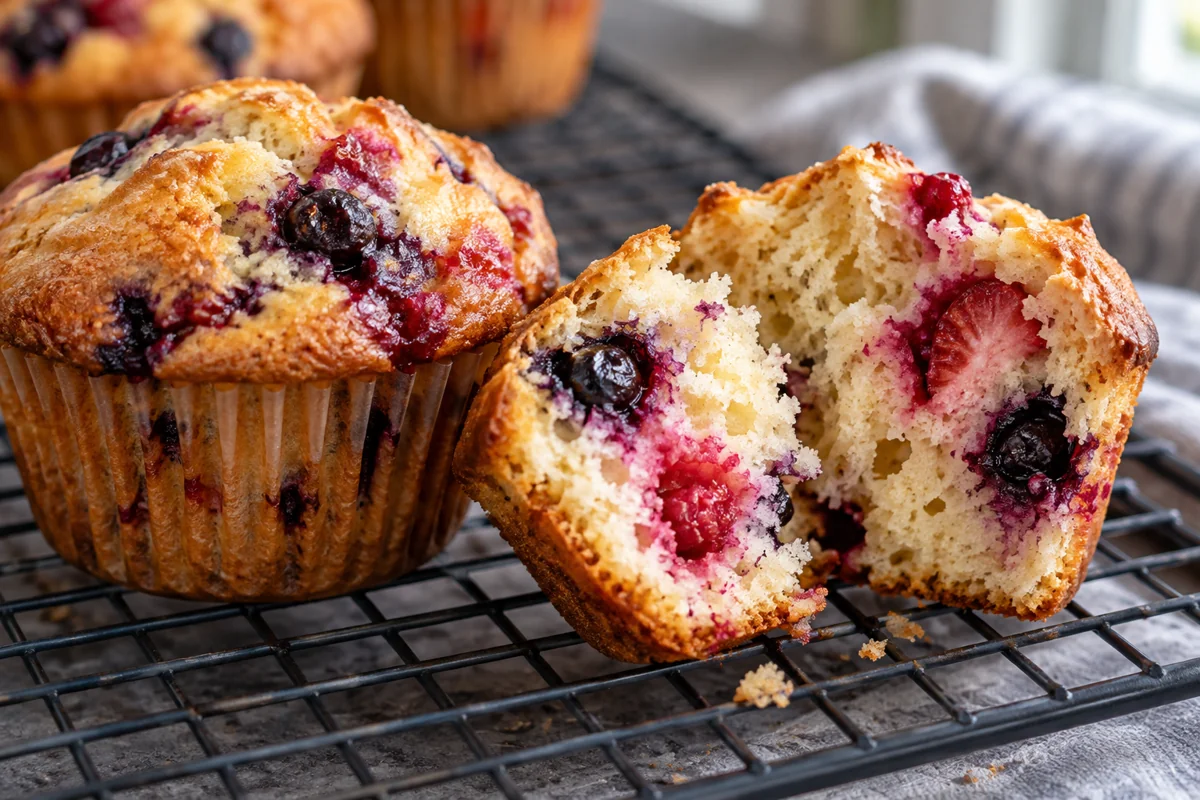
The most useful commercial specification begins with the muffin itself: portion weight, fruit load, desired berry pockets and the conditions in which it will be sold. A colorful bag can still give inconsistent muffins if its components separate during handling or if a few oversized pieces dominate individual portions. We suggest approving a berry blend through the actual batter, depositor and bake, using the same handling sequence that the bakery plans to repeat.
Choose a blend and particle size for each muffin
A mixed berry muffin should give a recognizable fruit experience throughout the batch. That does not require an identical arrangement of berries in every piece, but it does require a reasonable distribution of fruit size and type. Begin by identifying the components and their proportions. Blueberries, raspberries, blackberries and strawberries differ in shape, fragility and the way they occupy a small portion of batter. The blend name alone leaves those differences unresolved.
Small blueberries can distribute readily through a standard muffin. A whole large strawberry may occupy much of the same portion and leave a substantial wet pocket after baking. Blackberry seeds and raspberry fragments contribute their own texture. If the intended product has a delicate crumb and modest fruit pieces, a specification for smaller strawberry cuts may be more useful than a general requirement for premium whole fruit. Judge the cut against the muffin diameter and fruit load.

Mixed berries with strawberry pieces on a sorting surface. Confirm component ratios and cuts for the order.
The recipe-author guidance in Barefoot in the Pines' mixed berry muffins specifically calls attention to larger strawberries. This is a practical reminder to inspect a mixed pack before assuming it will suit an existing blueberry formula. For regular production, ordering an agreed cut reduces the need for ad hoc cutting at the bakery. Any cutting step that remains should have a controlled method and be included in the application trial.
Consider the proportion of broken fruit separately from the proportion of each species. A raspberry-rich blend with many small fragments can distribute color and flavor widely, while a blend with intact fruit creates more distinct pockets. Neither appearance is automatically a defect. The important point is whether the result matches the product description and the customer's expectation. Approve representative photographs of the cooled muffin interior alongside the written raw-fruit specification.
Component balance also affects flavor. A mild batter can make tart berries especially noticeable, while a sweeter or strongly flavored batter may obscure them. Evaluate the berry blend in the actual formula rather than tasting it only in isolation. A useful sensory note identifies the character that matters: strawberry aroma, dark berry depth, tartness, seed perception or the balance between fruit and crumb. Those descriptions are more actionable than good berry taste.
An unsweetened pack and a sweetened preparation should be treated as different ingredients. Confirm whether sugar or other ingredients are added, and account for them in the batter formulation. A prepared berry filling may have a texture system and water balance unlike raw frozen berries. The product photograph can help confirm form, but ingredient declarations and the approved specification establish what will enter the mixing bowl.
Decide how frozen fruit enters the batter
For a recipe written around frozen addition, the timing of the fruit addition is part of the formula. Prepare the other ingredients and equipment first so the berries can move from controlled storage to the final fold with minimal delay. Leaving a measured bowl on the bench while the batter is assembled creates a variable thawing interval. The first batch of the morning and a later batch may then receive fruit in different conditions.
Frozen berries can cool and stiffen batter during mixing. That affects the effort needed to fold, the way a scoop fills and the amount of batter left on equipment. Record the fruit condition and batter condition at deposit during development. If the batter becomes difficult to portion, investigate the full formula and sequence before adding extra liquid by eye. An informal adjustment can change the crumb and create a new formula without a record.
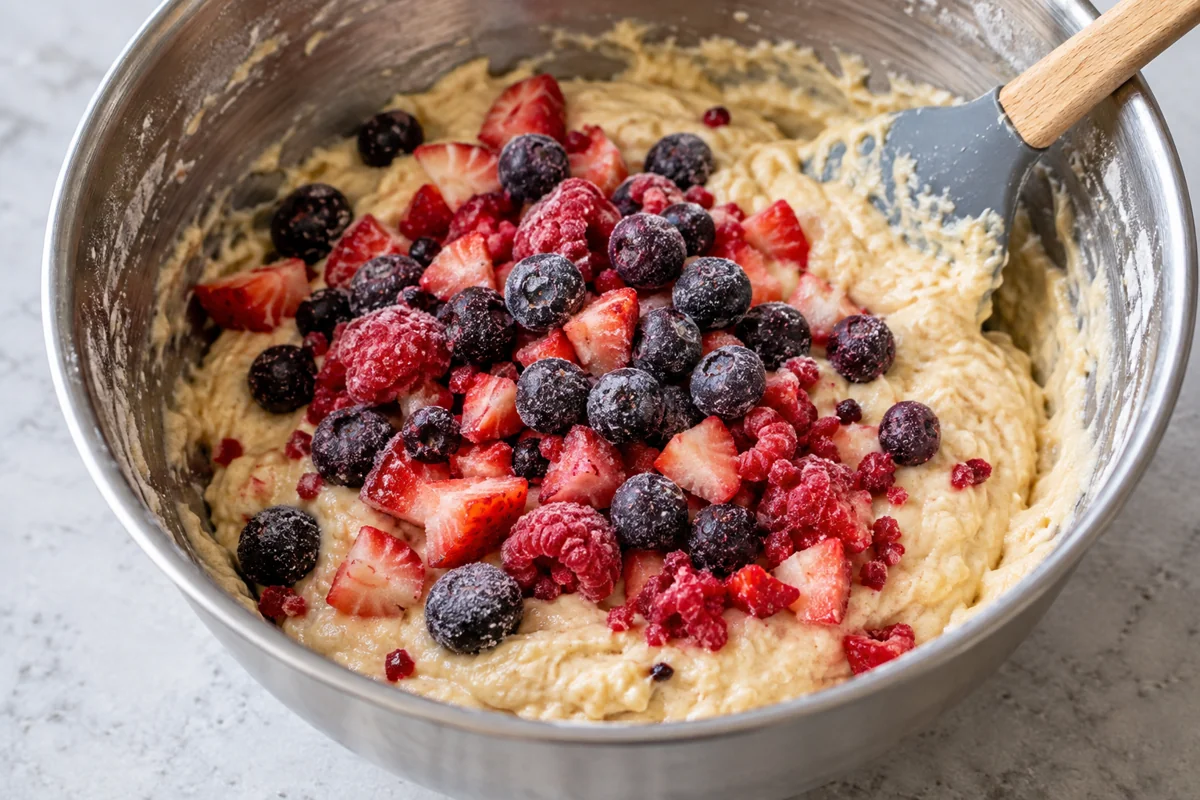
Frozen mixed berries added to thick muffin batter.
Rinsing advice requires care. Baking with Butter's frozen berry muffin recipe uses a brief rinse as part of its method, while other recipes add frozen fruit directly. A method intended to manage surface color on a particular fruit can add water or break delicate mixed berries. Follow the chosen recipe and the ingredient's handling instructions. Rinsing is not a universal requirement for mixed-berry muffins and does not establish microbiological safety.
If a controlled thaw is part of the recipe, specify how the released juice is handled. Returning it to the batter, draining it away or using only a defined amount produces different liquid balances. Weigh the fruit on the basis the formula requires. Frozen volume is especially awkward for mixed berries because large pieces leave different spaces in a measuring cup. A weight-based formulation is easier to repeat and makes changes in fruit loading visible.
| Fruit condition | What changes at mixing | What to record |
|---|---|---|
| Frozen as specified | Cold pieces enter a prepared batter | Fruit condition, final fold and deposit timing |
| Partly thawed for a defined cutting step | Cutting and surface juice become variables | Cut size, handling interval and juice treatment |
| Thawed and measured for a specific formula | More free liquid is present before baking | Prepared fruit weight and retained liquid |
| Prepared berry filling | Sugar and texture system enter with fruit | Full ingredient declaration and approved formula |
The King Arthur comparison of frozen and fresh fruit in baking shows why fruit state should be evaluated in context. A fresh-fruit muffin and a frozen-fruit muffin may need different attention even when the ingredient weight is unchanged. The sensible comparison keeps the recipe, portion size and assessment method clear, then changes the fruit state deliberately. It avoids interpreting a handling difference as a supplier quality difference.
Fold berries without losing the crumb structure
Berry addition is usually a late step in a muffin method because extended mixing can damage fruit and change the batter. Have the fruit weighed and the pans ready before that step begins. Use the mixing method specified for the formula, then fold the berries through with enough movement to distribute them. The target is a usable, reasonably uniform batter with the intended fruit pieces still present. A perfectly colorless batter may be unrealistic for a blend containing fragile raspberries.
Observe where color appears. A little staining around a berry or along a fold can be normal for the chosen blend. Widespread purple color may indicate greater fruit breakdown, more released juice or a different mixing history. It can also be an intentional product style. Describe the result against the approved reference rather than treating every color change as failure. The same colored batter may be attractive in one product and unsuitable for another.
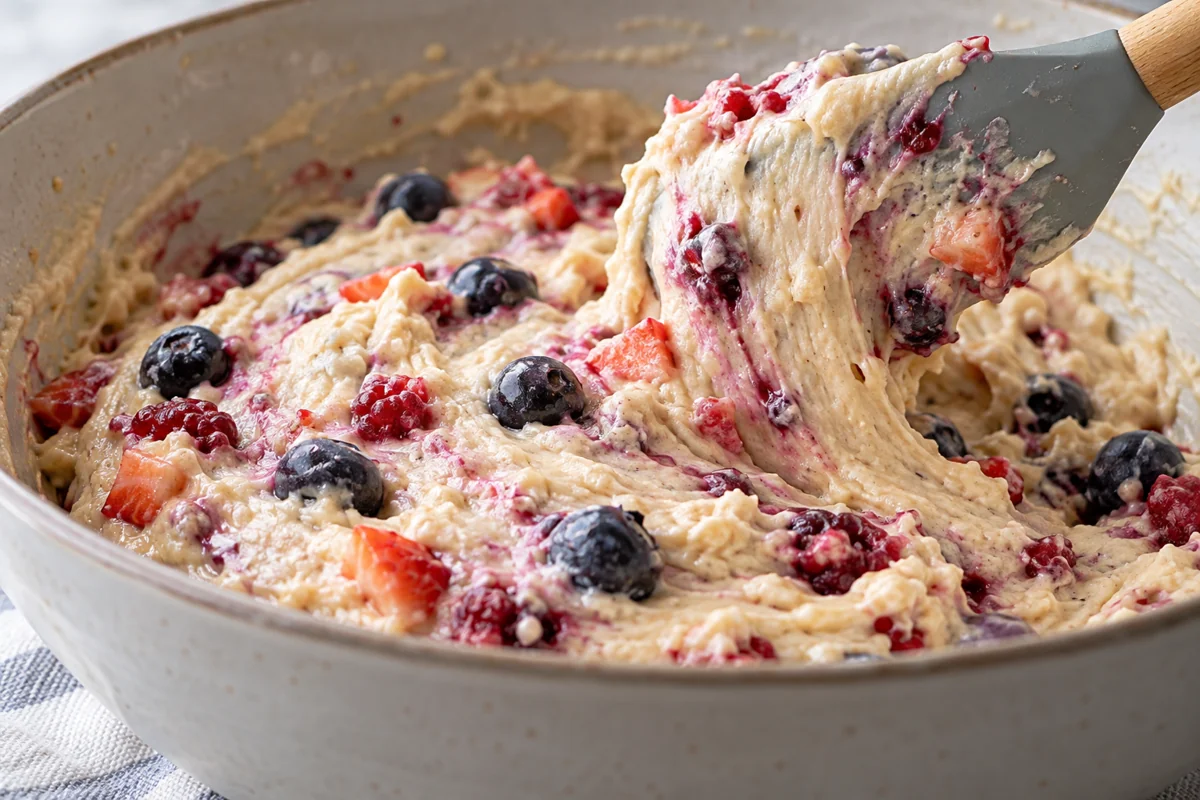
A partial fold distributes berries through thick muffin batter.
Do not rely on a flour coating to solve every fruit-distribution problem. A dusting used by a particular recipe is part of that method; it cannot compensate for an unsuitable batter consistency, excessive fruit load or oversized pieces. Adding unmeasured flour changes the formula and may leave dry patches. If a coating step is tested, weigh the flour and include it in the total formula so the trial can be repeated accurately.
Hand folding and mechanical mixing are different processes. A gentle fold in a small bowl does not predict the effect of a long mixer cycle on a large batch of raspberries. In development, note the equipment, tool, speed where applicable, mixing time and stopping point. Inspect the fruit after the final mix. If intact pieces are important, the relevant result is the piece condition after this stage, rather than how whole the frozen sample looked on receipt.
The OwlbBaking mixed berry muffin recipe provides another recipe-specific example of frozen fruit in a muffin batter. Such examples establish useful approaches, but they do not define a production mixer setting for every bakery. Scaling should preserve the intended batter and fruit outcome, with adjustments evaluated by the responsible product-development team. Simply multiplying the home recipe's mixing duration is not a meaningful scale-up method.
Avoid correcting a heavily streaked batch by continuing to mix until the color looks uniform. That may further break fruit and move the product away from its intended crumb. Instead, record when the change appeared and compare the fruit state, batch temperature, loading order and mixing method with the approved process. The next controlled trial can then address a specific cause. A short, clear record is more useful than a long list of emergency adjustments made after the batter has already changed.
Control berry distribution at the depositor
The bowl can look well mixed while individual muffins receive different amounts of fruit. This becomes obvious when one portion contains several large pieces and the next has mostly batter. Inspect the first, middle and last portions from a batch. The difference may arise during mixing, holding, scooping or mechanical deposit. A sample taken only from the top of the bowl gives little information about the whole run.
For hand portioning, use the same scoop and a consistent filling technique. Keep the target deposit weight visible to the operator and check representative portions with a scale. Weight consistency alone does not guarantee berry consistency, so examine the cooled cut surfaces as well. A heavy portion can contain extra batter or extra fruit, and those two conditions may bake differently. Record both the portion weight and the visible fruit distribution during the approval trial.
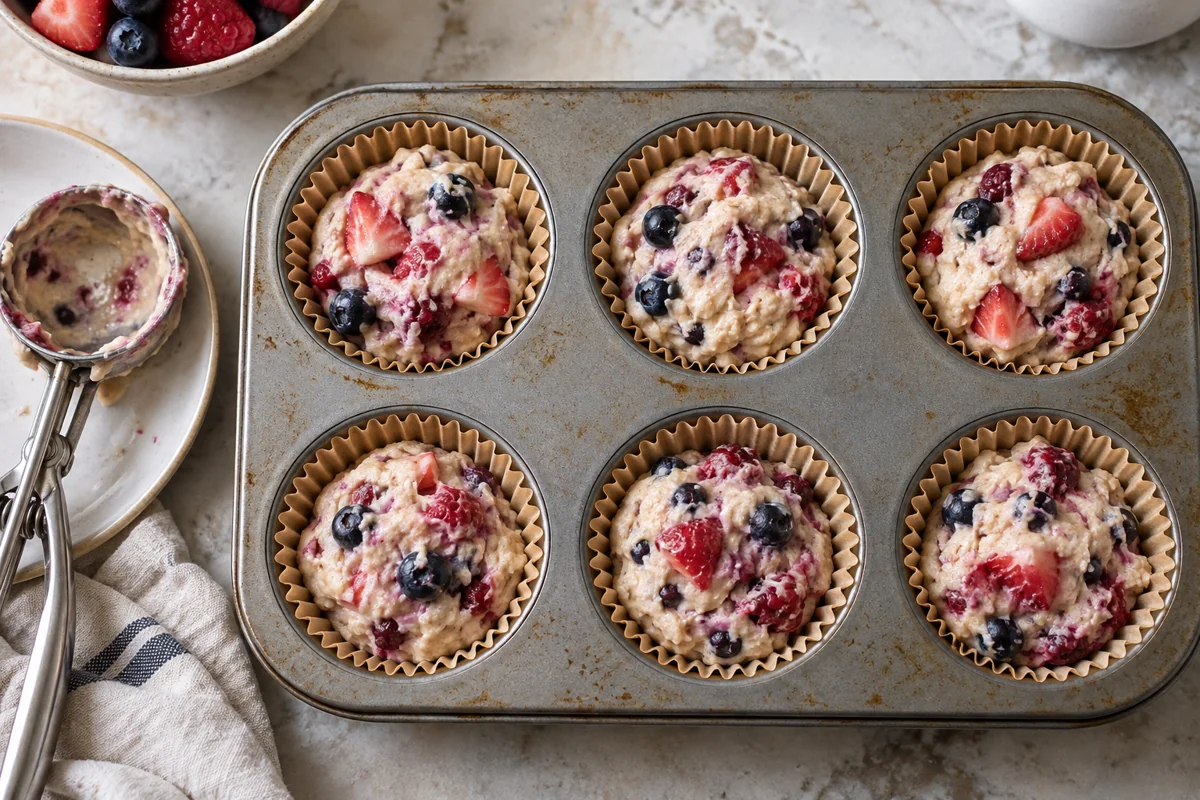
Comparable muffin portions with berries distributed across the tray.
At a mechanical depositor, particle size must suit the equipment. A cut that passes through a wide hand scoop may bridge or be damaged in a narrower passage. Ask the equipment team to review the proposed fruit size, especially when changing from blueberries to a blend containing strawberry pieces. The supplier can discuss the raw-fruit form, while the bakery must confirm performance on its actual machine. A generic claim that a blend is bakery grade does not settle this question.
Holding time between mixing and deposit also deserves attention. As berries soften, more juice may enter the surrounding batter and the distribution can change. Define the planned working interval and assess the first and last tray within it. If several ovens or deposit stations are involved, include the real sequence. A small test that is portioned immediately may understate the variation that appears during a longer production run.
The incoming bag matters too. Components of different size and shape may distribute unevenly during transport and handling. A bakery using the whole bag in one batch has a different exposure from one scooping a few hundred grams at a time. Sample in a way that reflects that use. If partial bags are routine, agree a practical handling method that supports representative portions without damaging delicate fruit or interrupting the required temperature control.
Set a realistic acceptance criterion. Individual muffins are not expected to contain an exact count of each berry unless the process is designed to place fruit that way. The criterion might instead describe an acceptable range of total fruit loading and the absence of repeated fruit-poor portions in a sample. Choose the sample size and method with the bakery's quality team. The purpose is to identify meaningful variation, not to create a visual ideal that normal mixed-fruit production cannot meet.
Bake and assess the crumb around the fruit
A risen, browned dome is only one part of muffin quality. Cut representative cooled muffins through the center and inspect the crumb next to the largest fruit pieces. Look for the intended tender structure, even baking and the absence of unwanted dense or gummy areas. Berry juice can color the crumb, so color alone is an unreliable way to distinguish a fruit stain from underbaked batter. Use the full set of checks specified for the recipe and operation.
A tester inserted into a berry can emerge wet even when the surrounding crumb is baked. Conversely, a tester through a fruit-free path may miss a poorly set area elsewhere. This is why development should include cut-surface inspection and samples from different tray positions. A recipe's doneness cue is useful within its own context, but the commercial process needs a repeatable method that accounts for the product's fruit distribution and portion size.
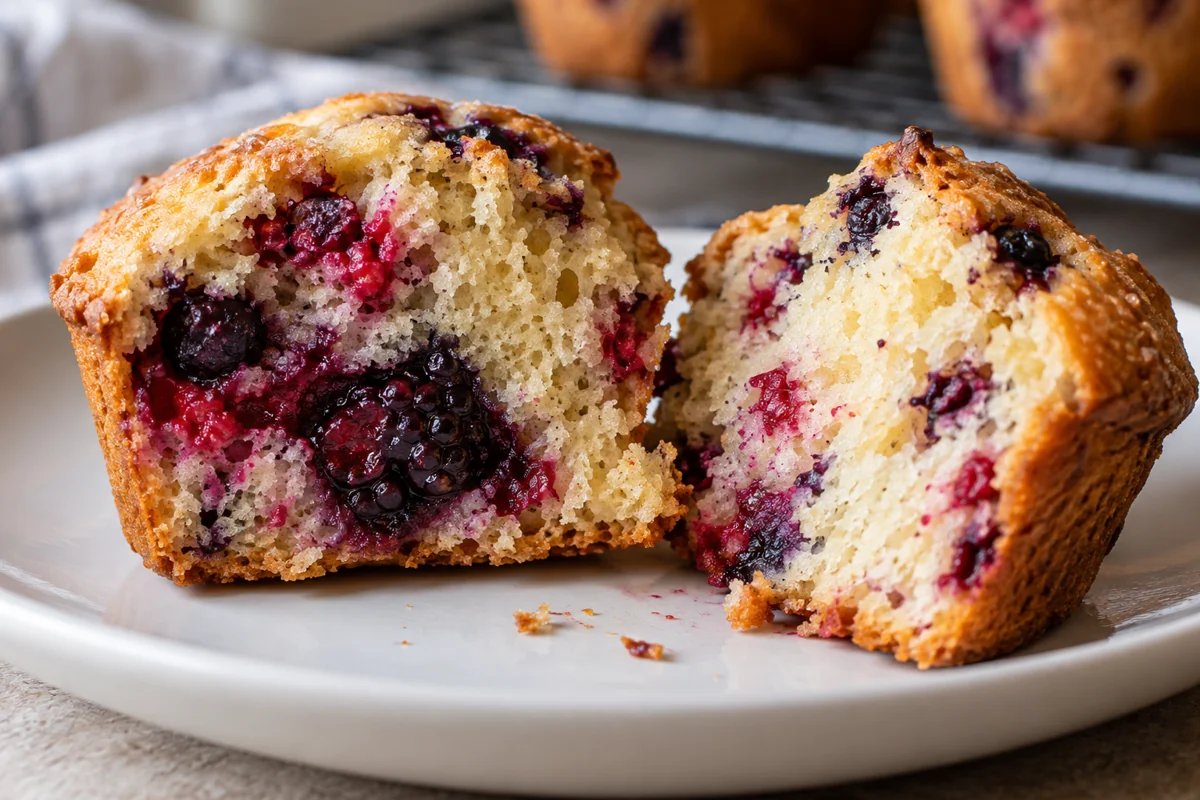
Cut muffin showing set crumb beside a berry pocket.
Large pieces deserve particular attention. They can occupy a significant fraction of a small muffin, and the adjacent batter may behave differently from the batter farther away. If a defect consistently appears beside oversized strawberries, test a suitable smaller cut before changing the entire batter. Keep the fruit weight constant during that comparison. Otherwise, an apparent improvement could simply result from reducing the amount of fruit rather than changing its dimensions.
The community recipe and comments on Food.com's berry muffins raise practical questions about fruit loading and large pieces. Those observations are useful prompts for development, not controlled evidence of a universal limit. Establish the loading that works in your own formula. A muffin with a high fruit content may be intentionally moist, but it still needs the structure and handling performance required for its packaging and service.
Oven position and loading should be recorded during trials. Compare muffins from the center and edges of the tray and from different parts of the oven where relevant. Keep pan type, liner and deposit weight consistent. A darker pan or a different liner can change the appearance and release behavior, which may be mistaken for a berry effect if those variables move at the same time. Evaluate the complete product under the planned production conditions.
Quality checks do not replace the food-safety process. Frozen fruit is not automatically ready to eat, and visible baking color does not prove a validated reduction of a particular hazard. Follow the raw ingredient's instructions and the bakery's applicable process controls. Keep any temperature, time or microbiological requirement tied to its actual validation and product scope. A supplier application sample can help assess crumb and flavor without becoming a claim that the finished muffin process has been validated.
Plan cooling, packing and later serving
Muffins continue to change after leaving the oven. The liner can hold moisture, the surface can soften and warm vapor can condense if packing occurs too early. Follow the cooling procedure suitable for the product, with enough space and airflow for the planned process. A tray of tightly packed muffins and a spaced rack are different cooling conditions. Include the chosen arrangement in development if packaging appearance and texture are important.
Assess liner release after the relevant cooling period. A muffin that tears when handled hot may release differently later, while a fruit pocket near the side can leave a sticky area even in a well-baked product. Record whether the issue is concentrated at fruit contact or distributed around the whole liner. That distinction can help the bakery decide whether to review fruit cut, deposit position, liner selection or cooling conditions.

Mixed berry muffins cooling with space around each piece.
For a packaged muffin, evaluate the package after the intended holding period as well as immediately after packing. Look for condensation, wet spots, loss of surface texture and movement of color around fruit. The package should be assessed as part of the product system. A successful open-rack sample does not establish the quality of the same muffin sealed in film and transported. Choose observations that reflect the customer's actual experience.
If the finished muffins will be frozen, trial the complete sequence: bake, cool, pack, freeze, store, thaw and serve according to the planned method. Record the packaging and the evaluation point. The raw berries having been frozen previously does not by itself determine the quality of the finished muffin after another freezing cycle. The batter, fruit load and packaging all contribute to the eventual texture. Use the finished-product evidence when deciding whether the product meets its target.
Shelf life requires its own basis. Recipe websites offer storage suggestions for their particular home preparations, but those periods are not commercial shelf-life validation for a different formula, package or distribution route. Establish the relevant quality and safety controls with the responsible team. If the recipe is being used at home, follow its storage directions and local food-safety guidance rather than assuming that a bakery-style appearance implies long keeping quality.
Serving temperature can also change the judgment. A chilled muffin, a thawed muffin and a gently reheated muffin may present different firmness and berry aroma. State which one the customer will receive and use that condition for final sensory approval. A supplier comparison becomes much clearer when both samples are evaluated at the same stage. It avoids rejecting a fruit lot because one sample was tasted warm and another after a long hold.
Approve the berry specification in a repeatable trial
A useful approval starts with a defined question. The bakery might need fewer large wet pockets, less overall color bleed, more distinct berry pieces or more even fruit distribution across a tray. Choose the most relevant question and design a comparison that changes one input at a time. The trial should use the intended recipe and equipment, not a convenient substitute batter that behaves differently.
One workable sequence is:

Raspberries, blackberries and blueberries in a mixed berry sample. Confirm component ratios and cuts for the order.
- Record the reference blend, component proportions, cut sizes, fruit weight and complete batter formula.
- Prepare representative samples using the planned frozen or thawed handling method and the same final mixing sequence.
- Deposit at the intended weight, checking first, middle and last portions for practical distribution differences.
- Bake under the same conditions and inspect cooled cut surfaces from several tray positions.
- Repeat the chosen treatment through the actual packing and serving sequence before approving the specification.
These are proposed development steps, not claimed GreenLand test results. The resulting record should identify the sample lot and formula revision, with photographs taken at consistent scale. Include the observations that caused the bakery to accept or reject the sample. A simple record of berry appearance, crumb condition, liner release and flavor is easier to use later than a single overall rating without explanation.
For purchasing, specify the berry components and permitted variation, the strawberry cut if included, relevant size limits, broken-fruit allowance and added-ingredient status. Confirm packing, net weight, storage instructions and traceability requirements. If the bakery draws partial bags, explain that use so the sampling and handling discussion addresses component distribution. If the whole bag enters a large batch, state that instead.
We use the intended application to discuss a frozen mixed berry supply specification. Share the muffin portion size, fruit percentage, mixing and deposit method, order quantity, destination and preferred packing. For a private-label program, also identify the ingredient declaration and documentation the finished-product team needs. Availability, lead time and any proposed component substitution should be confirmed against the actual order.
Keep a clear change rule after approval. A different strawberry cut, a substantial shift in broken raspberries, a new sweetened ingredient or a different packing format may affect the process even when the blend name is unchanged. Decide which changes require notification and which require another muffin trial. That agreement helps the buyer maintain the intended product while allowing ordinary fruit variability to be evaluated on its real effect in the baked muffin.
Related reading
Can You Bake With Frozen Strawberries? Pie, Cake & Muffin Tips
Explore strawberry behavior in cake, muffin and pie formulas.
IQF vs Block Frozen Strawberries: Buyer's Guide
Compare ingredient formats when partial-bag handling and preparation matter.
Strawberry Pie Filling with Frozen Strawberries
See why a pie filling needs different structure from fruit dispersed through muffin crumb.
Source frozen mixed berries with GreenLand-food
GreenLand-food is a professional frozen mixed berries supplier and manufacturer in China, providing factory-direct wholesale supply for importers, food manufacturers and foodservice buyers.
Send the berry components, product form, specification, packing, quantity, application, destination, private-label needs and requested documents so we can discuss an appropriate supply brief and sample.