


Strawberry Pie Filling with Frozen Strawberries
Sep 20, 2026
Leave a message

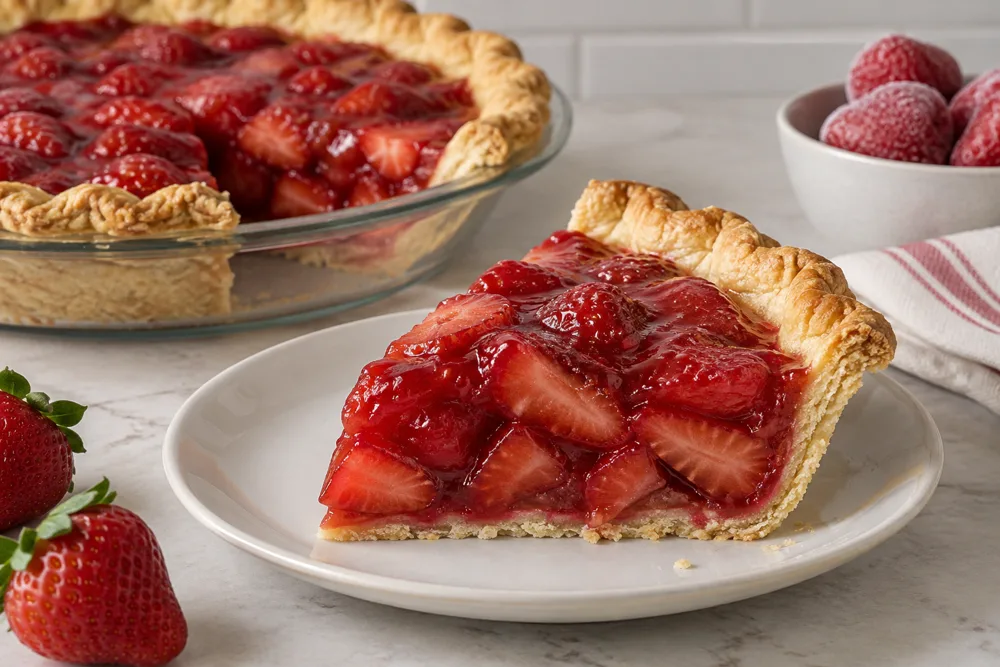
For a practical development batch, start with 500 g plain frozen strawberries, 80–120 g sugar, about 25–35 g cornstarch, and a small amount of lemon juice for flavor. This is a trial range for a cooked filling, not a universally tested pie recipe. Fruit size, juice release, sweetness, reduction and the desired slice all change the final balance. Use a tested complete recipe when you need a specific pie size and guaranteed assembly method.
A pie filling needs enough structure to stay with the slice while still tasting like fruit. A topping that pours attractively from a spoon may leak from a cut pie. That difference makes starch choice, heating history, filling depth and cooling just as important as the strawberry itself.
Choose a filling that matches the finished pie
Decide first whether you are making a chilled pie in a fully baked shell, a fruit pie that will bake after assembly, or a product intended for freezing and later reheating. These paths expose the filling to different conditions. A formula that sets well in the refrigerator can behave differently during another oven cycle or after freezing.
For a chilled pie, the stovetop step develops the filling before it enters a baked pastry shell. The fruit is cooked, the starch is activated under the chosen recipe's conditions, and the filling is cooled appropriately before assembly and refrigeration. The pastry does not provide a later opportunity to correct a thin filling. Its texture should therefore be assessed before the pie is filled.
For a baked fruit pie, heat must reach the filling through the assembled pastry and fruit mass. The outer crust can brown while the center is still catching up. A filling that includes uncooked starch needs the recipe's specified baking endpoint; attractive crust color alone does not establish that the thickener has worked throughout the pie.
A precooked filling can make the liquid balance easier to observe before assembly. It also adds a heating stage, which may soften the berry pieces further during the bake. That tradeoff can suit a smooth or finely textured filling, while a pie built around large recognizable pieces needs a gentler handling plan. Define the desired fruit structure before adjusting the starch.
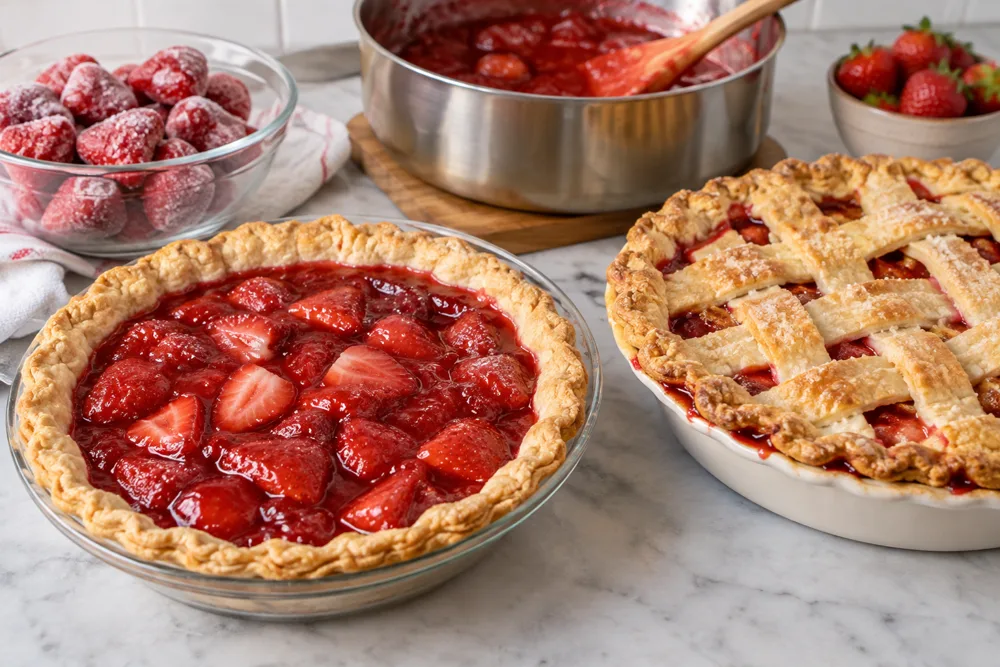
Choose the chilled or baked route before deciding how the starch will be cooked.
| Finished pie | Main setting stage | Principal texture question | Useful trial endpoint |
|---|---|---|---|
| Chilled pie in a baked shell | Stovetop cooking followed by cooling | Does the cooled filling hold a clean slice? | Assess after the planned chill |
| Pie baked after filling | Heating within the assembled pie | Does the center thicken before the crust overcolors? | Check center and fully cooled slice |
| Frozen pie or frozen filling | Full production and thaw or reheat sequence | Does the filling release liquid after freezing? | Evaluate after the intended cycle |
Our strawberry sauce guide covers a looser spoonable preparation. A sauce can use a lower starch dose or rely more heavily on reduction. For a pie, keep your attention on the cut portion, pastry contact and the serving interval. These observations reveal whether the structure fits the application.
Specify the portion format at the beginning of development. A full pie served from a dish can tolerate a different degree of softness from a slice that must stand alone on a plate. Individual tart shells also change the ratio of crust to filling and the distance heat travels to the center. Test the planned filling depth rather than borrowing a result from a shallower sample. If the product will be transported, include that handling stage in the quality evaluation after the complete cooking and cooling procedure.
Select the strawberry form and account for its juice
Plain unsweetened frozen strawberries give you the clearest control over sugar and liquid. Check the ingredient description before using a sweetened pack or fruit in syrup. The same total weight of those products contains a different balance of fruit, sugar and liquid, so substituting it directly can change both sweetness and the amount of thickener required.
Whole berries take longer to warm through than slices or dice. During that time, the fruit touching the pan may soften more than the centers of the largest berries. Halves, slices or appropriately sized pieces can produce a more even filling and a manageable bite within a pie slice. Select the cut before cooking rather than trying to chop hard frozen berries with force.
The juice released during warming contains flavor, color and soluble fruit material. Pouring it away casually changes the formula and yield. If you prefer a cooked-juice method, collect and weigh the liquid, thicken it separately under the recipe, then return the fruit. That is a deliberate formulation step. Discarding an unknown quantity makes the next batch difficult to reproduce.

GreenLand product photograph. Fruit form and released juice influence the filling trial.
Use weight for the development batch. Cups of whole berries, slices and broken fruit contain different amounts because they pack differently. A record of 500 g frozen fruit is easier to compare than a loosely filled bowl. Weigh the sugar and starch as well, particularly when making a small adjustment that would be difficult to measure consistently with spoons.
Do not add water automatically at the beginning. Frozen strawberries often release enough liquid as they warm. A small measured addition can protect a particular pan or help disperse a slurry, but every added gram joins the liquid balance. Excess water can lead to a longer reduction, more fruit breakdown and a less concentrated strawberry flavor.
GreenLand-food's frozen strawberry products include formats that can be reviewed for bakery and processing use. We confirm the fruit form, size, sweetness requirements, defects, packing and application before order confirmation. A bakery needing visible halves has a different starting requirement from a producer blending the fruit into a smooth filling.
Make a cooked filling from frozen strawberries
Use a heavy saucepan that can hold the batch comfortably while allowing gentle stirring. Prepare a heatproof spatula, a scale and a small bowl for starch dispersion. Keep the fruit frozen until you are ready to begin, and follow any cooking instruction on the supplied product. The sequence below explains how to control a development batch; it is not a shelf-stable preservation process.
- Weigh 500 g of plain frozen strawberries into the pan with 80 g sugar. Reserve additional sugar for a later flavor adjustment. Begin over gentle heat and turn the fruit carefully until enough juice appears to protect the base.
- Continue warming until the pieces are thawed and the liquid is distributed. Reduce large pieces only when soft enough to handle safely. Keep the intended fruit texture visible rather than mashing everything by habit.
- Disperse an initial 25 g cornstarch in a small measured amount of cold water or cold reserved juice, about 30–40 g for an easily stirred slurry. Mix immediately before use because starch settles.
- Stir the smooth slurry into the hot fruit while keeping the mixture moving. Bring the filling to the bubbling endpoint required by the recipe and starch, allowing the whole batch to thicken. Avoid prolonged hard boiling after that point.
- Add a small measured amount of lemon juice if the flavor needs brightness, then reassess sweetness. Do not treat lemon addition as a validated preservation step. Record all adjustments.
- Cool a small sample to the intended serving temperature before deciding whether more starch is necessary. Cool and store the remaining filling under an appropriate food-handling procedure, then assemble the pie according to its complete recipe.
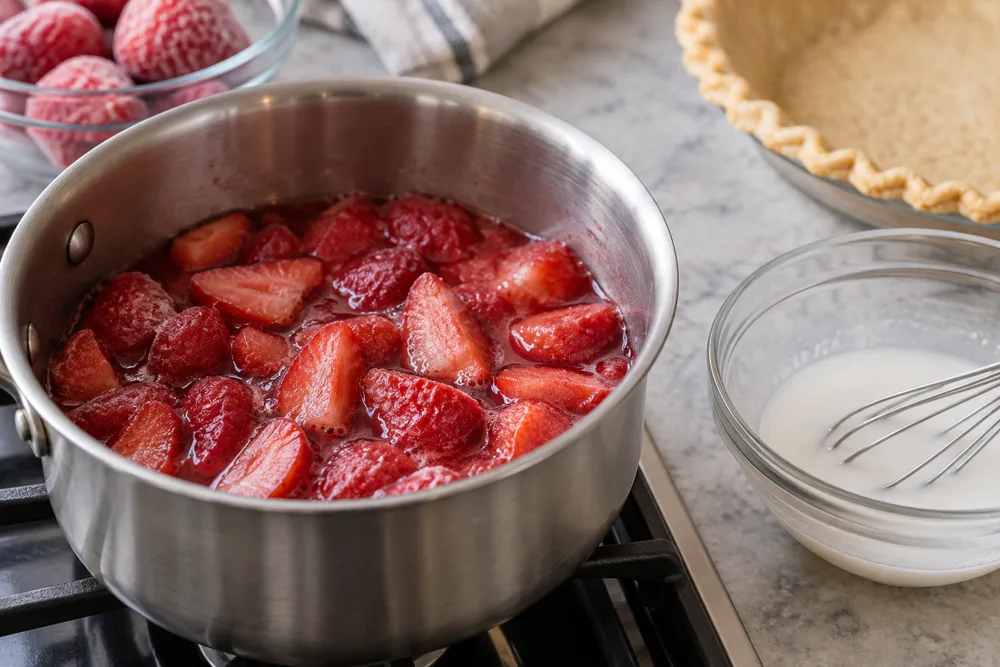
Gentle stirring helps distribute heat while limiting unnecessary fruit breakage.
The upper end of the starting starch range may be useful for a firmer chilled slice, but do not add it automatically. Reduction concentrates the existing starch as well as the fruit. A batch that loses more water during cooking can become firmer than another batch with the same original ingredients. Weigh the finished filling if you want an additional point of comparison.
Watch the pan closely as the filling thickens. Heat and stirring become less uniform as viscosity rises, and the base can scorch while the surface still looks wet. Scrape the bottom and corners with a suitable utensil. Stir gently enough to preserve the chosen fruit pieces, but thoroughly enough to distribute the starch and heat.
A small cooled spoonful is a useful early check, though it cannot fully predict a deep pie slice. The completed pie has its own filling depth, crust contact and cooling rate. Use the pan test to avoid a clearly unsuitable batch, then approve the formula by evaluating the assembled pie after the planned cooling and serving period.
Match the starch to the heating and storage cycle
Cornstarch is accessible and useful for many cooked fillings, but its behavior depends on concentration, heating, acidity and subsequent storage. It must be dispersed without lumps and heated adequately. Adding dry starch directly to hot fruit tends to create pockets that hydrate unevenly. Those lumps can remain even when the surrounding filling looks thick.
Flour thickens differently because it is not pure starch. It generally requires a different quantity and can make a filling more opaque. Some complete pie recipes intentionally use flour, or a combination of flour and cornstarch, for their desired texture. Follow the tested formula rather than replacing one thickener with another spoon for spoon.
Tapioca starch and quick-cooking tapioca are also distinct products. Their preparation and texture can differ. Quick-cooking granules may need a resting interval so they hydrate within the fruit mixture. For an industrial ingredient, use the supplier's instructions and trial the exact material; the word tapioca alone does not specify every functional detail.
King Arthur Baking's thickener guide distinguishes flour, cornstarch, quick-cooking tapioca and Instant ClearJel, including their appearance and temperature behavior. It also emphasizes following the quantity in a tested recipe. These distinctions support a practical rule: choose the actual starch product for the complete process, then test the finished pie.
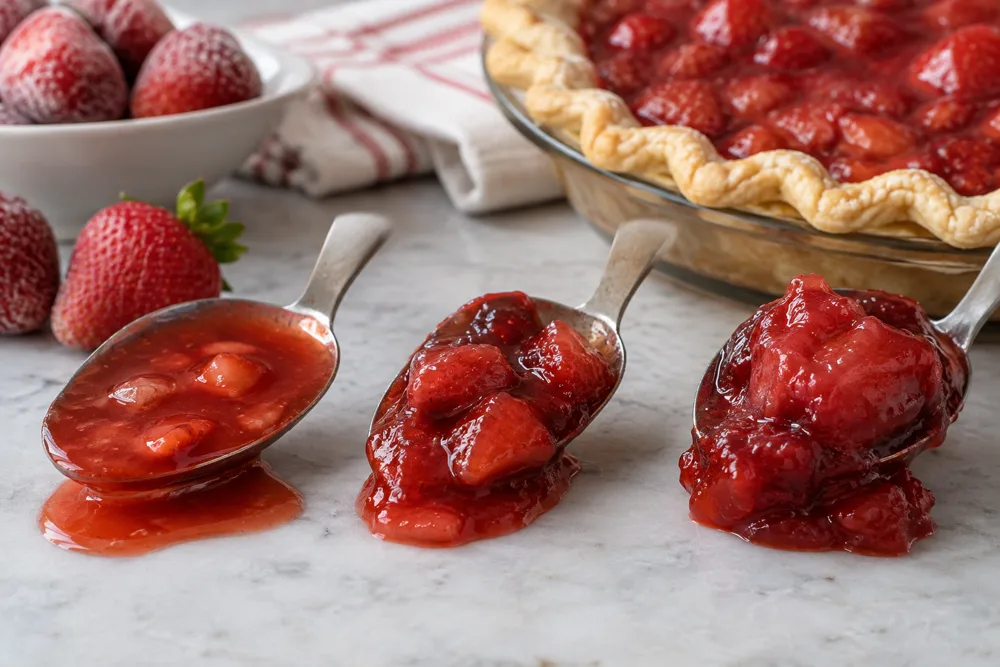
Texture should be evaluated at the intended serving temperature, not only while hot.
| Thickener option | Typical reason to consider it | Detail that needs confirmation |
|---|---|---|
| Cornstarch | Familiar cooked filling with moderate translucency | Cooking endpoint and behavior after storage |
| Flour | A tested recipe calling for a more opaque filling | Correct dose and sufficient cooking |
| Tapioca product | A particular clarity or texture target | Whether it is starch, granules or another preparation |
| Modified food starch | A commercial heating, freezing or handling requirement | Exact grade, dose, label requirements and supplier data |
Modified starch is a broad category. One grade may be designed for cold preparation, another for cooking, and another for a specified freezing and thawing cycle. Do not assume that all products carrying a similar name are interchangeable. Request the technical information for the actual supplied grade and include it in the formula record.
For a frozen commercial pie, assess liquid release after the intended frozen storage and reheating sequence. A filling that looks excellent on the day it is cooked may behave differently later. The relevant acceptance test is the final consumer or foodservice result. Starch selection should support that result together with fruit condition, processing and packaging.
Control the second bake and the cooling period
When a pie is baked after assembly, the filling and crust need to finish together. A cold dense filling can delay heat reaching the center. A very wet filling can keep the bottom pastry moist for longer. The full recipe should specify the pastry, filling temperature, pan, oven setting and endpoint because those variables interact.
Do not pour steaming filling into raw pastry unless the recipe specifically calls for it. Excess heat can soften the pastry fat before the intended oven stage, making handling and structure harder to control. Cool the filling under a safe procedure to the assembly condition used in the tested formula. Keep the waiting time and storage conditions part of the production plan.
Provide the venting required by the pie design. A lattice or properly vented top allows steam to escape, while a sealed surface changes the moisture environment. Fill to the recipe's intended level and place the pie on an appropriate tray if overflow protection is needed. More filling changes depth and heating; it is not simply an extra portion in the same process.
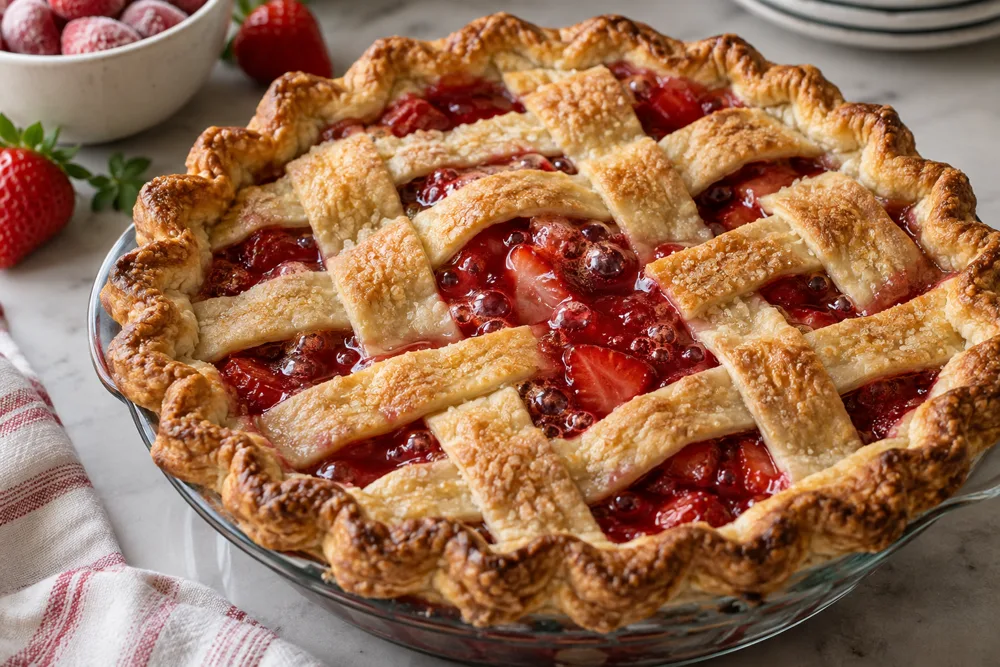
For a baked filling, the center must receive enough heat for the chosen thickener.
Protect an over-browning crust using the recipe's recommended method while allowing the center to finish. For starch-thickened baked fruit pies, visible bubbling in the center is commonly an important cooking cue, but use the complete recipe's endpoint and any product instructions. Bubbling only at the outer edge does not describe the temperature of the center.
Cooling is part of setting. A pie cut while warm can appear much looser than the same pie after a full cool. The liquid and starch system has not reached the same state, and a deep filling takes longer to cool than a thin spoon sample. Plan the service schedule around the intended serving temperature rather than treating cooling time as optional.
For professional production, document how pies are cooled and stored in accordance with the product's food-safety requirements. A thick filling should not sit in an uncontrolled environment while the team waits for a perfect slice. The quality target and safe handling procedure must be developed together. Once the process is established, assess the first slice and a later slice at the intended service interval.
Diagnose a filling that leaks or sets too firmly
A leaking pie can have several causes: insufficient thickener for the retained liquid, incomplete starch cooking, inadequate cooling, a fruit change or a process that adds more water than expected. Identify when the liquid appears. A hot pan sample, a newly cut warm pie and a chilled slice after overnight storage describe different stages and can point toward different explanations.
If the filling is thin while still in the saucepan, first confirm that the starch has been cooked according to its requirements. Adding more starch before the initial dose has functioned can overshoot the final texture. If an adjustment is needed, disperse a small measured amount separately and cook it properly into the batch. Record the change instead of treating it as an unmeasured rescue.
If the saucepan filling looked acceptable but the baked pie leaks, examine the second heating and cooling cycle. More juice may have emerged from large fruit pieces, the center may not have reached the required condition, or the pie may have been cut too early. Check those factors before concluding that the fruit supplier alone caused the problem.
A firm, rubbery or pasty filling suggests a different balance. Too much starch, excessive reduction or a formula designed for a different serving temperature can all contribute. Increasing lemon or sugar to disguise the texture usually creates another variable without addressing the structure. Use the current batch as evidence for a measured change in the next trial.
| Finished result | Questions to investigate | Controlled next change |
|---|---|---|
| Juice runs from a cooled slice | Was the liquid balance and center cook adequate? | Verify cooking, then adjust retained liquid or starch |
| Filling is thick but starchy | Was starch dispersed and cooked correctly? | Improve dispersion and use the required endpoint |
| Fruit disappears into paste | Were the cut size and stirring too aggressive? | Use suitable pieces and gentler mixing |
| Filling is excessively firm | Was starch dose high or reduction excessive? | Reduce one variable in a weighed trial |
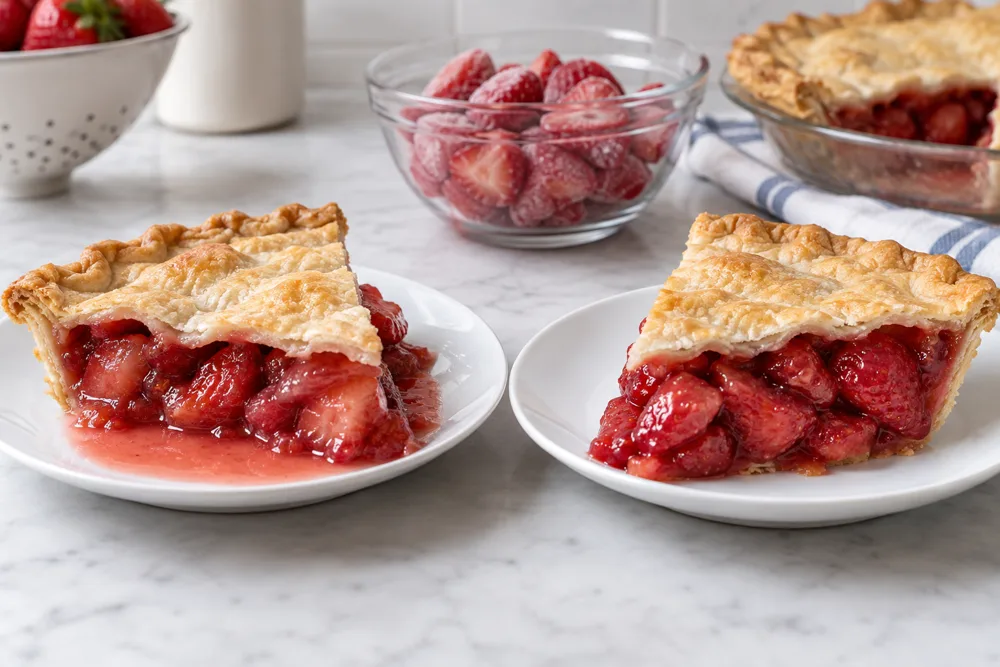
Visible seepage is a useful quality observation, but the cause requires a controlled trial.
Avoid changing fruit size, sugar, starch and baking time in the same trial. If the result improves, you will not know which change mattered. Work from a recorded baseline and adjust one major factor at a time. For a commercial bakery, that record becomes the basis of a repeatable formula and a clearer specification for incoming strawberries.
Before changing the fruit order, check whether the crust and filling were evaluated under the same conditions. A deep cold pie, a shallow pie with warm filling and a precooked shell all transfer heat differently. The fruit supplier cannot correct a center that never reaches the thickener's required cooking conditions by adjusting berry size alone.
For production trials, place a small record beside each pie identifying the fruit lot, filling weight, starch system and cooling interval. Slice at the intended serving temperature with the same knife procedure. Note whether the filling separates from the crust, whether free liquid gathers after cutting and whether the second slice looks different from the first. These observations are more useful than a photograph taken before the pie is cut.
If the pie is sold by the slice, test the practical service interval as well as the whole pie. A filling that looks stable immediately after cutting can release liquid onto the plate while it waits. Keep any holding trial within the operation's established food-safety controls. The quality test should never involve extending holding beyond a safe or approved procedure.
Approve frozen strawberries for repeat bakery production
We review frozen strawberries with the intended filling in mind. A supplier discussion should include whole fruit versus halves or dice, the desired piece visibility after cooking, flavor and acidity expectations, color, defect tolerance and packing. A bakery using a smooth filling may accept a different form from a producer whose label and cut slice promise recognizable berry pieces.
Request a representative sample and keep its lot information. Run the same weighed formula, pan load, heating method and cooling sequence that will be used for approval. Record incoming fruit condition, released liquid where measured, cooked output weight and the finished slice. This gives the purchasing and development teams a common description of performance.
Brix and acidity can be useful specification parameters, but neither alone predicts pie texture. Fruit maturity, cut size, tissue condition and thermal history also matter. A laboratory result should therefore sit beside an application trial. If the recipe is adjusted to compensate for one sample, repeat the trial with another representative lot before assuming the same correction will cover normal variation.

GreenLand product photograph. Match the sampled cut, size and condition to the commercial order.
Packing should suit the batch size and frozen handling procedure. Smaller inner packs may allow a bakery to open only what it needs, while a larger production line may prefer bulk formats that fit its equipment. Tell us the order quantity, destination, application, private-label needs and loading plan so the packing proposal supports the process.
Agree the documents required for qualification and each order, including the product specification, relevant test information, batch traceability and export paperwork. A frozen strawberry ingredient should follow its stated preparation requirements. Freezing is not a sterilization step, and an appealing filling appearance is not a substitute for a controlled food-safety process.
The broader frozen fruit range can help buyers plan other bakery ingredients alongside strawberries. Keep the strawberry pie trial attached to its own approved fruit and starch combination. That record is what lets a purchasing team evaluate a crop change, a new cut or a different packing proposal without losing sight of the slice the customer will actually eat.
Source frozen strawberry with GreenLand-food
GreenLand-food is a professional frozen strawberry supplier and manufacturer in China, providing factory-direct wholesale supply for importers, food manufacturers, foodservice distributors and private-label programs.
Send the whole, halved or diced form, size specification, packing, quantity, pie application, destination, private-label needs and requested documents. Include your filling and baking trial requirements so we can review a representative strawberry sample.