


Brussels Sprouts in Prepared Meals: Reheating and Portion Consistency
Oct 19, 2026
Leave a message

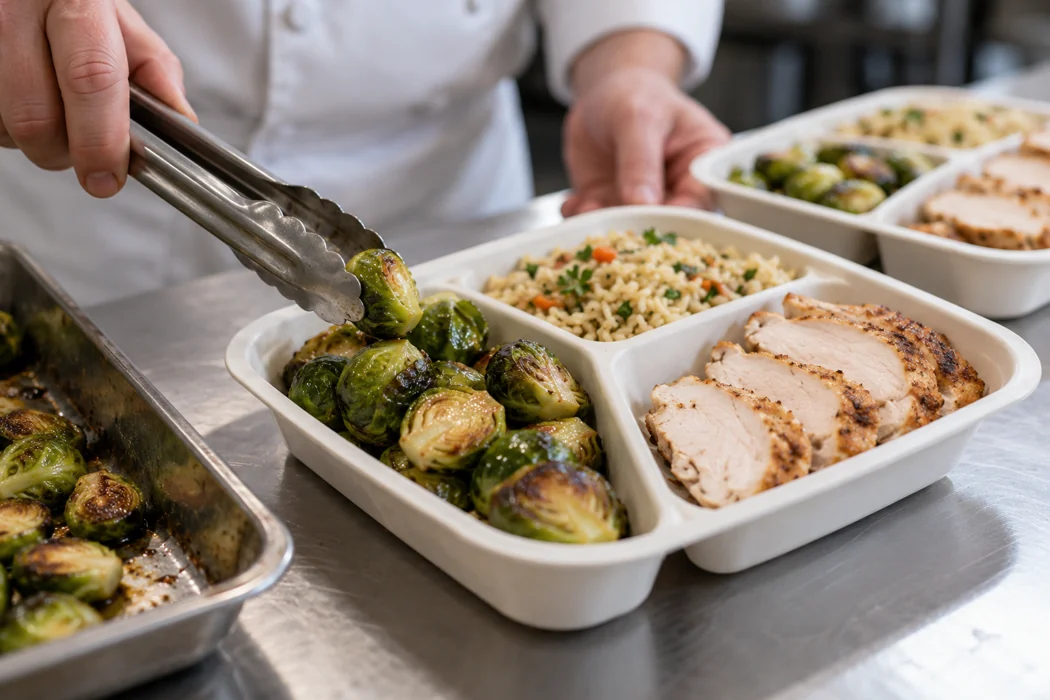
Approve the ingredient in the complete meal, using the actual tray, sauce, storage route and instructions. We help purchasing teams define whole Brussels sprouts around that final result. The most useful trial measures both the portion delivered to the tray and the eating quality after reheating, rather than relying on an attractive sample cooked by itself. The ingredient's declared processing status and the meal manufacturer's validated process govern how it enters production.
Start with the ingredient preparation status
Frozen Brussels sprouts may have undergone trimming, washing and blanching before freezing, but freezing alone does not establish that a product is ready to eat. Confirm the actual treatment and required preparation for the selected ingredient. A prepared-meal developer needs to know what safety function the manufacturing process and the final consumer heating step are expected to perform. That decision belongs in the food-safety plan and the approved product instructions.
Keep the supplier specification, ingredient label and development record together. A retail steam bag may carry instructions designed for its particular quantity, packaging and appliance power. Those instructions cannot simply be copied onto a larger meal tray containing rice, protein and sauce. Some retail products also expressly prohibit reheating after cooking. Such a restriction should be respected for that product; it does not describe every industrial ingredient or authorize a different use without technical review.
Our whole frozen Brussels sprouts supply page identifies trimmed whole buds as the main order form and calls for confirmation of processing status, size distribution and application fit. The current real product photographs show wet-looking heads. They are useful form references, but they cannot verify a frozen finished lot or a ready-to-eat claim. Obtain the relevant sample and records for the order being developed.

The whole-bud form can be recognized in the product photograph; treatment status needs separate confirmation.
Define the ingredient's entry point into the line. Will it be portioned from frozen, undergo a cooking step before assembly, or be incorporated through another controlled process? Each route changes the number of heat exposures, the opportunity for water release and the handling required. Record the intended entry condition precisely. A trial that begins with thawed buds cannot be assumed to represent production that feeds hard-frozen buds into trays.
For a cooked-and-chilled meal, cooling and refrigerated storage are part of the process. For a frozen assembled meal, freezing, frozen distribution and the final heating instructions also need to be considered. These routes may produce different texture even when the ingredient and recipe begin identically. Use the actual route during qualification, and have the responsible technical team establish the appropriate safety controls rather than borrowing a household timetable.
The practical development question is how much additional softening the sprout will receive after its first preparation. A bud that is perfect immediately after a kitchen trial may become too soft after assembly, storage and reheating. Assess the final serving before adjusting earlier cooking. Any adjustment must remain compatible with the validated safety process. Texture improvement is useful only when the complete preparation remains properly controlled.
Make portion weight and piece count work together
Portion weight controls ingredient usage, but diners also see the number and size of buds. A serving made from a few large heads can look different from the same weight of smaller heads. The available space in a tray may amplify that difference: a large bud can protrude against the lid or leave an awkward gap beside another component. Measure both weight and presentation during the trial.
Use a defined size band as the starting point, then inspect the actual distribution. An average diameter does not show whether the lot contains a wide mix of sizes. Count the heads in several representative portions and note the smallest and largest ordinary units. If some portions repeatedly contain only a few oversized buds, narrowing or changing the band may improve appearance and reheating consistency. Confirm the commercial availability of the proposed grade before building the final recipe around it.
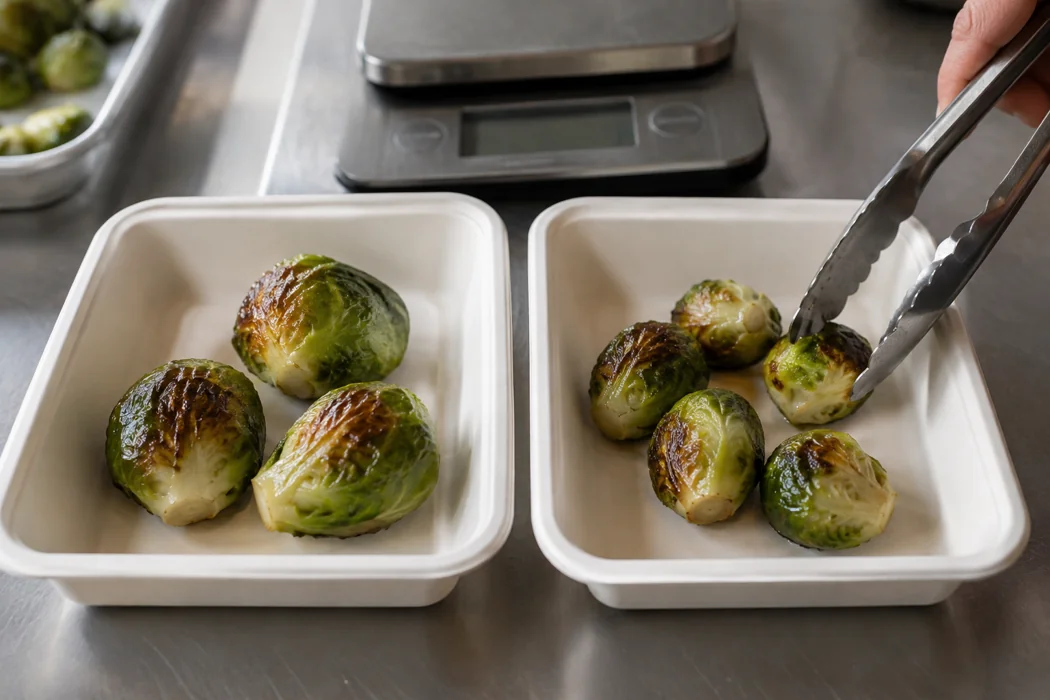
Three larger buds and five smaller buds produce different portion appearances; actual weights must be measured.
A simple development calculation can expose the tradeoff. Suppose a trial portion contains 60 grams of Brussels sprouts. Six heads averaging 10 grams and three heads averaging 20 grams both reach that target mathematically, but their visual balance and center-heating behavior differ. These figures are illustrative, not a product specification. Weigh the actual sample and use its observed count distribution when deciding what the finished portion should look like.
Include detached leaves and fragments in the analysis. They may contribute weight without contributing a complete recognizable bud. If they settle toward the end of a bag, the final trays can differ from the first trays even when each portion has the same total weight. Sample early, middle and late output from the normal feeding or hand-portioning method. Keep the results linked to the bag or case used in the trial.
Whole and halved forms also require different portion language. Halves can spread more evenly and expose a shorter path to the center, but they create cut surfaces and potentially more loose material. Two halves are not necessarily equivalent to one intact head for presentation or handling. If the production line needs halves, confirm that form and its availability with the supplier or define the controlled cutting step. Do not plan routine knife work on hard-frozen whole buds.
Agree the acceptable portion variation with the meal team and the applicable weight-control requirements. A development team may use piece count as an additional presentation check while controlling weight through its established system. Record the rules for making adjustments and the equipment used. A well-designed ingredient specification reduces the need for operators to choose individual buds by eye to rescue every tray.
Design the tray around water and heat movement
Brussels sprouts contain substantial moisture, and heating can release some of it into the meal. Water may also come from sauce, neighboring vegetables, surface frost or condensation on the lid. When liquid collects beneath the buds, the result can be closer to moist cooking than dry roasting. Examine where that liquid appears and what it does to the surrounding rice, starch or coating.
Its depth, compartment layout, material and lid influence how food is arranged and how moisture remains around it. A shallow layer of buds behaves differently from a crowded mound. If the meal promises a roasted character but is reheated under a sealed or partially vented cover, assess the realistic final texture. Browning achieved before packing does not guarantee crisp leaves after enclosed reheating.
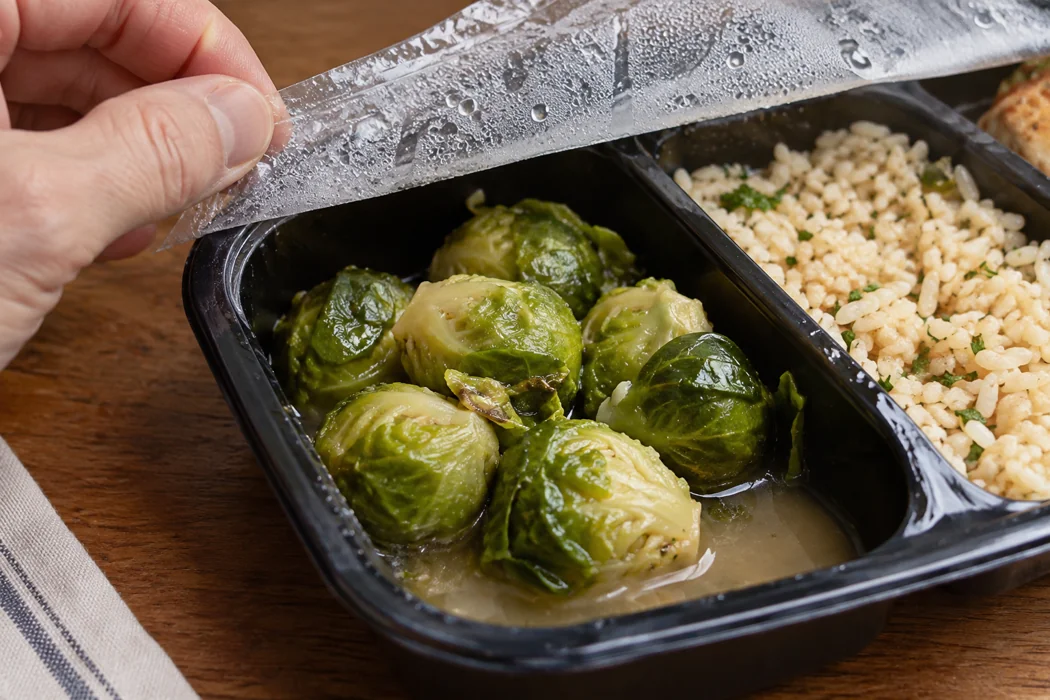
Lid condensation and pooled liquid can change the vegetable compartment and neighboring food.
Observe the complete serving after the required standing period. Condensation may redistribute as the tray cools slightly, and liquid can move when the customer peels the film or carries the meal. A sample judged immediately after leaving the appliance may therefore miss a problem that appears at the table. Record visible pooled liquid, sauce thinning, wet starch and any loss of leaf structure at the actual eating point.
Sauce placement deserves a separate trial. Coating the buds can improve flavor distribution, but a heavy sauce can hide color and change the surface conditions during reheating. A sauce held in an adjacent compartment may preserve more distinct texture while requiring the customer to combine the components. Test the intended serving action. Assess the sauce and the sprout together, since a pleasant vegetable can still produce an unsatisfactory mouthful when paired with a diluted or overly intense sauce.
For an oven-finished meal, exposed surface area and tray loading influence browning and drying. For a microwave meal, geometry, food composition and the distribution of components can affect heating patterns. The same nominal total weight does not guarantee the same result when the vegetable portion moves to another location in the tray. Keep placement consistent during development and include realistic assembly variation in validation.
Changes should have an identifiable purpose. If the first trial leaves excessive liquid, compare a controlled preparation or draining adjustment while keeping the tray and portion constant. If the outside dries before the center is acceptable, assess size, load and the approved heating route. Adding more sauce or extending the timer may conceal one symptom while worsening another. Record the change and the resulting whole-meal observation so the next decision follows evidence.
Validate reheating on the assembled meal
Reheating instructions need to work for the complete product in its intended appliances. A successful test of loose sprouts on a plate does not establish an instruction for a frozen tray with multiple components. The responsible food technical team should define validation conditions, including the starting temperature, fill weight, component placement, packaging, appliance range and measurement method. Include the ordinary upper end of the sprout size distribution.
A tender leaf or browned surface cannot prove the coldest region of a meal has reached the required condition. Conversely, a meal can meet a safety endpoint while the sprouts are too soft for the intended eating quality. Measure the required thermal conditions using suitable equipment, then assess the sensory result at the designated serving time. Both findings belong in the approval record.
FoodSafety.gov's preparation guidance emphasizes following package directions and standing instructions for microwave foods. For household leftovers, U.S. guidance uses 74°C or 165°F and calls for checking temperature; it also recognizes the importance of even heating. That household reference is not a complete industrial validation protocol. Commercial instructions must reflect the actual meal, process and market requirements established by the responsible team.
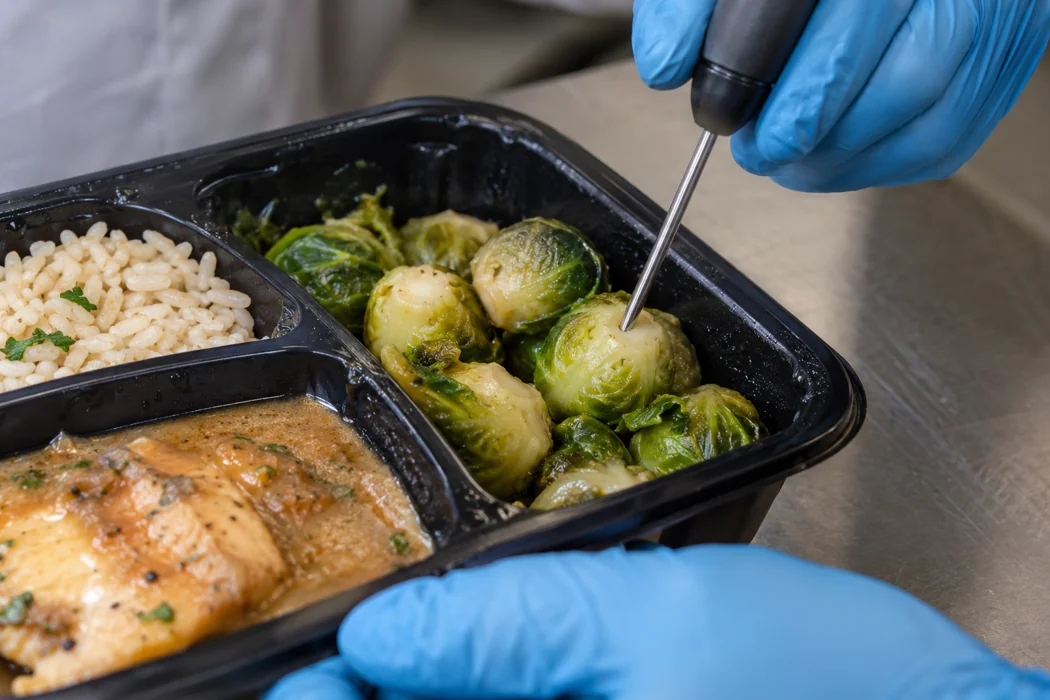
Place the probe tip in the region being assessed, including the center of a large whole bud.
Probe placement matters for a dense whole bud. Insert the sensing tip into the region being assessed rather than resting it against the hot surface or tray. Check the appropriate locations across the meal according to the validation method. A single convenient reading from a hot sauce pocket can miss a cooler vegetable center. Use clean, suitable probes and record their calibration or verification status within the established quality system.
Microwave power ratings and real appliance performance also need attention. A direction developed for one appliance cannot be assumed to cover every lower-powered unit without testing. Instructions to stir, rotate, vent or stand must be feasible for the actual packaging and meal. If a divided tray cannot be stirred as a mixed bowl can, the validation should reflect that limitation. Avoid giving customers an action that the package design makes impractical.
Preserve the link between validated instructions and the approved configuration. Changing the Brussels sprout size band, vegetable quantity, sauce formulation, tray depth or distribution route may affect the result. Have the technical team assess the need for revalidation before the change reaches routine production. A clear change record prevents a later team from applying an old timer to a materially different meal simply because the product name stayed the same.
Judge texture at the time the customer eats
Whole Brussels sprouts should have an eating texture appropriate to the meal. A green vegetable side may call for a tender center with enough leaf structure to remain recognizable. A casserole can tolerate a softer bite, while a product marketed around roasted edges needs a more demanding sensory trial. Define the desired result in ordinary descriptive language and support it with a reference sample prepared through the actual process.
Evaluate the outer leaves and the center separately before judging the whole bite. A sprout can have soft leaves surrounding a firm core, or it can collapse throughout. Compare several buds across the size range and across different trays. If only the smallest heads meet the target, the size distribution or process needs further work. An attractive middle-sized sample should not be the sole basis for approval.
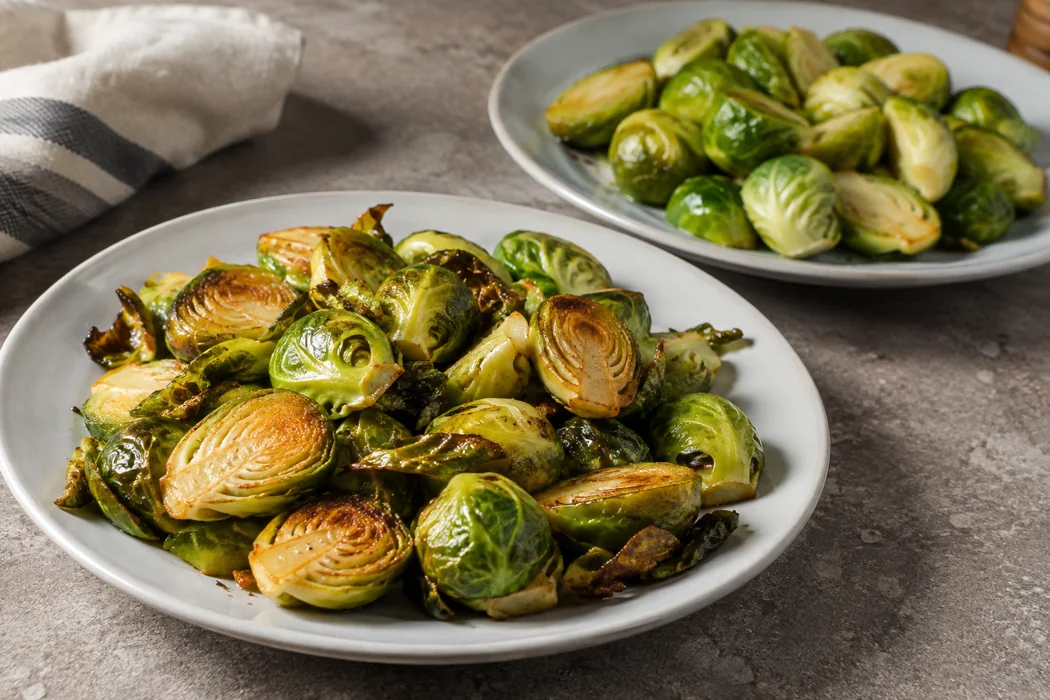
Dry browned surfaces and moist softened leaves represent different texture expectations.
Include the interval between heating and eating. A meal may stand according to its instructions, travel from a kitchen to a service counter, or wait briefly after opening. During that interval the texture and aroma can change. Test the realistic service window within the approved handling controls. For a catered meal, also assess the actual hot-holding arrangement established by the foodservice operation rather than substituting a room-temperature wait.
Roasted character needs careful language. Golden color and toasted flavor can remain useful even when crispness decreases under a lid. A microwave meal can therefore have a pleasant roasted note without delivering the same dry crunch as freshly roasted halves. Describe and approve the result the customer will receive. The guide to freezing roasted vegetables offers broader context on why storage and reheating alter the texture of cooked vegetables.
Observe aroma when the lid is opened and again during eating. Brussels sprouts naturally have a cabbage-like character, and prolonged heating can make sulfur notes more prominent. Use consistent serving temperature, portion and exposure time when comparing trials. Avoid judging one sample while it is very hot and another after it has cooled substantially. A controlled comparison is more informative than a strong first impression taken under different conditions.
Agree who participates in acceptance. Development staff, quality staff and the customer-facing team may notice different aspects of the meal. Use a small, repeatable set of descriptors such as center tenderness, leaf integrity, liquid release, color and aroma. Record comments in those terms before discussing overall preference. This makes a disagreement easier to resolve because the team can see whether it concerns appearance, texture, flavor or an unsuitable service expectation.
Investigate variation without changing every variable
When successive trials differ, begin with the records that define the test. Confirm the ingredient lot, size distribution, portion, starting state, tray and heating conditions. A change in any one of these can alter the result. If the records are incomplete, repeat a controlled trial before attributing the difference to the supplier. The aim is to identify a reproducible cause that can be addressed in a specification or process setting.
Incoming size variation is a useful first check because it is visible and measurable. Spread representative heads from the relevant bags and compare the distribution. The real product photographs shown here illustrate how whole heads can vary in size and visible leaf arrangement. They do not quantify a commercial lot. Use the actual retained sample and the agreed measurement method when investigating why some portions had larger or firmer centers.
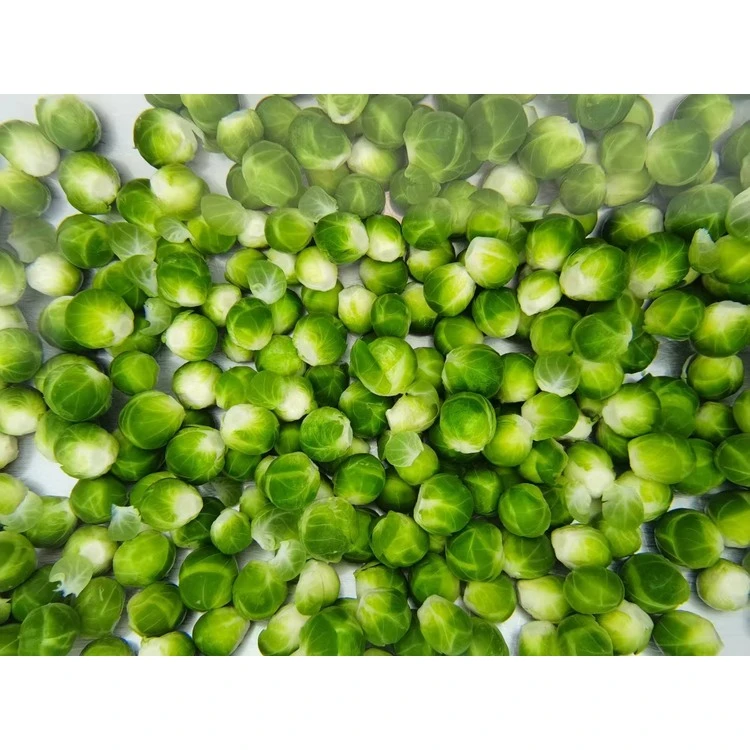
Incoming head-size variation can affect piece count and the tenderness of the final portion.
If portions contain more fragments near the end of a run, inspect how the bag empties and how the feeder handles loose leaves. A bag-wide loose-material result may be acceptable while individual trays vary noticeably. Compare output at different points in the run. Consider whether the receiving specification, handling method or portioning equipment needs adjustment, and verify the proposed change using the same portion and inspection method.
For unexpected water release, review both the ingredient and the assembly conditions. Surface frost, additional liquid, draining, sauce quantity and storage history may contribute. Measure the visible outcome consistently, using a defined time and temperature after preparation. Do not infer a thawing event solely from a wet tray, and do not dismiss a possible cold-chain problem because a later temperature reading is low. Relevant records and product observations should be reviewed together.
If flavor differs while size and preparation appear stable, compare plain prepared samples before adding the meal sauce. This can help determine whether the variation follows the vegetable or the formulation. Then test the complete dish again. A change in seasoning may alter perceived bitterness or saltiness without correcting a textural issue. Keep one major variable fixed while evaluating another so that the result has a clear interpretation.
Escalate uncertain safety or identity findings through the established quality procedure. Keep affected lots identified and preserve the evidence needed for review. For commercial quality complaints, send a concise record containing the lot, quantities, photographs, portion results and preparation conditions. We can use that information to discuss the relevant supply specification and sample comparison. A claim that the sprouts are inconsistent becomes actionable when the observed difference and test conditions are clear.
Approve repeat supply against a complete meal trial
The final ingredient approval should describe the meal application sufficiently for a repeat order to remain meaningful. Record the whole-bud or other agreed form, size range, processing status, loose-leaf allowance and the quality attributes that affect the final portion. Retain the complete trial configuration, including portion weight, piece count observations, tray, sauce placement and the approved heating instruction version.
Keep raw ingredient acceptance and final meal approval connected. The supplier controls the agreed incoming specification; the meal manufacturer controls assembly and the validated preparation route. A shared reference helps both teams understand how the ingredient contributes to the finished result. It also helps avoid a specification that demands extreme visual uniformity while leaving the actual reheat performance undefined.
Sample selection should represent ordinary supply. Ask for the lot identity and relevant specification with the qualification sample, then compare subsequent deliveries through the agreed receiving plan. A deliberately selected handful of ideal buds is a weak predictor of automatic portioning. If the application has a narrow acceptable size or texture range, discuss that requirement before the commercial order so availability, yield and price can be assessed honestly.
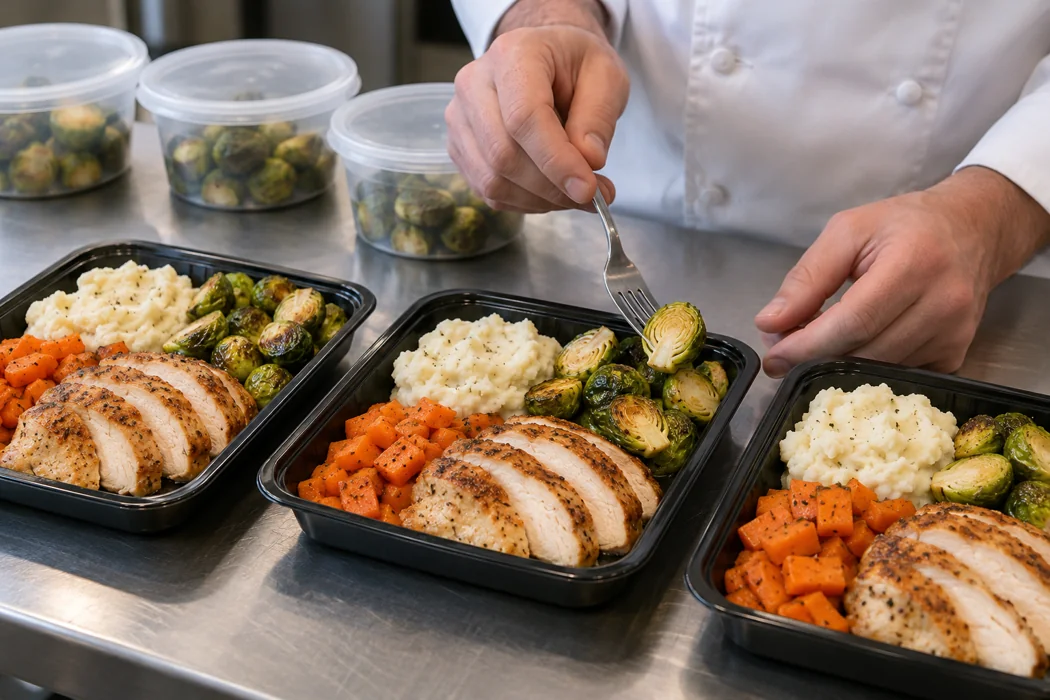
Evaluate the sprout in the assembled meal after its intended preparation.
Confirm packing around the line's needs. Inner-bag size, carton weight and the way operators open and empty packs can influence handling frequency and portion consistency. The preferred packing should support the approved process and cold-chain controls. Review case marks, lot identification, storage instructions and the requested shipment documents at the same time. These details allow a receiving team to connect the ingredient on the line with its approval record.
We quote frozen Brussels sprouts after reviewing the required form, application, packing, quantity, destination and schedule. Requested reports and private-label requirements need a defined scope, and any alternative form needs availability confirmation. For a new prepared meal, sharing the final serving target and the observed trial issues is often more useful than sending only a photograph of the unopened ingredient bag.
Retain enough development evidence to evaluate later changes. A new sauce, larger serving, different tray supplier or revised appliance instruction can affect a previously accepted vegetable component. Have the responsible team review those changes before routine use. Repeat supply becomes more dependable when the ingredient specification and the complete meal trial describe the same finished experience, from the number of buds in the tray to the tenderness of the last bite.
Continue reading
Understand how dense pieces, basket loading and surface moisture affect a hot-air cooking trial.
Explore how the first cooking stage, packing and reheating change the texture of cooked vegetables.
Source frozen Brussels sprouts with GreenLand-food
GreenLand-food is a professional frozen Brussels sprouts supplier and manufacturer in China, providing factory-direct wholesale supply for importers, food manufacturers, foodservice distributors and private-label programs.
Send your required product form, size specification, packing, quantity, application and destination. Include private-label needs and requested documents, together with the preparation method and sample criteria your team needs to evaluate. We will review the available product and commercial details for your inquiry.