


Can You Freeze Chayote? Peeling, Cutting and Texture After Thawing
Oct 19, 2026
Leave a message

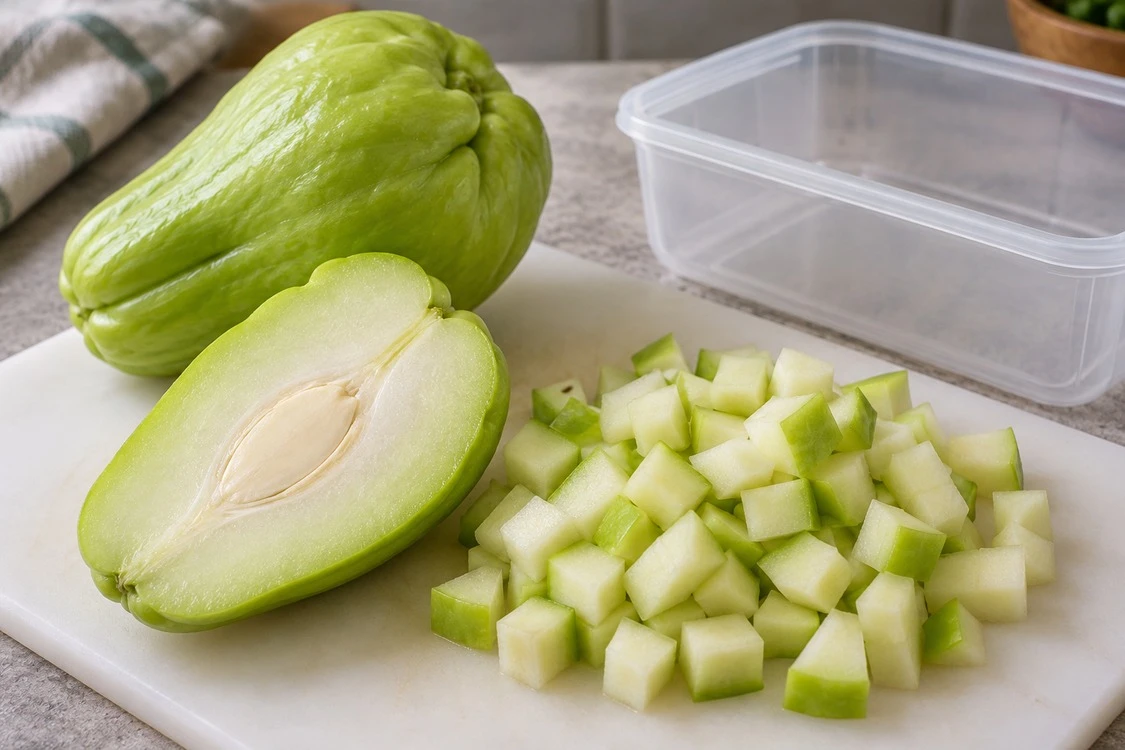
Expect frozen and thawed chayote to behave differently from freshly cut raw fruit. Plan to use it in a cooked dish and judge the result there, rather than expecting thawing to restore fresh crispness. The preparation method, cut, freezing conditions and later cooking all deserve attention. This guide separates the published home method from practical cooking choices and from the evidence needed when buying commercial frozen chayote.
Decide what you expect after thawing
The first useful question is what you want the chayote to do after storage. A soup ingredient, a vegetable component in a curry and a crisp raw salad garnish present different expectations. If the purpose is a cooked dish, a softer bite may be perfectly acceptable. If the purpose depends on the snap of fresh raw chayote, freezing is a less suitable way to preserve that particular eating experience. Decide on the dish before preparing a large quantity.
Freezing changes the conditions inside plant tissue as water becomes ice. The National Center for Home Food Preservation explains that freezing rate and ice-crystal formation affect quality. Thawing does not simply reverse structural changes and return the tissue to its fresh state. This is why a thawed piece can release liquid even when it still looks reasonably intact. Visible water is an observation to manage in cooking, not a reliable standalone diagnosis of what happened during every stage of storage.
Keep three observations separate when trying a small batch: the appearance while frozen, the condition after any thawing step and the bite after cooking. A frozen dice may have clean edges because it is rigid. A thawed dice may retain its outline but feel soft. A cooked piece can still work well in soup while being unsuitable for a presentation that requires firm, distinct cubes. Taking brief notes at each stage gives a much clearer answer than describing the whole batch as good or bad.
A side-by-side kitchen comparison can help set realistic expectations, provided the dishes are prepared fairly. Use some fresh chayote and some from a properly prepared frozen batch in the same intended recipe. Keep the seasoning and serving conditions comparable, but do not insist that both ingredients receive identical cooking times if their starting states differ. The practical question is whether each version can produce an acceptable finished dish. Record the preparation used instead of presenting the comparison as proof of a general freezing effect.
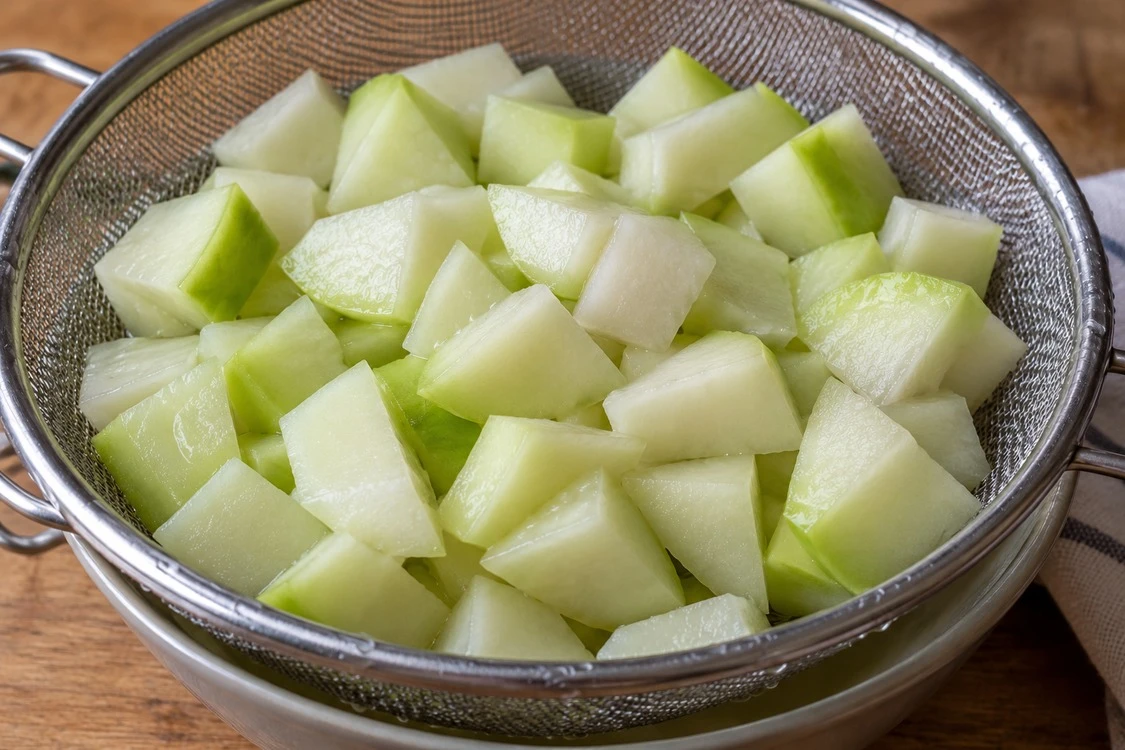
Illustration: Thawed chayote dice with visible surface moisture.
Do not read blanching as a promise of finished tenderness. In a preservation method, the step serves a different purpose from cooking a vegetable until it is ready to eat. The later recipe still needs attention, including heating the complete dish appropriately. Equally, giving the vegetable an extra-long preliminary cook to make it feel safer can make the final texture harder to control. Follow the published preservation method, then evaluate the recipe as a separate operation.
For a household, a trial portion avoids committing an entire crop to an unwanted texture. For a catering or product-development team, a small trial helps decide whether to pursue a commercial frozen ingredient. In either case, write down the intended use in ordinary terms: pale pieces that remain visible in broth, tender strips that mix through a sauce, or small pieces that blend into a filling. That description is a more useful starting point than an unsupported claim that frozen chayote will always stay crunchy.
Choose sound fruit and resolve the peeling question
Begin with sound fruit suitable for the published method. The chayote-specific guidance calls for tender skins. It does not offer a freezing process that turns tough or damaged fruit into a better ingredient. Examine the fruit before cutting and reject deterioration that makes it unsuitable to use. Freezing preserves an ingredient in a different state; it is not a preparation step that repairs poor raw material.
Wash the fruit before cutting, even if another recipe would have you remove the skin. FoodSafety.gov recommends washing produce under plain running water before preparation and advises against soap or produce-cleaning products. Keep the cutting surface and utensils clean, and separate produce preparation from raw meat or other contamination sources. These ordinary kitchen controls still matter when the next step is blanching or freezing. Neither the freezer nor an attractive frozen appearance demonstrates that handling was adequate.
The peeling question is easy to muddle because different instructions address different dishes. Some cookery pages recommend peeling chayote for their recipes. The National Center for Home Food Preservation's home freezing method instead specifies tender-skinned fruit and no paring. These statements need not describe the same product or objective. If you are following that preservation method, retain its stated preparation rather than silently combining a peeling instruction from one recipe with the timing and cut from another.
Skin preference also depends on the later dish. A small skin edge on a dice can look different from a green remnant on a pale, peeled commercial strip. A home cook may accept the first and a prepared-meal buyer may specify removal of the second. Describe that preference accurately. It is an appearance and texture requirement to be evaluated in the application, not evidence that every chayote must be peeled before it can be frozen.
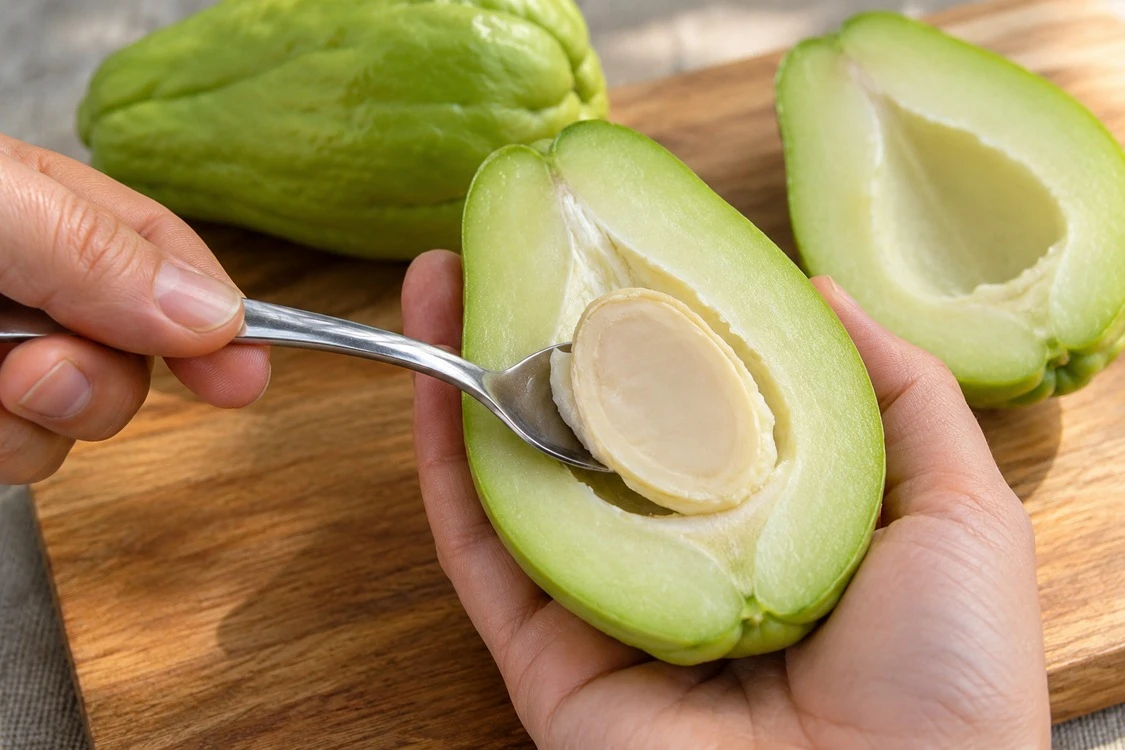
Illustration: A tender-skinned chayote halved before dicing.
Remove the stem and blossom ends as directed, then prepare the fruit so the central seed can be removed during dicing. Chayote has a central seed rather than the multiple wet seed cavities familiar from a cucumber. Do not use a cucumber photograph or a generic squash preparation illustration as a cutting reference. Looking at the actual fruit helps explain why removing its central material is a distinct action from trimming the two ends or taking off the skin.
If peeling is essential to your intended commercial product, state that requirement explicitly when requesting a sample. Ask the supplier to describe the offered preparation and any agreed allowances for visible remnants. Do not use this home method as documentary proof that a supplied peeled strip received a particular industrial process. At GreenLand, we would frame the enquiry around the form you need to buy and the dish it must serve. A domestic preservation instruction can inform the conversation, but the purchasing specification must describe the actual offered ingredient.
Photographs can make these distinctions easier to discuss, provided they are identified correctly. A fresh half-fruit shows the starting material. Prepared dice demonstrate the cut in the home method. A supplier photograph shows the particular commercial form depicted. Keep those roles separate in a sample request so nobody assumes that a photographed strip and a home-prepared cube share dimensions, peeling requirements or processing conditions.
Cut and blanch with chayote-specific guidance
Use the chayote-specific preparation rather than substituting a timing intended for another squash. The published home method calls for dicing after removing the seed and gives a two-minute water blanch. It does not provide a whole-fruit blanching schedule. A time copied from a page about whole or sliced fruit therefore should not be presented as an equivalent version of the official diced method. Differences in form are part of the method, not incidental wording.
Prepare the pieces as consistently as practical. A pile containing large chunks and very small fragments makes even preparation harder and complicates later cooking. The official chayote page does not give a universal commercial dice dimension, so do not invent one and attribute it to that source. If a precise cut is important for your own comparison, record the dimensions you actually prepared and treat them as your trial description, not a published preservation standard.
Set up the hot-water blanching and cooling arrangements before starting. The general National Center for Home Food Preservation instructions explain how to use a basket in vigorously boiling water, restore the boil and then begin timing. That distinction is important because dropping a large quantity of cold vegetable into a small pot changes the water temperature. Two minutes measured from the wrong point is a different operation. Follow the full published directions for water quantity, load and timing when carrying out the method.
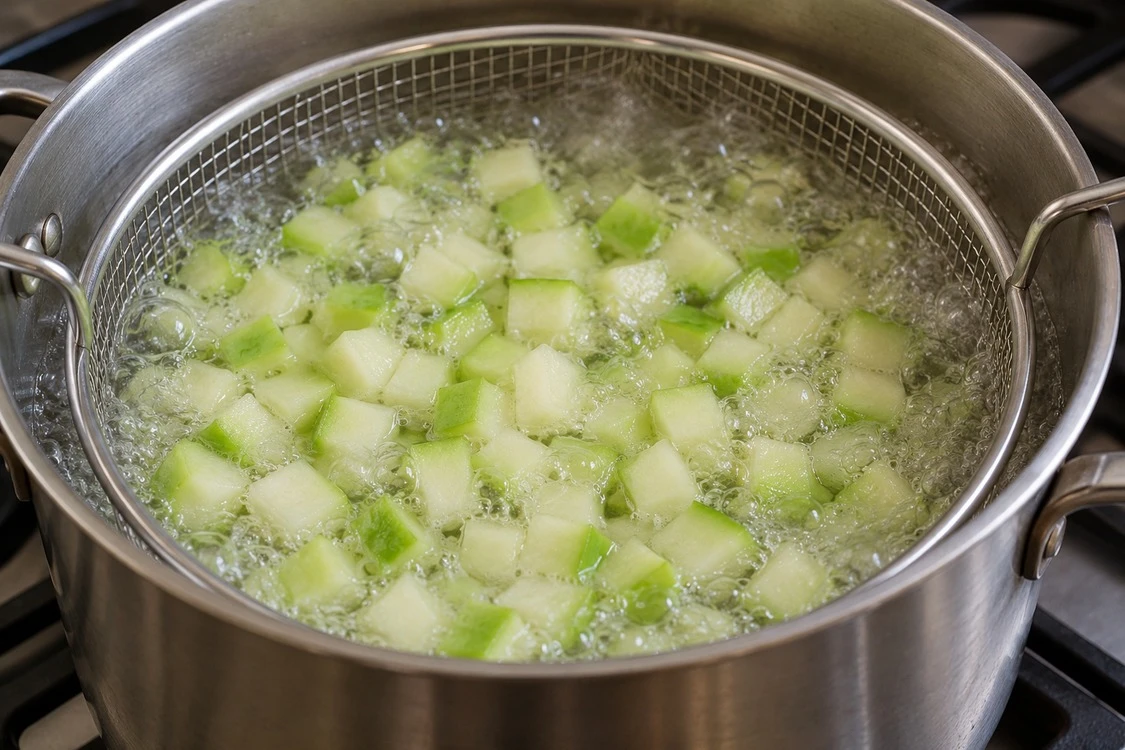
Illustration: Chayote dice immersed in boiling water.
Blanching is intended to control enzyme activity that can impair quality during frozen storage. Too little or too much treatment can both create problems. It is therefore unhelpful to shorten the method simply to preserve a firmer-looking raw surface, or lengthen it casually because the pieces are destined for a freezer. The visible appearance at the end of blanching does not tell you that the underlying preservation purpose has been met. Use the stated method and judge the eventual dish separately.
Avoid adding unverified shortcuts to the instructions. A microwave, steam treatment or pan sauté is not automatically interchangeable with the specified water blanch just because each heats the vegetable. Different equipment and loading change how heat reaches the pieces. If you intend to use another preservation process, look for guidance that actually covers it. For commercial production, the process must be appropriate to the product and operation; the short home recipe is not a validation document for a factory line.
It helps to write a simple record for a first household batch: where the method came from, how the fruit was prepared, when timing began and whether the water returned to a proper boil as directed. This is especially useful if several people are preparing the fruit together. One person may otherwise start a timer when the basket enters the pot while another starts after the water recovers, producing batches that are difficult to compare despite an apparently identical written time.
Once the timed step is complete, move straight to cooling. Leaving the pieces in hot water while searching for a container adds uncontrolled heating. The practical advantage of arranging the whole process beforehand is that the prepared cut, timed blanch and cooling step remain connected. You can then evaluate the stored ingredient without first wondering which batch sat hot on the counter or received a different treatment.
Cool, drain and pack for frozen storage
Cooling and draining are part of the freezing method, not optional tidying after blanching. The chayote instructions call for cooling the blanched pieces, draining them and packaging them with half an inch of headspace. The general blanching guidance explains the need for prompt, thorough cooling in cold water. Read that guidance before starting so the cooling arrangement is ready when the hot step ends. A sink occupied by unwashed produce is a poor place to discover that you still need a clean cooling container.
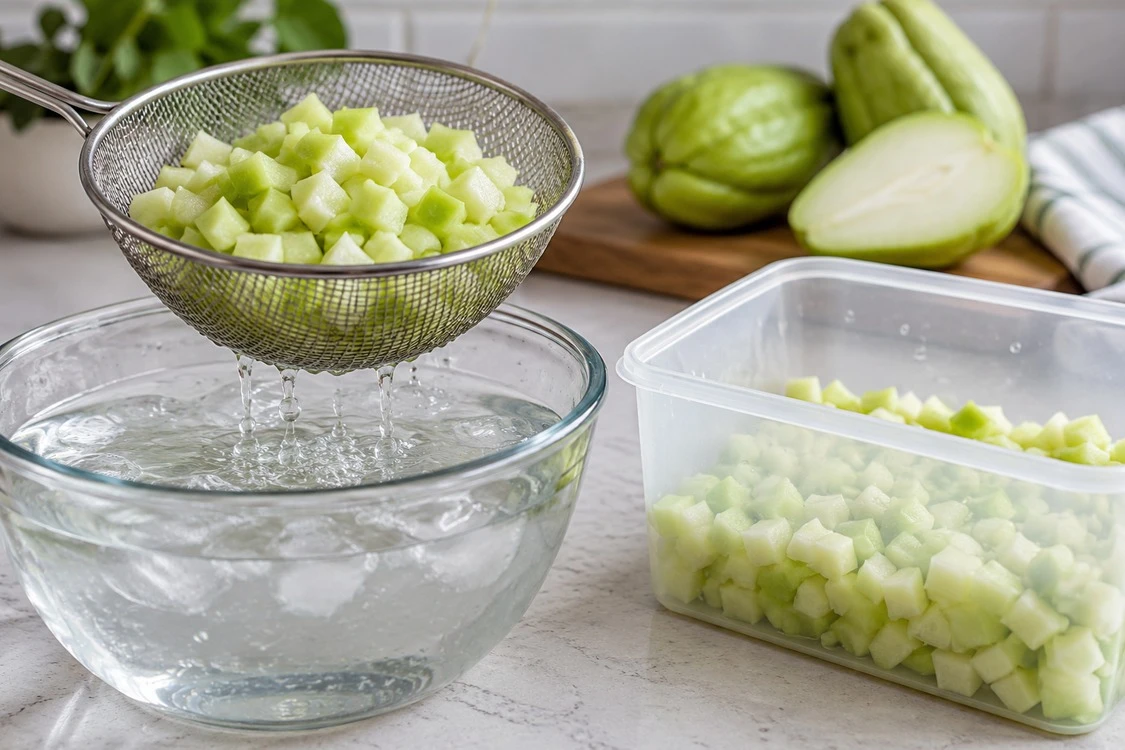
Illustration: Blanched chayote dice cooling before packing.
Use the cooling step to stop continued heating, then drain the pieces well. This is different from leaving them exposed for a long period in the hope that all visible moisture will evaporate. The objective is a properly handled ingredient ready for packaging. Surface water carried unnecessarily into a pack can become additional ice and later liquid, making portioning and cooking less predictable. Draining does not guarantee that thawed chayote will release no water, because moisture can also come from the tissue itself.
Choose packaging suitable for freezer storage and follow the stated headspace instruction. Keep the sealing area clean enough to close properly. A container packed to the rim may be convenient at that moment but no longer follows the published method. Conversely, a very large container holding a small amount may be awkward to store and use. Match the portion to the dish you are likely to prepare so opening one package does not create a repeated need to handle the rest.
Label the batch with the ingredient and preparation date. Including a short description such as diced, skin retained can help if you also freeze other vegetables. When evaluating a trial, record the preparation method separately. A date alone cannot tell you whether the seed was removed, whether the batch was blanched or how it was drained. These are simple household notes, but they prevent confusion when several containers look alike after weeks in the freezer.
Maintain appropriate freezer conditions and avoid overloading the appliance with a large warm load. FoodSafety.gov gives 0°F, or -18°C, as the freezer setting for food safety guidance. That temperature recommendation does not establish a chayote-specific quality life or guarantee the exact texture of every package. Freezer performance, handling and the original preparation still matter. Use the appliance instructions and trusted preservation guidance when planning how much food to freeze at once.
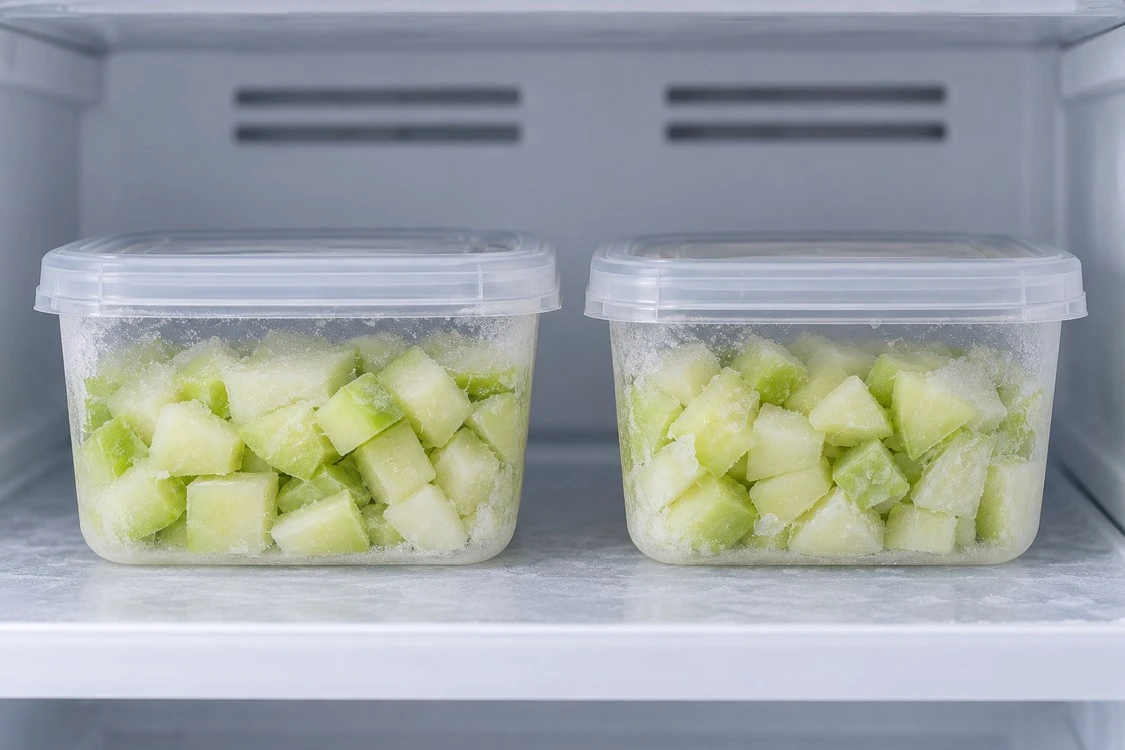
Illustration: Small portions of prepared chayote in sealed freezer containers.
Do not turn a general storage estimate from a recipe blog into a firm expiry promise. A home batch and a commercial frozen product differ in processing, packaging, verification and distribution. For home food, consult the preservation source for storage advice and keep realistic quality expectations. For a commercial ingredient, use the supplier's documented storage conditions and date coding. A photograph of loose frozen pieces cannot establish either product's shelf life.
When you take a package out, look at the condition of the packaging and consider its storage history alongside the food itself. Large ice accumulations or a solid clump can complicate use, but appearance alone does not reconstruct the temperatures the food experienced. If storage conditions are uncertain, seek food-safety guidance appropriate to the event rather than relying on smell or a taste test. Planning portions and maintaining records makes that uncertainty less likely in the first place.
Use thawed or frozen pieces in the intended dish
Decide whether the recipe needs a thawing step. Some cooked dishes can accept prepared frozen vegetables directly, while others require control of released liquid or more predictable handling before mixing. Follow the instructions for the ingredient and the dish rather than treating thawing as a universal requirement. A home-frozen dice and a commercial strip may need different preparation, especially if the commercial product has a specific cooking direction on its package.
For a soup or broth-based dish, liquid released from the vegetable joins an already wet cooking environment. That may be easier to accommodate than in a dry filling, but it still affects seasoning and the ratio of vegetables to broth. Add the chayote with enough time to heat and cook it appropriately, then judge its tenderness in the finished soup. Do not rely on a fresh-fruit recipe's timing as proof that a frozen batch of another cut will behave identically.
For a sauce or filling, pay closer attention to liquid. A loose filling can be difficult to portion even when the chayote itself tastes pleasant. Try the planned preparation with a representative portion and assess the complete mixture at the point where it will be used. If draining is part of your recipe, apply it consistently. Weighing the usable drained portion can help a commercial developer compare recipes, but a number from that trial is specific to the method and sample.
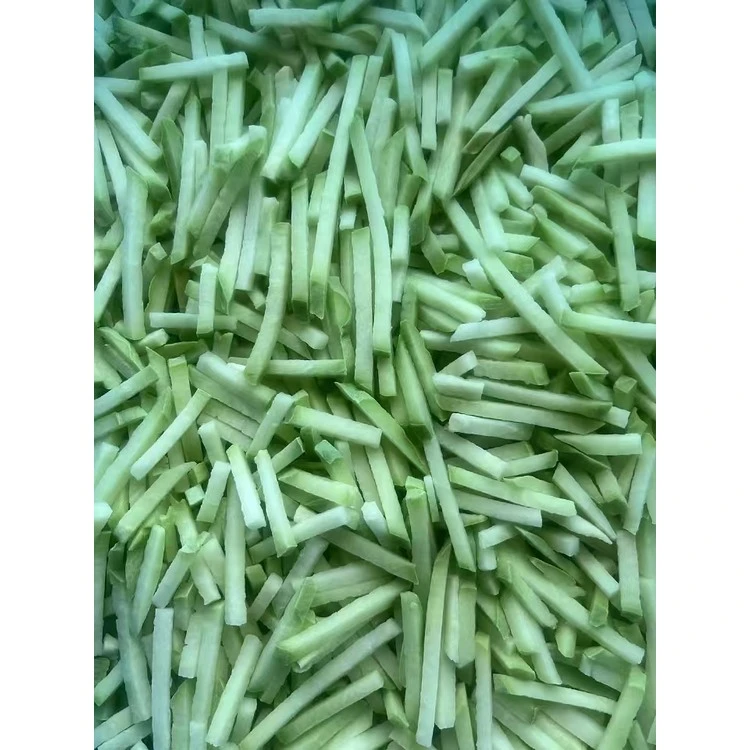
The published sample shows slender strips. A different cut requires its own sample and specification.
A pan dish adds another constraint: the amount of frozen vegetable changes the pan's heating conditions. Crowding can make it harder to drive off moisture and can prolong the period in which pieces sit in liquid. Use a manageable quantity for the pan and judge the endpoint rather than assuming a fixed time applies to every batch size. This is a practical cooking consideration, not a claim that one pan method will restore the fresh crunch lost through freezing.
When thawing is needed, use an appropriate controlled method and follow trusted food-safety guidance. Do not leave a package at room temperature for hours simply because the contents are vegetables. Freezing does not sterilize food. Likewise, thawing in a refrigerator is not a step that makes an ingredient ready to eat when the product is intended to be cooked. Keep the handling instruction and the final cooking requirement clear, especially when preparing a meal for later service.
Taste and inspect the completed dish at the point that matters. A chayote piece sampled immediately from a pan may differ from one held in sauce or reheated with a meal. If the intended use includes another heat cycle, include it in the trial. Note whether pieces stay distinct, whether the skin is noticeable and whether extra liquid changes the sauce. These observations help you change the recipe with a purpose rather than repeatedly adjusting the cooking time without knowing what problem you are solving.
The commercial reference photographs accompanying this section show slender chayote strips. They are useful for discussing an offered ingredient form, but they are not photographs of the home-prepared dice described earlier. Nor do they demonstrate a measured result after thawing or cooking. For a purchasing decision, request a representative sample and assess it through your actual recipe. A product image can establish visible form; it cannot substitute for tasting the finished application.
Compare home preparation with a commercial frozen ingredient
Home freezing answers a preservation question for a household quantity. Commercial frozen chayote sourcing answers a different set of questions about product identity, preparation, consistency, documentation and the buyer's intended use. The two can inform each other, but neither proves the other's process. A successful home batch does not establish the performance of an offered commercial lot, and a tidy supplier photograph does not validate a domestic freezing method.
Start a commercial enquiry with the form. Specify whether you are discussing peeled strips, skin-on dice or another cut for separate review. The current GreenLand chayote reference depicts slender strips. If your recipe needs dice, request confirmation and an appropriate sample rather than assuming that the pictured form can be ordered in any dimension. Cut geometry changes the appearance in a meal, the way pieces mix and the practical cooking trial you need to run.
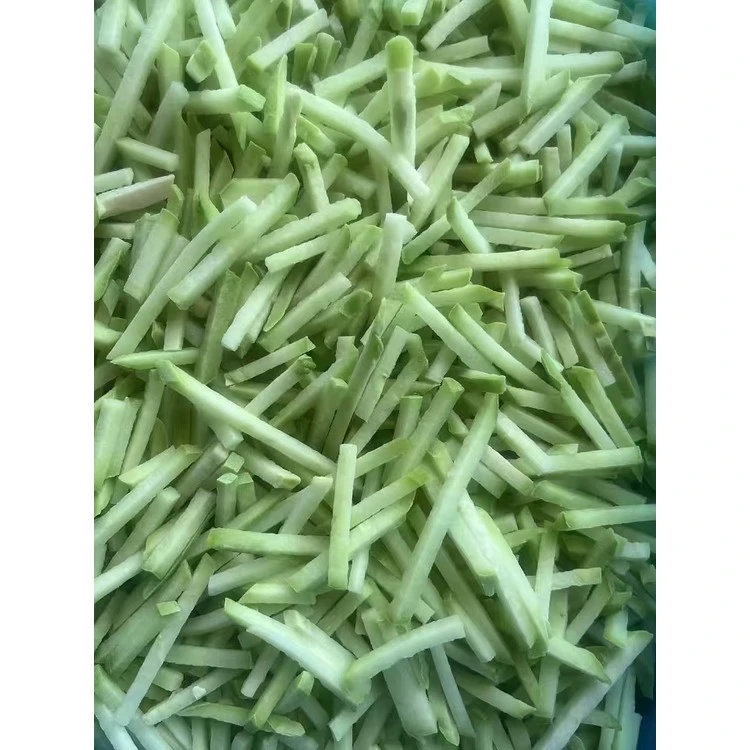
The published sample shows slender strips. A different cut requires its own sample and specification.
Ask how the offered product should be handled and cooked, and which preparation details will appear in the specification. State any peel or central seed-material requirements and how those requirements should be evaluated. Avoid treating the home blanching time in this article as an instruction for the supplier's process. What the buyer needs is a clear description of the actual product, appropriate supporting documents and an agreed sample reference for the intended order.
Evaluate the commercial sample in the complete application. For a simple catering dish, that may mean the actual pan load, sauce and service hold. For a frozen ready meal, it includes assembly and the intended consumer reheating procedure. If you compare the commercial ingredient with a home-prepared sample, label the comparison honestly: you are comparing two ingredient routes in one recipe, with their respective preparation histories. You are not isolating a single scientific variable unless the study was designed to do so.
Separate purchase weight from useful recipe output when costing the options. Home preparation includes trimming, seed removal, blanching, cooling, draining and packing. A commercial ingredient may reduce some preparation work, but the relevant yield and performance still need checking. Record actual usable amounts in your own trial instead of applying a generic saving percentage. Labour, packaging, storage space and the number of handling steps can all matter alongside the quoted ingredient price.
At GreenLand, a useful first discussion starts with the meal you are trying to make and the product description you can accept. Send the target cut, peeling preference, pack format, expected quantity and destination, together with the planned cooking or reheating sequence. That gives us a concrete basis for discussing the available reference and the questions a sample must answer. It is more productive than asking whether frozen chayote is good without defining good for the particular dish.
The decision can then remain simple. Freeze a small home batch using the published method when the purpose is domestic preservation and a cooked use. Request a properly described commercial sample when the purpose is repeat purchasing or product development. In both cases, judge the ingredient after the handling and cooking it will actually experience. The useful outcome is a chayote component that fits its dish, with preparation choices that are clear enough to repeat.
Continue reading
Separate blanching for frozen quality from final cooking.
Understand why thawed and cooked vegetables can become softer.
Compare commercial IQF and block formats before specifying bulk chayote.
Source Frozen Chayote with GreenLand-food
GreenLand-food is a frozen chayote supplier and manufacturer in China supporting factory-direct wholesale enquiries. Share your cut, peeling preference, packing, quantity, application and destination. Include any private-label requirements and requested documents so we can discuss a suitable sample and the information needed for your purchasing specification.