


Frozen Chayote in Ready Meals: Measuring Piece Integrity After Reheating
Oct 19, 2026
Leave a message

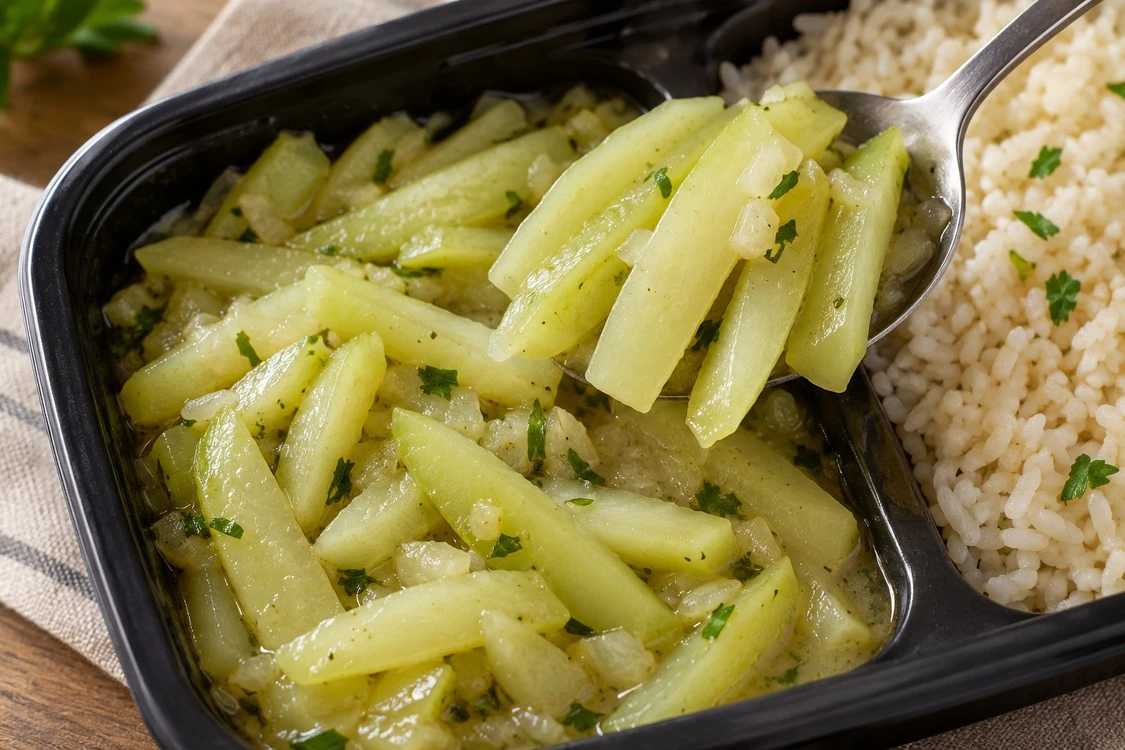
The procedure below is a proposed buyer trial framework. It gives development and quality teams a way to compare chayote samples without inventing a universal pass percentage. The acceptance limit must come from the intended dish, the agreed sample and a repeatable method. No trial results, equipment capability or achieved GreenLand performance are implied. The current product reference is slender chayote strips; another cut needs its own definition and approval.
Define an intact piece at the point of eating
Begin with the piece the consumer is meant to see and eat. For a slender strip, intact might mean a continuous piece that retains the agreed minimum length and recognizable strip outline after the approved serving method. For a separately specified dice, it would require a different shape definition. Write the definition before comparing samples. Otherwise one inspector may accept a shortened strip while another counts it as broken, and the reported percentages will reflect that disagreement.
An intact definition should address edge damage. A strip can have a small chipped corner without losing its functional appearance, while a split along its length may leave two thin fragments that behave differently in a tray. Decide which changes affect the finished meal. Use photographs of agreed examples, taken at a useful scale, to accompany the wording. Keep these examples tied to the selected cut; an image of a large baton should not set the reference for a slender strip.
The point of observation matters just as much. Chayote may look whole inside the tray but break during the normal spooning action used by the consumer. A meal sold for eating directly from its pack may need a different observation from a foodservice dish transferred onto a plate. State whether inspection occurs before serving, after a defined transfer or after another handling step. The trial should reproduce the relevant action without adding an unnecessarily severe treatment.
Keep piece identity separate from tenderness. A strip that bends without breaking can still be intact under a shape definition. Whether that bend is acceptable as eating texture belongs in a separate sensory criterion. Similarly, a firm short fragment may meet a bite target while failing a visual-length requirement. This separation prevents a favorable overall score from hiding a specific failure that matters to a visible vegetable component.
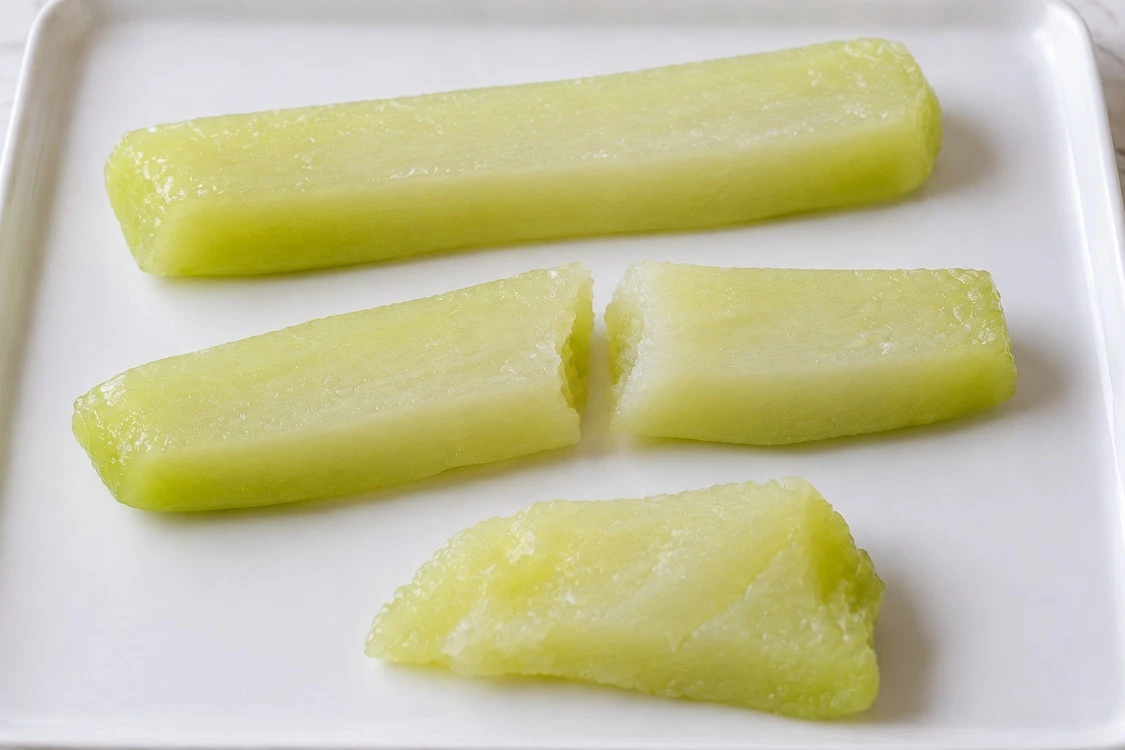
Illustration: An intact cooked chayote strip beside shorter fragments.
Choose a practical observation surface. Light chayote pieces can be difficult to distinguish in a pale creamy sauce, and fragments can disappear among rice grains. A contrasting plain tray helps during an analytical recovery check, while the original meal tray is necessary for the consumer appearance assessment. Both views can be useful, provided they are recorded as different observations. Moving food to a tray changes the presentation and can add handling damage.
For a first development trial, agree a small set of clear categories: intact according to the cut definition, broken or undersized, and unclassifiable material. Describe how to deal with an ambiguous piece before inspecting a full set. Two people can classify a small practice sample independently and discuss disagreements. This is a proposed way to improve consistency, not a formal statistical validation or a substitute for a buyer's established inspection system.
Once the categories are understandable, keep the same reference throughout the comparison. Changing the minimum length after seeing a weak result makes the final figure difficult to interpret. If development shows that the definition is unsuitable for the dish, revise it openly and repeat the relevant comparison. A useful integrity measure describes the product the customer expects, rather than simply producing an attractive percentage.
Keep the ingredient and meal baseline separate
Inspect the incoming frozen chayote before adding it to a meal. Record the lot code, cut description, pack condition, visible clumps, short pieces and any relevant peel or seed material. Use representative sampling under the agreed plan. A handpicked portion of long attractive strips gives a misleading starting point if the normal pack contains a wider range. The baseline should describe what the production process will actually receive.
The frozen ingredient baseline and the final meal observation answer different questions. Incoming broken-piece content shows what was present before the customer's processing. The final result includes ingredient condition, preparation, mixing, packing, storage, reheating and serving. Without the initial observation, a buyer may attribute every short fragment to reheating. Without the final observation, a supplier may approve a visually neat frozen sample that does not suit the finished product.
Do not calculate a survival percentage by dividing two unrelated counts and calling them the same set of pieces. An independently drawn incoming sample and a recovered cooked sample do not contain identical units. They may differ in piece size distribution, mass and recovery. Their results can be reported side by side, but a causal loss calculation requires a design that connects the measurements appropriately. State whether the trial tracks the same pieces or compares independent representative portions.
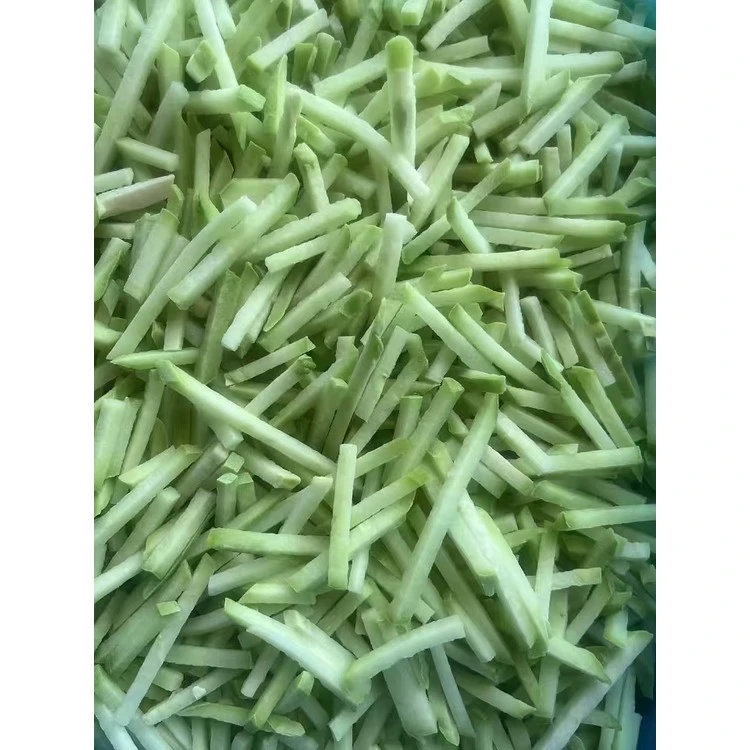
The published sample shows slender strips. A different cut requires its own sample and specification.
A tracked-piece trial can help during method development. Begin with a known set of individually identified or otherwise reliably tracked pieces, apply the defined treatment and assess how many original pieces still qualify as intact. The method must explain how identity is maintained and how missing material is handled. This approach is easier in a small controlled setup than inside a mixed industrial meal, so it should not be described as routine lot acceptance without assessing practicality.
An independent-sample trial is often more feasible for production. Inspect a representative portion before processing, then inspect separately selected finished meals using the same agreed categories where applicable. Report the incoming distribution and the final intact share with their own denominators. This gives the team useful comparative information without pretending that every final fragment can be matched to its original strip. Keep the limitations visible in the report.
Record sample handling before the first measurement. If frozen strips are thawed to make dimension measurement easier, that changes their condition and may affect later observations. Use a separate portion for a destructive or condition-changing test when the main application trial needs frozen material. Follow the actual product instructions for the meal preparation. A measurement convenience should not quietly alter the production route being evaluated.
At GreenLand-food, the useful sample discussion identifies the incoming cut and the customer's finished-meal route together. We can review the proposed specification and the questions raised by an application trial, while any performance statement must be tied to the actual sample and method. A photograph of loose strips establishes a visual reference; it cannot establish a retained-piece percentage after an unperformed reheating cycle.
Reproduce the complete meal and reheating route
Reproduce the assembled meal, including the sauce and other components. Plain chayote heated in water may help isolate an ingredient behavior, but it does not represent a portion surrounded by rice, protein or a thick sauce. Those components change the physical arrangement and the liquid available around the strips. The main approval trial should use the formulation, portion weight and tray geometry intended for sale or service.
Write down every relevant heat and handling stage. The chayote may be incorporated before a factory cook, added to a prepared sauce, filled into a tray, cooled, frozen and later reheated. Another product may follow a different route. Count the actual exposures instead of assuming that frozen ingredient means one cooking event. Keep the production sequence stable during a comparison so a difference between samples can be interpreted.
Control fill depth and distribution. A tray with a mound of vegetables in one corner does not present the same geometry as an even layer. A larger portion can also alter how heat reaches the centre. Record how the chayote is mixed or placed, the amount of surrounding sauce and the pack closure. If the consumer instruction permits stirring, perform it as specified. If it does not, do not add a helpful stir during testing that the customer will never perform.
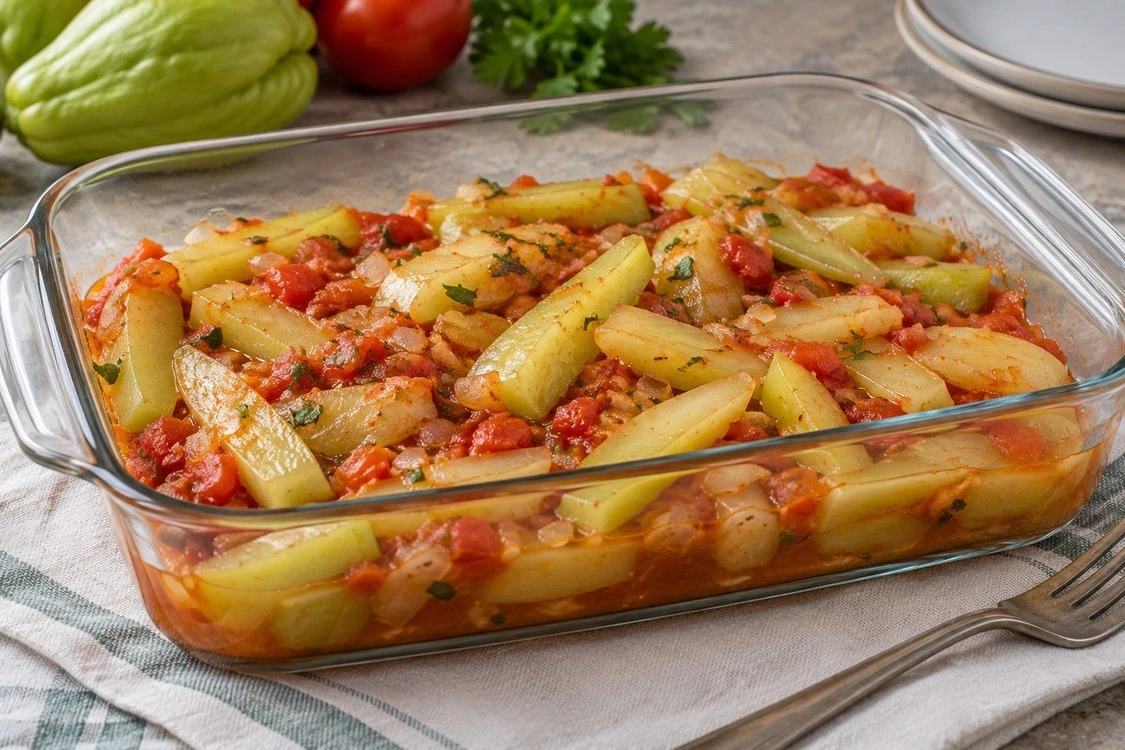
Illustration: Chayote pieces distributed through a shallow meal tray.
Use the intended reheating appliance and its relevant settings. Microwave power, oven mode and vessel suitability are part of the method. Follow the approved instruction, including standing time, and have the responsible food safety team establish the required safe heating performance. FoodSafety.gov explicitly advises following package directions for commercially prepared frozen foods. The integrity trial evaluates quality within that process; it cannot validate microbial safety from appearance or bite.
Storage should represent the development question. An early trial soon after production can screen candidate forms, while a later study may examine performance over the intended shelf life. Do not turn a short successful trial into a shelf-life claim. Keep storage conditions, dates and any transport simulation with the sample identity. If the trial includes temperature variation, define and justify that exposure separately rather than introducing it casually during handling.
Replicate enough independent preparations to understand ordinary variability for the decision at hand. Several spoonfuls from one tray reveal within-tray differences but do not establish variation between production runs. Several trays prepared from one mixed batch still share that batch. Describe the sampling structure plainly: number of batches, trays and observations, with the source lot for each. The design should support the claim being made about repeatability.
Take photographs at consistent points. A useful sequence includes the incoming sample, assembled tray, reheated meal after its standing period and the recovered or served chayote. Use comparable light, camera distance and portion depth. Photographs support interpretation but should not be used to invent precision that the measurement method lacks. Keep the original images with the report so a reviewer can see both normal variation and any ambiguous classifications.
Measure intact pieces with a stated denominator
Choose a measurement that fits the cut and the recovery method. For a recovered meal sample, a mass-based intact share can be practical: mass of recovered chayote qualifying as intact divided by total recovered chayote mass, multiplied by one hundred. Both numerator and denominator must use the same drainage and handling state. Call this the intact share of recovered chayote. It does not automatically measure the percentage of original pieces that survived, because unrecovered material is outside the denominator.
For illustration, if a hypothetical recovered sample contains 80 grams of qualifying intact chayote within 100 grams of total recovered chayote, the intact mass share is 80 percent. These numbers demonstrate arithmetic only; they are not measured GreenLand results or a recommended acceptance threshold. The example remains valid only when both weights refer to chayote measured under the same method. Sauce adhering to one fraction more heavily than another can distort the result.
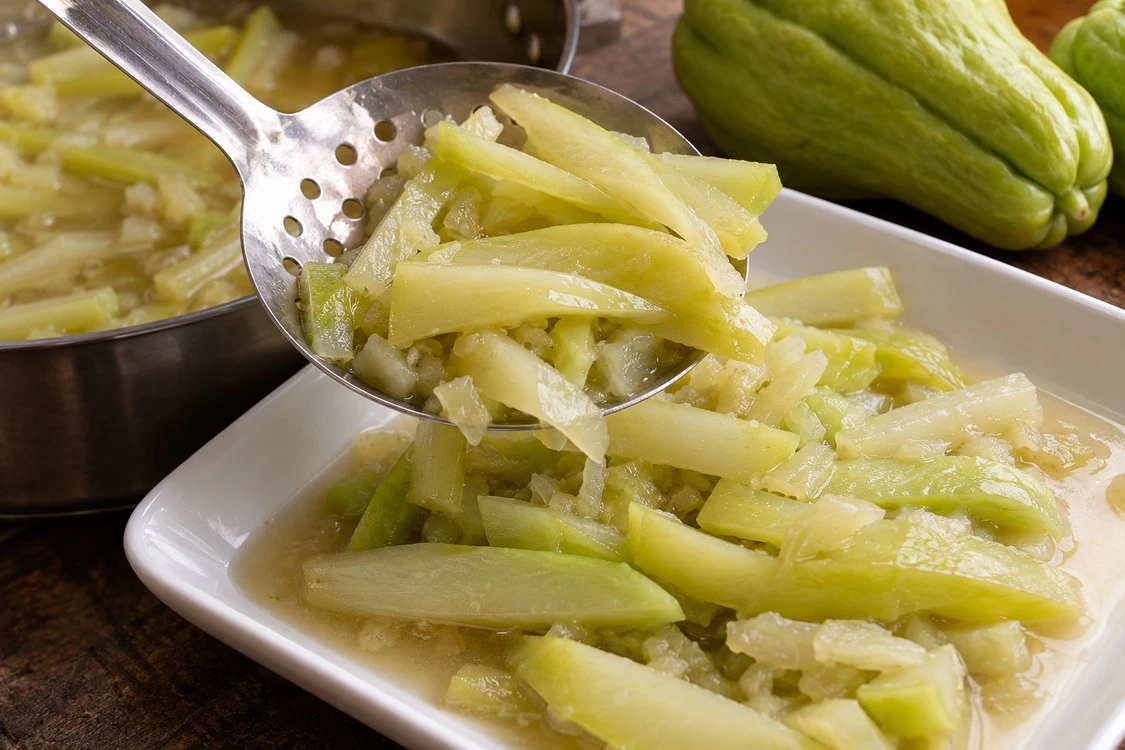
Illustration: Cooked chayote pieces gently recovered from sauce for inspection.
Record recovery completeness alongside that percentage. Small fragments may remain in sauce, adhere to the tray or pass through a sieve. If they are lost during separation, the remaining sample can appear artificially better. A recovery method should retain the size range relevant to the agreed defect definition and minimize added breakage. Keep unresolved residue visible in the report. A high intact share with poor or unknown recovery is weaker evidence than the number alone suggests.
Count-based reporting needs particular care. If one original strip breaks into three fragments, counting all four visible units from a two-strip starting set changes the denominator. The fraction of recovered items classified as intact then describes the final item population, not original-piece survival. That metric may still be useful for a defined appearance question, but it must be named accurately. Do not compare it directly with a mass-based figure or a tracked-piece result.
Where the same original pieces are reliably tracked, original-piece survival can be calculated as the number that still meet the intact definition divided by the original number assessed. State how missing pieces are treated and how a split original is counted. If identification is lost in the meal, the trial cannot honestly provide that measure. Use a method the operation can perform consistently rather than forcing a sophisticated-sounding calculation onto unsuitable observations.
Keep the drainage procedure explicit for mass comparisons. Specify the recovery utensil, drainage duration and whether a gentle standardized rinse is permitted. Rinsing can remove sauce but can also damage tissue or wash away fragments. Blotting can remove different amounts of moisture depending on pressure. Choose and assess the procedure before using its results for approval, then apply it identically to candidates and the reference. Report any deviation that could affect the comparison.
Show raw numerator and denominator values beside the calculated percentage. This makes errors easier to detect and allows reviewers to see the amount of material examined. Retain per-tray results before calculating any average. An average can hide one meal with substantial breakage, which may matter when consumers receive individual trays. The report should preserve enough detail to connect the number back to the actual food and the agreed decision.
Interpret breakage alongside water release and bite
Interpret integrity with the other observations from the same meal. A high intact mass share can coexist with an overly soft bite if the strips remain continuous but lose resistance. Conversely, a meal can contain more short pieces while its overall texture remains acceptable for a spoonable application. Decide which properties are essential to the product promise. A visible vegetable side may place greater value on continuous strips than a mixed filling that will be eaten without seeing individual pieces.
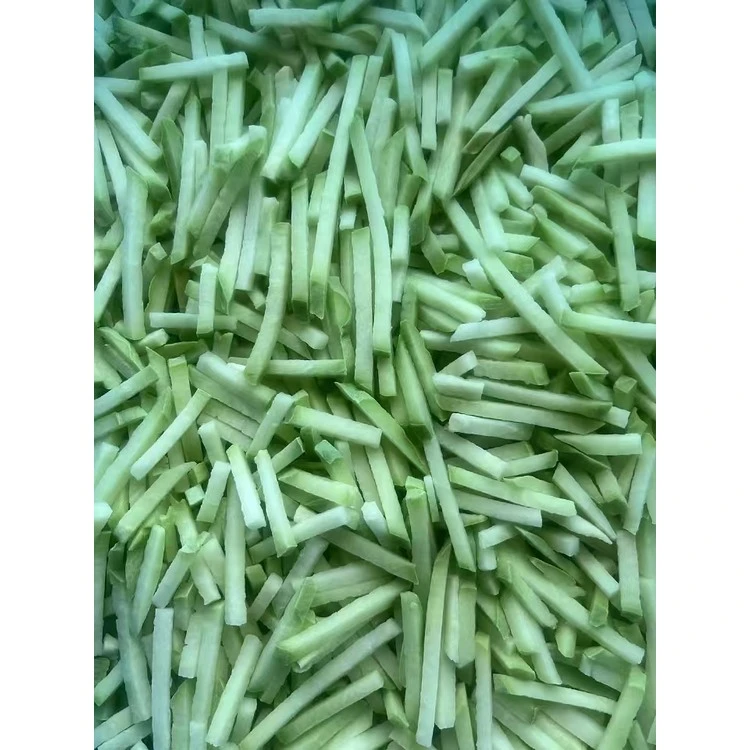
The published sample shows slender strips. A different cut requires its own sample and specification.
Water release is a separate measurement problem. Liquid around a finished tray can come from chayote, other vegetables, sauce changes or condensation. The appearance of pooling does not identify its source. If the team needs to isolate chayote contribution, a controlled ingredient trial can supplement the full-meal assessment. Keep that supplementary result separate from the assembled dish so the report does not attribute every drop of meal liquid to one ingredient.
Sauce can also affect recovery and visual interpretation. A thick coating may hold fragments together or conceal edge damage, while a clear broth makes every short piece visible. Compare candidates in the same formulation and use the same recovery method. If a recipe change improves appearance, record it as a formulation change rather than proof that the ingredient itself became stronger. The distinction helps purchasing understand which part of the result depends on the supplied cut.
When breakage rises between the frozen baseline and the served meal, inspect the process sequence. Mixing, pumping, filling, stirring, reheating and serving can each apply different stresses. A staged development trial can observe after selected operations to locate where the visible change occurs. Choose observation points that answer a specific question rather than measuring every possible step. Avoid claiming a cause from one correlation; repeat the relevant comparison under controlled conditions.
Suppose a hypothetical meal looks acceptable in the tray but shows short chayote fragments after aggressive spooning. A useful follow-up is to compare the normal intended serving action with the observed aggressive action, while keeping ingredient and heating constant. If the difference repeats, the service method becomes a candidate control. This example describes a proposed investigation. It does not establish that all chayote breakage is caused by handling or that a supplier's material is automatically acceptable.
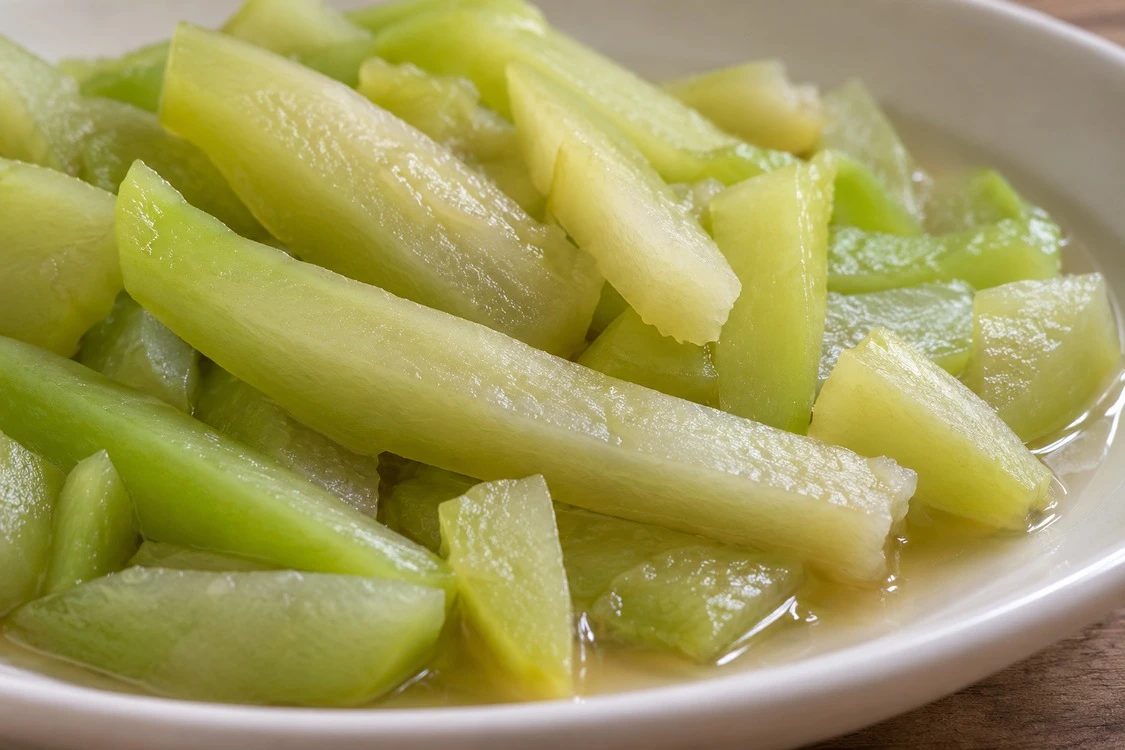
Illustration: Chayote piece edges and surrounding liquid visible at serving.
Use sensory comments to explain the numerical result. Ask assessors to describe bite, fibrous resistance, softness and the ability to lift a piece comfortably. Serve samples under appropriate safe conditions and at a consistent assessment stage. A short agreed vocabulary is usually more useful than elaborate scoring without training. If a formal sensory program is required, use the buyer's validated method and keep the panel conditions with the report.
The final interpretation should state what the evidence supports. A trial may show that one identified cut performs acceptably in one meal and reheating route. It may also reveal that more work is needed on recovery, size uniformity or holding. Keep those limitations attached to the decision. A single successful meal should not become a claim that the product will retain its shape in every sauce, pack, appliance or storage period.
Turn the trial into a repeatable approval rule
Set the acceptance rule after the method and application have been agreed. The rule should identify the product form, the meal route, the intact definition, the measurement basis and the treatment of ambiguous or missing material. Add the sampling and decision procedure appropriate to the business. A percentage without those details is difficult to reproduce and can create a dispute even when both parties inspect honestly.
Use development results to discuss an achievable limit with the supplier and the finished-product team. Consider the appearance the consumer expects, the variability observed across independent trials and the practical precision of the measurement. Do not borrow a threshold from a different vegetable or a fresh-fruit grade. A narrow number can look rigorous while being unsupported by the method. The contract should state which limit was agreed and why that limit is relevant to the intended meal.
Keep the ingredient specification and finished-meal approval linked but distinct. The supplier can be asked to control the incoming cut, peel and seed allowance, broken material and agreed treatment. The meal manufacturer controls its formulation, processing, pack and instructions. Shared application evidence helps connect those responsibilities. It should not erase them by attributing the entire final result to one party without considering the full process.
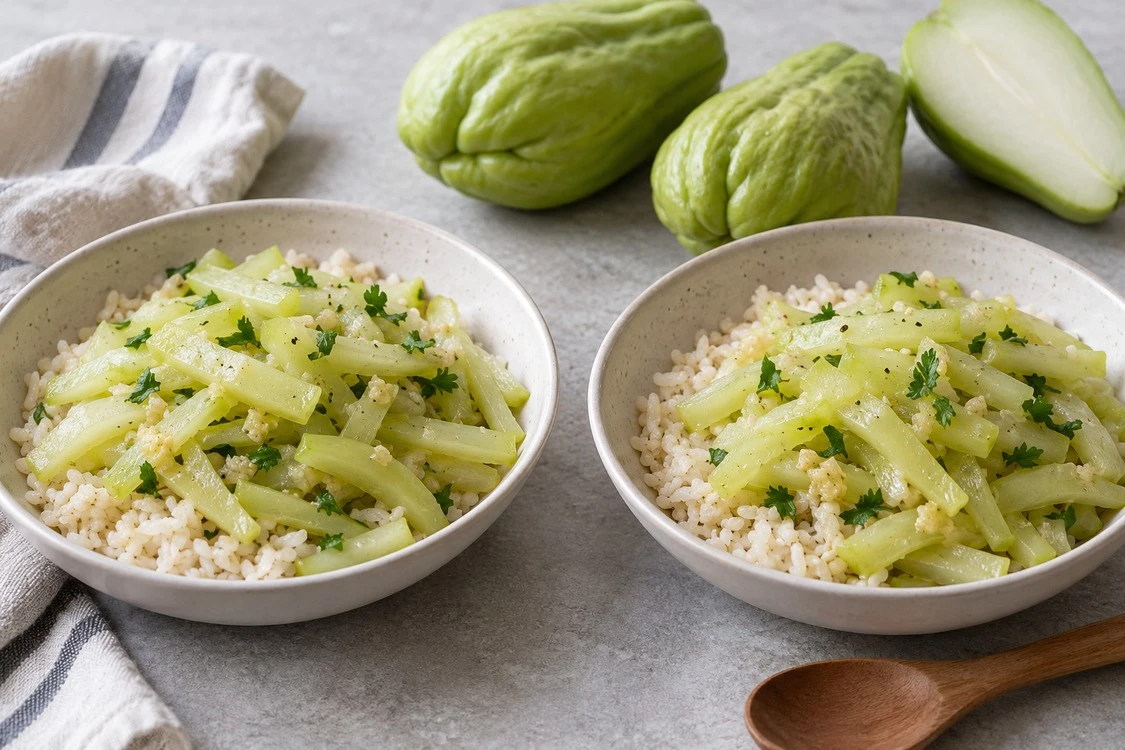
Illustration: Two comparable chayote meal portions for repeat trials.
Retain an approval package that another team can use. It should include the identified sample, specification version, recipe and process version, raw observations, photographs, calculations and decision. Keep the dates and lot references legible. If a later complaint arises, the team can compare like conditions and determine whether the ingredient, recipe, storage or reheating route changed. A polished summary without the raw values is much less useful for that investigation.
Define when a new trial is needed. A change from slender strips to a larger cut, a different meal tray, a thicker sauce or revised microwave instructions can alter the result. Some changes may only require a focused check; others may need a broader reapproval under the customer's quality system. The decision should follow the potential effect on the finished product, with the scope documented. Reusing an old passing percentage without reviewing the changed conditions weakens the approval.
For an inquiry, send us the intended chayote form and the meal in which it will be used. Include the heating sequence, pack geometry, desired visible piece and any existing test method. We can discuss the sample and specification questions with your purchasing team. Order quantity, packing, destination, private-label requirements and requested documents can then be reviewed for the actual supply. Performance commitments need the evidence for that defined arrangement.
A useful integrity result remains understandable after the number is removed: the team can explain which pieces were examined, how they were prepared, what counted as intact and what happened to missing fragments. The percentage then summarizes an observable, repeatable assessment. That is the foundation for a chayote ingredient approval that survives transfer from a development kitchen to routine meal production.
Continue reading
Review moisture and reheating concerns across the complete meal.
Connect the ingredient trial with mixing, dosing and filling.
Document approved performance alongside ingredient and pack requirements.
Source Frozen Chayote with GreenLand-food
GreenLand-food is a frozen chayote supplier and manufacturer in China supporting factory-direct wholesale enquiries for prepared-food applications. Send the product form, specification, packing, quantity, application and destination, plus private-label needs and requested documents. Include your reheating route and proposed integrity method so we can discuss a relevant sample.