


Can You Freeze Guava? Cuts, Seeds and Texture After Thawing
Oct 19, 2026
Leave a message

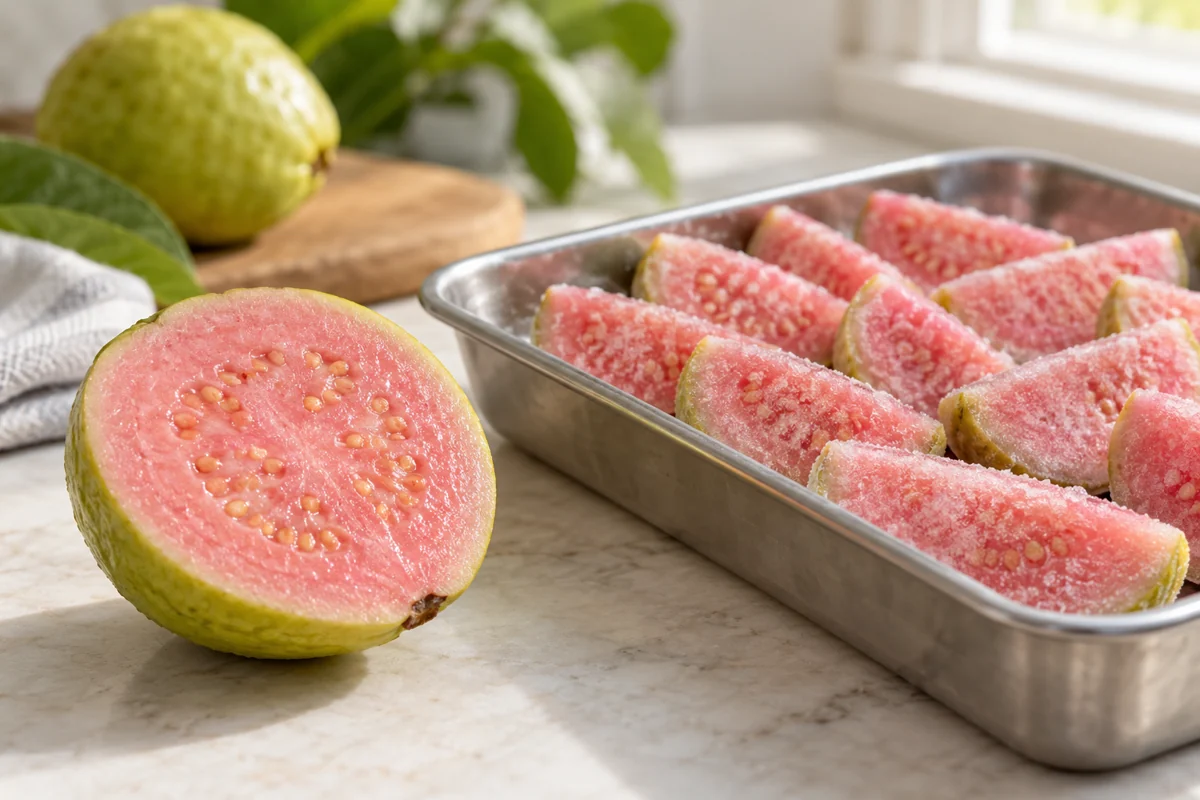
For a processor, the useful question is how that form behaves after storage and during use. A frozen piece that looks attractive in a carton may still need seed separation, and liquid released during thawing may belong in the formula. The checks below connect those practical decisions with a repeatable sample assessment and a clear purchasing specification.
Choose a frozen form for the way you will use guava
Start with the operation that follows storage. If the fruit will be screened into a smooth base, retaining the original wedge shape offers little benefit unless it helps your equipment handle the feed. If recognizable pieces matter in a fruit preparation, their size, peel and condition after processing become more important. Choosing the form first prevents a freezer full of fruit that requires an inconvenient preparation step later.
The National Center for Home Food Preservation provides guava-specific freezing guidance using ripe fruit, peeled halves and a syrup pack, with a link to unsweetened alternatives. That establishes a practical home-preservation route. A commercial unsweetened frozen ingredient is a separate product: its preparation, packaging and intended further processing need to be defined on their own terms.

Original GreenLand product photograph: the current visible form is skin-on pink pieces.
Whole fruit, cut pieces and pulp leave different amounts of work for the user. A whole guava still contains the ends, peel and central seed tissue. Cutting it while solidly frozen is awkward and should not become the expected preparation method. Pieces can be portioned more conveniently if the pack allows separation. Pulp can simplify a blending operation, but its seed, fiber and consistency requirements must already have been agreed.
| Frozen form | Work remaining before use | Main trial question |
|---|---|---|
| Whole fruit | Controlled thawing, trimming, cutting and any separation | Does later preparation justify storing the whole fruit? |
| Skin-on pieces | Peel or seed separation if the application requires it | Can the process accept the actual retained material? |
| Peeled, seed-reduced pieces | Inspection and any further size adjustment | Do the pieces retain an acceptable structure in use? |
| Screened pulp | Portioning and incorporation into the formula | Is the residual particle level and consistency suitable? |
| Fruit in syrup | Account for the packing liquid and added sugar | Does the complete ingredient fit the recipe balance? |
These are preparation options, not a list of GreenLand stock items. Our current frozen guava product page shows pink pieces with retained green peel and central seed material. A request for peeled pieces or screened pulp needs separate confirmation, representative samples and an agreed specification. Treat the photographed form as the starting point for that discussion.
Consider a kitchen that needs a small quantity for several different recipes. Individually separable pieces may be easier to allocate than one large frozen block. A factory that consumes the full package in one batch may value a different pack arrangement. Neither is automatically better: compare the handling route, preparation losses and finished result against the actual production pattern. Include the time needed to open, empty and identify each pack.
Write the intended use beside the form on the sample request. "Frozen pink guava pieces for a cooked fruit preparation, with the peel and seed treatment to be confirmed" is more useful than simply requesting guava. It tells both sides which uncertainty the sample must resolve and keeps attractive appearance from becoming the only selection criterion.
Decide on peel and seeds before freezing
Freezing does not remove guava seeds. When the surrounding flesh softens, hard seeds can remain noticeable in a bite or in a blended preparation. Plan their removal according to the equipment and texture you need. A seed-containing wedge, a spoon-trimmed outer-flesh piece and a screened pulp are different ingredients even when they come from the same fruit and have the same pink color.
Peel treatment is a separate choice. A thin skin may be acceptable in a coarse cooked preparation but visible in a pale smooth base. If you require peeled flesh, assess how much flesh is removed with the peel and whether the remaining piece still suits the intended cut. Avoid using the word "cleaned" to cover both peeling and deseeding; it leaves the most important preparation details unresolved.
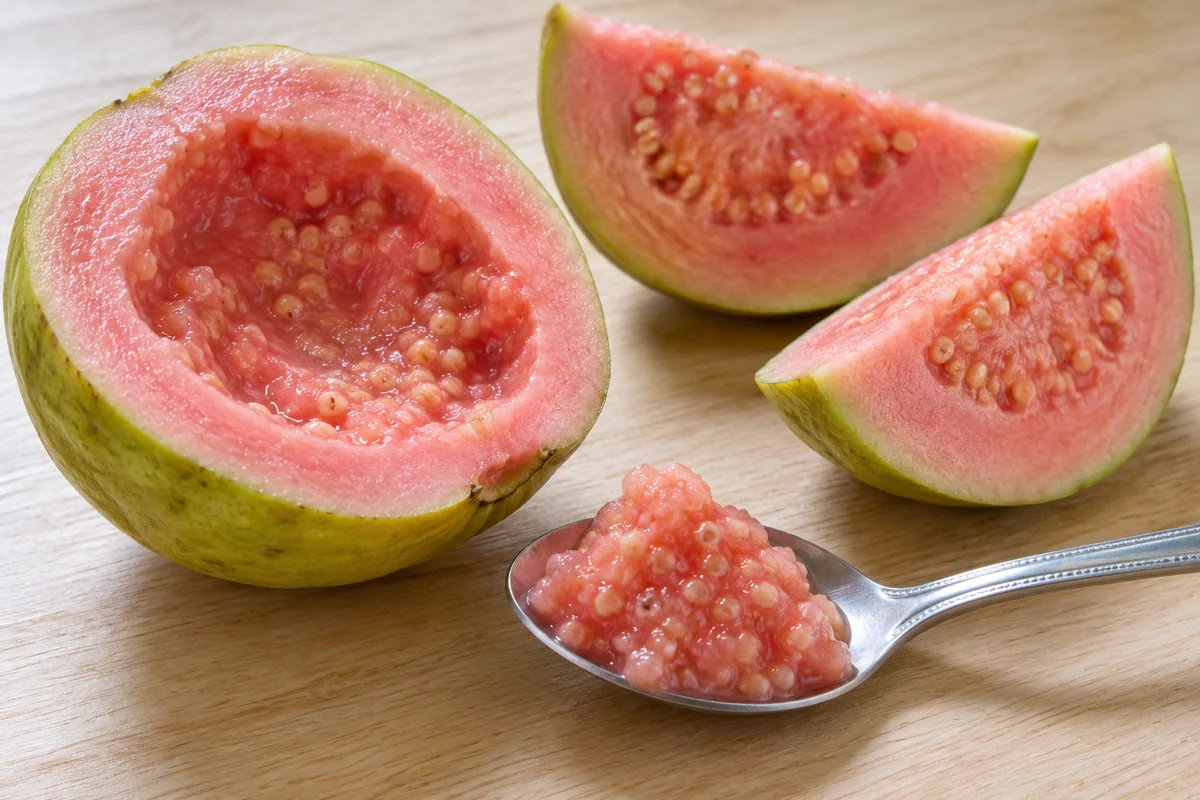
Freezing does not remove the seed-bearing tissue; define its treatment before packing.
For fresh fruit being prepared in a kitchen, wash it before cutting or peeling, work with clean utensils and separate sound fruit from spoiled material. The FDA's produce guidance recommends running water and advises against washing produce with soap or detergent. Commercial washing and sanitation controls need their own operating procedures; a kitchen preparation description does not establish a factory control plan.
Removing the central seedy tissue with a spoon is a useful small-batch option when outer-flesh pieces are wanted. It also takes some flesh with the seeds. Inspect the edge of the remaining cavity, because a quick scoop may leave seeds near the boundary. Make the acceptance decision after inspection rather than assuming that every hollowed half has the same residual-seed condition.
If a smooth pulp is the target, use a suitable separation process. The historical FAO guava-processing description distinguishes pulping from finishing, with the operations removing different unwanted material. Its value here is the distinction between stages. Exact equipment settings, heat treatment and microbiological controls must be established for the current product and facility; they cannot be copied from an old general manual.
Do not expect a blender alone to prove seed removal. A preparation may look smooth while still containing hard particles. Check the output under the same method intended for production, and describe the result in terms that the receiving and production teams can assess. If a residual-seed limit is required, agree the sampling method and the way whole seeds or fragments will be counted or retained on a screen.
Record preparation before freezing so that the later texture trial starts from a known material. Note whether the sample retains peel, whether the central tissue was scooped or screened, and whether water or another ingredient was added. Keep the removed material separate if you are measuring recovery. Otherwise a post-thaw yield figure can silently combine trimming loss, seed separation and liquid release into one number that explains none of them.
The practical benefit is fewer corrections after thawing. Once a batch is soft and wet, inspecting individual pieces and removing small unwanted portions may be more laborious. A preparation decision made early can therefore change both the frozen pack and the work required at the point of use.
Pack pieces or puree for practical portioning
The pack should match the amount you will use at one time. A large block can be suitable when the entire quantity enters a planned process, while smaller portions help when recipes consume only part of the supply. Decide that quantity before filling containers. Repeatedly softening a large package to remove a small amount creates extra handling and makes the remaining stock harder to manage consistently.
For a household tray method, arrange prepared pieces in a single layer, freeze them until firm, then transfer them promptly into suitable freezer packaging. The University of Minnesota Extension freezing guide describes this approach as a way to keep portions separate. A home tray process should not be presented as proof that a product meets an industrial IQF performance specification.
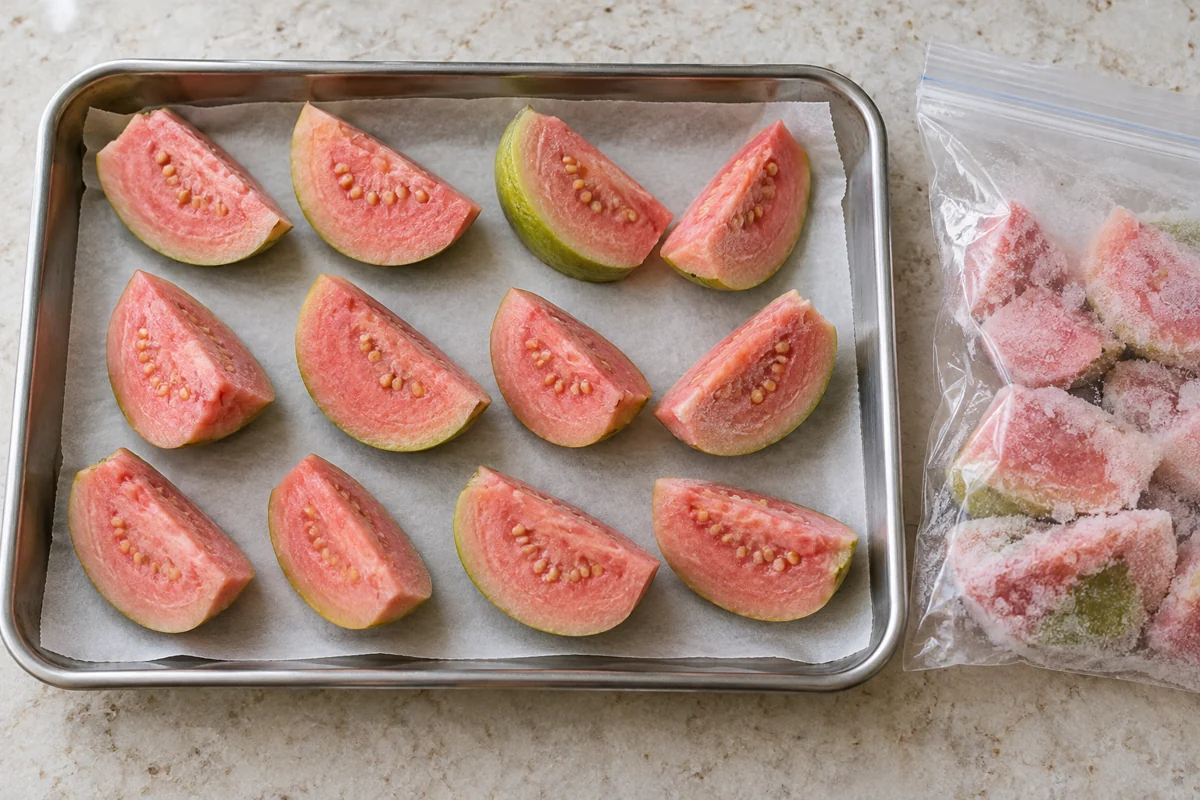
A single-layer tray method helps portioning; industrial freezing performance needs separate evidence.
Take surface water into account after washing. Excess liquid can collect between pieces and form bridges during freezing. Drain the prepared fruit under hygienic conditions, and assess the result after packaging rather than judging only the uncovered tray. Pieces that separate neatly at the first transfer may still clump during later handling if the product warms or liquid redistributes. Record the condition you actually observe.
With pulp, choose containers that can accommodate expansion and provide the headspace required by the container and the preparation method. A very deep portion may also be inconvenient for the equipment that will receive it. Think about the shape that reaches the mixer, not just how many kilograms fit inside the freezer. Confirm how the frozen portion will be released without damaging packaging or introducing fragments.
Keep added ingredients visible in the records. A syrup-packed fruit, a sweetened pulp and an unsweetened cut are not interchangeable by weight. Water added to assist blending also changes the ingredient. Record what was added and on what basis, then include the complete preparation in the formula calculation. Freezing preserves that formulation choice; it does not erase the difference between fruit content and total packed weight.
For a commercial sample, ask for the proposed production packaging when feasible. A small demonstration bag may help with flavor screening, but it does not answer how the ordered carton opens, how the liner empties or whether a full pack can be used without partial thawing. If the sample uses a different package, document the difference and decide which handling checks still need a representative pack.
Label the prepared portion with its identity and preparation date, and keep a separate record of the cut, seed treatment and any additions. A clear label is especially useful when several trials look similar after freezing. It also helps prevent the wrong version from being used in the next application test. A photograph of the packed portion can support the record, although it cannot replace the written identification.
The final pack check is practical: can an operator remove the required quantity using the intended equipment, keep the remaining stock under the specified conditions and identify what is being used? Resolve that question before settling on the largest or cheapest package. The handling step will recur throughout the purchasing program, so a small inconvenience can become a regular production burden.
Expect softer flesh and assess the thawed liquid
Thawed guava should not be judged as though it were freshly cut fruit. Freezing can disrupt fruit tissue, and the resulting flesh may feel softer and release liquid. Minnesota Extension explains the role of ice formation in this texture change. The amount and practical importance of the change still depend on the actual fruit, preparation, freezing history and application; there is no useful universal drip percentage for every guava product.
Look at the whole thawed portion before deciding what is lost. Liquid collected beneath pieces may be undesirable for a topping that must hold its shape, yet useful in a sauce or beverage base. Discarding it automatically changes the material entering the recipe. Keep the liquid if the intended process uses it, and measure it separately if the process removes it. State that choice with the result.
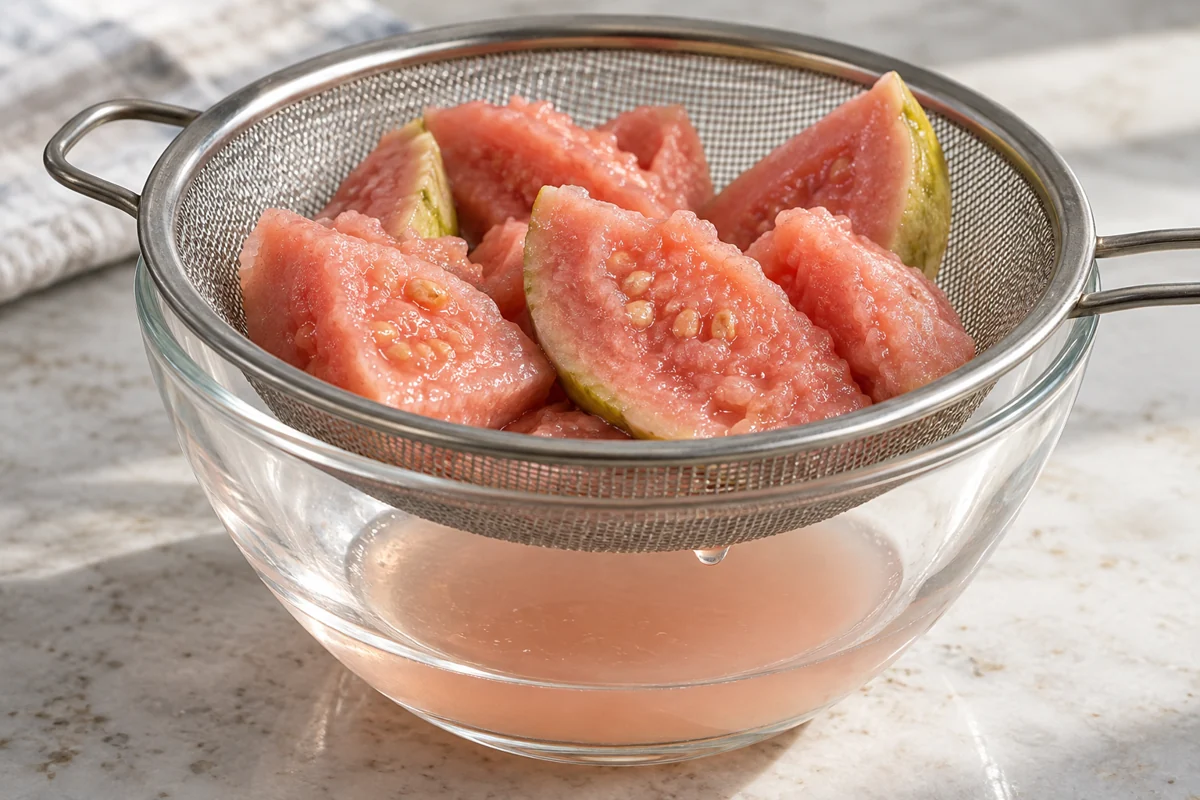
Assess retained pieces and released liquid separately, then decide which material enters the formula.
A simple comparison can begin with equal starting masses from representative samples. Use the same container, thawing conditions, endpoint and handling sequence. If a drain step is part of the test, use the same support, duration and method each time. Pressing one sample and allowing another to drip freely creates a method difference that can be mistaken for a product difference.
Record both the retained pieces and the collected liquid, along with any material left on the container or equipment. A hypothetical trial might start with 1,000 grams and recover 850 grams of pieces plus 140 grams of liquid, leaving 10 grams unaccounted for on surfaces or during handling. Those figures illustrate a mass balance only; they are not a guava benchmark or a GreenLand performance claim.
In that example, a process using only drained pieces has a different usable output from one incorporating both pieces and liquid. The first would assess the retained fraction against its needs. The second would ask whether the complete recovered material produces the required consistency and flavor. Calling all liquid "waste" before answering that question can distort both the formulation trial and the cost comparison.
Texture deserves more than a single description such as mushy. Note whether pieces can be lifted, whether edges break during gentle mixing, whether peel separates from flesh and whether hard particles remain noticeable. Use the same handling action for every sample. A piece that survives careful transfer may still disintegrate during the production mixing step, so both observations can be relevant without contradicting one another.
Evaluate color and aroma after the agreed thawing and application process as well. Frost can mask the surface appearance of a frozen piece, and a refrigerated sample will not present exactly like a warm fruit preparation. Keep lighting and serving conditions consistent when comparing samples. Photographs help document visible differences, but they should carry the sample identity and test conditions so that later reviewers know what they are seeing.
Set a quality limit only after connecting these observations to the intended use. An arbitrary low-drip target can reject material that works well in a complete-pulp process. A generous texture description can also accept pieces that fail in a visible-fruit application. The useful limit describes the performance the product actually needs.
Thaw only the amount your process can use
Choose the starting state deliberately. Some operations can accept frozen pieces directly; others need a controlled thaw before separation, weighing or mixing. Follow the product instructions and the validated process for the intended use. A frozen ingredient is not automatically ready to eat, and a preparation image or attractive sample does not establish its microbiological suitability for a cold-served product.
For household handling, refrigerator thawing provides a controlled route. The USDA freezing and food-safety guidance recommends a refrigerator at 40°F or below and a freezer at 0°F or below. It also explains that freezing does not reliably eliminate microorganisms. Plan thawing around the portion and keep the fruit protected from contamination while it changes state.
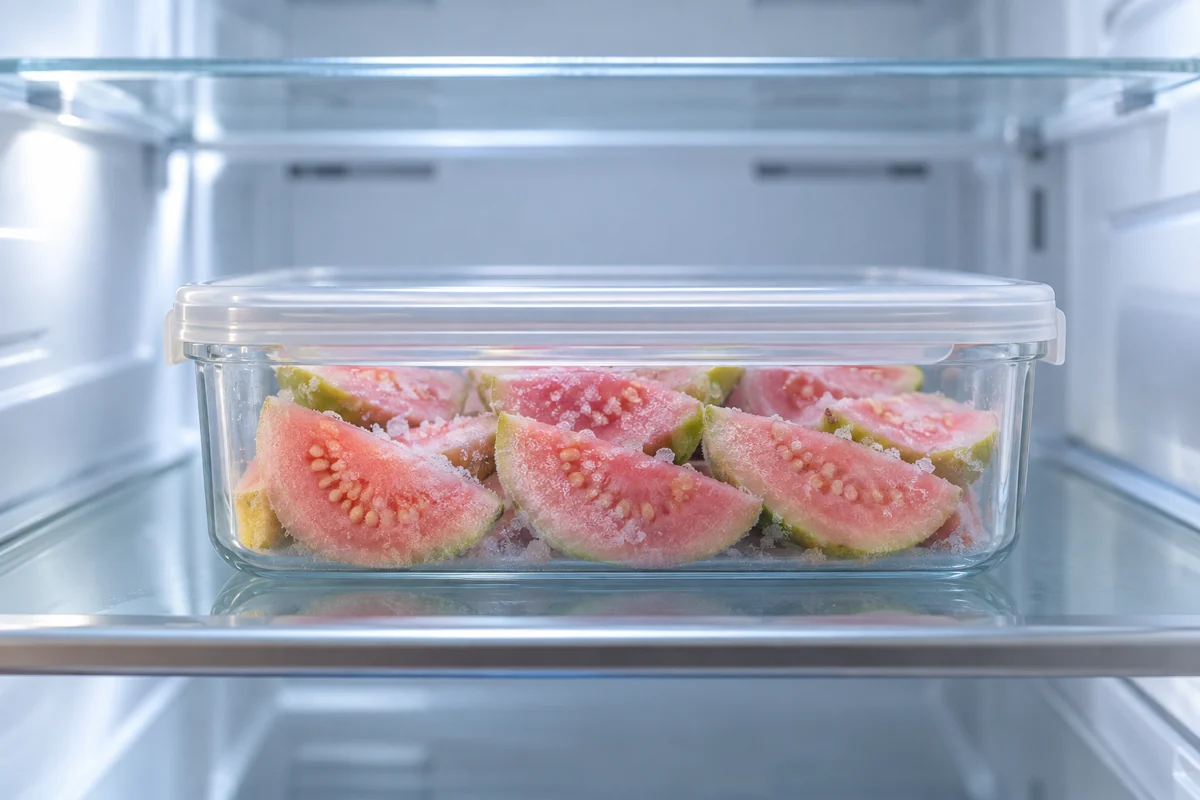
Plan a controlled thaw for the amount the next operation will use.
Use a covered food-safe container that retains the portion and any released liquid. Put it where it can remain protected, and avoid letting raw-food drips contact it. Identify the sample and record when the thaw begins. For a trial, also record the condition at the endpoint rather than relying on "overnight" as a complete method. Package depth and starting condition can make that word describe very different samples.
Do not force a knife through a solid frozen mass to obtain a small portion. Select a package that supports the required portioning method, or plan the full pack into the process. If pieces do not separate as expected, investigate the pack and temperature history before deciding how to proceed. The immediate problem is safe, controlled handling; the longer-term question is whether the delivered form fits the user's equipment.
When fruit goes into a cooked preparation from frozen, keep that state consistent during the comparison. Frozen material adds a different thermal load from already thawed material, even when the scale shows the same mass. Use the same validated cooking endpoint and record the route taken to reach it. A quicker or slower trial does not by itself establish a difference in fruit quality.
Refreezing is another reason to portion carefully. USDA notes that food thawed under refrigeration can be refrozen without cooking, although quality may decline. That household principle is not a blanket instruction to refreeze an industrial lot with an uncertain history. In commercial use, follow the agreed handling procedure and disposition rules, and investigate deviations using the recorded time and temperature information.
Keep the thawed holding period under the controls appropriate to the product and operation. Do not infer an allowable holding time from how the fruit smells, its acidity or the fact that it was previously frozen. A shelf-life statement for unopened frozen stock also does not automatically apply to an opened thawed portion. Ask for the relevant handling instructions and make any application-specific validation explicit.
The purpose of this planning is straightforward: each portion should reach the next operation in a known condition. That gives the person making the recipe a consistent ingredient and gives the quality team a fair basis for comparing results. It also reduces the temptation to improvise with a partly thawed package when production needs a smaller quantity than expected.
Test the application before setting a quality limit
A thawed-fruit assessment is useful, but the final application should decide acceptance. A beverage process may care most about residual particles, flavor and consistency after separation. A cooked filling may need pieces that remain recognizable after mixing and heating. A visible topping may be less forgiving of soft edges or liquid release. Write those priorities before tasting so that the trial has a clear purpose.
Use a representative sample and identify the lot or sample reference. Keep preparation and storage history available to the people evaluating it. If one sample arrives as a carefully selected bag and another comes from a routine carton, note that difference before drawing conclusions. Sampling conditions are part of the comparison, especially when cut size and retained seed material vary within a pack.
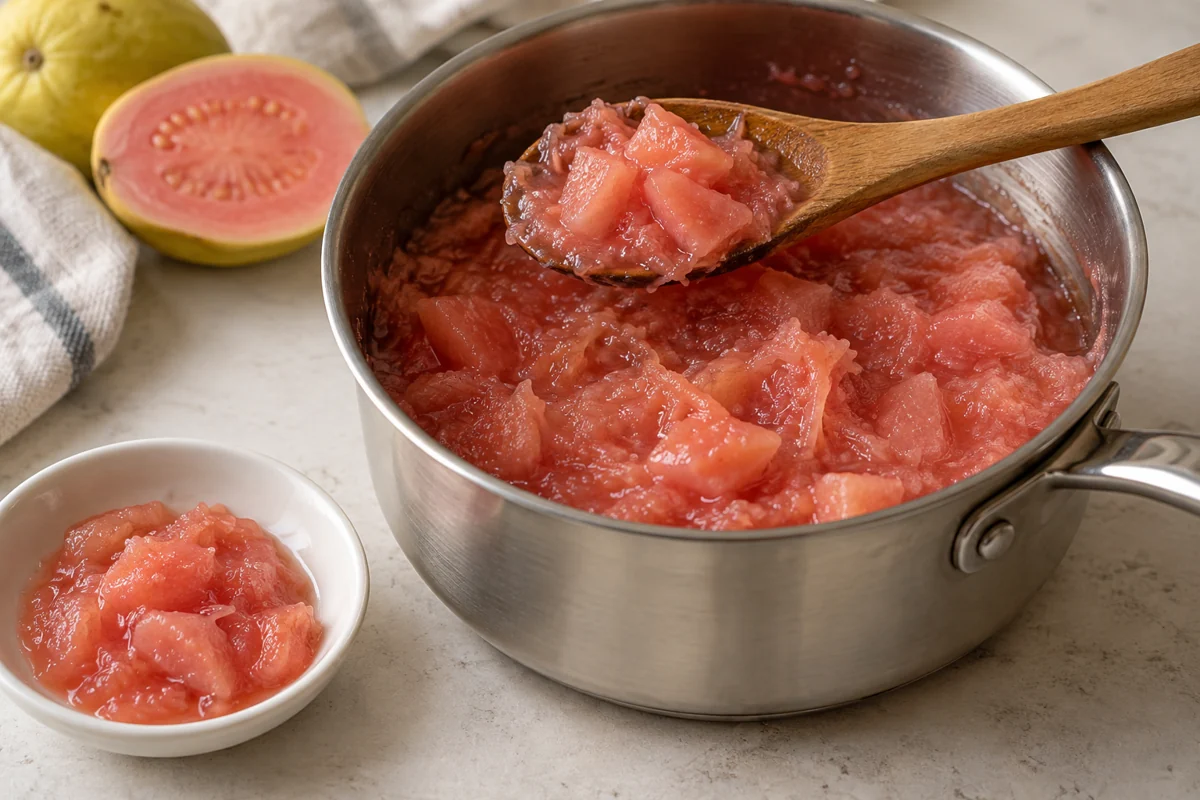
Evaluate the finished application under its intended processing and serving conditions.
- Define the finished application and the properties it must deliver, including whether pieces, peel or residual hard particles are acceptable.
- Record the incoming form, pack condition and preparation, then use a consistent starting quantity and thermal state.
- Carry out the intended separation, thawing or direct-frozen loading step, retaining or removing liquid according to the planned formula.
- Make the application with the same recipe, equipment and processing endpoint for each comparison.
- Assess the finished result at the intended serving condition and, where relevant, after the planned holding period.
- Repeat promising results with representative material before turning observations into purchasing limits.
Treat this as a proposed evaluation sequence, not a validated manufacturing or food-safety procedure. Its role is to make the quality comparison interpretable. Any commercial heat process, sanitation control or ready-to-eat requirement needs the facility's own appropriate validation. Keeping those responsibilities clear prevents a successful kitchen sample from carrying more meaning than the test can support.
For a cooked fruit preparation, note what happens to the pieces during normal agitation. Observe whether the flesh breaks down before the desired consistency is reached, whether peel remains conspicuous and whether the final product has unacceptable hard particles. A spoonful photographed immediately after cooking may hide later liquid separation, so assess the actual holding condition that matters to the customer as well.
For a screened base, compare recovered material on a defined basis. Keep screen selection, feed condition and the treatment of retained material consistent. Report the amount entering the application after separation, rather than comparing recipes only by the original incoming fruit mass. Otherwise differences in discarded seed tissue or retained liquid can become unintended differences in fruit loading.
Use a small set of acceptance terms that operators can apply. "Recognizable pieces after the agreed mixing step" is more testable when accompanied by a sample reference and a defined assessment than "premium texture." "No unacceptable hard particles under the agreed check" needs a method and threshold before it becomes a specification. The language should point to an observable result, not just a favorable impression.
Keep photographs, tasting notes and measurements together with the recipe version. If a promising result requires a different seed-removal step or fruit loading, record that change instead of attributing the improvement solely to the supplier. The most useful sample report explains what worked, under which conditions, and what still needs confirmation before a repeat order can be approved.
Buy frozen guava with a defined preparation and cold chain
A purchase specification should connect the delivered frozen form with the trial that approved it. State the fruit identity or agreed variety information, flesh color, cut description, peel status and seed treatment. Add the package arrangement and the intended further use. These details allow the supplier, receiving team and production staff to recognize the same material at different points in the supply chain.
The two original GreenLand product photographs in this article show pink frozen pieces with green peel and seed-bearing central flesh. They help establish the visible form offered on the current page. They do not prove a particular drained yield, seed-removal efficiency, storage history or finished-product texture. Request a representative sample and the relevant specification to assess those questions for your own operation.

Match the delivered preparation with the agreed sample and receiving specification.
Agree the frozen storage and transport conditions, including the evidence needed at receipt and the response to a deviation. Packaging condition, product temperature records and lot identification each answer a different question. A carton can look intact while still needing a temperature-history review. Conversely, visible surface frost alone does not explain the full history of a shipment or establish whether a specific acceptance limit has been exceeded.
Examine clumping and breakage against an agreed method. If the order requires separately usable pieces, decide how separability will be checked without warming or damaging the sample during inspection. If the application consumes a complete block, that same check may have less importance. Use the approved operating need to select receiving criteria rather than copying a checklist intended for an unrelated frozen fruit.
Confirm the shelf-life statement on the actual product documentation and the conditions attached to it. A general internet estimate for home-frozen guava is not a commercial guarantee. The relevant claim depends on the product, packaging, process and specified storage conditions. Changes in any of those factors should trigger a review of the evidence instead of being treated as an automatic extension of an earlier approval.
Compare cost on the material that reaches the application. Include any preparation, separation and handling that remains after delivery. A lower price per incoming kilogram can lose its advantage if substantial material is removed or the pack creates extra work. Where liquid is incorporated, include it consistently; where it is drained, use the same drain method for every option being compared.
For an inquiry, send the intended application, required cut, peel preference, seed requirement, quantity, destination and packing needs. Describe whether you plan to use the fruit directly from frozen, after thawing or after screening. Include the sample-test conditions that determine acceptance. We can then discuss the current frozen guava form and any separately proposed preparation against a request that production and quality teams can review.
The final decision is a practical one: choose guava that can move from its frozen package into your process with predictable preparation and an acceptable finished result. Clear sample records and defined handling conditions make that decision easier to repeat when the next lot arrives.
Source frozen guava with GreenLand-food
GreenLand-food is a professional frozen guava supplier and manufacturer in China, providing factory-direct wholesale supply for importers, food manufacturers, foodservice distributors, and private-label programs.
Send the product form, specification, packing, quantity, application, destination, private-label needs, and requested documents.