


Pink vs White Guava for Processing: Flavor, Color and Pulp Yield
Oct 19, 2026
Leave a message

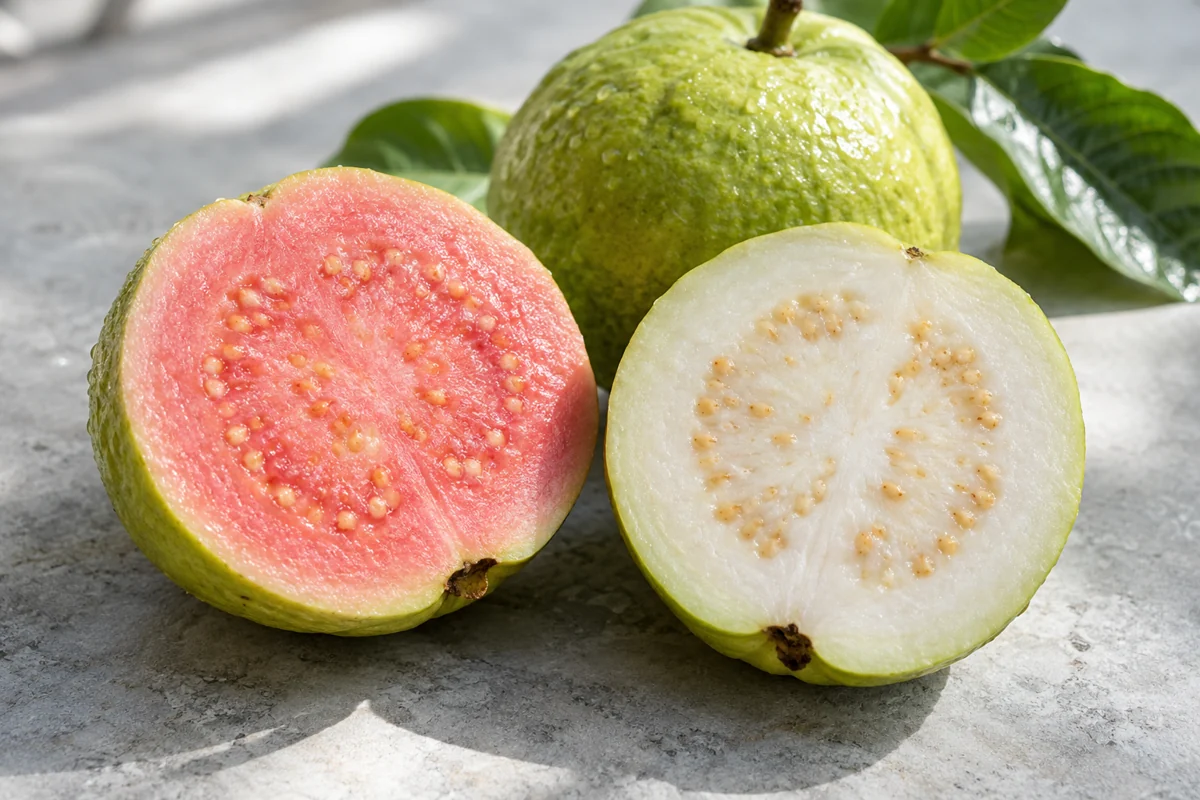
For a purchasing team, the practical comparison is between two defined samples. A ripe pink puree and a firm white fresh fruit answer different questions. Bring the candidates to the same preparation, record the material removed, and compare them in the finished formula. That approach turns a broad color preference into a specification that production and receiving teams can use.
We supply frozen guava pieces for processing inquiries and confirm the selected form against an order sample. Our current frozen guava product page shows skin-on pink pieces. White-flesh fruit and alternative preparations need separate supply confirmation. The comparison below explains how to evaluate those options without assuming that a photograph represents their flavor, recovery or commercial availability.
What flesh color tells you about guava
Pink and white describe the flesh you see when a common guava is cut. They are useful buying descriptors, but they cover variation in cultivar, fruit size, skin thickness, maturity and seed characteristics. The University of Florida's guava guide describes flesh ranging from white through yellow, pink and red, alongside considerable variation in aroma and acidity. A color category therefore belongs at the beginning of a product description.
Look at a cross-section before deciding how the fruit will enter the process. The thin outer skin, firmer edible outer flesh and central area containing small hard seeds have different effects on preparation. A large attractive half can still carry a substantial seed area. A smaller fruit may give a useful outer-flesh portion, depending on its structure and the cut. A photograph helps establish which parts are present; weighing the separated portions establishes their contribution to yield.
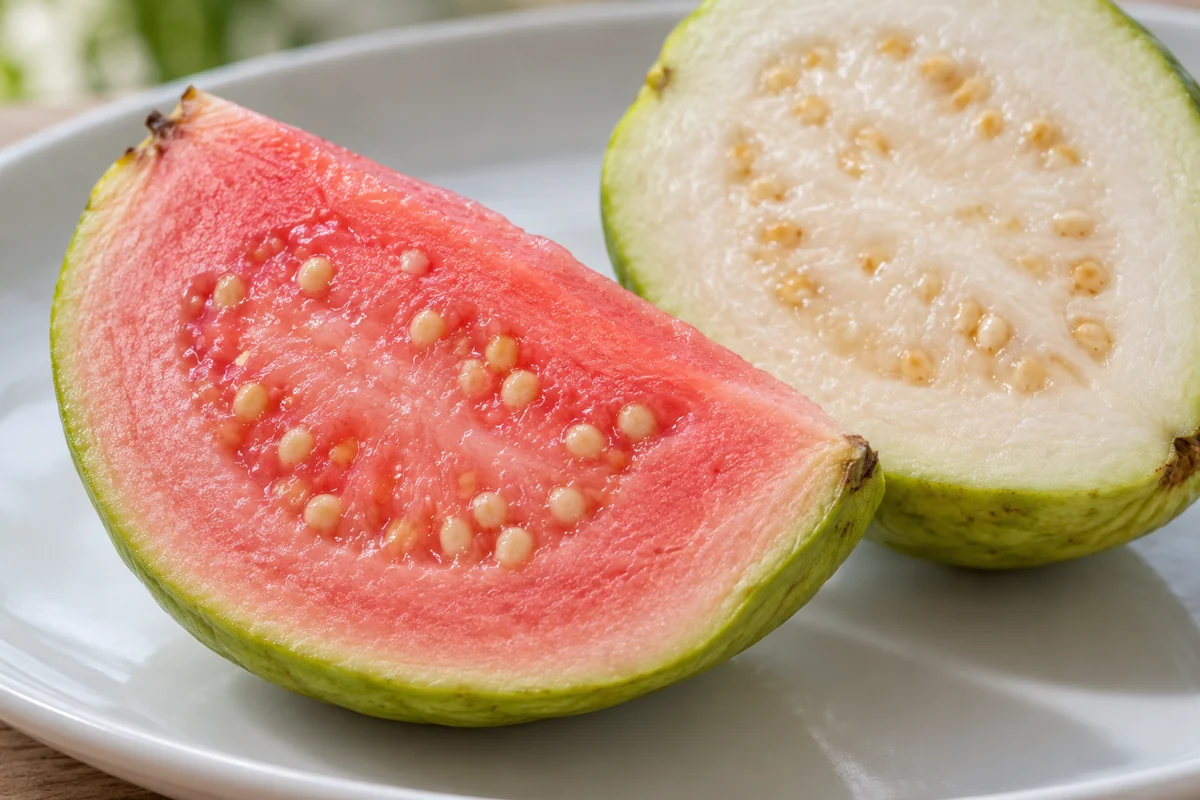
Compare peel, outer flesh and the central seed area when defining the preparation.
The word pink can also refer to several appearances, from a light salmon shade to stronger red-pink flesh. White may appear ivory or slightly cream. Agree a reference under consistent lighting and identify the state being assessed: freshly cut, frozen, thawed or pulped. Frost makes a frozen cut face look paler, and the color of a smooth puree can differ from the color of the fruit's cut surface. Those observations should be kept separate in the sample record.
A comparison of pink and white guava becomes useful when it names what is being held constant. Cultivar identity, harvest maturity, peeling, seed removal and added ingredients can each change the result. If these details are unknown, the sample can still be evaluated for a specific application, but the conclusion belongs to that sample. It should not become a universal statement that all pink guava is softer, all white guava is sweeter, or one type always gives more pulp.
At the inquiry stage, a short description such as "pink-flesh, skin-on frozen pieces for screened beverage pulp" carries more information than "premium guava." It tells the supplier what will be visible, what remains attached and what the buyer plans to remove. A white-guava inquiry should be equally explicit. Confirm whether the buyer needs pale color, a particular flavor reference, firm pieces before processing, or a named cultivar. Each requirement leads to a different selection discussion.
Compare flavor at the same maturity and preparation
Taste the candidates under conditions close enough to support a fair decision. Begin with fruit or pulp at comparable maturity and use the same preparation method. If one sample includes peel and the other has been peeled, record that difference before anyone scores aroma or aftertaste. If one is concentrated or sweetened, it should not be placed beside an unsweetened single-strength sample as though color were the only variable.
Regional eating habits can explain some familiar descriptions. UF/IFAS's South Florida account notes the local practice of eating pink guava after ripening and white guava while still firm. That context helps explain why a buyer may associate pink with softness and white with a crisp bite. It does not establish the flavor of ripe white puree or predict what a frozen white piece will do after thawing.
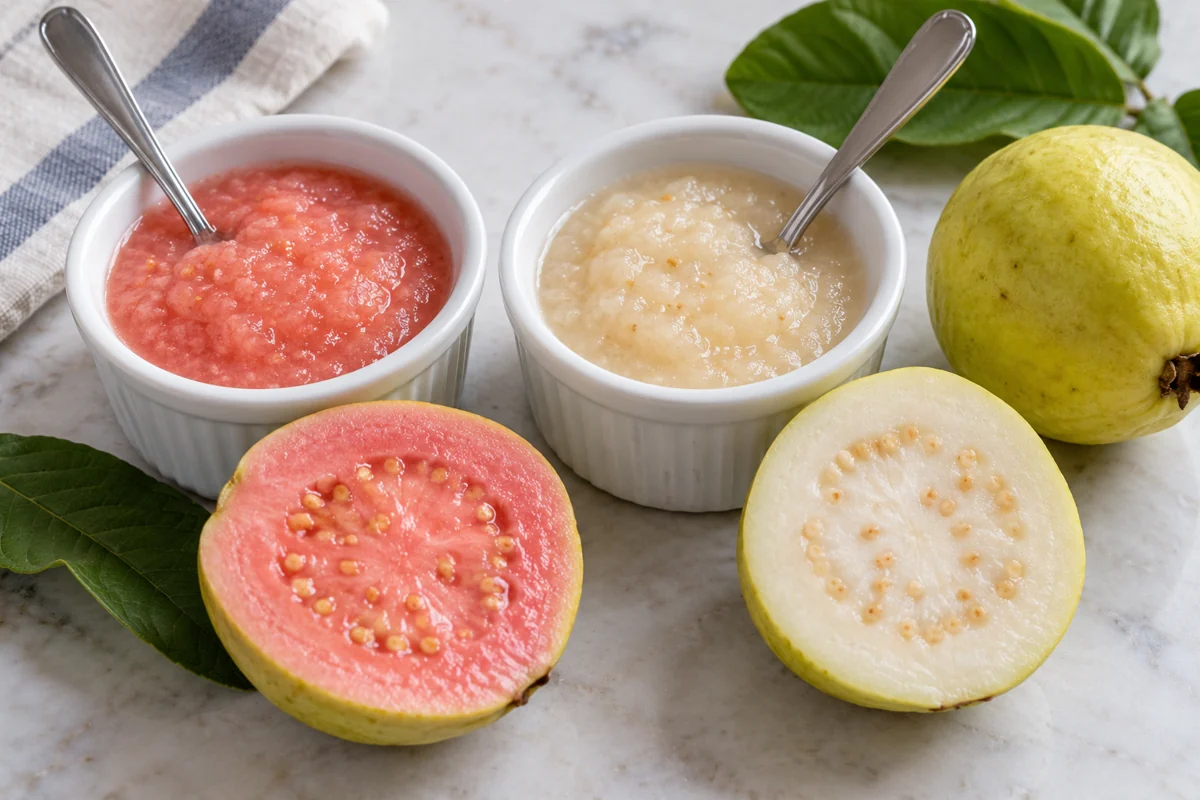
Prepare comparable samples before judging aroma, flavor and mouthfeel.
For an initial sensory comparison, use separate clean utensils and coded containers. Record the preparation date, sample identity, temperature and whether the fruit has been screened. Ask tasters to describe recognizable differences in aroma, sweetness, acidity, bitterness, graininess and lingering flavor. Avoid giving the panel a supplier's preferred conclusion before tasting. A descriptive note such as "more green aroma at the same addition level" is more useful to a formulator than a general quality score.
Next, taste in the intended formula. A guava pulp that seems strong by itself may become faint in a sweet dairy base. Another may provide enough aroma at a lower addition rate but introduce an unwanted coarse texture. A beverage developer should assess the planned dilution and sweetening system. A bakery developer should assess the filling after the intended preparation and cooling sequence. The candidate's value emerges from that complete use.
Soluble-solids and acidity measurements can help explain a sensory difference when the buyer has a suitable method. They do not replace tasting. Record the sample preparation and measurement basis so that a later lot can be compared. If the team changes the dilution, screen, heating route or serving temperature during development, label the new result separately. Otherwise, a process change can be mistaken for a difference between color groups.
Allow room for application priorities. A light fruit beverage may need a clean aroma and restrained body, while a dense fruit preparation may benefit from a fuller texture. The preferred sample can change with those requirements. Preserve a written description and a suitable reference from the accepted trial, subject to the company's sample-storage procedure. Future purchasing discussions then have a defined target instead of relying on the memory of a tasting session.
Set a color target in the finished product
The color of the raw guava is only one part of the final appearance. The formula's fruit content, other ingredients, mixing, processing and storage all belong in the assessment. Pink pulp can look much lighter in yogurt or a diluted beverage. White guava may allow another ingredient to dominate the visible color. Evaluate the finished sample in the packaging and portion depth that the customer will actually see.
Start with a visual reference that is simple to reproduce. Use the same clear vessel, fill level, background and lighting for comparative photographs. Photograph the raw material separately from the finished formula. A picture of a deep bowl of puree is a poor reference for a thin beverage in a narrow glass. Keep the accepted image with its sample and process information so the reference remains interpretable when a different team reviews it.
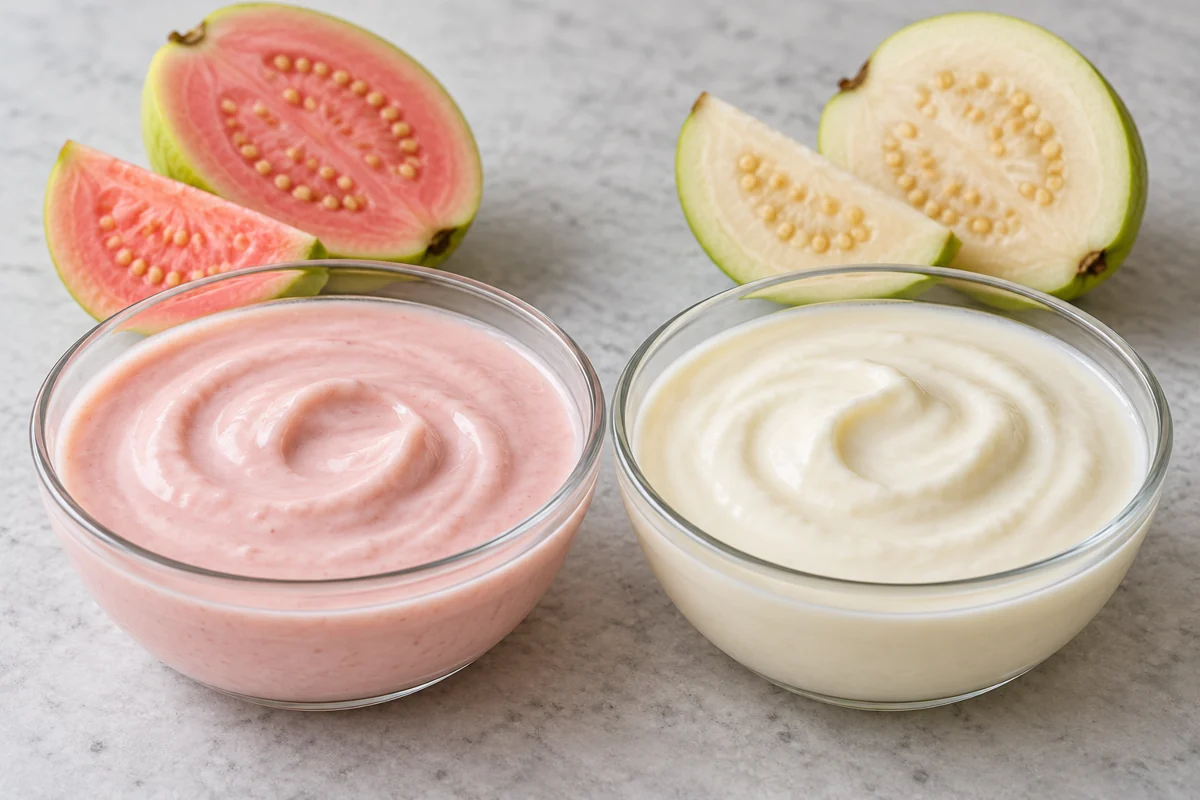
Assess color in the finished formulation, including the effect of its pale base.
For a pink product, distinguish the desired natural range from defects. A slightly lighter pink lot may still meet the formula's appearance target, while localized brown cut faces may require a separate defect assessment. For a white product, the buyer may be more concerned about visible peel fragments or dark specks. Agree how those findings are assessed rather than using one broad color score to cover every appearance issue.
If instrumental color measurement is needed, the parties should agree the instrument setup, sample presentation and reporting method. A number without that method can create false precision. The useful question is whether the incoming material and the finished product remain within the agreed range under comparable conditions. Set limits from actual development evidence and the buyer's commercial requirements, with appropriate technical review.
| Decision | Pink-flesh candidate | White-flesh candidate |
|---|---|---|
| Initial visual aim | A pink or salmon fruit character | A pale or ivory fruit base |
| Sample to inspect | Raw cut face and the finished pink formulation | Raw cut face and the finished pale formulation |
| Appearance concern | Natural shade variation versus localized browning | Peel specks, dark particles and unwanted discoloration |
| Acceptance basis | Agreed finished-product reference and method | Agreed finished-product reference and method |
The table describes evaluation priorities, not fixed quality rankings. A buyer can choose pink guava for flavor even when the final product's color is provided mainly by another ingredient. White guava can be selected because a specific sample performs well, even when a pale appearance is not essential. Keeping the decision attached to the application avoids unnecessary restrictions on sourcing while preserving the product identity that matters to the customer.
Measure pulp yield after the same separation method
Pulp yield needs a denominator and a defined endpoint. "Seventy percent yield" is incomplete unless the record states what entered the test and what counted as recovered pulp. Whole fruit, trimmed fruit, frozen skin-on pieces and purchased seed-reduced pulp start at different points. A supplier's raw-fruit recovery figure cannot be compared directly with a buyer's recovery from delivered frozen pieces without reconciling those starting materials.
Use a weighed input and collect the relevant outputs separately. For a practical development trial, this may mean usable screened pulp, retained seed and fibrous material, rejected damaged portions, and material remaining on equipment. Account for any water or other ingredient added during processing. The trial should distinguish physical recovery from recipe dilution; adding water increases the batch weight without increasing the amount of guava recovered.
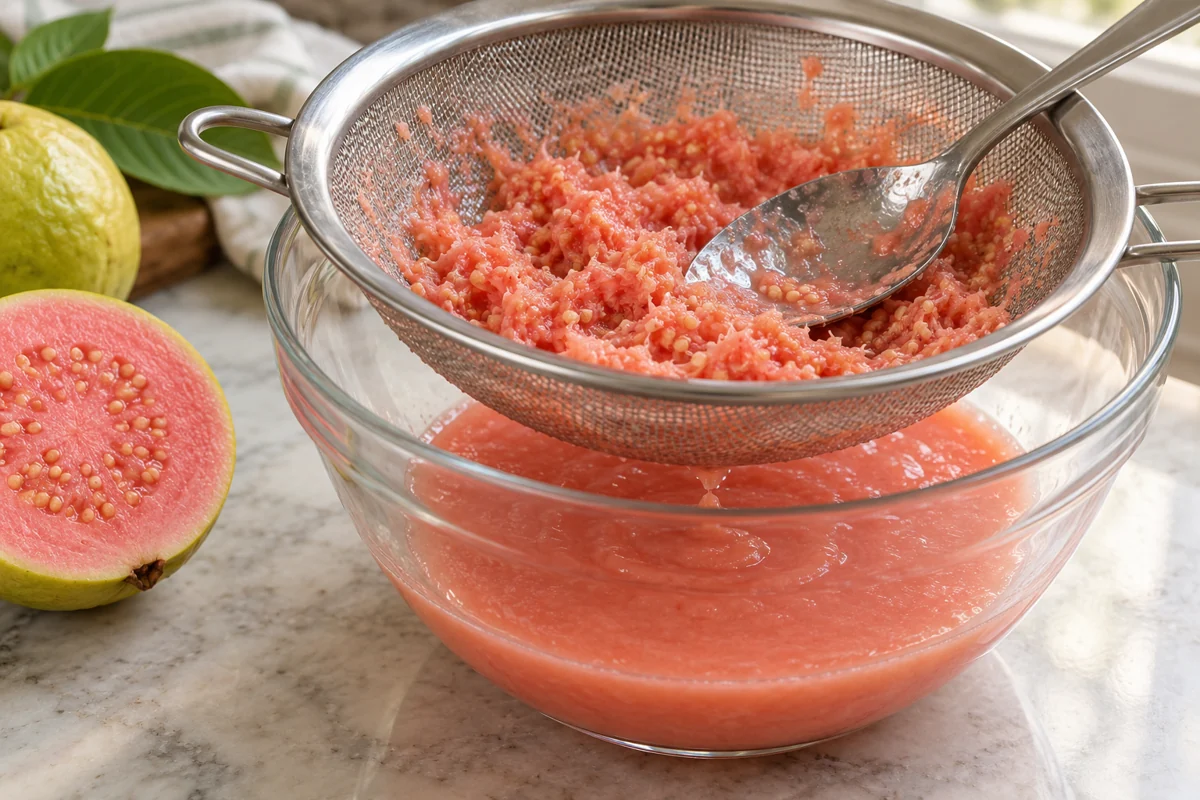
Record both accepted pulp and retained material under the agreed separation method.
A study of Kenyan red and white guava pulping found that both fruit type and extraction method affected recovery. Red guava performed better in the tested comparison, and hot methods produced different yields and nutrient retention from cold extraction. That is evidence for testing the selected fruit and method together. The reported results do not establish a guaranteed yield for every pink or white cultivar or for a different commercial line.
Keep the separation conditions consistent while comparing candidates. Screen opening, feed condition, preparation time and the chosen endpoint all need to be recorded. A finer separation may improve smoothness while retaining more material. A more forceful preparation may recover additional flesh but change the particle profile. The useful outcome is the quantity of acceptable pulp at the required texture, with enough process information for the result to be repeated.
Consider this illustrative calculation. A 10 kg input produces 6.8 kg of acceptable screened pulp, giving a measured recovery of 68 percent on that input basis. A second 10 kg input produces 7.4 kg, giving 74 percent. These are invented numbers for explaining the calculation, not GreenLand lot results. Before preferring the second sample, confirm that both pulps meet the same seed-fragment, peel-speck, flavor and color requirements. A larger recovered mass has limited value if it needs another separation step.
Repeat the test across representative sample units when the decision will guide an order. One favorable bag cannot show variation across a lot. Record where samples were taken and keep unusual findings visible. If a result changes after thawing or after a different preparation, investigate the handling history and test conditions before attributing it to pink versus white flesh. The final recovery requirement should state the method and the accepted output clearly enough for both parties to understand a later claim.
Choose pieces, pulp or puree for the application
Frozen pieces let a processor control part of the preparation route. The buyer can inspect peel retention, central seed material, cut shape and visible defects before pulping. This can be useful where the plant already has suitable preparation and separation equipment. It also means the buyer must allow for the material removed and the work needed to turn the delivered pieces into the required ingredient.
Purchased pulp or puree moves some of that work to the supplier's preparation stage. The description still needs detail: whether seeds and peel have been removed, how particle size is defined, whether ingredients have been added, and what processing state is supplied. The words pulp and puree are used differently across commercial discussions, so the specification and sample should establish what the buyer will receive. Confirm the intended use and any required further processing separately.

GreenLand product photograph: irregular frozen pieces retain green peel and central seed material.
For a beverage, the central question may be the behavior of the screened fruit in the formula. Check mouthfeel, visible particles, color and the intended suspension or separation characteristics. A fruit preparation used in yogurt may tolerate a different particle profile from a drink consumed through a narrow opening. The same raw material can therefore have different useful yields depending on the finished product's acceptance criteria.
For a filling, sauce or dessert base, evaluate the preparation after its relevant processing and holding steps. The incoming piece size may matter mainly for handling and dosing if the fruit is later reduced to a uniform mass. If recognizable pieces must remain, assess the desired piece condition after the complete process. A frozen product photograph cannot establish that outcome. Request a trial using the actual cut and intended handling sequence.
The real guava photographs on this page show the skin-on pink piece form described on our product page. They help a buyer see irregular cut geometry and retained green peel. They do not establish that the pieces are peeled, seedless or ready for direct consumption. A request for another form should state the change explicitly and allow for a separate sample, preparation evidence and quotation.
Packing also affects how the form is used. A plant dosing small quantities may value a format that can be portioned conveniently under its handling procedure. A line consuming a whole pack at once may evaluate a different pack size or frozen format. Confirm the inner pack, net quantity, carton arrangement and handling instructions with the proposed supply. The best form is the one that meets the finished-product requirement with an acceptable total preparation cost.
Run a sample trial that can become an order standard
A useful sample trial begins with a decision statement. For example, a beverage team may be choosing between two guava candidates for aroma and color at its planned fruit addition. A fruit-preparation team may be deciding whether skin-on pink pieces give an acceptable recovery after its screen. Write that decision before testing, then identify the measurements and observations that will resolve it.
- Identify the candidate lot, fruit color, preparation and pack, and record the condition on receipt.
- Prepare comparable portions using the agreed handling and separation method, retaining the input and output weights.
- Evaluate the resulting fruit ingredient and the finished application under consistent conditions.
- Record acceptance, failures and any process changes needed, then confirm which conditions belong in the proposed specification.
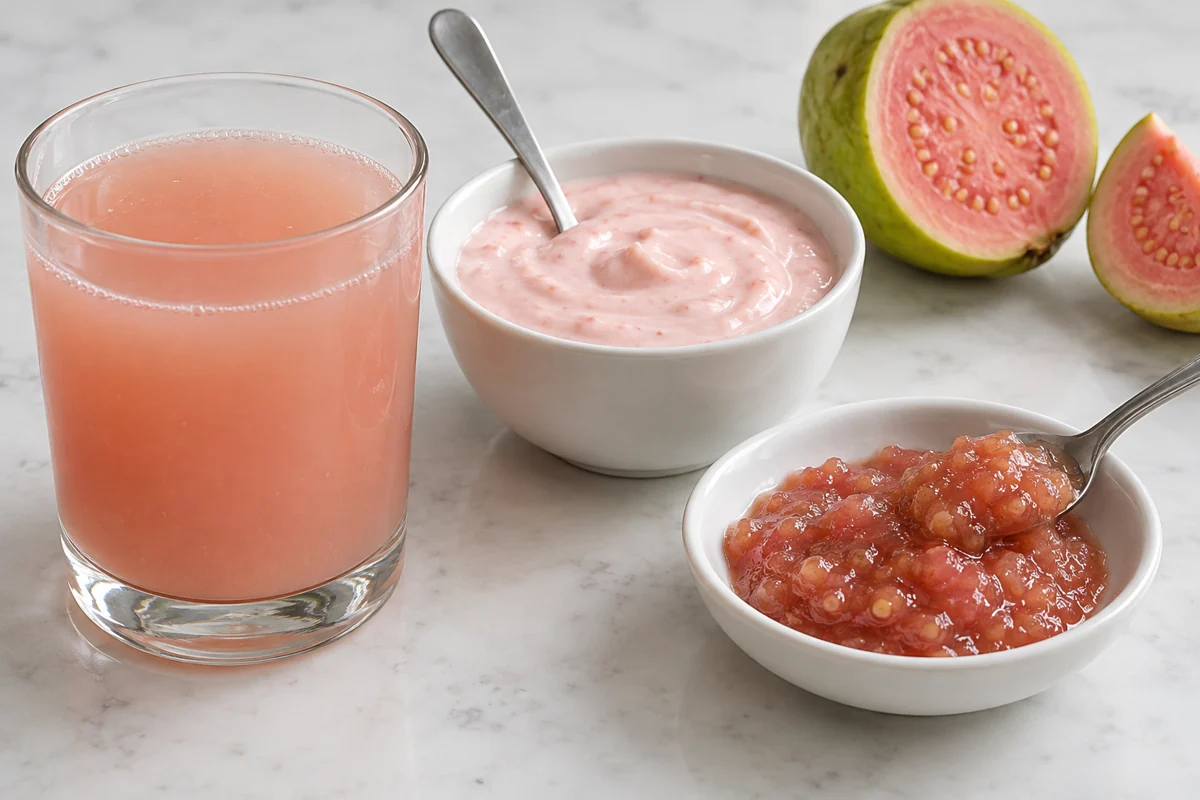
Beverage, dairy and fruit-preparation applications need their own texture and residual-seed assessment.
The trial record should preserve unsuccessful observations as well as the preferred result. If a sample produces an attractive beverage but leaves too much hard material on the screen, both findings matter. If a second sample gives better recovery but a weaker aroma at the selected addition, the development team can consider the formulation consequence. Purchasing needs that combined result to compare offers fairly.
Agree who approves each part of the decision. Development may approve flavor and appearance, production may confirm handling and throughput, and quality may define the sampling and release method. These roles can overlap in a small business, but the questions still need answers. An attractive tasting sample should not become an order standard before the relevant teams understand how it was prepared and what it represents.
Use representative samples for confirmation. A carefully selected display sample may help introduce the product, while an order decision needs material that represents the proposed supply. Ask how the sample relates to the lot or future production, and record any known differences. If the final preparation changes after the first trial, repeat the affected checks. A peeled proposal cannot inherit the recovery result of a skin-on sample without evidence.
Keep quality testing and safety decisions in their appropriate review processes. A pleasant flavor or smooth texture does not establish microbiological suitability or the adequacy of a later process. Confirm the product's intended use, required further treatment and requested documentation with the responsible technical teams. For broader receiving controls, our frozen-fruit quality guide explains how product definition connects with sampling, packing and shipment evidence.
Confirm the frozen guava specification and delivered cost
Convert the accepted trial into a description that can travel with the order. Name the fruit type or cultivar where it is verified and commercially necessary, flesh color, cut or pulp form, peel status, seed requirement and relevant size or particle limits. Add the agreed appearance reference, defect definitions and application test. Identify the sample and method so that "matches the approved sample" has a usable meaning.
Natural variation and defects should be discussed separately. A range of sound pink shades may be acceptable in one application, while brown damaged areas require removal. Some irregular pieces may feed well into a pulper, while excessive small fragments affect another buyer's handling. State how each attribute is inspected and whether the result is based on count, mass or a defined visual comparison. Avoid leaving the receiving team to invent the interpretation after delivery.

The supplied form and visible natural variation should be described in the order specification.
Compare cost on the output that the plant can use. In a simplified example, a delivered input priced at 2.00 per kilogram with a 70 percent usable recovery contributes about 2.86 per kilogram of accepted pulp before processing costs. An input priced at 2.20 with an 80 percent recovery contributes 2.75 on the same basis. These hypothetical figures show why invoice price alone can mislead. They do not quote a product or predict a commercial yield.
Add the costs that differ between the offers: preparation labor, separation, disposal, additional processing, pack handling and any formulation adjustment supported by the trial. Use the same currency, delivery basis and quantity assumptions. If one offer is for already prepared pulp and another is for pieces, reconcile the preparation stages before comparing. A small price difference may matter less than a clear difference in acceptable output or application performance.
Confirm commercial details from the actual proposal. Quantity, packing, crop or production timing, lead time, destination and required documents can affect the available options. Where private-label packing is requested, provide the intended pack size and artwork requirements early. Ask for the identity and scope of any documents needed for the order rather than assuming that a general website statement applies to every product and shipment.
We help purchasing teams define the frozen guava form and the sample questions before quotation. For a pink-versus-white decision, send the finished application, desired color, flavor reference, peel and seed requirements, preparation method and expected volume. A clear brief allows the supply discussion to focus on the fruit that can meet the application and the evidence needed to approve it.
Source frozen guava with GreenLand-food
GreenLand-food is a professional frozen guava supplier and manufacturer in China, providing factory-direct wholesale supply for importers, food manufacturers, foodservice distributors, and private-label programs.
Send the product form, specification, packing, quantity, application, destination, private-label needs, and requested documents.