


Frozen Mixed Berries in Yogurt: Fruit Pieces and Color Bleeding
Oct 19, 2026
Leave a message

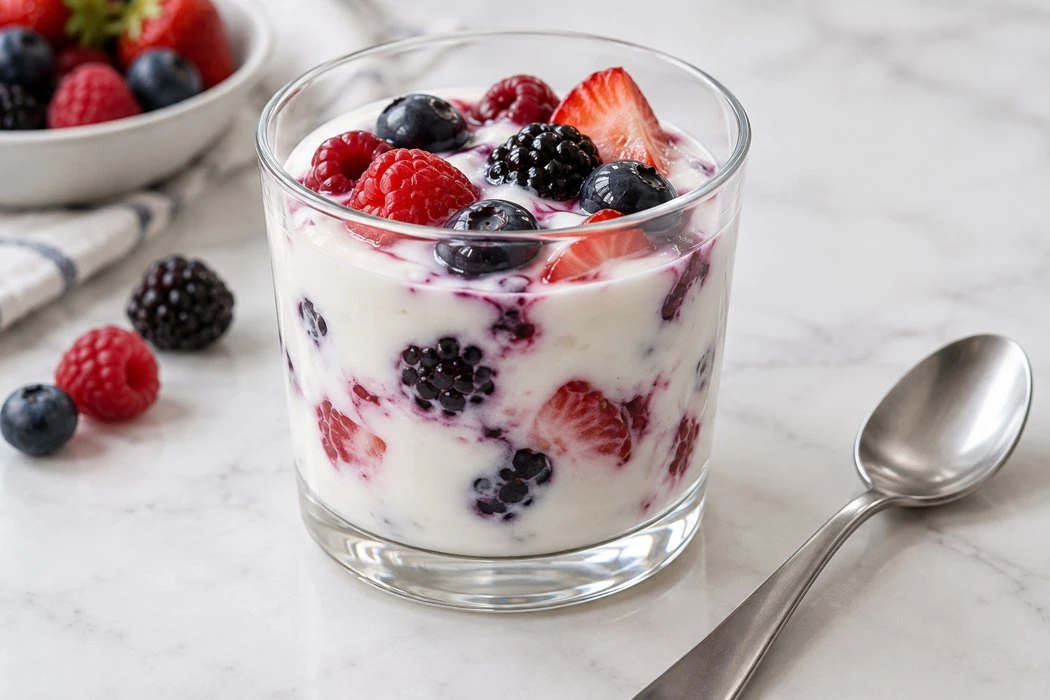
A pale halo around a blueberry may be welcome in a swirled dessert and unacceptable in a cup sold with a clean white layer. Neither appearance, by itself, proves spoilage or establishes suitability for consumption. Confirm the berry product's permitted use and any required treatment before a tasting trial. For purchasing, the useful approval connects a named berry blend, a defined yogurt recipe and a repeatable observation method.
Choose the yogurt appearance before approving the fruit
Begin with the finished cup. Describe whether the product will have a separate fruit layer, fruit folded through the yogurt, or berries placed on top near service. These arrangements expose different areas of fruit to the dairy and require different definitions of an acceptable appearance. A product brief saying only "mixed berry yogurt" leaves the person selecting the frozen ingredient to guess which result matters.
For a layered cup, specify whether the boundary should remain clear or whether gradual streaking is part of the concept. For a stirred yogurt, decide whether the base should become consistently pink or purple while recognizable pieces remain. For a topping, describe the amount of colored liquid allowed around the fruit. These are proposed product-development questions; the actual limits belong to the customer's approved reference and process.

Different berry forms are visible in the supplied mixture.
The mixed-berry product photograph shows how different the components can be before they enter yogurt. Raspberries have a hollow center and a delicate structure; blueberries have a continuous skin; strawberry pieces expose cut surfaces. A blend with all of these forms provides several different visual elements. The photograph identifies the supplied forms but does not demonstrate the final cup's formula, treatment history or performance.
Use the same serving container in development that the customer will assess, or record the difference when screening in a laboratory vessel. A shallow bowl exposes more of the fruit and yogurt surface than a narrow cup. A transparent wall also reveals a fruit layer that would be hidden by an opaque retail pot. A reference photograph should therefore include the package view that the buyer actually needs to approve.
Define the serving state as carefully as the presentation. Fruit that is still firm with ice can look distinct during assembly and soften later. A preparation made before filling can already have distributed its liquid throughout the base. The relevant endpoint is the state at which the product is intended to be served or assessed, under the approved handling conditions. Do not select a frozen ingredient solely because it looks attractive at the first mixing step.
We can use the brief to discuss the appropriate frozen mixed berry product and sample specification. Include the desired berry identities, form, visible piece target, fruit dose and use conditions. This allows a quotation to address the material the customer will evaluate. It also gives purchasing a clear basis for asking whether a later change in component size or grade needs another yogurt trial.
Track released juice separately from color stability
Color bleeding describes a visible movement of colored material into the surrounding food. Pigment degradation describes a chemical change that can reduce or alter the original pigments. The two processes can occur together, but a photograph of a pink yogurt halo cannot distinguish their contributions. The practical first question is where the color appears: within the fruit, in free liquid, along a contact boundary or throughout the dairy base.
Thawing changes berry structure and can release liquid. University of Minnesota Extension explains the connection between freezing, ice formation and softer thawed produce in its freezing guidance. That household explanation supports the physical distinction; it does not supply a commercial drip-loss limit. In a yogurt trial, record the released liquid and how the preparation incorporates it before attributing the final appearance to a deficient fruit lot.
Keep a small, identified portion of the prepared fruit available for observation alongside the finished yogurt when the trial design permits. Note whether colored liquid is already present before the fruit touches the base. If that liquid enters the cup during filling, it contributes to the appearance even when the recognizable pieces survive. A trial that silently removes it tests a different ingredient addition from one that retains it.
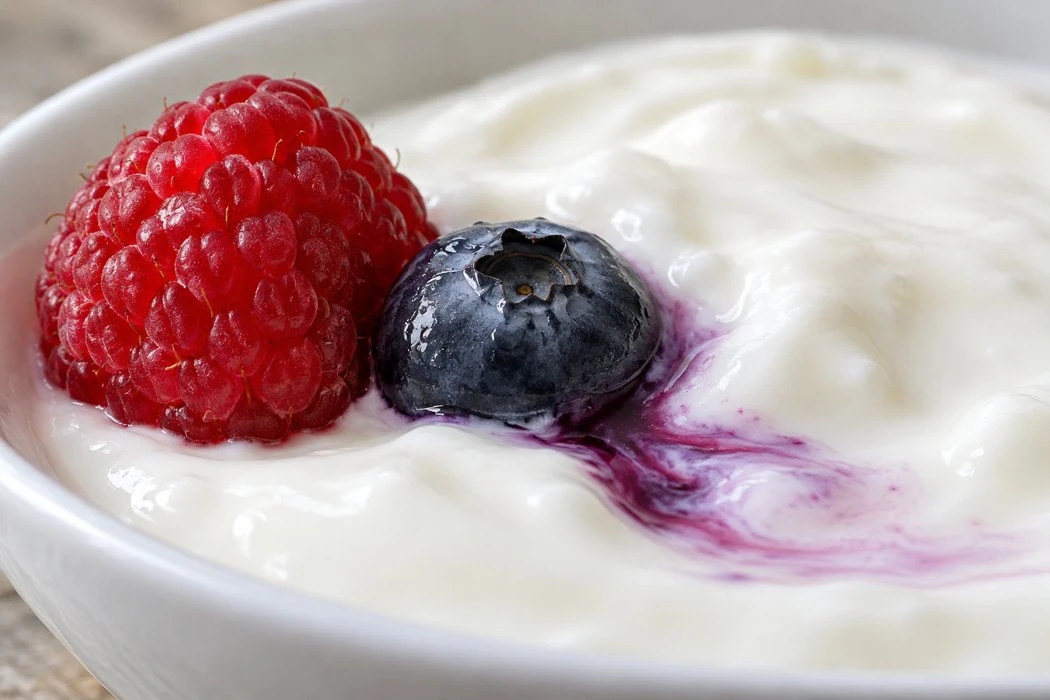
Observe the fruit, released liquid and surrounding yogurt separately.
Research also shows why the complete dairy application needs its own assessment. A 2023 study of berry smoothies with yogurt examined processed strawberry, raspberry and blueberry preparations at different yogurt additions. Its measured pigment response depended on the formulation and fruit. The materials were prepared purees and beverages, so the study does not predict the halo width around a whole IQF blueberry or validate a commercial yogurt shelf life.
For a visible-fruit product, a useful observation record distinguishes three things: the recognizable fruit remaining, the amount and location of free liquid, and the color of the dairy around it. These observations can be made without assigning a molecular cause. When pigment retention is part of the specification, ask an appropriate laboratory to define its analytical method and sample preparation. A homogenized chemical sample answers a different question from an intact cup viewed through its wall.
Avoid treating a darker cup as automatic evidence of more fruit or better pigment retention. Fruit distribution, the yogurt's original color, lighting, fill depth and the amount of dispersed material can change what the observer sees. Preserve a plain yogurt reference from the same base batch when practical. That helps the team identify changes belonging to the base and keeps the fruit comparison anchored to the actual product rather than an assumed white background.
Set a practical piece-size target for the spoon
Piece size needs to work at the serving scale. A large strawberry half may be attractive on the surface but dominate one spoonful, while several small blueberry pieces may disappear visually into a strongly colored base. Decide whether the product promises recognizable berries, small distributed fruit pieces, or a generally fruity texture. These are different purchasing objectives and can call for different component forms within the same named blend.
Describe each berry component separately. A strawberry size requirement should identify the supplied cut, while a raspberry requirement may need a distinction between whole fruit, broken fruit and smaller fragments. For blueberries, identify whether whole berries are required and state any agreed size range. A blend-wide phrase such as "uniform pieces" is difficult to apply when the ingredients have naturally different shapes and structures.

The bowls keep the berry species consistent while illustrating different strawberry cuts.
Then assess those forms after the actual incorporation step. A piece can meet its incoming size description and still break when transferred, mixed or filled. Conversely, a smaller incoming component can provide the most consistent distribution across spoonfuls. The product owner should decide which measurement controls ingredient acceptance and which observation controls the finished application. Keep both records when they address different risks.
Use the intended spoon, cup and fruit dose in the evaluation. Examine several ordinary spoonfuls taken from different parts of the cup rather than arranging one especially attractive sample for a photograph. Record whether a spoonful contains an oversized piece, no visible fruit, a rough seed sensation or an acceptable mixture. These observations should use agreed descriptions so assessors can explain a problem without reducing every difference to a single preference score.
A simple development comparison can keep the berry mass formula fixed while changing the strawberry cut. Record the actual supplied forms and their sizes, then use the same yogurt and incorporation procedure. This does not guarantee that cut size is the only property that differs between commercial samples; the lots may also vary in maturity or texture. The record should identify those limitations and show what the comparison actually supports.
Cost belongs beside that evaluation. If a lower-cost form requires extra handling, creates a larger rejected fraction or changes the finished portion, compare the usable product and preparation effort. A whole-fruit premium is useful only where the application benefits from the retained form. We would confirm the offered form and packing against the approved sample, while the customer confirms that the resulting yogurt meets its presentation and eating requirements.
Compare preparation states without changing the fruit basis
An incoming frozen blend, a thawed blend with all liquid retained and a drained fruit portion have different mass balances. If a developer adds the same scoop volume from each, the yogurt may receive different amounts of fruit material and water. A fair comparison begins by stating which basis is being held constant: incoming frozen fruit, retained prepared fruit, total fruit preparation or finished product mass.
For example, imagine a development trial allocating 100 grams of the same incoming blend to each candidate. One route retains all released liquid; another uses a documented draining step. The second route will ordinarily contribute less total material to the yogurt unless something else is added. That difference must remain visible in the recipe record. These numbers describe an illustrative trial design, not a recommended serving or a measured production yield.
Draining can help answer a useful question about presentation, but it also removes material. Record the mass of fruit retained and liquid collected, along with the draining arrangement and endpoint. Avoid pressing or squeezing one sample while allowing another to drain freely. A method that mechanically damages the fruit can change both piece retention and subsequent color release, making the comparison harder to interpret.
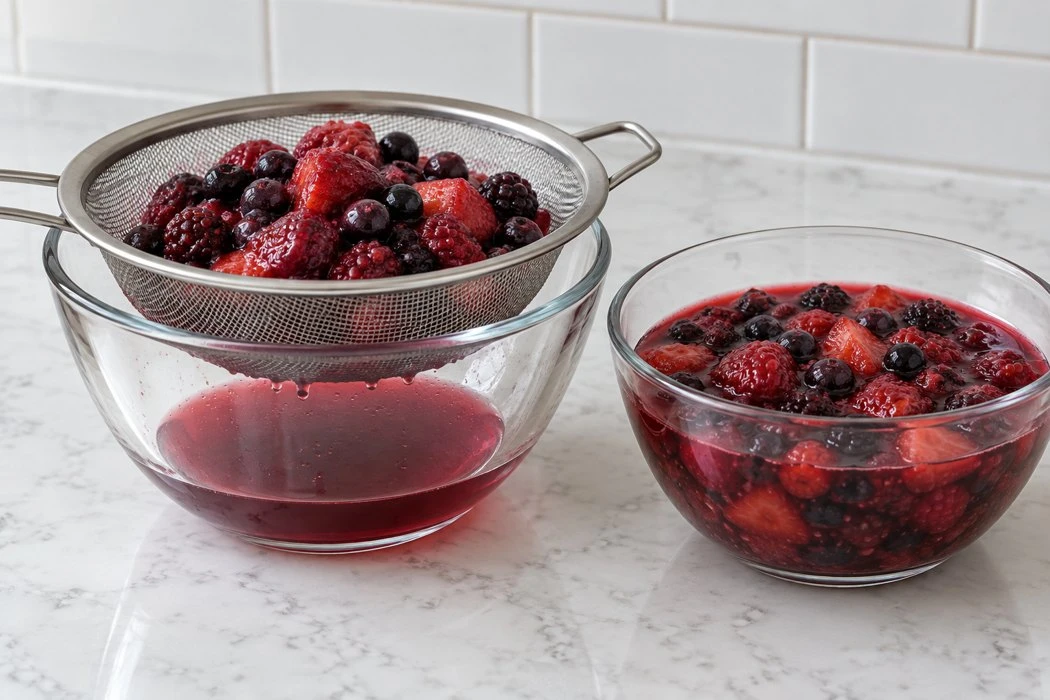
Keep retained fruit and collected liquid visible in the preparation record.
Use a defined and approved preparation route. If the ingredient requires a heat treatment, include that treatment before the intended dairy application and use the customer's controlled cooling and handling process. A visually appealing raw-fruit sample cannot replace it. The FDA's berry safety guidance explains that freezing generally does not inactivate viruses; the appearance trial cannot establish microbial safety.
Keep the yogurt base stable while examining the preparation question. Identify its batch, formulation and initial condition, and use the same fruit addition basis for each comparison. If the team needs to change yogurt solids, stabilizer system or sweetness at the same time, record the comparison as a complete formulation change. It may be commercially useful, but it will not isolate the effect of draining or thaw state.
- Document the incoming fruit and its sample identity.
- Record the prepared fruit and any separated liquid.
- Add the agreed quantity to the identified yogurt base.
- Evaluate the finished cup at the chosen endpoints.
Observe color through the intended display period
The moment after filling is only one observation. A cup can initially show recognizable berries against white yogurt and later develop broader streaks or a pooled colored layer. The development plan should cover the interval for which appearance needs approval. That interval must sit within the product's separately established safety and shelf-life program; a successful visual check does not establish a safe storage duration.
Choose observation points that answer the use case. A foodservice topping may need assessment after assembly and at service, while a packaged yogurt needs observations within its development storage plan. Record actual product and holding conditions with each result. If the samples are moved, opened, stirred or transported between observations, those actions belong in the record because they may alter the presentation being assessed.
Photograph comparable views. Keep the container, fill depth, background, illumination and camera position consistent. Include the whole cup when assessing the distribution of fruit and a closer view when inspecting the boundary between fruit and yogurt. Automatic exposure or white balance can make one sample seem paler than another, so use controlled settings or a suitable reference where the method requires it.
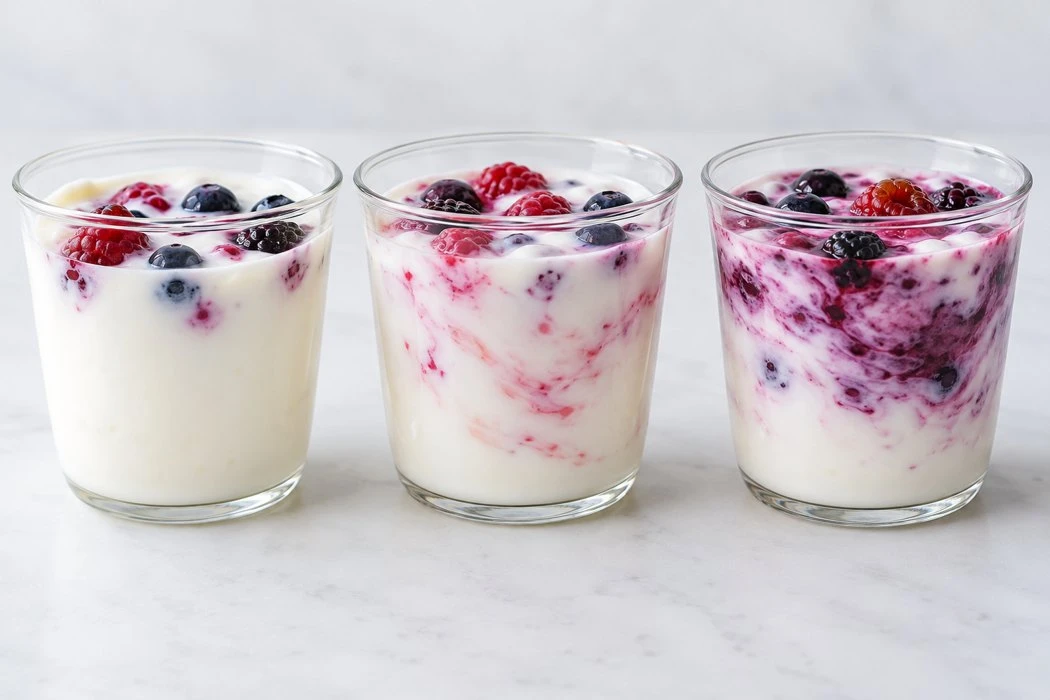
These appearances illustrate different color distributions; they are not a measured time sequence.
When instrumental color measurements are useful, decide what area they describe. Measuring plain dairy between pieces, measuring a homogenized portion and measuring the complete surface are different procedures. A few large berries can strongly influence a surface reading depending on their placement. The method should specify sample presentation and observation locations so an apparent color difference is not simply a different proportion of fruit under the instrument.
Use actual descriptors that connect to the product brief: localized halo, distributed marbling, uniform base coloration, colored liquid at the wall, or loss of contrast between components. A customer may accept one of these appearances and reject another. A reference image can anchor the discussion, but it should be paired with the preparation and observation conditions that produced it. Without that context, a single photograph is an incomplete acceptance standard.
If the candidate changes faster than the reference, investigate the likely contributors one at a time where practical. Check the fruit form and dose, the retained liquid, incorporation, base identity and handling record before changing several ingredients together. The outcome may be a revised fruit specification, a different application process or an adjusted presentation target. The evidence should show which change solved the observed problem under the tested conditions.
Keep component identity in the supply specification
A mixed-berry name does not define a universal recipe. Commercial blends can contain different fruits and different proportions, and a product photograph cannot establish those percentages. For a repeat yogurt program, identify every component and its mass contribution, then attach the required form and grade to each. This preserves the ingredient that produced the accepted application instead of approving an attractive but loosely defined mixture.
The real mixed-berry table photograph makes the identity question visible. Whole dark berries, raspberries and exposed strawberry surfaces can all appear in the same supply stream. Their presence does not prove a particular ratio or that every small portion will include each fruit. Use the written specification and representative sample to confirm those requirements, especially when the yogurt label or presentation depends on a named component.

Visible components include different shapes and exposed cut surfaces.
An official example shows how specific such terms can be. The USDA February 2022 frozen-fruit procurement specification defines a particular mixed-berry cup using whole blueberries and diced strawberries by weight. It also addresses blueberry color migrating into strawberry pieces. Those clauses apply to that procurement product; they do not provide a general color-bleeding allowance for yogurt. Their value here is the need to describe both component identity and the accepted appearance.
Keep sweetness and acidity information on a defined sample basis when they influence the yogurt recipe. A measurement from a selected berry, a homogenized blend and drained liquid may describe different materials. Ask for the method and sample preparation alongside any result used in approval. A single blend value can be useful for formulation, but it will not describe the texture or visual contribution of every component.
Packing should fit the customer's preparation quantity and cold handling. State the pack size, inner packaging, lot identification and any requirements for portioning. A large pack repeatedly opened for small additions can produce a different handling history from individually allocated production portions. Discuss the practical quantity with the application team so the selected commercial pack supports the process used in the trial.
We confirm the offered product form, packing and requested documentation against the inquiry and quotation. The customer's yogurt approval should remain attached to the blend version and sample identity. If a component is substituted, its cut changes or the allowed broken fraction changes, review the potential effect on the application. A nominally unchanged total fruit percentage does not preserve every attribute that made the original yogurt acceptable.
Approve a repeatable yogurt trial and its limits
A useful trial record lets another person prepare the comparison and understand the decision. It identifies the berry lot, blend formula, component forms, yogurt base, fruit dose, preparation route, incorporation method, container and observation conditions. Include the chosen appearance and texture criteria before evaluating the samples. That prevents the most attractive first cup from defining the standard after the fact.
Run the candidate beside an appropriate reference. The reference might be the currently approved ingredient in the same yogurt or a documented development target. Give samples neutral identifiers where practical, and separate visual observation from tasting so an appealing color does not automatically become a favorable flavor score. Tasting must occur only after the relevant preparation and product-safety requirements have been met.
Assess several prepared cups and ordinary portions. Repeated readings of one cup show measurement repeatability, while independently prepared cups also expose preparation variation. Keep those distinctions in the report. The number of samples and lots needed for approval depends on the commercial risk and agreed plan; a handful of development cups should not be presented as proof of every future production lot.
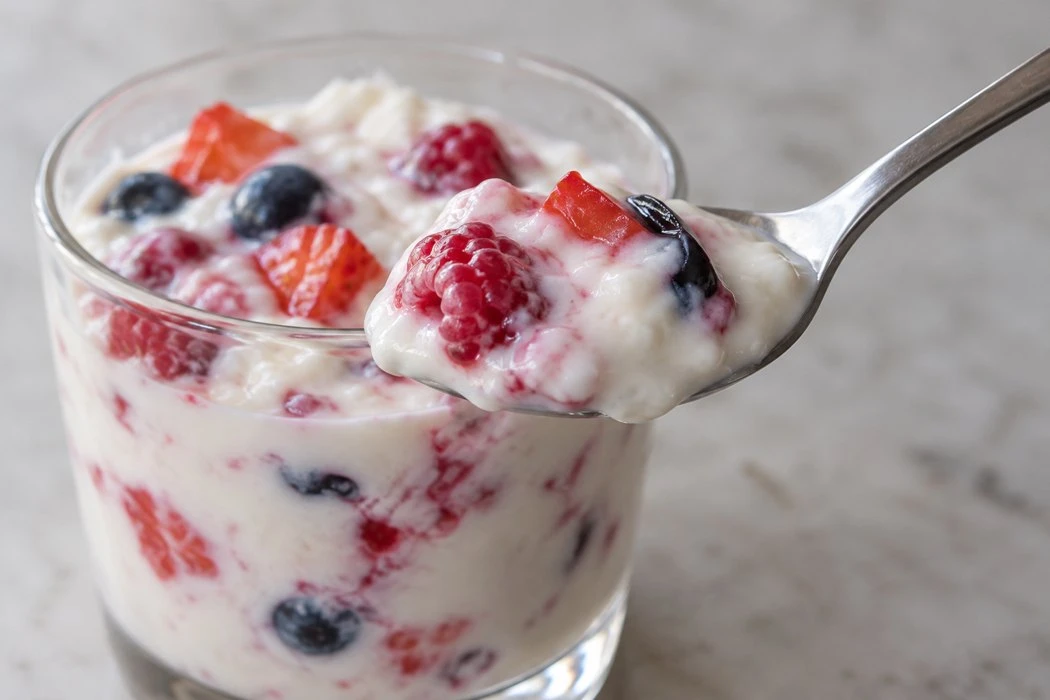
Assess ordinary spoonfuls alongside the appearance of the complete cup.
Write the decision in usable terms. If the candidate passes, identify the fruit version and process covered by the approval. If it needs revision, state the observed issue, such as excessive liquid pooling or loss of recognizable raspberry pieces, and the next change to investigate. Avoid a bare "good" or "poor" verdict that leaves the supplier unable to connect the feedback to a specification.
Retain the original observations as well as the selected photographs. A favorable view should not replace a record showing uneven distribution or a later appearance change. Keep the actual masses, handling notes and relevant analytical results with the sample code. That evidence helps the team distinguish a changed ingredient from a changed preparation when a future cup behaves differently.
A retained reference should be described by its preparation date, condition and permitted comparison period. A cup that has already changed substantially may no longer represent the original approval. Where a physical reference cannot be retained meaningfully, preserve the recipe, preparation record and controlled images, and establish how a fresh reference will be prepared. The application team should own that decision so purchasing does not treat an old photograph as a permanent physical standard.
Include the development schedule in the supply inquiry. The sample quantity needs to cover the planned cups, repeat preparation and any analytical work without forcing the team to change the procedure halfway through. State the destination and shipping arrangements required to keep the trial material in its intended condition. Confirm lead time against the actual offered component forms and packing; a development deadline should not become an unsupported promise of availability.
The final agreement should preserve both the supplied berry specification and the supported yogurt outcome. We can help your purchasing team confirm the frozen blend and sample requirements; the application owner defines the finished-product acceptance and validates the process. With those responsibilities connected, fruit pieces and color bleeding become clear approval questions that can be revisited when the recipe, pack or supplier lot changes.
Related reading
Berry Color in Dairy, Soy and Bean Bases | GreenLand-food
Review why changing the fermented base needs its own color assessment.
Strawberry Yogurt Bites with Frozen Fruit: Pieces, Free Water and Serving Texture
Compare fruit-piece and free-water decisions in a frozen yogurt bite.
GreenLand Food - Frozen Strawberries Specification Sheet
Define strawberry form, size and the technical fields behind a component specification.
Source frozen mixed berries with GreenLand-food
GreenLand-food is a professional frozen mixed berries supplier and manufacturer in China, providing factory-direct wholesale supply for importers, food manufacturers, foodservice distributors, and private-label programs.
Send your berry component list, target proportions by weight, required forms, packing, quantity, intended application, destination, private-label needs and requested documents. Include the sample quantity and assessment method so we can confirm an appropriate quotation and supply specification.