


Red Dragon Fruit Color in Drinks: Testing Heat, Light and pH
Oct 19, 2026
Leave a message

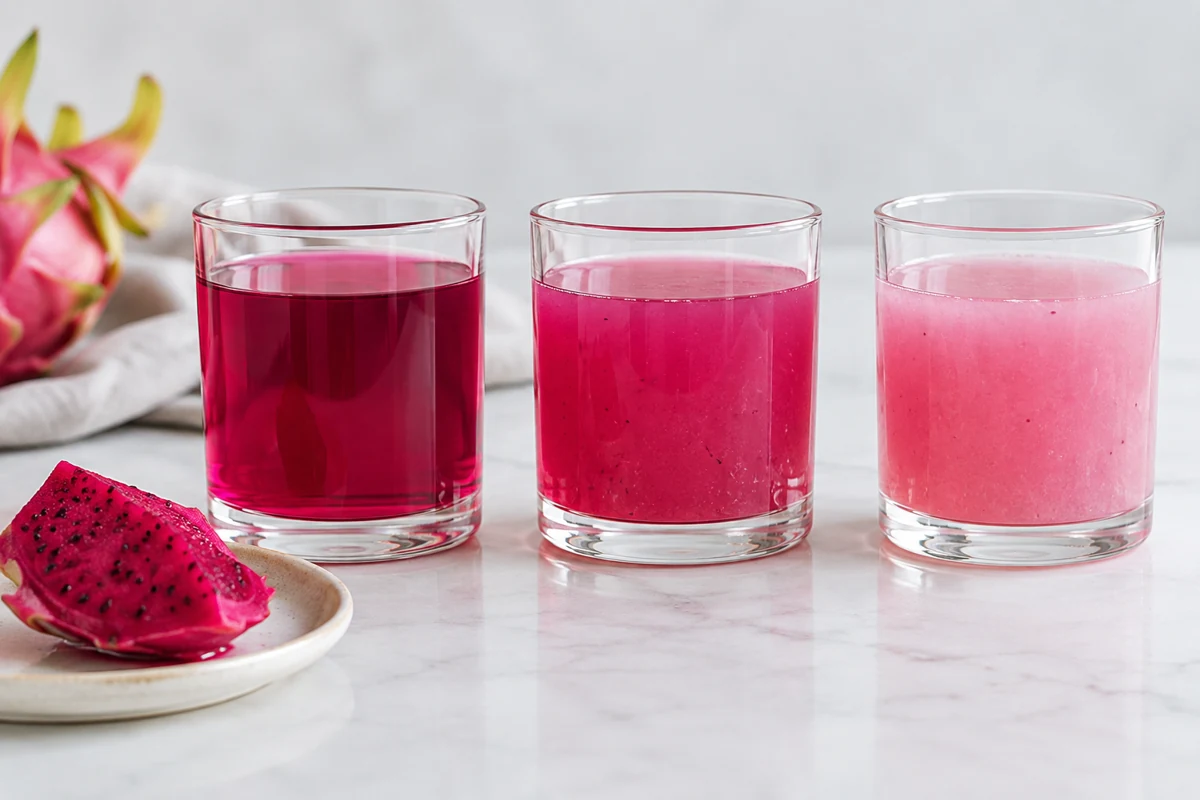
The red-purple pigments are betacyanins, part of the betalain group. Their response depends on the surrounding food system, so a pH or heating condition that retains color in one published juice experiment is not a universal processing instruction. A commercial beverage also needs a separately validated safety process. The tests described here are a development framework, not performed GreenLand trials or proof of shelf stability. We help buyers define the frozen fruit input so that a successful beverage trial can be connected to a repeatable supply specification.
Specify the red fruit input
Begin with confirmed red flesh. The pink skin on a whole dragon fruit does not by itself identify the color of its interior, and white-flesh material will not deliver the same magenta contribution. The order should name flesh color, physical form and ingredient declaration. GreenLand's current corresponding product page describes red dice, with white pieces reviewed separately. If the beverage requires puree, concentrate or screened juice, confirm that format and its process history as a separate request rather than treating it as a simple substitute for frozen dice.
Record the fruit dose as a percentage of the complete drink by weight. A formula containing ten percent fruit can be interpreted differently if one operator weighs whole frozen pieces while another weighs drained thawed flesh. For a whole-fruit formulation, account for released juice as part of the fruit unless the approved method explicitly removes it. Discarding that liquid changes both yield and the material entering the drink. Define controlled thawing or direct blending in the recipe and use the same method for every comparison.

Corresponding GreenLand product photograph: red-flesh frozen dice. Appearance supports identity; it does not establish an analytical or safety result.
Measure the input attributes that explain performance. Depending on the product, these may include soluble solids, pH, titratable acidity, seed content, particle size and a color measurement made after a standardized preparation. No single measurement describes the entire fruit. Two lots with similar soluble solids can differ in pigment strength or acidity. A photograph of frozen dice is useful for identity and visible defects, while a standardized beverage dilution is more useful for judging the color contribution at the intended use level.
Sampling deserves attention because a few intensely colored pieces can make a lot look more uniform than it is. Combine representative portions according to an agreed sampling plan, homogenize through a defined method and take analytical samples from the mixed material. Keep frozen and prepared references under suitable conditions, identified by lot and date. If the supplier and buyer use different preparation methods, align those methods before negotiating a tight numerical color tolerance. Otherwise, a laboratory difference may be mistaken for an ingredient difference.
Use the frozen dragon fruit supply page to begin the specification discussion. For color development, we would want to know the fruit dose, beverage type, processing route, package and intended storage conditions. These facts help determine whether cut distribution, recovered puree yield or standardized color strength deserves the most attention. They also prevent a visually attractive frozen sample from being approved for a drink whose processing conditions have not yet been assessed.
Keep incoming condition in the record. Heavy ice, damaged packaging or unexplained clumping should prompt a review of the lot and temperature evidence. They do not quantify pigment loss by themselves. Compare the prepared sample with the retained reference before changing the formulation, and preserve the details needed to distinguish an input change from a mixing, processing or storage issue.
Use a white-flesh reference carefully
White dragon fruit can help a team understand the role of the red ingredient when both forms are available for development. Prepare a small comparison with the same fruit dose and the same surrounding recipe. The white version shows how much of the finished appearance comes from milk, tea, juice, suspended pulp or other ingredients. It is a useful visual reference, but it is not a chemically identical control. The two fruit lots may differ in composition, maturity and handling as well as color.

Corresponding GreenLand product photograph: white-flesh pieces. Approve this distinct material separately rather than assuming equivalence to red fruit.
For a tighter investigation, include a beverage base without added dragon fruit and the complete red-fruit beverage. Keep the remaining ingredients and preparation consistent, and account for the omitted fruit mass explicitly. Replacing fruit with water is a deliberate change that affects solids and acidity, so document it rather than calling the result an exact control. The appropriate control depends on the question: pigment contribution, effect of fruit solids, or interaction with another ingredient. A single comparison cannot isolate all three.
The finished matrix can change the way the same pigment is perceived. A translucent lemonade and an opaque dairy or plant-based drink can look different at equal red-fruit dose because light passes through or scatters within them differently. Tea and other colored ingredients can also shift the visible result. Judge the drink in the actual service vessel or package after using a standardized analytical method for internal comparison. Both views matter, because the consumer sees the package while the development team needs repeatable measurements.
Check whether color complaints arise from recipe substitution. A different coconut drink, a darker tea infusion or a change in puree screening can produce a visible difference without a failure in the incoming red fruit. Record the complete ingredient specifications, including sweeteners and any permitted stabilizers or antioxidants. When an ingredient changes, first reproduce the original recipe with the retained fruit sample. That comparison helps identify whether the cause sits in the fruit, the beverage base or the interaction between them.
Seed removal is another visible change. Whole-fruit drinks can contain fine black specks and pulp, while screened material presents a more uniform appearance. Screening can remove liquid-bearing solids and alter recovered yield, so measure the recovered fraction and the resulting drink rather than using screen size alone as the specification. A customer who wants a clear drink may need a different ingredient and processing route from a customer who accepts a cloudy fruit beverage. Clarify that expectation before optimizing color intensity.
A white-fruit sample should remain identified as a separate development material and separate commercial option. It cannot demonstrate the stability of red betacyanins, nor can a pale drink establish that red pigment has degraded. For pigment retention, compare the red formulation with itself over time and treatment. Use the white reference only to answer the narrower question it can support: how the surrounding beverage looks when the strong red contribution is absent.
Test pH inside the finished drink
Measure pH after the complete recipe is mixed and has reached the measurement condition specified by your method. The pH of thawed fruit alone does not represent a drink containing lemon juice, tea, dairy ingredients or buffering salts. Use a suitable calibrated meter, follow its temperature and sample requirements, and record when the reading was taken. A strongly colored drink makes indicator strips difficult to interpret reliably, especially when the development question depends on relatively small differences.
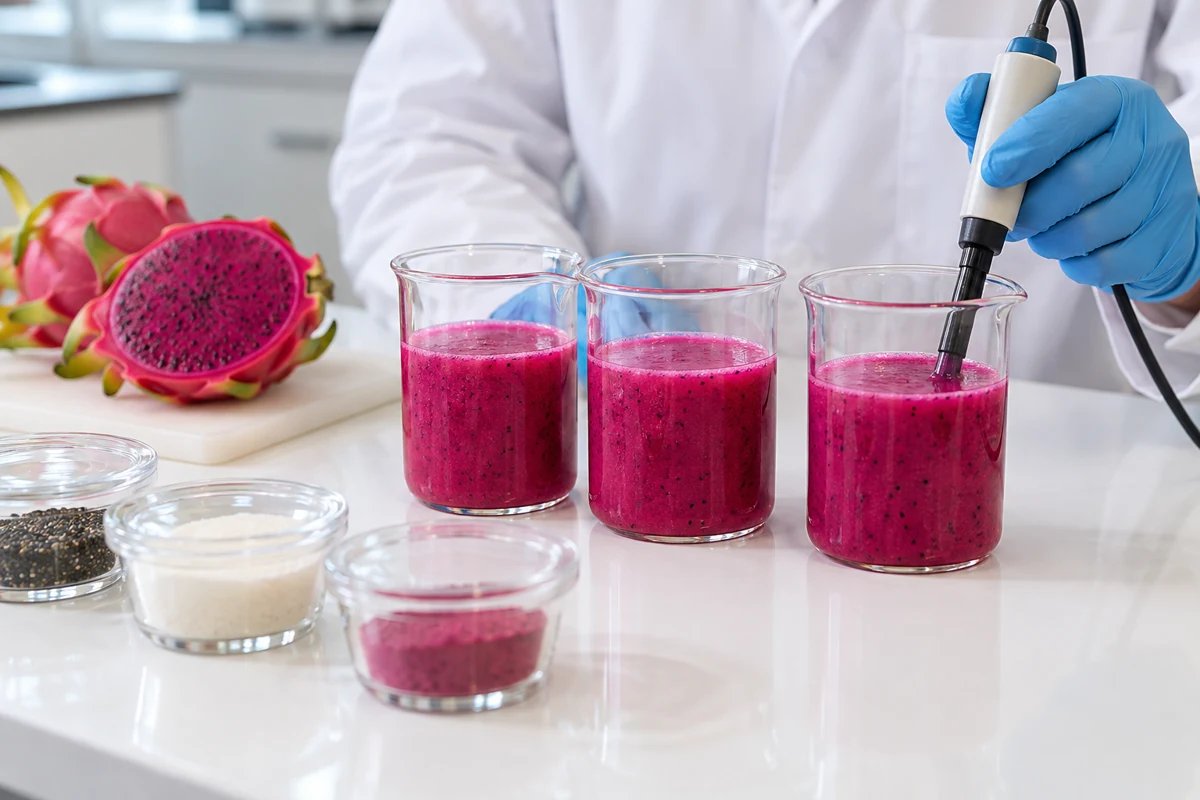
Measure the complete drink with a suitable calibrated method; the image shows a setup, not a pH result.
Choose the pH range from the intended flavor, product category and safety design. Within that permitted range, prepare a limited set of test conditions while holding fruit dose, soluble solids and other ingredients as consistent as practicable. Document the type and amount of food-grade acid or other permitted adjustment. The purpose is to compare realistic formulations. A laboratory experiment using analytical reagents does not automatically provide an ingredient recipe for a commercial beverage.
Published work illustrates why the result must be tied to the matrix. Wong and Siow's red dragon fruit juice and concentrate study examined pH, heat, ascorbic acid, agitation and light in defined models. A study of LD5 red-flesh dragon fruit juice also found that retention depended on treatment conditions. Their findings justify testing these variables; the selected conditions in either paper do not establish your beverage's best flavor, permitted formulation or microbiological safety.
Track titratable acidity when it is relevant to flavor and consistency. pH expresses a different property from the amount of acid required in a titration, so matching pH alone may leave two drinks tasting different. A beverage developer should specify the analytical method and acid basis when using titratable acidity. This is especially useful when fruit variability requires small recipe adjustments. Keep those adjustments within the approved formula and labeling requirements rather than allowing operators to correct each batch freely by taste.
Look at the drink immediately after adjustment and again after the intended treatment and storage. An attractive initial color can still change later. Measure a common baseline before exposure, then compare subsequent readings with that baseline. If all test samples are photographed under different lighting or at different temperatures, the apparent pH effect becomes difficult to interpret. Randomize the sample positions during assessment or use blind codes so expectations do not steer the visual judgment.
Do not use color as a pH meter or a safety signal. Red dragon fruit is not a universal color-change indicator with a fixed visual endpoint suitable for production control. A bright drink can be outside its approved formulation, and a faded drink can have a separate quality problem. The finished product's validated controls govern release. Color measurements provide additional evidence about appearance and ingredient performance, with their own acceptance criteria and investigation process.
| Question | Hold consistent | Record separately |
|---|---|---|
| pH response | Fruit dose and beverage matrix | Acid identity, dose, final pH and acidity |
| Heat response | Complete formulation and pack geometry | Actual product heating, hold and cooling history |
| Light response | Formula, package geometry and temperature | Exposure and protection, with oxygen conditions documented |
Record the whole heating history
A meaningful heat comparison records the temperature experienced by the product and how long it experiences it. The setting on a water bath, kettle or heat exchanger is not automatically the temperature at the coldest or slowest-heating point in the beverage. Include the rise to the treatment condition, the hold and the cooling period. Small laboratory bottles and a production line can have different histories, even when both are described using the same nominal temperature and time.
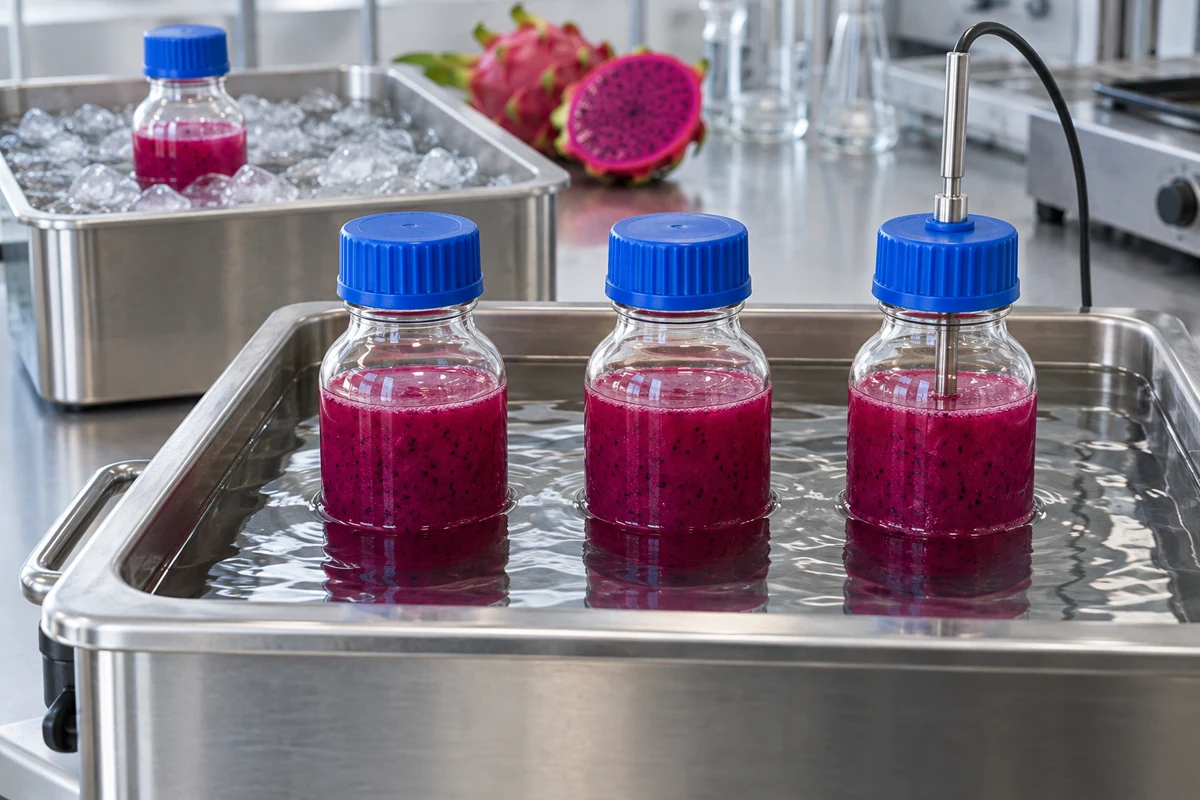
Record actual product temperature through heating and cooling. The depicted glass-bottle setup is illustrative, not a validated safety process.
Work with the person responsible for process validation to define which treatments are appropriate to investigate. Color optimization must operate within the required safety process. Do not shorten a hold or add untreated fruit after a kill step simply because a laboratory color result looks better. If post-process addition is proposed, the entire ingredient and filling system needs the relevant validated controls. A pigment-retention experiment cannot establish pathogen reduction, commercial sterility or the suitability of an aseptic operation.
Prepare enough identical samples to separate treatment effects from sampling variation. Keep fill mass, container geometry, headspace and closure conditions consistent for a bench study. Record the actual product temperature with an appropriate calibrated method and cool samples according to the defined protocol. Compare them at a common measurement temperature. A hotter sample can differ in optical appearance or physical behavior before any lasting color change is considered, so immediate casual observation is a weak basis for ranking treatments.
In a syrup-based drink, the order of addition is worth documenting. Heating syrup separately and mixing after it has cooled creates a different fruit heat history from heating the complete fruit beverage. Either route may have practical uses, but its safety controls and shelf-life evidence must match the complete product and process. A household lemonade recipe that cools syrup before adding fruit provides an assembly method, not a commercial preservation schedule. Keep that distinction clear when translating a recipe into a bottled product.
Assess flavor and physical stability alongside color. A treatment may retain an attractive magenta appearance while producing an unacceptable aroma, separation or cooked note. Use a structured sensory comparison with samples handled under the approved safety procedure. Record what changed and whether the difference matters at the intended serving temperature. If the beverage is diluted at the point of use, evaluate both the concentrate and the prepared drink, because the customer's experience depends on the latter.
For scale-up, retain the pilot settings and the measured product history, then confirm them on the intended equipment. Include startup, steady operation and end-of-run conditions where they affect exposure. Hold or divert material according to the validated process when the line departs from its limits. The purchasing specification can then describe the fruit input that supports the approved process, while the production record demonstrates what the beverage actually experienced during manufacture.
Separate light exposure from oxygen
Compare light-exposed samples with protected samples of the same beverage, package geometry and storage temperature. An opaque wrap can provide a practical protected comparison, provided it does not create a different thermal condition. Measure or monitor the storage temperature and record the light source, approximate exposure pattern and duration. A bottle in direct sun may become warmer than a bottle in a cupboard; that experiment combines light and temperature unless the design accounts for both.
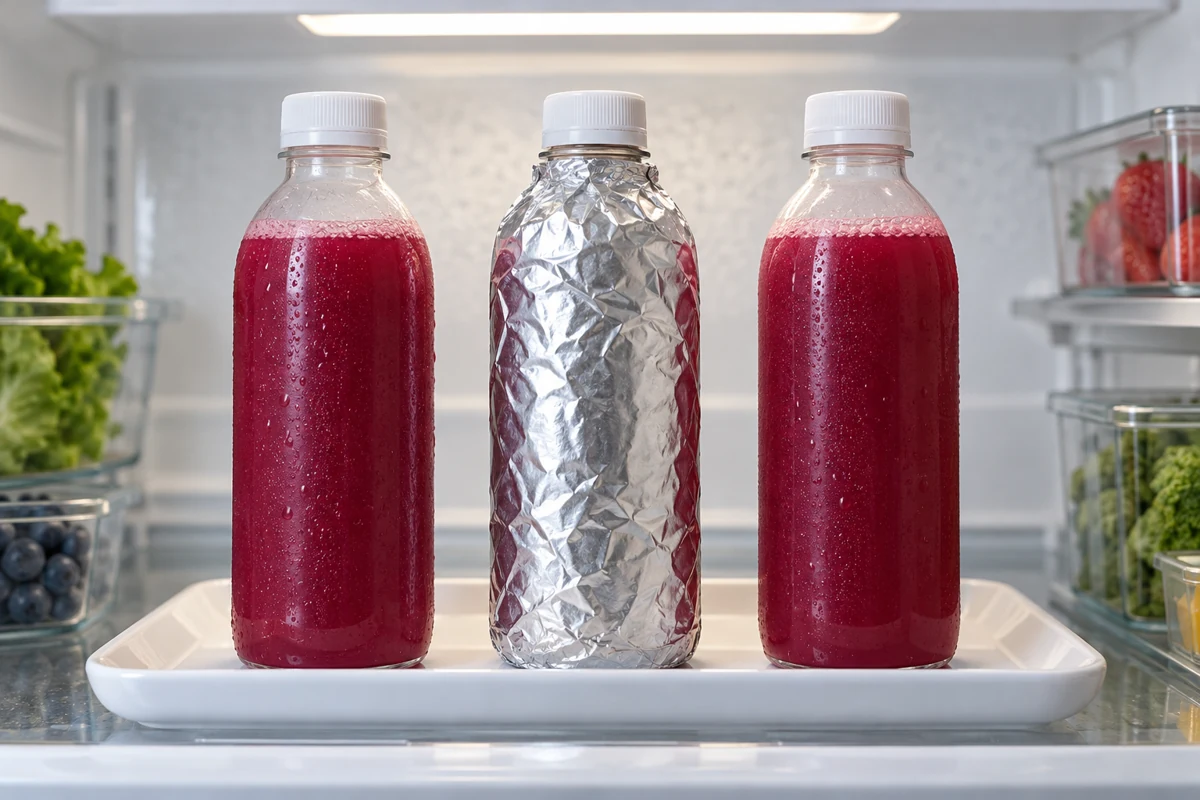
A protected bottle supports a light comparison only when temperature and other exposure conditions remain comparable.
Use the proposed sales package when evaluating commercial relevance. Clear glass, colored glass, different plastics, sleeves and cartons transmit light differently, but their names alone do not establish protection. Closure performance, oxygen transmission, fill conditions and the actual distribution environment also matter. Request relevant packaging information from the supplier and verify the beverage in the complete pack. A protected laboratory tube is a useful comparison, not a substitute for a finished-package storage study.
Oxygen should be controlled or at least documented. Mixing can entrain air, headspace can vary with fill level, and repeated opening introduces a different exposure from an unopened bottle. Use separate containers for destructive sampling where practical. If the same bottle is opened repeatedly, record that procedure and interpret it as an opened-pack condition. For a beverage consumed over several servings, an additional study may be needed to represent the intended use after opening.
Avoid assigning a universal benefit to an antioxidant from a single study. The effect of ascorbic acid and other permitted ingredients depends on concentration, matrix, oxygen and processing. Any addition also changes the formulation and may affect flavor, labeling and analytical results. Test the proposed ingredient at realistic levels within the relevant legal and product requirements. Keep an untreated formulation comparison so the team can identify whether the addition provides a meaningful improvement in the actual drink.
Plan storage observations around the proposed distribution route. A refrigerated drink, a frozen concentrate and a product intended for ambient sale have different requirements. Use suitable conditions to represent normal storage and justified stress testing, then keep their conclusions separate. Accelerated exposure can help compare candidates, but a faster change under a harsh condition does not by itself establish a precise real-time shelf life. The relationship needs evidence for the specific product and failure mode.
When the first trial suggests a packaging advantage, repeat it with representative fruit lots and actual production samples. Check whether the improvement persists after normal filling and shipping. A laboratory sample prepared with unusually little air or held under ideal refrigeration may overstate commercial performance. Record the result as a defined combination of formulation, process, package and storage condition so future purchasing or packaging changes trigger the appropriate review.
Measure color without confusing it with cloud
Use a standard visual setup before comparing samples. Identical vessels, fill heights, backgrounds and illumination reduce avoidable differences. Let bubbles settle according to a defined method, and decide whether samples are assessed mixed or undisturbed. A photograph taken with automatic exposure can make a pale sample appear more saturated or change the brightness between frames. Lock the relevant camera settings where possible and include a suitable reference for internal documentation. The photograph remains supporting evidence, not an absolute pigment measurement.
A colorimeter or spectrophotometer can provide more reproducible data when the method fits the drink. Define the measurement geometry, path length, sample preparation and instrument settings. Cloudy beverages scatter light, so a method suited to a clear extract may need additional controls. Work with the laboratory to distinguish instrument color values from an assay of betacyanin concentration. Those are related observations with different meanings; one cannot be silently substituted for the other in a specification.
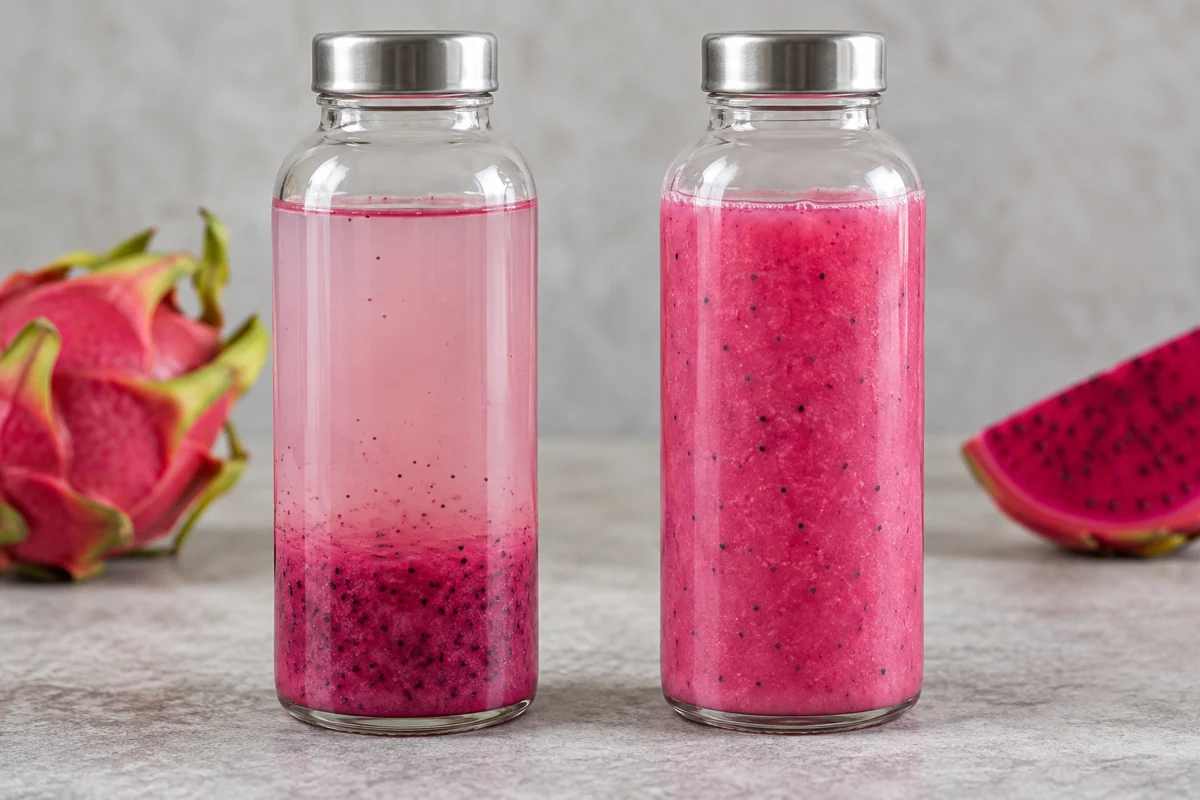
A lighter upper layer can reflect settling. Check redispersion separately from chemical color change.
Physical settling can make the upper part of a bottle look lighter while a darker pulp layer gathers below. First inspect the unopened sample, then mix it through a defined gentle procedure and reassess. If the color becomes uniform again, sedimentation is part of the explanation. That does not prove that no chemical change occurred, but it prevents every visible difference from being labeled pigment degradation. Record the settled layer, ease of redispersion and the appearance after mixing as separate attributes.
Dilution errors deserve a similar check. Confirm weighed fruit dose, water addition, syrup solids and final batch mass. Evaporation during heating can concentrate the beverage, while an incorrect top-up can weaken it. A dark sample is not necessarily more stable if it simply contains less water. Where samples are diluted for instrumental analysis, use a documented dilution factor and the same procedure throughout. Keep calculations and raw readings with the sample identity so another analyst can reproduce the result.
Define acceptance before examining the final data. A team might require a visual match to an approved reference under standard lighting, a specified instrument range and an acceptable level of sediment. Select limits from customer expectations and product evidence; there is no universal color-difference threshold that automatically represents acceptability for every dragon fruit drink. Include flavor, odor, physical stability and safety criteria in the complete release decision. Passing a color measurement alone is insufficient.
When a result fails, investigate the earliest point at which the difference appears. Compare incoming fruit preparation, mixed beverage, post-treatment sample and stored package. This sequence helps locate the responsible stage. If the deviation appears only after a packaging change, repeating incoming fruit analysis may not resolve it. If it is already present before heating, inspect dose, fruit identity and matrix composition first. A clear stage record turns a vague complaint about fading into a focused technical discussion.
Approve the beverage and incoming lot together
Select the final fruit specification from the complete development result. State red-flesh identity, physical form, ingredient declaration, relevant defects and the sample preparation used for color evaluation. If pigment strength or an instrumental color value is required, name the method and the represented material. A result measured on clarified laboratory extract cannot be compared directly with an unscreened factory puree reading. Agree the basis with the supplier before setting a rejection limit.

Keep the accepted drink and its fruit lot linked through a defined reference and repeatable comparison.
Confirm the intended use and the safety responsibilities for the ingredient. Frozen storage preserves quality but does not establish that the fruit is suitable for addition to a ready-to-drink beverage after processing. FDA's food storage guidance notes that freezing does not kill most bacteria. Your hazard analysis and validated process must address the selected ingredient, preparation and filling route. Ask for the relevant lot documentation and verify its scope rather than treating a bright appearance or a general certificate as release evidence.
The commercial order should also describe packing, net weight, lot identification, storage instructions, destination and requested analytical documents. Discuss forecast volume and delivery timing so sample approval is connected to a realistic supply plan. When a specific cultivar, origin or crop period is required, confirm that the selected supply lot supports the declaration. We confirm those details for the order; an article cannot guarantee an unverified cultivar or a fixed pigment level across every future shipment.
Retain both the accepted ingredient sample and the beverage trial record. Include formulation version, processing history, package, storage condition and the reason each candidate was accepted or rejected. This record is valuable when a supplier lot, acid source, stabilizer, tea ingredient or package changes. It allows the team to repeat the affected comparison without reconstructing the original reasoning from photographs and informal messages. Keep any remaining uncertainty explicit until the corresponding trial is complete.
At receipt, inspect representative frozen packs and prepare the agreed standardized sample. Compare it with the reference through the approved method, then confirm performance in the beverage when the risk warrants it. If the incoming result differs, hold the affected material under the applicable procedure while the cause is reviewed. Changing the fruit dose to hide a weak result can alter solids, flavor and cost, so any correction should follow an approved formulation rule and remain traceable.
A useful inquiry therefore includes the target drink, fruit percentage, pH range, processing route, package and intended storage life, along with the frozen ingredient form, quantity and destination. Share the appearance target and the methods your laboratory can run. That gives GreenLand-food and your development team a common basis for selecting a sample and agreeing the supply terms. The color promise then belongs to an evaluated beverage system, supported by a clearly defined fruit input.
A repeatable trial sequence
- Approve the complete beverage formula, process, package and storage condition.
- Agree a fruit-sample preparation and appearance method with the supplier.
- Compare a representative incoming lot with the retained reference.
- Investigate any deviation before changing the fruit dose or acceptance limits.
Source Frozen Dragon Fruit with GreenLand-food
We are a frozen dragon fruit supplier and manufacturer in China, offering factory-direct wholesale supply for importers, food manufacturers and foodservice programs. Product form, packing and order terms are confirmed for the selected SKU.
Send the red or white flesh requirement, cut, application, trial criteria, packing, quantity, destination and requested documents so we can discuss a suitable sample and quotation.