


Freezing and Thawing Goji Berries for Later Food Use
Oct 19, 2026
Leave a message

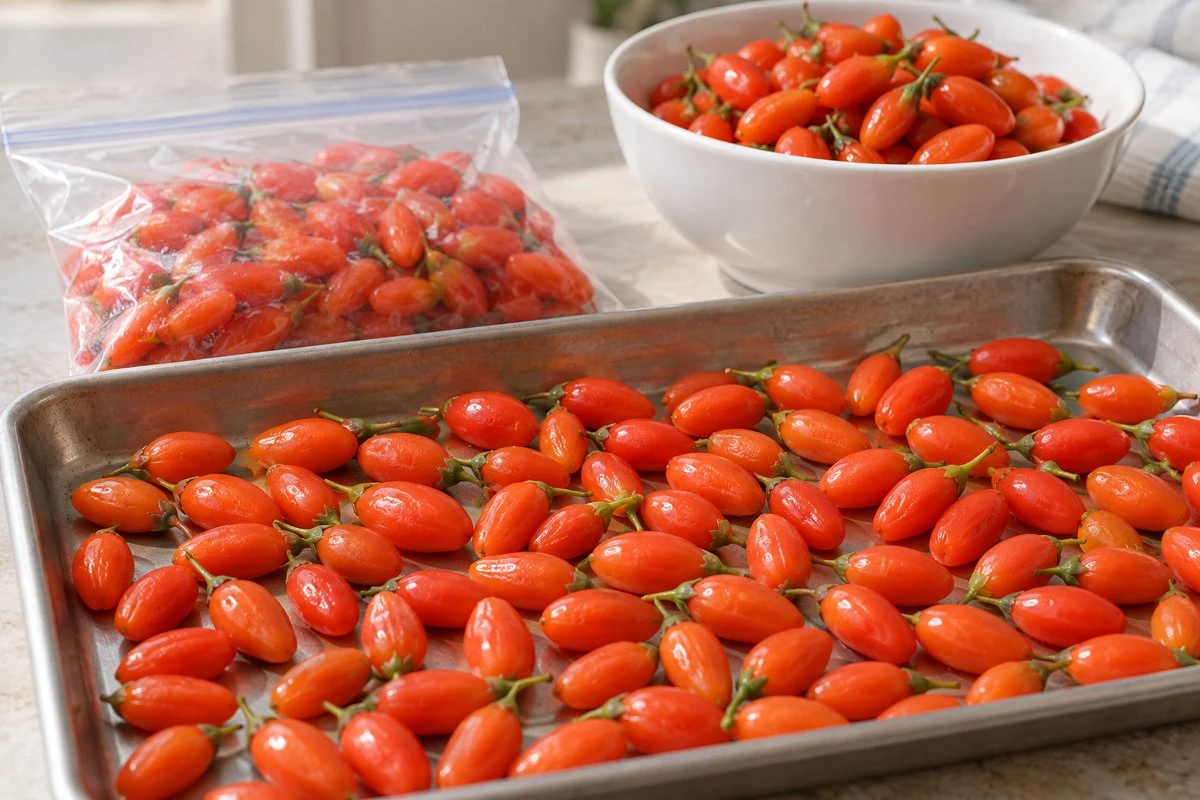
Freezing does not turn poor fruit into good fruit or establish that an ingredient is ready to eat. The fruit's identity, condition, intended use and handling history remain important. For a purchased frozen product, follow the supplier's instructions and the receiving business's food-safety procedures. A home tray-freezing method is useful for small quantities, but it does not validate the processing or shelf life of a commercial lot.
The following guide explains the physical handling decisions and how to make later use more predictable. It avoids fixed promises about freezing time, thawing time or storage life because pack size, equipment, fruit condition and the approved product specification determine those outcomes.
Choose sound fruit and the later use
Decide what the fruit will become before preparing the freezer batch. Goji destined for a cooked sauce can tolerate a different post-thaw appearance from berries intended to remain visible in a finished food. If whole-fruit appearance matters, handle the berries gently and plan a representative trial after thawing and the intended cooking or mixing step. The frozen appearance alone cannot predict how many berries will remain recognizable later.
Use correctly identified edible goji fruit from a suitable source. Red-goji trade names do not by themselves confirm botanical species, and a photograph is insufficient for identifying an unknown garden plant for eating. For a commercial purchase, record the supplier's product identity and intended-use statement. The Utah State University goji guide describes delicate fruit and bruising during harvest, which supports a gentle approach to preparing known food fruit.
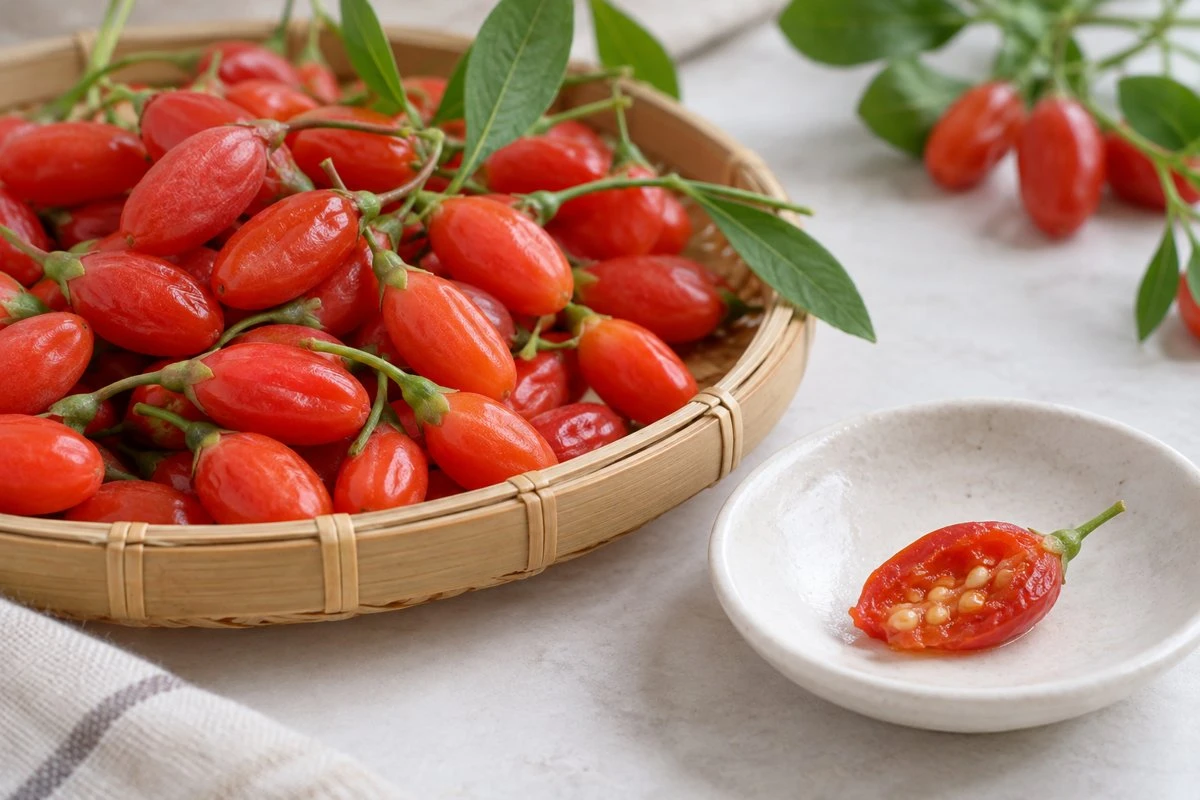
Select sound known edible fruit before washing or freezing it.
Sort before freezing. Remove stems and leaves and exclude moldy, decayed or otherwise unsuitable berries. Inspect obvious splits and crushed areas, especially where leaked juice has accumulated. A quality sorting decision should not become an attempt to salvage spoiled fruit by freezing it. If an incoming commercial lot has an unexplained condition or an uncertain temperature history, hold it for the appropriate review rather than incorporating it into a normal preparation batch.
Choose practical portion sizes. A small foodservice operation may need enough berries for one recipe at a time, while a processor may use a complete inner pack. Portioning at the beginning reduces the need to warm a large quantity just to remove a little. The package should protect the fruit while allowing the planned use. Overfilling a deep container can make both freezing and later thawing less convenient.
For fresh fruit held briefly before preparation, follow suitable chilled handling and avoid unnecessary delay. Do not treat a general internet storage estimate as a guarantee for berries whose maturity and history are unknown. A clean, shallow container can reduce crushing compared with a heavy pile. Keep the fruit protected from contamination and organize the preparation area so that washing, drying and packing can follow without a long uncontrolled hold.
The goal at this stage is a known, sound ingredient and a realistic later use. Record the preparation date for a home batch; for business use, retain the lot and the relevant receipt information as well. Those details make stock rotation and later questions easier to manage. They also prevent a newly packed freezer bag from losing the identity and history that belonged to the original fruit.
Wash gently and control surface water
For fresh fruit being prepared at home, wash under clean running water and use clean equipment and hands. FDA's produce guidance advises washing produce under running water and does not recommend soap, detergent or commercial produce wash. Washing reduces contamination; it should not be described as a validated kill step or a guarantee that a berry is safe for every later use.
A fine colander helps keep the small berries together without trapping them in large openings. Use a gentle flow and avoid forceful rubbing that damages thin skins. Clean the surrounding surface before setting the drained fruit down. A kitchen sink, cloth or tray that has contacted raw animal food can introduce contamination if it is reused without appropriate cleaning. The preparation sequence should keep the clean fruit away from dirty containers and discarded material.
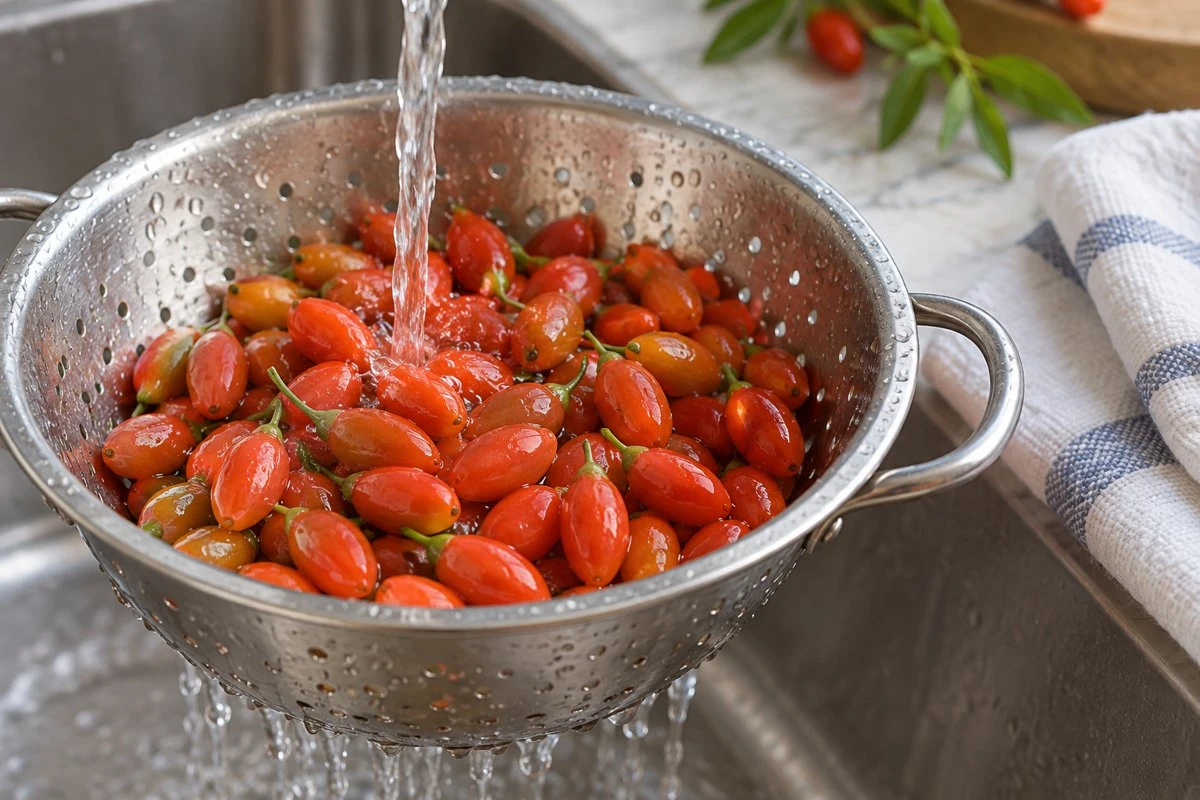
Wash fresh fruit gently under clean running water, then remove excess surface moisture.
Let water drain, then remove excess surface moisture with a clean suitable towel or other hygienic method. The purpose is to reduce water that can freeze between berries and form an external ice layer. It is not to dehydrate the fruit or leave it exposed for a long period. Gentle handling matters more than vigorous drying. If berries rupture while being rubbed, the released juice can create a different sticking problem.
Surface water and the fruit's own water are different. Drying the outside does not prevent all tissue changes during freezing, because the fruit still contains water internally. A properly drained berry can still soften after thawing. Explaining that distinction avoids an unrealistic expectation that a perfectly dry surface will preserve a fresh, firm texture. The later recipe should be designed around the actual post-thaw result.
For purchased commercial frozen berries, do not automatically add a wash-and-refreeze step. Read the product's instructions and intended use. Washing a frozen ingredient can introduce water, alter its temperature and change the preparation that the supplier's specification describes. If a business needs an additional wash or other control, it should be part of its defined process and food-safety assessment rather than an improvised response to a general home guide.
A simple household preparation sequence is: sort the known edible fruit, wash gently, drain promptly and remove excess surface water before arranging the freezer tray. Commercial operations should define their own water quality, equipment hygiene, handling time and verification requirements. The physical principle transfers, but the scale, hazards and records are different. A small-batch demonstration does not establish that a larger line uses an equivalent process.
Freeze separate berries before packing
A single shallow layer gives individual berries space and helps prevent a dense frozen mass. Place the prepared fruit on a clean freezer-suitable tray, using a suitable liner if needed, and avoid piling berries on top of one another. The Oregon State freezing guide describes tray freezing for suitable fruits and the value of manageable package sizes. Apply that principle gently to goji's small, delicate fruit.
Allow cold air to reach the tray and avoid loading the freezer with more unfrozen food than it can handle. A crowded freezer may recover slowly, and deep piles can freeze unevenly. Do not promise that every tray will be ready in a fixed number of minutes. Equipment capacity, the starting condition, tray loading and berry arrangement all influence the result. Check that the berries are frozen sufficiently for the intended transfer.
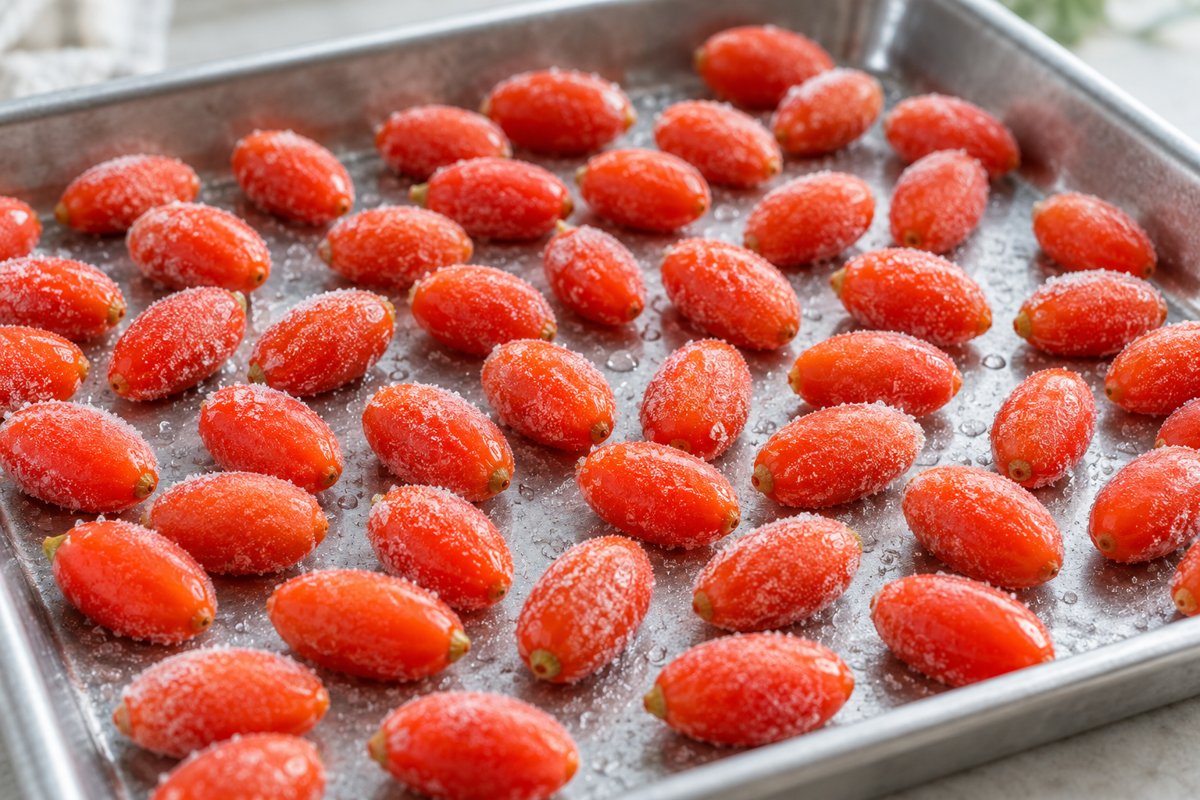
Space berries in a shallow layer for the initial tray-freezing stage.
Once the berries are firm and separate, transfer them promptly into protective freezer packaging. Leaving them exposed on the tray for prolonged storage increases exposure to dry freezer air and odors. The tray stage is a preparation step, while the closed package provides the longer-term protection. Work in portions that can be packed without extended warming and return the packages to the freezer promptly.
Handle the frozen fruit without excessive compression. A strong vacuum or heavy pressure can damage delicate berries, especially if they are not fully firm. The packaging method should suit the fruit and the equipment. Removing excess air from an appropriate freezer bag can be useful, but an aggressive vacuum should not be assumed beneficial for every berry or pack. Test appearance and handling under the actual method if whole-fruit integrity matters.
Home tray freezing should not be described as a certified industrial IQF process. Both may aim to keep pieces separate, but industrial equipment, throughput, hygiene, temperature monitoring and process controls are different. For a commercial ingredient, verify the supplied form and acceptance criteria directly. A free-flowing sample is a useful observation; it does not prove a particular factory technology or a complete freezing history.
If the fruit is intended to enter a cooked preparation as a complete batch, absolute separation may be less important than manageable pack size and a controlled process. If it will be metered in small doses, separation becomes more valuable. Let that use determine the practical quality target. The best freezer method is one that protects suitable fruit and delivers a usable portion without creating unnecessary handling later.
Protect the packed fruit during storage
Choose packaging designed for freezer use and suitable for food contact. Close it securely, protect the seal and avoid sharp edges that can puncture the material. The package should limit exposure to air and moisture loss while keeping the fruit contained. A shallow pack can be easier to organize and use than a bulky irregular one, provided it protects the berries from crushing under other stored foods.
Label the batch with its identity and preparation date, and keep different lots distinguishable. For business use, retain the supplier lot and the link to the original package or receiving record. A handwritten freezer date does not replace the manufacturer's shelf-life information or the facility's traceability requirements. Stock rotation works best when the person using the fruit can identify it without opening several packages.
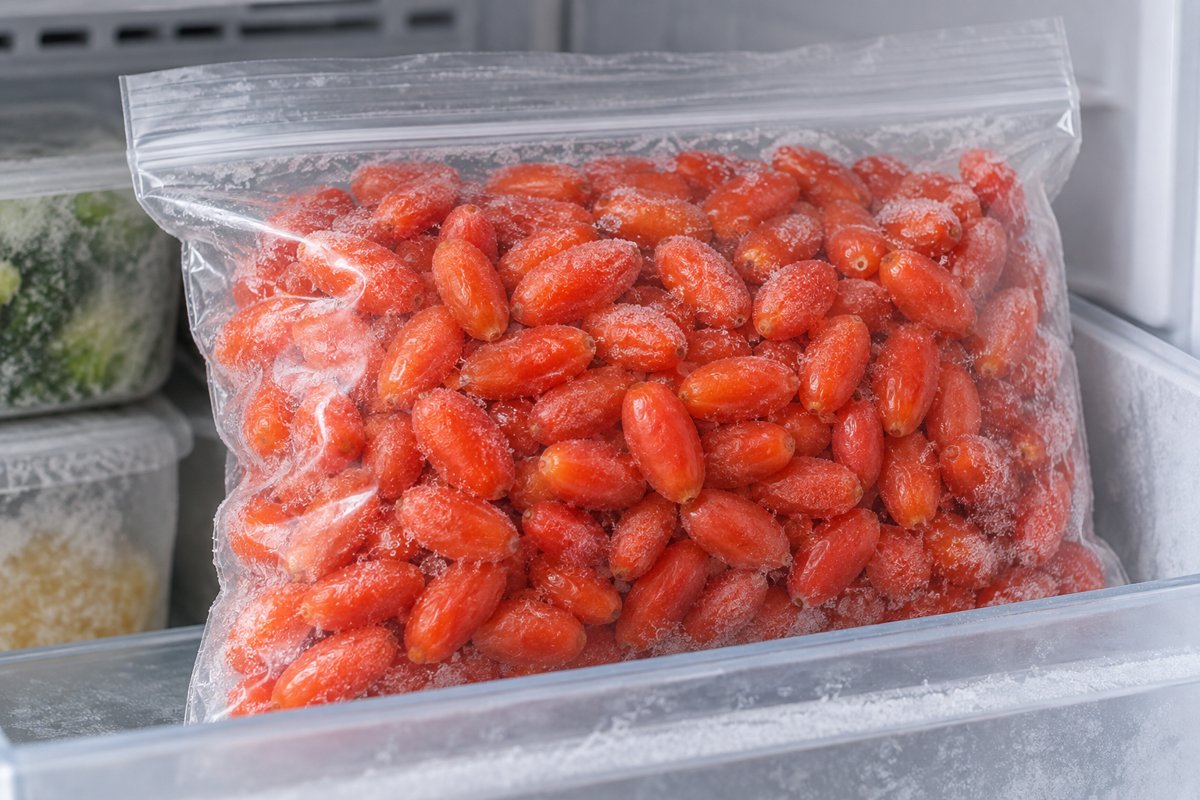
Pack promptly in suitable freezer packaging and protect the seal.
US household guidance commonly uses 0°F, approximately minus 18°C, or below for frozen storage. FDA household storage guidance gives this freezer setting and a refrigerator limit of 40°F, approximately 4°C. For a commercial goji order, the approved specification and the business's storage controls govern the required conditions and tolerances. A freezer dial setting alone does not document the temperature history of every pack.
Maintain stable storage and reduce unnecessary warming during portioning. Repeated exposure can contribute to changes in surface ice, clumping and texture. Open only what the operation needs, close the remainder correctly and return it promptly under the applicable procedure. If the normal demand is much smaller than the pack, consider a different inner pack size at the next order. Better packing can remove a recurring handling problem.
Freezer burn and surface drying are quality concerns, but their appearance does not answer every safety question. Similarly, a large ice cluster can have more than one explanation. Record the observed condition and examine the handling evidence rather than diagnosing a specific event from a single photograph. Where a commercial lot may have experienced an excursion, preserve the records and follow the site's disposition process.
Do not assign a universal goji freezer life from this guide. Quality retention depends on the raw fruit, preparation, packaging and storage history; commercial shelf life requires support for the defined product. Use the label and approved specification, and assess a home batch conservatively if its condition or history is uncertain. A calendar estimate should never be used to dismiss signs of spoilage or an unresolved handling problem.
Thaw only what the next process needs
Some recipes can use frozen fruit directly, while others need a controlled thaw for mixing, screening or measuring a drained portion. Decide which state the next step requires before removing the fruit from storage. A recipe or validated process designed for a frozen input should be followed as written. A process designed for thawed material should not receive a frozen block without assessing the effect on equipment, heating and the finished food.
When a separate thaw is needed, use refrigeration and keep the fruit in a clean covered container with suitable drip containment. Household refrigerator guidance uses 40°F, approximately 4°C, or below. A business must follow its applicable requirements and approved procedures. Place the container so it remains protected from contamination and does not leak onto other food. Thawing should be planned as part of preparation rather than performed wherever there is spare counter space.
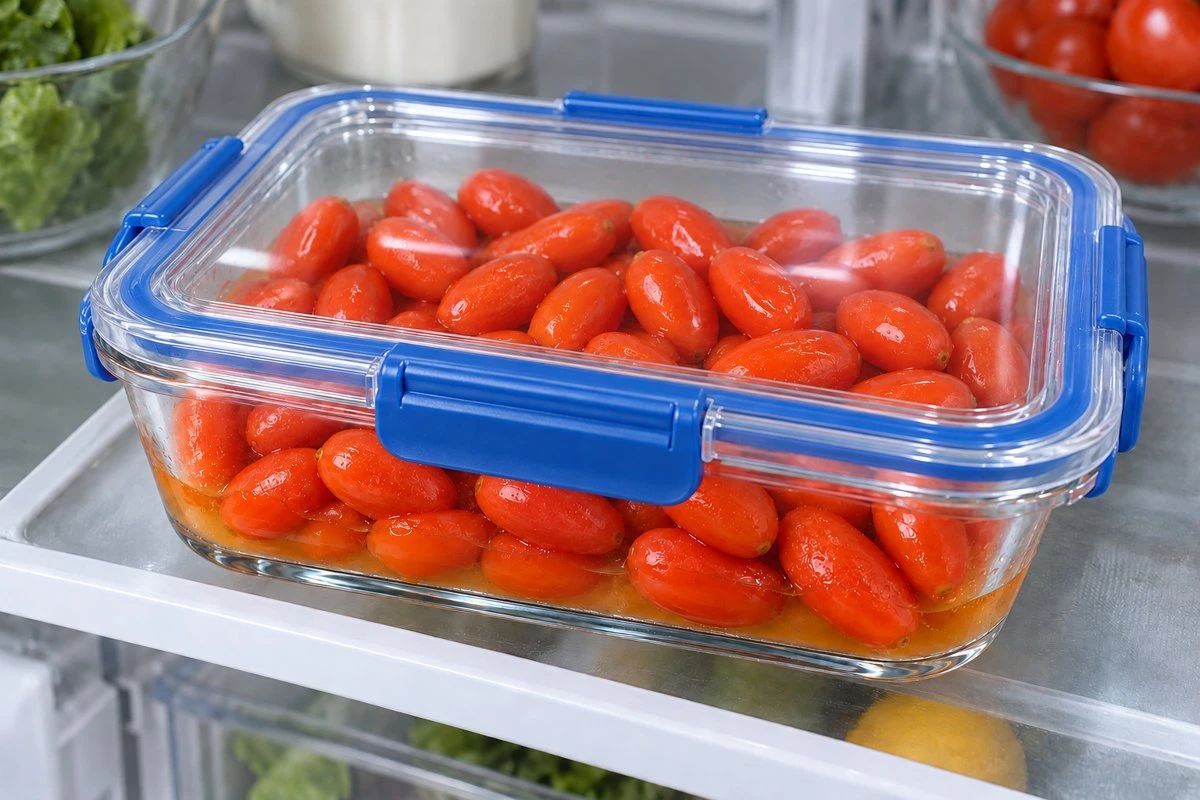
Keep refrigerator-thawing fruit contained and prevent drips onto other foods.
Avoid a fixed thaw-time promise. A thin portion of separate berries and a large dense pack have different geometry and may behave differently even in the same refrigerator. The exterior can soften before the centre. Decide whether the endpoint is fully thawed, partly thawed but separable, or ready for the next controlled process, and evaluate that condition appropriately. A cold centre does not establish the full history of the warmer surface.
| Route | When it may suit the food | What must be controlled | Main quality question |
|---|---|---|---|
| Direct use from frozen | A recipe and equipment designed for a frozen input | Product instructions and the validated process | Melting, dispersion and final texture |
| Refrigerator thaw | Measured preparation, screening or a defined thawed input | Containment, temperature, time and subsequent use | Liquid release and whole-fruit integrity |
| Partial controlled thaw | A process that needs separable pieces | A defined endpoint and approved handling procedure | Consistency of the partially frozen state |
Microwave or water thawing should not be improvised simply because the berries are small. These methods can create different temperature and texture conditions and must fit the product's instructions and the immediate next step. For broader methods and their limits, see our guide to safe thawing. Refrigerator thawing offers a straightforward default when time is available and the food needs a separate thaw.
Keep the intended-use requirement visible throughout. Thawing a frozen berry does not make it ready to eat. FDA explains that freezing generally does not inactivate viruses associated with berry contamination. A further-processing ingredient still needs the appropriate control in the finished-food process. Appearance, sweetness and a clean smell cannot verify the absence of those hazards.
Use the liquid and softer fruit deliberately
Thawed goji may release liquid and lose some firmness. This can be an expected quality change rather than evidence of spoilage, but it should be interpreted alongside the fruit's condition and handling history. The useful question is how the thawed material performs in the intended food. A sauce, cooked cereal or puree may accommodate softened fruit more readily than a preparation that depends on firm visible berries.
Do not drain automatically. The released liquid can contribute water, color, flavor and soluble material to the recipe. A sauce that uses the complete pack has a different formulation from one made with drained berries. If drainage is required, define the method and record the removed mass. The choice should be deliberate so that operators do not make different versions of the same recipe while believing they used an identical fruit weight.
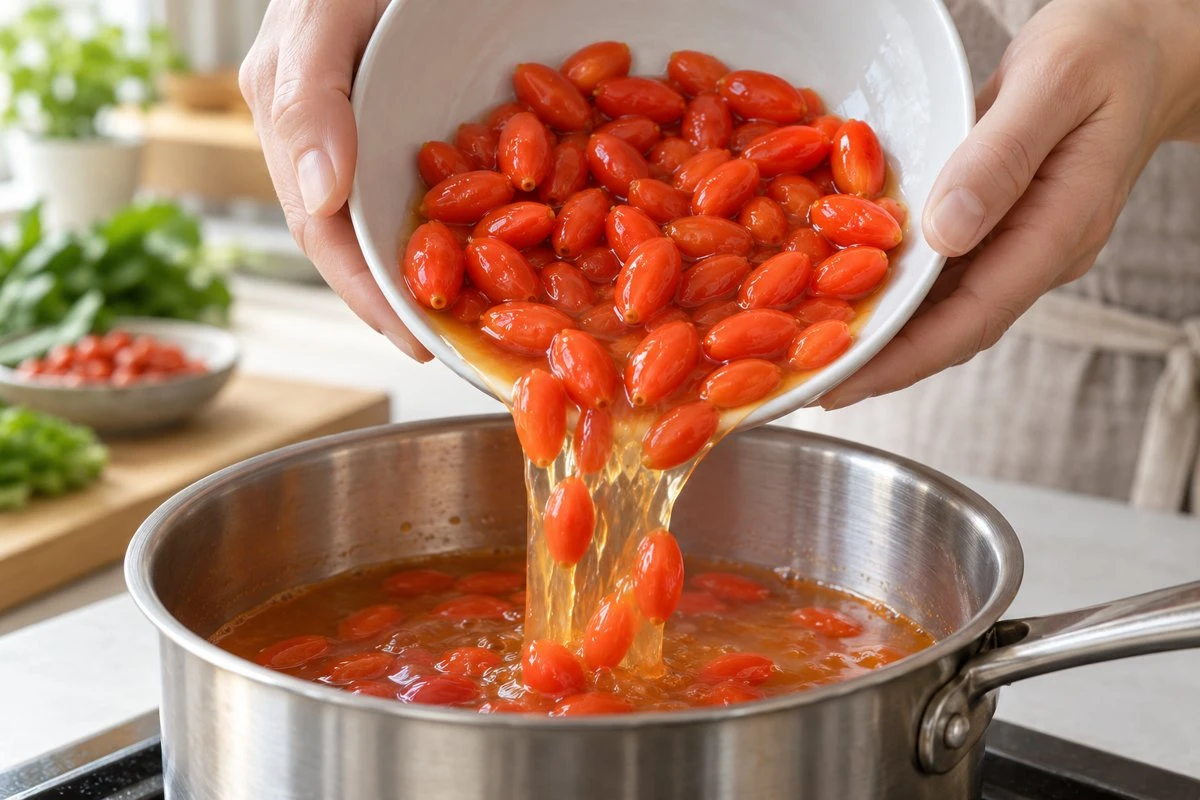
Include released juice in the recipe balance when the complete pack is used.
For a simple development comparison, prepare equivalent portions under the same controlled thaw. Record the starting mass, recovered fruit and separated liquid without squeezing the fruit unless squeezing is part of the intended process. Use the same drainage equipment and duration if comparing drained portions. These proposed observations help explain quality; they are not a lot acceptance plan until the buyer and supplier agree the sampling and criteria.
If the fruit will be pulped or screened, evaluate the result after that step. Whole-berry softness may have little commercial significance if the process deliberately breaks the tissue, while seed and skin residue can remain important. A screen setting does not completely specify the finished particle structure. The puree screening guide provides background for choosing a method that relates to the actual drink or filling.
Cooking from frozen also changes the heat input compared with using thawed fruit. Energy is needed to warm and melt the frozen portion before later heating proceeds. The result depends on the equipment, batch size and recipe. Our kettle-loading discussion explains why identical kilograms can still produce different heat-up behavior. That comparison helps quality trials and does not validate a food-safety heating schedule.
Evaluate the finished application at its intended serving condition. A hot sauce may seem smooth while a chilled sample shows more obvious skin or seed texture. A fruit inclusion can soften further during holding. Record the observation time and preparation so that the result can guide the next order. A useful decision connects the incoming fruit with the food the customer will actually use, rather than stopping at the appearance of the thawing container.
Handle deviations and commercial receiving
A planned thaw and an unplanned temperature excursion are different situations. Planned thawing begins with a suitable product and a defined procedure. An excursion introduces a history that needs review before the product returns to normal use. If a commercial delivery arrives with uncertain temperature records, damaged packs or unexplained wetting, retain the evidence and hold the affected material according to the business's procedure. Refreezing should not erase that uncertainty.
Do not make repeated thawing and refreezing the normal portioning method. FDA's household storage guidance allows refreezing in certain power-loss situations when food still contains ice crystals or is at 40°F or below. That guidance is not approval for a commercial lot with incomplete records. The product instructions, exposure history and the receiving business's food-safety assessment govern disposition. Smaller portions help avoid repeatedly changing the condition of the same material and make it easier to preserve a clear handling record.

Whole berries in a bulk liner show the supplied physical form; the specification establishes the agreed order details.
At receiving, identify the lot and compare the packaging and product condition with the approved specification. Inspect seals, liners, signs of leakage, clumps, excessive surface ice and damaged fruit using a defined method. Review available temperature evidence in context. A single air reading or controller setpoint is not a complete description of every carton, and a single photograph should not be used to claim a precise excursion duration.
For whole goji, agree which visible findings matter to the application. Stem fragments, crushed berries and fused clusters can affect a metered whole-fruit use differently from a process that intentionally pulses and screens the berries. If the contract includes a percentage limit, specify whether it is measured by count or weight and how the sample is obtained. Clear definitions make a receiving result easier for both parties to interpret.
We discuss frozen goji supply around the buyer's form, packing and later preparation. Tell us whether the fruit will enter the process frozen, be thawed as a complete pack or be drained before use. The approved specification should link that preparation to the sample and the requested documentation. Any claim about actual processing equipment, microbiological suitability or shelf life needs evidence for the proposed product.
The most useful freezer plan ends with a controlled next step. Portion suitable fruit, protect it during storage, thaw only when needed and keep its liquid and texture in the formulation decision. When something deviates from the plan, preserve the lot identity and handling record. That gives the food business a sound basis for deciding what can be used, what needs investigation and what should be excluded.
Related reading
Choose a controlled thawing method with handling and intended-use limits.
Compare starting state and melting load before interpreting a cooking trial.
Define the finished particle result instead of relying only on a screen opening.
Source frozen goji berries with GreenLand-food
GreenLand-food is a professional frozen goji berries supplier and manufacturer in China, providing factory-direct wholesale supply for importers, food manufacturers, foodservice distributors, and private-label programs.
Send the intended application, product form, botanical identity requirement, packing, quantity, destination and requested documents. We will review the frozen goji brief; availability and order specifications require confirmation.