


Fresh, Frozen and Dried Goji Berries in Food Formulation
Oct 19, 2026
Leave a message

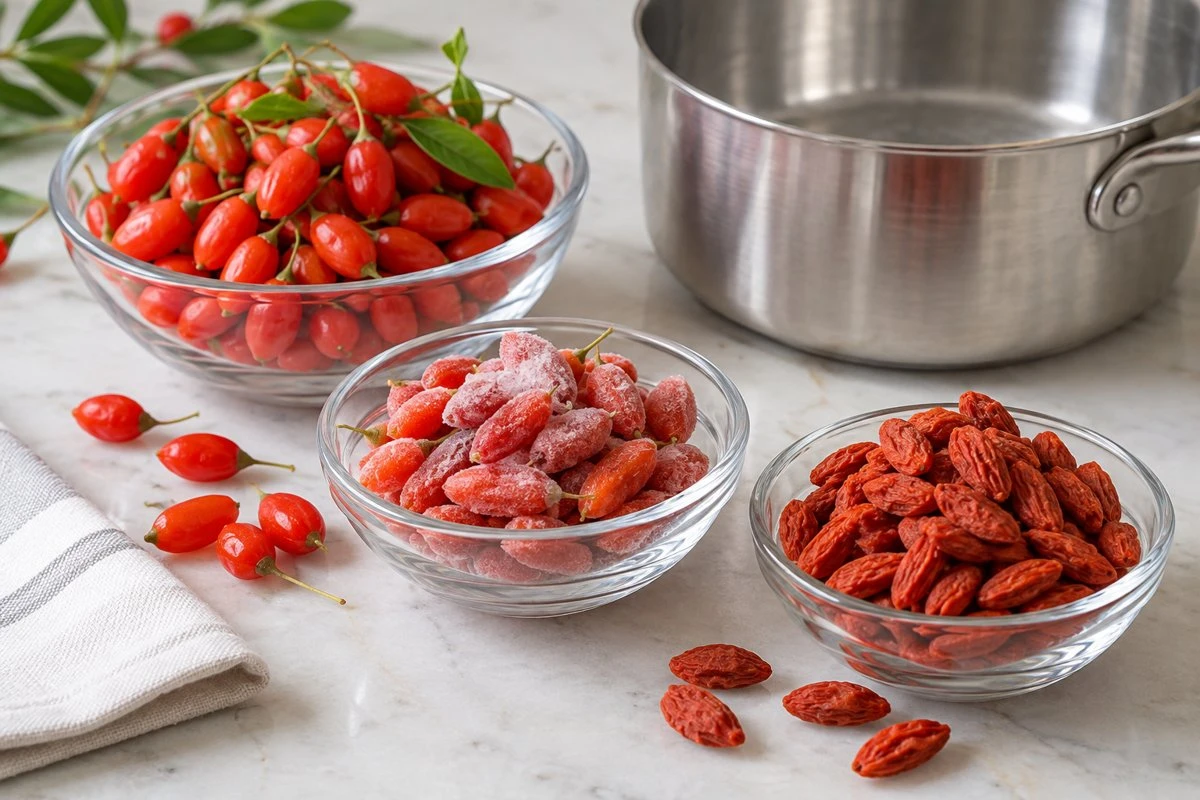
The most useful comparison follows the ingredient through the actual recipe. Record what enters the process, what liquid or residue leaves it, and how much acceptable finished food remains. A dried ingredient can look expensive per kilogram while contributing more fruit solids; a frozen ingredient can simplify a moist preparation while adding a melting stage. Neither observation establishes a universal winner.
We use the following framework to make a goji specification discussion concrete. The trial ideas and arithmetic examples are proposed methods, not completed GreenLand trials or declared composition values for any supplied lot. Red-goji identity, ingredient composition and intended-use status still need confirmation for the product being evaluated.
Start with the finished food and ingredient identity
Describe the intended eating experience before choosing the incoming form. A cereal bar may need distinct chewy pieces that remain compatible with the bar throughout storage. A bakery filling may need a smooth continuous base with a few visible fruit fragments. A beverage may need enough pulp for body without objectionable skin or seed particles. These are different development objectives even when every label uses the words goji berry.
Confirm what that name means in the offer. Red-goji discussions commonly include Lycium barbarum and Lycium chinense, which the University of Florida overview distinguishes. A species declaration, supplied form and ingredient list provide a better starting point than a commercial name alone. Black goji, extracts and powders require separate identity and composition checks; they should not quietly enter a comparison designed around whole red fruit.
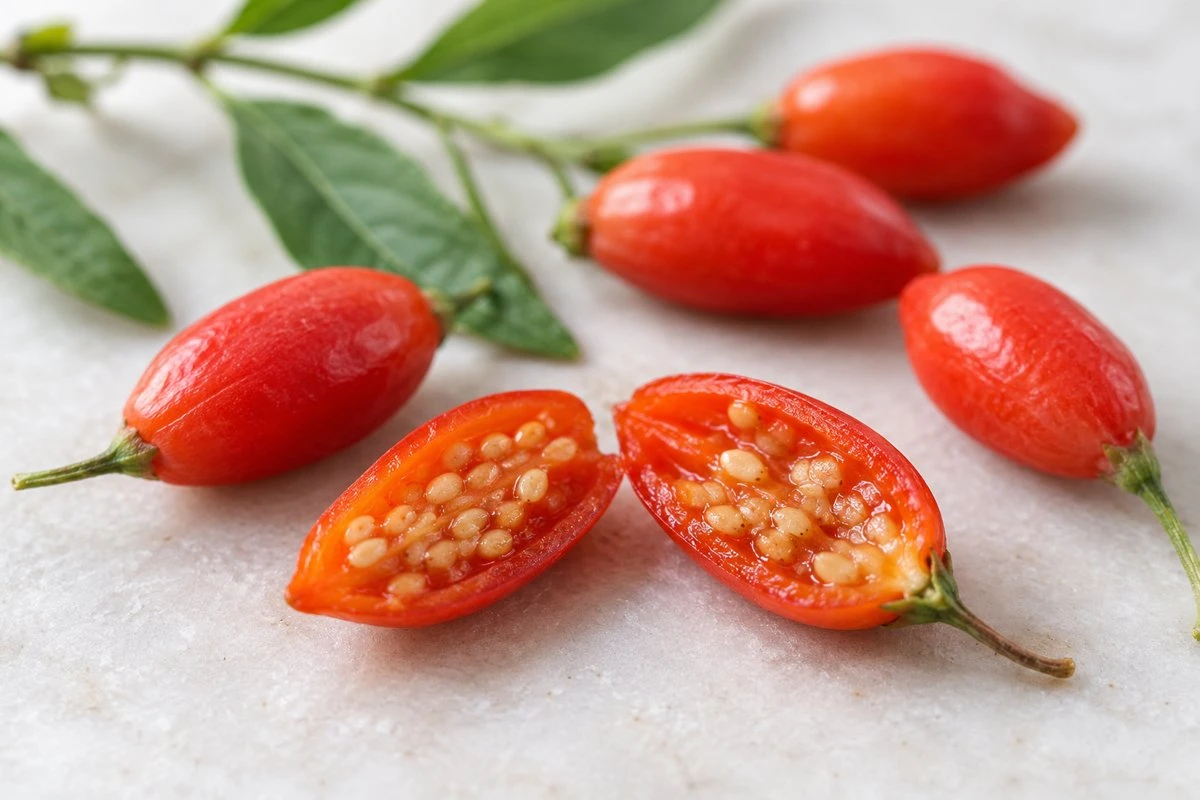
Whole fruit introduces skin, flesh and seeds into the formulation.
Fresh fruit offers a moist, delicate structure whose condition depends on harvest and subsequent handling. Frozen whole fruit contains water in a frozen state and may release liquid after thawing. Conventional dried fruit has a different water content and usually a wrinkled, chewy structure. Freeze-dried fruit is also a dried ingredient, with its own handling and moisture sensitivity. The storage instruction and specification should identify the actual material rather than relying on an abbreviated product name.
For each candidate, define the condition at incorporation. Whole frozen berries entering a cooker, refrigerator-thawed berries entering a mixer and drained berries entering dough are three different recipe inputs. A commercial trial that records only the same nominal kilogram addition can hide those differences. Write down the preparation, temperature where relevant, drainage and any pre-soaking before interpreting the finished result.
Food-safety suitability is part of the initial brief. A product intended for further processing must be evaluated within a suitable process, and a chilled ready-to-eat application needs the corresponding evidence and controls. Freezing alone does not establish that suitability. FDA's work on berry safety identifies the persistence of viral hazards despite freezing. An application photograph therefore demonstrates a concept, not the approved use of every frozen goji lot.
The first purchasing conversation can remain concise: identify the finished food, the visible fruit or texture required, the form preferred, the expected dose and the processing conditions available. Open questions can then be resolved through a sample and specification review. This avoids committing to a grade that looks attractive in the bag but does not fit the food or the receiving operation.
Account for fruit solids and water
Water balance is the first reason equal weights of fresh, frozen and dried goji can produce different foods. A moist fruit and a dried fruit do not contribute the same amount of non-water material per kilogram. Replacing one with the other changes the recipe unless the developer adjusts the other ingredients and verifies the result. A universal fresh-to-dried substitution ratio cannot cover all fruit lots and drying methods.
Use measured dry matter when a solids comparison is needed. Suppose, solely for an arithmetic example, candidate A contains 20% dry matter and candidate B contains 80%. One kilogram of A contributes 0.20 kg dry matter. A quantity of 0.25 kg of B also contributes 0.20 kg dry matter. Those figures explain the calculation; they are not typical goji values, a purchase specification or proof that the two candidates will have equivalent flavor, texture or nutritional composition.
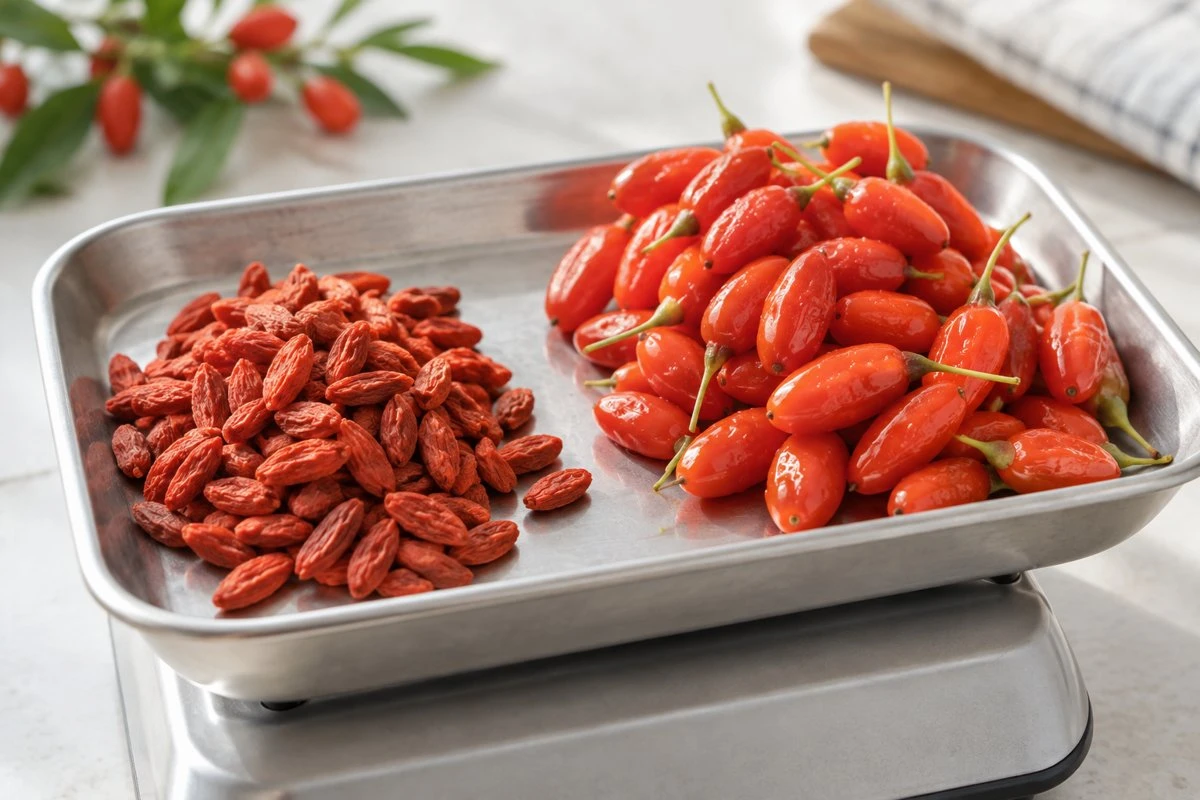
Equal incoming weights do not necessarily provide equal fruit solids.
The same example shows why added water needs attention. Candidate A supplies 0.80 kg water, while 0.25 kg of B supplies 0.05 kg water. A developer matching only the dry matter would need to consider the 0.75 kg water difference elsewhere in the recipe. Even after that arithmetic adjustment, the tissues have different processing histories. The adjusted trial still has to establish the intended sensory and physical performance.
| Comparison basis | What is held comparable | What it helps reveal | What remains to test |
|---|---|---|---|
| Equal incoming weight | Kilograms added | Operational handling of the quoted dose | Solids, water, flavor and yield differences |
| Equal measured fruit dry matter | Non-water material added | Effect of ingredient concentration | Tissue structure, dissolved components and sensory result |
| Equal finished-food weight | Saleable output mass | Practical recipe performance | Ingredient cost and process losses |
| Equal intended sensory effect | Agreed flavor and texture result | Application fit | Dose, yield, stability and commercial feasibility |
Soluble solids readings can help with some formulation questions, but a refractometer reading is not automatically total fruit dry matter or total sugar. Sample preparation, temperature and the mixture being measured matter. If the recipe needs a total solids balance, choose a suitable method for that purpose. If it needs consistency in a strained liquid, specify how that liquid is obtained and what the result represents.
Retain all relevant masses during a trial. Record fruit added, soaking water, recovered liquid, screened residue and finished yield. If the operator discards juice after thawing, that removal must appear in the balance. Without these records, a thicker result might be attributed to a superior ingredient when it simply contains less water. A modest balance sheet gives the team a defensible explanation and makes the next trial more informative.
Design a beverage around pulp, skin and seeds
A goji beverage begins with a choice about particle structure. A pulpy drink, a smooth blended drink and a clarified beverage are different products. Whole berries bring flesh, skin and seeds into the process. Blending reduces their size but does not make those components disappear. The development team should decide which components are desirable in the finished beverage and which need to be controlled through a defined separation step.
Start with a small trial using a known fruit weight and a fixed liquid addition. Keep the blender or mixer, loading, duration and preparation consistent across candidate forms. A frozen addition also changes the temperature and physical resistance encountered by the equipment. Follow the equipment's operating limits and the process's food-safety requirements; a food article cannot establish an acceptable loading condition for every machine.
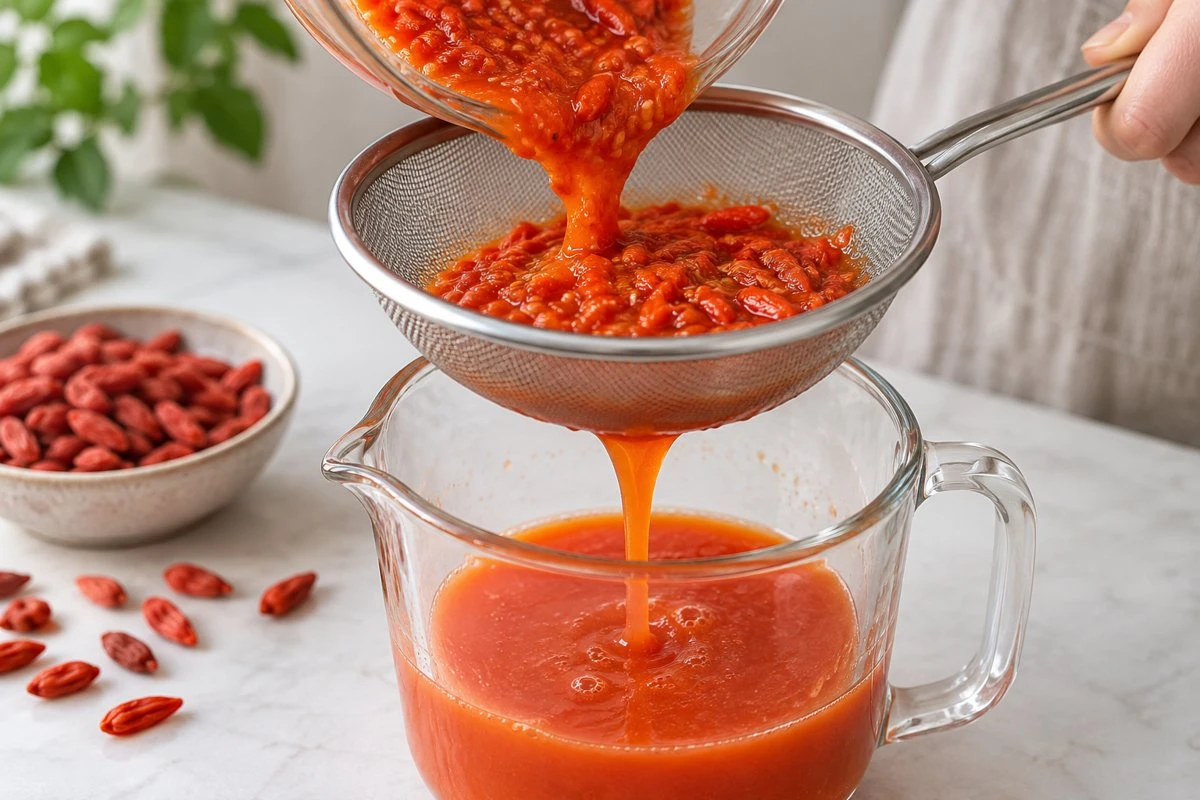
Screened liquid and retained residue both belong in the trial mass balance.
Screening introduces a yield decision. A finer or different screen may remove more visible material, but the retained residue can contain useful flesh as well as skin and seed. Measure what passes and what remains, then evaluate the beverage itself. Our discussion of puree screens and particle size explains why a screen aperture alone is an incomplete finished-product specification. Goji samples need the same distinction between process setting and measured outcome.
Assess the drink after the intended hold as well as immediately after mixing. Sediment, a floating skin fraction, foam or a changing mouthfeel can affect the user's experience. A freshly mixed glass may conceal a distribution problem that appears later. Use consistent storage, container and evaluation conditions, and record the time of the observation. This proposed comparison does not establish a shelf life; the finished beverage needs its own validated safety and stability assessment.
Flavor should be evaluated in the actual base. A vegetal note that is noticeable in water may interact differently with a fruit blend or a dairy ingredient. Sweetness, acidity and aroma should be adjusted through controlled trials, one meaningful change at a time. If several ingredients change together, a pleasing result may be difficult to reproduce because the team cannot identify which change mattered.
For purchasing, translate the successful trial into the properties that influenced it. These might include fruit identity, supplied form, agreed preparation, a defined coarse-residue method and a suitable sensory reference. Avoid writing "smooth puree" without explaining how smoothness is assessed. The supplier and buyer need a shared method that relates to the actual beverage, especially if the finished product passes through a narrow nozzle or is consumed through a straw.
Keep bakery inclusions and fillings consistent
Bakery work requires a distinction between a discrete fruit inclusion and a separate filling. An inclusion becomes part of the dough or batter structure. A filling may be cooked or thickened before it meets the surrounding pastry. The same goji form can behave differently in those two positions, so the purchase brief should identify where the fruit enters and what the finished piece should look and feel like.
Dried goji may be useful when the desired feature is a chewy visible piece. Its interaction with surrounding moisture still needs assessment. A berry that seems acceptable immediately after baking may soften further during storage, while a dry piece can feel hard in a crisp product. Evaluate the food at the intended eating condition and at meaningful points within the development study. Do not infer the complete shelf life from one warm sample.
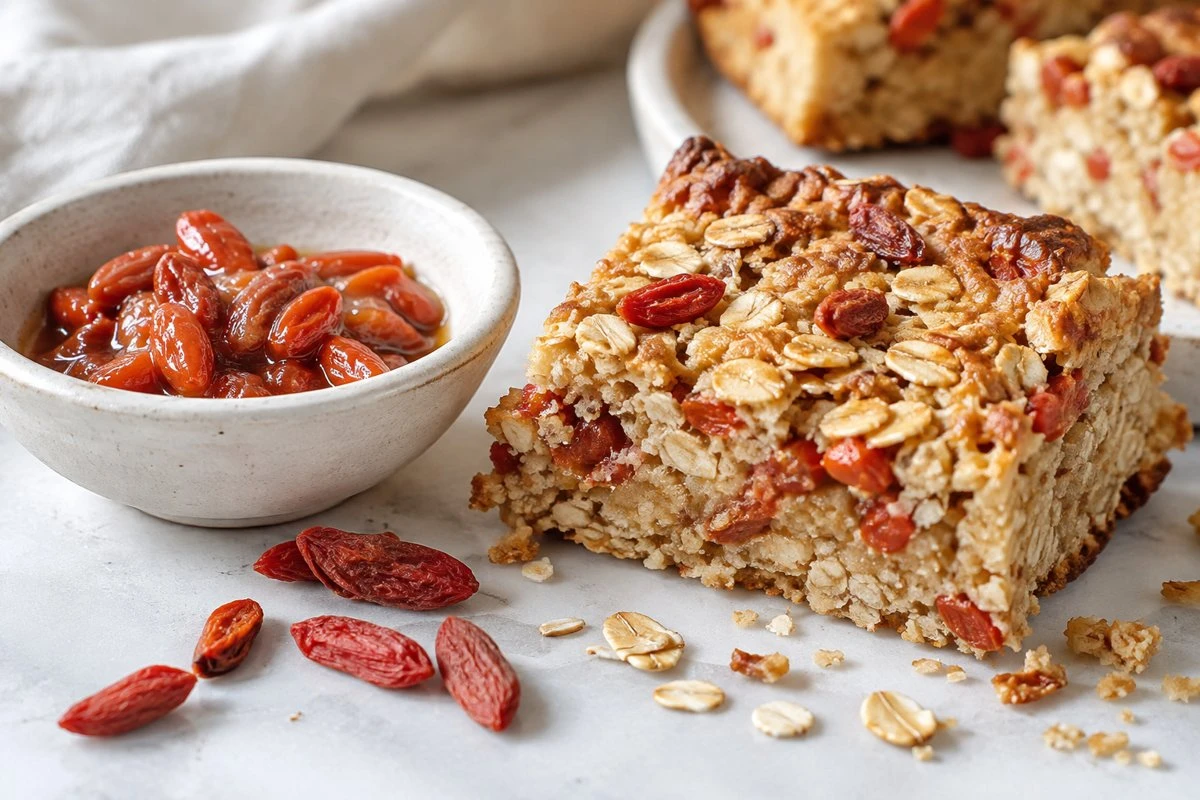
A discrete baked inclusion and a separate fruit filling need different tests.
Soaking a dried inclusion can change its handling and texture, but the soaking stage must be defined. Record the dry fruit mass, liquid composition, liquid amount, time, temperature and drainage. If sweetened liquid is used, it also becomes part of the ingredient and nutrition accounting. A recipe that simply requests "rehydrated goji" leaves too much uncertainty for a repeat order or for a comparison between suppliers.
Frozen whole fruit presents another set of variables. As it thaws or heats, released liquid can move into the batter or filling. Adding the complete fruit and liquid may be appropriate for one recipe, while another may require a defined drainage step. Changing that step changes usable yield as well as formulation. Record it explicitly so that a lower fruit recovery is not confused with a difference in the purchased net weight.
The fruit's starting temperature also affects a heated process. Our frozen versus thawed kettle-loading guide explains the additional warming and melting stage associated with a frozen ingredient. In a goji filling trial, compare loading state, charge sequence and final concentration alongside cooking time. A longer heat-up period alone does not prove that the ingredient is unsuitable or that the finished process is validated.
For a fair bakery comparison, hold the base recipe, fruit distribution and finished portion size steady. Note cut surfaces as well as exterior appearance: wet pockets, fruit clustering and uneven color may be easier to see inside the product. These observations can guide a revised dose or preparation trial. The agreed supplier grade should reflect the successful application and the tolerance the bakery can manage in routine production.
Manage texture in dairy and frozen desserts
A dairy or frozen-dessert application can use goji as visible fruit, a cooked preparation or a dispersed puree. Each choice gives a different eating experience. Whole berries add recognizable pieces but require attention to skin, seeds and firmness at the serving temperature. A smooth preparation spreads color and flavor more evenly. The development brief should state which result is wanted before the incoming fruit is approved.
The goji addition is only one part of a complex formulation. Dairy solids, sugar, acidity, stabilizers and the process all affect the final texture. A simple comparison between two fruit forms therefore needs a stable base and a clear objective. If the team changes fruit concentration and the stabilizer system at the same time, it becomes difficult to attribute a result to the fruit. Keep the trial design narrow enough to answer the actual question.
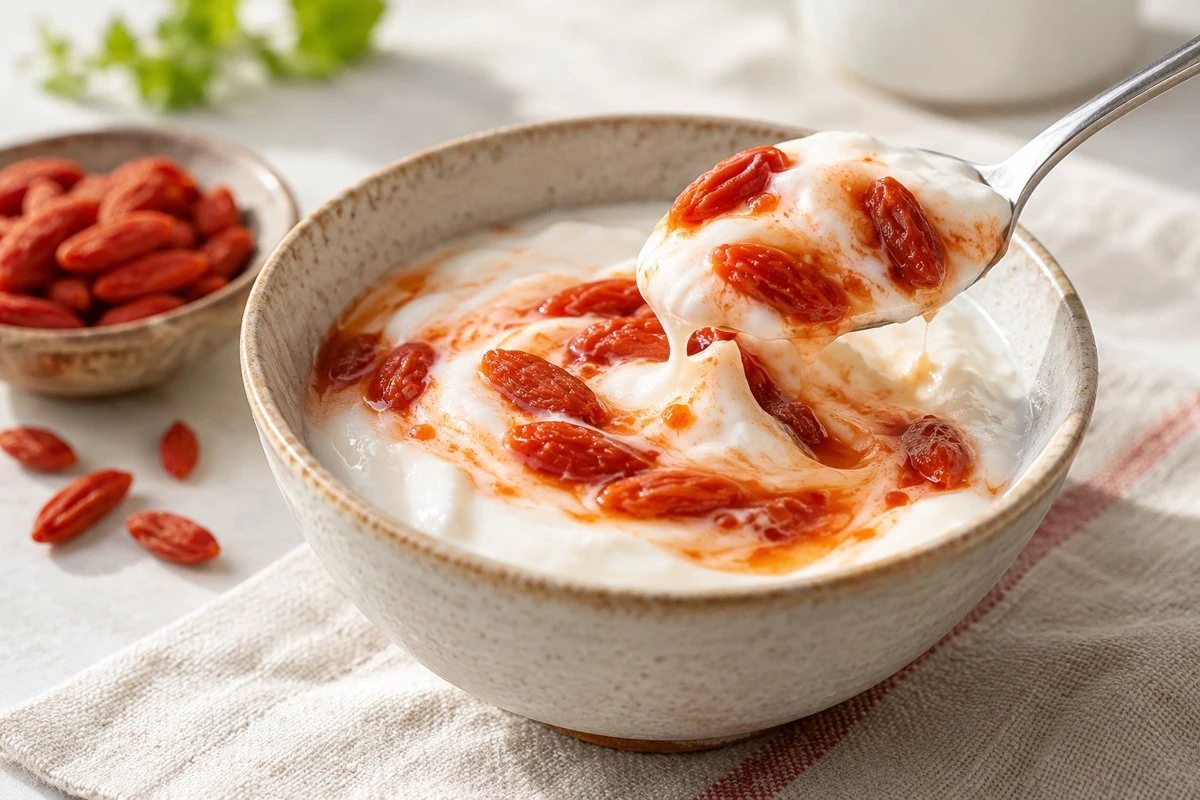
Assess a cooked fruit preparation in the actual dairy base and serving condition.
For chilled cultured dairy, observe the fruit preparation's distribution and any liquid separation after the planned hold. Record whether the fruit was cooked separately, cooled under the site's procedure and mixed into the base or placed as a layer. The preparation history can influence the visible result. No generic instruction in this article establishes a safe process or shelf life for a dairy food; the processor's validated controls apply to the complete product.
For frozen desserts, evaluate at the temperature at which the food is intended to be eaten. A fruit piece can feel acceptable in a thawed sample yet be too hard in a frozen bite. Conversely, very soft fruit may lose its identity during mixing. Use the actual serving condition and product dimensions in the trial. A photograph of a scoop cannot substitute for that physical assessment.
Consider moisture migration when a dried fruit is placed in a moist base. Its texture can change as it takes up water, and the surrounding food can change as well. A freeze-dried inclusion may lose a crisp texture when exposed to moisture. These effects are development questions rather than universal rejection criteria. The desired result may be a softened inclusion, provided it is consistent and supported by the finished food's safety and stability program.
The specification should preserve what the trial established. State the approved fruit form, preparation, dose basis and relevant sensory or physical criteria. If a later order proposes another form, review it as a formulation change. A common goji name does not guarantee that the replacement has the same effect on a dairy base, a frozen dessert or the production schedule that makes it.
Compare cost at the usable ingredient stage
Quoted price per kilogram is useful but incomplete when forms have different water contents and processing losses. The food business needs to know how much acceptable ingredient or finished food a purchased quantity produces. That comparison includes the preparation it actually performs: thawing, draining, soaking, pulping, screening or cooking. A form that requires fewer steps may have operational value even before the team considers flavor and texture.
Define the recovered material before calculating yield. If the product is a whole-fruit inclusion, usable material may mean berries that meet the appearance requirement after preparation. If the product is a screened drink base, it may mean the accepted screened fraction. If the whole pack enters a cooked filling, removing and weighing juice as waste would misrepresent the normal process. The denominator and endpoint must match the application.
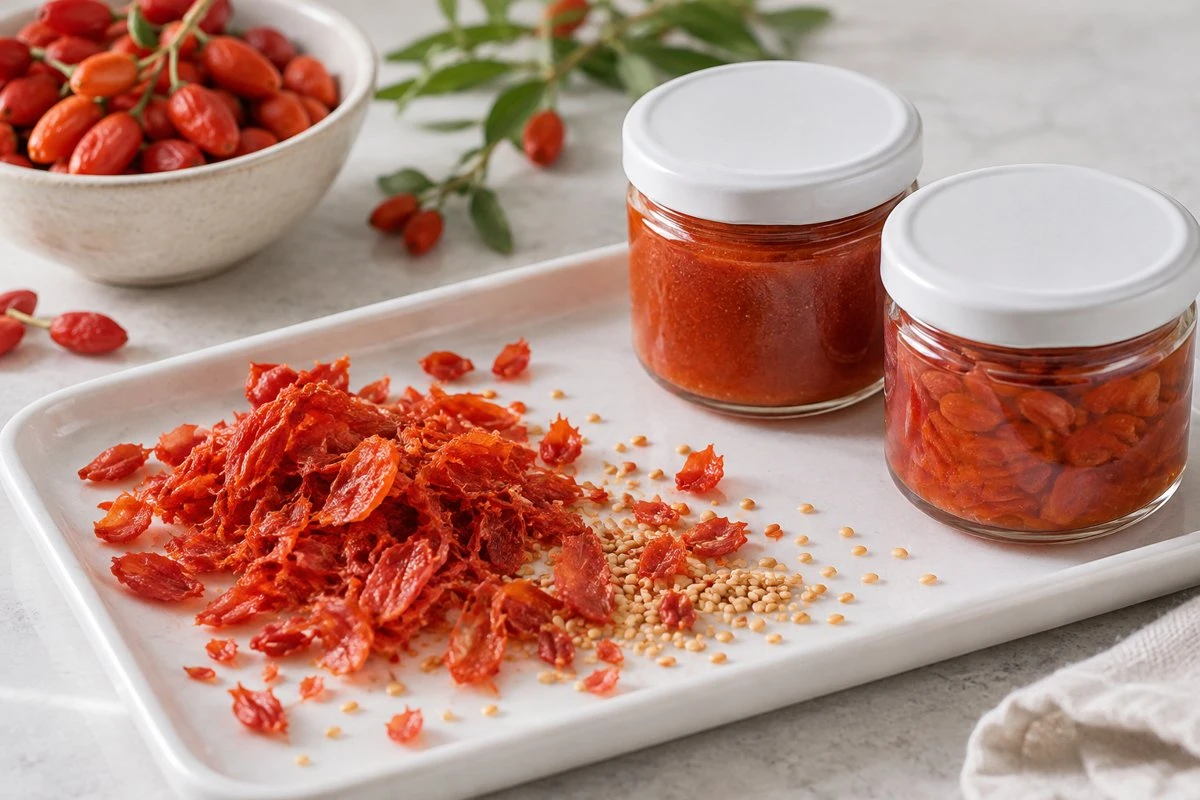
Usable yield depends on which fraction the finished food needs.
As a hypothetical calculation, a purchased 10 kg sample that yields 8 kg of accepted material has an 80% usable yield under that stated method. If its purchase cost is 40 currency units, the fruit purchase cost per usable kilogram is 5 units before other costs. Those numbers are invented solely to demonstrate the calculation. They do not describe goji performance, a GreenLand price or a supplier acceptance limit.
Add relevant operating costs separately. Labor for sorting, energy for freezing or heating, packaging, storage and disposal can influence the decision. Do not disguise an estimate as a measured expense. A trial record can distinguish actual weighed quantities, observed labor time and provisional commercial assumptions. This makes a comparison easier to update when an order size or production plan changes.
Packing can affect both yield and labor. A large frozen liner may suit a batch that uses the entire contents, while a smaller inner pack can help a facility that needs frequent partial doses. Repeatedly opening and warming a large pack can create handling difficulties that do not appear in a one-time kitchen test. Ask the supplier to quote the relevant packing options and evaluate them against the actual use pattern.
Price should be considered after the candidate meets the food's identity, safety and quality requirements. A cheaper material that cannot produce the desired food is not a useful substitute. Equally, paying for an exceptional whole-berry appearance may be unnecessary when the approved process intentionally breaks the fruit. The strongest commercial comparison explains which purchased properties create value in the finished application and which do not influence its acceptance.
Approve the form with a repeatable trial
An approval trial should produce a record that can be repeated with a later lot. Identify the ingredient, lot and specification version; define the preparation and base recipe; then name the observations that decide acceptance. A small number of well-chosen measurements is usually more useful than a long list without clear methods. The tests should answer the food's actual risks and desired performance.
Use a sequence that preserves the important comparisons. First confirm the sample's identity, ingredients and intended-use conditions. Next prepare each candidate under the agreed method and record masses. Then make the food using a stable base and evaluate it at the relevant condition. Finally review yield, texture, flavor and handling together. These are proposed development steps, not a validated food-safety process or evidence that a commercial lot has passed.

Whole berries in a bulk liner show the supplied physical form; the specification establishes the agreed order details.
Retain photographs where they explain an observation, such as a separated liquid layer, seed residue or visible fruit distribution. Use consistent lighting and scale so that the images can be compared. Keep them beside the method and the measured result. An attractive photograph without the preparation record can be misleading, particularly when a dried and a frozen sample have been handled differently.
Repeat the critical result before translating it into an order limit. One small portion may not represent the distribution of size, breakage or maturity in a larger lot. Agree how samples are drawn and what level of variation the process can tolerate. If a trial suggests a useful range, discuss whether the receiving method can measure it reliably. A specification that cannot be applied consistently will create disputes even when the target itself is sensible.
At GreenLand-food, we can discuss whole frozen goji berries against the buyer's application and packing brief. Species, composition, alternate preparation, intended use and numerical acceptance limits require confirmation for the proposed order. The sample and the documents should describe the same material, and any substitution should be reviewed against the approved trial rather than assumed equivalent from its name.
The completed approval should tell the next operator what to use, how to prepare it and what result to expect within the agreed range. That record connects development with purchasing and receiving. It also gives the supplier a practical explanation of why a particular form was selected, so that future crop or packing discussions can focus on the properties that matter to the finished food.
Related reading
Compare starting state and melting load before interpreting a cooking trial.
Define the finished particle result instead of relying only on a screen opening.
Distinguish a refractometer reading from a measured individual-sugar profile.
Source frozen goji berries with GreenLand-food
GreenLand-food is a professional frozen goji berries supplier and manufacturer in China, providing factory-direct wholesale supply for importers, food manufacturers, foodservice distributors, and private-label programs.
Send the intended application, product form, botanical identity requirement, packing, quantity, destination and requested documents. We will review the frozen goji brief; availability and order specifications require confirmation.