


Goji Berry Nutrition Labels: Fresh, Frozen and Dried Portion Basis
Oct 19, 2026
Leave a message

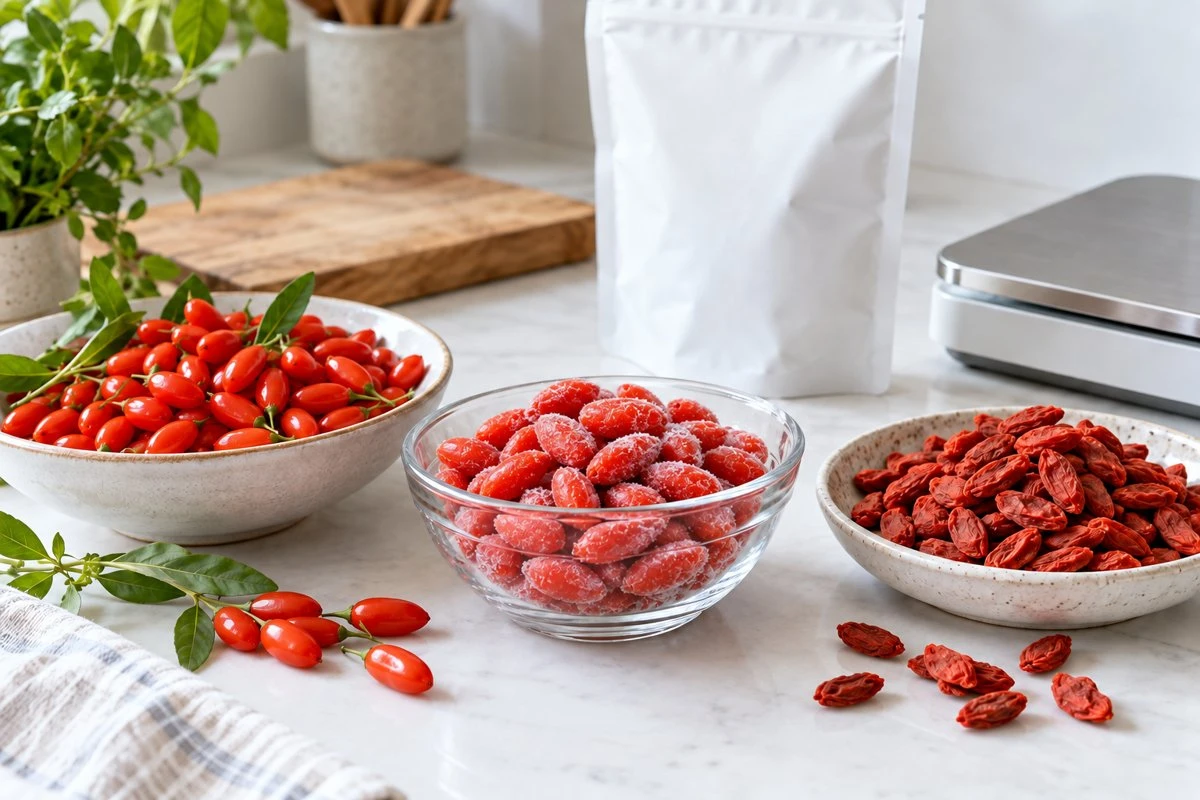
For food businesses, there is a further distinction: a published composition value is reference information, while a nutrition declaration must be appropriate to the actual product and destination. Freezing, drying, soaking, draining and recipe dilution change the question being asked. The buyer needs a data file that follows the supplied ingredient and the finished food, rather than a generic list of goji benefits.
This guide explains those decisions without inventing a universal fresh-versus-frozen nutrition table. Research examples remain tied to their samples. Arithmetic examples are clearly identified and are not GreenLand product values, recommended intake amounts or ready-to-print labels.
Read the food description before the numbers
The food description establishes the scope of a nutrition value. Look for fresh, frozen, dried, freeze-dried, sweetened, juice, puree, powder or extract. A database may have a short display name while its full record contains the important preparation detail. If the record says dried goji berries, its numbers remain dried-fruit data even when another website shortens the heading to "goji nutrition." That missing word can produce a large misunderstanding.
Identity deserves the same care. Red goji is associated with Lycium barbarum and Lycium chinense, which are distinct species in the University of Florida overview. A food business should confirm the identity relevant to its ingredient file rather than assuming every common-name record is interchangeable. Black goji, leaf preparations and extracts require separate treatment. A result for one plant part or concentrated fraction cannot automatically describe whole red fruit.
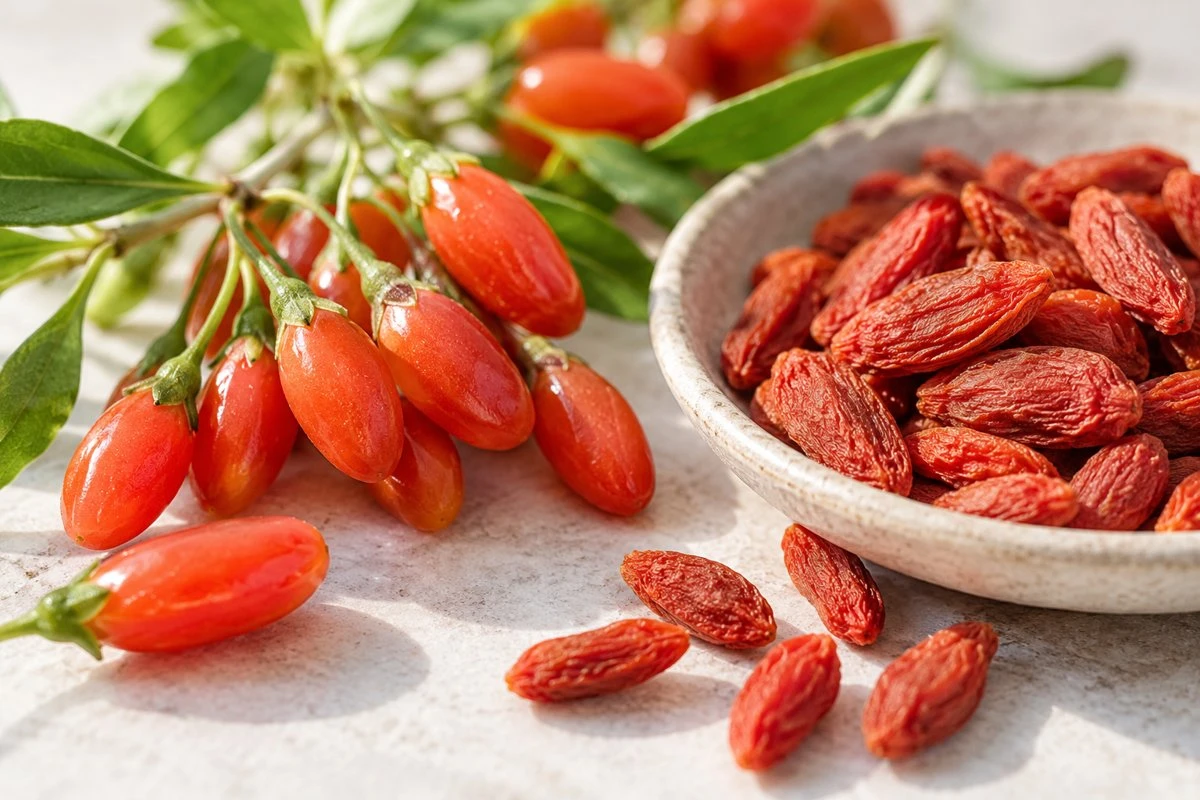
Fresh and dried fruit descriptions identify different foods for a composition table.
Check whether the value refers to the edible material, the product as sold or a prepared food. For a frozen pack, that may involve the entire contents or a specified drained portion after thawing. For dried berries, it may mean the dry product before soaking. The description should make that distinction clear. If the basis is missing, keep the number out of the final comparison until the source or supplier resolves it.
The source type also matters. A laboratory report identifies a tested sample and a method. A composition database may summarize selected food records. A supplier specification may contain agreed typical values or a declared range. A retail label applies rounding and presentation rules for its market. These documents can support one another, but they do not answer identical questions. Their dates, versions and product identities should remain visible in the technical file.
Do not fill blank entries with zero. An unreported vitamin, a missing energy figure or a nutrient absent from a short database display may simply be unavailable. Similarly, a result below a method's reporting limit needs its stated interpretation; it is not a license to write an arbitrary exact zero. A table can be tidy and still misrepresent the evidence if it hides those distinctions.
For a purchasing team, a useful first request is the ingredient's nutrition information with its product description, basis, source and date. That allows the developer to decide whether it is suitable for preliminary recipe work and what additional confirmation is needed for artwork. It also prevents the same ambiguous number from being copied through several departments until it appears to have more authority than it originally had.
Put each portion on the same weight basis
A per-portion value describes the stated portion. To compare foods with different portions, convert them to a common mass or compare the amounts actually used in the same recipe. Both approaches can be useful, but they answer different questions. A per-100-g comparison describes concentration; an actual-dose comparison describes the contribution made by the quantity eaten or added. Keep the chosen question clear before calculating.
The arithmetic is straightforward when the food and basis remain unchanged. Multiply a per-100-g value by the portion weight in grams and divide by 100. In the opposite direction, multiply a per-portion value by 100 and divide by the portion's gram weight. This rescales the same food. It does not turn dried-fruit data into fresh-fruit data, nor does it account for a processing loss that happened between measurement and consumption.
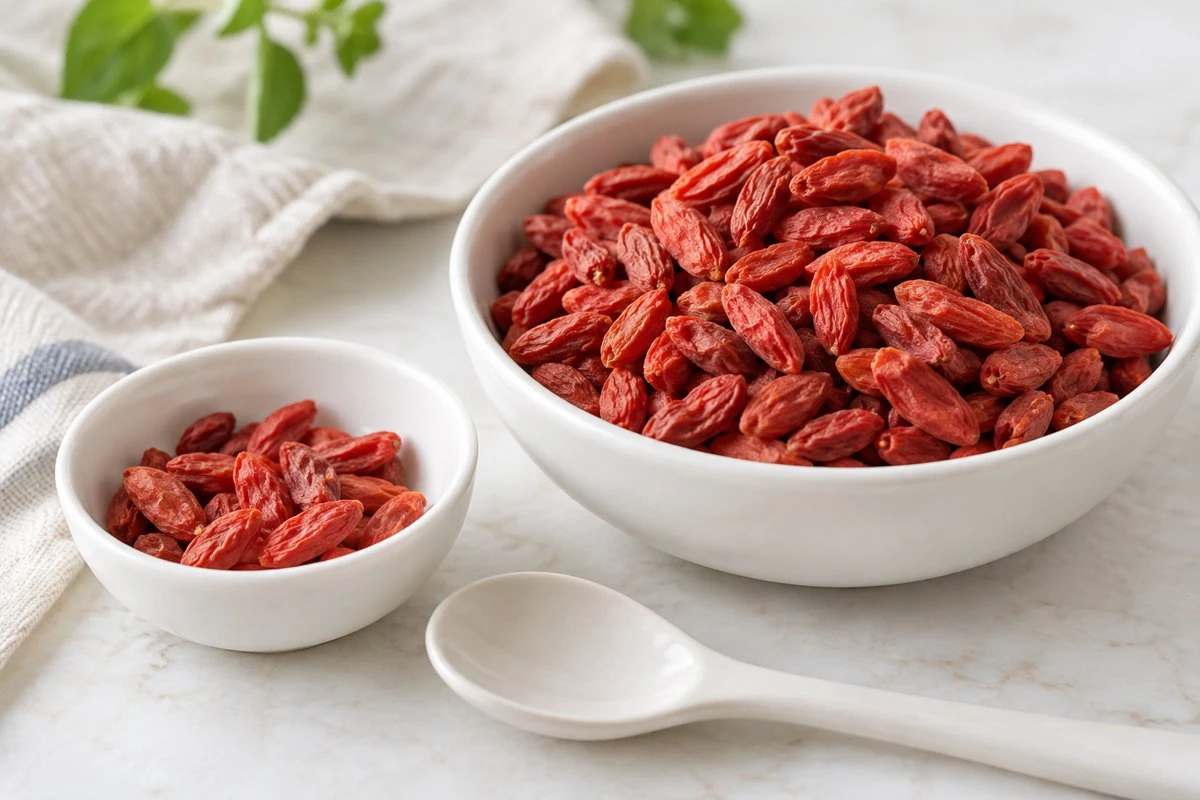
A portion must have a gram weight before its nutrient contribution can be calculated.
For example, imagine a hypothetical ingredient with 12 g of a nutrient per 100 g. A 25 g portion contains 3 g on the same unrounded calculation basis. A 40 g portion contains 4.8 g. These invented figures demonstrate scaling only; they are not actual goji composition or a recommendation to eat either amount. Where labels use rounded values, calculations from displayed figures can differ from calculations using the underlying data.
| Same hypothetical food | Portion weight | Calculation from 12 g per 100 g | Calculated amount |
|---|---|---|---|
| Small example portion | 25 g | 12 × 25 ÷ 100 | 3 g |
| Larger example portion | 40 g | 12 × 40 ÷ 100 | 4.8 g |
| Reference quantity | 100 g | 12 × 100 ÷ 100 | 12 g |
A household measure such as a spoon or cup also needs a gram equivalent. Dried berries of different size and packing density may not fill a spoon identically. For formulation, weigh the intended amount rather than assuming that a volume measure fixes the mass. For labeling, use the applicable requirements and a defensible measure for the actual food. A casual serving suggestion in an article does not establish a legal serving size.
FDA's serving-size explanation states that US label servings are based on amounts people typically consume, not an amount they are advised to consume. That distinction matters when a reader sees a small dried-fruit portion beside a large fresh-fruit portion. The portion is a declaration basis, not a universal dietary instruction. The relevant rules must be checked for the final product and market.
Keep the comparison heading explicit. "Per 100 g as sold" and "per amount used in this recipe" are clearer than "nutrition comparison." A reader can then see why one table emphasizes concentration while another emphasizes the actual recipe contribution. The calculations become easier to audit, and a large number loses the misleading implication that it automatically represents a better food choice.
Understand what drying concentrates
Removing water changes the proportion of solids in a food's mass. If a quantity of fruit loses water, a 100 g portion of the dried product contains material from more original fruit than a 100 g portion of the fresh product. That can raise a nutrient concentration per 100 g even when the total quantity of that nutrient in the original batch has not increased. Concentration and retention are different calculations.
A primary Italian study of fresh and dried goji illustrates the importance of the stated basis. Its L. barbarum samples from two growing seasons had reported mean moisture values of 77.4 g per 100 g fresh fruit and 9.3 g per 100 g dried fruit. These are study-specific results under the described sampling and drying conditions. They are not a universal goji specification or a value for GreenLand frozen fruit.
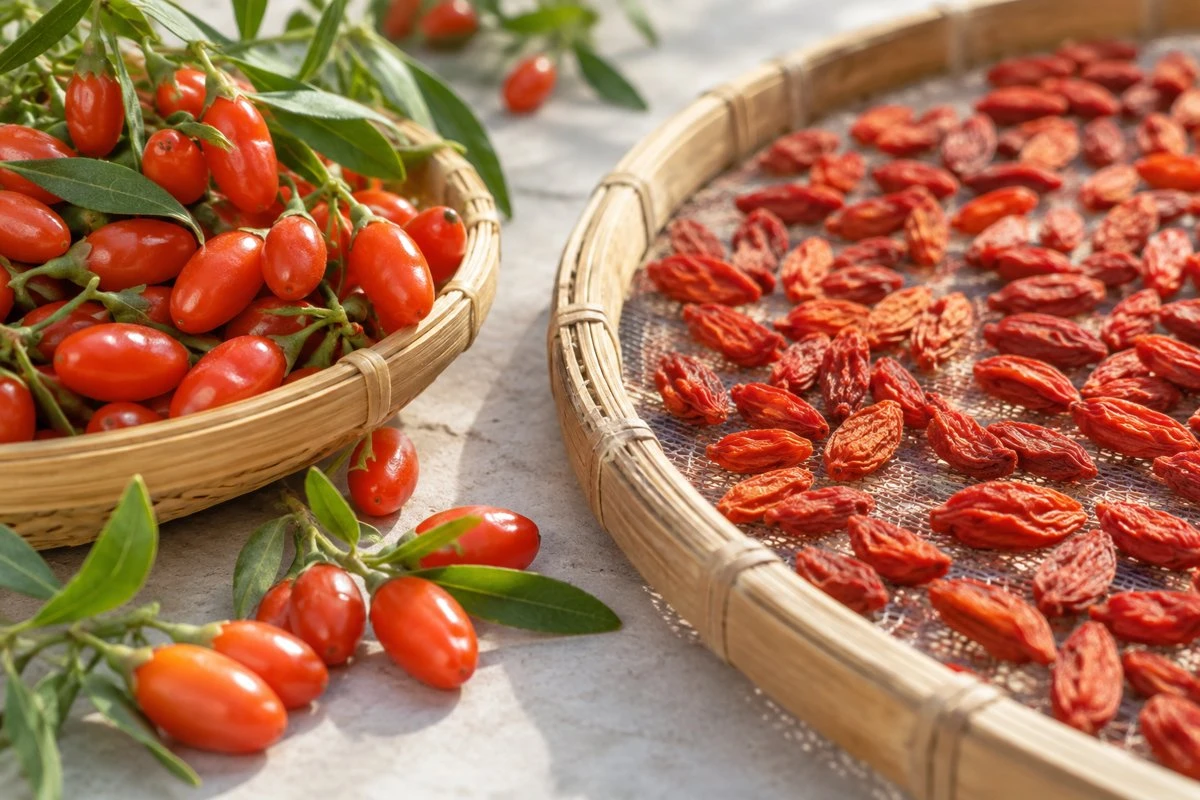
Removing water can increase concentration per 100 g without improving nutrient retention.
The example also shows why method sections matter. The paper describes sample preparation and reports the composition on named fresh and dried bases. A reader should use the authors' stated basis rather than assume that laboratory preparation changes the identity of the reported food. When a secondary table strips away methods, sample origin and units, it can become difficult to know what its numbers actually mean.
To illustrate retention separately, imagine an original batch containing 10 units of a nutrient and weighing 100 units of mass. After drying, suppose it weighs 25 mass units and contains 8 nutrient units. Its concentration is now 32 nutrient units per 100 mass units, even though 20% of the original nutrient amount was lost. These fictional units demonstrate the logic: a higher concentration does not prove perfect retention or the creation of nutrients.
Dry-matter calculations can help a researcher or technical team examine that distinction. They require a valid moisture measurement for the relevant samples and a clear calculation. A dry-matter result should not silently become a consumer label value, which may use an as-sold or other prescribed basis. Keep the analytical purpose and the declaration purpose separate in the file so that a technically correct number is not used in the wrong place.
Drying methods and ingredient additions create further variation. Conventional dried fruit and freeze-dried fruit may have different moisture and processing histories, while a sweetened product includes an additional formulation change. A buyer should therefore compare the actual candidates and their declared ingredients. A general dried-goji record can be useful background, but it cannot resolve whether a particular offered product matches the intended nutrition and labeling requirements.
Read a frozen berry declaration in context
Frozen whole goji contains the fruit's water in a frozen state. Ordinary freezing is not a drying operation, so a dried-goji table is the wrong starting point for a frozen whole-fruit label. At the same time, the word frozen does not supply every missing nutritional value. The actual raw material, preparation, ingredients and handling determine which data can responsibly describe the product offered.
Ask whether the product is plain fruit or includes other declared ingredients. A whole frozen fruit, a sweetened preparation and a blended puree have different compositions even when goji appears prominently in their names. The specification should identify the material that reaches the buyer. If the product is to be thawed and drained before use, the preparation basis must be clear, because discarding liquid changes what remains in the measured portion.
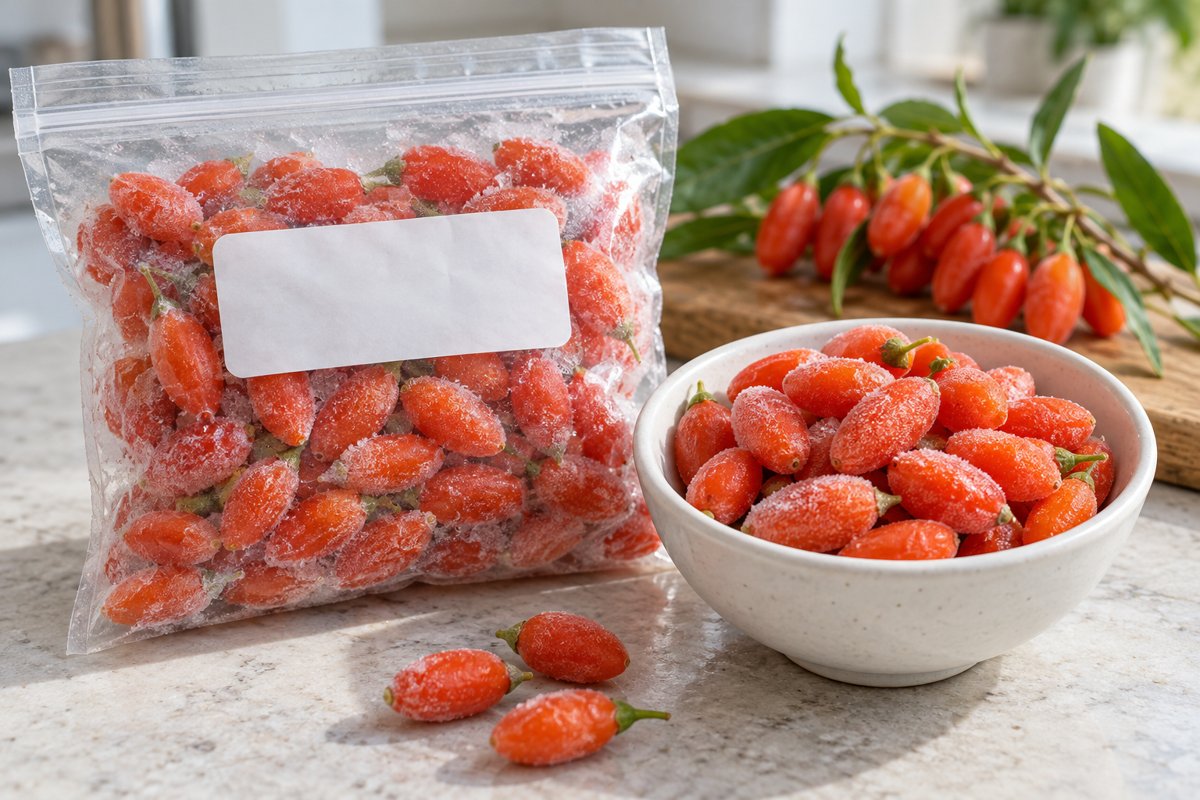
A frozen whole-fruit declaration needs data appropriate to that supplied material.
Avoid assigning a single universal nutrient-retention percentage to frozen goji. A study on another fruit, a different freezing process or an isolated compound does not automatically establish a complete nutrition declaration for this ingredient. Preliminary formulation may use suitable reference information where justified, but the label file needs an appropriate basis for the actual SKU and destination. Record any assumptions so that they can be reviewed before artwork approval.
A freezer-storage statement and a nutrition statement also answer different questions. The approved storage conditions and shelf life describe how the product should be handled under its specification. A nutrient declaration describes composition on a particular basis. A long shelf-life claim does not itself prove a fixed vitamin content throughout that period, and an acceptable vitamin result does not establish the product's microbial safety or storage history.
Photographs have a limited role here. A clear image can show whole orange-red berries, surface frost or pack form. It cannot measure protein, sugar, fiber or vitamins. Nor can a bright color prove a nutrient claim. Keep visual product approval linked to its proper purpose, and request the analytical or formulation evidence needed for the nutrition decision. This prevents an appealing product presentation from substituting for a missing technical record.
For an inquiry to GreenLand-food, identify the exact frozen goji product scope, the intended preparation and the market in which the finished food will be sold. We can then discuss the information needed for the offered material. Any nutritional values, claim support or alternate preparation must be confirmed against that order rather than borrowed from a general red-goji article.
Account for soaking, thawing and recipe yield
Adding water changes the concentration per 100 g of the prepared food. If dried berries are soaked, the result contains both the original fruit material and absorbed or retained water. Some constituents can also move into the liquid. The correct calculation depends on whether the entire mixture is consumed, only the drained fruit is used, or part of the liquid is discarded. Those are different prepared foods.
Consider a purely hypothetical mixture: 20 g of a dry ingredient is combined with 80 g water, and all of it remains in the finished 100 g preparation. If the dry ingredient contained 10 g of a particular nutrient per 100 g, the mixture would contain 2 g of that nutrient before any relevant processing loss. It would be incorrect to report 10 g per 100 g of the diluted mixture. The water has changed the denominator.
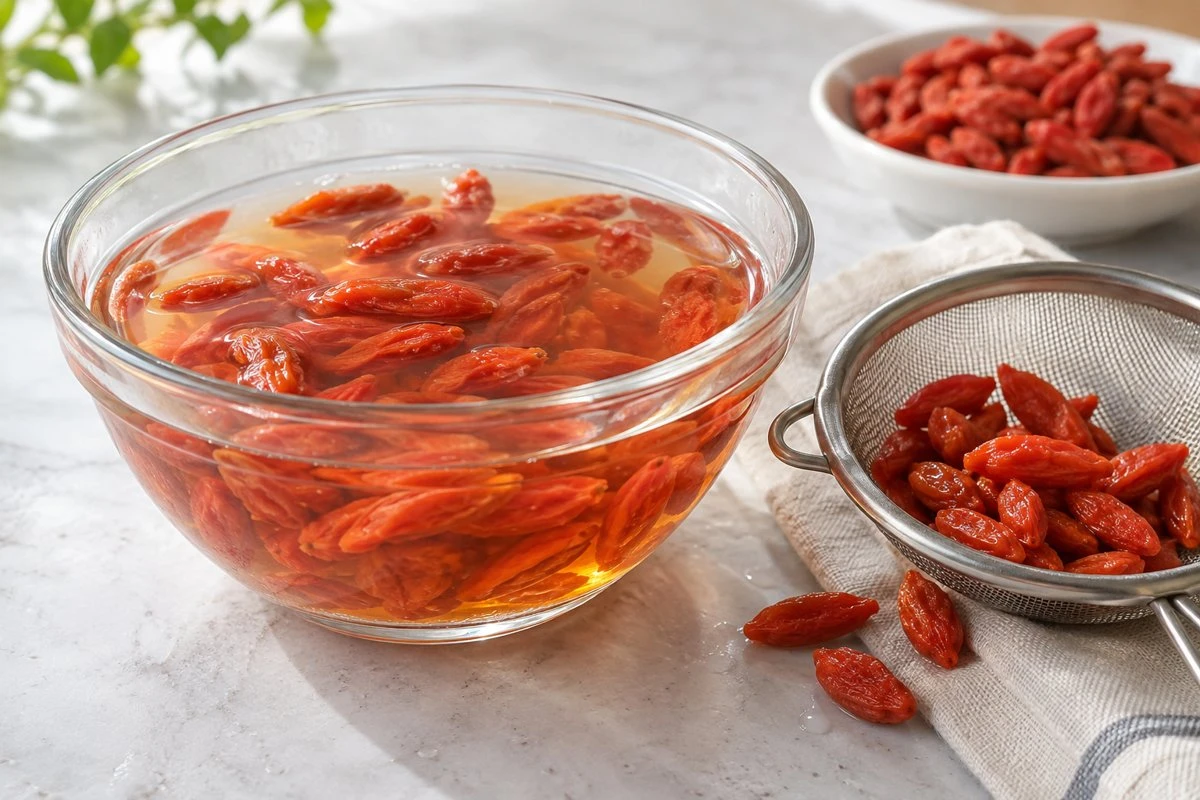
Soaked fruit and retained or discarded liquid create different calculation bases.
If the mixture is drained, the same simple calculation may no longer be sufficient. The drained material has a different weight, and the discarded liquid may contain some of the nutrient being considered. Weighing the drained berries alone does not tell the analyst how that nutrient partitioned. A suitable measurement or justified calculation is needed. The preparation method should identify soaking, drainage and any rinse rather than leave them as undocumented kitchen choices.
Thawed fruit presents a similar question. When a frozen pack is thawed, the separated liquid is still part of the pack unless the process removes it. If a recipe uses the whole contents, include that liquid in the ingredient accounting. If it uses drained fruit, define the draining conditions and obtain data appropriate to the resulting material. Our safe thawing guide explains the handling side; the nutrition file must also preserve the mass basis.
Cooking can change finished yield through water loss, ingredient additions and residues left in equipment. For a fruit preparation, weigh the finished batch at the defined endpoint before calculating a per-100-g result. Dividing by the original ingredient weight when the final product has a different mass creates a systematic error. Any nutrient changes relevant to the process still need appropriate consideration; a yield correction alone does not prove retention.
The recipe file should therefore contain both ingredient contributions and the final edible yield. Record the formula version, ingredient sources, preparation and what is discarded. When a developer changes a fruit dose, screen, drainage step or cooking endpoint, assess whether the nutrition calculation needs updating. This connection between process and data is especially useful when the same goji ingredient appears in a drink, a bakery filling and a dried snack.
Check sugars, units and nutrient claims
Total sugars and added sugars are different concepts. A fruit can contain naturally occurring sugars without sugar being added during manufacture. A sweetened goji product can contain both sources. Taste alone cannot distinguish them, and a dried fruit's concentrated sweetness is not proof of added sugar. The ingredient declaration and relevant formulation records are necessary to understand what the supplier has done and how the destination requires it to be declared.
The word carbohydrate also needs its method and definition. A research paper may calculate it by difference, while a label follows the requirements of a particular market. Fiber and other components may be handled differently across systems. Do not force figures from unlike sources into one comparison without checking their definitions. A numerical mismatch can reflect a methodological difference rather than a simple error in one supplier's data.
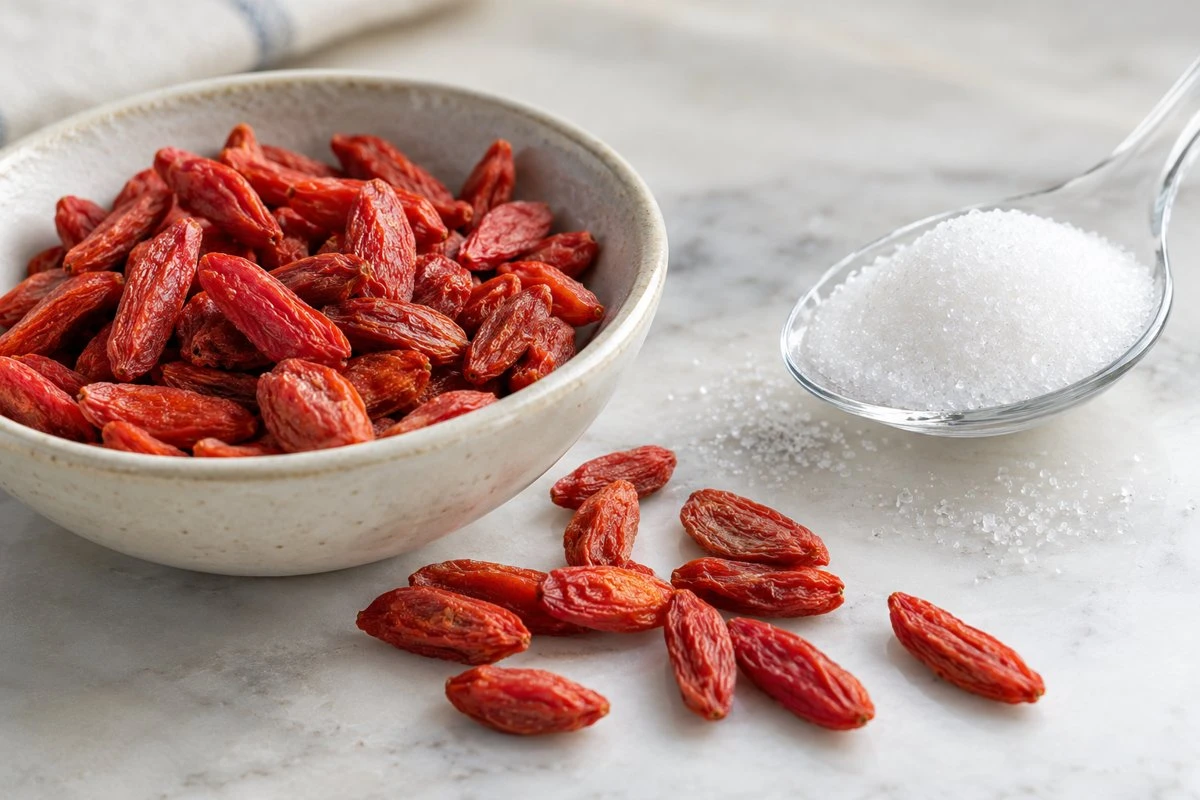
A sweet taste cannot establish whether sugar was added; use the ingredient and formulation records.
Units deserve a deliberate review. Grams, milligrams and micrograms differ by factors of a thousand. Energy may be shown in kilocalories or kilojoules. Vitamin values can use activity equivalents that are not interchangeable with an older unit without the appropriate basis. A spreadsheet should preserve the source unit and any conversion formula. Rounding should occur at the appropriate stage rather than repeatedly during intermediate calculations.
Claims such as "high in," "source of" or "no added sugar" need the applicable market criteria and product evidence. An article's description of a research sample does not authorize a claim on another product. Even when a nutrient appears naturally in goji, the qualifying amount and declaration basis still matter. Confirm the finished food, serving or reference amount where applicable, and the wording permitted in its market before printing.
Keep health-effect claims outside an ordinary ingredient composition comparison unless they have their own appropriate substantiation and regulatory review. A laboratory antioxidant assay, a carotenoid measurement or a small human study does not translate automatically into a promise about what this pack of fruit will do for a person's health. The useful buyer task is to establish accurate composition and an honest declaration for the food actually supplied.
For practical review, trace each proposed public claim back to a specific record. Identify the product, the data basis, the calculation and the applicable requirement. If a link is missing, keep the claim open until it is resolved. That approach helps the artwork team avoid polishing wording around a premise that the technical file cannot support, and it gives the supplier a clear request for any additional information needed.
Build a dependable nutrition data file
A dependable file allows another reviewer to reconstruct the declaration. Start with the product identity and specification version, then retain the source data, units, preparation basis and date. Add the recipe and yield calculation if the ingredient becomes part of another food. Keep the final label calculation linked to those inputs so that a later change can be assessed without searching through unrelated emails and screenshots.
Use source information at the level it supports. A published food-composition record can help early development or a justified calculation, while a current product-specific analysis may answer a more precise question. Neither source type automatically removes the need to check representativeness. The person approving the declaration should understand whether the data describes a single sample, an average, a formulated mixture or a documented range in the supplied product.

Whole berries in a bulk liner show the supplied physical form; the specification establishes the agreed order details.
Sampling is part of that judgment. A sample taken from one small part of a variable lot may not represent the material used in a long production run. The food business should agree an appropriate sampling approach with the supplier or laboratory and retain the identity of the submitted material. If preparation includes thawing, mixing or draining, document those steps. The laboratory should know what the reported result is expected to represent.
Revisions need a clear trigger. A change in species declaration, ingredient additions, drying method, moisture specification, recipe dose or final yield may require a data review. A change in packaging alone may or may not affect the relevant declaration, depending on the product and market. The file should identify the person responsible for deciding and the version approved for current artwork. An old spreadsheet should not silently remain the master after the product has changed.
For a frozen goji purchase, request the information needed for the actual use rather than an indiscriminate list of analyses. State whether the fruit will be used whole, drained, screened or cooked into a preparation, and identify the destination for the finished food. We help purchasing teams frame that information request alongside the product and packing specification. Numerical declarations and claims still require support for the confirmed material.
The final comparison should leave a reader with no uncertainty about the denominator. Name the food form, show the gram basis, preserve the source and distinguish calculated examples from product values. Once those foundations are correct, a nutrition panel becomes easier to interpret and a formulation calculation becomes easier to check. A larger number then means exactly what its basis says, without implying an unsupported advantage for fresh, frozen or dried goji.
Related reading
Match analyte, sample preparation and reporting basis before comparing vitamin values.
Distinguish a refractometer reading from a measured individual-sugar profile.
Choose a controlled thawing method with handling and intended-use limits.
Source frozen goji berries with GreenLand-food
GreenLand-food is a professional frozen goji berries supplier and manufacturer in China, providing factory-direct wholesale supply for importers, food manufacturers, foodservice distributors, and private-label programs.
Send the intended application, product form, botanical identity requirement, packing, quantity, destination and requested documents. We will review the frozen goji brief; availability and order specifications require confirmation.