


What Is Chayote Squash? Names, Taste and Frozen Ingredient Form
Oct 19, 2026
Leave a message

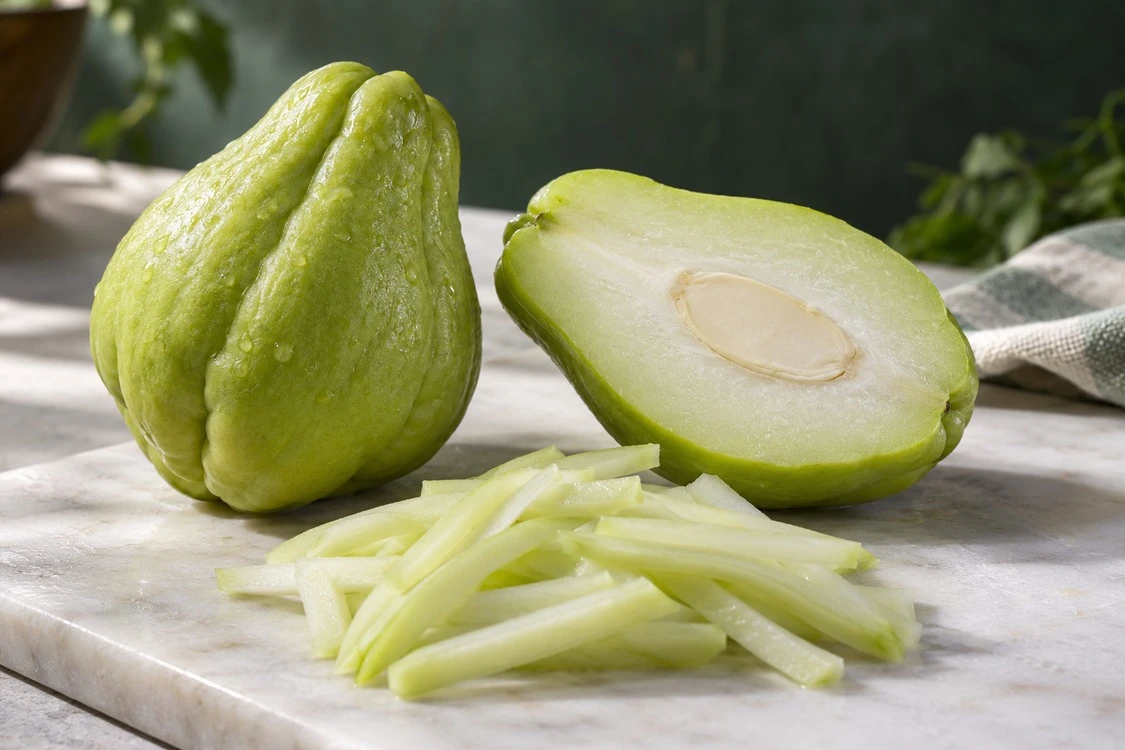
For a purchasing team discovering the ingredient, the first decision is whether its mild flavor and visible pieces suit the finished dish. A light soup, a seasoned vegetable side and a frozen meal tray make different demands on the same fruit. Frozen chayote should be evaluated in that dish after its full heating sequence. Fresh sensory descriptions help explain the ingredient, while an approved cooked sample establishes the expectation for the actual product.
Recognizing chayote and its common names
A whole chayote often looks like a green pear with folds running along its surface. Cutting it lengthwise reveals pale flesh surrounding a single central seed. Appearance varies, so a smooth example and a strongly creased example can belong to the same ingredient group. The shape is a useful introduction for a development chef; a buyer still needs the supplier to confirm the commodity identity in writing. Photographs can show cut form and obvious appearance, but cannot establish every identity or quality attribute of a commercial lot.
The names are especially useful when several teams are working across markets. A chef may ask for mirliton, a distributor may describe choko, and a quotation may use chayote squash. Matching those names early prevents unnecessary duplicate sampling. The USDA Agricultural Marketing Service lists several of these synonyms in its chayote inspection information. On a purchasing document, one consistent English name followed by Sechium edule gives everyone a stable reference. An accepted local name can be added for the destination label after the label requirements have been checked.
Botanically, the item discussed here is a fruit. In recipes and frozen vegetable purchasing, it is treated as a vegetable because of the way its flesh is used. Those descriptions answer different questions and can coexist without difficulty. A frozen vegetable blend can include chayote fruit, just as culinary vegetable dishes include several other botanical fruits. The useful procurement distinction is the edible part being ordered. Chayote shoots or leaves are different ingredients and should have separate product descriptions, samples and handling instructions.
A common name should also travel consistently through the supply documents. If the approved specification says peeled chayote strips, the sample label, order confirmation and carton description should point to that same ingredient. The consumer-facing name may be shorter, but the technical record needs enough information to reconnect the delivered bag to its approval. This becomes particularly valuable when a purchasing team already buys several pale cut vegetables that look similar in a mixed carton photograph.
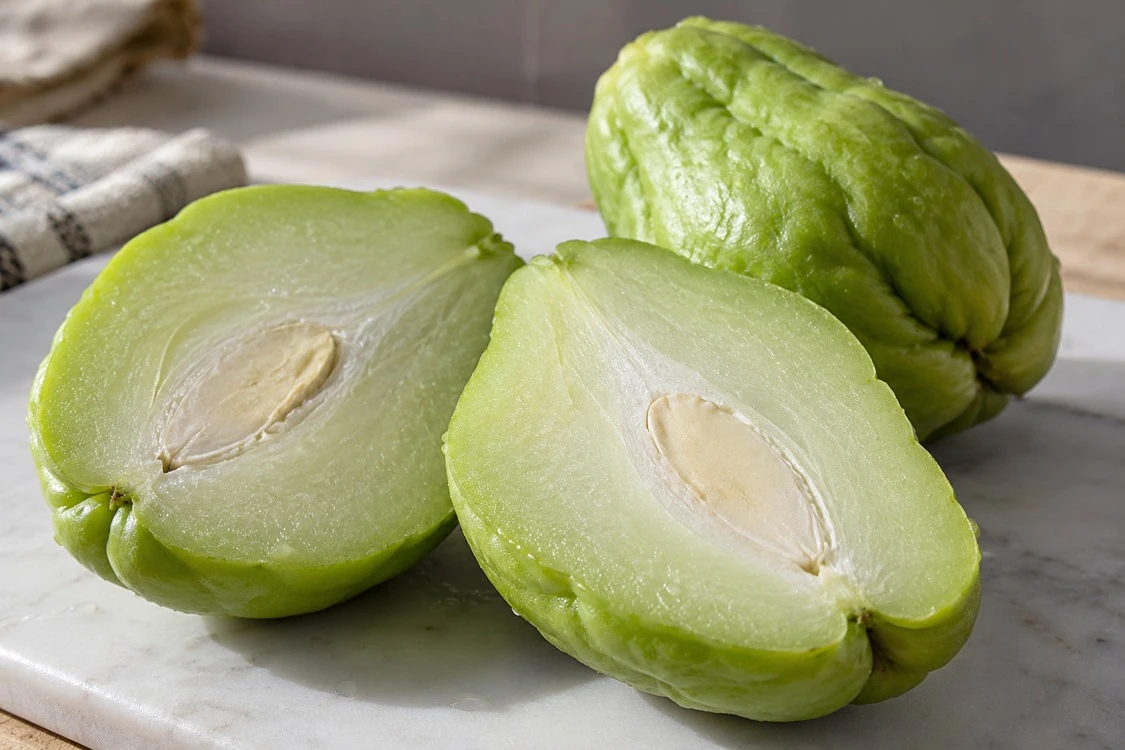
Illustration: Chayote cross-section with one central seed.
The natural folds on a whole fruit have little direct value as an acceptance rule for a peeled frozen strip. Their significance is in preparation: the supplier must establish what remains after trimming and cutting. A whole-fruit market photograph can explain what chayote is, while the cut sample explains what will enter the customer's process. Keep both descriptions available during development so that an attractive raw-material image does not become the only reference for a finished ingredient.
For a first tasting, give participants the confirmed ingredient name and describe the intended use before discussing subtle sensory differences. Otherwise one person may expect a sweet dessert pear and another a dense potato. A simple shared description, such as pale vegetable strips for a cooked broth, makes their comments easier to interpret. The name establishes identity; the application establishes what a useful texture will mean.
A name check can also explain an apparent mismatch between reference documents. Kew's Plants of the World Online treats Sechium edule as a synonym of Sicyos edulis, while many horticultural and food references continue to use Sechium edule. These names can therefore point to the same ingredient. Keep the name used in the agreed specification and include the botanical synonym where it helps resolve a document question. Do not assume that a changed botanical listing means the supplier has offered a different vegetable.
For an ingredient file, put the agreed name beside the actual cut description and a representative photograph. That combination is easier to review than a list of regional names alone. It also helps a new colleague distinguish a whole-fruit reference from the prepared ingredient on the order. When documents arrive using another familiar name, compare identity and preparation together before requesting a replacement or starting another sample approval.
What its mild taste means in a finished dish
Chayote has a mild flavor that leaves room for the other ingredients in a dish. Rather than assigning it one exact equivalent, taste a plain cooked sample alongside the finished recipe. The plain sample makes unusual odor, excessive bitterness or an unwanted processing note easier to detect. The recipe sample shows whether the chayote contributes enough vegetable character and whether its texture fits the seasoning and sauce. Both observations matter, but they answer different development questions.
Fresh chayote is often compared with cucumber, zucchini or other gently flavored vegetables. These comparisons introduce a reader to the ingredient, yet they are imprecise purchasing language. Two tasters may interpret cucumber-like very differently: one means moisture, another means green aroma, and another expects a particular crunch. Write the actual characteristic being sought. A clean, mild vegetable flavor after the agreed preparation is more useful than asking a supplier to reproduce another vegetable's entire sensory profile.
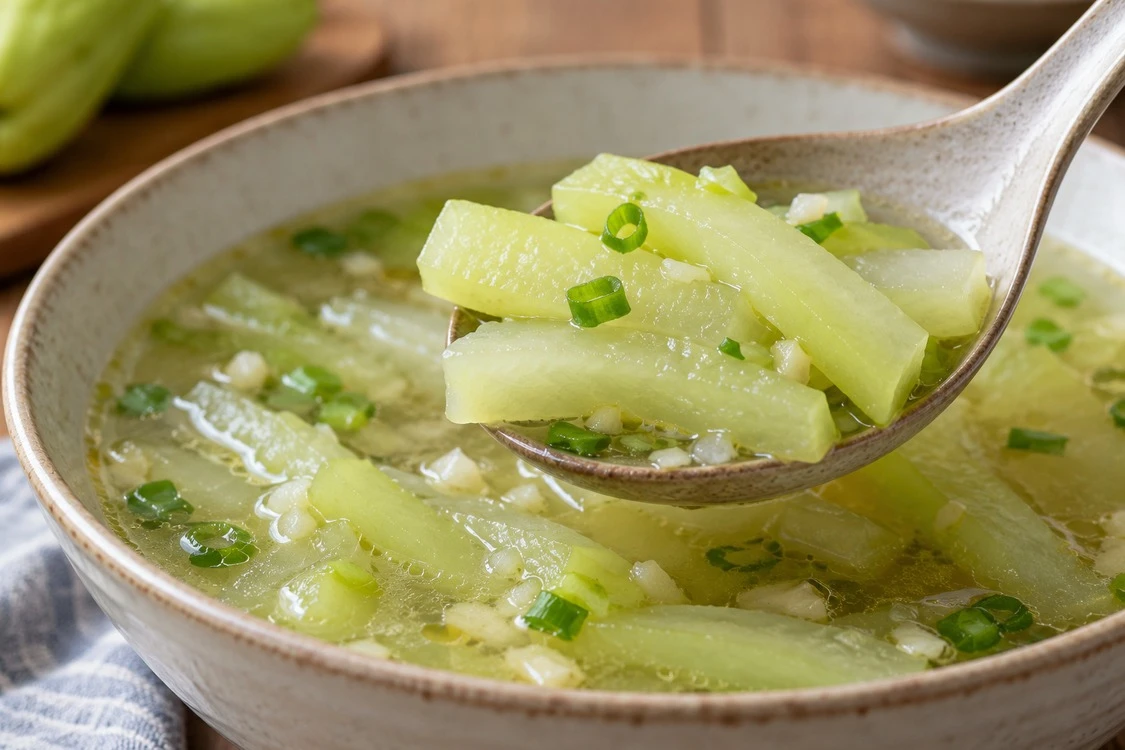
Illustration: Pale chayote strips in a clear garlic broth.
Flavor and firmness should be evaluated separately. A piece may taste acceptable while losing the outline that makes it visible in a tray. Another piece may remain intact yet feel too resistant for a spoonable soup. Tenderness also changes the way seasoning is perceived because the eater encounters a different balance of sauce and flesh in each bite. Record the sauce recipe, cut dimensions and serving state when comparing samples; otherwise a seasoning adjustment can be mistaken for a change in the ingredient.
Consider a clear broth with chayote strips. The pieces remain visible through the liquid, and their pale color gives a quiet contrast to herbs or carrot. The broth sets much of the overall flavor. A developer can therefore focus on whether the strips are tender enough to eat comfortably and strong enough to lift with a spoon. In a thick coconut sauce, the coating changes both appearance and mouthfeel. The useful question becomes whether the chayote still gives a recognizable vegetable bite after mixing and serving.
A mild ingredient also makes unwanted notes easier to notice when used simply. Seasoning should not become a way to excuse an unexplained off-odor or deterioration. If a sample has an unusual smell or appearance, stop the tasting and investigate its condition through the appropriate quality procedure. Sensory approval belongs alongside the product's food safety and traceability controls; it cannot replace them. A pleasing spoonful gives information about eating quality, not a complete assessment of the lot.
When several people assess a trial, serve them portions from the same preparation at a consistent point after heating. Ask for separate comments on flavor, bite, visible shape and surrounding liquid. A single score called overall quality can hide the reason a sample works or fails. At GreenLand-food, a useful discussion begins with those concrete observations, so the next sample can address the aspect that matters to your dish.
Peel, flesh and seed belong in the product description
The fruit's peel, pale flesh and central seed do not behave or look identical. A fresh recipe may use more of the fruit than a commercial cut specification allows. The fact that a part can be eaten in a particular preparation does not determine whether it belongs in every supplied form. For strips intended to appear uniformly pale in a vegetable blend, peel fragments and seed material can affect presentation and the consistency of a bite. Their inclusion or removal therefore needs an explicit agreement.
Peeling is a form decision as well as a visual one. A skin-on piece can display a green edge that helps a chef recognize the ingredient, but the customer may want a smooth pale cut. The finished use determines which description is useful. If the order calls for peeled strips, ask how residual peel will be described and assessed. A photograph of an approved mixed sample can help show the intended appearance, provided it accompanies a written rule and a defined inspection method.
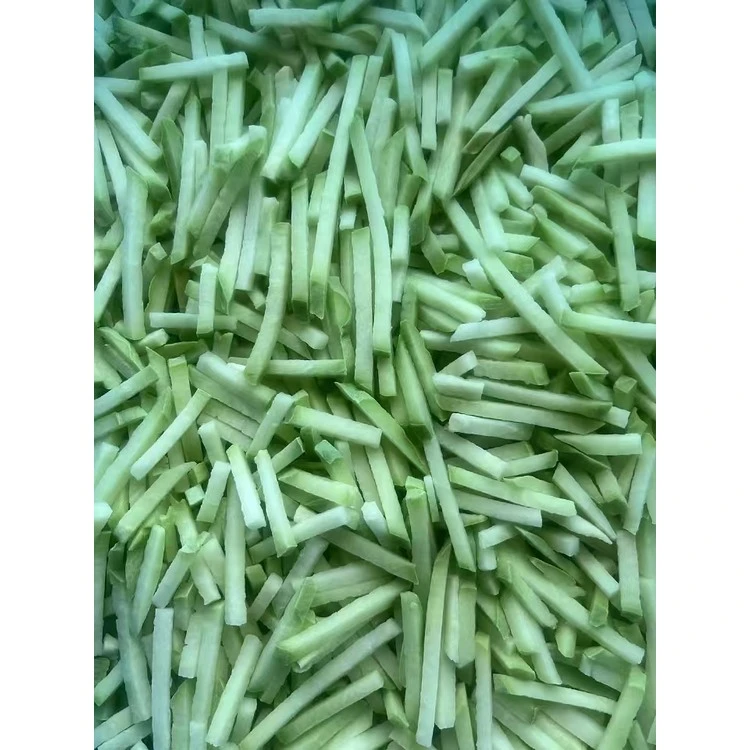
The published sample shows slender strips. A different cut requires its own sample and specification.
The seed is a separate anatomical feature, rather than a collection of small seeds distributed through the flesh. It should not be confused with the seed pattern of a zucchini slice. That difference matters when checking images, communicating with a cutting team or evaluating a proposed substitute. A seed-containing central section also has a different outline from a strip cut from the outer flesh. Even when a fresh culinary preparation uses the seed, an ingredient buyer may require its removal to keep the cut form consistent.
For freezing chayote at home, Penn State Extension's chayote-specific directions call for removing the seeds before blanching the dice. That instruction belongs to its stated home-preservation method. It provides a clear reason to avoid treating all edible parts as interchangeable, while commercial preparation must be confirmed for the actual product and process. A buyer should ask for the agreed seed treatment instead of assuming that every frozen item follows the same household procedure.
The location of a cut within the fruit can influence its shape. Curved outer portions, central portions and end trimmings do not produce identical strips without sorting or additional cutting. If a customer expects long visible pieces, a substantial share of short offcuts may be inconvenient even when the ingredient itself is sound. If the ingredient will be chopped further into a filling, those same differences may have less practical effect. The intended dish gives the supplier a reason for the requested form.
During a sample review, spread the pieces so both cut surfaces and remaining skin are visible. Inspect a mixed portion rather than selecting only the most attractive pieces. Record which features are acceptable in the target use, and keep the marked photographs with the written sample identity. This simple discipline makes a later conversation about appearance more precise. Detailed defect limits belong in the purchase specification; the first task is to agree which anatomical parts the named product contains.
The University of Florida chayote description identifies the single flat seed and distinguishes the young fruit from tougher, sprouting fruit.
How frozen strips differ from the whole fresh fruit
Freezing changes the state in which chayote is stored and handled. Cutting changes its shape. Those are separate product attributes. A description such as frozen chayote should therefore be expanded to say whether the supplied material is strips, dice or another approved form. The current GreenLand chayote range presents a strip sample; a proposed dice needs its own specification and sample approval. It should not inherit the strip's photograph or be assumed to have identical cooking behavior.
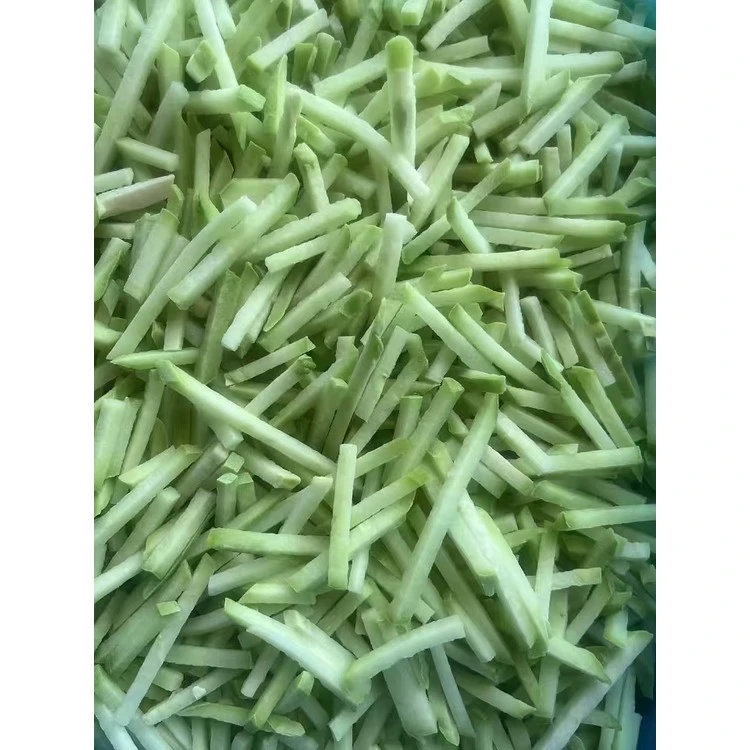
The published sample shows slender strips. A different cut requires its own sample and specification.
Frozen pieces can make portioning convenient when the format is designed to remain separated. The buyer can weigh a required quantity and return the remaining properly handled pack to frozen storage, following the product instructions. A compact frozen mass requires a different preparation plan. The words IQF, block and cut describe different aspects of that plan. Confirm the freezing format and the expected separation of the pieces in the actual quotation, especially if a dosing system or small kitchen portions depend on free-flowing material.
A fresh fruit and a frozen cut ingredient also create different expectations at the plate. Fresh, uncooked flesh may have a firmness that does not persist after freezing and subsequent cooking. Water in plant tissue changes state during freezing, and handling and heating add further effects. The National Center for Home Food Preservation explains that freezing rate affects quality through ice-crystal formation. For a buyer, the practical consequence is to approve the cooked ingredient rather than relying on a fresh bite as the finished-product benchmark.
A pale strip in a photograph cannot disclose the entire treatment history. Washing, peeling, blanching and freezing details must come from the product information and the agreed specification. A frosty surface does not establish a validated heat treatment. Likewise, the botanical fruit's use in raw dishes does not mean that a bag sold as a frozen cooking ingredient is suitable to eat without cooking. Follow the supplier's actual preparation instructions and have the food safety team review the intended use.
Bag condition gives another kind of information. Loose pieces, visible frost and clumps can be recorded on receipt, but their cause requires context. A photograph alone cannot reliably distinguish every reason for an accumulation of surface ice. Keep the lot code, receiving observations and temperature records together, then compare the condition with the agreed reference. Avoid judging the expected cooked quality solely from how attractive the frozen pieces look under bright lighting.
The source format should remain visible in development records. If the approved material was sampled as strips, mark the trial as strips even if some pieces later break during mixing. If a second trial uses dice, give it a separate sample identity and keep its results separate. This prevents an apparently small naming change from obscuring a real change in particle geometry, dosing behavior and the proportion of surfaces exposed to sauce.
Choosing a form for the first application trial
Choose the first application around the role chayote is expected to play. In a broth, it may provide a visible pale vegetable piece and a gentle bite. In a mixed side, it may need to remain distinguishable beside brighter vegetables. In a prepared meal, it must survive the manufacturer's preparation and the consumer's reheating instructions. These uses can all be sensible starting points, but approval for one does not establish performance in the others. A trial should reproduce the use that will actually be purchased.
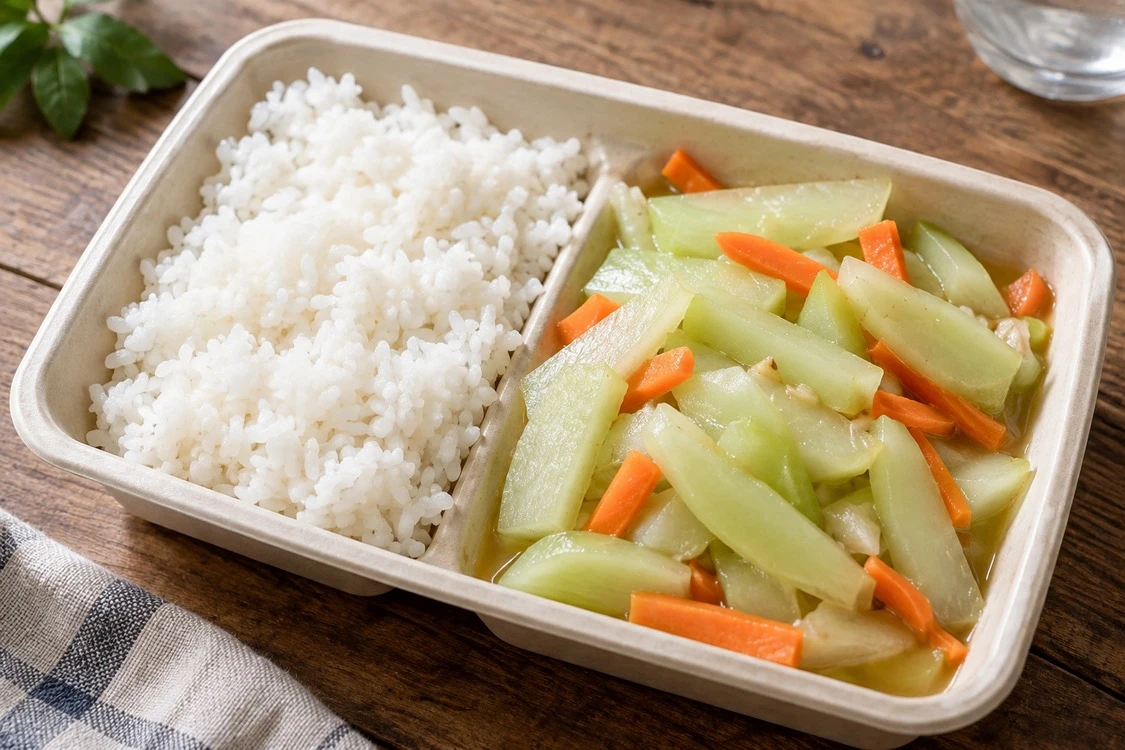
Illustration: Chayote strips visible beside rice in a cooked meal.
Start by describing the finished portion. A spoonable dish places a different demand on length than a fork-eaten side. Long strips can make the ingredient recognizable, yet an awkward length may complicate portioning or eating. Smaller pieces may spread more evenly through a formula, while their greater number makes appearance and dosing a different problem. Select a sample form with that serving method in mind before spending time optimizing seasoning.
Next, keep the recipe and preparation conditions stable enough to compare samples. Record the amount of chayote added, its starting state, the other ingredients, the cooking equipment and the point at which it enters the dish. If one trial uses thawed material and another uses frozen material, the comparison includes that handling difference. It may still be useful, but it needs to be understood. Changing several conditions at once makes an apparently better result difficult to repeat.
Examine the dish when it will be served. Chayote lifted immediately from a pan can look different from chayote after a realistic holding period or a later reheat. Look at visible edges, short fragments and any liquid that has accumulated around the portion. Taste only when the preparation has met the applicable cooking instructions. Keep the quality observation separate from that safety requirement: an attractive shape is not a temperature measurement, and softness alone does not demonstrate safe heating.
For a new ingredient introduction, a small comparison can be more informative than an elaborate score sheet. Prepare the candidate sample and an agreed reference under the same conditions. Photograph the finished portions with similar lighting and serving depth. Ask whether the ingredient can be identified, whether the pieces are comfortable to eat, and whether the surrounding sauce remains appropriate. If a difference matters, repeat the preparation before treating it as a dependable product characteristic.
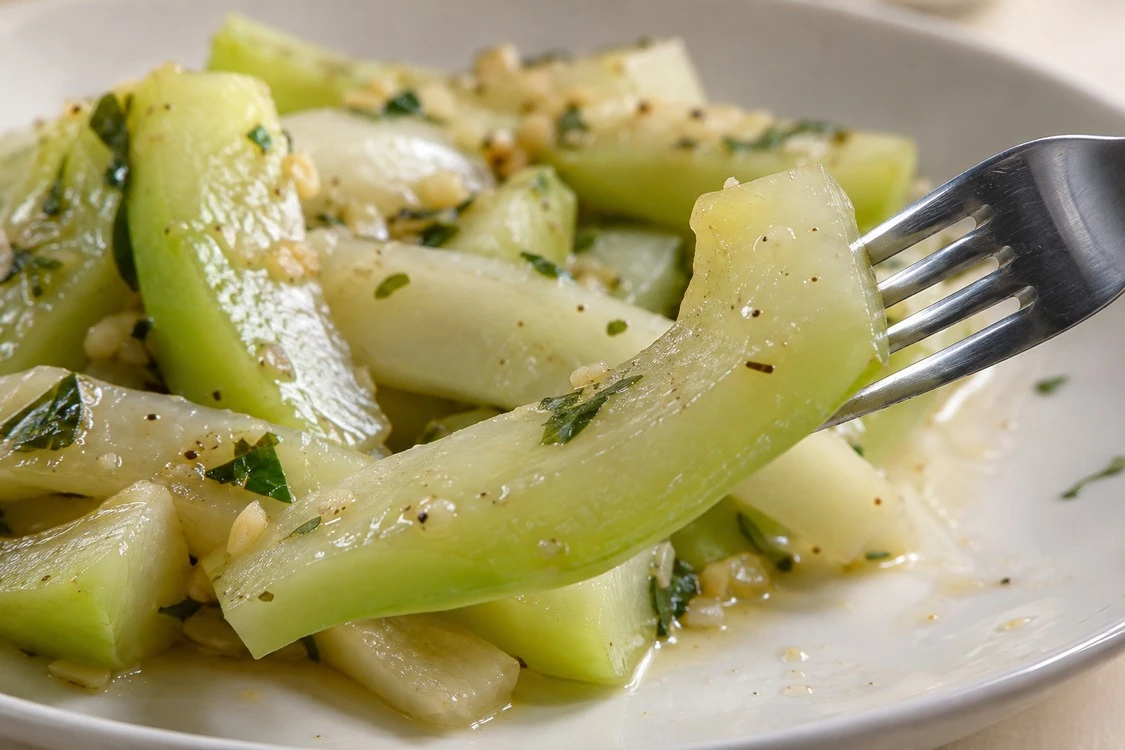
Illustration: A chayote strip retaining its outline beneath a thin sauce coating.
This is also the right moment to record usable quantity. The purchased weight, the amount incorporated and the portion served may differ because of the defined handling method. Keep the basis consistent before making a cost comparison. A cheaper quoted kilogram does not automatically produce a cheaper acceptable portion, and an impressive frozen appearance does not establish the usable yield. The first trial should give purchasing a practical reason for the selected cut and packing format.
Turning an ingredient idea into a clear sourcing request
A clear sourcing request connects the ingredient name to the finished food. Tell us that you are considering chayote for a particular soup, vegetable blend or meal tray, then state the form you want to assess. If the process is still being developed, describe the visible piece and serving method you hope to achieve. We can use those details to organize the discussion around a sample and specification instead of treating every inquiry for chayote as the same requirement.
Include the dimensions that matter to your process. Strip width and thickness influence how the pieces fit with other ingredients and how consistently they heat; length affects appearance and handling. A photograph with a scale can help convey the idea, but a written dimension and tolerance are needed for repeat ordering. If the dimensions have not been decided, request a clearly identified sample first and record the accepted range after the trial. Avoid presenting an untested cut as a final production requirement.
Packing should fit the way the ingredient will be used. A small kitchen removing portions and a manufacturer emptying a full pack into a batch have different needs. Discuss the intended pack weight, inner packaging, carton handling and any private-label requirements. Quantities and lead time can then be reviewed for that defined product. A general category page cannot establish that a particular cut, pack and shipment quantity are available on every requested date.
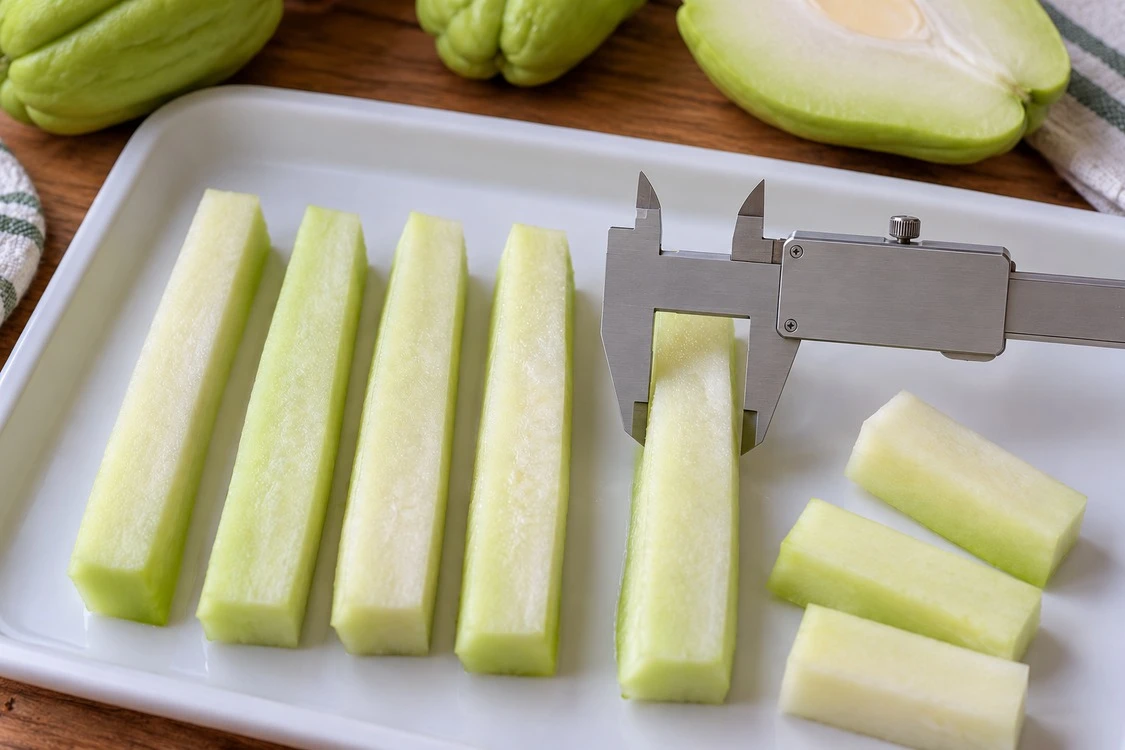
Illustration: Chayote strips arranged beside a clean caliper.
Tell the supplier where the ingredient will be delivered and which documents your quality team needs to review. The exact requirements depend on the destination, customer program and intended use. Useful records may include the agreed product specification, sample identity, lot identification and relevant test or certification evidence. Ask what each document establishes and whether it applies to the actual product and supply arrangement. A general company statement should not be substituted for an order-specific answer.
For repeat orders, retain the approved sample record and the finished-dish observations that justified it. A short change record is helpful when the recipe, cut, packing or reheating instruction changes. The team can then decide whether the earlier approval remains applicable or a new trial is needed. This keeps purchasing, development and quality staff aligned even when they encounter the ingredient under different regional names or inherit the project at different stages.
The most useful first message can be brief: chayote strips for a cooked vegetable side, the approximate dimensions under consideration, the expected pack, the destination and the intended order quantity. Add a photograph or current specification if available. At GreenLand-food, we help your purchasing team turn that starting point into the questions needed for a defined frozen ingredient. The approved product should remain recognizable in the paperwork, in the sample and in the finished dish.
Continue reading
Compare freezing format with the separate question of cut shape.
Turn a chayote product description into a complete purchasing specification.
Consider how vegetable pieces behave in a production recipe.
Source Frozen Chayote with GreenLand-food
GreenLand-food is a frozen chayote supplier and manufacturer in China, supporting factory-direct wholesale enquiries for defined cuts and applications. Send us your requested strip or other cut specification, packing, quantity, application and destination. Include private-label needs and the documents your quality team requires so we can review the proposed supply with you.