


How to Cook Frozen Chayote: Timing and Texture for Hot Dishes
Oct 19, 2026
Leave a message

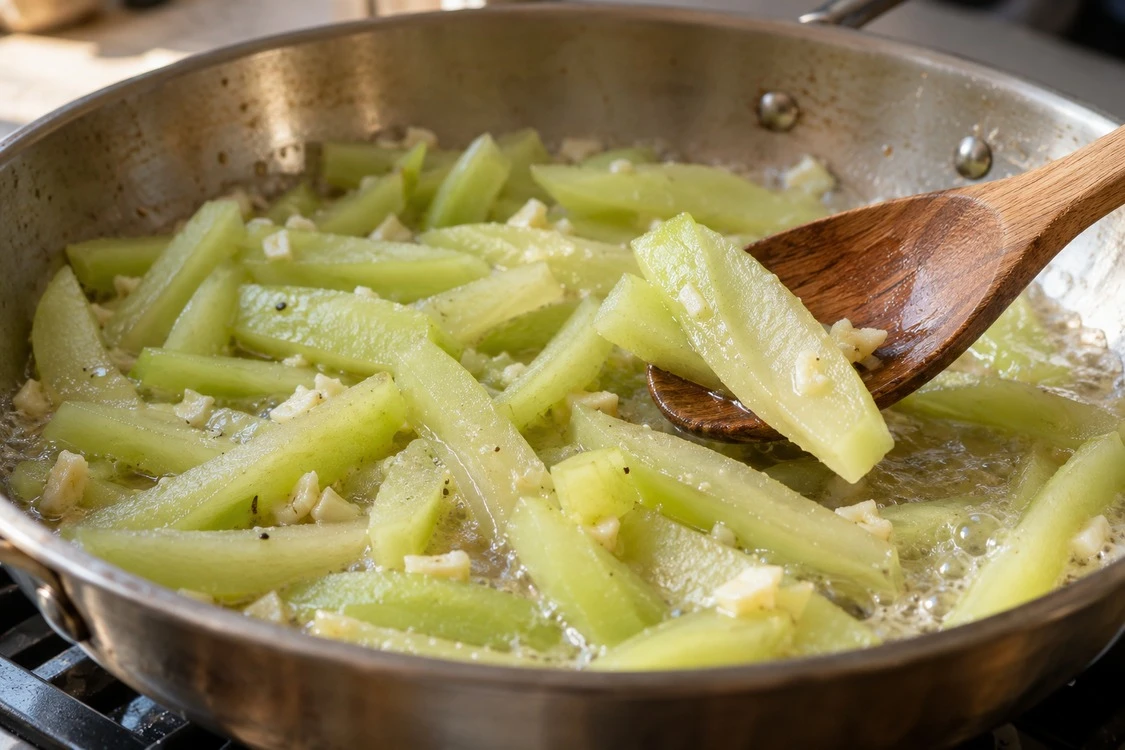
There is no verified universal minute value for all frozen chayote. Fresh whole fruit, thin frozen strips and a separately approved dice have different heating requirements, and the ingredient may have received different pretreatment. A kitchen needs a repeatable method for its own product. The following approach explains how to develop that method while keeping safe cooking requirements separate from the texture you want to serve.
Start with the cut and its preparation instructions
Read the product description before choosing a pan. Confirm whether the chayote is supplied as strips, another cut or a compact frozen form, and whether the instructions call for cooking from frozen. The public GreenLand product range shows slender strips. A recipe written for a halved fresh chayote cannot be transferred directly to that ingredient. Check the actual cut sample and its treatment information, since a photograph does not establish whether a product is blanched, fully cooked or ready to eat.
Thickness is especially useful when anticipating differences within a portion. A long thin strip and a shorter thick piece can have similar weights but different distances from surface to centre. Mixed thickness therefore makes a single visual check less informative. Spread a sample and look for the thickest pieces, thin tails and clusters. Those observations help you decide what to check during cooking. They also give the supplier specific feedback if the delivered cut does not match the form that was approved.
Frozen starting condition needs attention too. Separated pieces can be distributed through a pan or broth more evenly than a tightly joined clump. If the bag contains unusually large clumps, follow the agreed receiving procedure before adapting the recipe around them. Forcing a solid mass apart with a knife is an avoidable handling problem. Record the condition, lot code and relevant temperature history, and ask whether the product remains within its agreed handling specification.
Do not assume that a quick rinse or a room-temperature thaw improves the ingredient. Added water changes a pan process, while an uncontrolled hold adds a handling variable before cooking begins. If the approved recipe requires thawing, define the method, time controls and treatment of released liquid with the responsible food safety team. Keep that procedure consistent during development. A direct-from-frozen trial and a thawed trial are different methods and should be labeled accordingly.
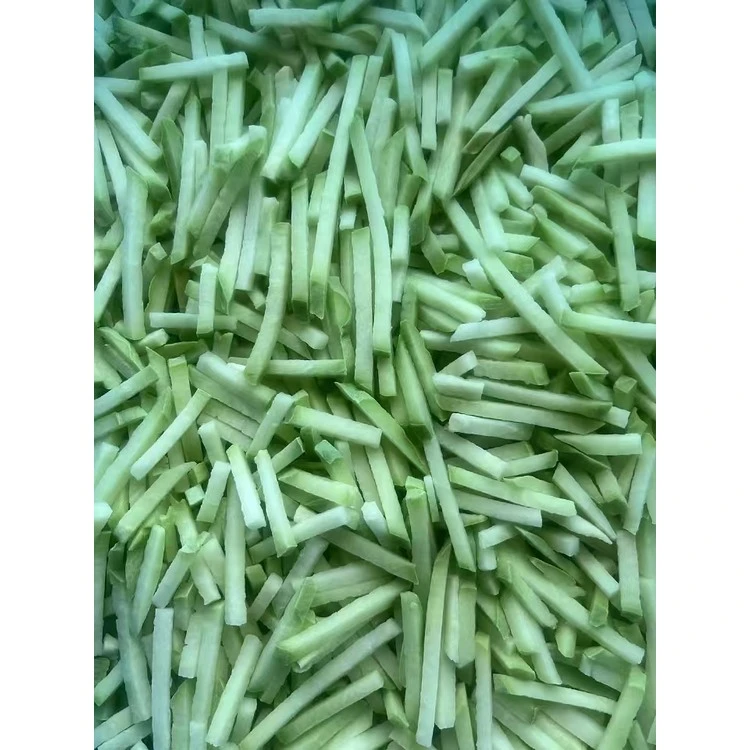
The published sample shows slender strips. A different cut requires its own sample and specification.
The dish's other components determine when chayote can enter the process. An onion base may need separate cooking before the frozen strips are added. A stew containing raw meat requires a complete safe process for that meat and the assembled dish. A preheated sauce may lose heat when a large frozen portion enters it. Plan the sequence around those requirements; chayote's mild flavor and pale appearance do not reveal whether the whole meal has been cooked safely.
Set a texture description that the kitchen can recognize. Tender strips that retain their outline, a soft spoonable vegetable, and a lightly browned side are distinct outcomes. A sample photograph can show shape and sauce condition, while a short sensory description explains the bite. This gives the cook a practical target and gives procurement a reason to ask for the particular strip dimensions. Without that target, the instruction to cook until done leaves too much open to interpretation.
Build a repeatable timing trial
A timing trial starts with a fixed setup. Record the frozen chayote weight, the pan or vessel, the amount of liquid or oil, the heat setting and the loading sequence. Use the same starting state for each comparison. A small trial can establish which variables matter, but the result still needs to be checked at the batch size the kitchen will actually serve. Doubling the ingredient does not automatically mean doubling the time, especially when the cooking surface becomes crowded.
Define when the clock starts. In a soup, staff may naturally time from adding the frozen ingredient, from the return of a simmer or from closing a lid. Those moments can be separated by a meaningful interval. Choose the reference that belongs in the final instructions and record it consistently. If heat recovery is important, record both addition and recovery so a later cook can identify why a larger batch behaves differently.
During development, take small observations at planned intervals while keeping the remaining batch as undisturbed as practical. Check a thick piece from a representative position, then note its centre resistance, surface condition and tendency to split. A fork can help compare tenderness, but its result is qualitative unless the procedure has been standardized. It is not a substitute for a food thermometer or the safe cooking instruction required for the product and finished dish.
Keep taste assessment behind the safety decision. Follow the product directions and the food business's approved process before serving samples for tasting. FoodSafety.gov advises following commercially prepared frozen-food instructions, including any standing time in microwave preparation. A piece that looks translucent or feels soft does not establish the required heating outcome. Texture development should proceed within the safe process, rather than by shortening it to preserve a firmer appearance.
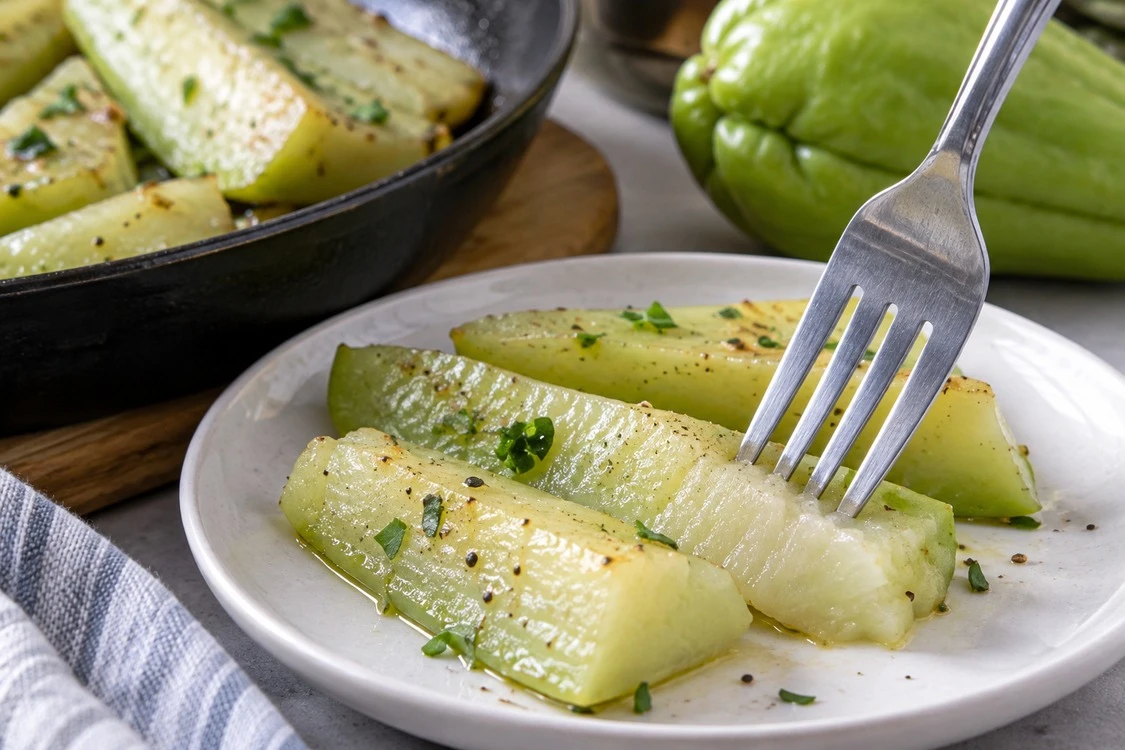
Illustration: A fork checking the centre of a cooked chayote strip.
Once a useful endpoint is found, repeat the preparation. Look for the range of results across ordinary variation in pan loading, ingredient distribution and the staff who perform the method. If the acceptable window is narrow, changing cut uniformity or reducing the batch load may be more dependable than asking every cook to stop at an exact instant. Record the condition that produced the result so the improvement can be tested again.
For example, a development kitchen might compare two practical loading amounts in the same pan while holding cut, recipe and heat setting constant. The purpose is to see whether extra loading creates liquid pooling and delays the desired finish. This is a proposed comparison, not a claim about a completed GreenLand trial. If the heavier load consistently gives a watery side, the final instruction can specify a maximum tested load rather than simply telling staff to use higher heat.
The useful output is a short cooking record with an identifiable product, equipment, load, sequence and observed serving condition. Time belongs in that record once it has been established for the setup. It should remain connected to the conditions that produced it. A published minute range without those conditions creates a false sense of precision and can make troubleshooting harder when the kitchen's equipment or product form changes.
Cook chayote in soups and simmered sauces
For a soup or simmered sauce, develop the base first so the chayote enters a predictable environment. Confirm that the liquid is at the intended cooking state before adding the planned frozen portion. Distribute the pieces gently and observe how the addition affects the simmer. A large cold load can interrupt heating, while a smaller addition may recover more quickly. Record that recovery during the trial, because it helps explain changes between a tasting saucepan and a service kettle.
A controlled simmer gives the cook more opportunity to preserve visible strips than unnecessary violent agitation. Stir enough to distribute the ingredients and avoid local sticking, using a utensil that does not repeatedly crush softened pieces against the vessel. The exact stirring requirement depends on the sauce and equipment. A thin broth and a thick sauce should not share an unexamined stirring instruction merely because both contain chayote.
Chayote can release water as it heats. In a broth, that contribution becomes part of the liquid phase; in a thick sauce, it may affect the final consistency. Keep the added liquid measured while developing the recipe so you can distinguish the formula from uncontrolled variation. Do not compensate automatically by extending simmering until every excess drop disappears. Longer exposure may change the vegetable texture while concentrating the seasoning in ways that were not intended.
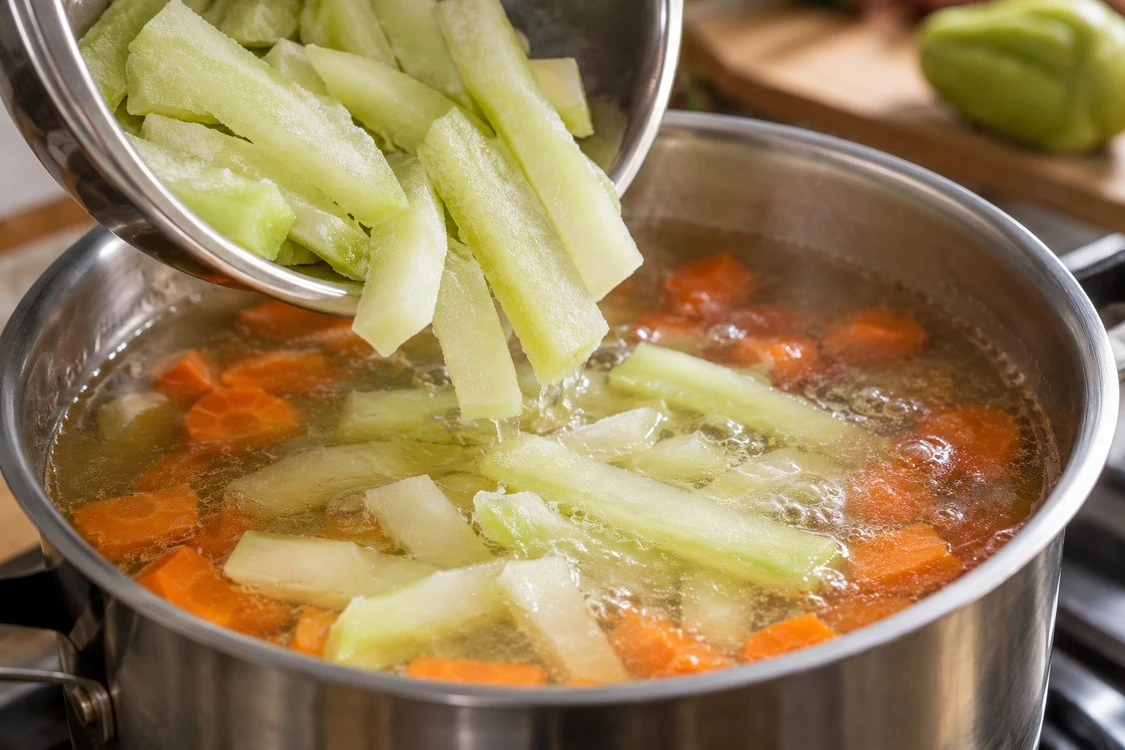
Illustration: Separated chayote strips entering a simmering broth.
Check the chayote in the assembled dish. A strip lifted from clear broth is easy to see, whereas a thick sauce can hide broken edges and short fragments. Use a spoonful from a representative part of the vessel, then inspect the piece without aggressive squeezing or rinsing. If you need to recover pieces for a formal comparison, define that handling separately. The act of recovering the sample can itself damage tender material and create misleading evidence of cooking failure.
Think about the other vegetables in the formula. A chayote strip, a thick carrot slice and a leafy component may reach their desired eating textures at different points. The trial can compare addition order while preserving the complete safety process. Adding everything simultaneously may be convenient, but it should earn its place through the finished result. If the chayote is already soft when another component becomes acceptable, changing the sequence may be more useful than changing the seasoning.
A soup that will be held or reheated needs its final assessment later than the end of the first simmer. Keep a representative portion through the intended service route and check whether the chayote remains easy to identify and eat. Include the actual sauce quantity and portion depth. A small uncovered tasting cup can lose moisture differently from the covered container used in service, making an early positive result difficult to reproduce.
For a repeat order, the approved recipe should specify the ingredient form and the point of addition alongside the agreed time and heat conditions. When the cut or pretreatment changes, review the cooking instruction with the supplier. The goal is a stable finished soup or sauce, and the evidence should connect the supplied chayote to that particular result.
Manage water and contact heat in a pan
A pan-cooked side depends on both heating the chayote and controlling the water around it. Frozen strips cool the surface when they are added, and moisture can collect between the pieces. If the pan is densely loaded, the ingredient may spend much of the process surrounded by liquid. That can be suitable for a tender simmered side, but it changes the conditions needed for a drier finish with lightly colored edges.
Use a practical, tested load that leaves room to distribute the strips. A wide pan gives more exposed area than a deep narrow vessel holding the same amount of food. During a trial, note whether liquid pools, how quickly it reduces and whether pieces are being stirred through that liquid or contacting the pan. Those observations make a complaint about sogginess more specific. They also help distinguish a recipe issue from a change in the supplied ingredient.
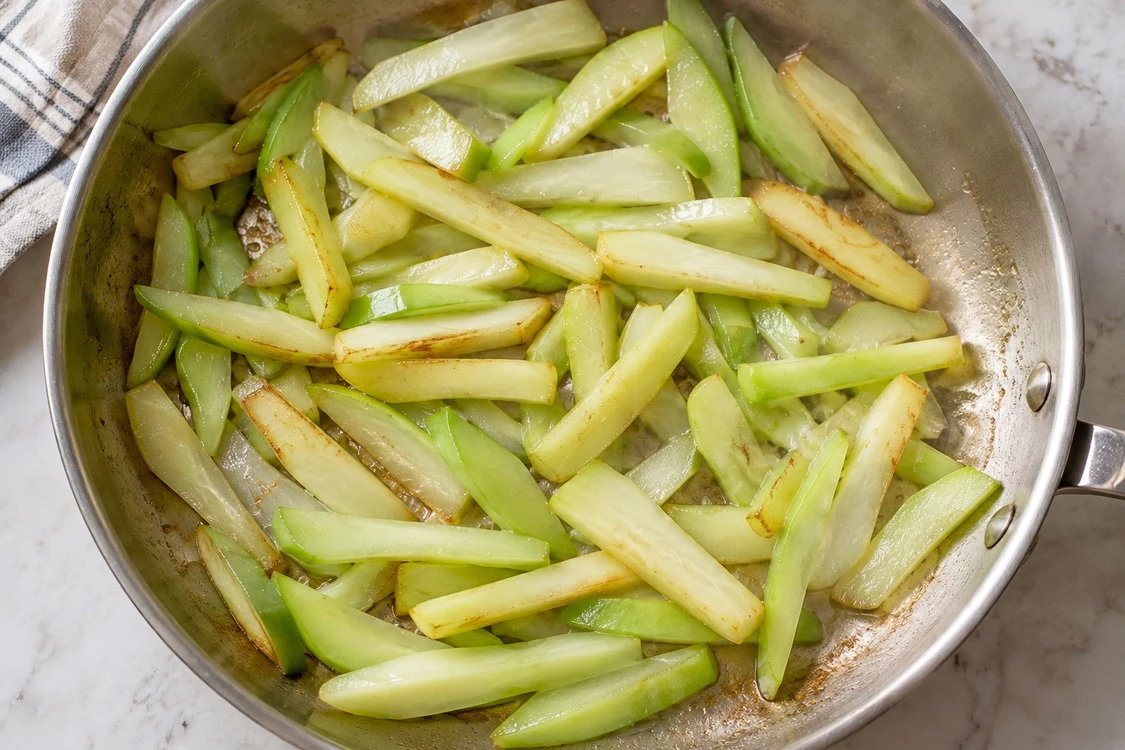
Illustration: A shallow layer of chayote strips with visible spaces in the pan.
Follow equipment and product instructions when adding frozen food to a hot pan. Excess surface ice or water can cause splattering in hot fat, so avoid improvised high-oil methods that have not been assessed. The quantity of fat should serve the recipe and the chosen technique. Increasing it does not remove the water released by the chayote. A controlled shallow preparation is easier to observe than a crowded pan in which both liquid and food are difficult to move safely.
Stir and turn with enough care to preserve the intended cut. Thin chayote strips can become harder to recognize if they are repeatedly pressed, chopped with a spatula or tossed after they have softened. Use a broad utensil to move portions of the layer, and record whether the method requires a lid at any stage. Covering retains a different moisture environment from leaving the pan open, so a lid instruction is a meaningful part of the recipe.
If light browning is desired, assess it only after the safe heating requirements are satisfied and the surface conditions allow it. Pale flesh can remain an attractive finished result; deep color is not proof of a better process. Chasing browning through a much longer cook can leave the interior softer than the dish needs. Develop the balance in the actual pan and avoid judging the result solely by a photograph of fresh chayote prepared with another method.
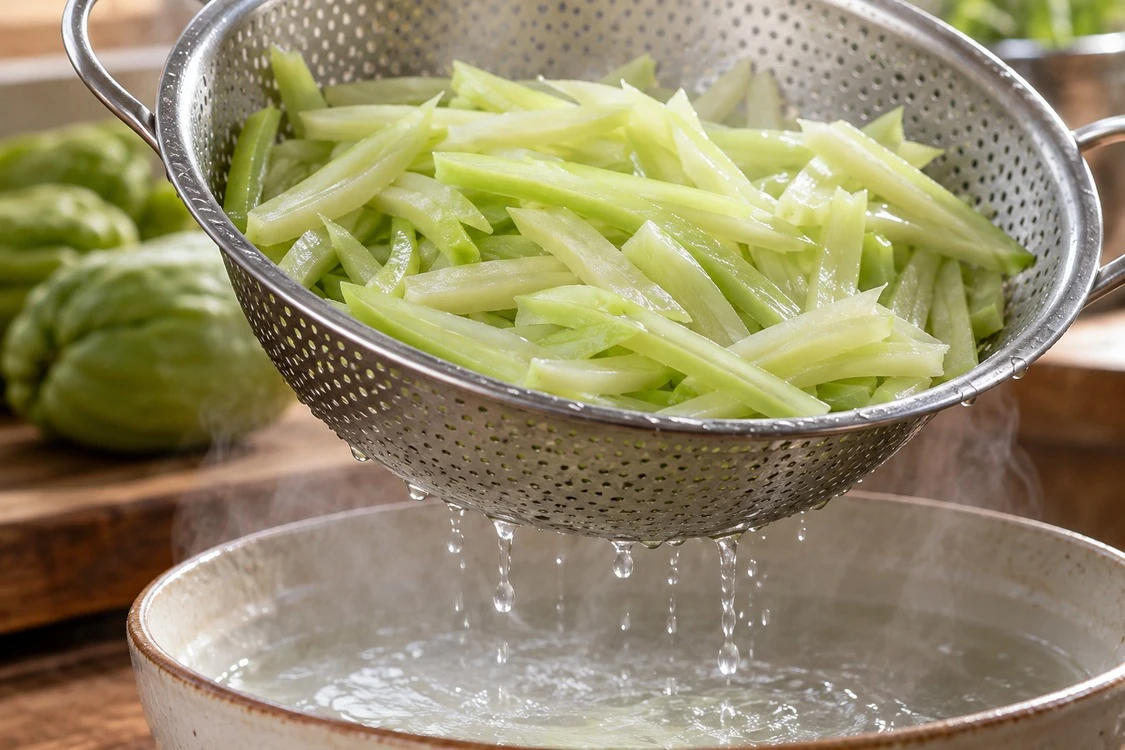
Illustration: Steamed chayote strips draining above a bowl.
Sauce addition changes the final stage. A sauce stirred in early may turn the process into a simmer, while one added at the end may coat the strips without the same duration of contact. Either can work in a defined recipe. Record when the sauce enters, its quantity and how the final portion is served. A sweet or thick seasoning can also change surface color, so compare the texture directly instead of using color as the only endpoint.
When scaling a successful small pan trial, first test the intended service load. A cook may find that several manageable batches reproduce the approved texture more reliably than one full vessel. The operational choice depends on labor, throughput and safe holding arrangements, but it should be based on the actual dish. The instruction to cook quickly is less helpful than a tested load, vessel and sequence that staff can follow.
Check texture after serving and holding
The moment food leaves the heat is only one observation point. A chayote side may then sit in a serving pan, be portioned into bowls or travel with sauce before it is eaten. Remaining heat and contact with liquid can continue to change the eating texture. Inspect a portion at the time the customer is expected to receive it. This prevents the kitchen from approving a result that exists briefly at the stove but disappears during normal service.
Define how the dish will be held under the food business's safe holding procedure. The relevant controls depend on the operation and local requirements, so the recipe should refer to the approved plan. For texture development, record the vessel, cover and intended service interval. An uncovered shallow plate and a covered deep pan do not create the same moisture conditions. Keep the conditions visible in the trial notes before deciding which product or cut is suitable.
Assess at least three separate qualities: whether the pieces retain a recognizable outline, whether the bite is appropriate and whether the surrounding liquid fits the dish. They can change independently. A strip may remain intact but feel softer than desired; another may have broken into shorter pieces while keeping an acceptable bite. A watery sauce can be objectionable even when the vegetable itself is sound. Separate observations lead to more useful adjustments than a single mushy verdict.
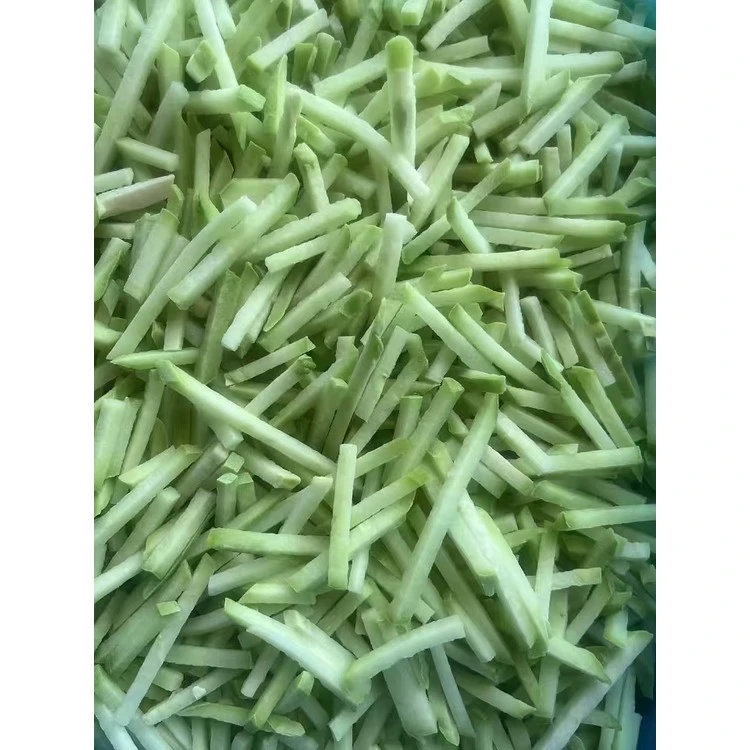
The published sample shows slender strips. A different cut requires its own sample and specification.
Use a representative serving utensil during the check. A large spoon that works well for a broth may damage a delicate side when pressed against the pan, while tongs can squeeze softened strips. The handling step is part of the final application. If the food looks acceptable before portioning and broken afterward, inspect the service method before concluding that the supplier must change the raw material. The evidence should follow the ingredient through the whole operation.
For a meal that will be cooled and reheated, prepare a separate trial under the approved full process. Do not judge it from the first cook alone. Follow the actual package or service instructions, including any microwave standing period and any permitted stirring. Check the assembled portion because sauce, rice and other components influence the result. The reheating requirement should be developed and validated for the meal, with texture assessed within that safe method.
If the finished chayote is too soft, review the variables one at a time. Confirm the product identity and starting condition, then compare cut uniformity, heat exposure, loading, mixing and holding. A change in one of those may explain the problem without a complete recipe rewrite. If the same method behaves differently with a new lot, retain the lot details and comparative observations so the supplier can investigate the actual difference.
A practical kitchen reference includes a photograph of a normal served portion and a short description of the accepted bite. Keep it attached to the cooking record and product specification. Staff can then identify a meaningful departure and communicate it with a lot code and preparation details. The reference should describe an achievable result in routine service, rather than an unusually attractive plate selected from many attempts.
Write cooking instructions that a kitchen can repeat
Write the final kitchen instruction from a successful, repeatable trial. Begin with the exact product and starting state, then give the approved portion or batch load and vessel. State the heating sequence, when timing begins and the tested cooking conditions. Include any lid, stirring, draining or standing step that changes the outcome. The reader should be able to reproduce the method without guessing which parts of the development process were essential.
Keep quality checks alongside the preparation steps. A short description such as tender pale strips with recognizable edges can help a cook recognize the intended finish, while the product's safe cooking requirements remain explicit. Avoid presenting a fork check, color change or visible steam as a replacement for those requirements. Where a measured temperature or validated process is required, the staff instructions should identify it through the approved food safety procedure.
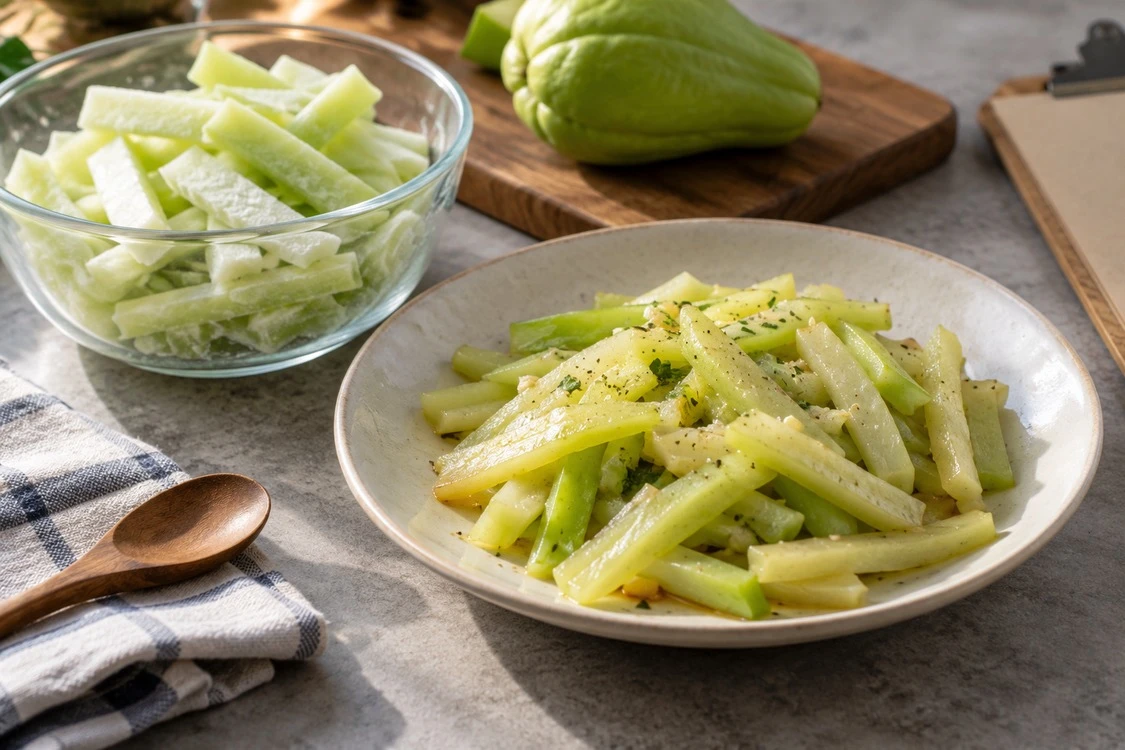
Illustration: A chayote portion beside an example cooked side dish
Give adjustments a controlled boundary. If the kitchen uses more than one pan size or appliance, test the relevant versions and label them clearly. A microwave wattage, oven setting or burner arrangement cannot be assumed equivalent to another merely because the time is the same. If staff need to cook a larger quantity, provide the tested batch arrangement. Unplanned crowding is a common reason why a useful small-scale recipe becomes inconsistent in daily operation.
For procurement, connect that cooking instruction to the approved cut and packing. A supplier reviewing a texture complaint needs to know which form was delivered and how it was prepared. Include strip dimensions, peel and seed requirements where relevant, and keep the sample identity with the trial record. A future change to the cut or treatment can then trigger an appropriate review of the cooking method instead of appearing as an unexplained kitchen problem.
We help your purchasing team discuss frozen chayote around the intended hot dish. A sample request is more useful when it includes the cooking equipment, approximate batch load, sauce or broth, and the desired serving texture. Packing and order quantity can be considered alongside those details. The actual product preparation instructions and available supporting records must be confirmed for the proposed supply; a general article cannot establish an individual lot's treatment.
Keep the instruction concise enough for staff to use, while retaining the detailed development record elsewhere. The working version should tell the cook what to load, how to heat, what approved checks to perform and how to serve. The retained record explains why those choices were made and what changed when the product or equipment was reviewed. This division helps the kitchen act consistently without losing the evidence needed for quality discussions.
A good frozen chayote cooking method ends with a portion that meets both its safe preparation requirements and the dish's texture target. The tested load, sequence and serving conditions make that result repeatable. Once those conditions are recorded, time becomes a useful instruction rather than a guess attached to the ingredient name.
Continue reading
Investigate softness beyond the cooking time alone.
Understand how prior blanching changes the questions to ask about cooking.
Extend the cooking trial to baked dishes and a second heating cycle.
Source Frozen Chayote with GreenLand-food
GreenLand-food is a frozen chayote supplier and manufacturer in China supporting factory-direct wholesale supply enquiries. Send your product form, cut specification, packing, quantity, hot-dish application and destination, together with private-label needs and requested documents. We can review the sample and cooking questions with your purchasing team.