


Frozen Chinese Chives in Dumpling Fillings: Cut Length and Water Control
Oct 19, 2026
Leave a message

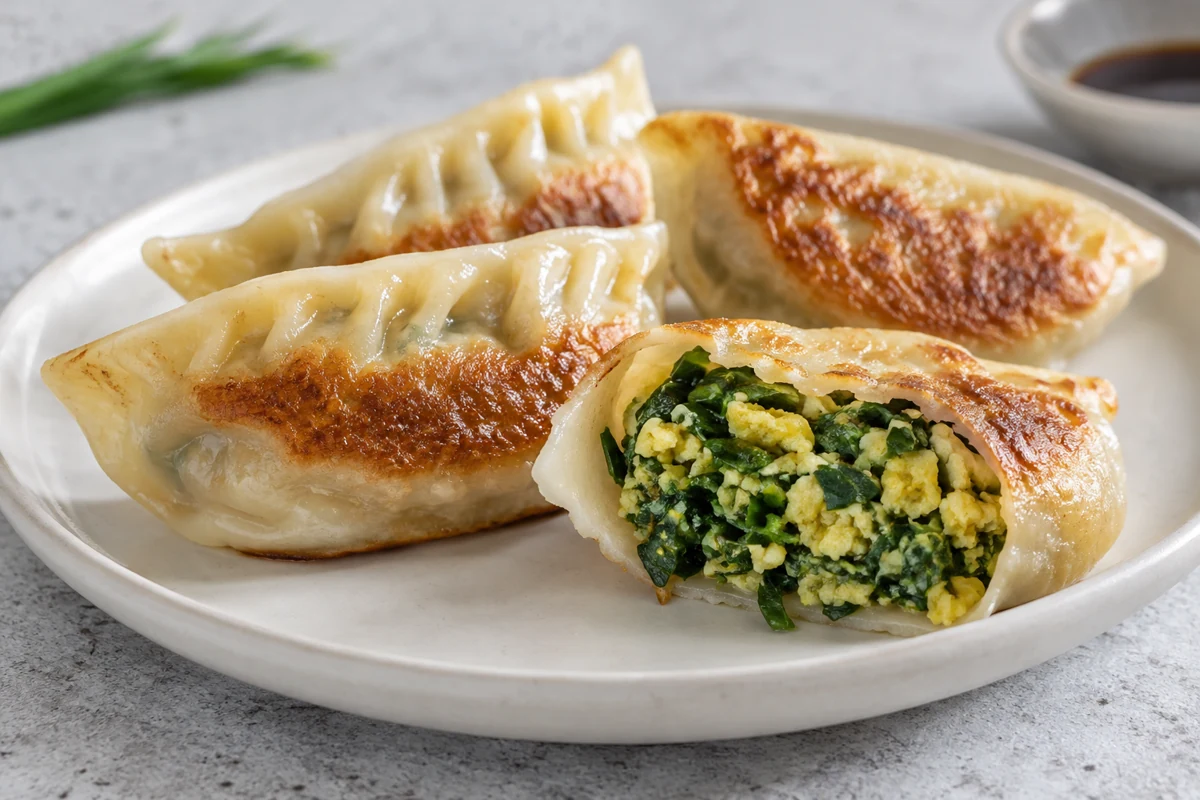
Start with the dumpling you intend to sell. A small boiled dumpling, a larger pan-seared crescent and a translucent starch-wrapper dumpling place different demands on the filling. Approve the chive in that product, using the normal mixing, forming, freezing and cooking route. Avoid carrying a fresh-chive recipe straight into a frozen-ingredient order without recording what changes.
At GreenLand-food, the practical enquiry is a request for a defined Chinese-chive cut for a defined filling. Share the wrapper type, filling ingredients, desired leaf appearance, preparation route and packing needs. That allows the offered sample to be assessed against a clear target rather than a general preference for greener or drier material.
Set the dumpling and filling target first
A filling can be pleasantly juicy after cooking while remaining manageable before wrapping. Those are different observations. A spoonful that holds together in the mixing bowl may still release liquid during a production hold; a dry-looking mixture may cook into a dense bite. Describe both stages when setting the target. For the uncooked filling, consider portion consistency, loose liquid and clean sealing. For the cooked dumpling, consider leaf distribution, tenderness, aroma and the relationship between filling and wrapper.
Begin with one reference product. Use its normal wrapper diameter and thickness, filling portion and cooking method. If the customer sells a frozen dumpling, include the approved freezing and storage route before the final cook. If the customer distributes a cooked chilled item for reheating, include that route instead. A small kitchen trial cannot represent both automatically. The reference gives the team a specific product against which to judge the chive, rather than an abstract idea of a good dumpling.

Illustrative portion showing space for folding and sealing.
The other filling ingredients matter from the beginning. Pork, shrimp, cooked egg, tofu, cabbage and soaked noodles create different mixtures. Their preparation changes how much water is available and how the mixture holds together. Current culinary recipes illustrate this variation: some remove water from cabbage before mixing, some drain noodles, and others add liquid deliberately to a meat base. These are recipe-specific choices. They do not establish a universal instruction to squeeze every chive sample or add every frozen cut directly.
For a first comparison, keep the established filling base unchanged and introduce a documented chive sample. Record the received chive mass, any preparation loss and the mass entering the mixer. Make enough filling to observe both an immediate portion and a portion after the normal controlled hold. A tiny hand-mixed spoonful can conceal distribution problems that become visible in a larger bowl. The aim is to learn how the material behaves in the intended routine before negotiating a tighter ingredient limit.
Write the acceptance language in terms people can observe. "Visible green leaf pieces distributed through the filling" is clearer than "premium texture." "No unacceptable strands at the seam" directs the team toward an actual forming problem. The exact tolerances should come from the customer's process and sample approval. A supplier can discuss an achievable cut and packing arrangement; the finished-food team must decide what its wrapper, recipe and selling route can accept. That shared target keeps later water adjustments tied to the dumpling's eating quality.
Specify the cut distribution rather than one ideal length
Chinese-chive leaf cuts vary in length, width, base content and the proportion of fragments. A nominal cut dimension is a useful starting description, but it does not reveal the whole distribution. A batch with mostly short pieces and a few long strands can behave differently from one with the same average length and no long tail. For dumpling fillings, pay particular attention to pieces that remain conspicuous in a small portion or cross the wrapper's sealing area.
Inspect a representative spread sample rather than one selected handful. Keep the product in the agreed inspection state and separate it only by the approved method. Photograph the spread material beside a scale reference, then record the dimensions according to a consistent rule. A curled or folded leaf can appear shorter than its unfolded length. Decide whether the measurement follows the leaf or uses its projected length, and use the same method for the approval sample and later checks.
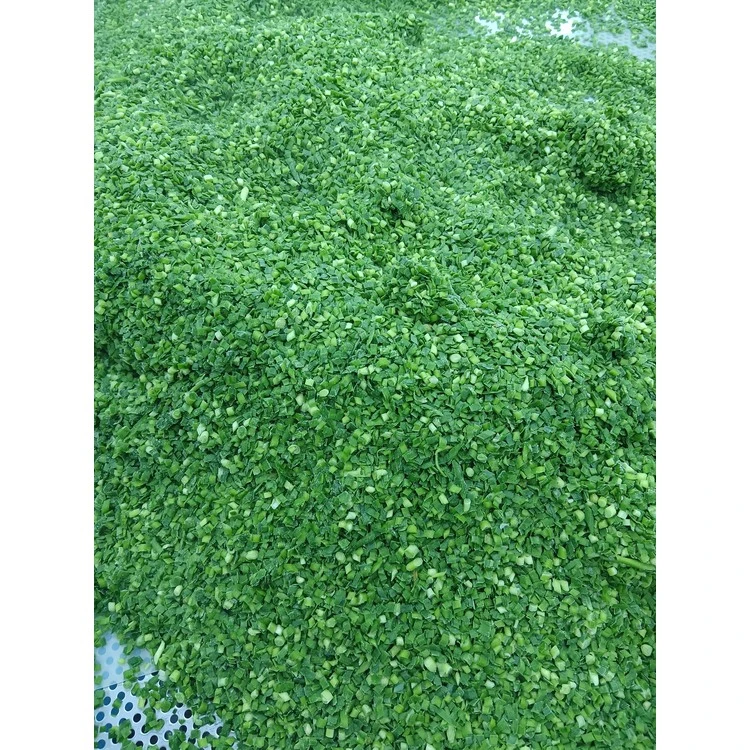
The product-page view shows a very fine cut; request identity and dimensions in the current specification.
Fine material also deserves a description. Very small fragments may disperse readily, while larger flat pieces remain more visible. Neither is automatically unsuitable. The target depends on whether the buyer wants a uniform green distribution or a recognizable leaf bite. Excessive fines can make it harder to judge the original leaf form, while long pieces can create uneven distribution or awkward strands. Agree a practical range with the supplier and confirm that the offered sample represents the intended cut rather than a specially selected display.
The GreenLand frozen Chinese-chives product view shows finely cut green material. Use it to start a discussion about the supplied form, then ask for the current cut description and a representative sample. The photograph does not prove an exact millimeter range or the suitability of every piece for a particular forming machine. Longer visible cuts, a different base allowance or another processing state need their own confirmation and application approval.
Once a promising cut is found, connect its limits to the actual failure it prevents. If a long strand causes trouble at a small wrapper seam, record that observation and inspect the length distribution around it. If the finest cut loses the desired leaf presence after cooking, retain that result too. A purchasing specification becomes more useful when the customer can explain why a limit exists. It also helps avoid an unnecessary demand for extreme uniformity when a broader natural range performs well in the finished dumpling.
Account for water from the actual frozen ingredient
Frozen leaf material contains water within the tissue and may carry moisture on its surface. Freezing and thawing can affect cell structure and the way liquid becomes available. The National Center for Home Food Preservation explains that ice-crystal size influences cellular damage and texture. That general mechanism supports checking the actual ingredient; it does not predict a fixed drainage percentage for Chinese chives or prove that every frozen lot contributes the same amount of free liquid.
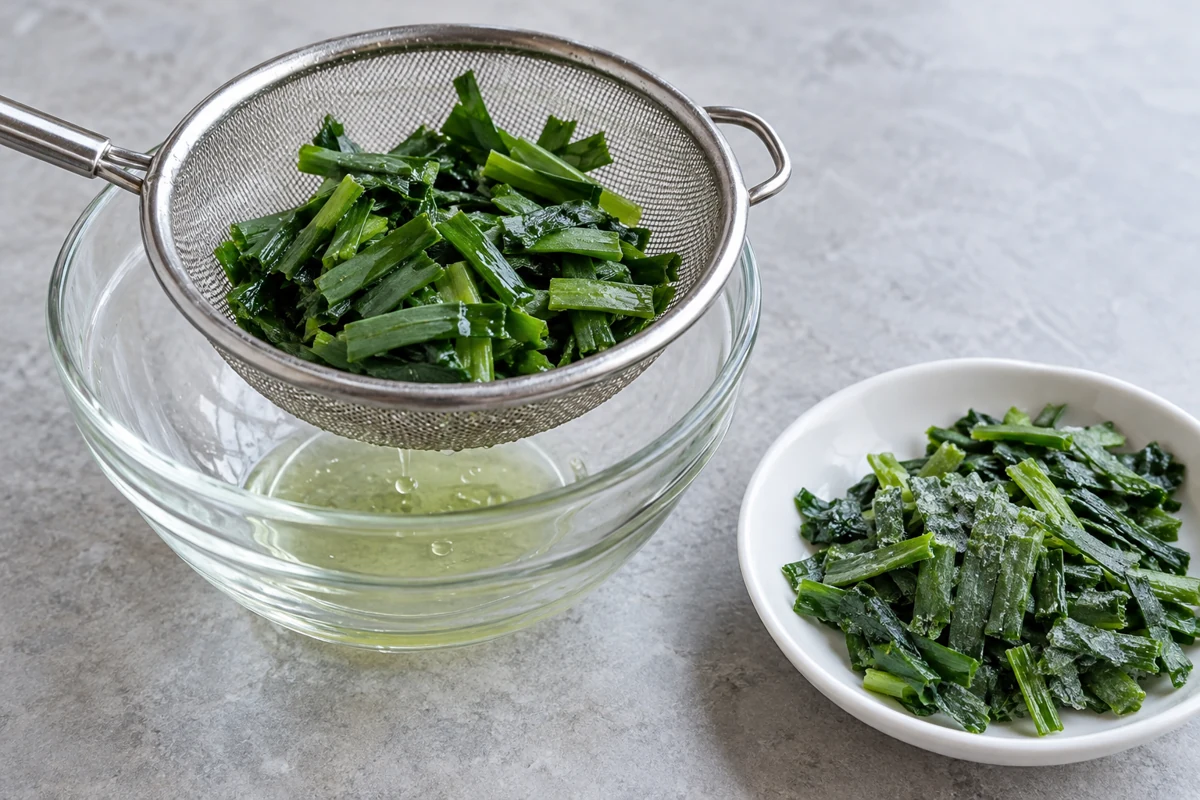
Illustrative drainage setup; liquid volume is not a measured result or product specification.
Choose a weighing basis before comparing samples. "One kilogram of chives" might mean a kilogram from the frozen pack, a kilogram after a controlled thaw and drain, or a kilogram after another preparation step. These are different inputs. Record the received mass and the mass used in the filling. If liquid is removed, record it as part of the preparation result rather than quietly replacing the lost weight with more product and calling the recipes equivalent.
A small drainage assessment can help describe a sample when draining belongs to the proposed production route. Use the same product quantity, receiving temperature, vessel, permitted thawing conditions, drain support and elapsed time for each comparison. Keep the method within the operation's approved food-handling controls. Do not leave a sample on a warm counter simply to speed the test. The result describes drainage under that method; changing the sieve, pressing force or hold can change what is collected.
Track the rest of the liquid inputs at the same time. Water, stock, soy sauce, egg, prepared cabbage and soaked noodles may all affect the mixture. If a new chive sample appears to make the filling wetter, check whether another ingredient or its preparation changed. A useful trial sheet gives each added liquid and each drained ingredient its own entry. This makes it possible to identify a controllable difference rather than repeatedly compensating with starch or extra dry ingredients without understanding the cause.
The objective is an appropriate filling balance, not the driest possible chive. Removing more liquid can alter usable yield and the material entering the recipe. Leaving all released liquid in the mixture can also change portioning and the cooked bite. Evaluate the proposed route in the full dumpling, then agree the basis that production will repeat. For purchasing comparisons, calculate the supplied chive quantity needed for an acceptable batch alongside the price per kilogram. That connects water management with both food quality and actual ingredient usage.
Choose preparation and mixing as one controlled route
Preparation and mixing should be evaluated together because one determines what enters the other. A recipe may be able to incorporate an appropriate frozen cut directly; another may need a controlled preparation step before addition. Follow the supplied product instructions and the customer's validated process. Confirm whether the SKU has any pretreatment and what that means for its intended use. Frozen, washed and finely cut are descriptions of form or handling; none alone establishes a ready-to-eat ingredient.
Use one recorded preparation and mixing sequence for the initial trial.
- Identify and weigh the sample in its received state.
- Apply the preparation defined for that trial and record any mass change.
- Prepare the filling base with its normal ingredients and mixing conditions.
- Add the chives at the chosen point and mix for the target distribution.
- Assess the mixture immediately and after its normal controlled hold.
Keep the recorded route with the trial result so it can be repeated or changed deliberately.
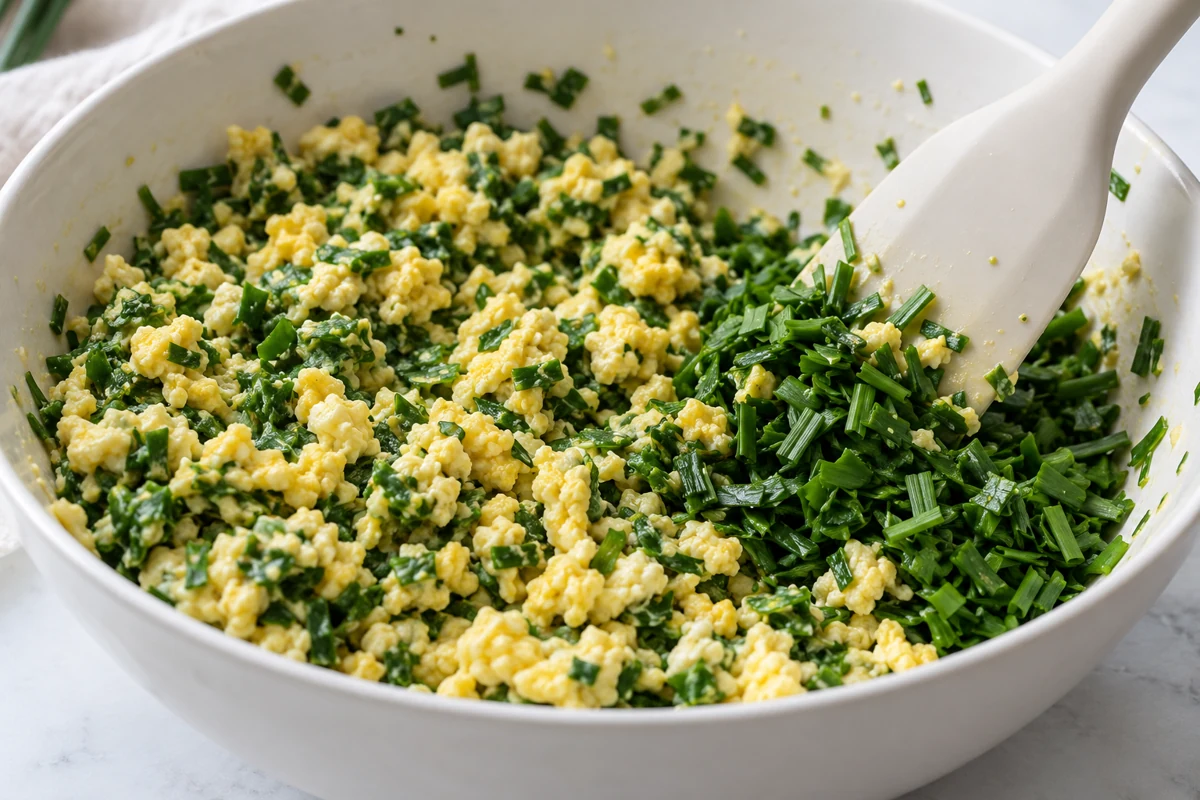
Illustrative folding stage showing newly added leaf and distributed filling.
Observe distribution as well as bowl appearance. A few turns with a spatula can make the top look evenly green while the lower portion remains different. Conversely, excessive mixing may break delicate pieces and change the texture. Sample from more than one position in the bowl or the actual discharge sequence. Compare the portions for visible leaf balance and loose liquid. These observations help decide whether the cut, addition sequence or mixing conditions need adjustment before the team changes the recipe itself.
Culinary recipes offer useful examples of different mixing logic. The Woks of Life prepares a seasoned meat base and combines it with finely chopped chives; King Arthur Baking's shrimp filling uses a different combination of ingredients. Those examples show why the filling matrix matters. Their quantities and times are not a commercial setting for an unrelated line. A food manufacturer should record its own mixer, batch size, ingredient state and process controls when qualifying the offered frozen cut.
Treat oil coating, squeezing or additional binder as specific formulation choices rather than guaranteed repairs. Each can change the ingredient interaction and eating result. If one adjustment is proposed, compare it against the reference while keeping other important conditions aligned. Record whether the improvement lasts through holding, forming and cooking. A mixture that looks easier to handle immediately may become less appealing after reheating. The best preparation route is the one that production can repeat safely and that delivers the intended dumpling at consumption.
Check portioning and wrapper sealing during the hold
The first few wrappers can look successful even when the filling changes as it waits. Liquid can gather in one part of a bowl, and the distribution of leaf pieces can vary as portions are removed. Evaluate portions at planned points through the normal controlled holding period. Keep the holding conditions within the operation's approved process; this is a quality observation within that process, not a reason to extend an established limit. Record both the elapsed time and the ingredient handling history.
Use the normal portioning method. Hand filling with a spoon, a small depositor and a larger forming line may respond differently to the same leaf mixture. Observe whether the portion releases cleanly and whether individual portions have a similar leaf distribution. If long pieces bridge across the dispensing path or remain attached to the spoon, document the actual event. Do not claim a universal machine tolerance from a recipe photograph. The equipment and its operating conditions determine what the customer needs to test.
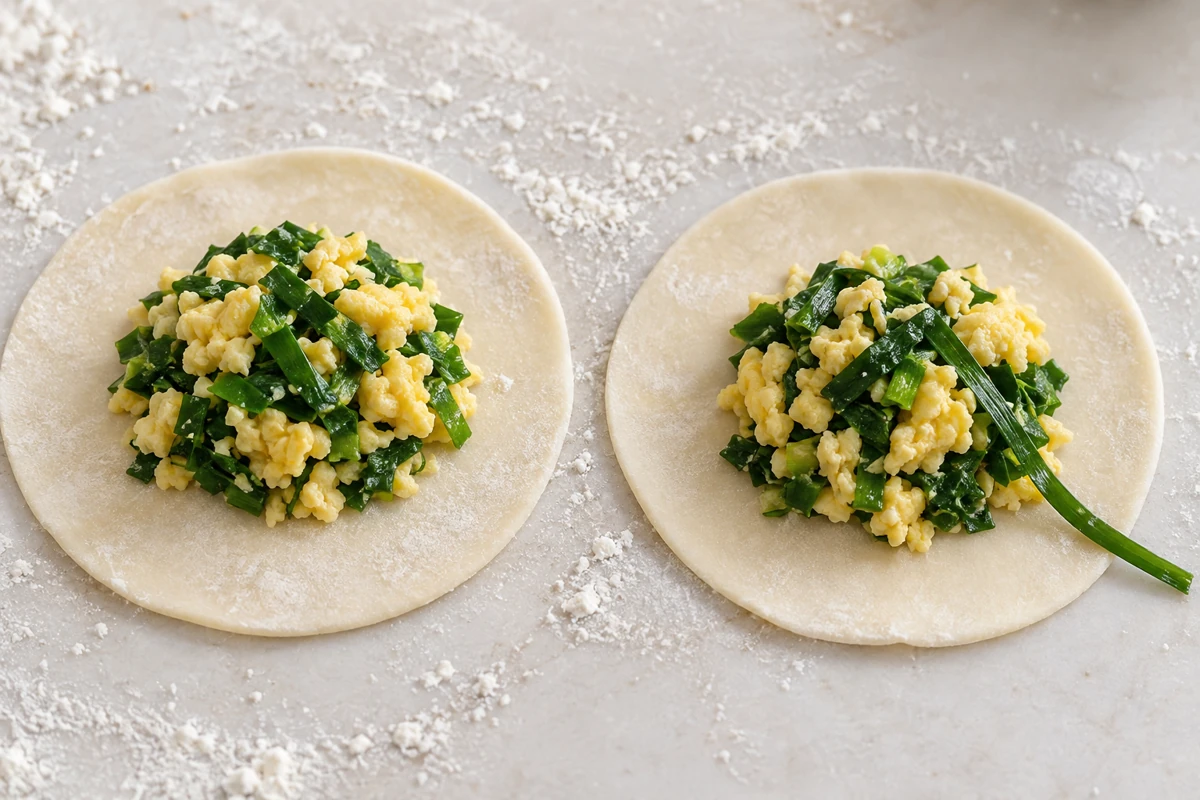
Illustrative wrapper comparison: a long leaf strand crosses one sealing margin.
At the wrapper, look closely at the sealing margin. Filling spread, free liquid or a long leaf strand can interfere with a clean edge. A visual check should distinguish those situations because they call for different responses. Reducing the filling portion may help an overfilled wrapper but will not explain an unexpected change in liquid release. Shortening an excessive strand may improve the physical fit but will not correct a wrapper that has dried during handling. Keep the diagnosis linked to what is actually visible.
Include the wrapper in the record. Its composition, thickness, diameter and handling condition affect the trial. A new wrapper supplier or an altered dough preparation can make a previously successful filling seem problematic. Keep the reference wrapper for the first ingredient comparison where possible. If both wrapper and chive must change, use separate comparisons to understand their effects before approving the combined version. Otherwise the team may tighten an ingredient specification for a problem created elsewhere in the product.
Retain representative photographs of the portion and seal, together with the sample code and observation point. Record the number inspected and the defects observed if the team wants to calculate a rate; a few attractive examples cannot establish one. Agree the acceptance method before using the result for a shipment decision. These records give procurement useful feedback: a certain cut range and handling route supported clean forming under stated conditions. That is a defensible basis for the next sample request and later repeat orders.
Evaluate the cooked dumpling through its selling route
Cook the trial dumplings through the route that the finished product will actually use. The appearance of the raw filling and the integrity of a freshly folded seam are intermediate checks. The buyer ultimately needs an acceptable wrapper, filling and aroma after the full preparation. Boiling, steaming and pan-searing create different conditions, so do not approve a product on one method if the commercial instructions require another. The customer remains responsible for its validated cooking process and finished-food safety.
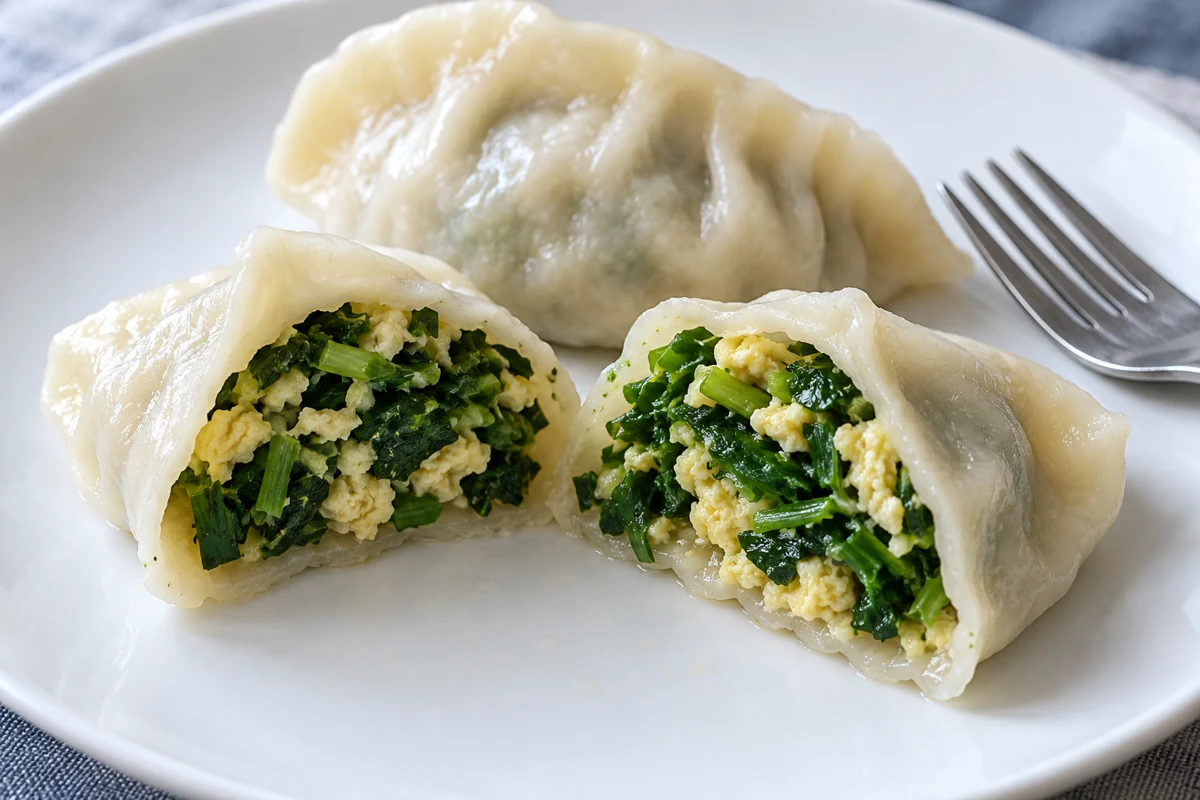
Illustrative cross-section for observing the cooked wrapper and filling together.
Open several cooked dumplings from different trial portions. Observe whether the leaf is distributed through the filling, whether long pieces remain awkward in the bite, and whether the wrapper-filling interface is acceptable. Note any visible liquid or separation without assuming its cause. A juicy center may be part of the intended recipe; a wet wrapper or a watery filling may be outside it. The acceptance target should distinguish those outcomes in words the development and receiving teams understand.
Assess flavor at a consistent serving condition. Very hot samples can be difficult to compare, while cooled samples may give another impression. If the product is intended to be held briefly before eating, include that point. If it is reheated after distribution, include the approved reheat route. Garlic-chive character should be judged within the finished food, alongside salt, fat and other aromatics. A strong aroma from an opened ingredient bag does not guarantee the desired result in a cooked dumpling.
When the product will be sold frozen, evaluate the approved candidate after a relevant controlled storage interval and repeat the assessment as required by the product-development plan. Do not borrow a home recipe's freezer-life statement as a commercial claim. Packaging, formulation, processing and distribution conditions need evidence appropriate to the finished product. The ingredient supplier's shelf-life statement and the dumpling manufacturer's finished-product shelf life are separate records. One cannot be inferred simply from the other.
Use the cooked result to choose the next adjustment. If leaf distribution is acceptable but the wrapper becomes too wet, review the recorded liquid inputs and preparation route. If moisture is suitable but strands dominate the bite, review the cut distribution. If the filling is cohesive yet the garlic-chive character is weak, review dose, sample identity and the full cooking route before increasing several seasonings together. A focused next trial is easier to interpret and gives the supplier a clearer request than a general comment that the first sample was unsuitable.
Turn the trial into a repeat-order specification
Once the dumpling works, preserve the conditions that made the approval meaningful. The ingredient specification should name Chinese garlic chives, confirm the botanical identity with the supplier, describe the leaf cut and any permitted base content, and identify the processing state. Add the agreed cut range, fines or long-piece allowance, visible color criteria and relevant defect definitions. Reference the representative approved sample and the method used to inspect it. A product photograph supports the record but cannot carry all of those requirements.
Keep the application approval linked to that specification. Record the filling recipe, chive weighing basis, preparation method, addition point, mixing route and observed holding behavior. Include the wrapper and finished cooking route. If the customer's quality team uses a drainage measurement or a sensory check, retain its method and acceptance basis. Another team should be able to understand what was approved without relying on the original developer's memory. This is particularly useful when a purchasing contract changes hands between staff or sites.
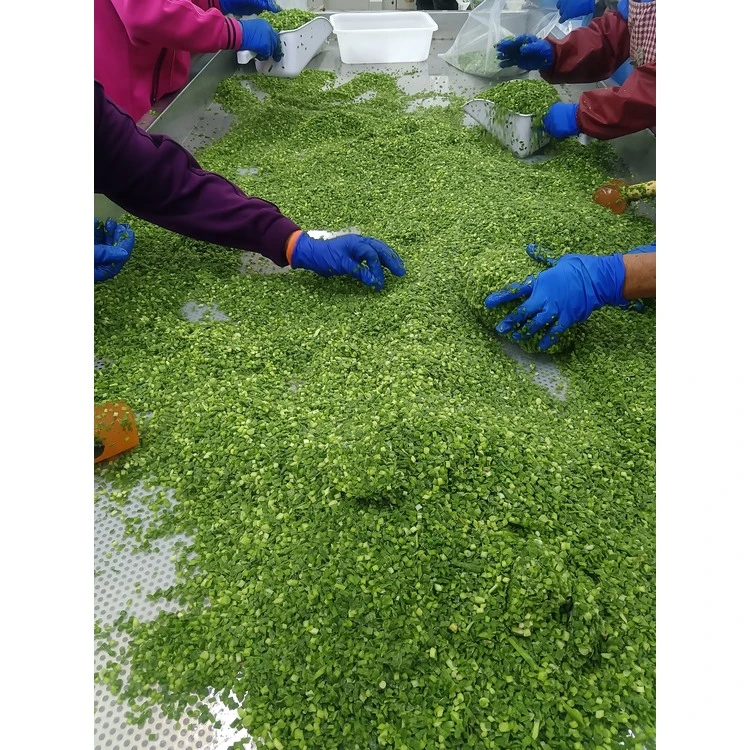
This source photograph shows material being handled on a sorting table; process and acceptance details require the current specification.
Agree how representative samples will be supplied and how shipment lots will be assessed. One sample drawn from a convenient part of a pack may not capture all relevant variation. The appropriate sampling plan depends on the lot, packing and the buyer's quality system. Define the number and location of samples, the inspection method and the response to a result outside the agreed limits. Do not invent a universal sample count or imply that visual inspection alone establishes the ingredient's complete safety status.
Packing should support the chosen production routine. Confirm the inner-pack quantity, carton identification, storage instructions and lot traceability. A pack that fits a normal batch or shift may reduce unnecessary handling, but the available configuration and commercial terms must be checked for the order. Give the supplier the destination and required documentation early enough to review applicability. We can discuss a frozen Chinese-chive supply brief that reflects the tested cut and use, with quantity, lead time and sample timing confirmed for the enquiry.
Agree how an incoming discrepancy will be reported before the first commercial delivery. A report should identify the carton and lot, retain the sample under the agreed conditions, and describe whether the concern is long pieces, loose liquid, distribution or cooked bite. Compare it with the retained reference using the same method. If the ingredient passes inspection but forming changes, preserve the wrapper and production records too. This makes it possible to investigate the material and the application together, with a clear record of which evidence belongs to each. Keep shipment release decisions with the responsible quality team while the cause is assessed.
Changes after approval should remain visible. A different cut, increased base allowance, revised pretreatment, new wrapper or altered mixing route can affect the evidence supporting the original decision. Decide which changes trigger a focused application check. That gives repeat purchasing a stable basis while allowing practical improvements. The useful outcome is a chive specification that supports clean portioning, controlled water contribution and the intended cooked dumpling under the customer's real process, together with records that explain how the choice was made.
Related reading
Frozen Spring Onion: Applications, Benefits, and Uses in Foodservice
Explore how another frozen allium is specified for cooked fillings, sauces and foodservice products.
Source Frozen Chinese Chives with GreenLand-food
GreenLand-food is a professional frozen Chinese chives supplier and manufacturer in China, providing factory-direct wholesale supply for importers, food manufacturers and foodservice distributors.
Send the product form, specification, packing, quantity, application, destination, private-label needs and requested documents so we can discuss a suitable sample and quotation.