


Garlic Chives vs Regular Chives: Flavor, Shape and Ingredient Names
Oct 19, 2026
Leave a message

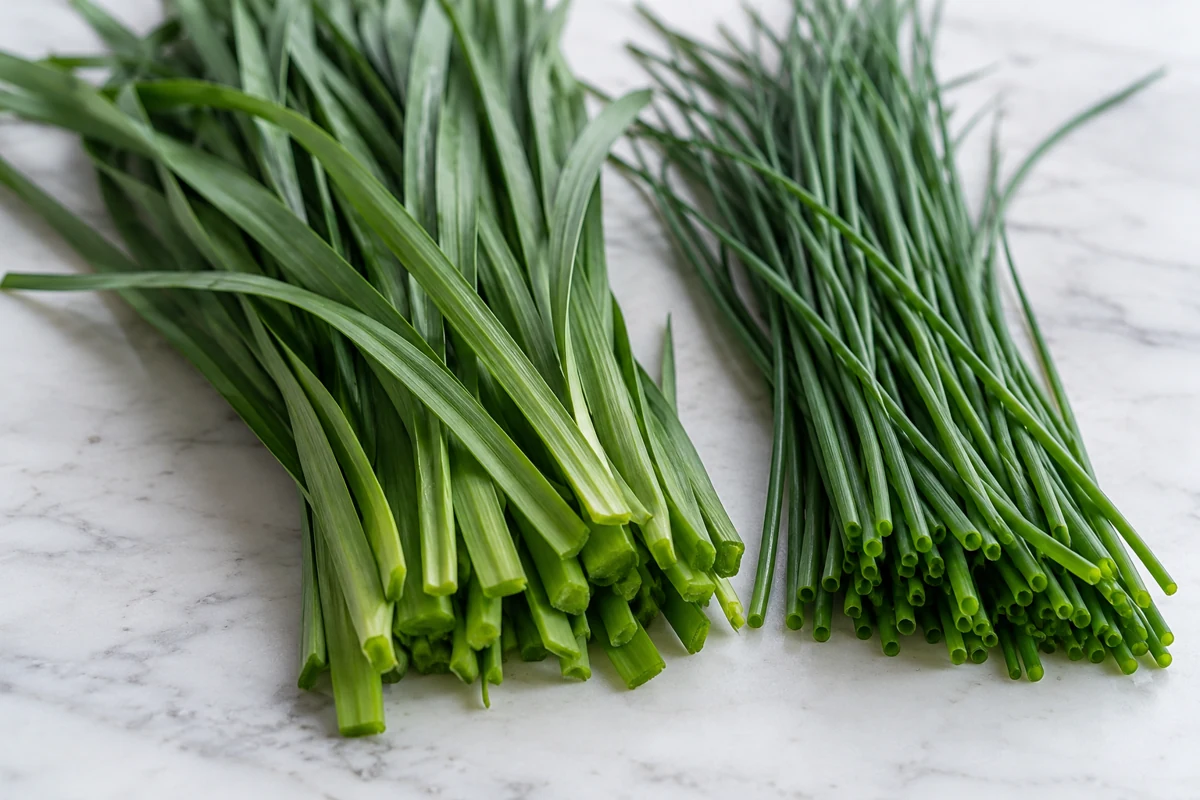
For a cook, the distinction changes the aroma and appearance of a dish. For a frozen-food buyer, it also changes how to describe the raw material, compare a sample and approve a substitution. A finely chopped green ingredient can lose the obvious shape that made its fresh bunch easy to recognize. Put the botanical identity, plant part, cut and intended use together before comparing quotations.
The most useful choice follows the recipe. A dumpling filling built around garlic-chive character needs a different reference from a sauce finished with delicate ordinary chives. Either ingredient deserves a trial in its actual supplied form. Fresh leaves, frozen cuts and dried herbs should each be evaluated on their own handling and eating results.
Recognize the leaf difference before the cut hides it
Look first at a sound whole leaf and its cut end. The University of Wisconsin describes ordinary chives as having hollow tubular leaves; its garlic-chive guide describes flattened, strap-like foliage. Those features give a more useful starting point than the general impression of a green bunch. A regular chive cut across its width can form a tiny ring. A garlic-chive leaf makes a short flat piece whose width remains visible. The difference becomes harder to judge when pieces are very fine, crushed, frozen together or covered with surface ice.
Keep scale consistent when looking at sample photographs. A tightly cropped picture can make ordinary chives look broad, while a distant view can make garlic chives look like thin threads. Ask for one overall view and a closer view with an ordinary scale reference, photographed without stretching the image. That request is especially helpful when the seller sends photographs of prepared cuts rather than intact raw material. It gives the buyer a clearer view of the offered form while leaving botanical confirmation to the product description and supporting records.
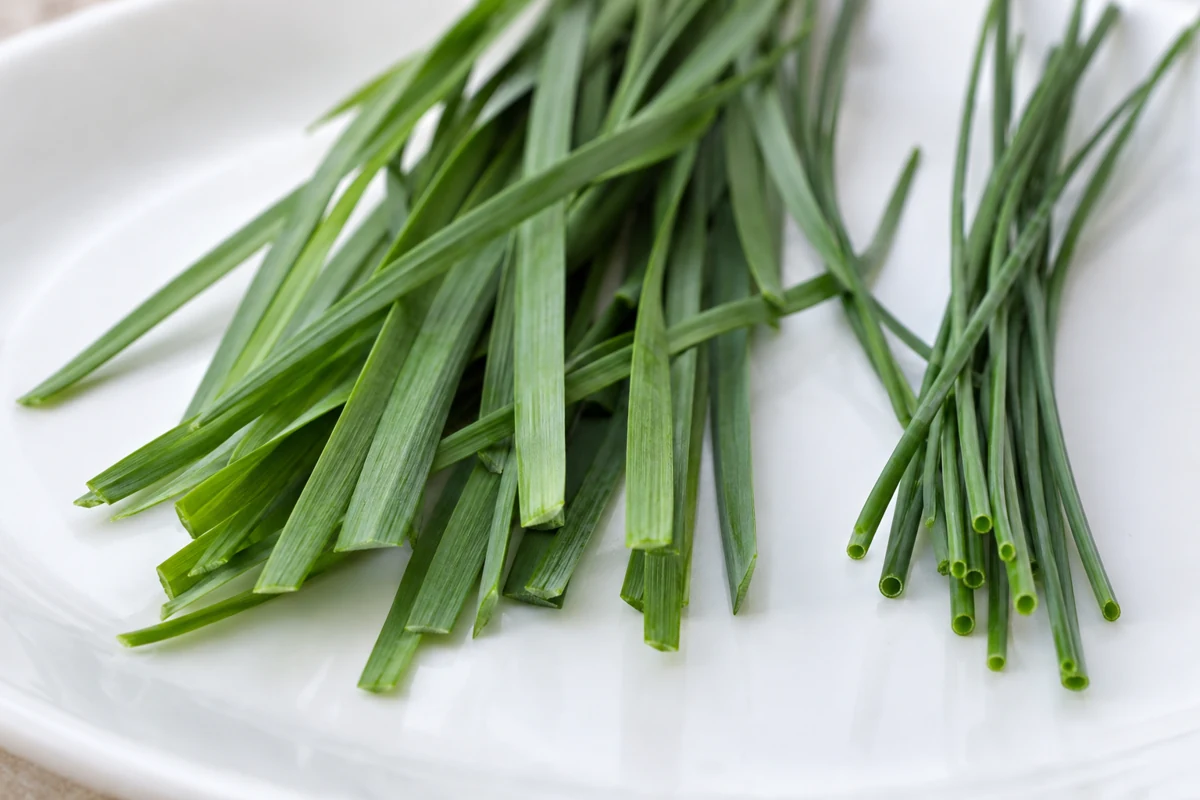
Illustrative close view of the leaf structures; confirm commercial identity with the specification.
| Attribute | Garlic chives | Ordinary chives |
|---|---|---|
| Botanical name | Allium tuberosum | Allium schoenoprasum |
| Leaf form | Flat, strap-like leaf | Fine hollow tube |
| Broad aroma description | Garlic-like allium character | Mild onion character |
| Order description | Confirm green leaf cut and any base allowance | Confirm leaf form and supplied state |
Flower color can help explain the plants in a garden, but it is a weak shortcut for accepting a food shipment. Garlic chives commonly have white flowers and ordinary chives commonly have pink or purple flowers. The RHS also lists white-flowered forms of ordinary chives. Commercial chopped leaf packs usually contain no flowers to inspect anyway. A purchasing specification should therefore describe the intended leaf ingredient directly. It should not depend on an ornamental feature absent from the delivered product.
The practical comparison has three parts: the name on the specification, the visible leaf structure and the sensory character of an appropriately prepared sample. If those disagree, pause the approval and ask the supplier to explain. A familiar smell does not resolve an incorrect species declaration, and a plausible photograph does not resolve a vague product name. Keep the question narrow: which botanical ingredient and plant portion does this sample represent, and will the order use that same agreed description?
There are also other edible alliums with flat leaves or onion-like aromas. The Wisconsin garlic-chive guide notes similarity with Allium ramosum. A comparison article cannot identify every plant from a photograph, particularly after cutting. Buyers should obtain a positive supplier identification rather than assemble an identity from isolated visual clues. For an established recipe, retain the original ingredient specification as the starting reference. That prevents a later purchasing team from changing species merely because another seller uses a familiar English name.
Put the ingredient name and species on the same specification
Common names help people find an ingredient; they do not always make an order precise. "Garlic chives" and "Chinese chives" commonly refer to Allium tuberosum. Japanese culinary sources use "nira." "Chinese leek" also appears in ingredient guides, although the word leek can suggest a different vegetable to an English-speaking buyer. Rather than choosing one preferred synonym and hoping every party understands it, connect the commercial name to the botanical identity in the specification and sample request.
Write the plant part alongside the name. A leaf cut, a flowering stalk and a pale cultivated chive are different presentations even when they come from related culinary traditions. A buyer asking for green garlic-chive leaf should say so. If tender pale bases are permitted, describe their allowance separately. If the recipe needs a visible green inclusion, a sample with a substantial base fraction may perform differently from the developer's original green-leaf reference. The English headline on a quotation rarely communicates all of that detail.
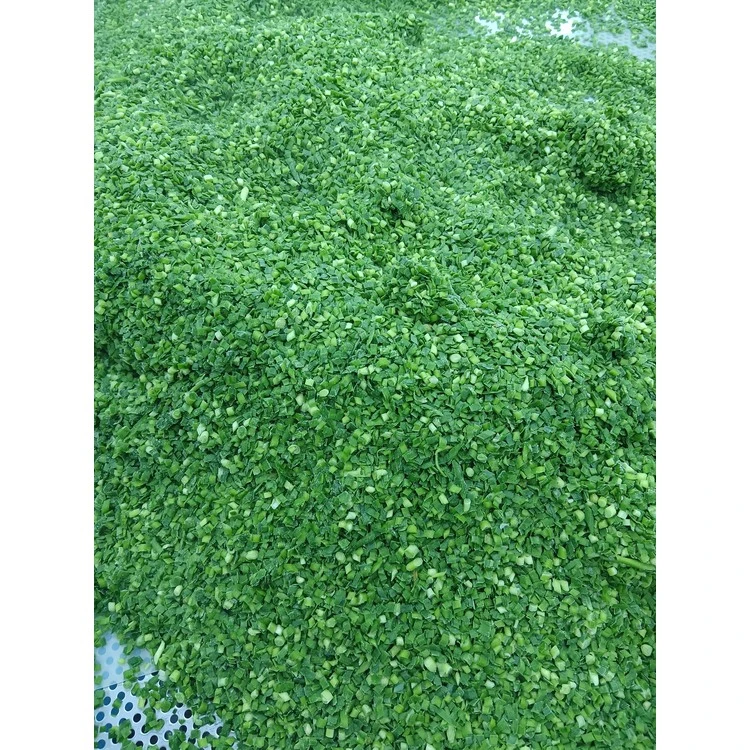
The product-page view shows a very fine cut; request identity and dimensions in the current specification.
The same discipline helps with ordinary chives. "Regular chives" is conversational wording; a specification can identify Allium schoenoprasum and the supplied leaf form. A vendor may offer fresh cut leaves, frozen chopped material or dried pieces. These forms may share an ingredient name while requiring different dosing and handling. Put the required state near the name so the quotation, sample label and approval sheet describe the same material. A translation should preserve the identity and form rather than shorten the name until the distinction disappears.
For GreenLand-food enquiries, our frozen Chinese chives product page is a useful starting point for discussing the offered leafy cut. Confirm the botanical identity and actual processing state in the current specification. The product photographs show a fine cut and a sorting view; they cannot establish a particular species, exact dimension or treatment solely from appearance. We need the requested application and cut description to discuss a relevant sample, rather than treating every use of the word chives as the same buying brief.
Keep the agreed wording consistent across internal records. Procurement, product development and receiving should be able to connect a sample code with one ingredient description. If a buyer changes a trade name for a local market, keep the underlying identity and form traceable in the specification revision. The finished-food label requires its own destination-market review; this ingredient comparison does not establish the legally required name in every country. Operational clarity starts earlier, with a shared description that prevents the wrong leaf ingredient from reaching the trial kitchen.
Compare garlic character and onion character in the finished food
The broad flavor distinction is useful: ordinary chives contribute a mild onion note, while garlic chives contribute a garlic-like note with an allium character. Wisconsin and Maryland extension descriptions support that starting point. It does not create a universal strength ranking. A particular sample can vary with its condition, preparation and the food carrying it. Avoid specifications that call one species "twice as strong" without a defined method and actual evidence for the offered product.
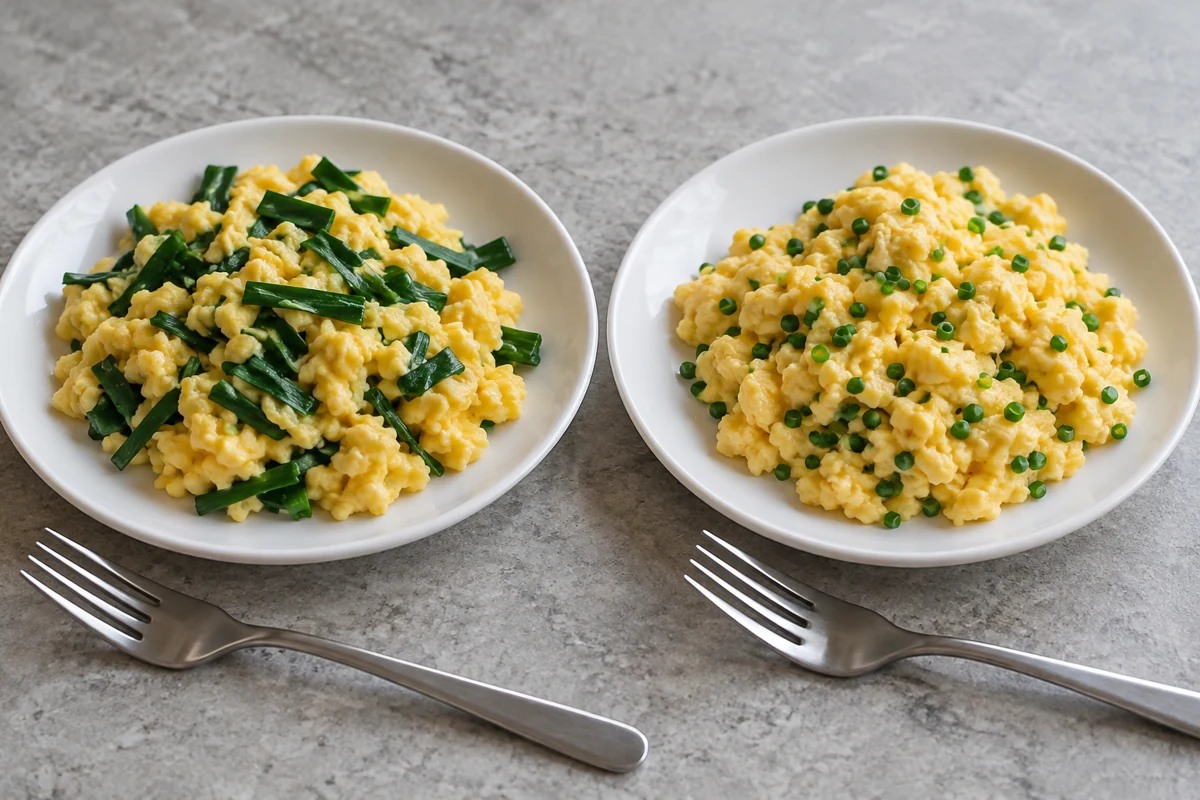
Illustrative cooked comparison. Weigh actual trial additions; the photograph does not establish equal doses or aroma scores.
A buyer can begin a comparison with a mild cooked food that allows the ingredient to be noticed. Plain egg, rice or a simple vegetable filling may be useful depending on the intended application. Use the same base ingredients, portion size and preparation route for the two samples. Record the added herb mass and whether it was weighed fresh, frozen or after any approved preparation step. Otherwise a difference attributed to species may partly reflect a different amount of material or water in the portions.
Separate the words used to describe the result. "Garlic-like," "onion-like," "green," "cooked" and an undesirable stale impression describe different observations. "Strong" alone gives the next evaluator little guidance. A team can agree a small set of descriptors and compare both samples at the same serving temperature. This is a proposed development method, not a claim that GreenLand has measured a fixed sensory profile for every lot. The reference should come from the buyer's actual recipe and the sample under discussion.
The finished food deserves the deciding role because other ingredients change what is perceived. Garlic already present in a filling may make the difference between the two chives less obvious. A delicate cream sauce may make it much easier to notice. Browning, reheating and service holding can also change the impression. If the finished product will be reheated, assess it after that route as well as immediately after cooking. A sample approved only in a fresh kitchen portion may not answer the distribution customer's question.
Keep aroma approval separate from product identity and safety decisions. A satisfactory tasting does not prove the supplier declaration or the adequacy of the food's process. Use appropriately prepared samples under the operation's established controls and confirm the ingredient's intended use with the supplier. The useful outcome is a clear statement such as "this named leaf ingredient delivers the required garlic-chive character in our cooked filling at the tested dose." That statement is narrower, easier to repeat and more valuable than a general promise that one chive always tastes better.
Choose the chive for its role in the recipe
Garlic chives have a familiar place in dumplings, egg dishes and savory pancakes. Ordinary chives often serve as a fine onion accent in sauces, spreads and finished dishes. These are helpful culinary patterns, rather than exclusive territories. The ingredient should be chosen for what the recipe needs it to do: supply a recognizable garlic-chive character, distribute a gentle onion note, contribute visible green pieces, or provide a particular leaf texture. Naming that role makes substitution discussions much more productive.
In a dumpling filling, the leaf pieces are part of the bite and the internal distribution. A developer may want the green ingredient to remain visible without forming long strands. The appropriate cut depends on the filling composition, portion size and forming method. A very fine cut may disperse evenly but give a different appearance from broader pieces. Ordinary chive rings would change both the visible form and the aromatic direction. The difference can matter even when both versions produce an acceptable dumpling.
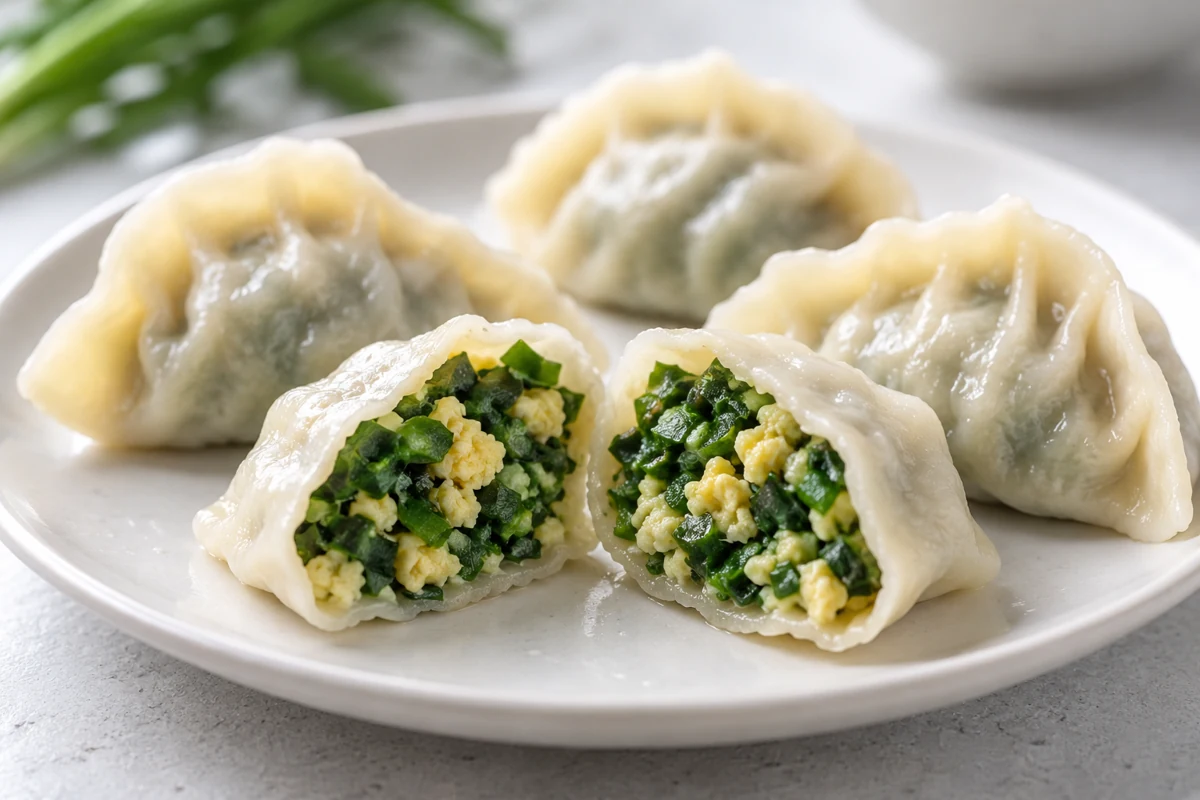
Illustrative filling showing how chopped leaf becomes part of the bite.
For a sauce, think about the point of addition and the intended serving condition. A fine fresh garnish creates a different eating experience from an ingredient incorporated before a full cooking step. Frozen chive cuts should be tested in the role requested by the recipe. The fact that ordinary chives are often sprinkled over food does not establish that any commercially frozen cut is suitable for direct uncooked use. Read the supplied product instructions and keep the final preparation within the operation's approved process.
Appearance also needs a realistic target. Tiny rings scattered over a pale sauce create a different pattern from short flat green segments. If the customer has approved a photograph or a reference meal, identify whether that appearance is essential or simply one possible presentation. A manufacturer can then decide which variations require a new approval. Without that discussion, procurement may judge two quotations equivalent while product development regards their finished dishes as visibly different products.
Commercial efficiency follows the same logic. A pack that fits the required batch size can simplify handling, but pack convenience alone should not determine the species or cut. Ask which offered format supports the recipe and the normal portioning routine. We can discuss frozen Chinese-chive supply against a defined application; availability, cut range and packing should be confirmed for the enquiry. A good sample request describes the finished food and the ingredient's role before listing price targets. That gives the supplier a practical basis for proposing material worth testing.
Describe the frozen cut beyond the word chives
A frozen ingredient needs a fuller description than its fresh-market name. Ask for the leaf form, cut distribution, permitted tender-base content, visible color and handling state. Confirm whether the offered product is intended to separate into individual pieces and how it should be stored and prepared. Washing, trimming, pretreatment and freezing details should come from the actual SKU documentation. Neither the word frozen nor a clean photograph establishes that a cooking or microbial reduction step has occurred.
Cut distribution matters because a single nominal dimension can conceal the pieces that cause difficulty. A sample may contain mostly short segments with a few long strands; those strands can remain noticeable in a small filling portion. Another sample may contain many fine fragments that disperse differently from the reference. Agree how length and broken material will be assessed. Use a representative spread sample and an agreed measurement method rather than selecting the neatest handful for a photograph. The aim is a usable acceptance description, not an unrealistic demand that every natural leaf match perfectly.
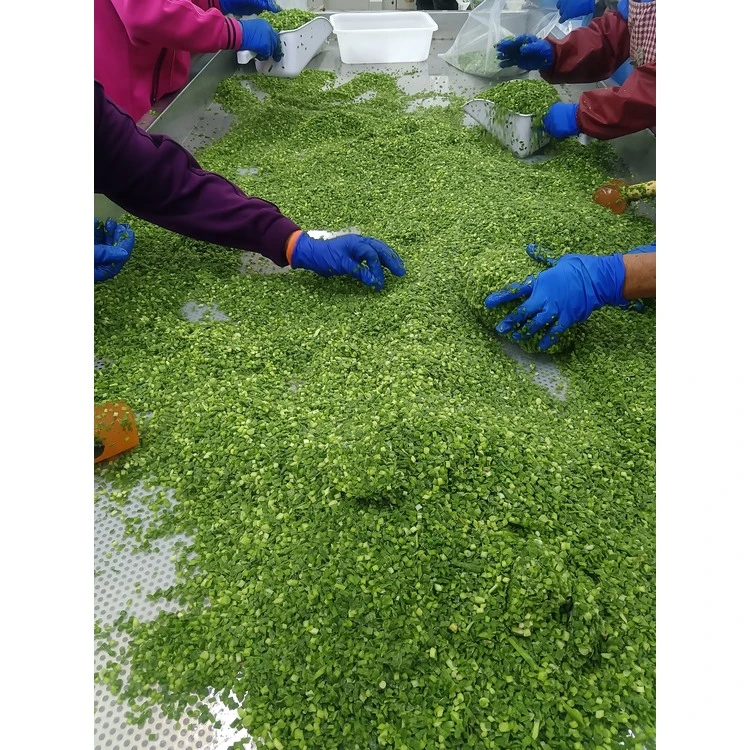
This source photograph shows material being handled on a sorting table; process and acceptance details require the current specification.
Color should be described with the same care. Define the desired green appearance and the treatment of yellow tips, dark damaged pieces or coarse bases. Compare samples under similar lighting and in the same state. A frozen photograph, a thawed display sample and a cooked filling can look different without explaining why. If color after cooking is important, include that application check in the approval. Do not infer a raw-material defect solely from one poorly lit picture, and do not let an attractive photograph replace examination of the sample.
Observe clumping and visible ice as handling information. Record what is actually seen and compare it with the agreed product condition. Those observations can prompt questions about packing, storage or handling history, but appearance alone does not reconstruct an entire cold chain. Keep the supplier's storage instructions and the buyer's receiving criteria connected to the sample. For formulation work, record whether the ingredient was added in its received frozen state or prepared through an agreed alternative route before weighing it into the food.
Packing and documentation complete this ingredient description. Confirm pack weight, inner packaging, carton identification and the lot code that connects the goods to the specification. Ask for the documents required by your quality team and destination, with their applicability to the offered product made clear. Commercial details such as quantity, lead time and shipment timing need order-specific confirmation. A written request for Chinese-chive leaf cuts with agreed acceptance criteria is far more useful than an enquiry for "the same green chives as the picture."
Treat substitution as a small formulation change
Replacing garlic chives with regular chives can produce a pleasant dish, but it changes the ingredient. The relevant question is whether the new version still meets the product brief. Begin with the reason for substitution: supply availability, customer preference, appearance, cost or handling. Each reason suggests a different acceptance question. If the brief promises recognizable garlic-chive character, a mild onion note may be insufficient even if the substitute is cheaper and easier to source.
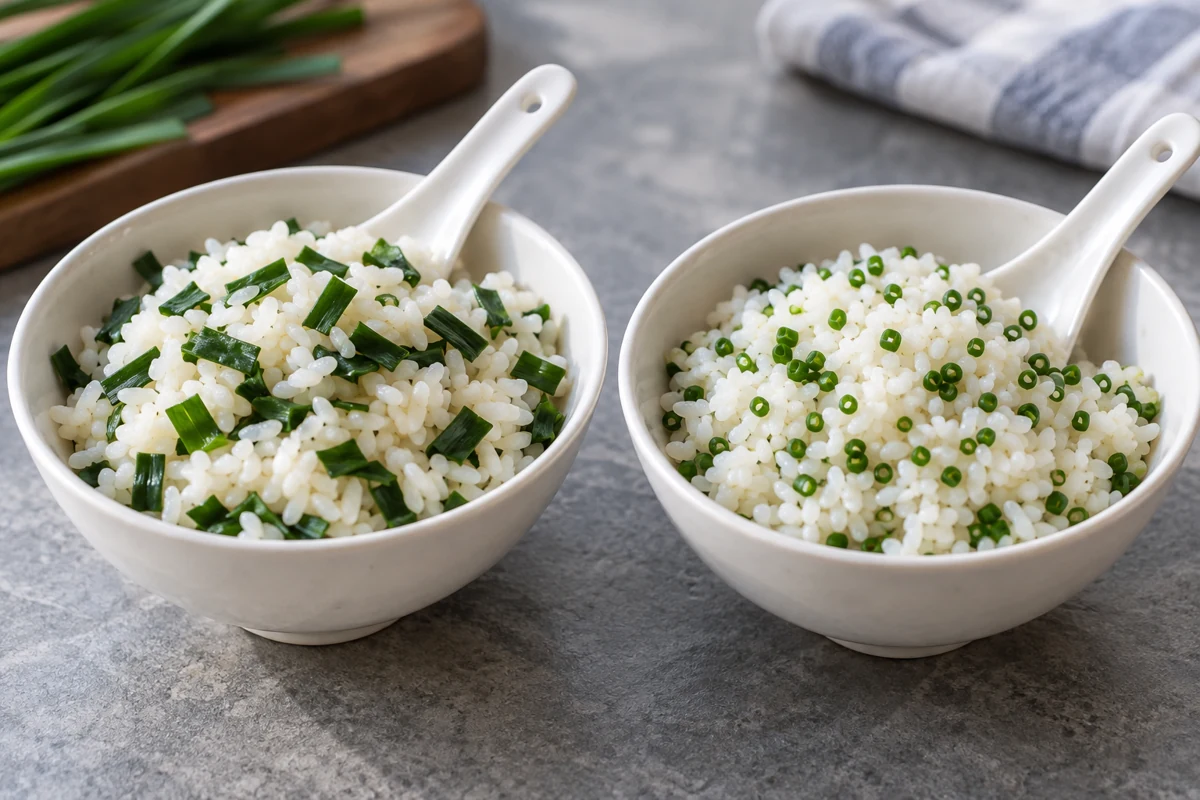
Illustrative rice portions reveal the different cut shapes; a substitution trial also compares the finished aroma.
Use a controlled sequence for the first substitution trial.
- Prepare the approved reference recipe with its current ingredient.
- Prepare a comparison in which the chive is the main intentional change and the weighing basis is recorded.
- Compare appearance and aroma after the normal cooking and serving route.
- Adjust the candidate only after recording the initial difference.
This keeps a useful explanation of what changed. Altering the herb, added garlic, liquid and cooking time together makes it difficult to know which decision improved the result.
Adding bulb garlic to ordinary chives is a separate recipe decision. It may move the flavor toward the desired direction, but it does not recreate the original leaf structure or automatically produce the same aroma. Treat the additional garlic as another ingredient with its own dose and process implications. Keep a record of the complete candidate recipe so later production does not inherit a verbal instruction to "add a little garlic." A repeatable formula needs measured inputs and a defined finished-food target.
Do not assume one replacement ratio applies across fresh, frozen and dried forms. A comparison by supplied mass is one useful starting basis when that matches purchasing and production practice. If the customer's process drains or otherwise prepares one ingredient before use, record the change in mass and the actual addition. The resulting cost comparison should reflect how much supplied material is needed for an acceptable finished batch. A lower price per kilogram can lose its advantage if the approved recipe requires a different quantity or additional preparation.
After a promising trial, check another representative sample and the normal production route before a routine purchasing change. The purpose is to discover whether the result depends on one unusually favorable sample or a small kitchen process. Keep the approved formulation, ingredient description and sample reference together. If the customer accepts both chive versions for different products, give them distinct internal ingredient identities. That avoids a later substitution happening silently when a purchaser sees two suppliers using the same broad English word.
Approve a named ingredient and a repeatable reference
The final approval should connect identity, physical form and application performance. Record the commercial and botanical names, leaf or base composition, frozen form and cut requirements in one controlled specification. Link it to the sample code and the recipe trial. Photographs can show the accepted appearance, while the written record explains dimensions, tolerances and intended use. A retained visual reference is most useful when the receiving team knows how and in what state it was prepared.
Decide which differences require discussion before dispatch or use. A change in species clearly deserves review; a material change in cut, base allowance or processing state may also affect the recipe. The buyer and supplier should agree how such changes are communicated. That is more workable than asking a natural ingredient to remain visually identical across all seasons while leaving its critical attributes undefined. The agreed limits should focus on what the food needs and what the receiving team can assess consistently.
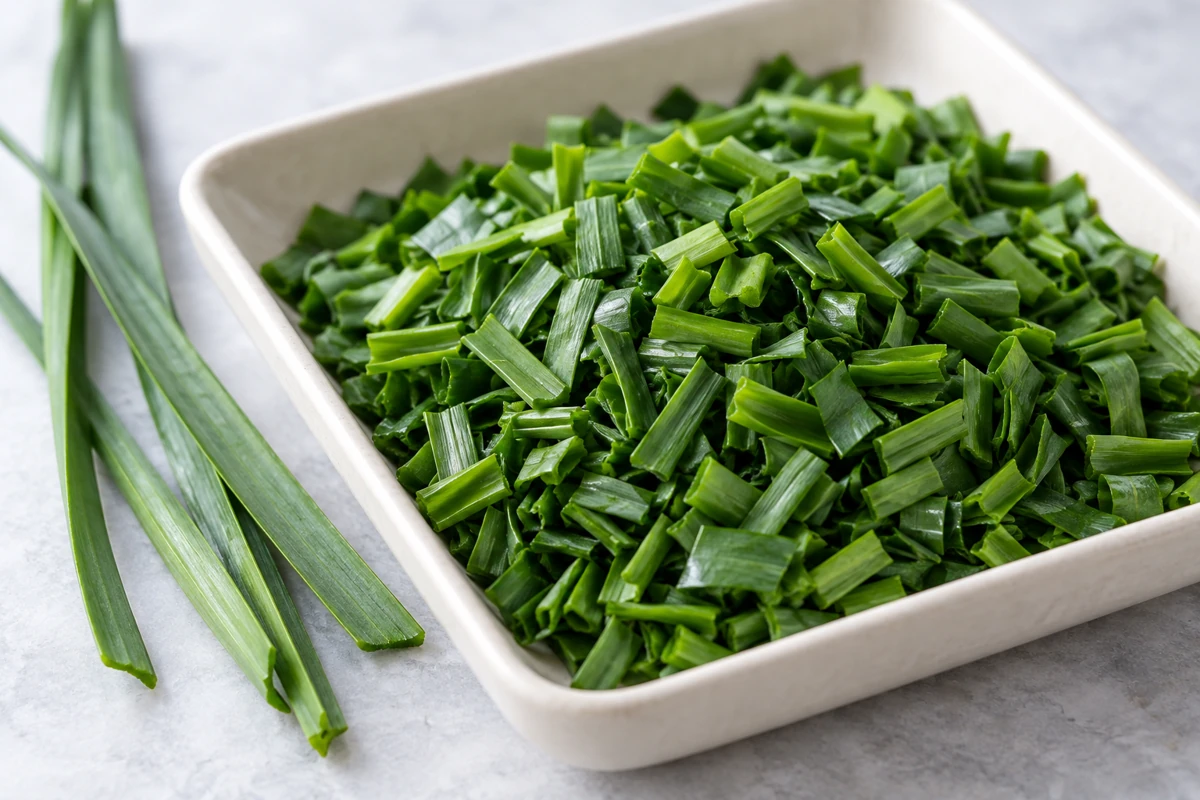
Illustrative physical reference showing flat leaf material before and after cutting.
Keep the sensory reference practical. Describe the desired character in the finished food, the tested addition rate and the serving or reheating condition. Retain the observations that led to acceptance, including any disliked notes or texture problems. A later evaluator can then compare a new lot against a meaningful target instead of a memory of one pleasant meal. If a disagreement arises, both teams can review the same ingredient identity, preparation method and application result before attributing it to the supplier or the recipe.
Use the order enquiry to make those decisions visible. Send the required product form, cut description, expected quantity, pack preference and destination together with the intended cooked application. Explain whether the current reference is garlic chives or ordinary chives and whether a substitution is even under consideration. We can then discuss the frozen Chinese-chive specification and sample that may fit the request. Exact availability, processing details, documents and delivery timing remain matters for confirmation against the proposed order.
The small distinction between a flat leaf and a hollow leaf has a larger commercial consequence: two green ingredients can carry different names, aromas and expectations into the same recipe. A good approval preserves that distinction from the first enquiry through the receiving check. When the named plant, supplied cut and finished-food reference agree, repeat purchasing has a clear basis. When they differ, the buyer has a specific question to resolve before changing the ingredient.
Related reading
How to Eat Scallions: Raw, Cooked and Frozen Uses
Compare the edible parts and preparation roles of scallions before treating another allium as a substitute.
Source Frozen Chinese Chives with GreenLand-food
GreenLand-food is a professional frozen Chinese chives supplier and manufacturer in China, providing factory-direct wholesale supply for importers, food manufacturers and foodservice distributors.
Send the product form, specification, packing, quantity, application, destination, private-label needs and requested documents so we can discuss a suitable sample and quotation.