


Can You Freeze Mustard Greens? Leaf Color and Cooked Texture
Oct 19, 2026
Leave a message

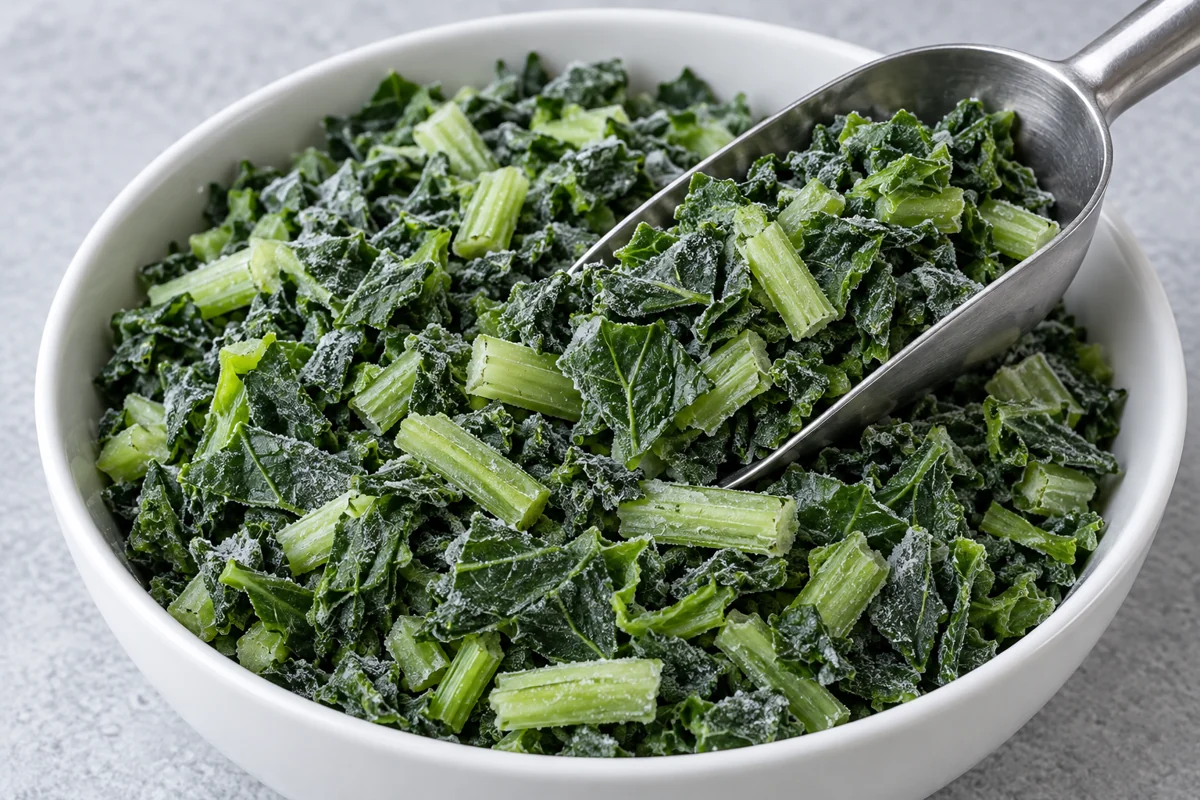
The useful question for a buyer is what the greens will look and feel like after the full cooking route. A bright frozen sample may soften in a filling, release liquid into a sauce or change appearance during holding. This guide explains those quality decisions and the evidence to request. Household preservation references provide background; the article does not prescribe a commercial thermal process, establish shelf life or report a GreenLand freezing trial.
Expect a cooked ingredient rather than a fresh salad leaf
Freezing preserves a leafy ingredient in a useful form, but it does not preserve every feature of a freshly harvested leaf. University of Minnesota Extension explains that ice formation can damage plant cell structure and leave thawed produce softer. Cooking also changes plant tissue, so this difference is often less important in food that will be cooked. For mustard greens, that makes soup, cooked fillings, sauces and similar uses sensible places to evaluate a sample. A crisp raw-leaf application calls for a different expectation and a product specifically suitable for that use.
Decide what texture the finished food requires before judging the frozen bag. A soft, distributed leaf can work well where the vegetable should blend into the food. It may be unsuitable where the customer expects a large, firm piece to hold a particular shape. The supporting petiole may remain more noticeable than the blade. These are application questions, not a simple ranking of fresh above frozen. A useful trial asks whether the prepared ingredient performs the intended role at the serving stage that matters to the customer.
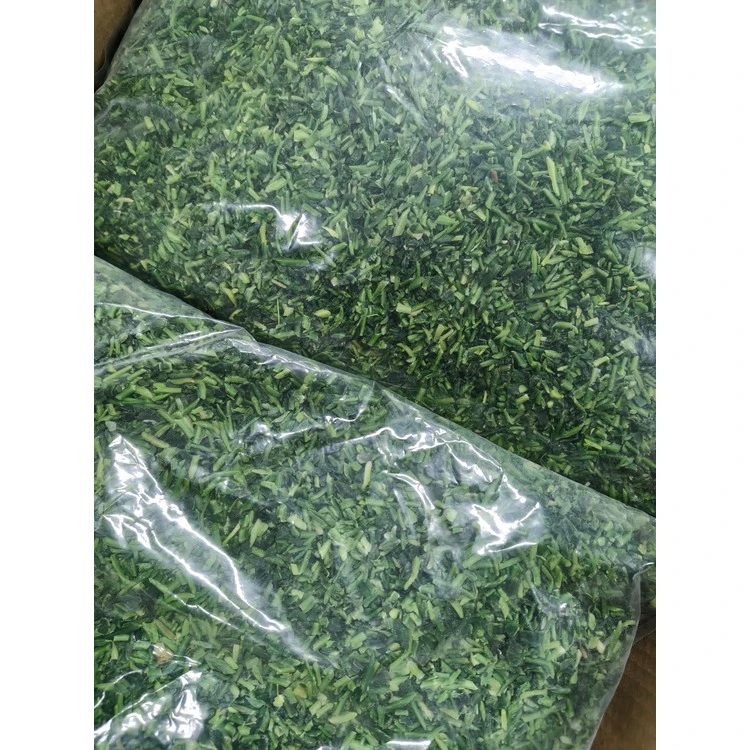
Cut mustard greens pictured in the GreenLand-food product listing; confirm the exact specification for your order.
Keep product convenience separate from readiness to eat. Freezing is not sterilization, and it does not establish that an ingredient can be served without the required preparation. Follow the confirmed product instructions and the site's food-safety controls. This is particularly important when a fresh recipe uses young mustard leaves uncooked. That recipe does not authorize the same treatment for an industrial frozen cut. The supplied preparation state should be clear before the development team chooses its cooking route or designs an uncooked product around the ingredient.
The real GreenLand product photograph in this section shows fine cut mustard material in a bag. It is useful for recognizing the listed appearance, but it does not demonstrate the product's thermal history, exact size distribution or future cooked texture. Ask us to confirm the relevant specification and provide a representative sample discussion for the intended use. The illustrative frozen scenes elsewhere in this article are educational images; they are not photographs of a tested GreenLand lot and should not be used as an order reference.
Set the comparison fairly when deciding between fresh preparation and a purchased frozen ingredient. Compare the amount that reaches the recipe after the required trimming, cooking and draining, not just the weight bought. Include the work each route requires and the effect on the final portion. Record the actual basis rather than assuming a standard conversion. A fresh bunch and a frozen pack may carry the same vegetable name while representing different preparation stages, so a simple one-for-one weight substitution can obscure the reason the recipe behaves differently.
Start with suitable leaves and a defined cut
Freezing does not turn poor raw material into a better ingredient. The National Center for Home Food Preservation's greens guidance begins with tender green leaves and removal of woody stems. That household advice illustrates an important starting principle: the quality and plant portions selected before freezing affect what remains afterward. For a commercial product, ask how the offered grade describes leaf condition and supporting tissue. Do not assume that a broad statement such as premium greens defines maturity, trimming or the proportion of coarse material in the supplied cut.
The intended cut should be part of the product discussion. A finely divided ingredient presents differently from larger pieces, and the blade and petiole may not respond identically in a recipe. Cutting can make material easier to distribute, but it does not guarantee that coarse tissue becomes tender. If a filling cannot tolerate long fibers, examine that issue in the prepared sample. If soup needs visible leaf, assess whether the offered cut provides it. Both decisions are more useful than asking for an unspecified best grade.
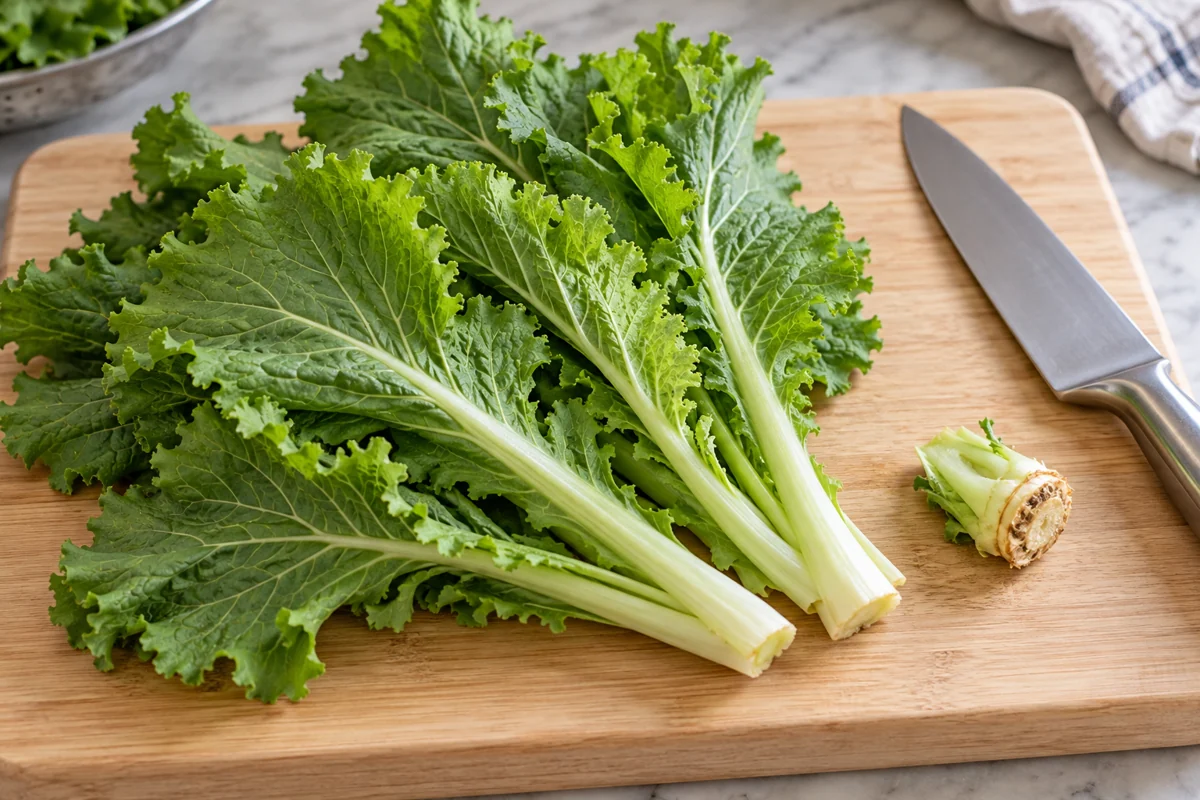
Illustrative household preparation, not a GreenLand trimming operation or measured loss.
For a household freezing project, use a complete current preservation method rather than assembling isolated tips from several pages. Selection, washing, trimming, blanching, cooling, draining, packing and freezing belong to one method. The linked NCHFP instructions provide that context. A commercial operation needs its own appropriate process design and verification for the material, equipment and intended use. Increasing the quantity does not turn a domestic pot method into a production schedule, even when the same vegetable is involved.
For a purchased frozen product, some of those decisions have already been made upstream. The buyer's task is to understand the supplied state and confirm that it fits the application. Ask whether the sample corresponds to the offered commercial specification and whether the relevant processing information is available. Do not automatically wash, reblanch or otherwise alter the product simply because a fresh-leaf method includes those steps. Follow the actual instructions and establish any additional preparation as part of the buyer's approved process.
An appearance reference should show the material in a defined condition. A fresh illustrative leaf can explain trimming, but it cannot prove the raw-material selection used for an order. A bag photograph can show cut appearance, but it cannot establish every piece in the lot. Combine clear product documentation with representative samples and the agreed receiving method. If the supplied cut or plant balance changes, review the application again rather than assuming that the freezing step makes all mustard-green material equivalent.
Understand why blanching and cooling matter
Blanching is a short heat treatment used before freezing many vegetables. The NCHFP blanching guidance explains its role in controlling enzymes associated with changes in flavor, color and texture. It also emphasizes that insufficient and excessive treatment can both reduce quality. This is a reason to follow an appropriate method, not to blanch until the leaves merely look green enough. Visible color alone does not establish that a process has met its intended purpose, and it cannot replace the verification required for a commercial operation.
Cooling belongs with the heat treatment. The Academy of Nutrition and Dietetics describes prompt cooling as the step that stops continued cooking after blanching. For a home method, follow the published instructions for the chosen vegetable and the associated cooling and draining steps. For a commercial ingredient, confirm the supplied process information needed by your technical team. A casual statement that the greens were blanched tells less than a clear description of the controlled process and the evidence appropriate to that product.
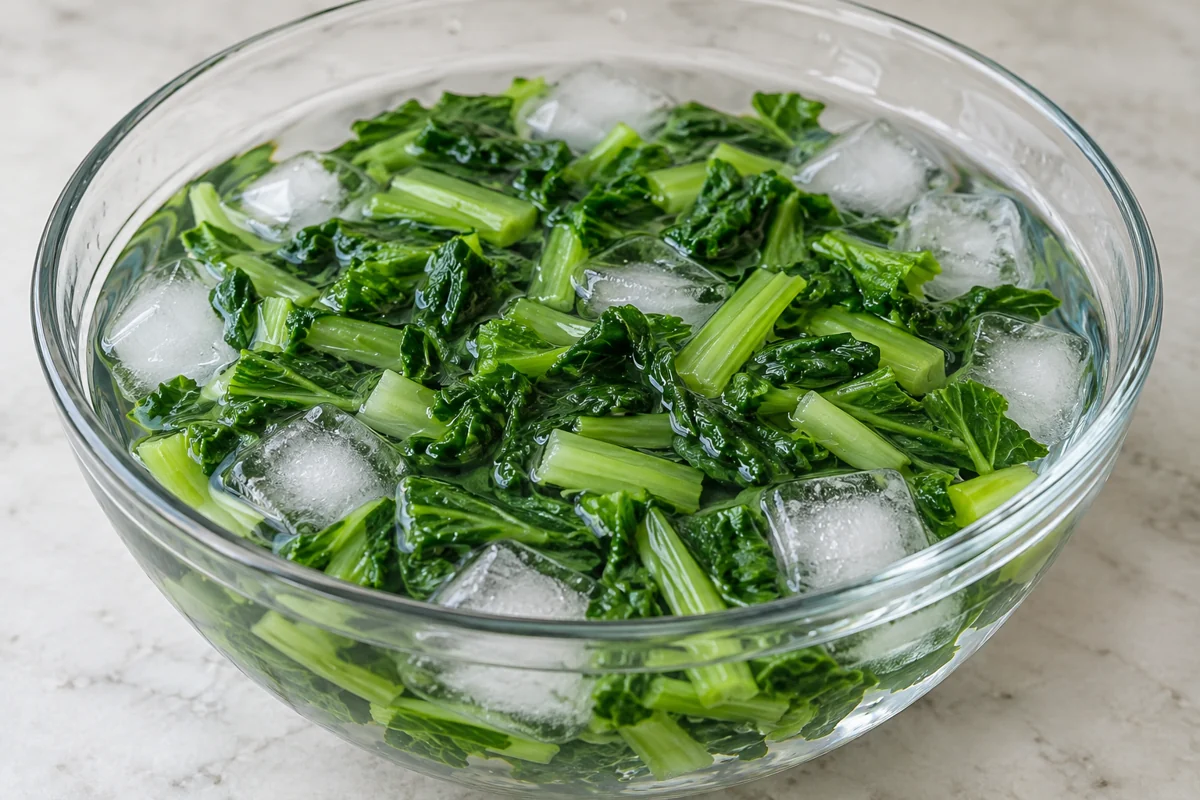
Illustrative immersion cooling; follow the complete applicable method. This is not commercial process evidence.
This distinction matters when the same greens will be heated again in the finished food. A product that has already received a heat treatment will enter the buyer's process differently from a raw fresh leaf. The development trial should include all subsequent heating, not stop at a pleasant-looking sample just after preparation. A filling may be cooked inside a wrapper; a sauce may pass through another heating and holding stage. Approve the result after the complete route that the customer will experience.
Do not use a household blanching time as a universal factory requirement. Product dimensions, loading, equipment and heat transfer conditions need to be addressed by the responsible process specialists. Similarly, a commercial process description should not be inferred from a product photograph or from the general frozen-leafy-green category. If a specification requires a particular preparation state, record it and ask for confirmation. The buyer can then evaluate the product on a clear basis without inventing equipment, a thermal schedule or a validation result.
A useful supplier conversation separates the process question from the sensory question. The process question asks what treatment the product receives and what information supports it. The sensory question asks whether the prepared material has the desired color, leaf body and stem bite in your food. One does not answer the other automatically. A sample may be visually attractive while still lacking the documentation needed for approval, or fully documented while requiring a recipe adjustment. Record both outcomes so purchasing does not mistake a tasting preference for a process verification.
Judge color in a consistent prepared state
Compare like with like when color matters. A frozen fragment under cool light, a wet separated leaf and a cooked portion under a warm service lamp can look different. Before treating that difference as a product defect, align the preparation and viewing conditions. Use a neutral background, consistent light and a defined point in the cooking route. If photographs support the reference, preserve the original images and avoid saturation adjustments. A visually appealing photograph is not a calibrated color measurement or proof of the product's process history.
Judge both the ingredient and the food around it. In a clear broth, the eye may distinguish leaf pieces and pale petioles easily. In a dense filling, the visible effect may be overall green distribution. A sauce can change the background against which the leaf is seen. Identify which appearance matters to the customer and record it in the application approval. This prevents a later inspector from rejecting a suitable cooked ingredient because it does not match an unrelated fresh-leaf photograph used during concept development.
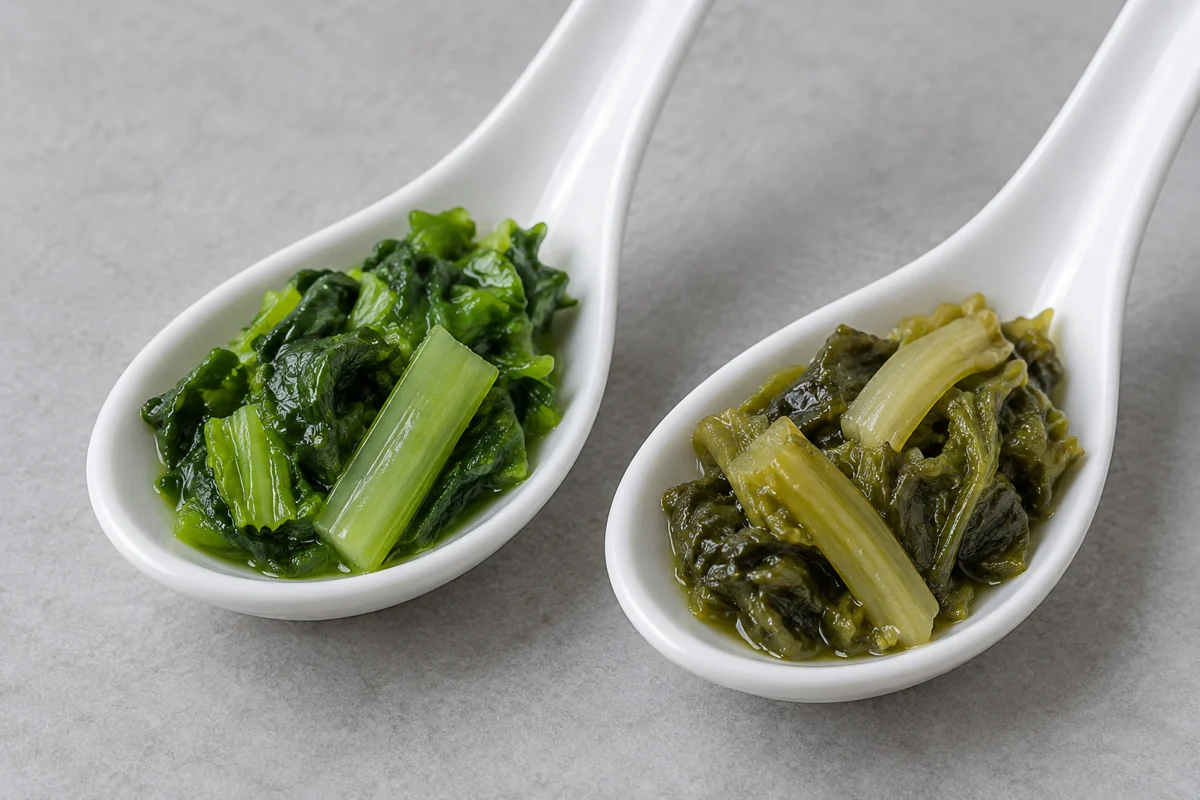
Illustrative color difference only; no cause, cooking duration or controlled result is assigned.
Longer or repeated cooking can alter the appearance that the team first liked, so include the intended serving stage in the trial. Observe the portion at the relevant end of preparation and, where applicable, after the planned hold. Record the actual method rather than promising a universal bright-green result. The two spoonfuls shown here illustrate that prepared greens can have different visible colors. They are not controlled experimental samples, and the image does not assign the difference to a particular time, temperature, acidity or freezing method.
If the project requires a formal color limit, agree how it will be measured and interpreted. A descriptive reference, a standardized photographic comparison and an instrumental reading are different tools. Each needs a defined sample condition and an acceptance basis. Do not invent a numerical limit simply because an instrument is available, and do not transfer a value from another vegetable without justification. The practical objective is a method the supplier and buyer can apply consistently to the actual mustard product.
Keep cause and observation separate when a sample falls outside the target. Record whether the concern is overall dullness, isolated yellow areas or a mismatch that appears only after the buyer's recipe. Review the relevant process and handling information before assigning a cause. A single color photograph cannot establish inadequate blanching, storage abuse or raw-material age. That restraint makes the investigation more useful: the supplier receives a reproducible observation, while the buyer retains a clear explanation of what aspect of the finished food needs to improve.
Manage liquid and texture in the finished recipe
Prepared mustard greens can contribute both solids and liquid to a formulation. Decide whether the recipe uses the entire prepared portion or a defined drained portion. That decision affects the amount of green material and water entering the food. A soup may use released liquid as part of the base; a filling may need a different treatment. Neither approach is automatically correct for every application. Record the preparation and dosage basis so a later batch does not change because one operator drained the ingredient and another added everything.
A drainage method needs enough detail to be repeatable if its result will support purchasing or production. Identify the preparation state, draining arrangement and any pressing step. Gentle draining and vigorous squeezing are not equivalent. The visible bowl of liquid in the illustration is a reminder to account for it, not evidence of a particular loss percentage. Measure the actual sample through the chosen method. Keep the prepared solid weight and the liquid treatment linked to the recipe record rather than reporting a generic yield with no method attached.
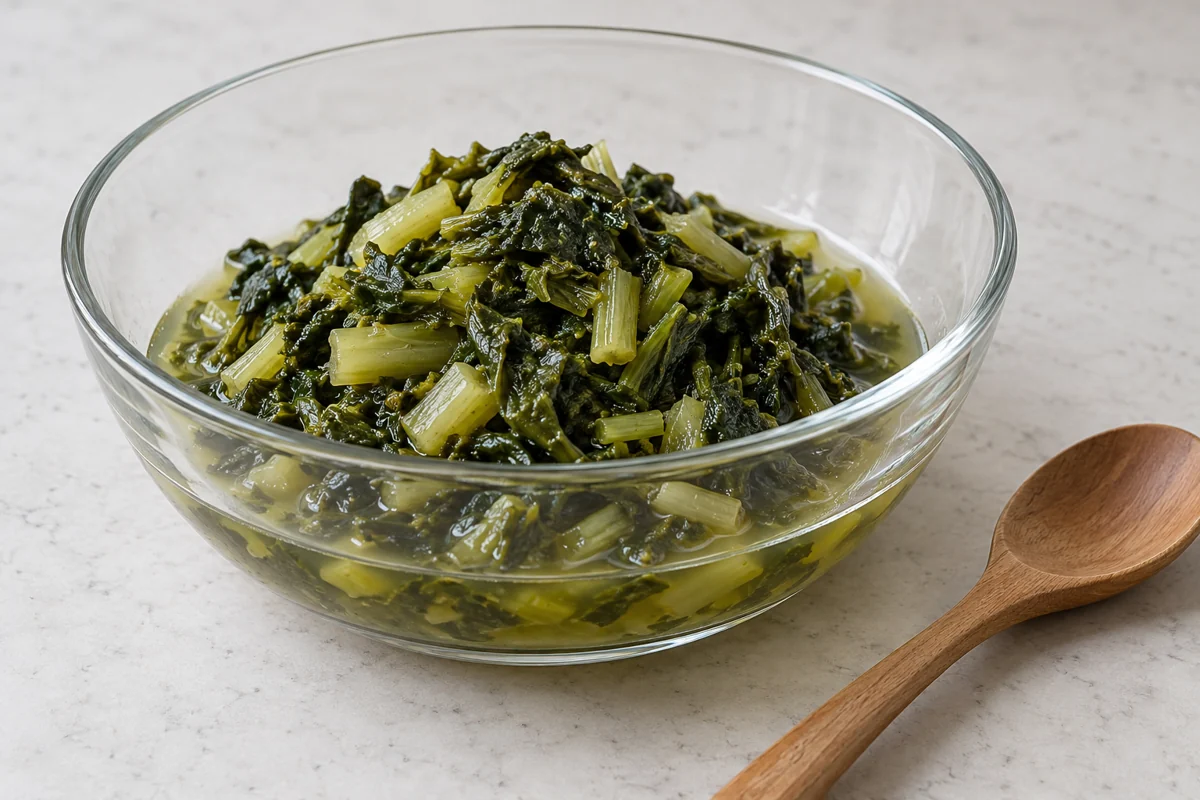
Illustrative prepared material; no drainage percentage or yield result is implied.
In a filling, examine the product after the final cook and at the intended serving stage. Look for the desired cohesion and distribution, and record whether liquid escapes or coarse pieces interrupt the bite. A mixture that looks convenient in the mixing bowl may behave differently inside a wrapper or pastry. Adjustments to binders, other ingredients or drainage should be documented as formulation changes. Do not assume that removing more liquid always improves the food; it can also change the amount and character of the vegetable in each portion.
In a broth or sauce, include the greens in the liquid balance. A difference in prepared water contribution can change the consistency or flavor concentration even when the same frozen weight is added. Use the actual batch size and addition point during development. If the product is cooked from frozen under the approved route, account for that state rather than comparing it with a separately thawed and drained sample. The trial should resemble the process the kitchen or factory will repeat, with deviations made visible.
Evaluate the leaf and supporting tissue together. The blade may soften while a thicker petiole remains noticeable, and an extra cook designed to change one component may affect the other. Record the whole eating experience rather than chasing one isolated texture result. A practical approval can describe acceptable leaf body, stem bite and liquid behavior in the final food. It should also identify the sample and the method used. This connects the purchase decision to an observable result instead of a broad claim that frozen greens are always soft or always firm.
Protect the product during frozen storage and handling
Packaging and storage conditions affect the quality that remains available for cooking. University of Minnesota Extension explains that moisture loss from poorly protected frozen surfaces can cause freezer burn and poorer eating quality. The relevant buyer questions are whether the supplied pack is suitable for its intended frozen use, whether it remains intact and how the product is managed after opening. Confirm the actual storage instructions and shelf-life statement. A general household storage interval does not establish the commercial life of a particular mustard-green SKU.
The second real GreenLand product photograph shows a different view of the listed cut material in a bag. It does not establish the packaging barrier properties, seal performance or temperature history of a delivery. Those questions require the appropriate specification and records. Keep the image in its proper role as an appearance reference. If the order needs a particular pack size or handling format, ask for confirmation and connect it to the quantity the operation will use. A convenient format can help staff follow the intended handling procedure.
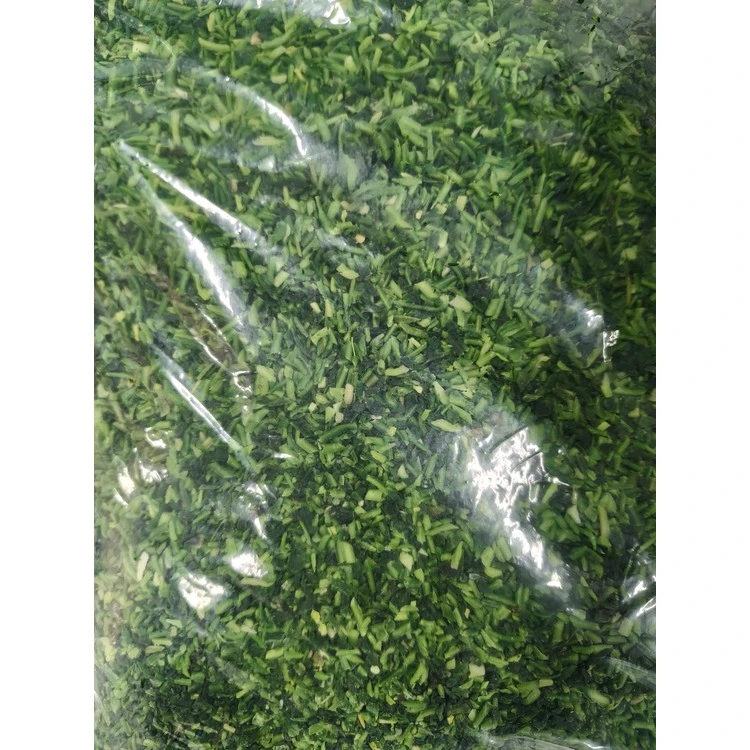
A second view of the cut mustard product. Use representative lot records alongside appearance references.
Review receiving evidence before making a quality judgment from a single visible feature. Record package condition, product identity and the temperature information required by the site's procedure. Clumping or visible ice may justify a closer review, but a photograph alone does not reconstruct the complete history of a shipment. Different product forms can also behave differently in a bag. Compare the observation with the agreed specification and involve the responsible quality team when the evidence falls outside the expected condition.
Plan how the product moves from frozen storage into the preparation area. Use the confirmed product instructions and the operation's approved controls for thawing or cooking from frozen. Avoid improvising a room-temperature holding step merely to make a sample easier to separate. If partial packs are used, define how they are identified, protected and returned or otherwise handled under the site's procedure. These details belong in the operating method, because inconsistent handling can make an otherwise consistent ingredient appear variable in the recipe.
Do not decide the acceptability of a temperature excursion by smell or color alone. Preserve the available records and follow the established review process for the actual product. Food-safety disposition and sensory quality are connected but distinct decisions. This article does not provide an emergency thaw-and-refreeze release rule. For routine purchasing, the useful preparation is to agree the required storage information, traceability and receiving evidence before delivery, so an unexpected condition can be evaluated from records rather than guesswork or a convenient photograph.
Approve the frozen result before repeat purchasing
A representative application trial turns the general question about freezing into a specific purchasing decision. Identify the offered product and prepare it through the complete intended route. Record the frozen dosage, any intermediate draining or preparation, the recipe additions and the serving stage. Evaluate color, leaf body, petiole bite and liquid behavior together. The rice portion illustrated here is simply an example of a cooked application where distribution is visible. It is not a tested recipe or a claim about the performance of a particular GreenLand lot.
Choose a comparison that answers the project's real uncertainty. If the question is whether the offered frozen cut fits an existing recipe, compare it with the current approved ingredient through the same final process. If the question is about two possible preparation methods, keep the product identity and other recipe conditions consistent. Avoid changing the cut, dosage and seasoning at the same time and then attributing the result to freezing alone. A modest, well-recorded trial is often more informative than a complicated tasting with too many uncontrolled differences.
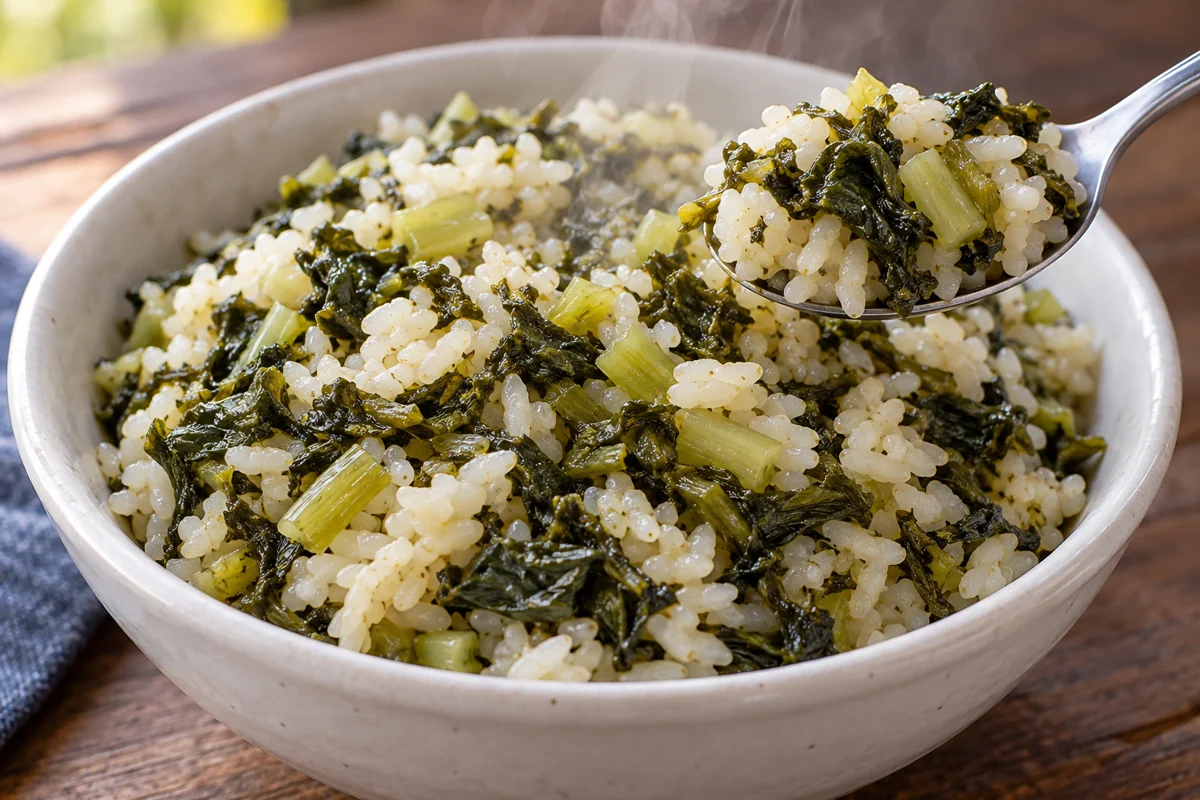
Illustrative cooked application, not a tested GreenLand recipe or performance result.
Review the result at the stage that represents use, including any intended hold or reheating. Record the observations honestly, including a mixed result. A sample can have suitable flavor but too much visible supporting tissue, or attractive color but an inconvenient liquid contribution. Those findings guide the next conversation about the offered specification or the recipe. They are more actionable than a single overall score that hides the reason for the decision. If another trial is needed, state the specific change and the question it is meant to answer.
Include a practical handover note when the trial is approved. Identify which preparation details are essential to the result and which are simply the equipment used for development. If production will use a different vessel or batch quantity, the responsible team should decide what needs confirmation before scaling. Record the final agreed version after that review, rather than leaving staff to reproduce a photograph. This makes the approval useful beyond the original tasting and gives a later investigation a clear starting point if the cooked result changes.
Keep the approval connected to the commercial order. Retain the relevant specification version, sample identity, preparation instructions and application notes under the site's procedures. Confirm packing, quantity, destination and document requirements with the supplier. If a later proposal changes the cut or preparation state, determine whether the application needs review before treating it as equivalent. Freezing makes the ingredient convenient to store and use, but it does not remove the need to define the product that was approved.
When you contact us about frozen mustard greens, describe the cooked result you need as well as the product form. Tell us whether color, leaf visibility, stem bite or liquid behavior is the main concern, and include the intended application and preparation route. We can then discuss the offered product details and the evidence needed for your project. The aim is a repeatable cooked ingredient with a clear specification and handling method, supported by actual sample observations rather than an assumption that freezing will preserve every feature of the fresh leaf.
Continue reading about frozen leafy ingredients
Compare the household-method and commercial-specification distinction in another frozen leafy vegetable.
Extend the liquid-accounting discussion into an application trial with a defined preparation and recipe basis.
Source frozen mustard greens with GreenLand-food
GreenLand-food is a professional frozen mustard greens supplier and manufacturer in China, providing factory-direct wholesale supply. We help your purchasing team confirm the offered cut and preparation state against the intended application.
Send the product form, specification, packing, quantity, application, destination, private-label needs and requested documents, together with the cooked texture and flavor your team wants to approve.