


Frozen Cucumber in Cooked Soups and Sauces: Managing Water Release
Oct 19, 2026
Leave a message

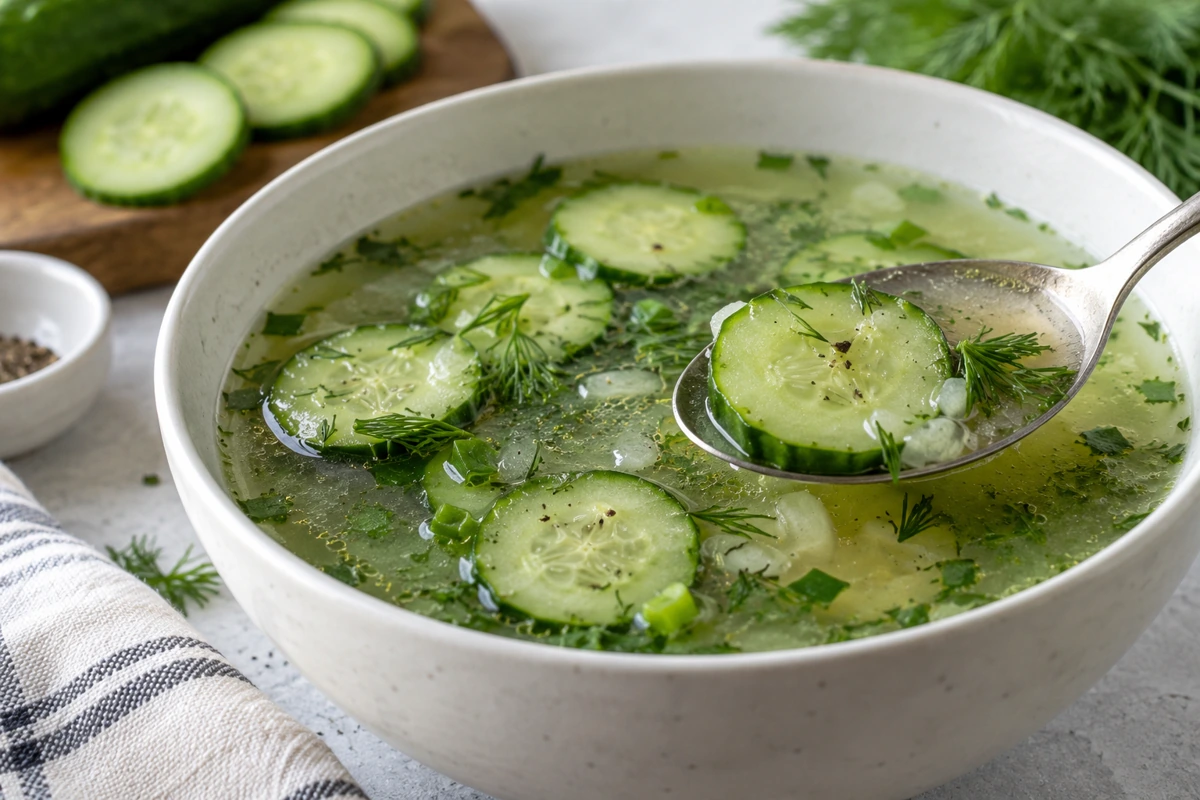
A soup that keeps cucumber liquid and a sauce that needs a concentrated body have different requirements. Judge the ingredient after normal mixing, holding and any reheating. We discuss cucumber form and preparation status with buyers before sample approval. The approach below describes proposed development trials, rather than a tested recipe, a universal cooking schedule or a guarantee about a particular lot.
Choose whether the dish needs pieces or puree
Decide the cucumber's role before choosing a treatment for its water. A clear soup may use visible tender rounds and retain their liquid in the broth. A blended soup may use the whole prepared ingredient while controlling its final concentration. A sauce may need either small visible pieces or a smooth body that coats another food. These are different development targets, even when they begin with the same cucumber.
Write the desired serving result in concrete terms. For a piece soup, describe the appearance on the spoon, the acceptable tenderness and how the round should survive ladling. For a puree, identify the expected particles, color and mouthfeel. For a sauce, assess coating, spreading or another function in the dish where it will be used. A general request for a "good texture" does not identify which of these functions matters.
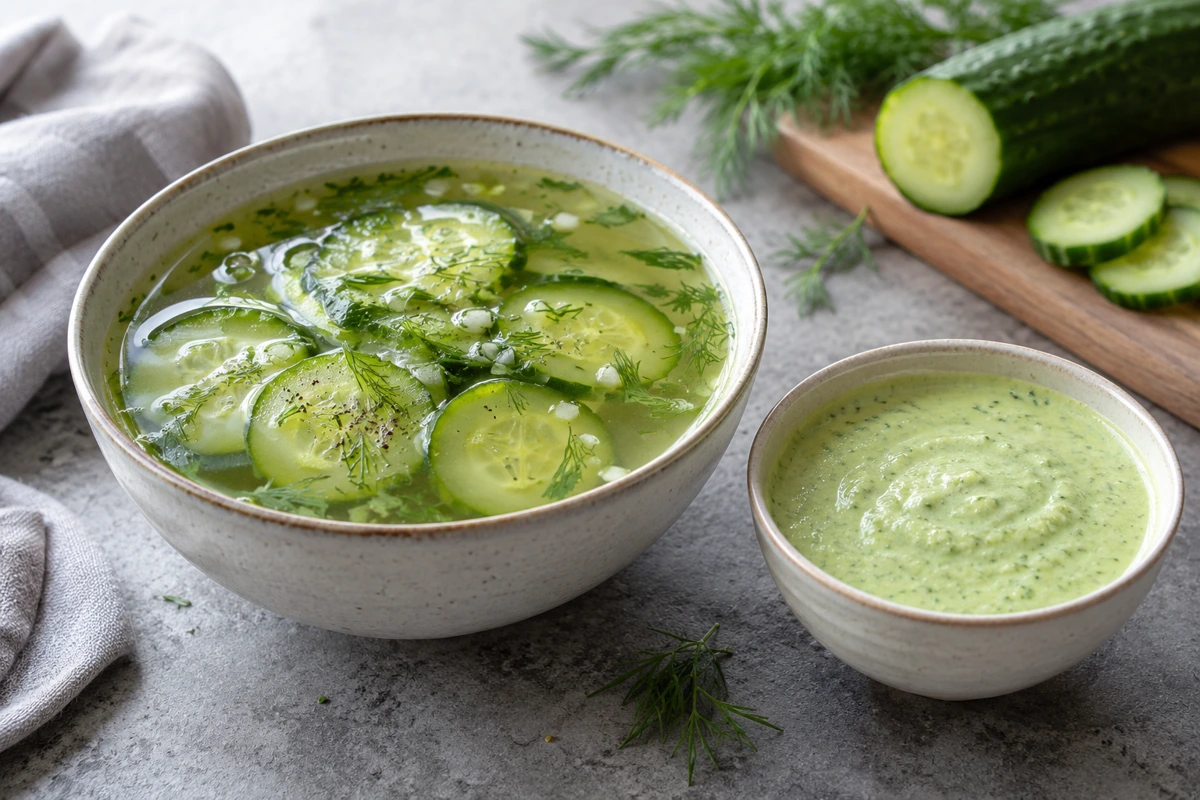
A piece soup and a smoother cooked sauce ask different questions about shape, particles and liquid balance.
| Finished form | Where cucumber liquid goes | Main quality observation |
|---|---|---|
| Clear soup with rounds | Usually retained as part of broth | Tender piece integrity and broth concentration |
| Blended cooked soup | Incorporated into the puree unless a drain is specified | Particles, body and flavor at service |
| Cooked sauce | Retained, drained or reduced under the accepted formula | Coating, free liquid and recovered output |
Freezing changes the starting ingredient. NCHFP explains that cucumber is likely to become softer after thawing. That makes fresh-salad bite an unreliable expectation for a cooked frozen-cucumber program. The effect can be acceptable when the food already calls for tender pieces or a puree, but the actual sample still needs to demonstrate a useful appearance and flavor.
Cooked cucumber has established culinary uses. University of Maine Cooperative Extension discusses cucumber in broth and other preparations. Its brief fresh-julienne soup instruction is specific to that recipe and form. It should not become a time specification for frozen rounds, a large kettle or a product whose label requires a different preparation. Use the actual ingredient instructions and process review.
Consider what the other ingredients contribute. A broth with a subtle flavor may show dilution more readily than a strongly seasoned base. A sauce served with a wet protein or vegetable may receive additional liquid on the plate. Assess the complete dish, including normal portion size and serving temperature, rather than approving cucumber in an isolated cup and assuming the effect will remain the same.
The first trial can be modest and focused. Prepare a reference base, incorporate the offered cucumber through an appropriate route and observe what changes. Keep notes about the visible pieces, free liquid and flavor before revising the formula. When the target is clear, it becomes easier to decide whether to retain liquid, drain a portion or change the ingredient form. Each decision then has a practical reason that can be tested.
Build the trial around the actual cucumber round
The GreenLand-food frozen cucumber reference describes rounds with visible peel edges for processed uses that tolerate moisture release. Confirm the current commercial offer, preparation status and packing. A peeled puree or specially deseeded form needs separate confirmation. The prototype should represent what the buyer will actually purchase, including the seed center and peel that enter the recipe.
Round thickness matters when the piece is meant to stay visible. Very thin and thicker rounds can soften and handle differently during cooking and serving. Diameter also affects appearance and the number of pieces delivered in a portion. Specify both attributes where they influence the dish, then evaluate the practical range in a representative sample. Do not approve a carefully selected small round while ordering a much wider distribution.
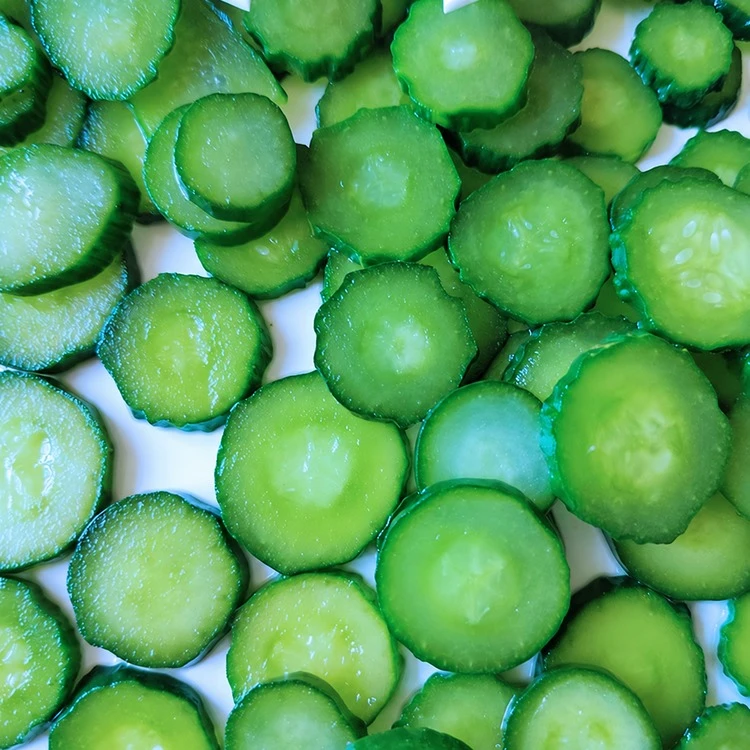
The product reference retains green peel and central seed tissue; confirm the current offered specification.
Peel can help the customer recognize cucumber in broth, but the same peel can leave dark flecks in a pale sauce. Decide whether those flecks are acceptable before asking the process team to blend longer. A texture problem may be related to the offered form rather than insufficient machine time. A different form, if available and appropriate, could require less correction in the final recipe.
Inspect the seed center under the intended preparation. A round can retain a green rim while its center becomes loose or opens. That can affect a visible piece soup even when the cucumber flavor remains suitable. In a blended sauce, the more relevant question may be seed fragments and recovered output after any screening. Use the application to decide which observation controls acceptance.
Check the frozen sample's condition before cooking. Note clusters, visible ice and how easily the normal portion can be retrieved. A tightly joined mass can enter a kettle differently from loose rounds, changing the practical loading and mixing sequence. Record such observations without claiming that one appearance proves the entire temperature history. Ask for clarification when the condition conflicts with the agreed specification.
If the kitchen trims, peels or screens the sample, measure that intervention and retain it in the development record. The labor and discard become part of the product's cost and process. A prototype prepared from a small amount of hand-selected flesh may not represent a foodservice bag or an industrial input. Confirm whether the necessary preparation is feasible at the intended scale before accepting the ingredient.
Link the cut description to the recipe method. Future buyers and operators should be able to identify which sample was approved and how it was used. A changed thickness, peel condition or preparation status may require a new trial even if the ingredient name remains frozen cucumber. Keeping those details together prevents a useful first sample from becoming an ambiguous long-term purchase standard.
Manage released water as part of the formula
Account for water through the actual route used in the food. If frozen cucumber enters the soup and all its released liquid remains, that liquid is part of the final broth. If the ingredient is prepared and drained first, the retained cucumber mass and discarded liquid become separate streams. Write the formula so that another operator can tell which stream is included in the cucumber quantity.
A useful proposed comparison begins with the same base and a measured cucumber input. Record starting masses, preparation, liquid additions and recovered output. Compare the food at a defined serving condition. That record helps distinguish dilution from a change in seasoning, evaporation or the concentration of the base. Changing several inputs at once may produce an acceptable soup without explaining what the cucumber did.
Liquid retained around cooked cucumber becomes part of the food's formulation.
Reducing added water can be one development option when the cucumber's liquid remains in the dish. It needs a trial rather than a universal replacement ratio. The amount released and its timing depend on the actual ingredient and process, while the finished flavor depends on all the ingredients. Make a controlled adjustment, compare the same serving size and retain the observed result when it becomes available.
Draining is another option when the application supports it, but it changes both flavor and usable yield. Define the preparation and drainage method, including whether pressure is applied. Gentle draining and squeezing are different processes. If a specification uses recovered mass or a drainage percentage, include the method and denominator so that the supplier and buyer are discussing comparable results.
Evaporation also needs a clear purpose. Holding a pan open longer may concentrate the dish while softening the cucumber further and reducing saleable output. It can change herbs, dairy components or other ingredients as well. Measure the final mass and inspect the pieces instead of judging the change only by how thick the food looks at one moment. A successful correction should remain practical in normal production.
Look at the serving system. A sauce can appear balanced in a saucepan and still release a watery edge on a warm plate or after contact with another component. A soup can receive extra liquid from other frozen vegetables. Include those normal interactions in the trial. Cucumber should be assessed as one ingredient in the complete food, with the complete formula recorded.
Keep the accepted handling simple enough to repeat. A process that depends on an operator guessing when the pan looks dry can be difficult to maintain. Where practical, define the batch input and output, the supported preparation and the observation used for acceptance. Those controls make the recipe more transferable than a vague instruction to cook away the extra water.
Set the cooking sequence around cut size
Use the ingredient's supported cooking route, then refine the sequence for the intended texture. The order in which cucumber enters a broth or sauce affects how long it experiences heat and mixing. A recipe team may compare different addition points while keeping the required preparation intact. A shorter exposure aimed at improving texture must not cancel a cooking step needed for the actual product.
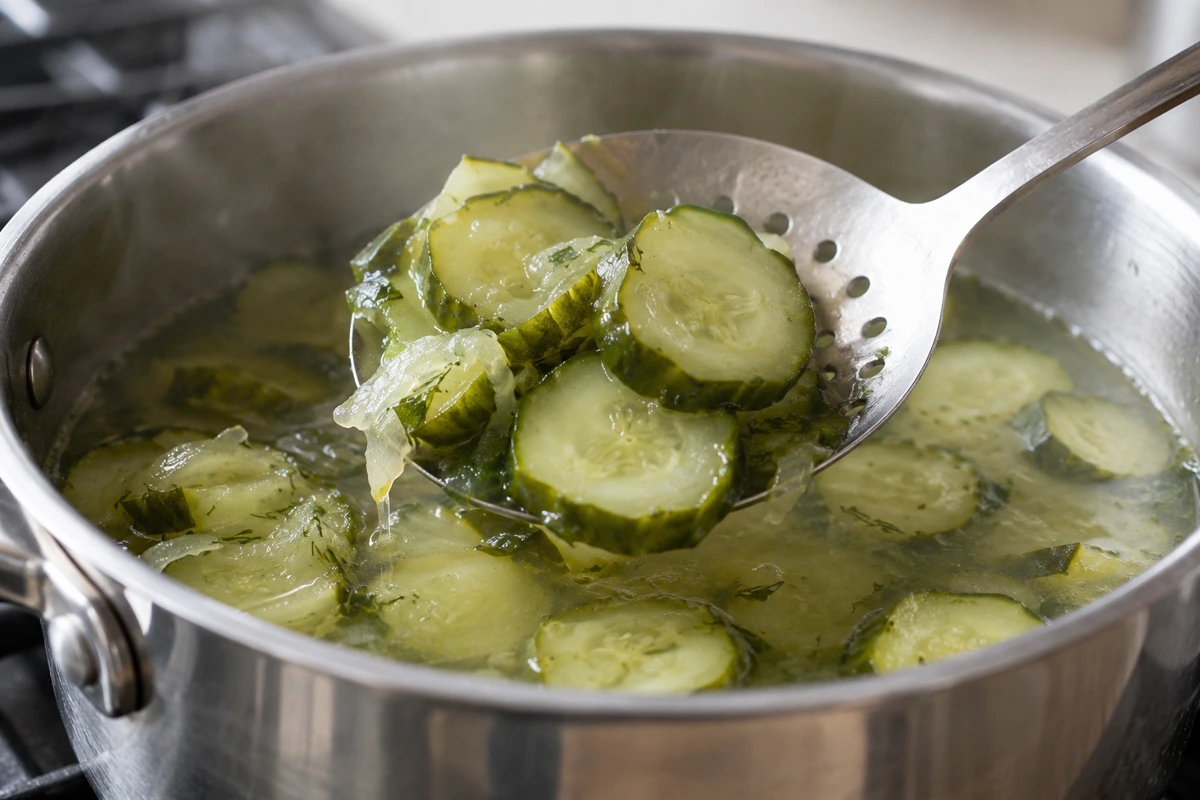
Match the trial to the cut and load. A fresh julienne, a thin frozen round and a thicker joined portion do not represent the same heating situation. Vessel size, starting conditions, liquid volume and mixing also matter. Record the actual process rather than copying one recipe's minutes into an industrial specification. The buyer's technical team should confirm the appropriate safety and preparation requirements for the program.
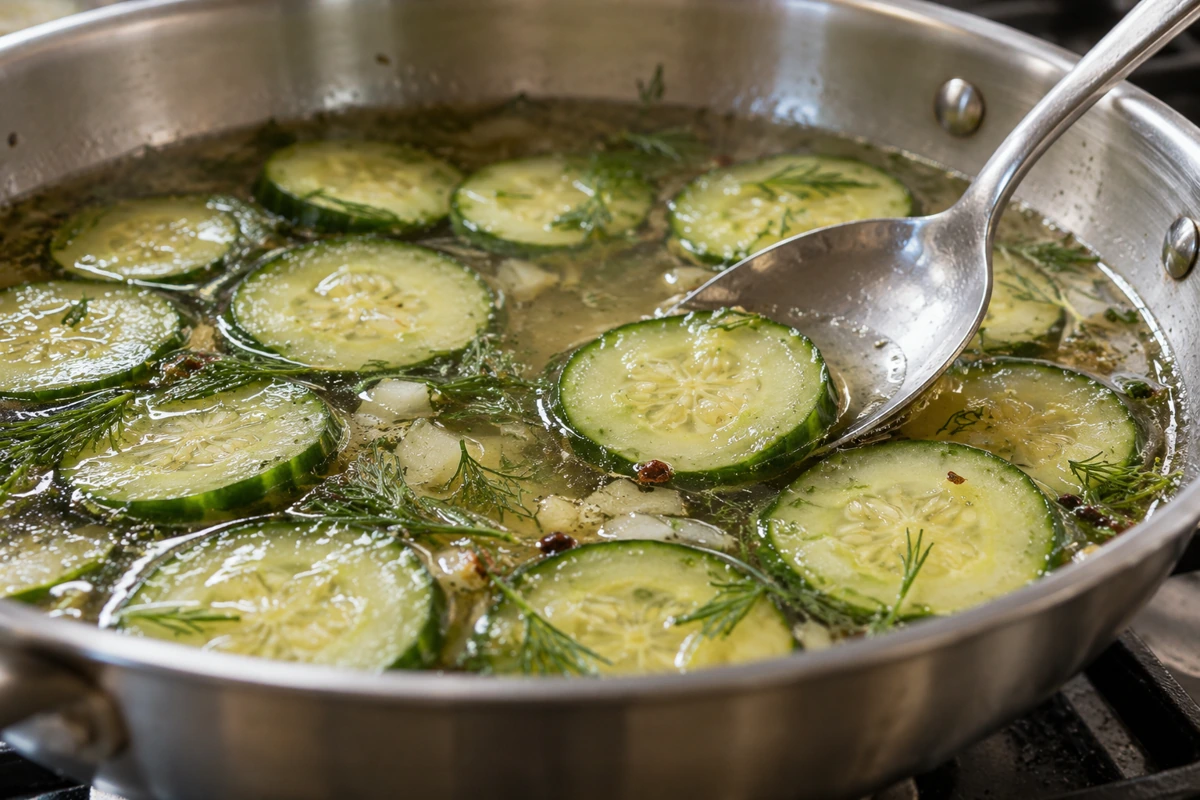
An illustrative shallow-pan preparation; cut, loading and the supported cooking route determine the trial.
For visible rounds, include the normal stirring or pumping action. Gentle hand stirring in a small pan may preserve pieces that break during a larger operation's transfer. Conversely, aggressive laboratory mixing may create damage that routine production would not. The trial should reflect the intended system closely enough to answer a practical question about how the round reaches the serving vessel.
Evaluate at the point of service as well as at the end of cooking. A tender round can continue changing during a hot hold or a later reheat. Record its outline, seed-center integrity and resistance to normal ladling at the relevant stage. If the dish is packed for another kitchen, the preparation performed there belongs in the development plan. The first kitchen's result is only part of the route.
For purees, decide when blending occurs in relation to cooking and any other preparation. Follow the equipment maker's requirements for hot liquids and vessel loading. Record whether the process includes screening and what material is removed. The resulting particle size, color and recovered mass should be judged after the same sequence in every comparison. A changed blending stage can make two nominally identical formulas behave differently.
Keep seasoning adjustments separate while evaluating the cooking sequence. More salt, acid or herbs can mask a weak cucumber note, but it does not establish that the cut or method is consistent. First identify the physical behavior and an appropriate preparation. Then finish the flavor balance in the complete dish, documenting any change that becomes part of the accepted commercial formula.
When a sequence works, write the procedure with the ingredient specification. Include the intended input condition, addition point, supported preparation, mixing and serving route. Operators need enough detail to reproduce the accepted result without improvising a thaw or an extra drain. A clear method also makes it easier to investigate a later complaint about broken pieces or a thinner broth.
Test the sauce after cucumber water enters it
A cucumber sauce needs a defined function. It may need to coat a spoon, spread over a component, remain pourable through a dispenser or hold visible cucumber pieces. Judge it in that role. A sauce that looks thick in a cool sample cup may thin at its serving condition, while a sauce that pours well from a ladle may behave differently in a small pump or nozzle.
Record the cucumber input and any preparation liquid that enters the sauce. If the ingredient is drained, include the recovered mass in the formula and costing. If it is blended with its liquid, assess the full mixture. An ambiguous instruction such as "one kilogram cucumber" can produce different solids and water inputs when one operator drains and another includes everything in the bag.

The sauce's coating and free liquid need assessment at its actual serving condition.
Inspect coating and free liquid after the intended hold. A watery edge may appear around a portion even when the bulk sauce seemed uniform immediately after stirring. Use the same container, serving temperature and observation point for comparisons. Photograph actual trial samples consistently when they are available. An illustrative image in this article explains the observation; it supplies no measurement or acceptance result.
If a thickener or other permitted formulation ingredient is considered, evaluate it within the complete recipe and applicable labeling requirements. Its performance depends on the formulation and process. Do not assume that adding more will correct every cause of thinning or separation. It may also change mouthfeel, flavor release, pumping and the way the sauce behaves after chilling or reheating.
Prepared dairy and cream-style sauces require their own trial if the finished food will be frozen. University of Missouri Extension discusses the potential for milk sauces and gravies to separate after freezing. That is a finished-formula issue. A visible split should not automatically be attributed to cucumber thaw drip, especially if the base changes when frozen without cucumber as well.
Use a reference base when diagnosing a failure. Compare the approved sauce without the cucumber intervention against the intended cucumber formula under consistent conditions. Then change the variable that appears responsible. This proposed comparison helps distinguish an ingredient-water issue from a base-formula or process issue. It does not establish a particular thickener's performance before a real trial has been conducted.
Account for handling losses. A thicker sauce may leave more material on a vessel wall or create another transfer problem. A smoother screened sauce may discard peel and seed tissue. Measure recovered saleable output when the method is tested. The accepted formula should give the required serving result at a practical yield, with its preparation and ingredient costs understood.
Include freezing and reheating when the dish needs them
Decide whether the finished soup or sauce will be served promptly, chilled, frozen, reheated or passed to another operation. Each additional stage can change texture and distribution of liquid. Freezing the cucumber ingredient and freezing the complete dish are separate events. A good result in a freshly cooked saucepan cannot establish the performance of a frozen prepared meal after its final reheating.
Use the actual pack and portion where feasible. Depth and distribution affect the way a meal is handled and reheated, while lid and container design affect practical preparation. Follow the supported instructions for the finished food and the applicable controls in the operator's system. A container chosen for a bench photograph is not necessarily suitable for the intended cooking, freezing or distribution process.
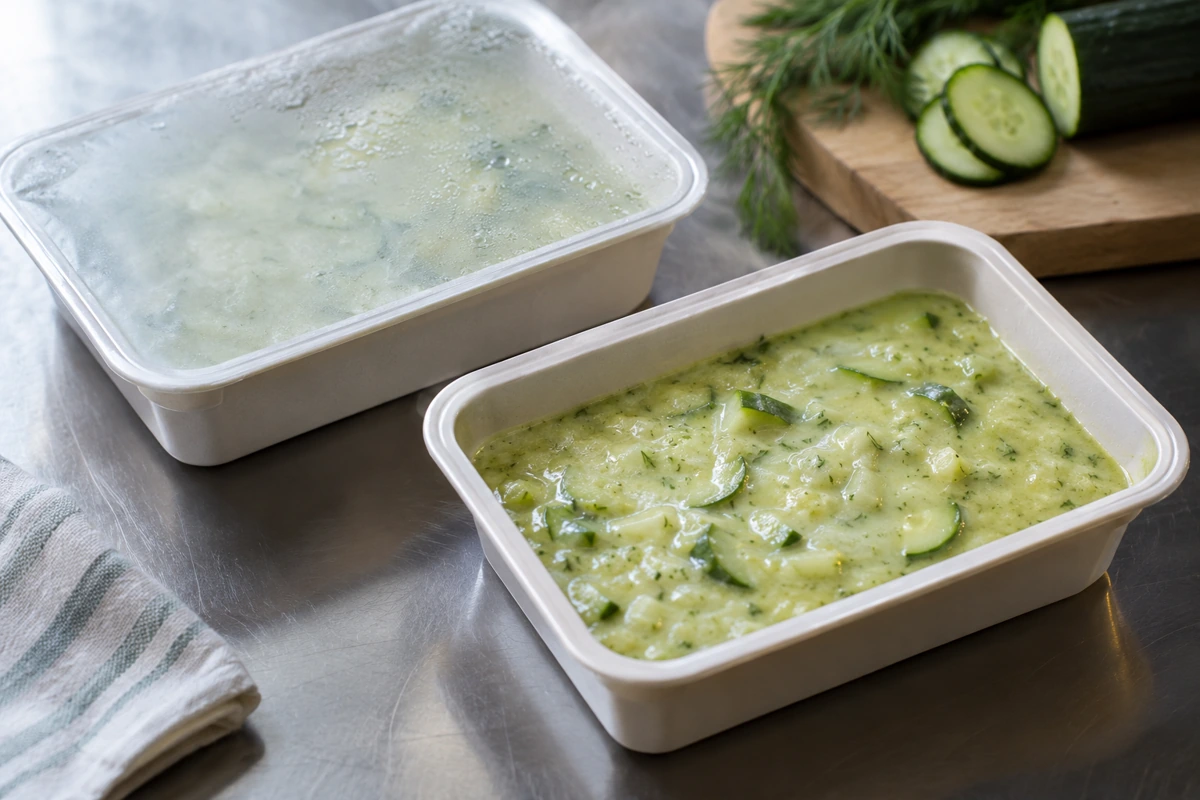
Illustrative frozen and prepared meal states for a finished-formula trial.
Inspect after the complete route. Look at free liquid in the tray, the shape of the cucumber pieces, seed-center condition, sauce uniformity and flavor. Assess what the customer serves after normal stirring or ladling. If a required remix is part of the method, record it. A sample mixed thoroughly by a technician should not be compared with another assessed without its normal serving preparation.
Include the hold that the commercial operation actually needs. A short immediate tasting can miss a watery edge, further softening or uneven distribution later in service. The quality observation interval should be defined alongside the applicable temperature and handling controls. A visually acceptable hold trial does not establish microbiological shelf life; that needs the appropriate finished-product and process validation.
Keep reheating instructions specific to the finished food. A general home-preservation publication cannot validate a factory's prepared meal or another product's pack. The ingredient specification, the complete formula and the final process all matter. If cooking is required for the cucumber, confirm where that requirement is satisfied in the approved route rather than assuming that any warming at the end will be sufficient.
Record sample age and condition when comparing a fresh bench dish with a stored version. A meaningful comparison uses the same formula and identifiable material, with storage and preparation described. Different batches, changing seasoning and different serving temperatures can make the result hard to interpret. Plan the test so that an observed difference can guide a specific decision.
If the final food fails, preserve the distinction between ingredient acceptance and finished-food development. The cucumber may meet its agreed cut specification while the recipe still needs adjustment. It may also show a relevant inconsistency that the supplier needs to investigate. The records should let both teams identify the stage where the dish departed from the accepted result and decide what to retest.
Approve yield and handling before ordering volume
Approve the ingredient against the finished dish and an agreed preparation method. Identify the cut, peel and seed-center expectations, the supported product status and the application observations that matter. The frozen cucumber category provides a starting point for discussion; the current sample and written order specification establish what the buyer accepts for the actual program.
Measure useful yield under the intended method. Record cucumber input, liquid retained or discarded, other formula inputs and recovered finished food. If the sauce is strained or the soup is reduced, include those effects. Cost per frozen kilogram answers a different question from cost per acceptable serving. Use actual trial data when available, with no assumed commercial yield inserted to complete the calculation.
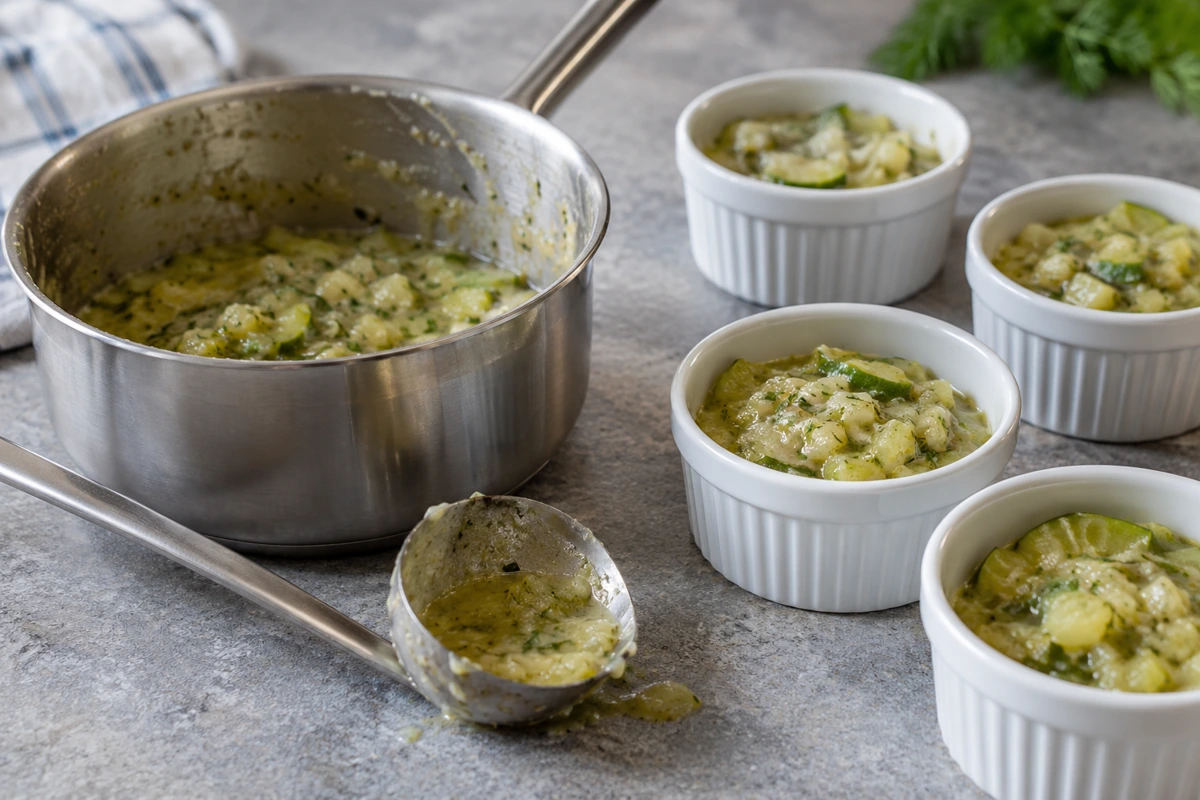
Portioned sauce and pan residue illustrate the difference between batch input and recovered servings.
Ask for representative samples and retain their identity. The sample should reflect the offered cut, preparation and packing rather than a special selection that routine supply cannot match. Agree which changes require notification and renewed approval, such as a relevant change in form or preparation. The right review depends on what affects the dish, not simply whether the product name remains unchanged.
Choose packing for the operation's normal batch and portioning. Confirm the available inner bag and carton, net-weight basis, label information and handling instructions. An ingredient that needs repeated uncontrolled softening to enter the kettle is poorly matched to the line. Resolve the form or dosing problem in development, before volume purchasing makes that workaround part of everyday practice.
At receipt, connect the lot and documents to the approved specification. Inspect packaging and frozen condition, and retain preparation instructions after the outer case is opened. Investigate a discrepancy before using the material in a route whose suitability is uncertain. The buyer's normal hold and disposition process should identify who can release a lot and what evidence is needed.
We help buyers discuss cucumber supply around their actual food, quantity, destination, packing and document needs. Share whether the dish keeps visible rounds or uses a puree, where liquid is retained or removed and whether the finished product is frozen again. That information makes the sample conversation useful. The accepted record should show how the cucumber reaches the customer's bowl or plate and why that result meets the program's needs.
Discuss Frozen Cucumber with GreenLand-food
GreenLand-food is a professional frozen cucumber supplier and manufacturer in China, providing factory-direct wholesale supply for importers, food manufacturers and foodservice programs. We confirm the offered form, preparation status and specification against your intended application.
Send the product form, specification, packing, quantity, application, destination, private-label needs and requested documents so we can discuss a representative sample and the current supply offer.