


Frozen Garlic Scapes for Pesto: Fiber, Particle Size and Flavor
Oct 19, 2026
Leave a message

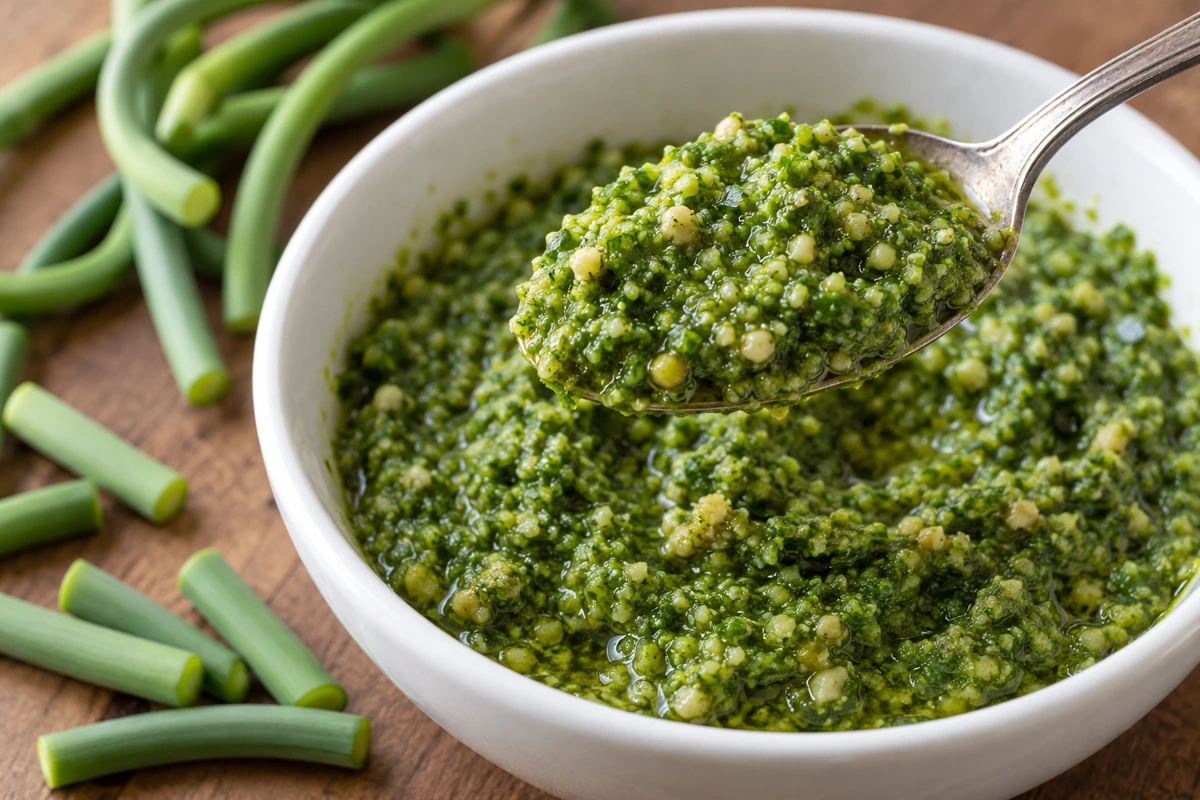
Begin with the pesto you intend to make: a coarse cooked pasta sauce, a spread or a product served without further heating. Those uses need different texture and process decisions. A frozen vegetable must not be assumed ready to eat merely because it will be blended. Confirm the product's preparation requirements before designing the trial, then assess the finished sauce through its actual storage and service route.
Choose scapes for the pesto you intend to sell
Pesto can accommodate a range of textures, but the acceptable range depends on the food it accompanies. A sauce coating hot pasta may work with visible plant particles. A sandwich spread may need a smoother, more even distribution. A dressing passing through a narrow outlet may place another constraint on particle size. Define the finished use before asking whether a particular bag of frozen scapes is suitable.
Garlic scapes are stalks rather than leaves or cloves. Their cylindrical tissue contributes a different structure from basil, and mature or poorly trimmed sections can leave resistant strands. A formulation developed by replacing basil with an equal volume of chopped scapes may therefore need more than a flavor adjustment. Volume also varies with cut size and packing, so use weighed additions when comparing ingredients or scaling a recipe.
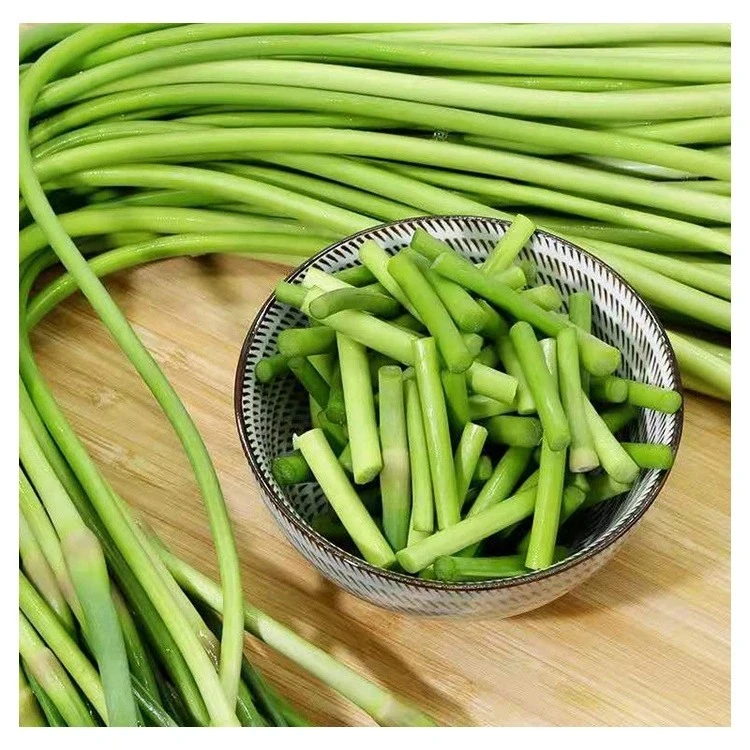
Whole scapes and cut stalk sections provide a raw-material reference for the usable form.
The offered product should be identified by its cut, accepted stalk material and treatment. Ask whether the scapes are raw, blanched or otherwise prepared before freezing and what cooking instruction applies. Illinois Extension describes both raw and blanched freezing routes for scapes. That distinction matters to a pesto trial because prior treatment can change the starting texture and the sensory result.
For a sauce served cold without a further heat step, confirm the ingredient and process suitability explicitly. The FDA's ready-to-cook guidance explains why frozen products may still require cooking. Blending does not replace that required preparation. A commercial cold pesto needs a qualified ingredient route and controls for the complete product, including handling after any heat treatment.
A pesto that will be cooked within another food also needs a clear route. Stirring a spoonful into hot pasta for flavor is not automatically equivalent to a validated cooking step for an ingredient that requires one. Establish the actual preparation before sensory testing. The aim is to evaluate flavor and texture within a process that already meets the necessary safety requirements.
Use the real product photographs to discuss stalk form and cut appearance, then request a representative sample of the proposed frozen SKU. The photograph cannot show the fiber behavior of a new lot or certify its treatment. Our frozen garlic scapes supply page provides the product route for clarifying those order details.
Remove tough material before milling
Trimming determines which tissue enters the processor. The lower cut end and the upper bud area can differ from the main stalk in texture. When preparing whole scapes, examine those areas and remove material that does not fit the intended sauce. When buying cut frozen scapes, ask how trimming is defined and verify the result in a representative sample. A processor cannot reliably compensate for every unsuitable piece hidden in a bag.
The key distinction is between desirable coarse particles and persistent fibers. A small nut fragment can provide texture that a customer expects in pesto. A long plant strand can pull across the tongue or remain after the rest of the sauce has dispersed. Both may look like rough texture in a photograph, yet they produce different eating experiences. Write the acceptance description in terms of the actual problem rather than asking only for a smooth appearance.
Pre-cutting can improve access to the blades. Long stalk sections may circulate unevenly or bridge above the cutting zone in a small processor. Shorter cross-cut pieces present a more manageable input, but they do not remove the need for trimming. Test the actual proposed cut with the equipment rather than assuming that a household recipe's chopping instruction will scale to a larger vessel.
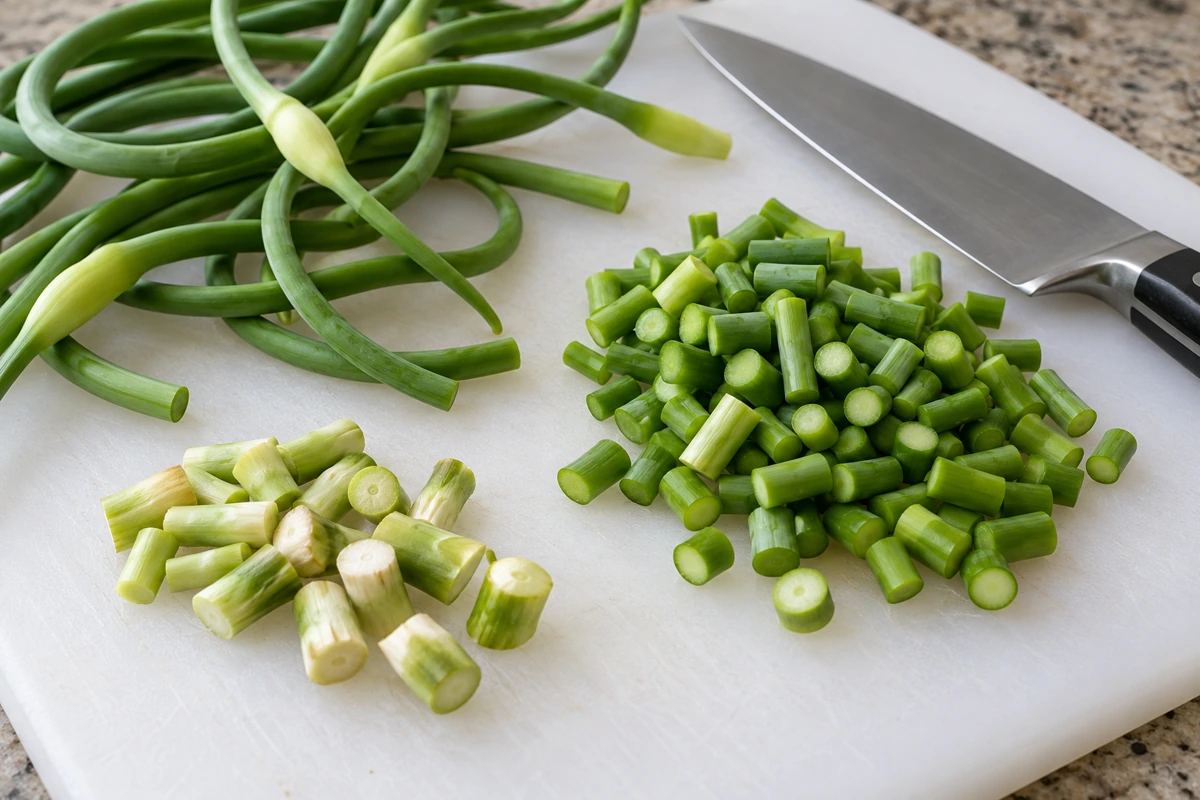
Remove unsuitable stalk material before relying on milling to refine the sauce.
Examine the prepared material before adding expensive ingredients. A small safely prepared scape-only trial can reveal persistent strands that would be harder to locate once nuts, cheese and oil are present. Keep the quantity and method consistent between samples. This preliminary check is a development tool; final approval still depends on the complete pesto and intended serving condition.
If a fibrous sample fails, identify whether the problem occurs throughout the material or in a recognizable subset. Retain examples of the problem pieces and compare them with the original cut. The supplier may need to review the accepted stalk portion or trimming approach. A blanket instruction to blend longer can increase processing time without addressing the underlying material.
Any additional sorting has a yield and labor cost. Weigh the material entering the trial and the material removed before blending. A low ingredient price can become less attractive when a substantial fraction needs rework. Conversely, an agreed prepared cut may reduce handling at the buyer's site. The useful comparison is the cost of a pesto that meets the finished specification through the normal production method.
Control preparation water and ingredient weight
Frozen scapes may release liquid during controlled thawing or required preparation. Decide whether that liquid belongs in the formula before comparing lots. One trial using the full thawed contents and another using only drained pieces will have different amounts of water and vegetable material. Their texture and flavor may differ even when the same nominal starting weight was used.
Choose a weighing basis and keep it visible in the recipe. As-purchased frozen weight is useful for purchasing and inventory. Drained prepared weight may be useful for formulation if drainage is part of the normal process. The relationship between them needs to be measured under a defined method. Avoid describing an ingredient simply as one cup of scapes when the production team needs a repeatable commercial ratio.
Drainage should be controlled enough to compare samples fairly. State the preparation condition, container or sieve arrangement and the point at which the material is weighed. A sample left to drain for an extended interval can differ from one transferred immediately. Pressing or squeezing can introduce another change. Use the method that reflects the actual operation, and record any material loss separately.
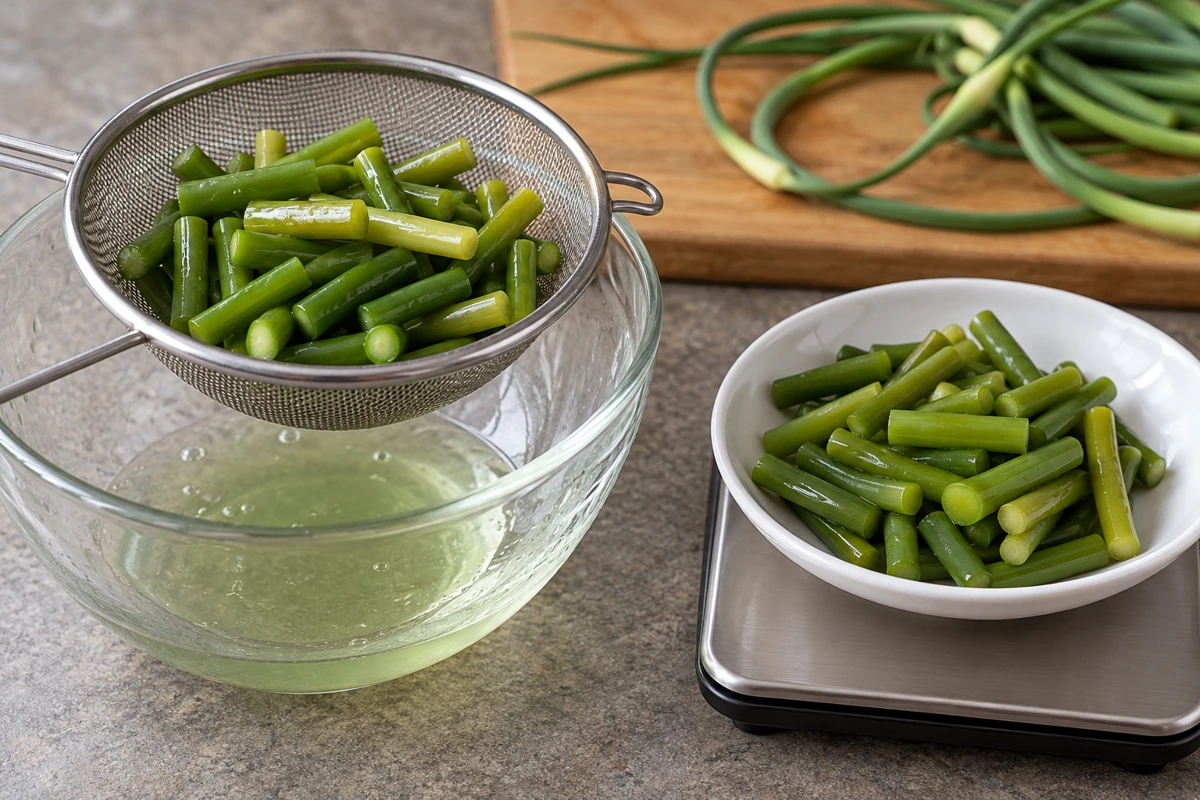
Define whether released liquid remains in the formula before comparing ingredient weights.
Water affects how the sauce spreads and how the other ingredients are distributed. Excess free liquid can create an unwanted watery phase or change the way pesto coats food. A very dry mixture can be difficult to circulate through the cutting zone. The correct balance depends on the recipe and equipment. Adjust it through a controlled trial rather than adding oil repeatedly until the mixture appears fluid enough.
Oil, nuts and cheese each contribute their own structure and flavor. Keep their weights constant while testing the scape input, then adjust the final formulation once the raw-material behavior is understood. Otherwise, a change in nut level or cheese moisture can be mistaken for a difference between scape lots. This is especially relevant when several ingredients are sourced from different suppliers at the same time.
Record the finished yield. Product left on blades, lids and vessel walls is a real handling loss, particularly in small batches. A formulation that appears inexpensive on ingredient weight can produce fewer saleable portions if recovery is poor. Measure the recovered sauce and note whether the normal transfer method changes its texture. These observations connect the kitchen result with the commercial cost calculation.
The preparation-water decision should remain part of the approved formula. If a later operator drains a bag because it looks wet, the recipe has changed. Clear instructions reduce that variability and make an unexpected thin or strong batch easier to investigate.
Build particle size in stages
Particle size is a distribution rather than one number. A pesto can contain many fine particles and a small number of objectionable long strands. An average size may therefore look acceptable while the eating experience remains poor. Inspect the largest and longest material as well as the overall texture, using a method suited to the finished sauce and the buyer's equipment.
For development, establish a staged process that can be repeated:
- Prepare the scapes under the required treatment and drainage method, then weigh the agreed input.
- Reduce the stalk material to the planned initial particle condition using a defined charge and equipment setting.
- Add the remaining ingredients in the selected sequence and continue only as needed to reach the intended sauce texture.
- Recover the pesto, record product temperature and yield, and inspect a thin spread for persistent strands.
- Assess the sauce in the intended food after its complete preparation and service route.
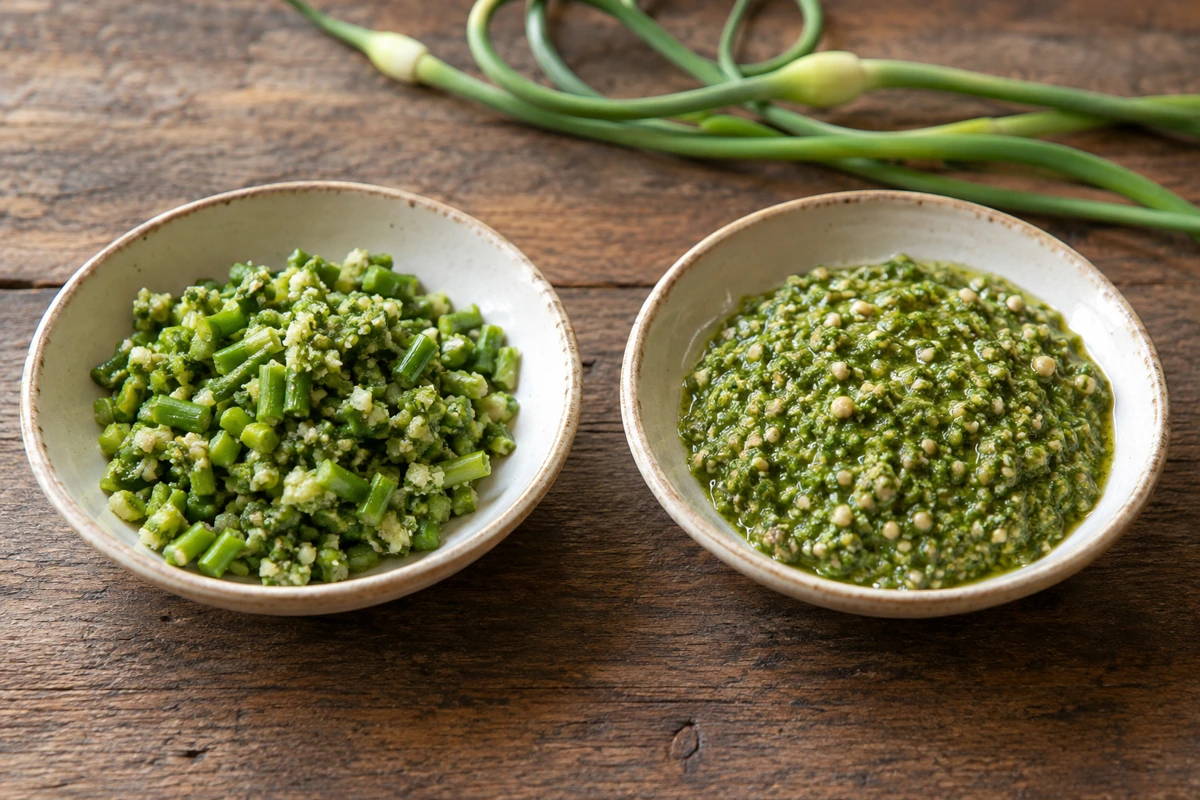
Coarse plant fragments and a finer sauce finish require different processing endpoints.
The sequence gives the team a way to separate plant reduction from final mixing. It is not a universal recipe or a guarantee that a particular machine can process frozen pieces directly. Follow equipment limitations and the product's required preparation. The starting condition of the ingredient should be safe and practical for the actual equipment.
Batch fill matters because material needs to reach the blades or cutting surfaces. An underfilled vessel and a heavily loaded vessel can behave differently even at the same setting. Record the charge weight and the relevant equipment configuration when a trial succeeds. A note that says blend until smooth gives little guidance when the recipe is transferred to another machine.
Monitor the product condition during processing. Extended work can change temperature and the way the mixture flows. If the process includes pauses, scraping or manual redistribution, record them and assess whether they are practical at production scale. A successful laboratory result that depends on frequent unrecorded intervention may be difficult to repeat on a busy line.
Use a simple thin-spread inspection to make large particles easier to see. Place a consistent amount on a suitable plain surface and spread it to a comparable thickness. Examine several portions, because a single spoonful may miss rare strands. For an instrumental or sieve-based method, agree the method and interpretation with the technical team; an oily, heterogeneous sauce can behave differently from a dry particle sample.
The target should match the application. A rustic sauce may benefit from visible particles, while a smooth spread may require a different finish. Avoid pursuing the finest possible texture by default. The desired result balances eating quality, processing time, yield and the recognizable character of the ingredients.
Balance aroma in the finished sauce
Garlic scapes bring a green garlic character that can become prominent when used as the main plant ingredient. The amount that seems pleasant in a small spoonful of pesto may feel different when spread across bread or mixed through pasta. Evaluate the normal serving and the actual food combination. The acceptance question is whether the sauce gives the intended flavor at the planned use rate.
University of Kentucky's scape recipes show scapes used alone or with herbs in pesto. This illustrates formulation flexibility, but it does not establish a universal substitution ratio. A blend with basil, parsley or another ingredient changes the flavor, color and particle mixture. Treat that blend as its own formula and record the ingredient identities and weights.
Salt, acidity, fat and cheese can change the perception of the garlic note. Keep them fixed when comparing scape lots. Once the preferred ingredient condition is established, adjust the complete recipe and taste again. A strong seasoning change can mask a raw-material difference during development, leaving the team unable to explain why a later batch tastes different.
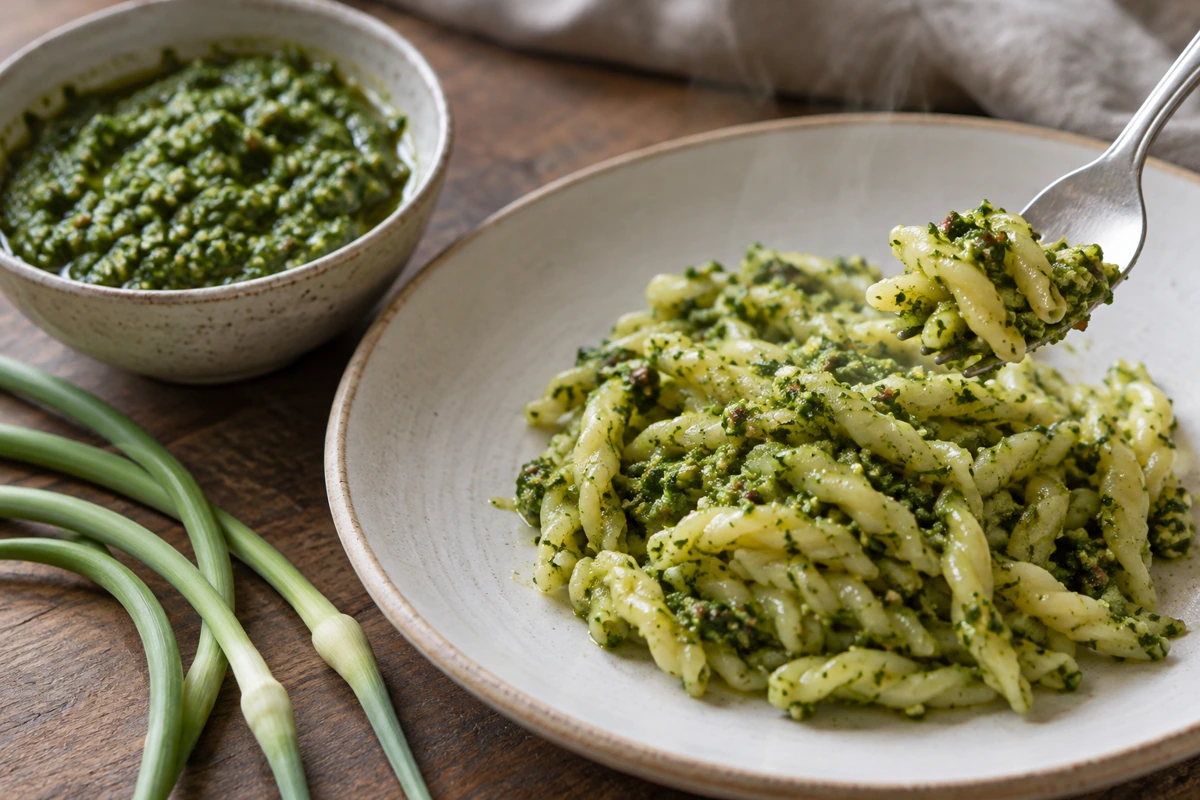
Judge aroma at the intended use rate in the complete serving.
A useful formulation comparison also controls presentation. Give each prepared sample a neutral code, serve comparable portions in the same type of vessel, and keep the serving order from always favoring one candidate. Record the code against the scape lot and formula in a separate trial sheet. If a sample is assessed in pasta, weigh both the sauce and the cooked pasta rather than relying on a spoonful that varies between plates. These small controls help distinguish an ingredient effect from a serving difference. They also make an unexpected preference easier to reproduce before changing the purchasing specification.
Temperature and service route also matter to the tasting context. A cold spread, a room-temperature tasting portion and a sauce mixed into hot pasta are different experiences. Use the intended serving condition and record it. If the product is sold for several applications, identify which one controls acceptance and which secondary uses have also been evaluated.
Distinguish flavor intensity from off-flavor. A stronger garlic impression may require a formulation decision, whereas an unexpected odor or taste may require investigation of the ingredient and handling. Do not use a normal aroma as proof of safety. Sensory review should occur only after the required preparation and alongside the appropriate product and process evidence.
Nuts and dairy introduce their own procurement and labeling requirements. Changes in nut type, cheese or a dairy-free substitute can alter both texture and flavor. They can also change the allergen profile of the finished product. Keep those changes under the buyer's established formulation and labeling controls rather than treating them as interchangeable ways to thicken a sauce.
For a commercial tasting, record a few concrete descriptors and the use rate. Notes such as clean green garlic aroma, persistent strand or uneven coating are easier to act on than delicious or too rustic. Include the panel's serving context and the point in the storage cycle. That record becomes a useful reference for both the purchasing and product-development teams.
Qualify storage and the intended use
Pesto is a complete food system containing more than the frozen vegetable. Its storage and shelf life depend on the formulation, processing, packaging and distribution route. A shelf-life statement for frozen scapes cannot be transferred directly to a sauce made from them. The finished product requires its own assessment and instructions, particularly where it is served without further heating.
For household context, University of Maine Extension recommends refrigerating pesto for short use or freezing it for longer storage. This supports the general distinction between chilled short-term handling and freezing; it does not validate a commercial storage period. A buyer developing retail pesto needs the appropriate technical review for the actual product and market.
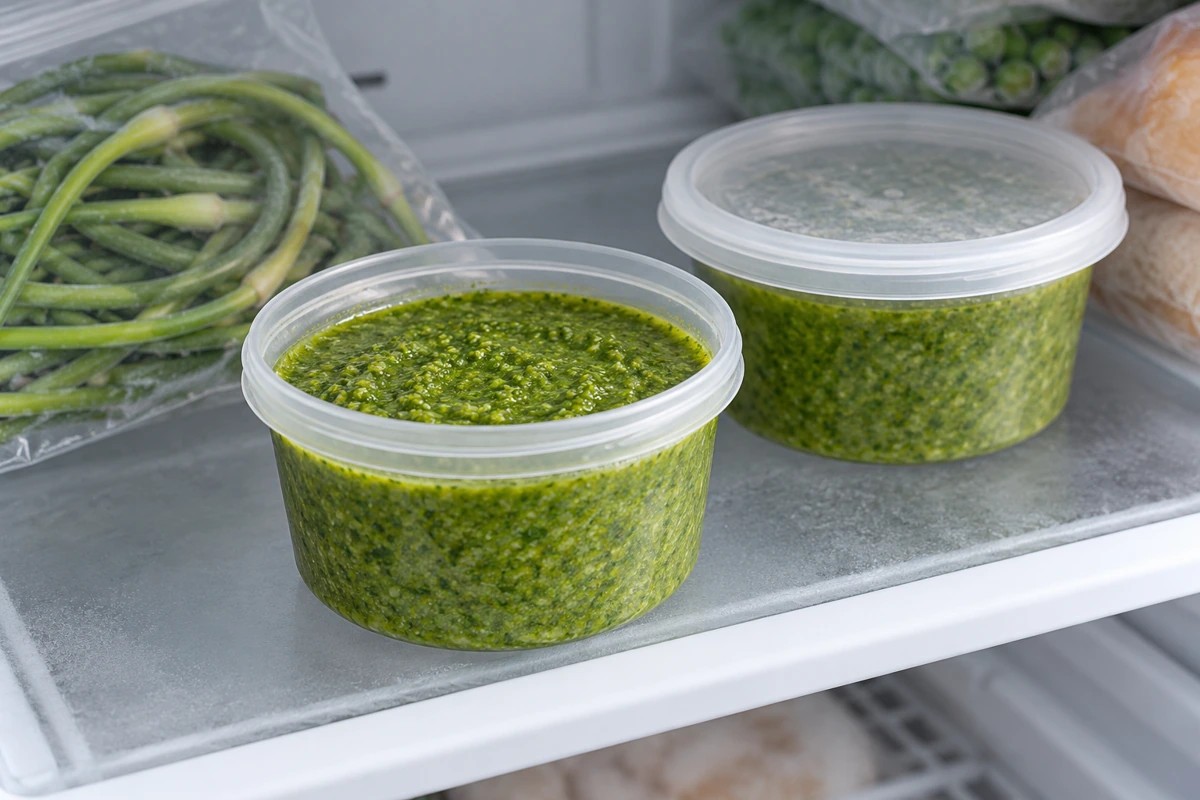
Portion size, headspace and the intended storage route belong in the finished-product plan.
Oil does not make a scape mixture suitable for room-temperature storage. Likewise, adding a little lemon juice for flavor does not establish an acidification process. Keep recipe adjustments separate from validated preservation controls. If the intended product is ambient-stable, that is a distinct development project requiring the relevant expertise and evidence, rather than an extension of a freezer recipe.
The pack should suit the use pattern. Small portions may reduce repeated opening and warming in foodservice. A larger container can suit a controlled manufacturing process if the opening, dispensing and remaining-product handling are defined. Trial the pack through the normal operation, including how the sauce is removed from corners and whether the final portions have the same texture as the first.
If the pesto is frozen, assess the product after the intended thaw and service route. Observe any free liquid or oil separation, particle texture and coating behavior. A sauce that looks uniform immediately after blending may change during storage and thawing. Record whether normal mixing restores the accepted result and whether that mixing instruction is practical for the customer.
For cooked applications, include the final heating step in the quality trial. Some sauces are added early and heated throughout, while others are used near the end for flavor. The safe process and the desired sensory result must both be established for the actual route. Avoid assuming that contact with a hot food provides the required preparation for a cook-required ingredient.
Keep samples and records tied to the formula version. If the scape treatment, nut source, cheese, acid addition or pack changes, review the effect on the finished product. A useful storage trial describes exactly what was made and how it was handled, so that its conclusions can be applied to the product actually sold.
Approve the scape lot through a pesto trial
The strongest approval links the incoming scapes to a repeatable finished sauce. Define the raw-material identity and treatment, the cut distribution, the preparation method and the pesto formula. Then record the equipment, charge, processing sequence, recovered yield and serving condition. This gives a later receiving team more information than a general requirement for scapes suitable for pesto.
Include a method for persistent fibers. Decide how portions are selected for inspection, what constitutes an objectionable strand and how the result is recorded. Any limit should be agreed from the application and sampling plan. This article does not prescribe a universal percentage or particle dimension. A limit copied from another vegetable or sauce may have little relationship to the customer's eating experience.
Use representative material from the proposed lot. A hand-selected sample can demonstrate that good pesto is possible while hiding the variation present in a normal bag. The sample should contain the cut and stalk distribution the buyer will actually receive. Where different packs or production segments need separate assessment, keep them identifiable rather than combining everything into one favorable average.
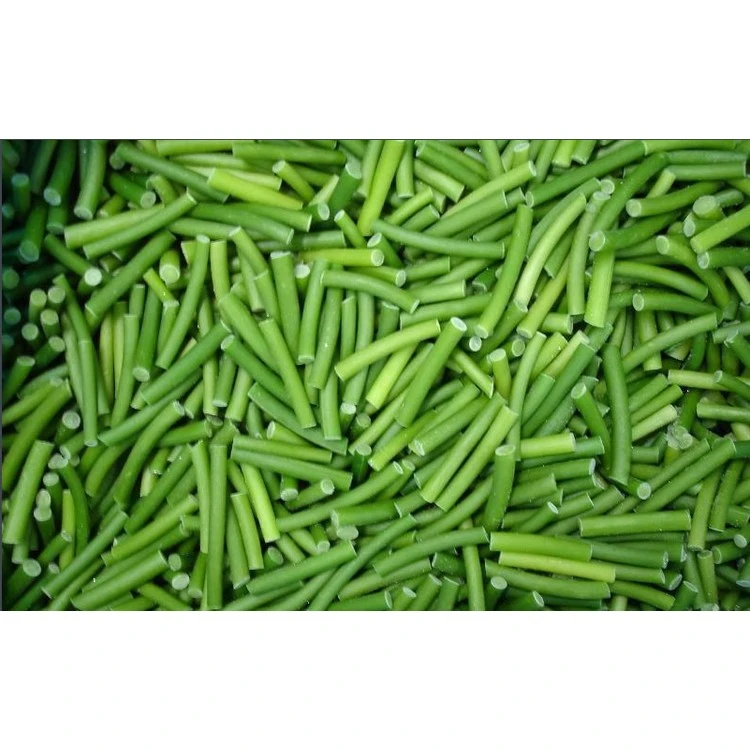
A cut-stalk sample makes the visible length distribution easier to examine.
Review the commercial cost through the finished sauce. Account for trimming or sorting, preparation loss, product retained in equipment and any extra processing time. A slightly different scape specification may be worthwhile if it gives more consistent texture or better recovery. The decision should be based on measured trial performance and the actual quote, without assigning an assumed saving to a product photograph.
At GreenLand-food, we can review your pesto application and proposed cut with the purchasing team. Send the intended cold or cooked use, preparation requirement, packing, quantity, destination and requested documents. If private-label frozen scapes are involved, include the use instruction and artwork requirements. Confirm lead time and order terms after the specification is clear enough to quote.
Retain the approved sauce reference and the method that produced it. A future lot can then be evaluated against the same fiber, particle and flavor expectations. That keeps the buying decision connected to the food the customer eats and makes changes easier to investigate when an otherwise familiar frozen ingredient behaves differently.
Source frozen garlic scapes with GreenLand-food
GreenLand-food is a professional frozen garlic scapes supplier and manufacturer in China, providing factory-direct wholesale supply for foodservice, importers and food manufacturers.
Send your product form, specification, packing, quantity, application, destination, private-label needs and requested documents. Include your prepared-product reference so we can discuss the cut and order requirements.