


Frozen Hami Melon Wedges in Fruit Preparations: Softening and Portion Yield
Oct 19, 2026
Leave a message

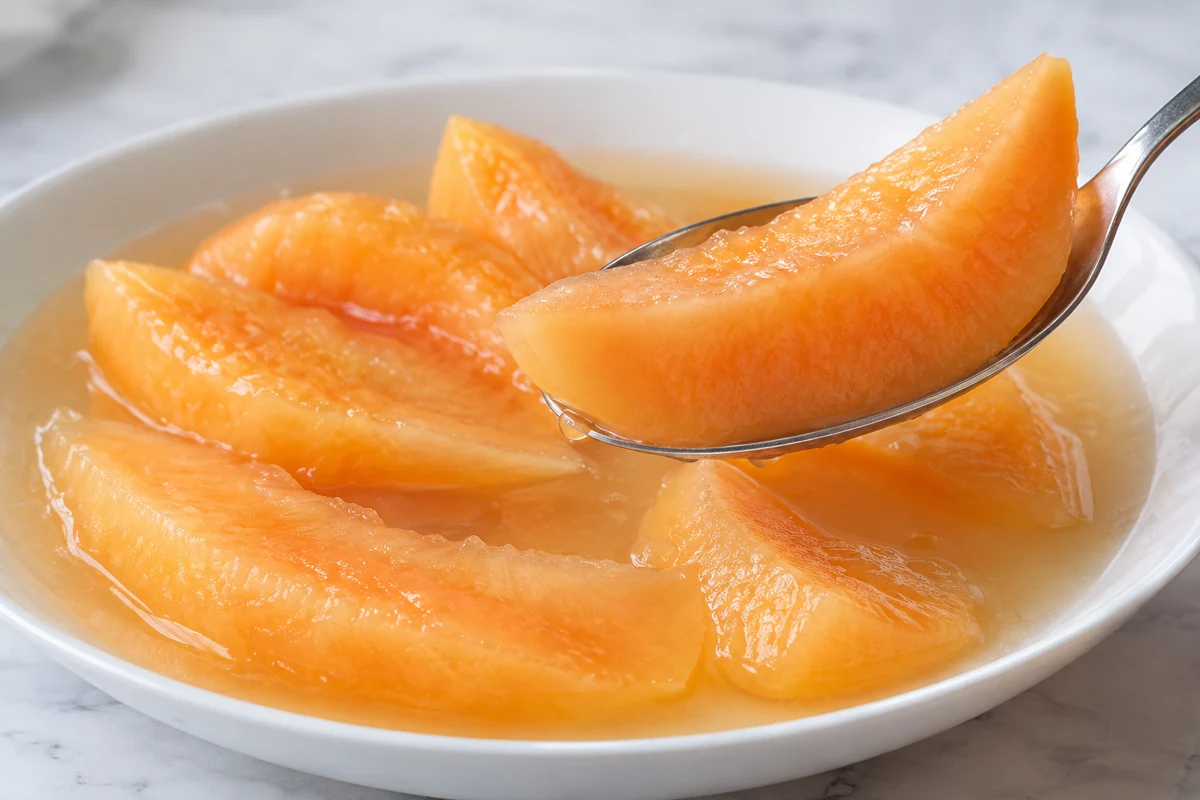
For a smooth base, softening may be acceptable because the fruit will be dispersed. A preparation sold with visible wedges needs a different assessment: the pieces must survive addition, filling and serving with a texture the customer accepts. The working specification should therefore connect the frozen cut to the finished food. We help purchasing teams establish that connection through an approved sample, a stated handling route and a yield calculation with clear boundaries.
Begin with the fruit preparation and serving route
Describe the finished product before choosing a wedge grade. A chilled fruit component spooned over a dessert presents a different task from a cooked fruit filling or a preparation blended before filling. The first may depend on a few attractive pieces in each serving. The second may tolerate considerable breakdown. If these uses share the same purchasing description, the application team can accept a sample for one route while production expects it to work in another.
Write down whether the melon enters frozen, partly thawed or fully thawed, and whether any separated liquid is included. State the preparation's consistency at addition and the utensil or mixing action that moves the fruit. These details define the mechanical conditions the wedges will face. A spoon moving through a thick base can push against softened fruit differently from a gentle fold in a shallow vessel. A successful trial should describe that contact closely enough for the next operator to reproduce it.

Melon dice are a separate cut, with their own size and handling requirements.
Wedges also need a practical size description. Length alone leaves their thickness and mass uncertain. A long, thin wedge may look generous in a tray but fold or tear during portioning; a short, thick piece can create an uneven fruit share. Agree which dimensions matter, how tapered ends are treated and whether a serving is controlled by mass, piece count or both. Photograph the approved cut beside an appropriate scale reference in the actual specification file.
Melon dice are a separate option when a distributed inclusion is more useful than a large curved piece. The current product photograph shows that different form; it does not establish that its texture or processing history matches the wedge sample. A switch from wedges to dice requires its own approval because it changes the visible fruit, the number of pieces per kilogram and the contacts made during mixing. Our frozen Hami melon supply page describes the cut forms to confirm for an order.
Define the customer's eating experience with comparable servings. A wedge that looks appropriate in a large foodservice bowl may be awkward in a small retail cup, especially when the customer has a short disposable spoon. Include the actual cup depth and opening in the trial. The cut should be easy to collect with the rest of the preparation, without leaving the last portion with a large piece that the serving utensil cannot divide comfortably.
Finally, identify the intended consumption route. A chilled preparation with no later heat treatment needs ingredient and process evidence appropriate to that use. Freezing alone does not establish ready-to-eat status. Any cooking, cooling and refrigerated holding controls belong in the processor's validated system. An application trial can assess the appearance and texture of a wedge without proving that the whole production route is safe or establishing its commercial shelf life.
What softening changes in wedge handling
The attraction of fresh Hami melon often includes a firm bite. That fresh-fruit description is an unreliable acceptance target for a frozen ingredient after complete thawing. Ice formation and subsequent thawing can alter the tissue's ability to retain water and resist handling. The National Center for Home Food Preservation discusses serving frozen fruit while some ice remains to moderate the perception of softness. A commercial preparation held fully chilled must be assessed in that actual state rather than approved from a still-frozen tasting sample.
Softening has several visible consequences. A wedge may keep its overall outline but compress under the serving spoon. Its tapered end may separate while the thicker central part remains intact. Small fragments can become suspended through the base, increasing the impression of fruit while reducing the number of recognisable wedges. These outcomes affect presentation differently, so a single description such as "good texture" gives the supplier little useful direction.
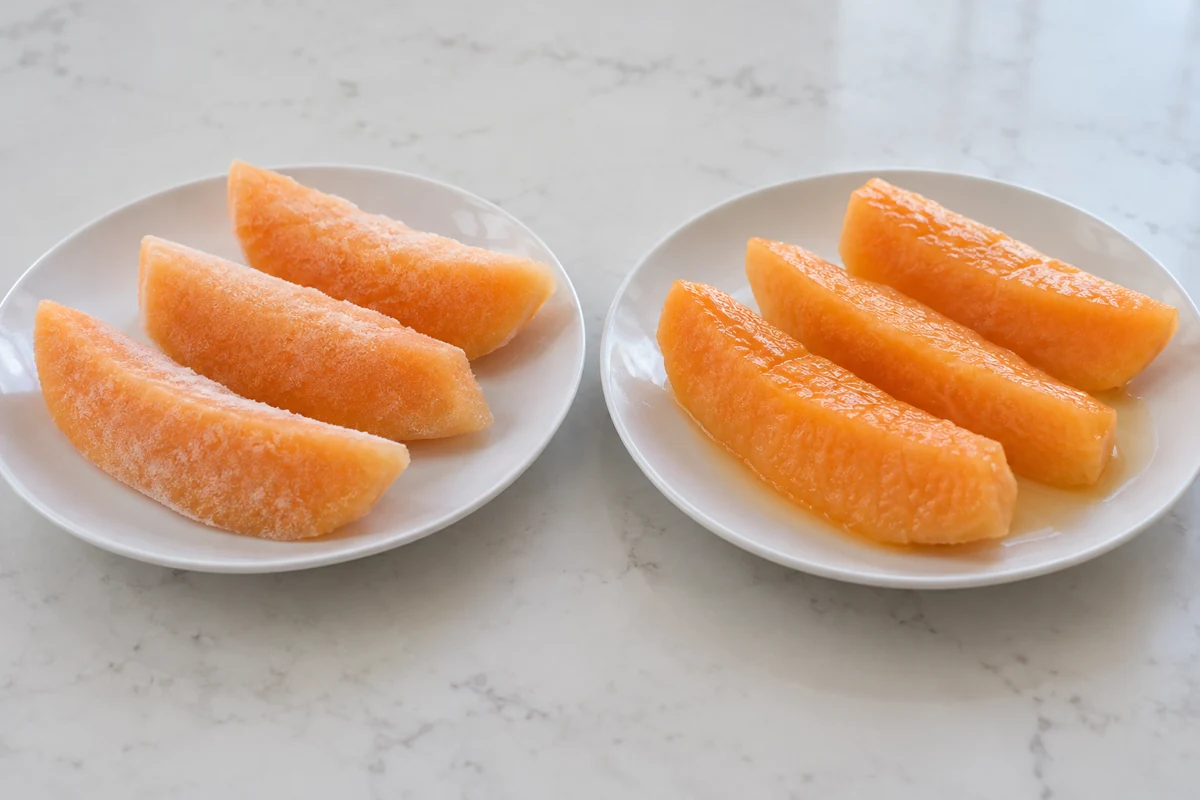
A thawed wedge can retain its outline while losing the crisp bite of fresh melon.
Choose an observation that corresponds to the finished use. For a spooned preparation, assess whether a typical wedge can be lifted, transferred and released with the normal utensil. For a filling that is subsequently spread, check what remains after that action. A development team may record intact-piece mass or a defined visual class, provided it fixes the observation method. Such a class is a proposed purchasing tool; it is not a universal Hami melon standard or a substitute for the customer's sensory approval.
Thawing conditions deserve attention because the same frozen material can look different at different endpoints. A firm center and a softened exterior can give an encouraging first impression that disappears during the finished hold. Record sample depth, temperature control and the endpoint used for comparison. The published frozen-Hami thawing study by Wen and colleagues examined several methods with different quality outcomes. Its particular equipment settings should not be copied into a factory instruction; its relevance here is that the method influences the result being judged.
Sensory approval should also distinguish tenderness from undesirable breakdown. A soft, coherent wedge may be pleasant in a spoon dessert, whereas fibrous outer tissue or a tough retained peel strip can be objectionable even when the central flesh is tender. Ask assessors to describe the feature they reject and retain an appropriate reference. That detail allows a trimming issue to be corrected without mistakenly attributing every poor eating experience to freezing.
Compare sweetness and aroma at the same serving temperature too. A still-frozen sample and a fully chilled portion differ in more than mechanical firmness, which can influence a panel's overall preference. Keep flavor comments separate from the physical piece classification, then review both against the application. A lot may meet the desired visible wedge share and still need a different formulation balance. The physical test should make that discussion clearer rather than compressing every response into one score.
Keep thaw liquid in the formulation decision
When a wedge releases liquid, the preparation receives two linked fractions: retained fruit tissue and separated juice. Removing the juice changes the material entering the formula. Keeping it changes the amount and timing of liquid in the base. Neither choice has a universally better yield. The useful decision is to select the practice that suits the finished food, then apply it consistently to the approval sample and the commercial ingredient.
A drained fruit trial should specify where drainage starts and finishes. An operator who waits until the basket looks dry may remove a different amount from one who follows a stated endpoint. Pressure, shaking and a deeper pile of fruit can also change the collected fraction. If the production route drains the wedges, use a repeatable procedure and record the retained mass as well as the recovered liquid. Keep the observation cold and within the site's food-handling controls.
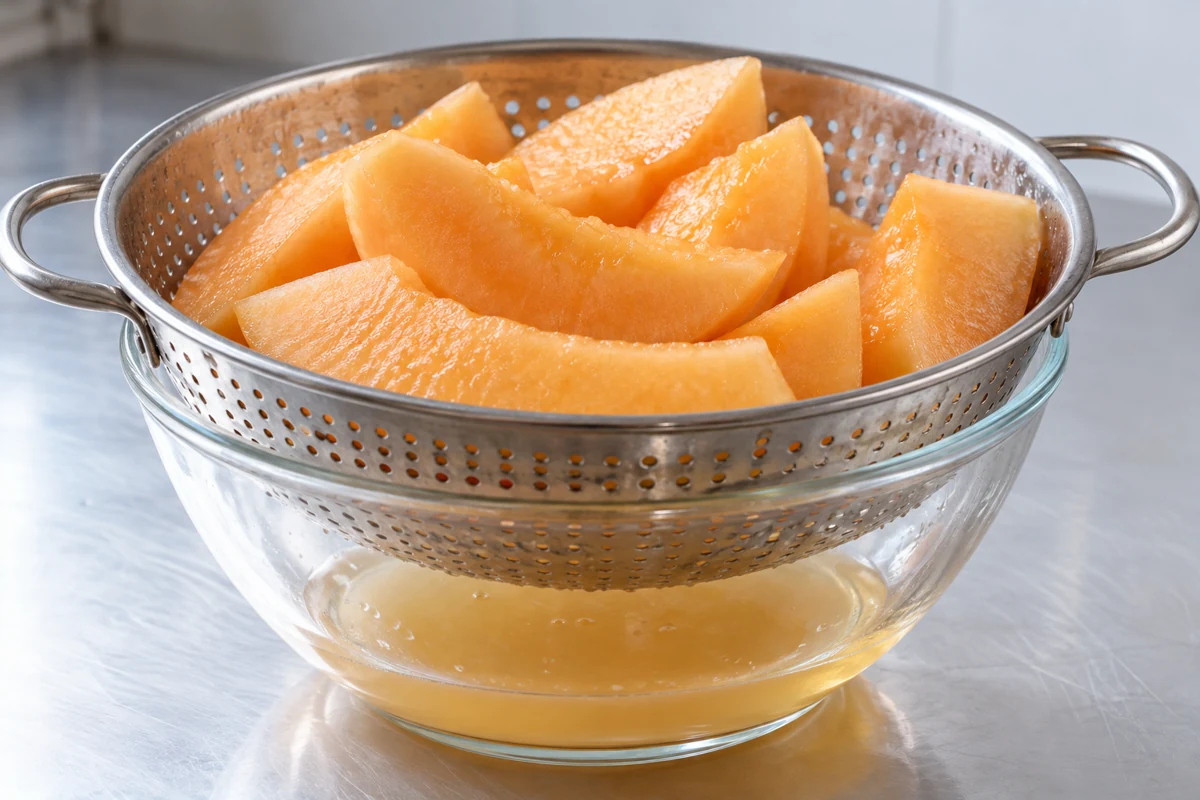
Record whether recovered liquid enters the formula or leaves the batch.
If the formula retains the liquid, charge it deliberately. Juice added early can become part of the base before the delicate pieces are folded in. That may help the team manage concentration and mixing, but it also creates a separate addition to control. A trial needs the actual quantities and sequence. Do not describe liquid as "lost" when it was returned to the preparation, and do not calculate fruit concentration from the drained pieces while quietly adding all the juice back into the batch.
Released juice can influence flavor as well as water balance. The amount of soluble material in that fraction varies with the fruit and the test. If soluble solids matter, measure the relevant fraction under a stated method. A refractometer reading of the juice alone does not describe the whole wedge or establish the finished preparation's composition. Take the measurement needed for the formulation decision, and record what was sampled rather than assigning one convenient reading to every part of the fruit.
The GreenLand discussion of frozen versus thawed ingredient loading explains why starting state and liquid handling can change a kettle trial. For melon wedges, this becomes a practical batch-sheet detail: identify frozen input, separated liquid, retained fruit and any liquid returned later. Once those entries are visible, the team can compare two grades without confusing a drainage change with a raw-material improvement. The finished concentration still needs to be checked on the actual product.
Any thickener adjustment should be evaluated in the finished preparation. A base made firmer to absorb extra liquid can change how the spoon moves through the fruit, how the product fills and how it feels in the mouth. Recheck piece retention after that change rather than assuming that improved liquid control leaves everything else unchanged. If the formulation is intended for a dairy component, test the complete combination and its planned hold; performance in the fruit base alone is only an intermediate observation.
Add wedges at a stage they can survive
The preparation process determines how much structure the fruit must retain. An early addition may expose wedges to more agitation and heat, while a later addition may reduce some of that contact. A late addition can also create a different temperature history and distribution problem. The processor must choose a sequence compatible with the validated process. Ingredient quality advice cannot authorize moving fruit beyond a required safety step or reducing an established treatment.
Within that approved process, examine the contacts that damage fruit. A narrow transfer point, repeated scraping, deep container or aggressive stirring can break softened wedges after the ingredient has passed receiving inspection. A small kitchen trial using gentle hand folding may therefore overestimate the result on a production line. Identify the real transfer, mixing and filling actions, then reproduce the relevant stresses at a useful pilot scale before committing to the commercial cut.
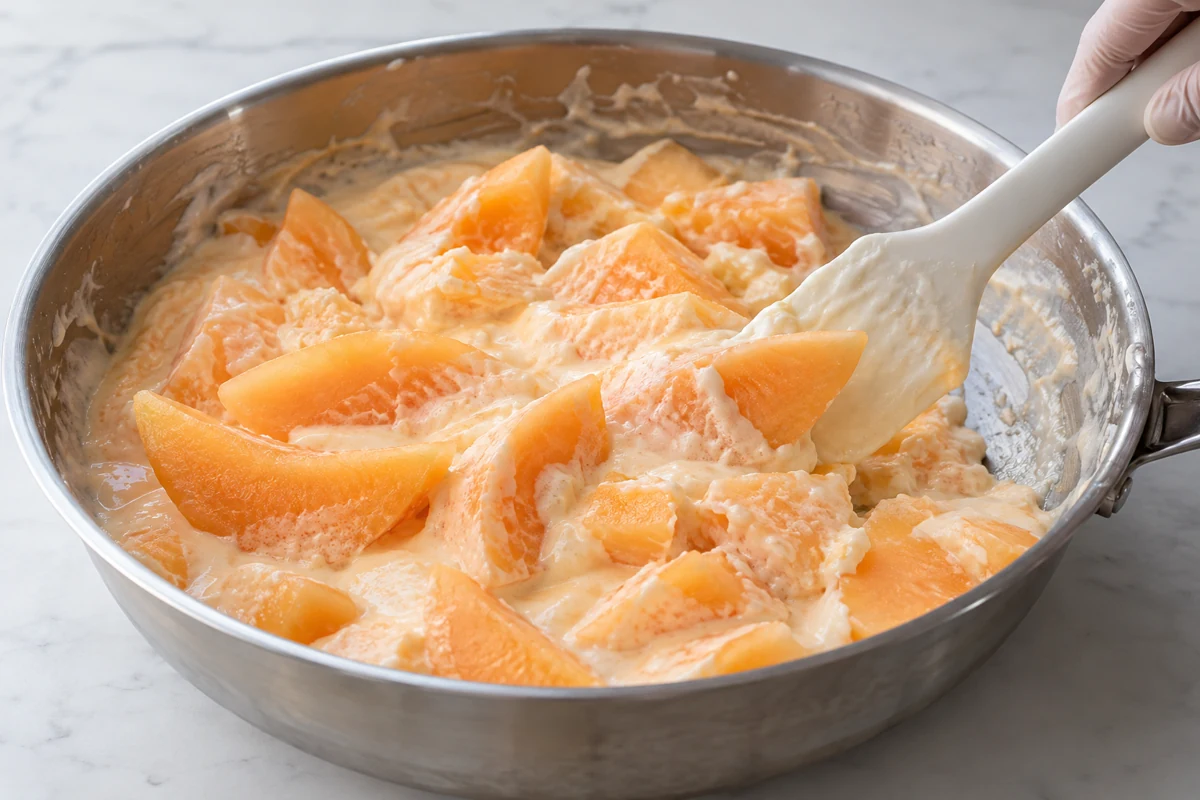
The addition stage and the contact with the utensil influence visible piece retention.
Where possible, change one handling factor at a time during development. If a new trial uses thicker wedges, shorter mixing and a more viscous base together, improved piece retention cannot be assigned to any one change. An initial comparison can establish whether the combined system works, but a later purchasing decision may require a more controlled trial. Keep the original approved condition available so that a promising adjustment can be checked against a stable reference.
Frozen addition also changes the heat that must enter the batch. Two portions with the same nominal melon mass can have different thermal effects if one is hard frozen and the other is thawed. An operator may respond by extending the process, which can alter evaporation and texture. Record the time and condition at addition, the relevant process endpoints and final net mass. That record helps explain the application result without turning a longer heating time into a claim of inferior fruit.
After mixing, look at the fruit in the filled pack. A top sample from the vessel can look different from the final portions if large pieces settle, float or are collected early by the filling action. Compare representative fills across the run, including the normal pauses that the line experiences. The question is whether customers receive the expected fruit, not simply whether an attractive sample can be selected from the vessel immediately after a successful trial.
Calculate portion yield after the finished hold
Define each yield before using it to compare quotations. Drained fruit yield measures retained tissue after a particular drainage procedure. Intact-piece yield measures the share meeting a stated physical definition. Finished preparation yield includes the base and any retained liquid. Saleable portion yield measures portions that meet the agreed serving requirement. These quantities answer different commercial questions, and their denominators should remain visible in the costing sheet.
Consider a deliberately hypothetical example. A 10 kg fruit input leaves 8.6 kg of retained fruit after a defined drainage step. Of that retained fruit, 7.4 kg meets the agreed intact-piece description. The drained yield is 86% of the starting fruit mass, while intact-piece yield on the same starting basis is 74%. Reporting 7.4 divided by 8.6 gives about 86% intact pieces within the drained fraction. All three calculations can be correct, but only with their stated denominator.
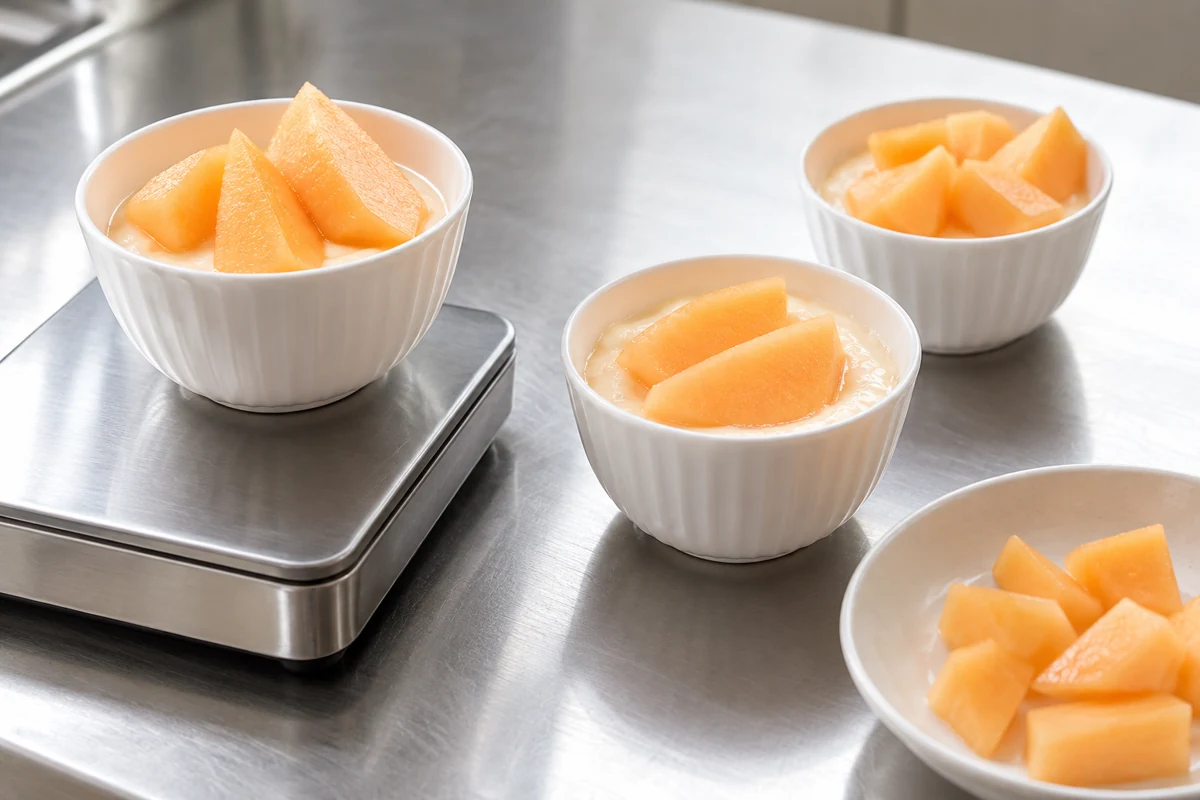
Check piece distribution and usable servings after the actual portioning step.
If the 1.4 kg of recovered liquid is returned to the base, it remains part of the formulation. It does not restore the missing intact pieces. Conversely, a preparation that intentionally disperses the fruit may use the smaller pieces successfully. State which fractions are acceptable for the application before calculating waste. A purchasing team can then compare the cost per kilogram of acceptable fruit or per saleable portion without discarding useful material simply because it no longer resembles a wedge.
Portion requirements can make this calculation more demanding. A dessert cup may need both a target fruit mass and a minimum visible piece presence. Dividing the batch's total fruit mass by the desired fruit mass per cup provides a theoretical number of portions. Actual output may be lower if large pieces are distributed unevenly, if the last fills contain mostly sauce, or if handling leaves material in the vessel. Weigh and inspect actual portions across the fill rather than using the theoretical count as a confirmed production result.
Assess the portions after the intended hold and at serving condition. Separation that appears later can change the eating experience even when filling weights were accurate. Record whether the hold is a development comparison or part of an established commercial process. Use the accepted finished result for costing, including legitimate rework or other use only when the processor permits it. A low invoice price becomes useful when the approved portion requirement can be met reliably from the delivered material.
| Measure | Numerator | Basis / decision |
|---|---|---|
| Drained fruit yield | Retained fruit mass | Initial declared sample mass; drainage method fixed |
| Intact-piece yield | Mass meeting the piece definition | Initial sample or drained fruit; identify which |
| Saleable portion yield | Servings meeting the finished requirement | Actual filled portions after the agreed hold |
Match wedge grade and pack to the operation
An order specification should describe the actual wedge and its preparation. Confirm flesh color, size range, permitted taper, rind-removal boundary, seed-cavity cleaning and broken-piece treatment. Pale outer flesh and external rind can require different definitions. The genuine product photograph shows visible outer bands on the wedges; the image alone cannot establish that the buyer's peeling requirement is met. Agree the boundary on the sample and reflect it in the written defect description.
The USDA frozen melon-ball standard offers a useful reminder that color, uniformity, defects and character are separate quality attributes. It applies to melon balls within its own scope. Its grades and scores do not automatically classify frozen Hami wedges. For this cut, use the buyer's appropriate requirements and clearly identified methods. If a customer requests a named grade or formal inspection, establish its applicability before incorporating the wording into a quotation.

Frozen wedges with visible pale outer bands; agree the rind-removal boundary on the approved sample.
Pack size affects staging and yield. An inner bag that suits the batch size can limit repeated opening and prolonged exposure of unused fruit. A large carton may be economical for a line that consumes it promptly under controlled conditions, while smaller packs can fit intermittent production. Assess the liner, seal and handling route with the actual fruit. Avoid assigning a universal pack weight or shelf life from another supplier's listing; the confirmed SKU and supporting evidence should govern those details.
Ask how free-flowing condition will be checked on receipt. A few naturally contacting wedges differ from a substantial frozen mass that needs force to separate. Breaking a clump mechanically can create fragments before the application begins. Record the observed condition alongside carton integrity and the agreed temperature history. A single clump or visible frost pattern does not establish its cause, so assess the wider shipment evidence before making a cold-chain conclusion.
The commercial file should connect the approved cut, sample identity, ingredient declaration, packing and shipment lot. Confirm any additives or processing aids instead of assuming that a firmer sample received a particular treatment. Destination documents and microbiological criteria need agreement for the actual intended use. GreenLand-food can work through these inputs with the purchasing team so that the quoted material, approval sample and receiving description refer to the same ingredient.
For repeat orders, identify which changes need renewed approval. A new cut range, revised trimming boundary, different inner pack or material change in the declared preparation can affect the previous application result. The buyer and supplier should agree how those changes are communicated. Keep the approved version with the purchase specification so that a later comparison uses the correct reference, especially when several melon forms appear in the same procurement system.
Approve a repeatable application trial
Start the approval trial with the decision it needs to support. A first development run may establish whether the wedge is suitable for a spooned preparation. A supplier comparison needs comparable sample condition, formula and handling. A production change may require evidence across the actual fill and finished hold. Keeping that purpose explicit prevents a convenient kitchen result from being treated as proof of every commercial outcome.
Record the fruit lot, cut, pack, starting state, drainage practice and input masses. Add the preparation formulation, addition stage, relevant mixing or transfer settings, final net mass and filling sequence. These entries should be concise enough for routine use but specific enough to reproduce. Retain observations of the fruit before addition and in representative finished portions. A sample photograph helps communicate the accepted appearance when it is linked to the actual trial record.
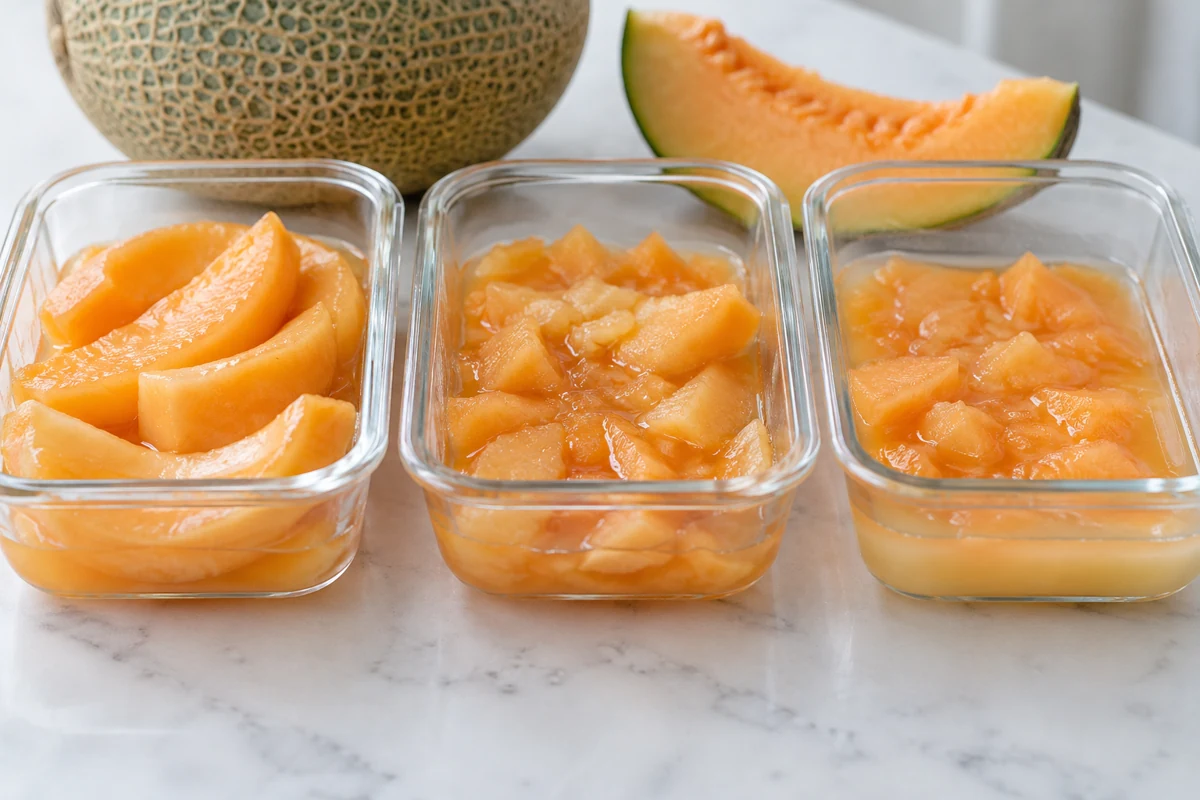
Compare retained portions at the agreed hold and serving condition; these are illustrative samples.
Compare repeated portions or runs where the commercial decision depends on a small difference. If one sample yields slightly more intact pieces, ordinary variation in fruit distribution or operator handling may explain the result. Repetition helps establish whether the difference is consistent under the proposed method. Report the range or individual results alongside the average when that variation matters, and avoid presenting a single favorable portion as the expected lot performance.
Agree what happens when a commercial lot misses the approved condition. The buyer may need a review sample, a documented retest, a restricted alternative application or a hold pending investigation. Those actions depend on the contract and the processor's controls; they should be settled before a delivery dispute. A change in use cannot excuse a safety failure, and a quality retest must preserve the original result and sample identity rather than replacing inconvenient evidence.
The most useful approval ends with a short description of the material and the result it must deliver: the chosen wedge grade, how liquid is handled, the accepted portion after holding and the method for checking it. That gives the supplier a concrete target and gives production a meaningful receiving reference. When the cut, process and serving are connected in this way, portion yield becomes a repeatable commercial observation rather than an expectation based on frozen weight alone.
Continue reading about fruit handling and testing
Compare frozen and thawed addition while controlling the input state, charge sequence and final preparation.
Understand what a controlled stress trial can establish before using it to approve handling or storage.
See why a liquid-loss measurement needs companion observations when piece structure matters.
Source frozen Hami melon with GreenLand-food
GreenLand-food is a professional frozen Hami melon supplier and manufacturer in China, providing factory-direct wholesale supply for importers, food manufacturers, foodservice distributors, and private-label programs.
Send the product form, specification, packing, quantity, application, destination, private-label needs, and requested documents.