


Frozen vs Canned Kidney Beans for Meal Production: Cook State, Pack Liquid and Texture
Oct 19, 2026
Leave a message

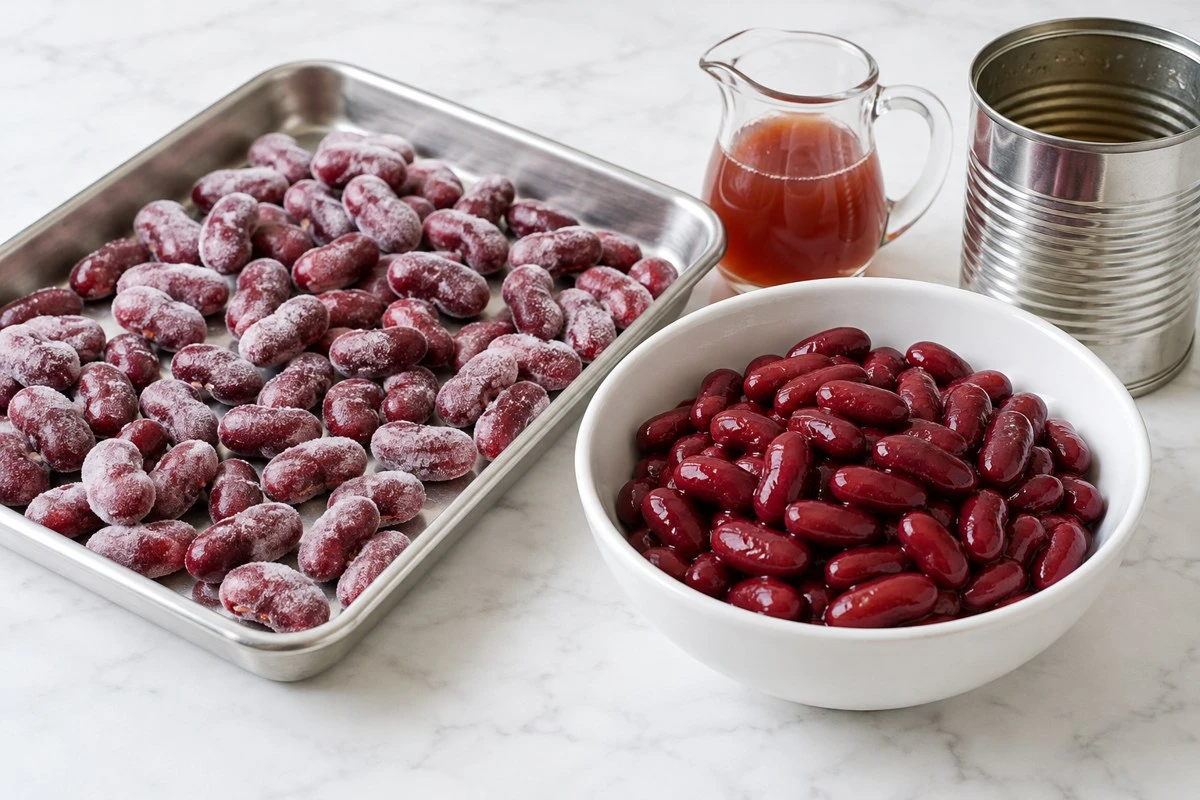
For a manufacturer changing formats, the decision is usually a combination of recipe work and operational work. Canned beans bring a defined liquid and seasoning system and ambient storage before opening. Frozen beans require a frozen distribution route and may offer convenient dosing in the agreed form. Either ingredient can perform poorly if its cooking declaration, texture or handling requirements do not fit the line.
At GreenLand-food, we discuss the frozen ingredient against your current meal and preparation method. The following comparison is designed to help purchasing, development and quality teams prepare that discussion. Numerical examples are proposed calculations using hypothetical measurements, not quoted prices, supplier guarantees or completed production tests.
Compare two defined ingredients at the same cooking state
Before comparing texture or cost, establish what each ingredient is. For canned kidney beans, read the product identity, ingredient declaration, net contents, drained-weight information where supplied, storage instruction and intended use. For frozen beans, add the explicit cooking-state declaration and required preparation. "IQF" explains a freezing format; it does not identify a validated cooking treatment. Both specifications should refer to the actual SKU being sampled, rather than a general product family.
This is especially important for red kidney beans because raw or inadequately cooked beans can present a lectin hazard. Health Canada states that the heat treatment used in canning adequately destroys lectins in canned red kidney beans. That does not establish the treatment of a frozen candidate. Request its processing evidence and use instruction before treating it as a direct replacement in a short meal-heating process.
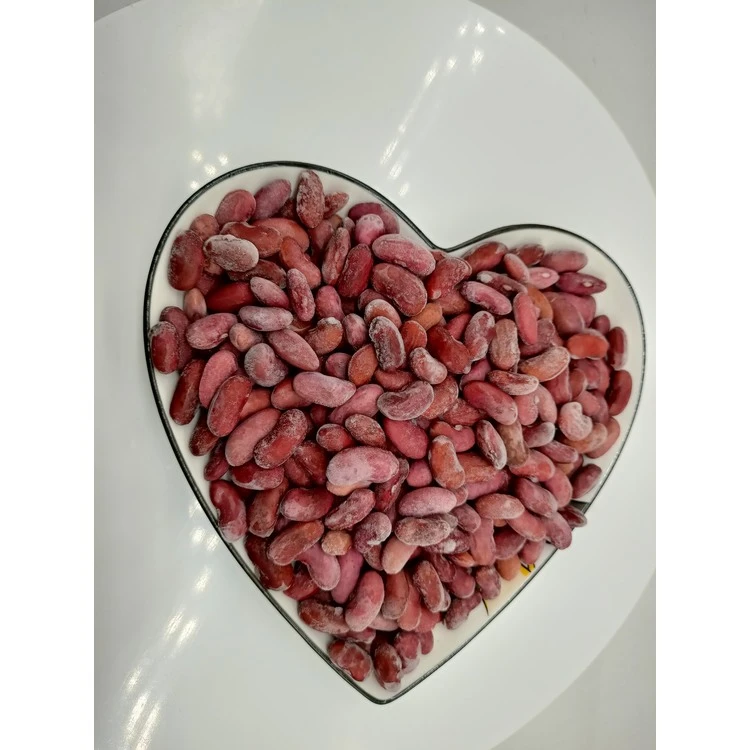
Red kidney beans shown on the GreenLand product page. Appearance does not establish cooking status.
Do not force a raw or unclear frozen product into a comparison designed for cooked canned beans. The extra full-cooking requirement would change labour, equipment, yield and safety responsibilities. The technical team must first determine whether the candidate is appropriate for the line. If the requirement is a documented cooked frozen ingredient, state it explicitly in the request for samples. This avoids a trial that appears cheaper only because the necessary preparation has been omitted.
| Attribute | Defined frozen candidate | Defined canned candidate |
|---|---|---|
| Cooking state | Confirm the actual treatment and remaining preparation | Read the commercial product's intended use and instructions |
| Liquid basis | Measure surface ice, drainage or release under the agreed method | Distinguish packed contents, drained beans and retained liquid |
| Ingredients | Confirm salt, additives and any other declared components | Check brine, salt, seasonings and permitted firming ingredients where present |
| Storage before opening | Maintain the specified frozen conditions | Follow the label's ambient storage conditions for the unopened product |
| Meal performance | Assess after the actual cooking, transfer and reheating route | Use the same finished-meal assessment basis |
Even two cooked products may enter the line at different temperatures and with different texture. A frozen addition changes the thermal load on the meal process. An ambient canned ingredient may introduce more liquid, depending on how it is prepared. These differences can be managed, but they should be visible in the trial plan. A fair comparison does not require identical handling when the products require different handling; it requires an equivalent finished outcome and accurate recording of the work needed to achieve it.
Keep the scope narrow enough to support a decision. Compare the two specific candidates for your chili, rice meal, filling or stew. A broad claim that frozen beans are always firmer, lower in sodium or more economical ignores the supplier's formulation and process. Canned products can differ in texture and added ingredients, while cooked frozen beans can soften during later heating. The purchase decision should follow measured performance of the actual products, including their approved safety and preparation conditions.
Separate bean mass, pack liquid and recipe water
The most common formulation error is to substitute equal pack weights while changing the amount of beans and water in the meal. A can contains beans plus its packing medium. A frozen pack may contain predominantly separated beans, but its received weight and prepared usable weight still need a defined basis. Record what is weighed, when it is weighed and which material remains in the recipe. Those definitions make the comparison repeatable across shifts and suppliers.
For canned beans, decide whether the existing recipe uses the liquid, drains it or drains and rinses the beans. Keep that procedure consistent during the first comparison. A sieve type, drainage interval and sample loading can change the amount of retained liquid, so describe the method rather than relying on a vague instruction to "drain well." If rinsing is part of the production process, also record how it is performed and the final drainage stage.
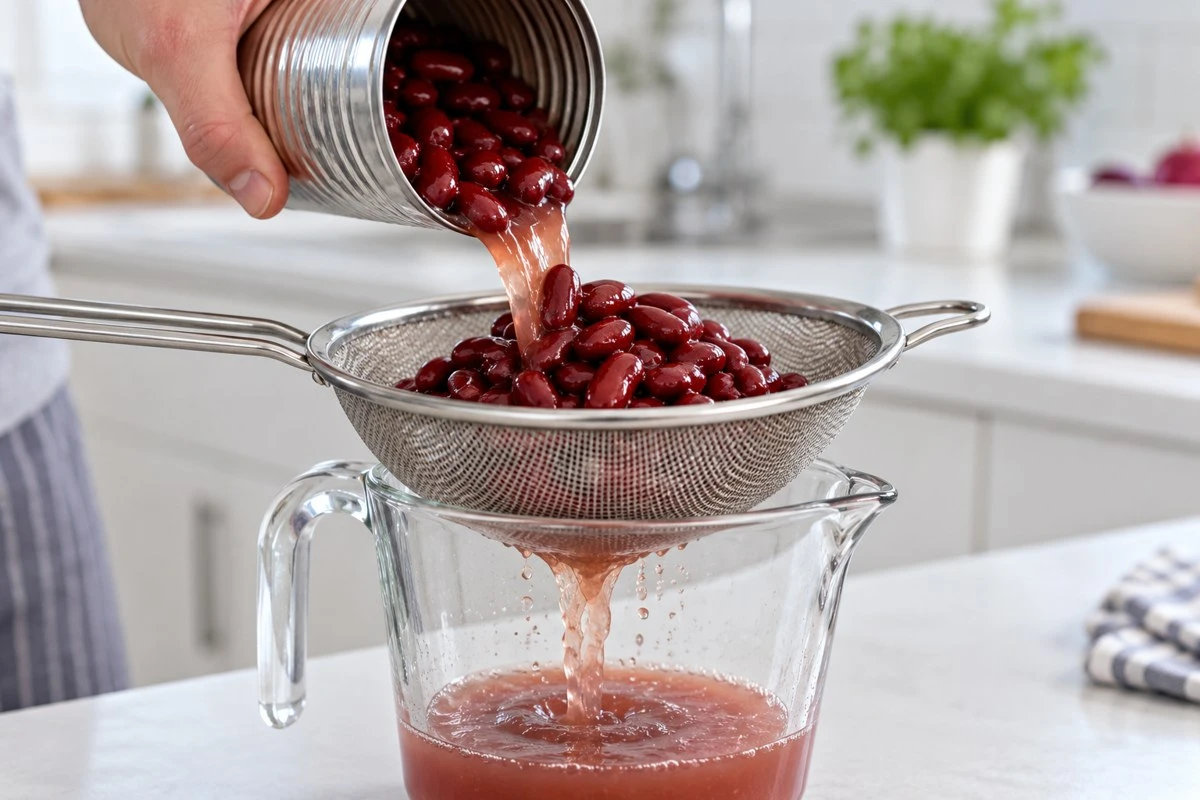
A defined drain separates the retained beans from the can liquid for a repeatable comparison.
Consider a hypothetical can format with 2.5 kilograms of net contents and 1.5 kilograms of beans retained by your agreed drain method. Its measured retained-bean yield is 60 percent on that basis. A frozen candidate with a measured 96 percent usable yield under its own approved preparation would require about 1.56 kilograms to provide the same 1.5 kilograms of usable beans. The missing pack liquid would then need separate recipe treatment if the original formulation used some or all of it. These figures illustrate the arithmetic only.
The liquid may contribute more than water. It can carry salt, soluble bean material and other declared ingredients, affecting flavour, colour and sauce consistency. Replacing it with the same mass of plain water may produce a different meal. Conversely, adding the entire can's liquid when the original recipe specified drained beans changes the formula. The Bean Institute's discussion of draining and rinsing identifies liquid retention as a recipe choice; commercial development should define that choice for the actual product.
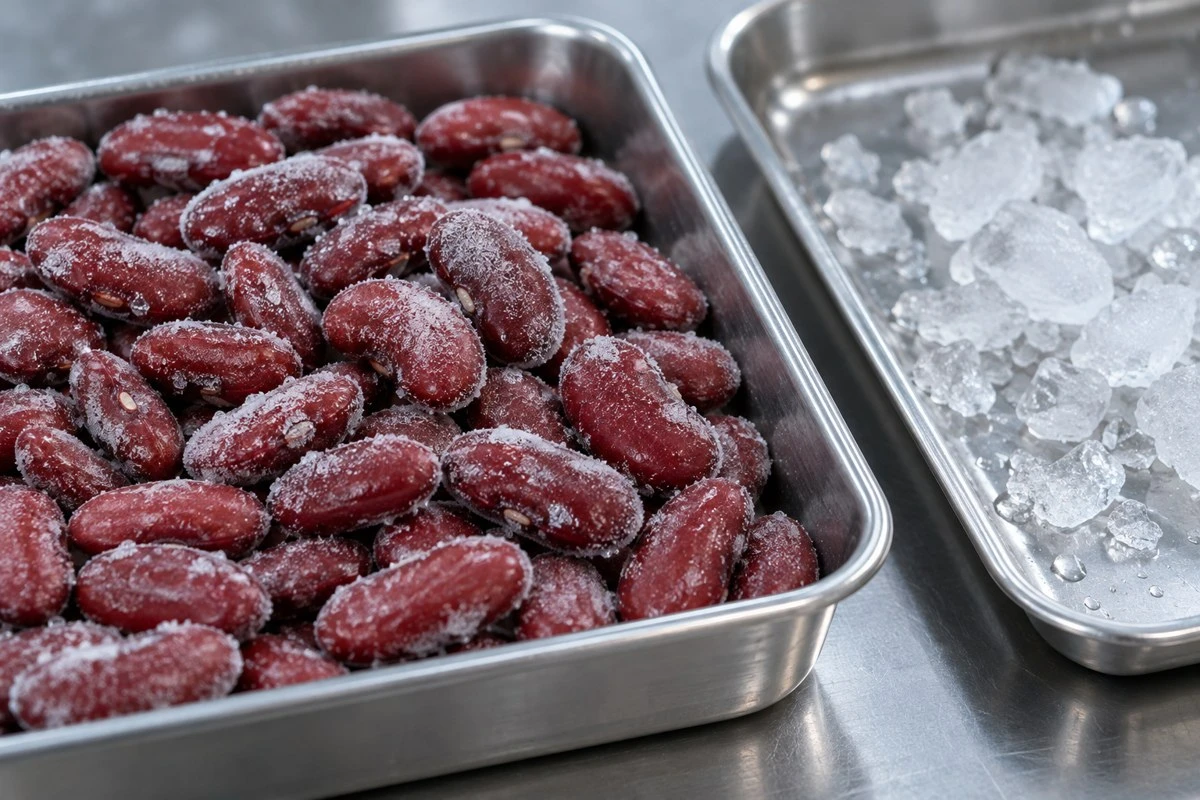
Frosted beans and separate ice illustrate why the received weight basis needs a clear definition.
For the frozen ingredient, inspect loose ice, clumping and the state in which it is dosed. Do not assume that every visible white surface is added glaze; frost and product appearance need an agreed interpretation. If the specification includes a particular glaze or weight method, use it. If the process uses direct frozen addition, measure the complete meal result rather than inventing a thaw-and-drain procedure solely to make the ingredient appear more concentrated on paper.
Use a mass balance at the kettle or mixer. Record bean input, retained can liquid, other liquids, additions during processing and final batch mass. Note evaporation and material left in transfer equipment where they affect yield. The purpose is to explain where the difference goes. A thinner sauce could result from retained liquid, reduced evaporation or a different vegetable component, and an ingredient substitution trial should make those possibilities distinguishable.
Once the equivalent bean basis is agreed, update the bill of materials and operator instruction together. Purchasing may still buy by net pack weight, while development formulates by prepared usable weight. Keep the conversion and its measured basis attached to the approved SKU so an order change does not silently alter the proportion of beans served to the customer.
Judge texture after your complete meal process
Texture at opening is only an early observation. The customer eats beans after mixing, heating, pumping, filling, holding and possibly another cooling and reheating cycle. Evaluate both candidates at the end of that route. A bean that seems pleasantly firm from its pack can become too soft after a long simmer, while a softer initial sample may remain suitable in a meal with a gentle final process. The result depends on the actual ingredient and application.
Use the same finished recipe conditions as far as the comparison permits. Match usable bean mass, sauce concentration, portion size and the required final safety process. Record different heating recovery times caused by frozen versus ambient additions. It may be reasonable to change the addition point for one format, but that change should become part of the approved process and cost calculation. Otherwise the tasting panel evaluates two meals without knowing which process produced each result.
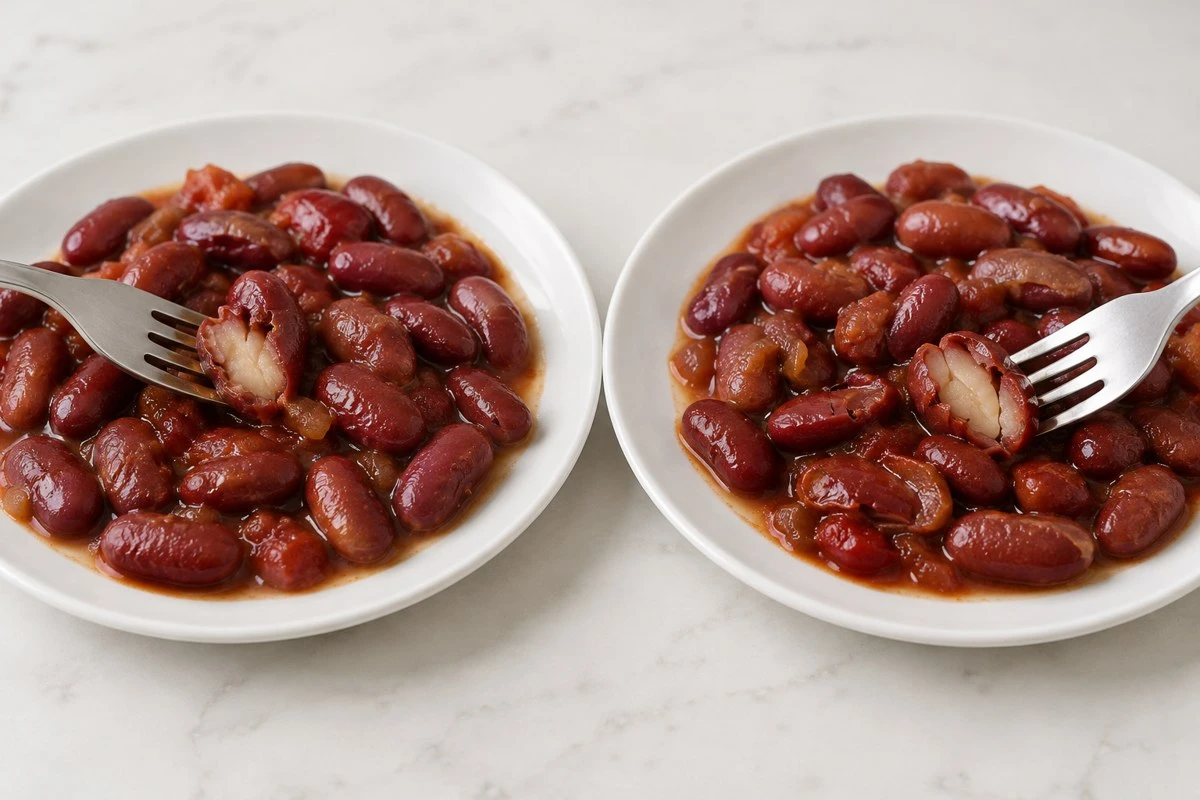
Compare skin integrity and the bean centre after the actual meal process.
Describe texture in terms the team can use. Skin integrity, firmness of the centre, creaminess, fragments and the ease of eating a spoonful are separate observations. A whole-looking bean can have a tough skin, while a split bean can still have a suitable eating texture in a thick stew. Decide which attributes matter for the meal and which would cause rejection. For a visible kidney-bean component, recognizability may carry more weight than it would in a mashed filling.
Sample after the stages likely to damage the beans. A comparison at kettle exit may miss breakage in a pump or depositor. If a tray meal will be microwaved, evaluate it in the actual package and according to the intended instruction. If a foodservice product is held before serving, include the approved holding interval. Use separate retained portions for each evaluation point so repeated opening and reheating do not introduce an unintended extra process history.
Define how breakage is measured. A percentage by bean count is different from a percentage by recovered mass. Specify how beans are separated from sauce, if separation is needed, and recognize that washing or sieving can damage a soft sample. For some applications, standardized photographs and sensory scoring of plated portions may complement a physical count. The appropriate method should help explain a commercial decision rather than produce a number with no link to the finished meal.
Avoid granting one preservation format an automatic texture advantage. Supplier cooking conditions, bean variety, size, maturity and the final meal process can all contribute to the observed result. If the frozen candidate performs better in your trial, record the actual conditions and the measured or agreed sensory outcome. If the canned candidate performs better, retain that finding too. A useful specification is built from the accepted result, not from a predetermined claim about frozen or canned foods.
When a candidate fails, change the smallest relevant variable and repeat the affected part of the trial. Altering sauce, bean quantity, addition point and reheating instruction together makes it hard to identify the cause. Keep the original result available and distinguish a formulation adjustment from a supplier-specification change. This helps the buyer decide whether the format is unsuitable or simply needs a clearly documented process adaptation.
Recalculate seasoning from the actual ingredient declarations
Compare the ingredient lists before adjusting the recipe. Frozen beans may be supplied plain or with declared additions; canned beans may be packed in water, brine, sauce or another medium. "Frozen" does not guarantee no added salt, and "canned" does not guarantee a high-sodium product. Read the actual specification and nutrition information on the basis stated, including whether values describe the product as packed or after a defined preparation.
If the current meal uses the can liquid, its contribution belongs in the formulation. If the liquid is discarded, the recipe receives a different portion of the packed ingredients. A generic percentage reduction from rinsing is not a suitable calculation for every supplier's product. The University of Florida's guide to beans, peas and lentils notes that low-sodium and no-added-salt canned choices are available. Those alternatives may be relevant candidates when the buyer's objective is sodium control rather than a change in preservation format.
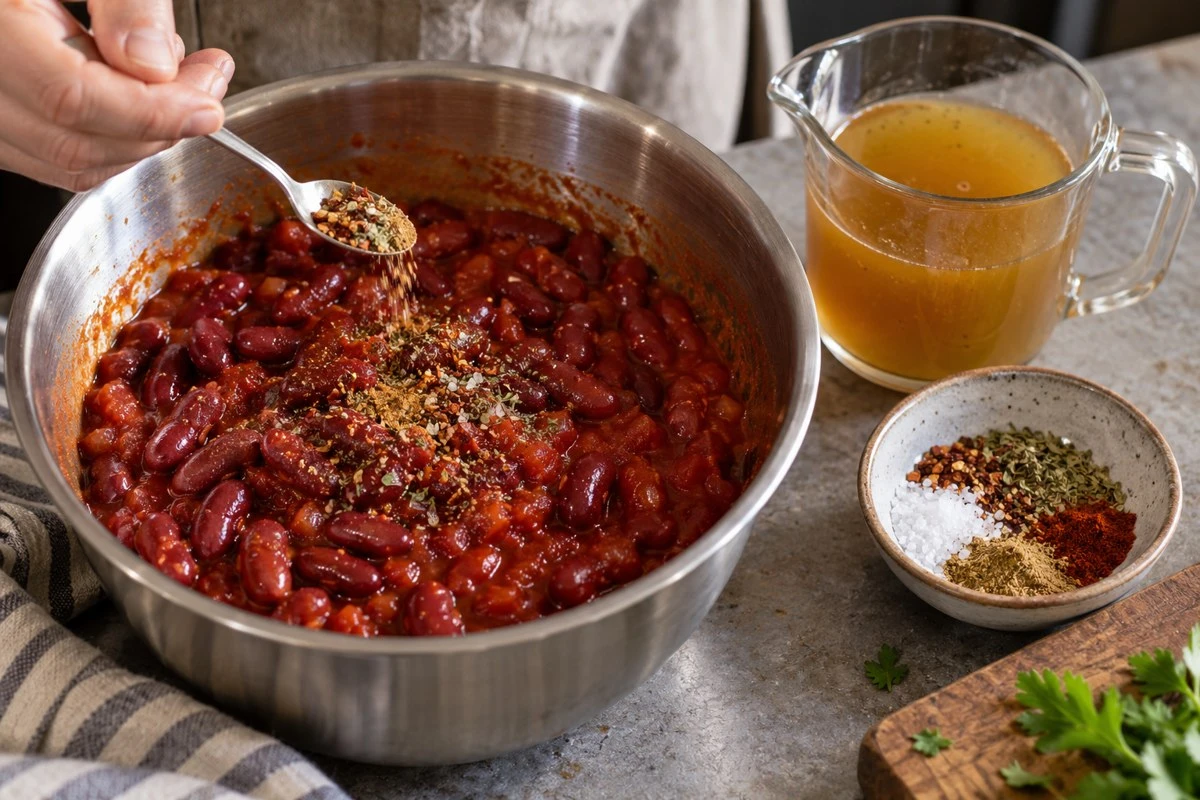
Adjust seasoning after the bean mass and recipe liquid have been established.
Begin the seasoning trial after the bean and water basis has been established. Otherwise a watery candidate can appear underseasoned and receive extra salt that becomes excessive when the sauce is later concentrated. Record the stock, tomato components, spice blends and any other sodium-bearing ingredients. A change in bean format may be small relative to those contributions, but it still needs to be represented accurately in the final formulation and any label calculation.
Taste at the intended serving condition. Temperature and sauce consistency affect the way a meal is perceived, and a hot development sample can differ from a later customer portion. Compare coded samples in equal quantities and ask the panel to evaluate bean flavour, sauce flavour and overall balance separately. A stronger spice blend may hide a mild difference in bean flavour while doing nothing to correct an unsuitable texture. Keep those observations distinct in the approval notes.
Check declared ingredients that influence texture or the recipe's positioning. A canned product may include a permitted firming ingredient, while another SKU may have a different formulation. The presence, purpose and destination-market acceptability should be reviewed for the actual product. Do not assume an additive is present from a firm bite or absent because the label uses a short commercial name. A supplier declaration should support any claim made about the ingredient's formulation.
For private-label meals, update ingredient and nutrition work through the brand owner's normal approval process. A direct substitution can change ingredient order, allergen information associated with other declared components, sodium values or marketing claims. Confirm the final formulation and the information supplied for the new SKU. This article does not establish a label claim or a destination-specific legal allowance; the responsible reviewer must assess the actual meal and market requirements.
Document the recipe adjustment in practical units. Operators should know the new ingredient weight, any retained or replacement liquid and the approved seasoning addition. A note saying "use less salt with canned beans" is too vague for repeat production. When the formulation is finalized, retain the supplier specification and the trial version that supported it, so a later change in bean supplier or packing medium triggers the right review.
Include freezer space, opening work and usable yield
The purchase price is only one component of the comparison. Frozen beans require storage and transport under their specified frozen conditions. Unopened canned beans use an ambient storage route according to their label. The available space, production schedule and receiving arrangements can make either format easier to operate. Evaluate those conditions for the actual site rather than assuming that one packaging format has a universal labour or cost advantage.
Map the work from receipt to dosing. For cans, this may include case handling, opening, draining, rinsing where required, empty-container handling and cleaning the work area. For frozen packs, it may include cold-store retrieval, controlled movement to the line, opening, weighing, managing clumps and handling partial bags. Time the actual process with an appropriate trial quantity. A small demonstration can miss the repeated opening or movement tasks that become significant across a full shift.
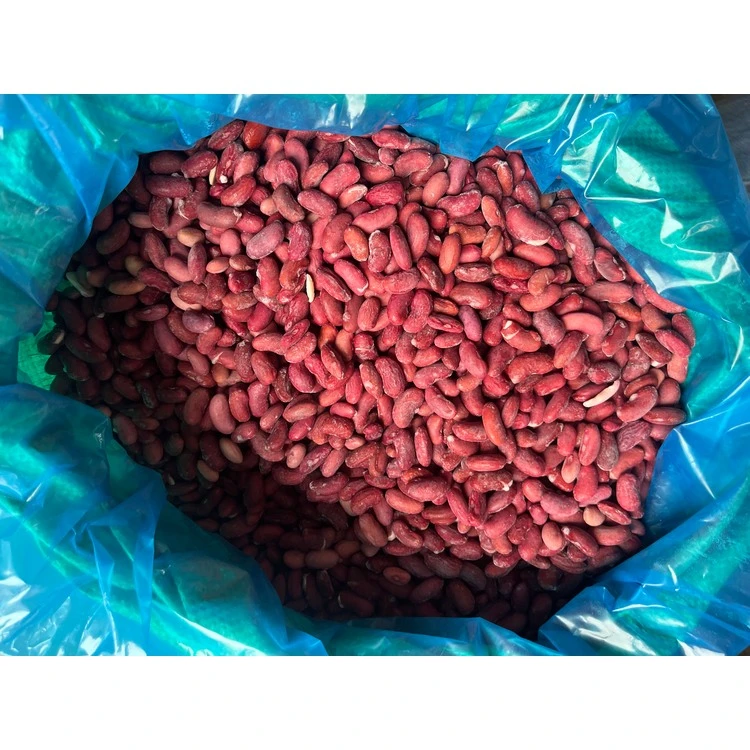
Red kidney beans in a lined carton. The order specification defines the pack and cooking declaration.
Convert price to an agreed usable basis. If a hypothetical packed ingredient costs 2.40 currency units per kilogram and delivers 60 percent usable beans under the approved method, its ingredient cost is 4.00 units per kilogram of usable beans. A second candidate at 3.30 units with a measured 96 percent usable yield has an ingredient cost of about 3.44 units on that basis. These are arithmetic examples, not current market prices. They exclude liquid value, labour, storage, packaging disposal and process changes.
If the can liquid is a useful recipe ingredient, give it an explicit value or account for the cost of replacing it. Treating all of it as waste would bias the comparison. Likewise, do not credit a frozen product with perfect yield if the actual line loses beans during handling or needs a different preparation stage. Use measured losses and the approved finished output. The final comparison should explain its assumptions well enough for purchasing to update it when prices or production volumes change.
Consider batch size and partial-pack use. A can may suit a fixed recipe quantity but leave opened material at the end of a small run. A frozen bag may permit flexible dosing when the product remains separable and the site's handling instruction supports partial use. Neither advantage should be assumed without checking the actual pack and routine. Record how remaining material is identified, stored and used, and include the practical waste that occurs in the intended production schedule.
Packaging and supply planning also affect the decision. Confirm the available case configuration, pallet arrangement, minimum quantity, lead time and destination documentation for the proposed frozen order. Compare these with the current canned supply arrangement and required buffer stock. A lower unit price can lose its value if the available pack does not fit the line or the buyer lacks capacity to receive and store the delivery. Commercial terms should follow the confirmed order, rather than being inferred from a general product page.
Keep quality costs visible without inventing savings. If one candidate creates more fragments, slower filling or more recipe adjustment, record the observed effect and its measurement basis. If no difference has been measured, leave that cost unassigned. The purpose of the comparison is to support a defensible choice, with assumptions that can be checked when the first full production run is completed.
Approve a substitution through a matched production trial
A format change needs an approval record that joins the technical and commercial findings. Start with the existing meal specification and the reason for considering a change: storage constraints, dosing flexibility, texture, ingredient declaration or cost. Give that objective a measurable or clearly described acceptance basis. Without it, a trial can produce many observations while leaving the original purchasing question unanswered.
Use the following sequence as a starting point for a site-specific trial:
- Approve the cooking declaration and preparation route of both candidates. Resolve any safety or intended-use gap before tasting.
- Establish equivalent usable bean mass and define the treatment of packing liquid, surface ice and recipe water.
- Produce coded meals using recorded formulations, addition points and process conditions. Include any necessary operational differences.
- Evaluate the finished meal after its actual holding, storage and reheating route, including texture, sauce balance, portioning and required safety checks.
- Compare measured usable yield and operating work, then approve the ingredient, process and commercial conditions together.
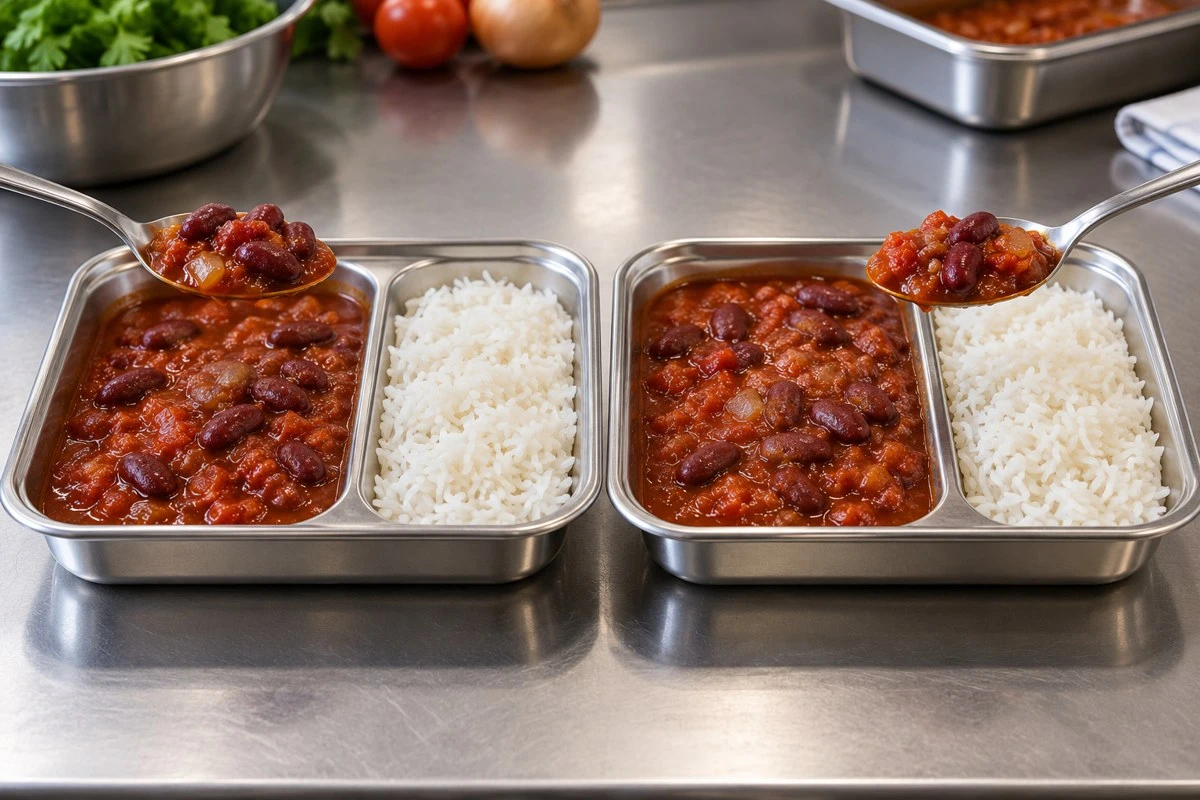
Matched meal portions support a fair comparison of the final bean-and-sauce result.
Use more than one sample condition when the application demands it. A first-day trial may establish initial fit, but a stored meal needs assessment through the relevant quality period under the approved conditions. The scope should be agreed by the development and technical teams. Do not imply a shelf life from a single successful tasting or assume that an acceptable frozen ingredient establishes the shelf life of a meal containing other components.
For a production trial, identify the settings that differ from the development kitchen. Vessel size, heating recovery, agitation, transfers and filling equipment may change the result. Retain samples from the points needed to explain those effects. If the final meal fails, the team should be able to distinguish an ingredient difference from a scale-up issue. That evidence makes a supplier discussion more useful than a general complaint that the new beans were softer.
Record the decision with its boundaries. The candidate may be approved for one meal and unsuitable for another. A bean accepted in a thick chili may not meet the appearance requirement for a visible rice-bowl component. A specification approved for a long cooking route may not fit a short reheating route. Keep the application, formulation and preparation version beside the supplier and SKU in the approval system so that acceptance is not unintentionally broadened.
For a GreenLand sample request, share the current product's cooking status and ingredient declaration, the bean-weight basis used in your recipe and the meal's complete process. Include the target appearance and texture, preferred pack format, expected quantity and destination. We can discuss an appropriate frozen red kidney bean specification and confirm available supporting records for the proposed order. Any claim about cooking status, ready-to-eat use or certification needs its own evidence.
After approval, update the recipe, purchasing description, receiving checks and operator instructions as one controlled change. Keep the conversion from purchased weight to usable beans visible and retain the accepted finished-meal reference. The next delivery can then be judged against the same decision that justified the substitution, rather than against a general preference for frozen or canned ingredients.
Source Frozen Red Kidney Beans with GreenLand-food
GreenLand-food is a professional frozen red kidney beans supplier and manufacturer in China, providing factory-direct wholesale supply for importers, food manufacturers, foodservice distributors and private-label programs.
Send your required cooking state, product form, specification, packing, quantity, application, destination, private-label needs and requested documents. We confirm the available ingredient and order evidence against your intended preparation.