


Raw or Cooked Frozen Kidney Beans? Processing Records Buyers Should Check
Oct 19, 2026
Leave a message

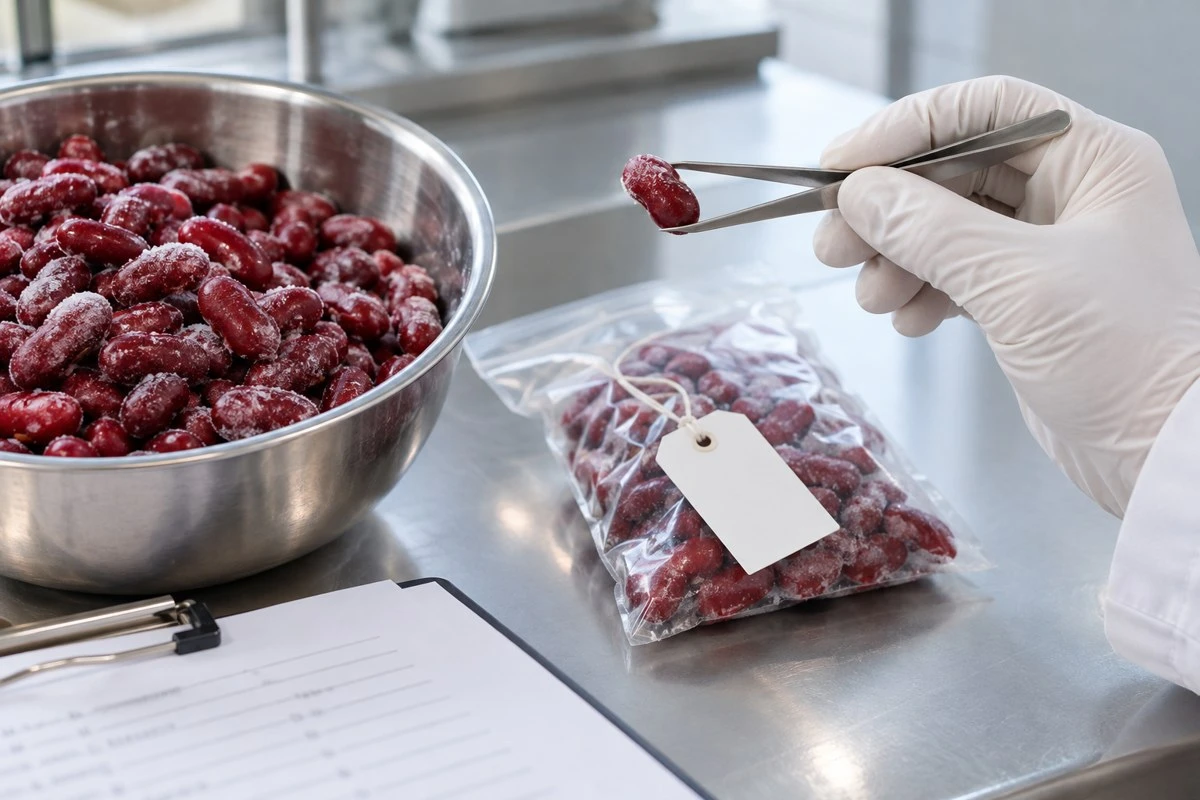
The distinction matters because raw or inadequately cooked red kidney beans can present a lectin hazard. Colour, firmness and a frozen appearance cannot resolve it. A supplier's current product specification, validated process and lot records should tell a consistent story. Laboratory results can contribute to that review when the method and sample scope are appropriate, but an unrelated certificate of analysis cannot replace missing cooking evidence.
At GreenLand-food, the starting point for a red kidney bean order is the actual ingredient state and the buyer's use. This guide sets out a proposed document-review approach for purchasing and quality teams. It does not certify a particular lot, prescribe a universal industrial cooking schedule or establish that a photographed product is ready to eat.
Read the cooking declaration as a product requirement
Begin with the exact product name and the intended use. Red kidney beans are a type of common bean, but commercial terms may combine identity, preparation and preservation in one short line. "IQF red kidney beans" describes the product and a freezing format; it leaves the cooking history unanswered. "Cooked frozen red kidney beans" provides more information, yet the instruction may still require further heating. Ask the supplier to state these elements separately so the buyer can approve each of them.
The word "blanched" needs particular care. In many frozen vegetables, blanching is used to manage enzymes and quality. It does not, by its name alone, establish an adequate kidney-bean cooking treatment. A supplier should explain the actual treatment and its validated purpose rather than asking the buyer to infer safety from a familiar process word. GreenLand's general blanching discussion is useful background on this quality-control step, but kidney-bean lectin control requires its own assessment.
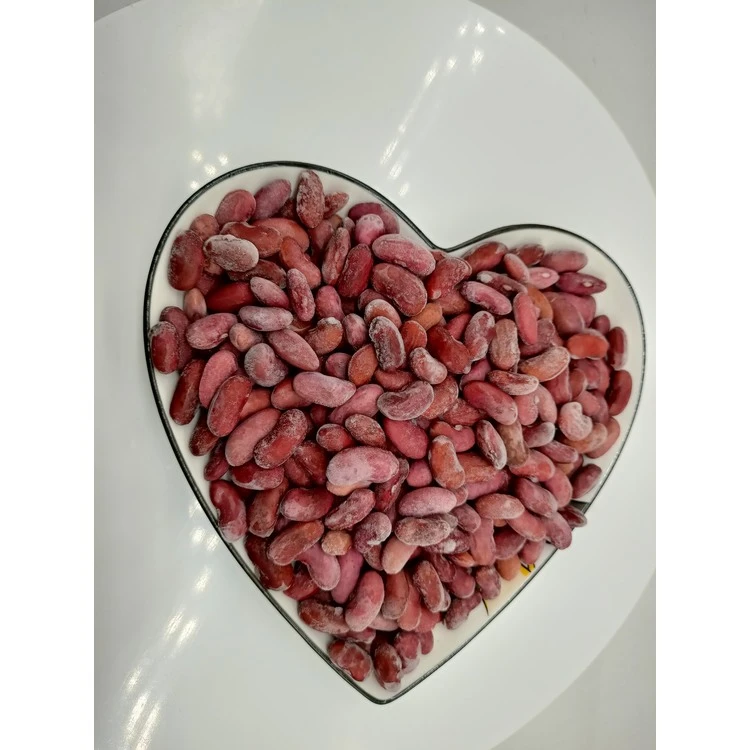
Red kidney beans shown on the GreenLand product page. Appearance does not establish cooking status.
Compare the declaration across the specification, label, quotation and sample paperwork. If the quotation calls the product fully cooked but the bag says to cook thoroughly, the documents need explanation before approval. The two statements may refer to different purposes: adequate initial cooking does not automatically mean consumption without further heat is intended. They may also reveal an outdated label or a different SKU. Resolve the meaning with the supplier's technical contact and retain the agreed version.
| Declaration | What it establishes | What the buyer still needs |
|---|---|---|
| Frozen or IQF | The preservation or freezing format described by the supplier | Actual cooking treatment, intended use and preparation instruction |
| Blanched | A declared heat-treatment step | Its purpose, parameters and evidence relevant to kidney-bean hazards |
| Cooked; further heat required | A cooking claim with an additional preparation obligation | Supporting process evidence and the required downstream treatment |
| Ready to eat | A declared use without further cooking | Evidence supporting the entire process and handling route for that use |
The proposed review should also distinguish quality language from safety language. "Tender" describes a sensory attribute under defined preparation conditions. "Low split rate" describes appearance. Neither is a direct measurement of lectin activity. A sample can look attractive yet arrive with an unresolved process declaration; another can meet the cooking requirement but be too soft for the intended meal. The approval record should allow those two decisions to be documented independently.
Do not authorize a tasting panel to settle an uncertain cooking status. Keep the sample identified and on hold until the technical team has approved how it will be prepared. The same rule applies when a frozen carton resembles an earlier accepted delivery. Similar colour and pack design cannot establish that the new lot followed the same process. A clear status on the receiving record prevents kitchen staff from making a safety decision from appearance.
For the purchase order, use a description that survives handover. Identify the supplied state, the relevant specification version and the required preparation. If your site needs a cooked ingredient for a short final reheating process, state that need explicitly before the supplier selects a candidate. A raw or insufficiently documented alternative is a different approval problem even when its price and physical size are attractive.
Ask what the heat process was validated to control
A process description shows the intended sequence. Validation explains why the defined process can achieve its safety objective under the conditions assessed. Routine monitoring then shows whether a particular run followed that process. These records serve different purposes. Buyers need enough information to connect them, without treating a flow chart as proof that every batch was adequately treated or treating a single good result as validation of every possible operating condition.
The relevant hazard includes phytohaemagglutinin, commonly abbreviated PHA. In its 2026 public guidance, EFSA advises soaking pulses for 6–12 hours, changing the water and boiling for at least half an hour at 100°C, continuing until soft. Health Canada publishes a different household preparation sequence for dry red kidney beans. These recommendations illustrate the need for adequate preparation; neither provides a ready-made validation for a commercial kettle, bean size range or continuous line.
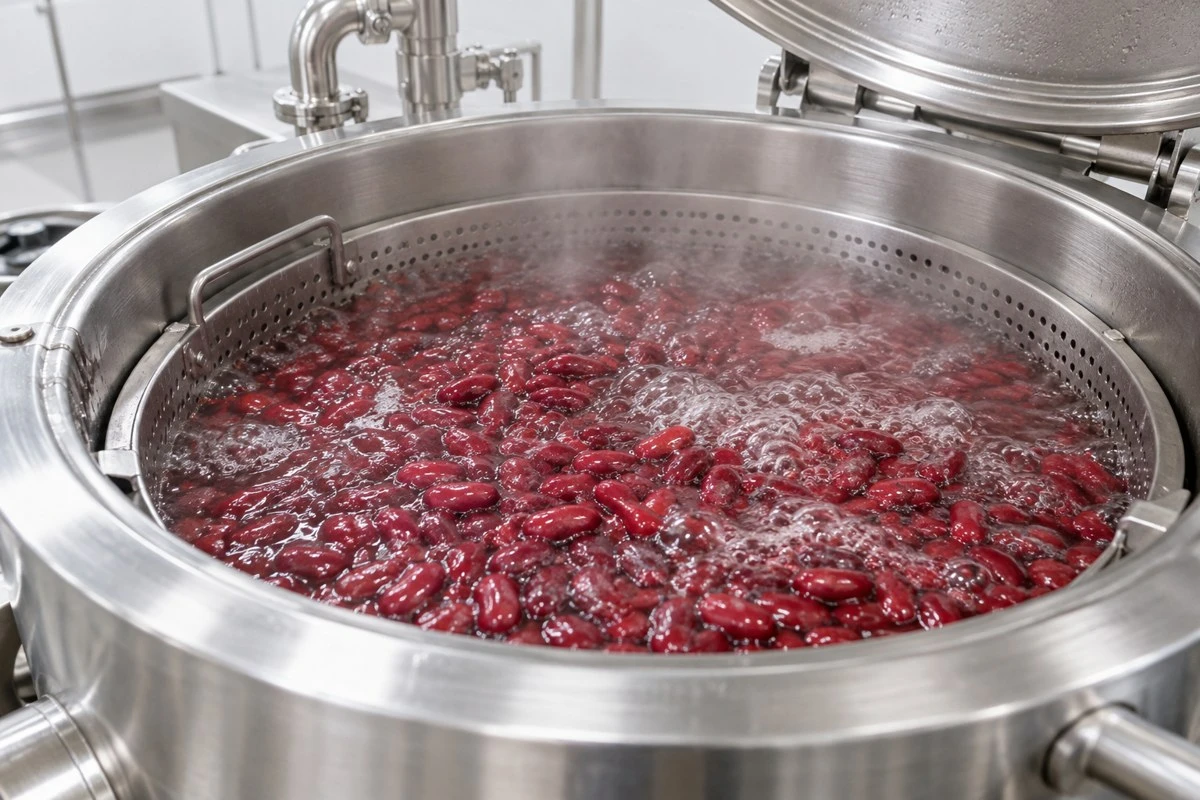
Illustrated kidney beans in boiling water; visible boiling does not establish a validated commercial treatment.
Ask which product and operating range the supplier's validation covers. Relevant conditions may include the raw material, hydration state, bean size distribution, load size, water-to-product relationship, heating method and the location where temperature is measured. The responsible process specialist determines which variables are critical. A buyer should understand the approved limits and how routine operation stays within them, particularly when the ingredient is intended for only a brief final preparation at the customer's site.
Time requires a defined starting point. Does the recorded duration begin when a vessel is loaded, when the heating medium reaches a target condition, or when the relevant product location meets the validated requirement? Those events are not interchangeable. A record stating "cooked for thirty minutes" is incomplete unless the associated method defines what those minutes represent. The reviewer should also understand whether a displayed temperature belongs to water, steam, equipment or the beans themselves.
Probe placement, instrument checks and load distribution influence how those records are interpreted. A convenient measuring point can differ from the location that controls the process outcome. Ask how the process study identified relevant locations and how routine monitoring represents them. This is a request for evidence about the actual system, not an instruction to place a probe in an arbitrary spot or increase heat until the beans appear soft. Any proposed process change belongs with the qualified technical team.
Commercial documents can contain contradictions even when they appear detailed. A publicly accessible older Foodnet red kidney bean specification gives different soaking durations in its narrative and generic flow chart. It also describes a cooked ingredient intended for further heat treatment. The buyer's lesson is to reconcile document versions and intended use. That document's parameters and assay figure should not be copied into a new GreenLand order as universal acceptance criteria.
If a supplier changes the bean source, preparation method, batch loading or equipment, ask how the change was assessed against the validated range. Some changes may remain within the approved conditions; others may need additional work before release. The purchase agreement should identify notification responsibilities so a process change does not arrive as an unexplained shift in cooking state or meal performance.
Connect the actual cooking record to the supplied lot
After reviewing the process basis, follow one supplied lot through its actual records. Start with the case code and work backward to the packing run, frozen bulk material, cooking batch and raw-material receipt. A traceability system may combine several cooking batches into one packing lot or divide one batch across several packing dates. The buyer needs the relationship explained, including any mixing, rework or intermediate storage that changes the boundary of the material under review.
The record set should identify the relevant specification and process versions, the date and equipment used, the monitored conditions and the person responsible for review. The purpose is to see what happened to the supplied material. A blank form shows the intended recording structure; it does not establish completed treatment. A certificate issued before the actual production date likewise needs clarification if it is presented as lot-specific evidence.
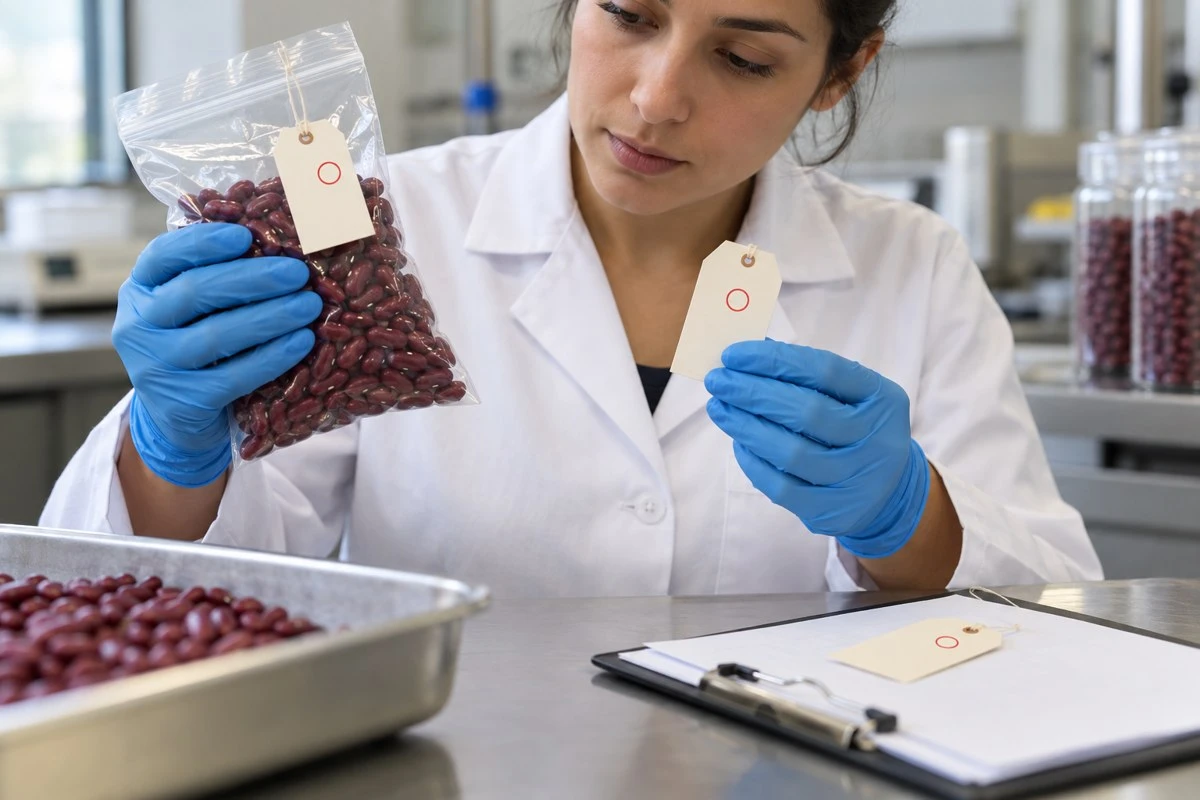
Sample identity should remain connected to the production and release records.
Look for continuity through a production interruption. If the line stopped, a heating condition drifted or an instrument failed a check, the record should show how affected material was identified and handled. Ask who evaluated the deviation, what evidence supported the decision and how any released material was distinguished from material still on hold. A handwritten correction or additional cook is not automatically unacceptable, but its authorization and technical basis must be understandable.
Where proprietary process details cannot be shared in full, agree an evidence format that still answers the buyer's safety questions. A controlled validation summary, a reviewed batch compliance record or an appropriately scoped independent assessment may be useful, depending on the risk and contractual requirements. Confidentiality does not make an unsupported cooking declaration sufficient. The technical teams should resolve what can be reviewed before the order depends on that evidence.
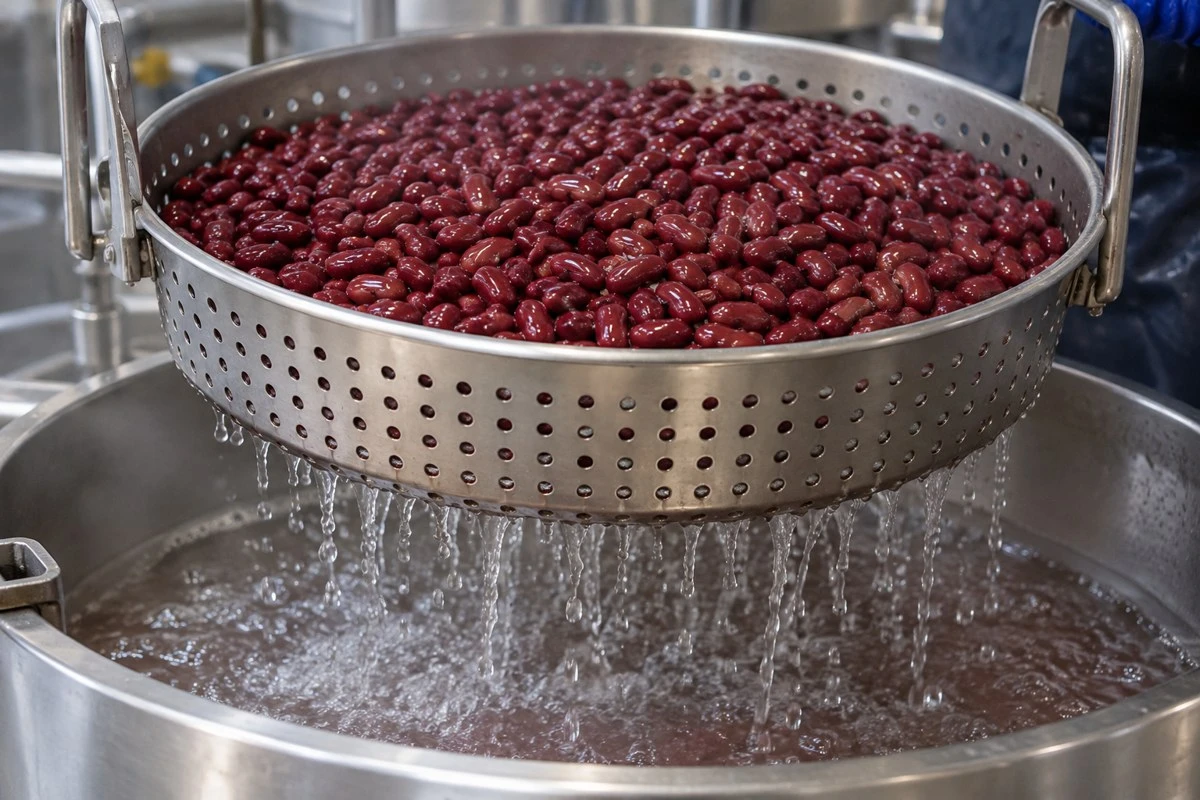
Basket loading and product depth are among the conditions a process review may need to consider.
Consider a proposed example in which packing lot P includes cooking batches A and B. Batch A followed the approved conditions; batch B has an unresolved time record. The question is whether the supplier can identify and segregate B before or after mixing. A satisfactory record for A cannot establish the treatment of B. If the two batches were combined, the disposition must address the combined material through the site's authorized process. This example demonstrates the traceability question; it is not a report of an actual GreenLand incident.
Ask for the lot boundary in terms that the receiving warehouse can use. Case marks, pallet labels and packing lists should lead to the same approved material. If a shipment contains multiple lots, retain their distinctions in receiving and production records. Replacing those codes with one internal delivery number without a mapping can make later investigation unnecessarily difficult. The mapping should remain available even after individual cartons have been opened and used.
The buyer's reviewer should sign off the actual conclusion: the supplied lot matches an approved process and use, more evidence is needed, or the material is unsuitable for the planned application. Keep that conclusion separate from a general supplier approval. A supplier can be approved as a business while one particular lot remains on hold. This distinction gives purchasing a clear basis for scheduling without pressuring operators to make assumptions at the point of use.
Follow the beans through cooling, freezing and packing
The record review continues after cooking. Adequate initial heat treatment does not eliminate the need to control what happens during cooling, transfer, freezing and packing. The supplier's flow should show these stages in their actual order, with the handling and storage conditions relevant to the intended use. If the product is claimed to be ready to eat, the evidence needs to support that complete route, including the controls applied after the cooking step.
Cooling records should relate to the beans and the process conditions that determine their cooling behaviour. A room temperature log alone does not describe the temperature history of a large batch. Review the approved method, loading pattern, time controls and monitoring approach. The technical team should define the applicable limits. This article deliberately does not supply a generic commercial cooling schedule that might be inappropriate for the site, package or destination.
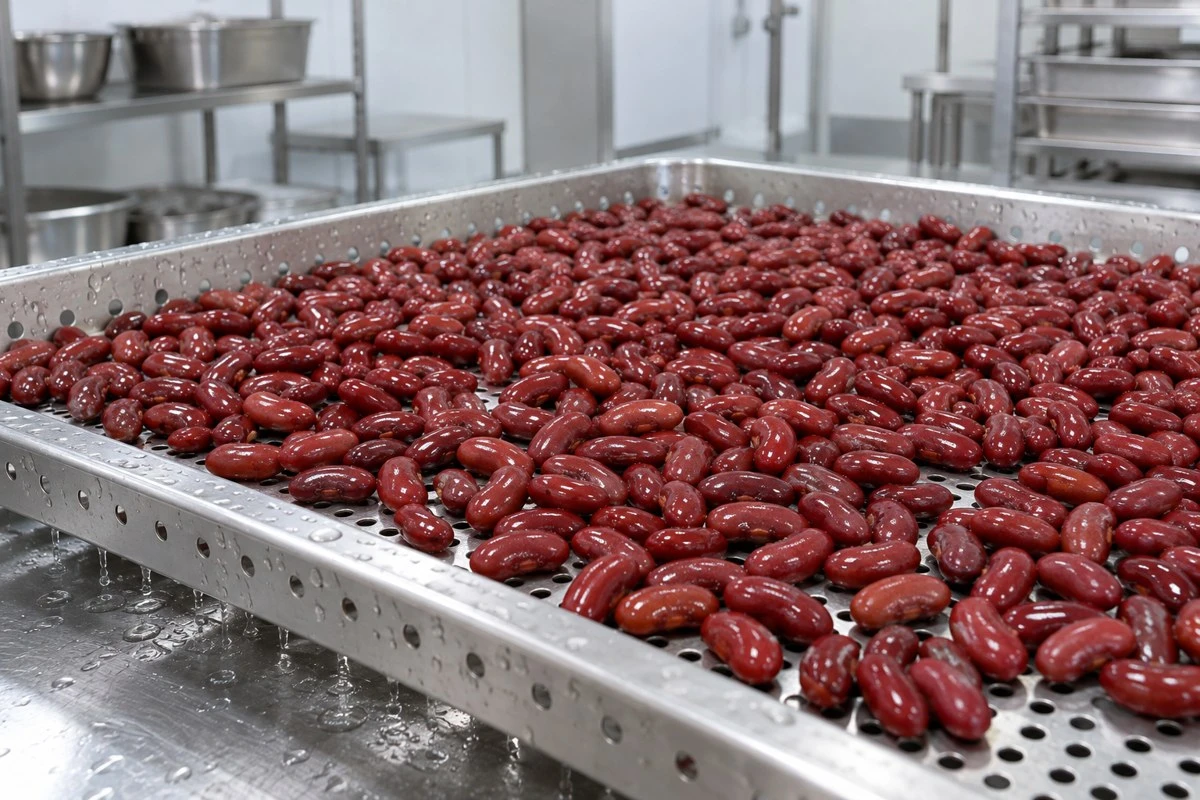
Cooked beans on a draining tray illustrate the handling stages that follow the initial heat treatment.
Draining and transferring can influence both quality and the interpretation of weights. Beans may carry surface water into freezing, and subsequent handling may create fragments. Ask how the specification defines the received weight basis and the physical sample preparation used for acceptance. If the buyer measures thawed drained yield while the supplier reports frozen pack weight, the two results answer different questions. Agree those definitions before a dispute arises from apparently inconsistent numbers.
Free-flowing appearance is useful for dosing, but it remains a physical attribute. Loose beans can simplify portioning; clumps can complicate feeding and heat distribution at the customer's line. Neither condition identifies the earlier cooking treatment. Keep freezing performance, package integrity and cooking-status release as distinct entries in the review. That structure allows a team to investigate excessive clumping without accidentally approving an unresolved process declaration.
Traceability must survive intermediate storage and repacking. If beans are held in bulk containers before final packing, identify the container code and its link to the cooking batch. If a later packing run draws from more than one container, preserve that relationship. Check how the final best-before date and storage instruction are assigned under the supplier's approved system. Do not infer a shelf life from the fact that the product remains frozen or from the label on a similar vegetable.
Review the intended transport and receiving conditions alongside the packaging. The order should define frozen storage, inner-pack construction, sealing, case marks and the information needed when a temperature or handling concern occurs. A single satisfactory arrival temperature cannot reconstruct the whole journey. Conversely, visible frost alone does not establish a particular abuse history. The technical assessment should consider the available records and actual condition rather than turning a photograph into a diagnosis.
The customer's controls begin at receipt and continue after opening. If an approved cooked ingredient still requires further heating, warehouse and kitchen instructions should preserve that requirement. Partial packs need an identified handling method and a traceable connection to the original lot. Repacking into a plain container without retaining the product state and use instruction can undo an otherwise careful supplier review by leaving the next operator to guess how the beans should be used.
Read laboratory evidence with the method and sample scope
Laboratory evidence is useful when the result answers the relevant question about the relevant material. Start with the sample identity, tested product, production lot, sampling date and report version. Then read the method, units, reporting limit and decision basis. A result copied into an email without those details may be impossible to interpret. Ask for the underlying report or an approved summary that retains the information needed for a technical review.
For lectin testing, avoid treating a number in haemagglutination units as universally comparable across methods. The assay conditions, sample preparation, units and laboratory interpretation matter. A buyer should agree the suitable method and acceptance basis with competent technical support for the product and destination. A limit taken from another supplier's historical specification does not establish a legal threshold or an appropriate release criterion for this order.
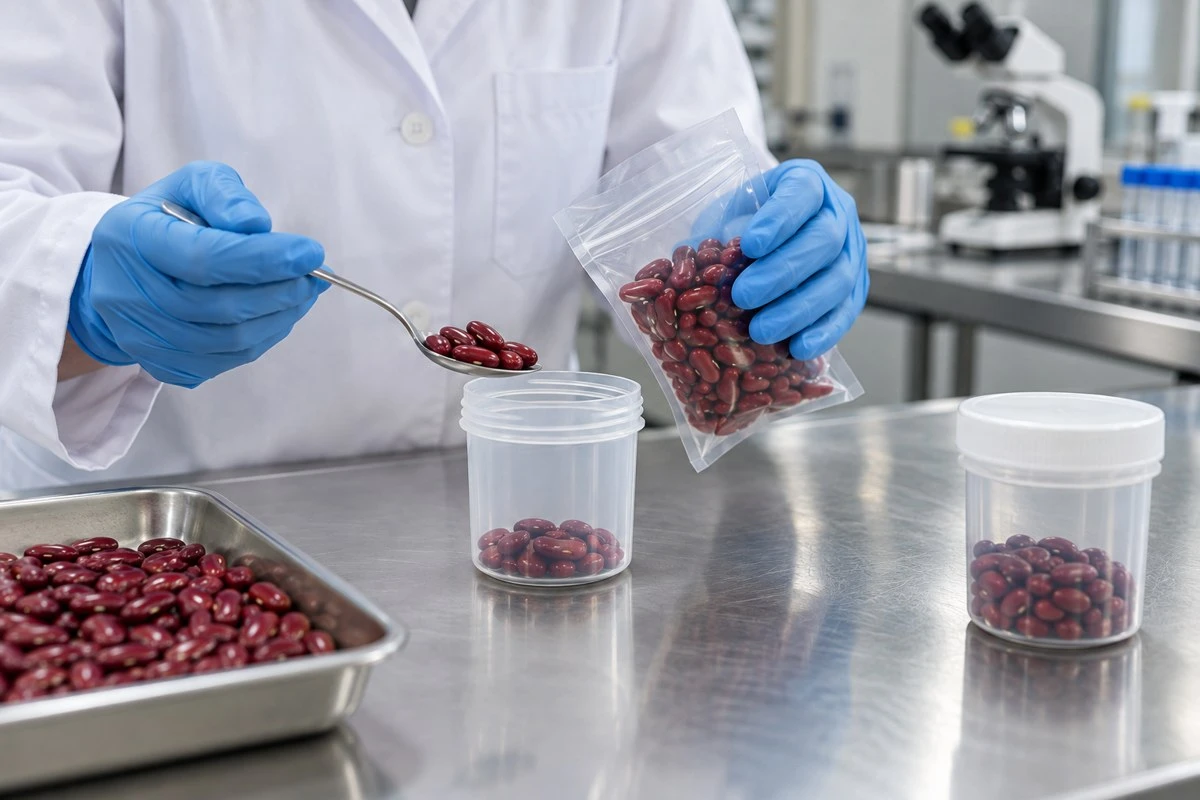
A defined sample and preparation method are necessary to interpret a laboratory result.
Read "not detected" in the context of the reporting limit and method. It describes the outcome of a defined analysis on a defined sample; it does not mean that every bean in every carton was individually tested. Review how the sampling plan represents the lot and how testing fits the wider process-control approach. A favourable sample result cannot retrospectively explain a missing cooking record unless the authorized technical review explicitly establishes an adequate disposition basis.
The same discipline applies to microbiological results. A report may address selected organisms or indicators under a specified sampling plan. It does not automatically address lectin activity, chemical residues, foreign matter or all conditions relevant to ready-to-eat use. Keep each document tied to the hazard or quality attribute it measures. A long report can still leave a critical question unanswered if the test panel was selected for a different product or intended use.
Ask when the sample was collected in relation to production. A sample before packing and a sample from finished sealed cases represent different points in the route. A development sample taken months earlier supports a different decision from a current lot sample. Neither should be relabelled as the other. Where an ongoing verification program uses periodic testing rather than every-lot testing, request an accurate description of that program and the routine release controls that apply between tests.
If results conflict with process records, stop the approval and investigate the conflict. Possible questions include whether the sample belongs to the supplied lot, whether the correct method was used, whether a record was entered incorrectly and whether the material was mixed or relabelled. The technical team should determine the investigation and disposition. Repeating a test until a preferred result appears would not resolve the underlying inconsistency.
Research can explain why these distinctions matter without supplying a replacement release method. A study of Canadian pulses reported that treatment and legume type affected measured antinutritional factors, with cooking more effective than soaking for the studied lectin reduction. Its abstract supports the general need to distinguish treatments. It does not validate a particular supplier's line or authorize transferring its experimental results to an untested commercial lot.
Approve the use instruction and receiving handover
The final approval should give the next person a clear action. Receiving staff need to identify the product, confirm the lot and recognize a mismatch. Production staff need to know its supplied state and the required preparation. Purchasing needs to know which specification and document package govern the order. A technical review that ends with an ambiguous "approved" stamp can leave each department applying a different interpretation.
Use a short ordered handover before the first delivery is released:
- Match the product identity, cooking declaration and intended use across the agreed specification, label and order.
- Confirm that the process evidence and relevant lot records support that declaration, including the disposition of any deviations.
- Check the scope of requested laboratory and traceability records and resolve missing or contradictory information.
- Approve the customer's preparation instruction and ensure it is available where the ingredient is used.
- Record the receiving decision, responsible reviewer and conditions that trigger a hold or renewed approval.
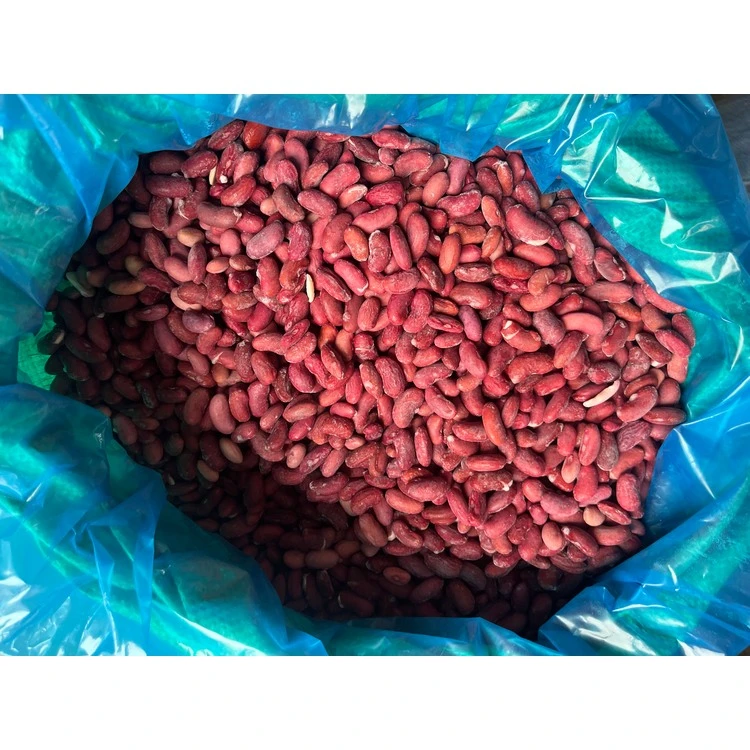
Red kidney beans in a lined carton. The order specification defines the pack and cooking declaration.
Write hold conditions in plain language. Examples include a different cooking declaration, an unexplained lot-code mismatch, missing required release evidence or a damaged package that requires investigation. The site's actual criteria should be approved by its technical team. Avoid instructions that encourage an operator to decide safety by colour or to compensate for uncertainty through an arbitrary extra heating period. Escalation should lead to a named reviewer and a documented decision.
Plan for substitutions and repeat orders. A new source, process revision, changed bean size or different packing site may require technical review even if the commercial name stays the same. Agree which changes the supplier must report and what evidence is needed before use. Retain the old and new versions so the buyer can identify which instructions applied to stock already in the warehouse. Version control becomes especially useful when several kitchens receive the same ingredient through a distributor.
At GreenLand-food, we ask buyers to describe the actual application before confirming the available frozen red kidney bean order form. A long cooking process, a short meal reheating step and a no-further-cook application place different demands on the evidence. Tell us the intended use, destination, pack size, order quantity and requested documents. The agreed scope should reflect the real SKU and available records, with any additional test or certification requirement confirmed separately.
An approved sample also needs a defined preparation method. If the development kitchen cooked a sample thoroughly before tasting, that successful texture result does not prove the supplied ingredient was already cooked to the required standard. Preserve both records: what the supplier declared and what the buyer did to prepare the sample. This prevents a quality trial from being misread later as a safety release for a different use.
The finished review should allow someone outside the original email exchange to follow the evidence. They should be able to identify the received lot, see the supported cooking declaration, locate the preparation instruction and understand the release decision. When those elements agree, the product can move through purchasing, receiving and production with a shared and verifiable meaning.
Source Frozen Red Kidney Beans with GreenLand-food
GreenLand-food is a professional frozen red kidney beans supplier and manufacturer in China, providing factory-direct wholesale supply for importers, food manufacturers, foodservice distributors and private-label programs.
Send your required cooking state, product form, specification, packing, quantity, application, destination, private-label needs and requested documents. We confirm the available ingredient and order evidence against your intended preparation.