


Guava Juice from Frozen Pieces: Screening and Usable Yield
Oct 19, 2026
Leave a message

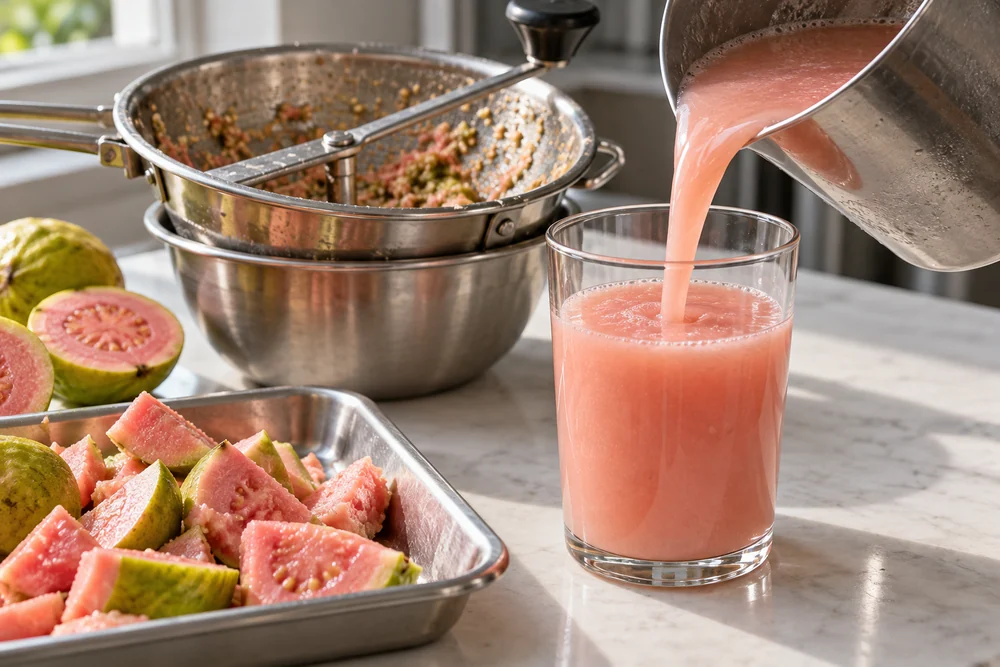
For skin-on pink guava, start with the actual cut and seed state. Keep fruit recovery separate from added-water dilution, then judge the screened base in the finished beverage. A high mass of collected liquid can hide low fruit recovery if extra water was added during extraction. We help purchasing teams describe the frozen guava input and agree the sample; the beverage processor establishes its finished formula and safety process.
Start with the actual guava pieces
A bag described as frozen guava can contain several physically different inputs. Skin-on irregular pieces retain peel and some central tissue, while a separately prepared seed-reduced grade has a different usable fraction. A smooth frozen puree has already passed through another processing operation. The name alone does not tell the operator how much screening remains. Record what arrives before comparing supplier prices or opening a trial: flesh color, retained peel, seed-center inclusion, piece size distribution and the declared preparation history.
Our current frozen guava product page shows skin-on pink pieces. They should enter the trial as that form. A peeled or seedless proposal needs its own sample and specification. Calling these pieces puree-ready without discussing the seed center would leave a consequential operation undefined. The same applies when a buyer specifies white guava after looking at pink product photographs: the color, fruit identity and offered lot must be reconciled before a sensory comparison begins.

The current skin-on form retains peel and firm central tissue that affect the preparation route.
Look at a representative selection rather than the most attractive pieces from the top of a carton. The sample should include the normal range of skin share, size and central tissue found in the offered lot. A large piece with a seed center can behave differently from a thin outer-flesh fragment. Draw material according to an agreed sampling plan, preserve the lot code and photograph the mixed sample before preparation. These records help explain a later yield difference without assuming the pulper was responsible.
Color and aroma still matter when the fruit will be screened. Brown cut faces, damaged flesh or an objectionable odor cannot be corrected simply by removing the solids that carry them. Compare the thawed material and screened base with the approved reference under similar light and at a defined temperature. Natural pink shade variation should be distinguished from deterioration. Avoid accepting a darker base solely because it will be hidden in a multi-fruit blend; flavor and process consistency remain part of the decision.
Ask whether sugar, water or another ingredient has already been added. An unsweetened fruit-piece trial and a sweetened pulp trial are different comparisons. Even when both drinks eventually reach the same sweetness, their starting mass, soluble solids and fruit contribution differ. The incoming specification should preserve that distinction. It also needs to state whether the fruit is intended for further processing or a ready-to-eat application, because a physical description such as IQF does not by itself establish microbiological suitability.
Keep thawing liquid inside the trial balance
Use piece distribution as a process question rather than a cosmetic grading exercise. Record whether the typical sample contains large curved skin sections, thin outer-flesh fragments or substantial seed-center pieces. Those shapes can feed and soften differently. A trial made from a carefully selected uniform handful may overstate how consistently a full carton runs. If oversize material has to be removed or cut before feeding, include that operation and its loss in the comparison. The purchase standard should reflect the preparation the plant can actually maintain.
Thaw preparation changes what the pulper receives. Some equipment can accept partially frozen pieces, while another route requires a controlled thaw before feeding. Follow the equipment and food-safety procedure that applies to the plant. Record the preparation state, product temperature, elapsed handling time and whether a frozen core remains. Two trials cannot be called equivalent when one uses fully softened fruit and another forces hard icy pieces through the same nominal screen at a different loading rate.
Released liquid belongs in the material balance unless the process deliberately removes it. Collect it with the fruit and identify any fraction discarded before pulping. Draining a thawed sample and weighing only the remaining flesh understates the original fruit input, while adding the drain liquid back later without recording it can distort output calculations. The correct boundary is the boundary used in production. State it explicitly so a later operator can reproduce the result with another lot.
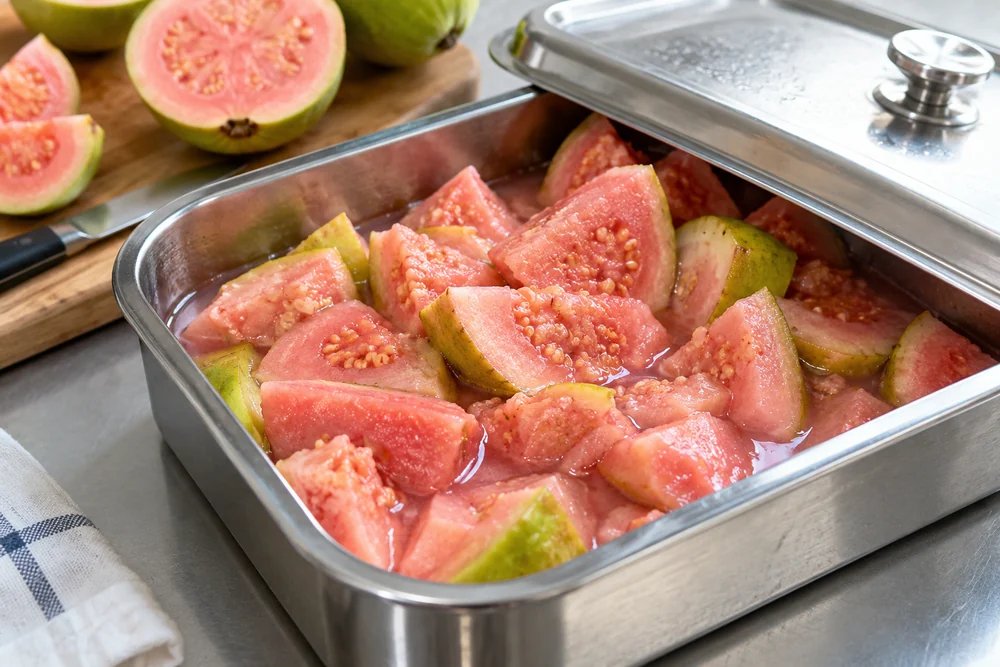
Keep released liquid identifiable when defining the trial input and preparation losses.
A practical trial uses clean, covered containers and prevents cross-contamination during preparation. Keep the fruit within the site's validated time and temperature controls. Do not leave a large block on a workbench simply to make it easier to blend. A laboratory or kitchen trial should use the same safety logic as the intended operation, even if the batch is small. Freezing preserves the ingredient; it is not a substitute for an appropriate hazard assessment and subsequent process control.
Weigh the fruit as received after removing packaging, then record any measurable free ice or foreign water separately using an agreed method. Water introduced by cleaning equipment or rinsing residue should also be identifiable. When several small containers are used, account for material left on their surfaces. These details can appear minor in one bowl but become meaningful when the difference between suppliers is only a few percentage points of usable recovery.
Keep a short observation record beside the weights. Note whether the softened pieces separate easily, whether large skin sections remain firm, and whether seed centers hold together during feeding. These observations help interpret the later residue. They do not replace measurement, but they prevent a misleading conclusion such as attributing all retained mass to seeds when it also contains avoidable flesh or incompletely prepared frozen pieces.
Separate seeds without grinding the trial away
Define the practical batch boundary before the first measurement. A plant may begin its trial when a sealed frozen bag is opened or when prepared fruit reaches the hopper. Either boundary can be useful, but costs and losses that occur before it should remain visible elsewhere. A buying team that compares a prepared hopper weight with another supplier's delivered frozen weight will misread recovery. Keep tare records for the containers and confirm that the scale is suitable for both the full input and the smaller residue fractions.
The purpose of pulping is to recover acceptable fruit tissue while controlling the coarse material that the recipe cannot tolerate. Excessive grinding can fragment hard seeds or create fine peel particles that are more difficult to separate downstream. A very smooth-looking base is therefore not sufficient evidence that the route worked well. Inspect both the passed material and the retained fraction, then assess the mouthfeel of the intended beverage after its normal mixing and heat treatment.
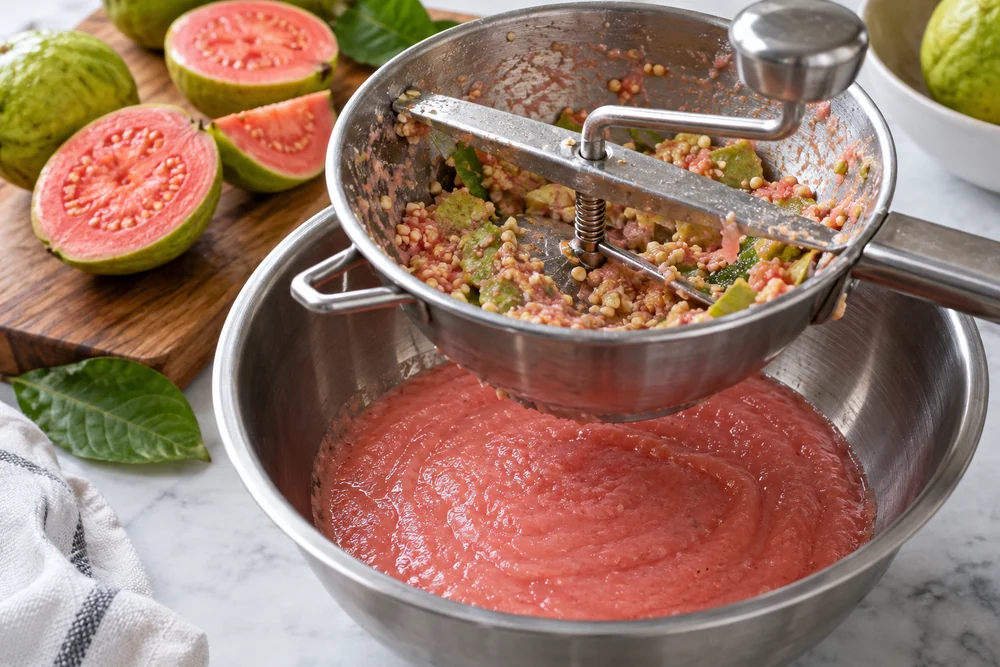
Inspect the retained fraction as well as the passed pulp when assessing a refining route.
Guava also contains stone cells that can contribute grittiness. These are different from the visible seeds. The FAO discussion of guava processing distinguishes those structures and describes refining as part of puree preparation. Its historical equipment examples explain why removal matters; they should not become a universal screen specification for every cultivar, preparation state or beverage. A production setting needs to be supported by the actual product and equipment trial.
Define the route with enough detail to repeat it. Record the pulper or mill, the relevant screen aperture, feed condition, approximate loading and any second refining stage. Note whether water is added to help movement, whether retained material is passed again and how long the run continues. Reworking residue may recover additional flesh, but it can also change the character of the base. Compare that recovery with its effect on seed fragments, peel specks, flavor and processing time.
Choose a screen against the finished requirement rather than selecting the smallest opening available. A tighter screen may remove objectionable particles while also retaining desirable pulp. A more open route may improve recovery but leave visible coarse material. The correct balance depends on whether the base enters a thick nectar, a drinking yogurt, a fine-textured beverage or a clarification process. These are different products, and their acceptance rules need not be identical.
The screen setting describes a process component. It does not prove a finished particle-size distribution. Our article on refining screens and particle-size reports explains why a separate outcome test can be necessary. For a guava trial, examine the coarse tail, seed fragments and sensory grit using a suitable method. A small amount of troublesome material can matter even when the bulk puree appears uniform.
Measure the usable output at a defined endpoint
Start a yield calculation by naming the output that counts as usable. It might be unsweetened screened base at the pulper outlet, a refined base after a second pass, or an acceptable beverage after formulation and heat treatment. Those endpoints answer different questions. For purchasing frozen pieces, the first useful comparison is often recovered fruit base before recipe water and sugar are added, with a separate record of later process losses.
One orderly trial proceeds through four linked measurements:
- Weigh the representative fruit input and record its thaw liquid and any separately identified free ice.
- Collect the screened base, retained coarse material and other recoverable losses in separate tared containers.
- Record every added-water stream and define how equipment hold-up is measured or estimated.
- Calculate usable recovery for the stated endpoint, then repeat the beverage trial using the same fruit-equivalent basis.
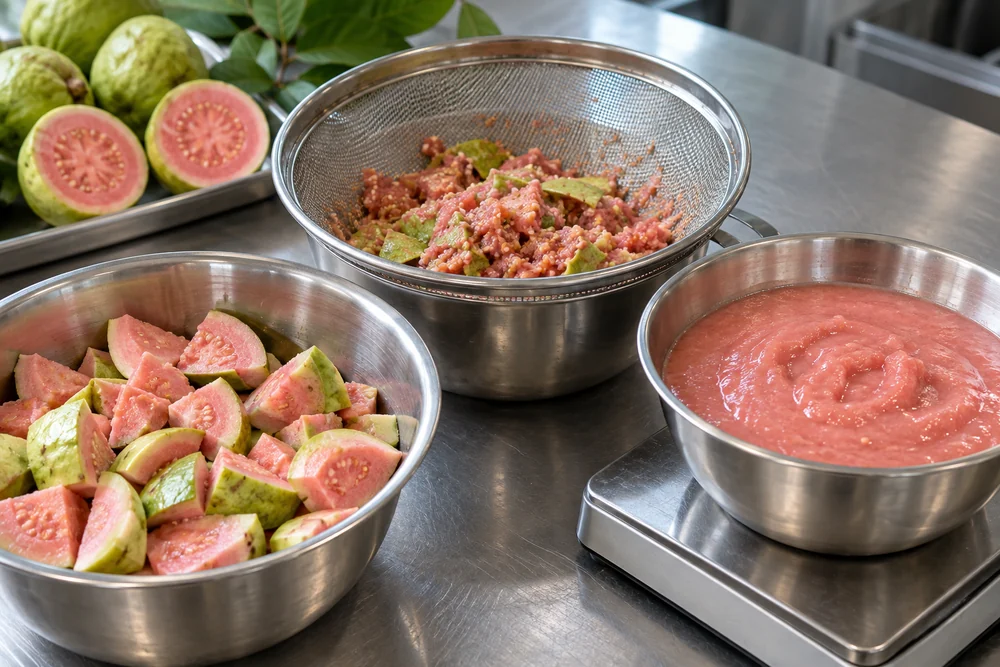
Separate collection points make a defined recovery calculation possible; the scene supplies no measured yield.
Consider an illustrative calculation with 10 kg of frozen fruit yielding 7 kg of acceptable screened base and 3 kg of combined residue and measured losses, with no water added. Recovery is 70% for that defined operation. If 2 kg of water is then mixed into the 7 kg base, the resulting 9 kg is a diluted blend. It does not demonstrate 90% recovery of fruit tissue. These numbers are an arithmetic example, not an expected guava yield or a GreenLand lot result.
When water is introduced before screening, simple output mass divided by fruit input becomes harder to interpret. State whether the result is gross wet recovery, recovered solids, or another agreed measure. A solids balance can help, but it requires appropriate analytical measurements and assumptions. Avoid subtracting all added water from the collected stream unless the method accounts for water retained in residue and equipment. The calculation should fit the actual route rather than create an apparently precise percentage from incomplete measurements.
Inspect the residue before deciding that a lower yield reflects inferior fruit. It may contain substantial recoverable flesh because the preparation or equipment setting differs. Conversely, higher recovery may include peel fragments or seed particles that the finished drink rejects. Repeat the agreed procedure on more than one representative sample when the result drives a material purchasing decision. Report the spread of observed recovery and the conditions used instead of presenting one favorable run as a guaranteed commercial result.
Set the drink's body and sediment tolerance
Check the material balance for unexplained differences. Input fruit and recorded additions should be reconcilable with collected streams, identified hold-up and other measured losses within the method's practical uncertainty. A poor closure can point to spillage, material remaining in equipment or a weighing mistake. It should prompt investigation before the percentage is used for purchasing. The objective is a credible comparison that the next operator can reproduce, rather than extra decimal places. Report the method's limitations alongside the result when the decision is sensitive to a small yield difference.
A screened guava base may still produce a naturally cloudy beverage. That appearance can be desirable when the product promises fruit body. A clear drink requires a different processing objective. AIJN's public guava reference introduction recognizes cloudy and clear guava juice; the terms do not establish that a simple kitchen sieve can produce both. Specify the desired appearance and texture before selecting the input or comparing recovery.
Evaluate the base in the real recipe. Keep fruit contribution, sweetening, acid balance and serving temperature controlled when comparing samples. A thicker sample can seem more intensely fruity while also blocking a narrow drinking straw or leaving an unwanted coating. A thinner sample may pour easily but deliver less body. Sensory approval should include aroma, sweetness-acidity balance, visible specks and grit, with observations recorded at the same stage of preparation.
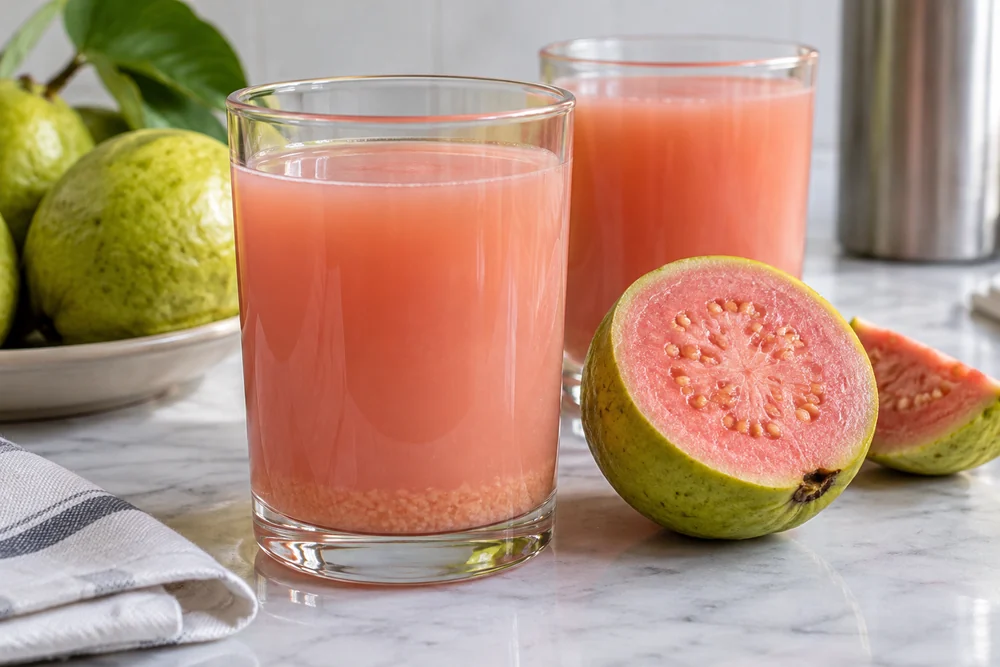
Evaluate body and settled appearance under a defined resting and serving procedure.
Sediment needs a defined observation method. State the container, fill amount, resting time, temperature and whether the product is evaluated before or after normal shaking. Photograph the samples under the same light. A layer observed after a short bench rest is not a shelf-life study, but it can help screen out a route that fails the intended appearance. Confirm promising samples in the actual package and intended distribution conditions before making a stability claim.
Guava introduced into a blend also interacts with its partners. A mango or dairy base may accommodate more pulp than a delicate tea-style drink. Acid addition and heat treatment can alter the appearance of a formulated system. Test those operations in their intended order. It is unhelpful to approve a cold, freshly mixed beaker if the commercial product will be heated, homogenized, filled and stored before consumption.
Relate the sensory result back to economics. A cheaper fruit input that requires more screening, lower fruit loading or an additional stabilization step may change the finished cost. An attractive base that does not meet the seed-fragment requirement should not receive credit for all of its gross mass. The useful output is the quantity that meets the agreed beverage standard. Keep that standard visible in the trial record so procurement and product development are comparing the same result.
Treat screening and safety as separate controls
Where several candidates are compared, use coded samples when practical and assess them in matched containers. Ask the sensory team to identify the attribute behind a preference: aroma, smoothness, body, visible specks or the balance of sweetness and acidity. A single score such as good gives procurement little help with the next crop. Keep the approved drink reference and the recipe preparation beside the observations. A later lot can then be checked for the property that actually mattered, while the technical team reviews any associated formula or process change.
Removing hard seeds and peel improves the physical suitability of the base. It does not demonstrate control of pathogens. A processor must identify the hazards associated with its fruit, process, package and intended use, then establish and verify the relevant controls. Supplier documents, hygiene during thawing and a validated downstream treatment have different roles. None should be implied by a photograph of clean equipment or by the word frozen on a specification.
For a U.S. juice operation, the FDA juice HACCP questions and answers provide a starting point for understanding the regulatory framework. The requirements that apply depend on the actual operation and product. A beverage team should determine the applicable obligations with its qualified food-safety personnel. A supplier article cannot assign one heating schedule to every guava drink or establish a universal shelf life.
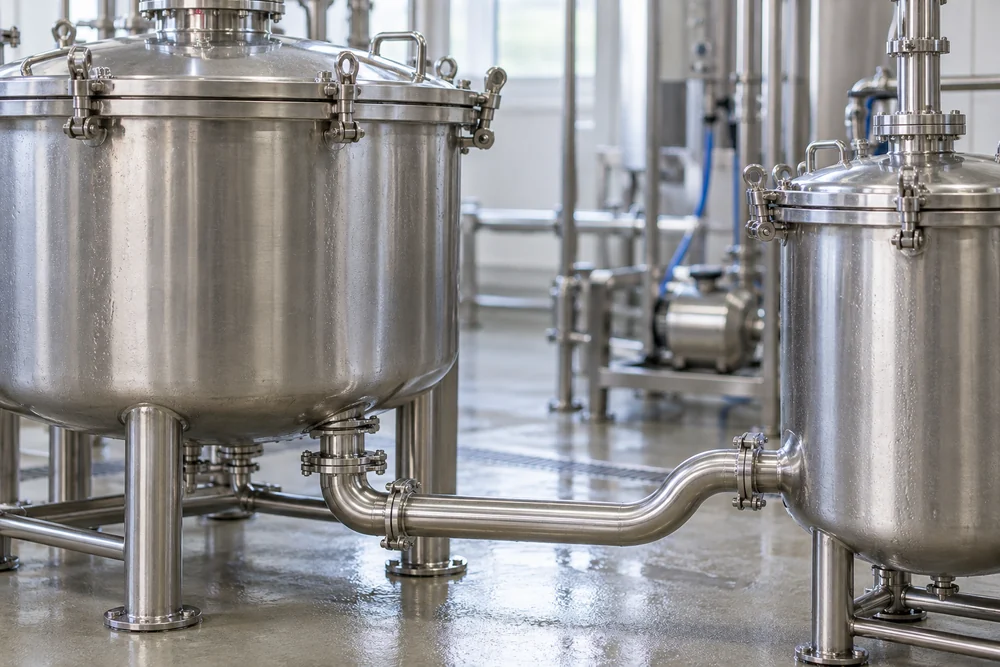
A closed transfer illustrates one hygienic handling arrangement; it is not evidence of a validated safety treatment.
Follow hygienic handling through every transfer. Covered prepared fruit, clean collection vessels and separation of incoming raw material from treated product help protect the intended process. Record any interruption or unexpected holding period that could affect the trial's validity. If a small pilot uses equipment with a different heat-transfer pattern or residence time from the production line, treat its sensory result as development evidence and validate the commercial process separately.
Packing also changes the control question. A frozen base intended for further processing, an aseptically packed puree and a chilled finished drink require different storage and use instructions. Do not take a shelf-life statement from a supplier's aseptic puree page and attach it to raw frozen pieces. Ask what the offered ingredient actually is, how it is packed, what its validated storage conditions are and what the receiving plant must do before the final product is released.
Keep food-safety acceptance distinct from quality preferences in the trial decision. A color or body adjustment may be a formulation choice. An unidentified seed fragment, damaged pack or missing required process record can demand a separate disposition. The person reviewing the sample should know which observations are mandatory gates and which can be discussed within an agreed quality range. That makes the purchasing decision easier to defend and repeat.
Approve the guava lot through the same trial
The pilot report should also identify which evidence remains to be established at production scale. An acceptable texture from a small mill does not determine the capacity, cleaning demands or hold-up of a larger finisher. The engineering and quality teams should confirm the relevant route before the purchasing plan depends on it. If a second refining pass becomes necessary during scale-up, repeat the useful-yield calculation at that revised endpoint. Keep the earlier trial as development history, and make the accepted commercial method clear in the final approval record.
The RFQ should describe the frozen ingredient that enters the approved route: skin-on or peeled state, seed tolerance, flesh color, cut distribution, intended application, pack and destination. Add the measured acceptance methods that influence performance, including how representative pieces are selected and how the screened output is judged. A request for guava with no seed problem is too vague to connect a price to a reproducible result.

Confirm the purchased preparation and its lot before comparing usable output.
Where soluble solids and acidity affect formulation, agree the method, reporting basis and sample preparation. A Brix value from a clear liquid fraction and one from a prepared puree should not be assumed interchangeable. Nor does a sweet taste establish the same acidity or fruit identity. Published specifications from other puree suppliers can suggest useful questions, but their numerical ranges are not specifications for a GreenLand frozen-piece lot.
Retain the link between the offered sample, trial record and purchased lot. Record any change in variety, origin, season, preparation or packing that could alter the result. A new crop does not automatically fail an approved application, but it may need a comparison under the same conditions. Define who reviews a changed sample and what evidence is needed before it enters an established beverage formula. This is especially useful when several teams share purchasing responsibility.
Calculate commercial value at the point where the fruit becomes usable. Include the delivered ingredient price, agreed recovery, preparation time, disposal, equipment demands and losses that matter to the plant. Keep recipe water, sugar and finished beverage volume in their own part of the calculation. An inexpensive kilogram of incoming fruit can be a good purchase when it performs well through the route; a more prepared input can be worthwhile when the avoided operations justify its price.
We can discuss a representative frozen guava sample and the form, packing and documents appropriate to the proposed order. Share the pulping route and the finished drink's seed, peel and texture requirements with the inquiry. When the same trial defines the approved sample and later lot checks, the quotation becomes connected to a measurable application rather than an attractive photograph or an undefined juice-yield promise.
Source Frozen Guava with GreenLand-food
GreenLand-food is a professional frozen guava supplier and manufacturer in China, providing factory-direct wholesale supply for importers, food manufacturers, foodservice distributors and private-label programs.
Send your required product form, specification, packing, quantity, application, destination, private-label needs and requested documents. Include the seed and peel tolerance and the preparation route your plant plans to use, so the sample and quotation describe the actual ingredient.
We confirm the offered form and pack for the order; any peeled, seed-reduced or puree request needs its own preparation evidence and approval.