


How Long to Cook Shiitake Mushrooms?
Sep 02, 2026
Leave a message
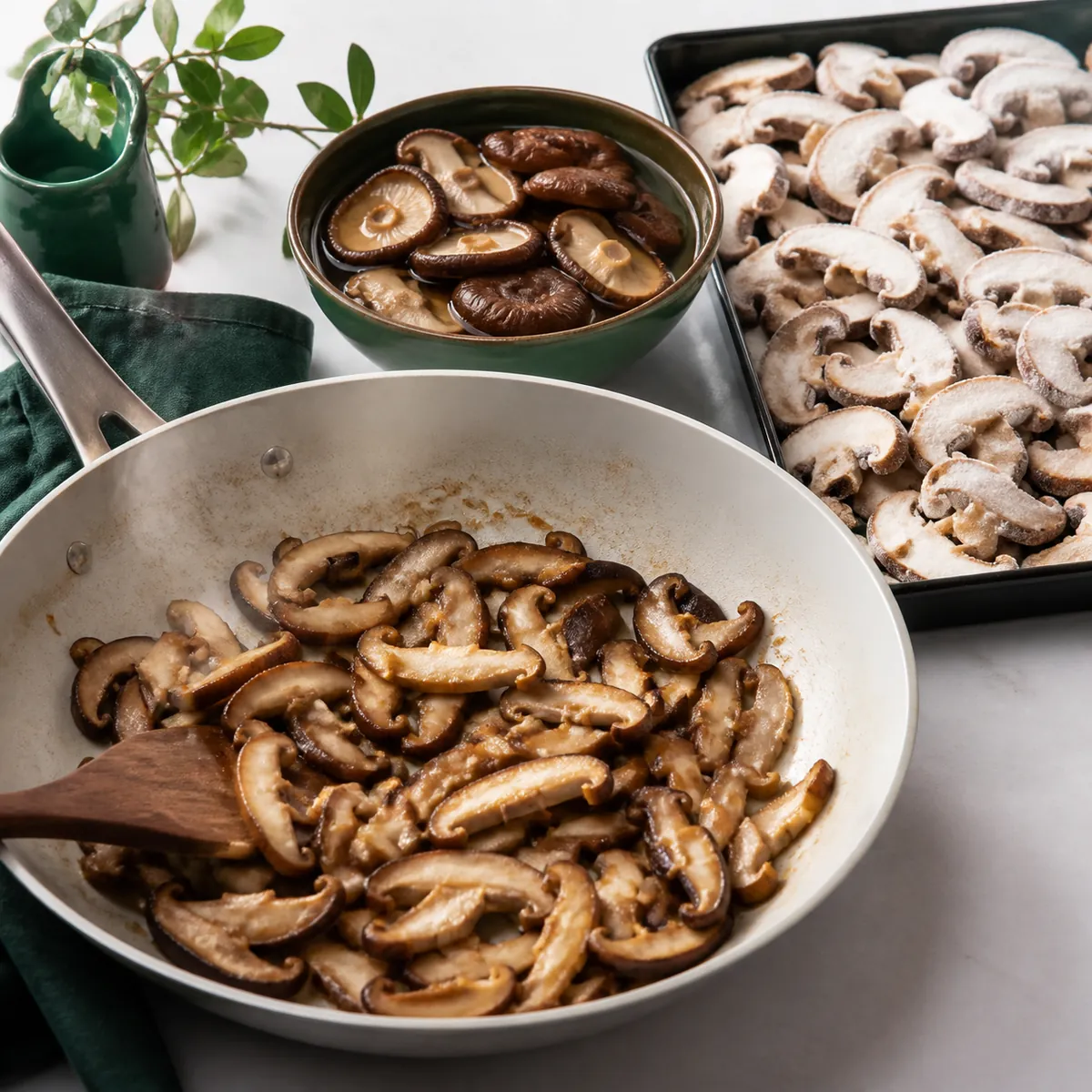
Use different clocks for fresh, dried and frozen shiitake
Fresh shiitake are done when the slices have released moisture, browned at the edges and become tender. Dried shiitake need full rehydration first; then simmer until the cap is tender through the thick center. Frozen shiitake need room in the pan so thaw water can leave before browning.
The clock is a check window, not the endpoint. Cap thickness, whole versus sliced format, soak, pan load, sauce and equipment change the time. For routine service, cook shiitake thoroughly rather than using raw or barely warmed pieces.
Key takeaways
Shiitake cooking time by format and method
| Format and method | Preparation | Typical cooking window | Endpoint |
|---|---|---|---|
| Fresh sliced, sauté | Clean, remove tough stem, slice evenly | 5–8 minutes | Tender, browned edges, no raw firm center. |
| Fresh whole caps, roast | Trim stems, oil lightly | 12–20 minutes at about 400°F/204°C | Hot, tender and lightly browned. |
| Dried caps, simmer | Soak until fully pliable, trim stem | 15–30 minutes after soaking | Thick center tender; broth aromatic. |
| Dried caps, quick soup finish | Use fully rehydrated thin slices | 10–20 minutes | Tender in the final broth. |
| Frozen sliced, sauté | Cook from frozen in a wide pan | 7–12 minutes | Released water evaporated; slices hot and tender. |
| Frozen shiitake in soup | Add to simmering liquid | 8–15 minutes | Evenly hot and tender in the completed dish. |
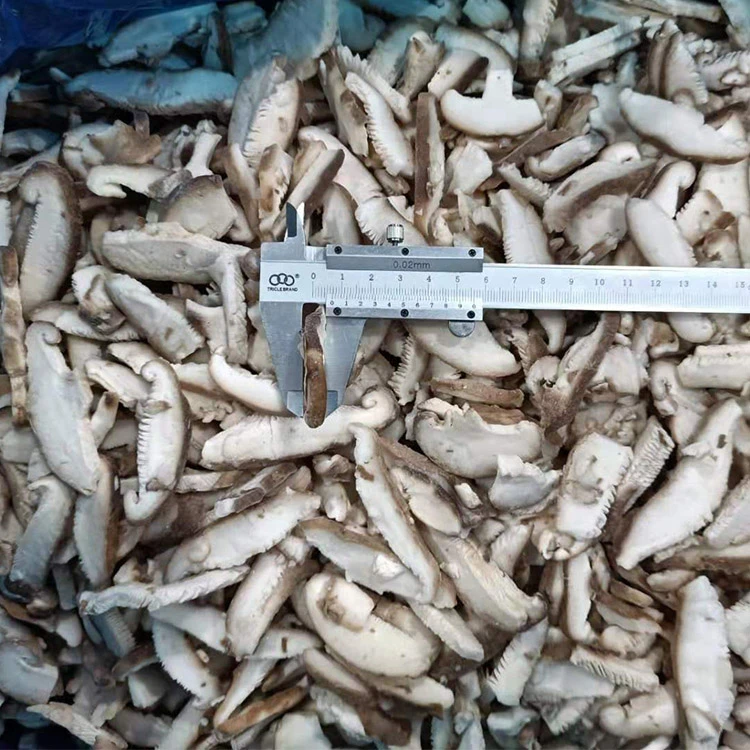
How to sauté shiitake mushrooms
- Prepare the format. Clean fresh caps, fully rehydrate dried mushrooms, or keep frozen slices frozen until the pan is ready.
- Remove tough stems. Save suitable stems for stock if desired, but do not expect thick fibrous stems to tenderize like caps.
- Cut evenly. Uniform slices finish together and give a useful timing window.
- Heat a wide pan. Use enough surface area for released water to evaporate.
- Add mushrooms without crowding. Cook in batches rather than steaming a deep pile.
- Let moisture release. Stir enough for even contact but do not continuously cool the pan.
- Season after the wet phase. Add salt, aromatics and sauce at the point that suits the recipe and browning target.
- Stop when fully tender. Taste the thickest piece and serve or continue into the final dish.
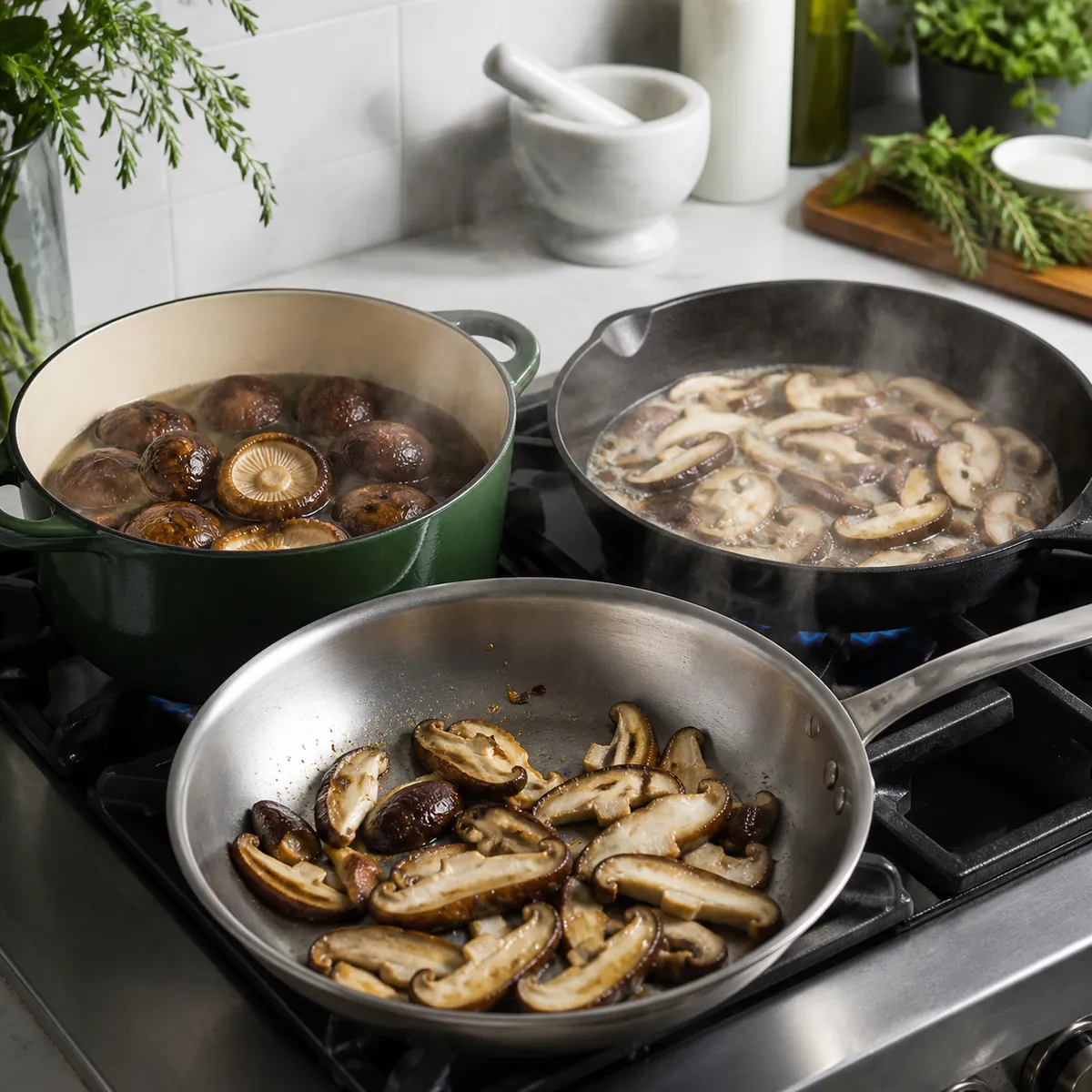
Fresh shiitake preparation is simple but not careless
Wipe or rinse quickly when needed and dry before sautéing. Remove the hard end of the stem; very tough stems are better for stock than for quick cooking. Slice caps to a consistent thickness.
A hot pan and modest load let moisture escape. If the pan floods, keep cooking until the liquid evaporates before expecting browning. Adding a wet sauce at the start extends the steamed phase.
Dried shiitake timing begins with rehydration
Dried caps may need several hours in cool water for an even tender center, though warm-water methods can be faster. The cap should bend without a hard core before cooking. Strain the soaking liquid if it will be used.
A thick rehydrated cap can remain chewy after a short boil. Gentle simmering allows the center to tenderize and flavor to move into the broth. Whole caps need longer than thin slices.
Frozen shiitake should not sit thawing on the counter
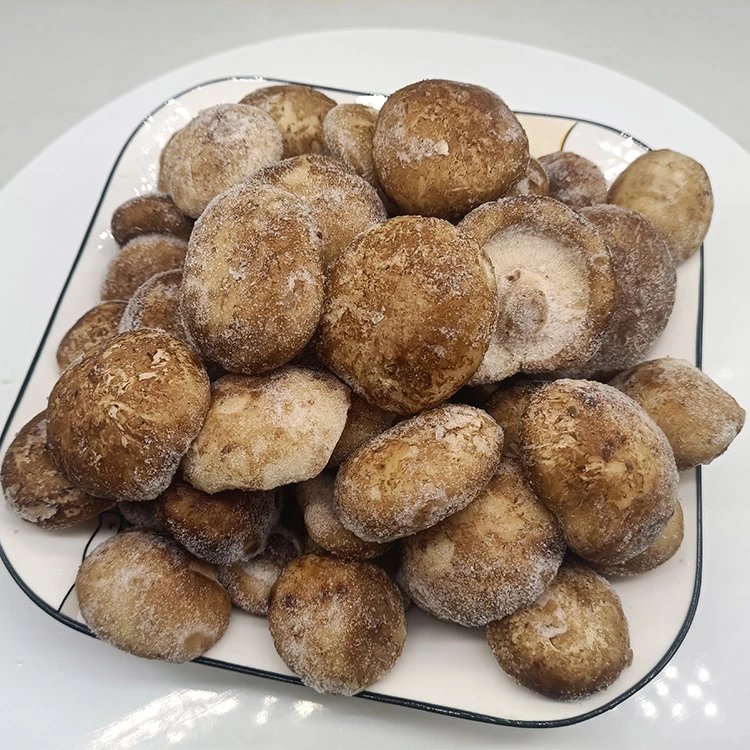
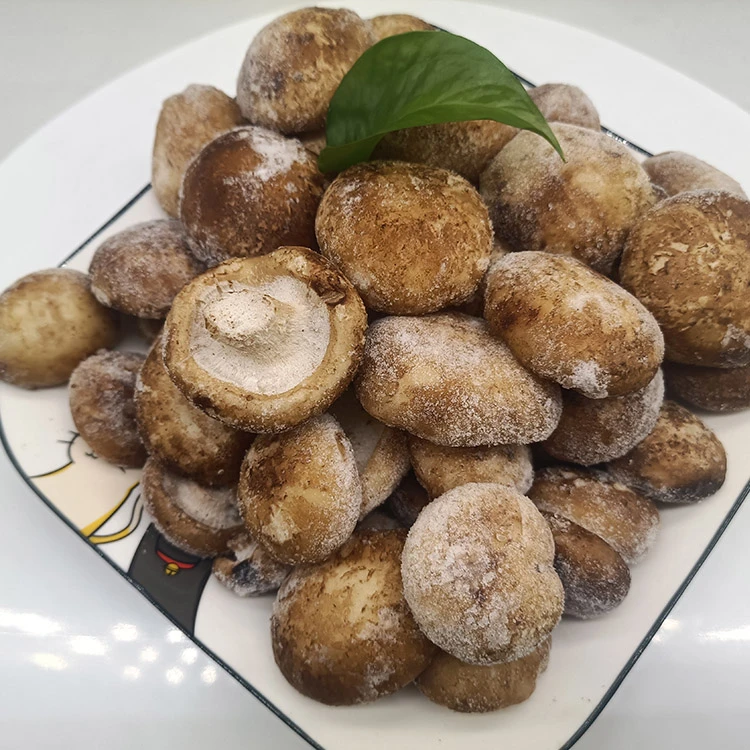
Move the required portion from freezer to pan or use a controlled thaw if the recipe specifically needs drained mushrooms. Frozen slices initially cool the pan and release water; a wide surface and moderate batch size protect texture.
Once the water has mostly evaporated, add oil if needed for browning. If the mushrooms enter soup or sauce, the released liquid may be acceptable, but it still changes dilution and seasoning.
Boiling time depends on what the liquid must accomplish
A brief simmer can heat thin fresh or frozen slices in a soup. Dried whole caps need more time because cooking must tenderize the rehydrated structure. A hard rolling boil can damage delicate pieces and reduce broth clarity without making a thick center tender much faster.
Check texture with a bite or clean utensil. The finished cap should be tender and flexible, not rubbery or raw-firm. For foodservice, define the largest piece and kettle load because they determine the slowest point.
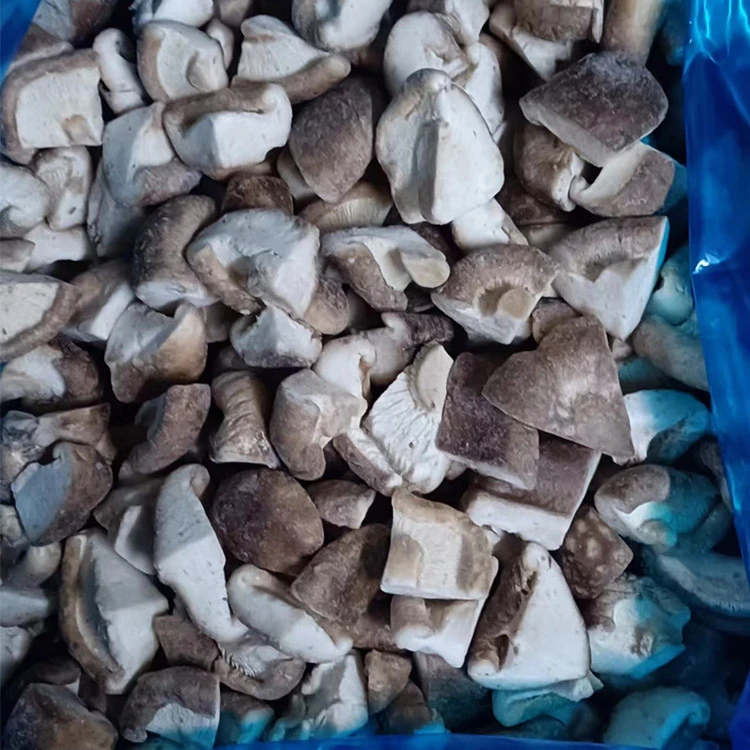
Troubleshooting the most common failures
| Problem | Likely cause | Next adjustment |
|---|---|---|
| Rubbery fresh slices | Pan crowded or cooking stopped before tenderness | Reduce load and cook through the moisture-release phase. |
| Hard dried center | Incomplete soak or cap too thick | Extend rehydration and simmer gently. |
| Watery frozen batch | Too much product in a cool pan | Use smaller loads and a wider hotter pan. |
| Burned garlic, pale mushrooms | Aromatics added before water evaporated | Brown mushrooms first, then add sensitive aromatics. |
Create a timing standard for each shiitake format
Begin by writing the finished target in observable language. For fresh, dried and frozen shiitake used in sautés, soups, sauces, rice, noodles and prepared meals, the useful endpoint is fully tender aromatic shiitake with the method-specific moisture and browning target. That statement is more operational than a vague direction such as "cook until done" or "use good quality." It tells purchasing, kitchen and quality teams what the trial must demonstrate, while leaving room for equipment-specific timing.
Use a representative sample, not the most attractive handful. Pull material from several positions in the bag, case or lot and record clumps, free water, broken pieces, color and odor before preparation. If the article concerns a finished dish, record the ingredient batch and the pan or container depth as well. Small input differences often explain a large finished difference.
Measure the starting condition. Frozen ingredients should be hard frozen unless a controlled thaw is part of the method; fresh raw material should be at the defined receiving and storage condition; cooked food should have an accurate preparation time. An uncontrolled bench period creates a new process that cannot be compared fairly with the approved one.
Run the first trial at a deliberately manageable scale. Weigh the main ingredient, liquid, oil, sauce and seasoning. Record equipment model, vessel dimensions, load depth and actual settings. A reliable small trial produces a baseline; a casual large trial produces too many possible causes when hard centers, rubbery slices, watery pans or raw undercooked service appears.
Observe the process rather than watching only the clock. Note the moment frost melts, water releases, sauce thickens, slices become tender, grit settles or the center warms-whichever signals apply. Those observations reveal why two batches with the same nominal minutes can finish differently.
Check the slowest or most difficult portion. It may be the thickest mushroom cap, the center of a casserole, the largest fry, a dense kettle zone or the bottom of a wash load. Edge color and surface heat can look satisfactory while the limiting point remains outside the target.
Scale in controlled steps. Increasing a batch changes heat recovery, evaporation, agitation, cooling and holding. Doubling ingredient weight does not automatically double time, nor does it preserve the same surface area. Establish a maximum load per pan, basket, tank or kettle and retest before exceeding it.
Record yield as well as appearance. Weigh input, prepared output, trim or drip loss and rejected material. Yield connects quality to cost and helps explain portion changes. A cheaper delivered product can cost more per acceptable serving when frost, defects, breakage or trim are high.
Include the real hold. Evaluate fully tender aromatic shiitake with the method-specific moisture and browning target immediately and again after the normal service, display, refrigeration or delivery interval. Steam migration, continued starch hydration, sauce absorption and moisture loss can change the result after the active cook or preparation step has ended.
Test the final application rather than approving an isolated ingredient only. A sample that works in a small skillet may behave differently in a soup, ready meal, buffet pan, retail pack or bakery formula. Include any chilling, freezing, thawing and reheating that the customer will actually use.
Define corrective actions before production. If the process trends toward hard centers, rubbery slices, watery pans or raw undercooked service, staff need a bounded response: reduce load, hold the lot, adjust within an approved range, repeat a rinse, extend a controlled thaw, or reject the material. Improvised corrections should not silently become a new formula.
Receiving evidence protects both buyer and supplier. Record product temperature, packaging condition, lot code, photographs and representative defects before the material is dispersed. When the finished result changes, compare the affected lot against an approved reference under the same method.
Cold-chain and storage control continue after acceptance. Door openings, partial thawing, condensation, light exposure or poor ventilation can change the ingredient before it reaches the kitchen. A good purchase specification cannot compensate for uncontrolled local storage.
Compare supplier samples under identical conditions. Keep load, equipment, liquid, seasoning and endpoint constant. Score only attributes that matter to the application. Changing the recipe for every sample hides whether the input is suitable and makes commercial comparison unreliable.
Turn the approved result into a short working standard. Include input condition, batch weight, equipment, sequence, approximate check window, observable endpoint, hold and rejection triggers. Train staff to use the endpoint within that boundary rather than treating one minute as a substitute for judgment.
Review complaints with data. Separate product defects from handling, recipe and equipment causes. If hard centers, rubbery slices, watery pans or raw undercooked service occurs, reconstruct the lot, input condition, load, settings and hold. The aim is not to assign blame quickly; it is to identify which control failed and stop the same failure from returning.
For private-label instructions, test realistic customer equipment and behavior. Give a usable range plus clear visual or texture cues. Avoid promising one exact result across every appliance, pan, serving size or storage history when the evidence supports only a controlled range.
Release commercial claims only after the evidence matches them. Words such as ready to eat, fully cooked, washed, quick-cook or freezer-stable carry process expectations. Put the declared status, preparation directions and supporting documents into one coherent specification.
Revisit the standard when crop, cut, formula, pack, factory, equipment or intended use changes. A result approved for fresh, dried and frozen shiitake used in sautés, soups, sauces, rice, noodles and prepared meals is not automatically transferable to another application. Change control keeps a once-valid method from becoming an assumption.
How we review a frozen shiitake mushrooms enquiry
At GreenLand-food, we start with the intended use rather than a product name alone. For this program, the first technical points are fresh dried or frozen format, cap diameter, slice thickness, stem allowance, rehydration instruction. We match the sample review to fresh, dried and frozen shiitake used in sautés, soups, sauces, rice, noodles and prepared meals so the purchasing team can see whether the proposed format reaches fully tender aromatic shiitake with the method-specific moisture and browning target.
Send the destination market, required pack, annual or trial volume, preferred delivery window and whether the program is foodservice, industrial, retail or private label. MOQ, mixed loading, lead time and loading port depend on the selected item and order plan, so we confirm them during the quotation instead of inserting a universal figure into the article.
For sample approval, we recommend one written method and one score sheet. Keep load, equipment and endpoint constant; record yield, defects and the normal hold. If the result trends toward hard centers, rubbery slices, watery pans or raw undercooked service, the record shows whether to adjust the application, tighten the specification or review another format.
Document needs also vary by market and customer. Share the requested product specification, certificate or audit support, ingredient and allergen declarations, origin wording, microbiological requirements and shipment documents at RFQ stage. We can then review which controlled copies apply to the proposed supply.
Specification and approval checks for frozen shiitake mushrooms
1. fresh dried or frozen format. Define what is acceptable, how it will be sampled and how it affects fresh, dried and frozen shiitake used in sautés, soups, sauces, rice, noodles and prepared meals. Check the attribute on the frozen or received product and again at the finished endpoint. Record the result against the approved reference, not an unwritten impression. If it contributes to hard centers, rubbery slices, watery pans or raw undercooked service, set a hold, correction or rejection rule before ordering commercial volume.
2. cap diameter. Define what is acceptable, how it will be sampled and how it affects fresh, dried and frozen shiitake used in sautés, soups, sauces, rice, noodles and prepared meals. Check the attribute on the frozen or received product and again at the finished endpoint. Record the result against the approved reference, not an unwritten impression. If it contributes to hard centers, rubbery slices, watery pans or raw undercooked service, set a hold, correction or rejection rule before ordering commercial volume.
3. slice thickness. Define what is acceptable, how it will be sampled and how it affects fresh, dried and frozen shiitake used in sautés, soups, sauces, rice, noodles and prepared meals. Check the attribute on the frozen or received product and again at the finished endpoint. Record the result against the approved reference, not an unwritten impression. If it contributes to hard centers, rubbery slices, watery pans or raw undercooked service, set a hold, correction or rejection rule before ordering commercial volume.
4. stem allowance. Define what is acceptable, how it will be sampled and how it affects fresh, dried and frozen shiitake used in sautés, soups, sauces, rice, noodles and prepared meals. Check the attribute on the frozen or received product and again at the finished endpoint. Record the result against the approved reference, not an unwritten impression. If it contributes to hard centers, rubbery slices, watery pans or raw undercooked service, set a hold, correction or rejection rule before ordering commercial volume.
5. rehydration instruction. Define what is acceptable, how it will be sampled and how it affects fresh, dried and frozen shiitake used in sautés, soups, sauces, rice, noodles and prepared meals. Check the attribute on the frozen or received product and again at the finished endpoint. Record the result against the approved reference, not an unwritten impression. If it contributes to hard centers, rubbery slices, watery pans or raw undercooked service, set a hold, correction or rejection rule before ordering commercial volume.
6. frozen free-flow. Define what is acceptable, how it will be sampled and how it affects fresh, dried and frozen shiitake used in sautés, soups, sauces, rice, noodles and prepared meals. Check the attribute on the frozen or received product and again at the finished endpoint. Record the result against the approved reference, not an unwritten impression. If it contributes to hard centers, rubbery slices, watery pans or raw undercooked service, set a hold, correction or rejection rule before ordering commercial volume.
7. surface frost. Define what is acceptable, how it will be sampled and how it affects fresh, dried and frozen shiitake used in sautés, soups, sauces, rice, noodles and prepared meals. Check the attribute on the frozen or received product and again at the finished endpoint. Record the result against the approved reference, not an unwritten impression. If it contributes to hard centers, rubbery slices, watery pans or raw undercooked service, set a hold, correction or rejection rule before ordering commercial volume.
8. moisture release. Define what is acceptable, how it will be sampled and how it affects fresh, dried and frozen shiitake used in sautés, soups, sauces, rice, noodles and prepared meals. Check the attribute on the frozen or received product and again at the finished endpoint. Record the result against the approved reference, not an unwritten impression. If it contributes to hard centers, rubbery slices, watery pans or raw undercooked service, set a hold, correction or rejection rule before ordering commercial volume.
9. color and aroma. Define what is acceptable, how it will be sampled and how it affects fresh, dried and frozen shiitake used in sautés, soups, sauces, rice, noodles and prepared meals. Check the attribute on the frozen or received product and again at the finished endpoint. Record the result against the approved reference, not an unwritten impression. If it contributes to hard centers, rubbery slices, watery pans or raw undercooked service, set a hold, correction or rejection rule before ordering commercial volume.
10. cooking direction. Define what is acceptable, how it will be sampled and how it affects fresh, dried and frozen shiitake used in sautés, soups, sauces, rice, noodles and prepared meals. Check the attribute on the frozen or received product and again at the finished endpoint. Record the result against the approved reference, not an unwritten impression. If it contributes to hard centers, rubbery slices, watery pans or raw undercooked service, set a hold, correction or rejection rule before ordering commercial volume.
Frequently asked questions
How long do fresh shiitake mushrooms take to sauté?
Thin fresh slices commonly take about 5–8 minutes, depending on heat, load and thickness. Cook until tender with browned edges.
How long should dried shiitake be boiled?
After full rehydration, simmer whole caps roughly 15–30 minutes as a starting range. Thick caps may need longer.
Do you need to soak dried shiitake before cooking?
Yes for most uses. Soak until the cap is pliable through the center, then trim the stem and cook.
Can frozen shiitake be cooked from frozen?
Yes. Use a wide pan or add them to a simmering dish, allowing extra time for thawing and released water.
How do you know shiitake mushrooms are cooked?
They should be hot and tender through the thickest piece, with no raw-firm center. Sautéed slices may also show browned edges.
Should shiitake stems be eaten?
Tender stem portions may be usable, but thick woody stems are usually removed and can be used for stock.
Review frozen shiitake mushrooms for a controlled commercial program
GreenLand-food is a frozen shiitake mushrooms supplier and manufacturer supporting factory-direct and wholesale programs. Share your intended application, specification, pack, market and expected volume so our team can review supply and sample requirements.