


How to Bake Bell Peppers
Sep 11, 2026
Leave a message
Research This Article & Topic with AI
Verify key claims, compare reliable sources, and explore GreenLand-food's practical frozen food knowledge.
Article details and research questions are prepared in the links. Sign-in or sending may be required.
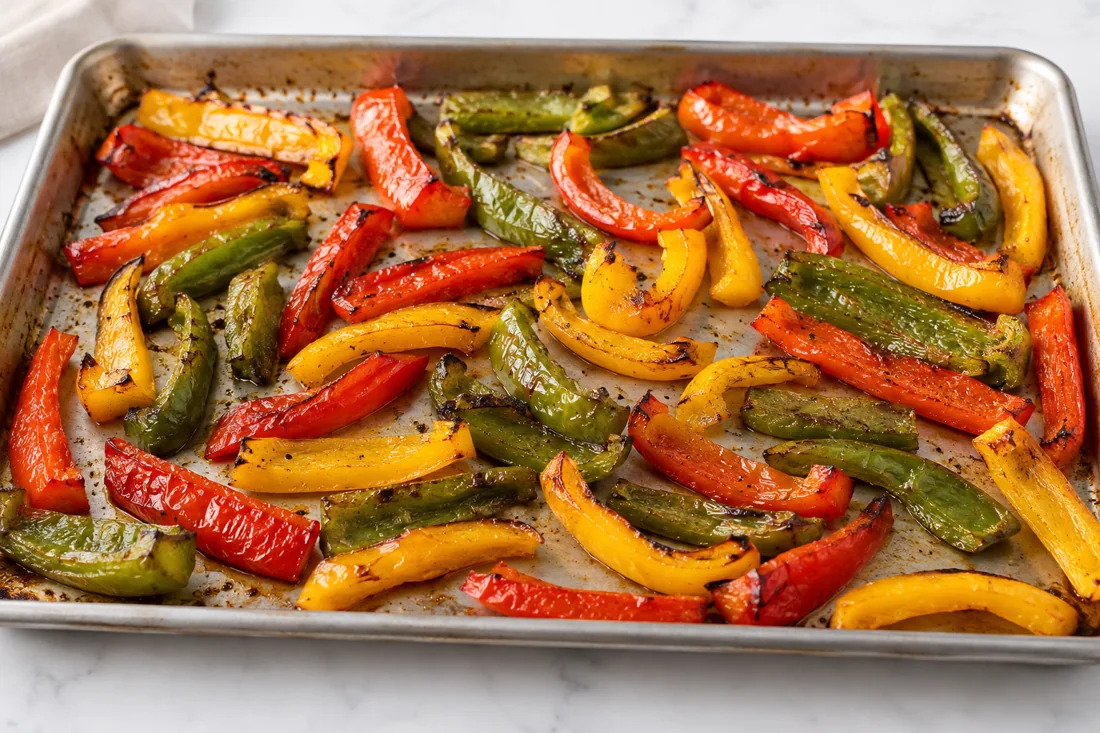
Choose the result before setting the timer. Tender strips with lightly browned edges are different from whole or halved peppers roasted until the skin can be removed. Frozen dice intended for a filling are different again. A method designed to char a large skin surface should not be copied unchanged for small pieces that can dry or burn much sooner.
For a repeatable result, control four things: the cut, the starting condition, the amount on the tray and the finish you want. Then inspect the flesh and surface during cooking. We use the same approach when reviewing frozen pepper ingredients for foodservice: the sample needs to work in the actual oven load and recipe, not just look attractive in the frozen state.
Choose the cut and the finish you want
Bell peppers can be baked as halves, broad strips, smaller pieces or whole fruit, depending on the recipe. Halves provide a large skin surface and are convenient when the goal includes peeling after roasting. Strips are useful for sandwiches and vegetable sides. Dice distribute through fillings and sauces, but their smaller dimensions mean that a whole-pepper timetable is a poor guide.
Decide whether the skin will remain in the dish. For skin-on strips, a little browning and a flexible, tender wall may be enough. For peeled roasted peppers, the skin needs to separate more readily, and a recipe may deliberately use stronger blistering. Those are different endpoints. Blackened skin is not a necessary target for every tray of baked pepper pieces.
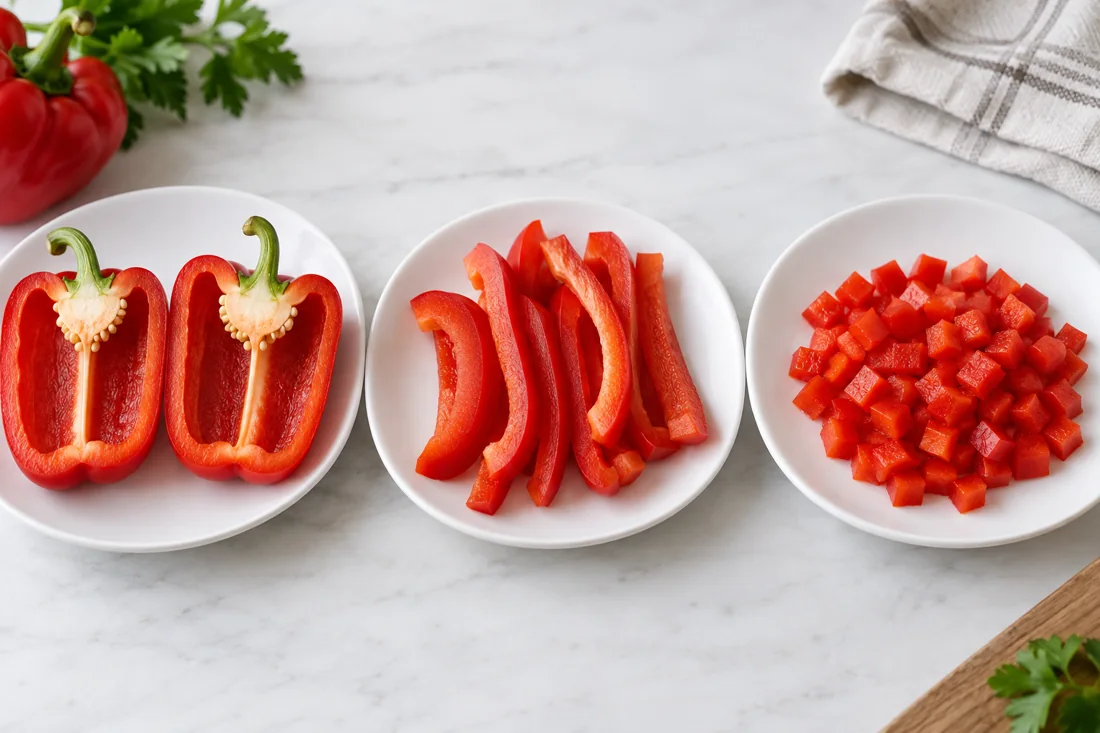
Halves, strips and dice present different cooking dimensions.
Wall thickness affects how the cut cooks. Two strips of similar length can take different times to soften if one comes from a much thicker-walled pepper. Natural curvature also changes contact with the tray. Use reasonably consistent pieces within a batch and assess representative thicker sections, rather than relying on the fastest-cooking thin edge to judge the entire load.
Large pieces can retain a more substantial bite, while smaller pieces can be easier to distribute through a mixed dish. The right size depends on the customer experience. A long strip may pull out of a sandwich if it is difficult to bite through; tiny dice may disappear in a vegetable side intended to show distinct pepper pieces. Choose the cut with the serving format in mind.
| Intended result | A practical starting form | Main check during baking |
|---|---|---|
| Skin-on sandwich or side ingredient | Broad strips or manageable pieces | Flexible flesh, suitable bite and limited free liquid |
| Peeled roasted pepper | Halves or another form specified by the recipe | Adequate skin blistering and tender flesh |
| Filling or sauce ingredient | Dice or smaller pieces | Even cooking without excessive drying |
| Stuffed pepper dish | Intact shells or prepared halves | The complete filling's cooking requirements as well as the shell |
Stuffed peppers require separate consideration. A tray of bare vegetables is not equivalent to a shell filled with raw meat, cooked rice or a chilled prepared mixture. Follow a complete recipe and the appropriate cooking requirements for the filling. The pepper's softened wall cannot establish that the centre of a filled product has reached its required condition.
For a production trial, write down the intended endpoint in observable terms. Lightly browned edges, tender but distinct pieces and no large pool of liquid are more useful than perfect roasted texture. An agreed reference sample can help the kitchen and buyer judge the result consistently. It also makes later adjustments to cut or tray loading easier to evaluate.
Prepare the peppers and the baking tray
For fresh peppers, wash under running water before cutting, then dry the surface. Remove stems, seeds and core material as appropriate to the chosen recipe. The FDA's produce-cleaning guidance recommends washing produce under plain running water rather than using soap. Cleaning before cutting also helps avoid carrying surface material onto newly exposed flesh during preparation.
Cut the peppers into a reasonably consistent form and remove loose seeds or unwanted core pieces. Drying after washing is useful for a roasting method because excess surface water adds to the moisture the oven must remove. This does not mean the food has to be completely dry inside; peppers naturally contain water. The aim is to avoid beginning with unnecessary wash water on the tray.
Use a rimmed, oven-safe tray with enough usable surface area for the batch. A light coating of oil can help the surfaces cook evenly and carry seasoning, but the pieces do not need to sit in a pool. Toss them so the coating is reasonably distributed. Follow the recipe and the temperature suitability of any tray liner or other equipment you use.
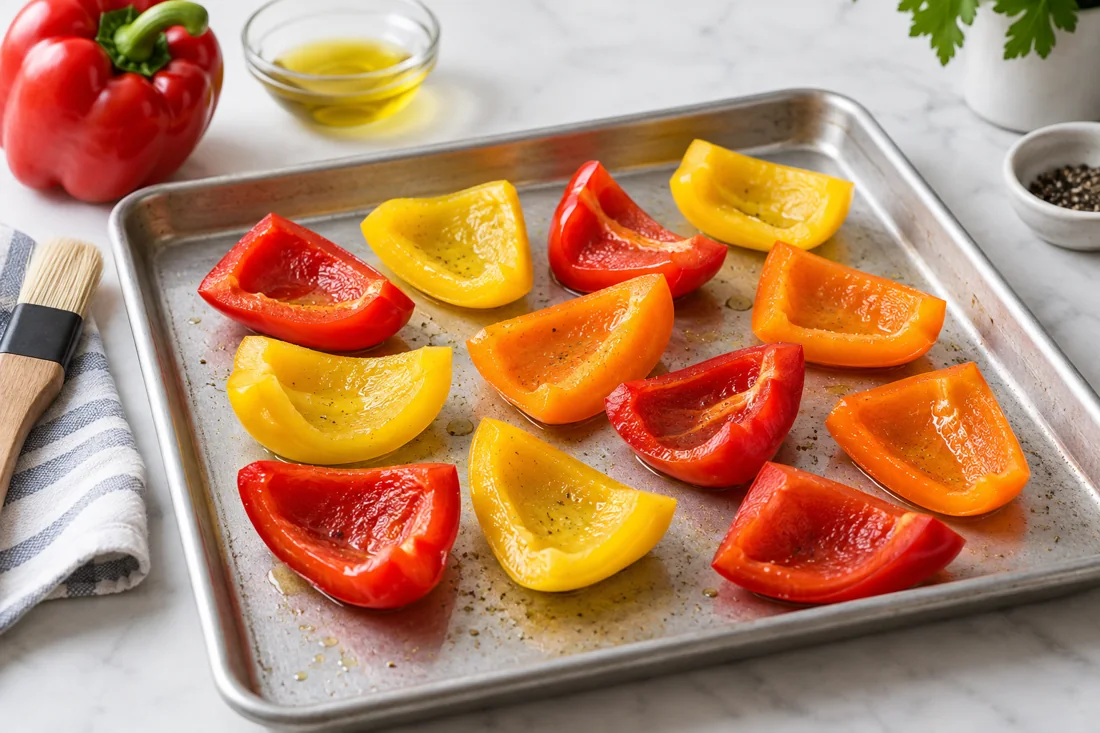
Arrange lightly oiled pepper pieces in a loose layer.
Arrange pieces in one layer with space between them where possible. A loose layer exposes more surface to the oven environment than a mound. If the quantity does not fit, use another suitable tray or cook in batches. Piling everything into a small pan and extending the time can produce soft, wet peppers without the browning expected from a properly loaded tray.
Preheat the oven before loading. Starting in a cold oven changes the heating sequence and makes a published cooking time less transferable. Place the tray according to the oven and recipe instructions, with room for air circulation. In a fan oven, the effective cooking rate may differ from a conventional oven, so use the equipment's guidance and check the food rather than assuming identical timings.
Keep additions in mind. Onions, courgettes, tomatoes and frozen vegetables can release moisture at different rates. A mixed tray may need a different cut balance or cooking sequence from a tray of peppers alone. If the peppers repeatedly finish before another component, adjust the recipe instead of continuing to bake them until the slowest ingredient catches up.
For foodservice, record the prepared weight per tray and the tray dimensions. A description such as one tray of peppers is incomplete when trays vary in size or staff load them differently. A simple weight-and-layout reference makes the cooking method easier to repeat across shifts. It is often more useful than trying to control the result by adding a few minutes to an inconsistent load.
Bake until the flesh and surface are ready
The USDA MyPlate roasted bell pepper recipe provides a concrete starting reference: a preheated 450°F oven, prepared halves, and about 30–35 minutes to reach tender flesh with blistered spots. Use the full recipe for its preparation details. That time belongs to the stated method; it is not a universal instruction for every cut, oven or frozen product.
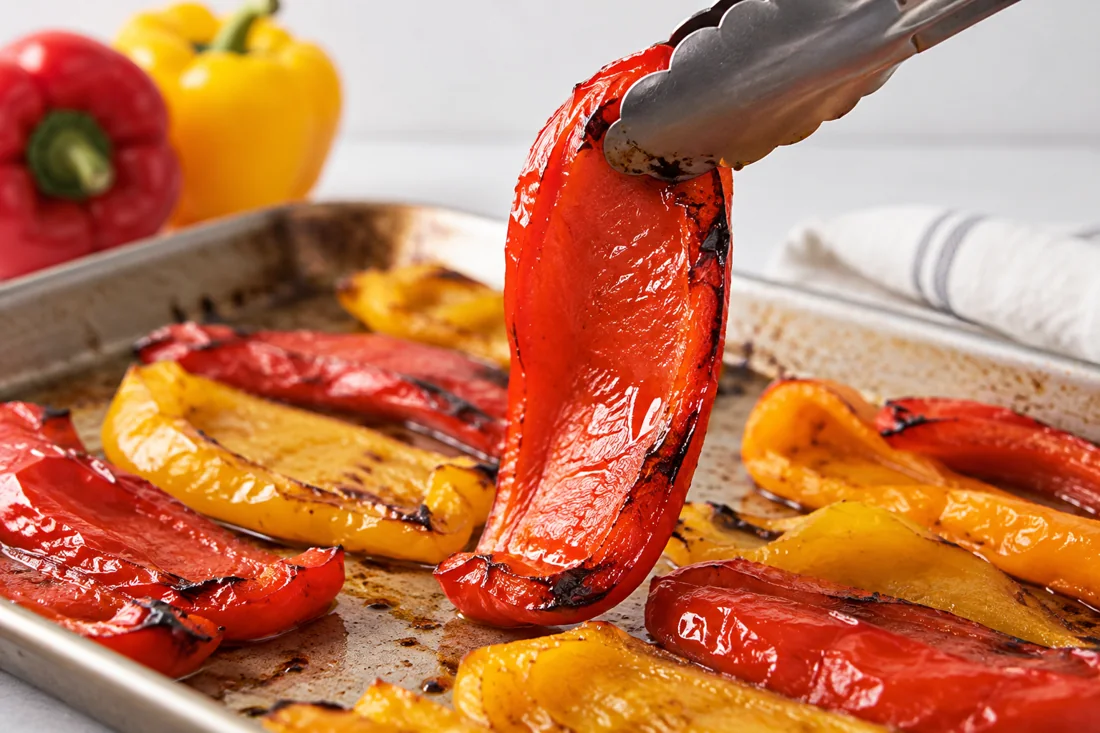
Tender flesh and the desired surface finish guide the quality check.
For skin-on strips or smaller pieces, begin checking earlier than you would for large halves. Look for flexible flesh and the surface finish required by the dish. A strip lifted with tongs should show whether it has softened, while a representative thicker piece can be tested for bite once handled safely. Thin corners may brown before the centre of a thicker wall is ready.
Use these steps to keep the decision tied to the food rather than the timer alone:
- Start with a preheated oven and the prepared tray load specified by the recipe or trial.
- Inspect during cooking, especially when using a smaller cut or a different oven from the reference method.
- Turn or redistribute pieces if the recipe and observed browning require it, keeping a loose layer rather than creating a pile.
- Check representative flesh for tenderness and inspect the surface for the intended degree of browning.
- Remove the batch when it reaches the target, then follow the recipe's finishing and serving steps.
If the edges darken quickly while the flesh remains too firm, examine cut thickness, oven behaviour and tray position. Simply waiting longer at the same conditions can overcook the edges. A revised cut or a different recipe setting may give a more even result. Keep any adjustment within a method suitable for the equipment and ingredients rather than treating browning as the only measure of success.
If the peppers are soft but pale and surrounded by liquid, the problem may be load and moisture rather than insufficient time. A crowded pan can behave more like a steaming environment. For the next batch, reduce the load or use more tray area. For the current dish, decide whether the softer result suits a sauce or filling instead of driving small pieces toward dryness in pursuit of colour.
Peeling is optional and application-dependent. When using a recipe intended for peeled roasted peppers, follow its resting and peeling sequence and handle the hot food safely. For many skin-on sides and fillings, peeling would add labour without improving the intended result. Decide at development stage so the cooking endpoint and usable-yield calculation include the same preparation steps.
Bare peppers do not need a meat-style internal temperature target to determine their preferred eating texture. However, a dish containing peppers may have food-safety requirements because of its other ingredients or preparation history. Keep those questions separate. A tender vegetable surface is a culinary observation; the complete recipe's required safety checks come from its actual composition and process.
Adjust the method for frozen pieces
Start with the frozen product's instructions. Some prepared pepper ingredients are intended to be cooked from frozen, while others may have a specified preparation sequence. Do not thaw automatically because that is how a fresh-pepper recipe begins. Confirm the product's supplied condition and follow its directions before adapting the oven method for the intended dish.
Frozen strips and mixed pieces can be useful for cooked applications, but their moisture release and texture will differ from freshly cut raw peppers. Spread the required amount in a suitable layer and assess the actual sample. A frozen piece may look firm in the bag yet soften considerably during cooking. The useful test is its condition in the finished meal.

Green bell pepper strips in a lined container.
Avoid forcing a large clump apart with a knife over an unstable tray. Handle the product according to its supplied directions and the kitchen's normal safe procedure. If unusual clumping or ice is observed, assess the pack's condition with the supplier rather than assuming it represents normal product quality. Appearance alone is not enough to diagnose the cause of a storage or handling issue.
The initial moisture load can make tray spacing especially important. Pieces placed in a deep mound have less exposed surface for evaporation than a loose layer. The result may be acceptable for a soft filling but disappointing for a roasted side. Define which outcome is wanted, then adjust loading and method around that outcome rather than expecting one programme to suit both.
Do not promise that frozen pieces will become identical to fresh raw pepper strips. For baking, a softer cooked texture may be entirely appropriate. The relevant questions are whether the pieces remain distinct, whether the colour suits the dish and whether the moisture fits the recipe. A product can be useful without reproducing every characteristic of another starting form.
Compare fresh and frozen ingredients on a fair basis. Record usable input weight, cooking conditions and final yield. Fresh whole peppers require trimming, while a prepared frozen cut enters the kitchen in a different state. Include that labour and loss in the comparison, then assess the portion cost and finished quality. Gross purchase price alone does not show the complete operational difference.
For repeated production, keep a record of the approved frozen sample and oven trial. Note the cut, colour mix, tray weight, cooking endpoint and any finishing step. If a later product changes in dimensions or composition, recheck the result rather than automatically applying the old timing. A small change in cut or loading can affect an oven application more than a broad category name suggests.
Season and use the cooked peppers
Seasoning should support the intended dish. Salt, pepper, herbs and a modest amount of oil can be enough for a simple side, while a sauce ingredient may need less seasoning at the tray stage because the final recipe already contains it. Record what is added during baking so the complete formulation remains clear. Repeated seasoning at several stages can make a finished dish stronger than intended.
For sandwiches, cut the cooked peppers into pieces that can be bitten through comfortably. Check free liquid before assembly and test the sandwich after the intended wait. A pepper mixture that works for immediate service may soften bread during transport. Adjust draining, cut or assembly order based on that observation rather than assuming roasted always means dry.

Baked peppers can be used in sandwiches or blended sauces.
For a blended sauce, tenderness and flavour may matter more than keeping every piece intact. A batch that is suitably soft can be useful even if it does not have the appearance required for a visible vegetable side. If the recipe calls for a smooth result, consider the role of skin and the blending method during development. Do not add an unplanned peeling step after costing the product.
For pasta, grain bowls and cooked salads, decide whether the pepper should remain a distinct component or mix through the dish. Larger pieces provide visible colour and a separate bite; smaller pieces distribute more evenly. The same total pepper weight can create a different eating experience depending on cut and distribution. Evaluate a full serving rather than a spoonful taken from the pan.
Acid ingredients such as lemon juice or vinegar can be added for flavour where the recipe calls for them. They should not be described as making a homemade preparation shelf stable. A seasoned roasted pepper dish still needs appropriate storage and handling. If developing a preserved product, use a suitable established process rather than extending an ordinary cooking recipe through an improvised oil or vinegar treatment.
Keep serving temperature in mind when tasting. A pepper side eaten warm may have a different texture and flavour impression from the same food served chilled. Develop the seasoning at the intended service condition. For a retail meal that will be reheated, test the complete pack preparation rather than approving only the freshly roasted sample at the production bench.
Use any surplus through the operation's appropriate cooling, storage and reheating procedures. Do not leave a large warm tray on the counter merely to preserve its roasted surface. Food quality and proper handling need to work together. A smaller batch plan may reduce surplus and maintain a better serving result than trying to hold an oversized production run for an extended period.
Scale oven loads without steaming the batch
Scaling a tray bake is not simply multiplying the ingredient weight and leaving the timer unchanged. More food introduces more moisture and changes the load on the oven. Additional trays can alter airflow and the rate of heating. A method that works for a small test tray should be checked at the actual production load before it becomes the kitchen standard.

A crowded tray retains more moisture around the pieces.
Compare a loose single layer with a crowded mound at the same stage of cooking. The loose layer exposes more surface and gives released moisture a clearer route away from the pieces. The crowded load can retain liquid and produce a softer, paler result. This visual difference explains why extra tray area may solve a problem that extra cooking time does not.
Define the batch in measurable terms: prepared weight per tray, tray dimensions, number of trays and intended placement. Follow the equipment's loading guidance and leave the required space for circulation. If a full oven produces uneven results, assess tray position and load before changing the entire recipe. The oven may need a different workable batch size from the one assumed during planning.
Use a representative production trial. Include the normal starting temperature of the ingredient, the actual staff handling sequence and the expected door openings where relevant. Record when the food reaches the desired condition rather than merely when a preset programme ends. This provides a more useful basis for a kitchen method than a single small trial conducted under unusually ideal conditions.
Check several tray locations. Pieces near an edge or a hotter area can brown sooner than those in a dense central section. Where redistribution or tray rotation forms part of an approved method, state it clearly. Avoid relying on an experienced cook's unrecorded adjustments if the process must be repeated by different staff or on different shifts.
For a side intended to retain some surface contrast, service depth also matters. A finished roasted batch piled deeply into a covered pan can soften as it waits. Choose a holding and replenishment approach consistent with the site's food-safety procedure and desired quality. The endpoint should be judged at serving, not only at the instant the tray leaves the oven.
Calculate yield after the defined cooking and finishing process. A drier roasted result may weigh less than a softer, wetter result, so apparent yield must be interpreted alongside quality. The highest retained weight is not automatically the best commercial outcome if the customer receives excess liquid. Compare cost per acceptable serving and the consistency of that serving across the batch.
Choose a frozen pepper specification for baking
Describe the baked application in the enquiry. State whether the pepper will be a visible side, sandwich ingredient, sauce component or part of a filling. Include the required cut, colour or colour mix and desired texture after cooking. That gives the supplier a practical basis for discussing suitable products and samples rather than assuming every frozen pepper form will roast in the same way.
Agree on nominal dimensions and acceptable variation where cut consistency affects the oven result. Natural wall curvature is expected, but a large spread between tiny fragments and thick pieces can make a uniform finish more difficult. Review a representative sample and connect the inspection criteria to the dish. The specification should control the variation that matters without demanding an unrealistic geometric shape from natural pepper walls.

Mixed bell pepper pieces beside a caliper.
We recommend testing the proposed ingredient at the intended tray loading. Record liquid release, colour, piece integrity, tenderness and usable yield. If a colour mix is important, assess several finished portions as well as the bulk sample. The approved reference should show what the customer will receive after the full cooking cycle, not just the raw material's appearance.
Confirm composition, preparation status, packing, net weight, storage and cooking directions. Add the traceability and quality documents required for your operation and destination. If the recipe depends on a particular treatment or no added ingredients, make that requirement explicit. A category name alone does not answer those product-specific questions.
Retain the sample approval and cooking trial together. When a cut, mix or process changes, review whether the previous oven method still gives the required result. This makes troubleshooting more direct: the team can compare the supplied product and preparation conditions against a known reference. Consistent baked peppers come from matching those two sides of the process.
Source frozen pepper with GreenLand-food
GreenLand-food is a China supplier and manufacturer serving wholesale buyers of frozen pepper ingredients. We review factory-direct supply around your required cut, colour, packing and baked application. Send your expected volume, destination and cooking requirements so we can confirm the suitable product, sample scope and quotation.