


How to Blanch Sweet Potatoes for Freezing and Processing
Sep 24, 2026
Leave a message


The practical challenge is to apply enough heat to control quality-related enzymes and make the later product predictable without turning cubes into mash before they enter the freezer. Excessive heating weakens piece integrity. Insufficient heating can leave quality changes that appear during frozen storage or after cooking. The thickest part of the chosen cut governs the heat path, while water recovery, basket depth, cooling speed and initial root condition change the result from batch to batch. GreenLand-food works from the required frozen format and application: a puree ingredient can tolerate more softening than a cube expected to hold its shape in a ready meal.
Three distinctions keep a blanch trial useful:
- The official home-preservation endpoint for sweet potatoes is almost tender cooking, followed by cooling and packing. The exploratory cut-size windows below are process trial checkpoints, not a replacement for that guidance.
- Start timing only after boiling water recovers around the load, or use a defined steam exposure. Check the thickest pieces rather than judging only the outer color.
- Cool quickly, then drain. Residual heat continues softening the piece, while excess surface water becomes frost and can reduce free-flowing condition after freezing.
Define the blanch endpoint for sweet potatoes
Blanching means a controlled, brief heat treatment in water or steam. For many vegetables, its main preservation role is slowing enzymes that affect color, flavor and texture. Sweet potatoes need a more careful description because the NCHFP freezing instruction tells home preservers to cook medium to large cured roots until almost tender, then cool, peel, slice or mash, pack and freeze. That sequence is broader than dipping raw dice for a fixed two minutes. The official general blanching guide lists sweet potatoes as a vegetable to cook rather than assigning one cut-size minute.

The required endpoint balances center heating with piece integrity.
In a commercial cut-piece line, the product may be peeled and diced before heat treatment. The buyer may want pieces that remain firm enough for a later oven, skillet, soup or ready-meal cycle. That can justify a different validated process endpoint from the home whole-root method. It does not justify calling an arbitrary short dip sufficient. Define the product state after freezing and after final cooking, and validate the heating and enzyme-control method for that state. The outer surface can look cooked while a 25 mm cube still has a relatively raw core. Conversely, a thin piece can lose its edge definition while the operator waits for a much thicker piece to heat.
The image compares raw, heated-intact and softened-broken sweet potato cube structures. It is an editorial illustration of texture, not a laboratory assay. A knife or fork check is useful for a household batch: the center should approach the desired tenderness while pieces remain suited to their later dish. Commercial release needs a documented method that samples the largest permitted cut and tests the relevant quality target. Enzyme activity is one part of that method; shape, color and cooking yield matter too.
Separate quality from safety language. Blanching can reduce organisms on the surface, but it is not automatically a validated lethality step for a ready-to-eat product. The frozen sweet potato must still be manufactured and used under its food-safety plan, and buyers need to know whether the supplied item requires further cooking. The process specification should say what the heat step is intended to accomplish. A frozen cube prepared for a soup factory and a fully cooked retail side dish do not share the same endpoint merely because both pass through hot water.
Set trial time by the thickest part of each cut
Cut thickness is the dimension that controls how long heat needs to reach the center. A 10 mm cube has a shorter path than a 25 mm cube even if both are called "dice." Wedges have uneven thickness, so their heavy center and pointed tip will not heat at the same pace. Strips can be long but thin; their short cross-section matters more than their length for blanch heat penetration. The verified GreenLand photograph shows a real frozen strip format and a caliper beside the pieces. It documents an available cut family; it does not prove a blanch time or represent a finished endpoint sample.

This verified strip cut shows a real form for dimension discussion; the photograph does not establish a blanch time.
Consumer pages in the current search set give incompatible ranges: some say 2–3 minutes for small cubes, others say about 5 minutes for slices or dice, and one uses up to 7 minutes for thick pieces. The conflict is expected when size, water load and final tenderness are not held constant. Use the following table as a point to begin checking a cut-piece process trial, with boiling water fully recovered before timing. These are not NCHFP-prescribed times, validated enzyme limits, safety values or guaranteed commercial settings. If the goal is home preservation, follow the NCHFP almost-tender method for the product you are freezing.
| Cut for a trial | Approximate thickest cross-section | First inspection window after boil recovery | Main texture risk to watch |
|---|---|---|---|
| Thin slices or fine dice | 5–10 mm | About 2–3 minutes | Broken edges and excess softening while larger pieces remain underheated |
| Medium dice or narrow strips | 10–20 mm | About 3–5 minutes | Variation between the smallest and largest pieces in one basket |
| Large cubes or thick sticks | 20–30 mm | About 5–7 minutes | Outer softening before the center approaches the chosen endpoint |
| Thick irregular wedges | Over 30 mm at the center | No reliable short fixed window; cook and inspect until the specified near-tender endpoint | Pointed ends soften well before the center |
The table is a sampling schedule, not a release chart. If the largest piece is still too firm at the first check, extend the process in measured steps and record the actual result. If the smallest piece has lost its shape, tighten the cutter tolerance or separate grades. Repeat the trial with the real batch weight, water ratio and equipment recovery; a small saucepan test can underestimate the time needed in a deep production basket. The GreenLand frozen sweet potato product page lists strips, dice, cubes, chunks and custom cuts, so a purchase specification should name dimensions rather than saying only "sweet potato."
Control water, steam and batch recovery
Start with clean, sound sweet potatoes and a consistent peel and cut procedure. The water should be actively boiling before the product enters. Lower a manageable load into the water, allow it to return to a boil promptly, and start the timed phase at the defined recovery point. The NCHFP general blanching guide describes this timing convention and notes that slow recovery suggests too much product for the water volume. A deep basket of cold cubes can pull the water temperature down long enough that pieces at the center receive a different treatment from pieces near the surface.
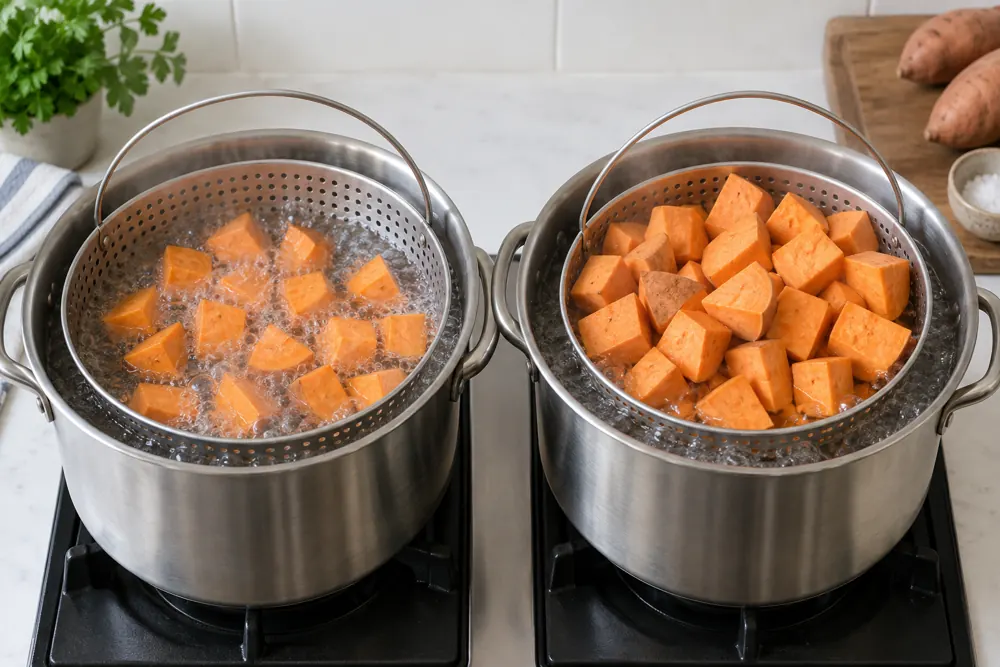
A shallow load gives hot water more access to each piece.
The paired-pot image makes that loading issue visible: shallow pieces can move and contact the hot water, while an overloaded basket restricts circulation. It is an explanatory generated scene, not a GreenLand factory record. In a home kitchen, use a larger pot or smaller batches. In a processing line, define the load weight, water flow, inlet temperature, belt depth and residence time. Track the slowest-heating location during validation. Merely raising the nominal temperature does not correct a product pile that blocks water contact.
Steam is another option. The NCHFP says steaming and boiling are both satisfactory for sweet potatoes, while general steam blanching may take longer than water blanching. In a steamer, avoid a deep compacted bed, close the lid promptly and begin timing at the specified point. Steam can reduce direct water contact and some leaching, but it only works when steam reaches every piece. A processor should compare color, solids loss, core heating and texture with the same raw lot. Do not transfer a water-blanch minute to steam without a new trial.
Cut pieces should enter at a consistent starting condition. A root held cold, a wet raw cut and a warm freshly cut lot can change heat recovery. Record the lot, cut dimensions, batch mass and time between cutting and heating. If slices spend too long exposed before blanching, they may darken before the hot-water stage; that is a raw-material handling problem, not necessarily a blanch-time problem. The process should make the input repeatable enough that its timed step has a meaning.
Cool promptly, drain and prepare for freezing
Move the pieces out of the heat promptly when they reach the selected endpoint. Cooling stops the continuing thermal softening that can erase the benefit of a carefully chosen blanch. The NCHFP general guide calls for rapid and thorough cooling after blanching; the University of Minnesota Extension guide makes the same point while warning that overblanching can produce mushy vegetables. A home batch can use a generous ice-water bath. A commercial line may use chilled water or another controlled cooling system. The important measures are the piece center condition and how quickly it leaves the damaging warm range under the site's process plan.
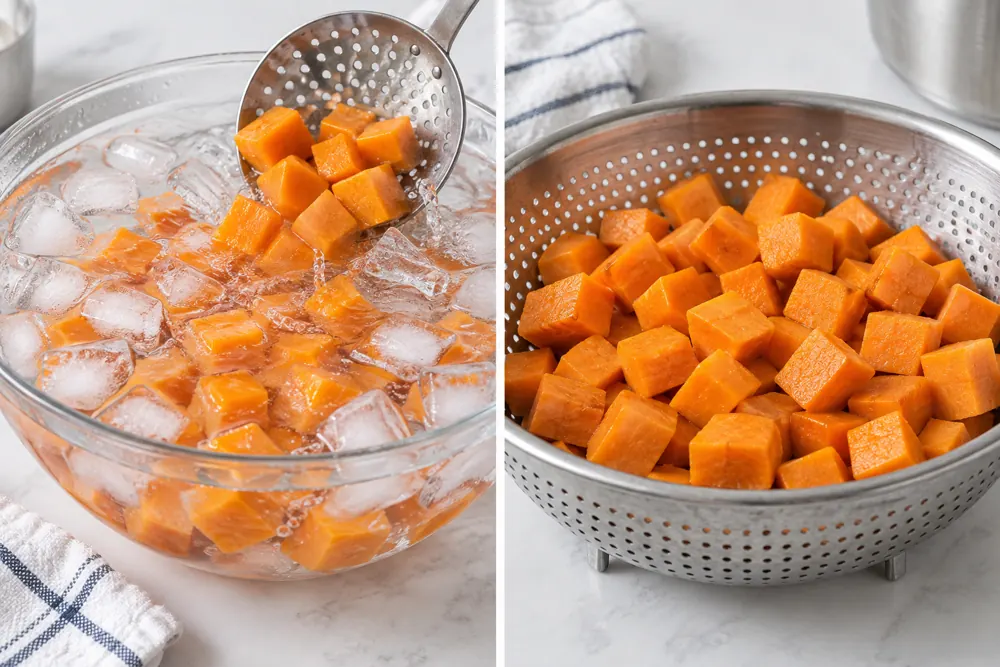
Cooling stops residual heat; drainage removes surface water before freezing.
The two-panel image shows transfer into ice water followed by drainage in a perforated basket. These are separate operations. Cooling in a full sink of ice water only helps if the ice bath remains cold enough after the hot load arrives. If the water warms, add cooling capacity or reduce batch size. A pile of hot pieces waiting beside the pot continues to cook even though the timer has stopped. Thin pieces are especially exposed because their structure can soften quickly; a large cube may still retain heat at the center after the surface feels cool.
Drain thoroughly after cooling. Excess water on the surface forms frost and can glue pieces into clusters during freezing. Pressing soft pieces aggressively to dry them can create breakage, so use time, a perforated tray and controlled air or gentle mechanical dewatering appropriate to the cut. Spread pieces before freezing if individual separation matters. A home tray freeze helps keep portions loose; an IQF line depends on dewatering, feed rate and freezer performance. Neither approach can restore a cube that was overcooked in the blancher.
Keep cooling and drainage records in commercial production. Water quality, recirculation, sanitation, time, temperature and product handling all belong to the site's food-safety plan. Rapid cooling is a quality control and a necessary part of safe process design, but no single photograph proves the relevant plan was followed. At receiving, a buyer sees the downstream evidence: free-flowing pieces, limited loose frost, intact cuts and predictable texture after cooking. Those signs should be investigated against records rather than treated as a complete explanation by themselves.
Check enzyme control and texture together
Heating slows or inactivates quality-related enzymes, but the amount of heat needed depends on the food, cut and process. The University of Minnesota Extension blanching guide warns that underblanching may leave enzyme activity and that overblanching makes vegetables soft. A peer-reviewed sweet potato blanching study uses peroxidase activity as a research indicator in very thin slices. Its 2.4 mm laboratory slices are unlike a 20 mm commercial cube; the study cannot supply a ready-made residence time for every product. A processor can use a validated residual-enzyme assay when its specification calls for one, while also measuring the final texture and appearance.
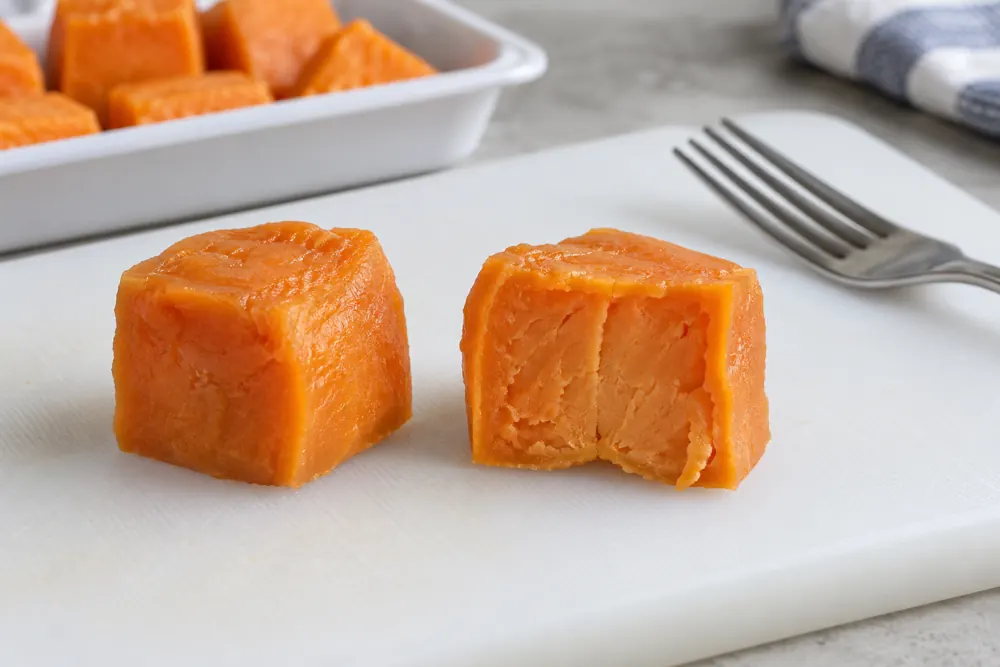
Open the largest permitted cut to inspect its center and structure.
The image shows a heated cube opened at its center. Looking inside the largest permitted piece is a practical first screen: does the center still appear raw when the application requires near-tender product, and do the edges still hold? An operator can record a defined fork resistance or instrument texture result, the percentage of broken pieces and color after cooling. Then test the sample after freezing and actual cooking. A cube may look sound immediately after blanching yet lose shape in a sauce because the combined heat history is too long.
For a factory trial, define where samples are drawn. The center of a dense load and the final belt position may differ from the easiest-to-reach edge. Sample across the production run, including start-up and after long continuous operation. Compare the largest and smallest allowed cuts, and review any excess fines from the cutter. If an enzyme test passes but the product is too soft, the process still fails the customer's intended use. If the texture is attractive but color or flavor degrades in storage, examine both pretreatment adequacy and cold-chain exposure before changing the cut blindly.
The buyer should request a processing description that separates raw cuts, blanching, cooling, dewatering and freezing. These terms are often compressed into "IQF" in a catalogue, but IQF describes the freezing form, not the precise heat treatment. A supplier can propose different blanch levels for a ready meal, a soup cube and a puree ingredient. The acceptance sample needs to match that proposal, including the planned reheating method. We can discuss the cut and application with a purchasing team before confirming a frozen sweet potato specification.
Freeze and inspect the prepared pieces
Once pieces are cooled and drained, freeze them in a way that supports the required product form. Individually quick frozen pieces should remain separable so a foodservice kitchen can portion them, a ready-meal line can meter them, and a retailer can present a useful pack. A block-frozen form may suit a different downstream process but should not be sold as loose IQF dice. Freeze capacity, feed rate, piece size and surface water all affect the free-flowing result. The real GreenLand photograph here shows a verified IQF sweet potato dice format; it is product evidence, not proof of any exact blanch time.

This verified GreenLand product photograph shows a separable frozen dice format.
Inspect frozen pieces for size range, color, clumping, loose ice, broken edges and foreign material. Then cook a representative sample in the customer's actual application. The earlier GreenLand guide to freezing sweet potatoes explains the broader choice among whole, sliced, diced and mashed forms. This article's narrower question is whether the proposed blanching and cooling sequence produces the right frozen cut for that use. A sample that pours freely from the bag can still be too soft after a long ready-meal cook, so frozen inspection and cooking tests both matter.
Storage and shipment need a stable frozen chain according to the confirmed specification. Temperature cycling can build frost or clumps that make it hard to judge whether the original blanch or the later handling caused a defect. Record lot identification, packing date, storage condition and any deviation. If a product arrives in a solid mass when it was specified as IQF, compare packing integrity and temperature history as well as process records. Do not try to solve every clumping problem by changing blanch time; the source may be drainage or cold-chain handling.
Commercial buyers should confirm whether the product is plain, blanched, par-cooked or fully cooked. Those words affect final cooking instructions and nutritional or label declarations. If a retail pack is marketed as ready to heat, its validated process and directions may differ from a foodservice ingredient sold for further cooking. The heat step and final use belong together in the specification; the photograph of frozen dice can only show cut and visible condition.
Diagnose dark, soft or uneven lots
The comparison image shows three visible outcomes: intact bright cubes, darker pieces and broken soft pieces. It deliberately does not assign a cause to each tray. Darkening can begin with a damaged raw root, long exposure after cutting, uneven heating, a hot spot during later cooking or storage conditions. A soft, fractured cube may come from excessive blanching, a weak raw material, harsh mechanical handling, freeze-thaw history or overcooking in the final dish. The investigation should follow the lot through these stages rather than blaming the first step that seems plausible.
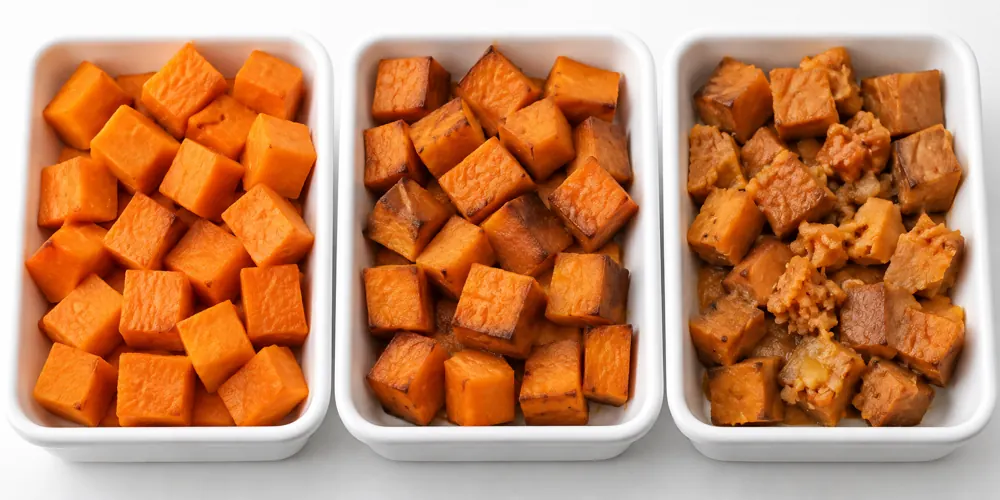
Visible differences start a lot investigation but do not prove the cause.
If pieces have a firm center with very soft edges, check the spread of cut dimensions and the heating method. Thick centers need more time while thin edges lose structure. A cutter adjustment or size sorting may improve the lot more than extending the water cycle. If the whole batch seems underheated, review the actual boiling recovery or steam circulation. If some trays are underheated and others soft, map load position and water or air path. A time written on a production sheet is only meaningful if the equipment delivered the expected heat to all of the product.
If frozen pieces carry heavy surface frost, examine post-cooling drainage and how quickly pieces entered the freezer. If they leave the freezer separate but arrive clumped, review package and temperature history. If they remain visually sound yet disintegrate during cooking, test the customer's cooking load and stirring method as well as pretreatment. The published GreenLand frozen sweet potato cooking guide covers final cooking methods; a buyer can use it to frame an application trial without turning this blanching article into a recipe collection.
Record defects in terms a supplier and buyer can measure: percentage of broken pieces, dimensions outside tolerance, visible dark pieces, free-flowing condition, loose ice and cooked firmness after a defined method. An image can start the discussion, but it cannot replace a retained sample and lot data. If the actual product misses an agreed limit, preserve the affected lot and compare process records before changing the next order. The correction might be at cutting, blanching, cooling, freezing or distribution.
Specify blanching and acceptance for supply
A useful purchase request names the sweet potato form and the work it must perform. Give the cut dimensions and tolerance, color range, desired blanch or pre-cook condition, intended final cooking method, pack format, order quantity, destination and document needs. If the ingredient will be roasted, state the target piece integrity and color after the buyer's oven cycle. If it will become puree, a softer form may be acceptable and less expensive to process. If it enters a ready meal, ask how the proposed cube behaves after both factory preparation and the meal's final heating step.
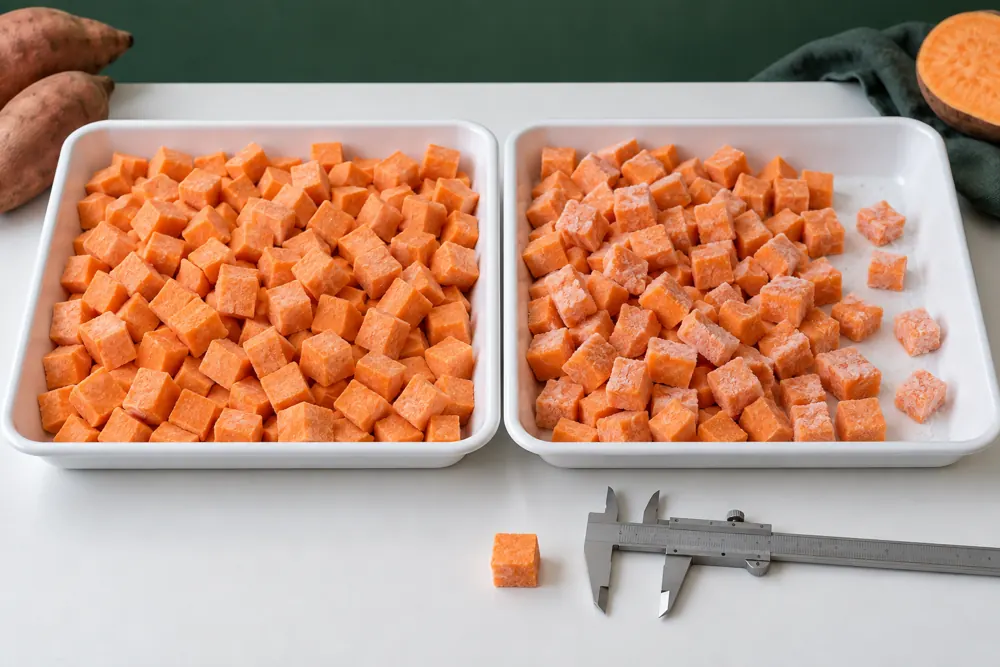
Compare samples by the agreed cut and cooking-performance criteria.
For a new cut or process, begin with a small representative sample. Ask for the proposed heat and cooling sequence and compare samples across more than one raw-material lot when possible. Check the largest permitted piece at its center, sample cooked texture and record breakage. A processor may include enzyme activity or another instrumental quality result where relevant. Agree on the test method before production so a supplier does not release by visual color while the buyer rejects by firmness. The sample trays in the image represent that comparison: the buyer's measured criteria give them meaning.
Documentation follows the product and destination. The package may need a written product specification, batch identification, inspection results, traceability, certificate scope, packing list, commercial invoice and destination-market documents. Confirm which facility and process each certificate covers. A broad logo list cannot prove that a particular blanching line, sweet potato cut or shipment has passed the agreed checks. Cold-chain requirements and container planning should be tied to the actual packing and volume rather than copied from another frozen vegetable SKU.
GreenLand-food supplies frozen sweet potato cuts for wholesale foodservice, retail and processing programs and can review cut dimensions, pre-cook level, packing and application with buyers. We would confirm any special blanching request against the actual product and available process rather than promising a fixed minute before a trial. That discipline protects both sides: the supplier knows which heat outcome to produce, and the buyer receives a frozen piece that performs in the dish or manufacturing step for which it was ordered.
Source frozen sweet potato with GreenLand-food
GreenLand-food is a professional frozen sweet potato supplier and manufacturer in China, providing factory-direct wholesale supply for foodservice, retail and processing programs. We can review the cut, pre-cook level and application test for an agreed order.
Send the product form, cut specification, packing, quantity, application, destination, private-label needs and requested documents.