


How to Cook Frozen Brussels Sprouts: Core Doneness Across Cooking Methods
Oct 19, 2026
Leave a message

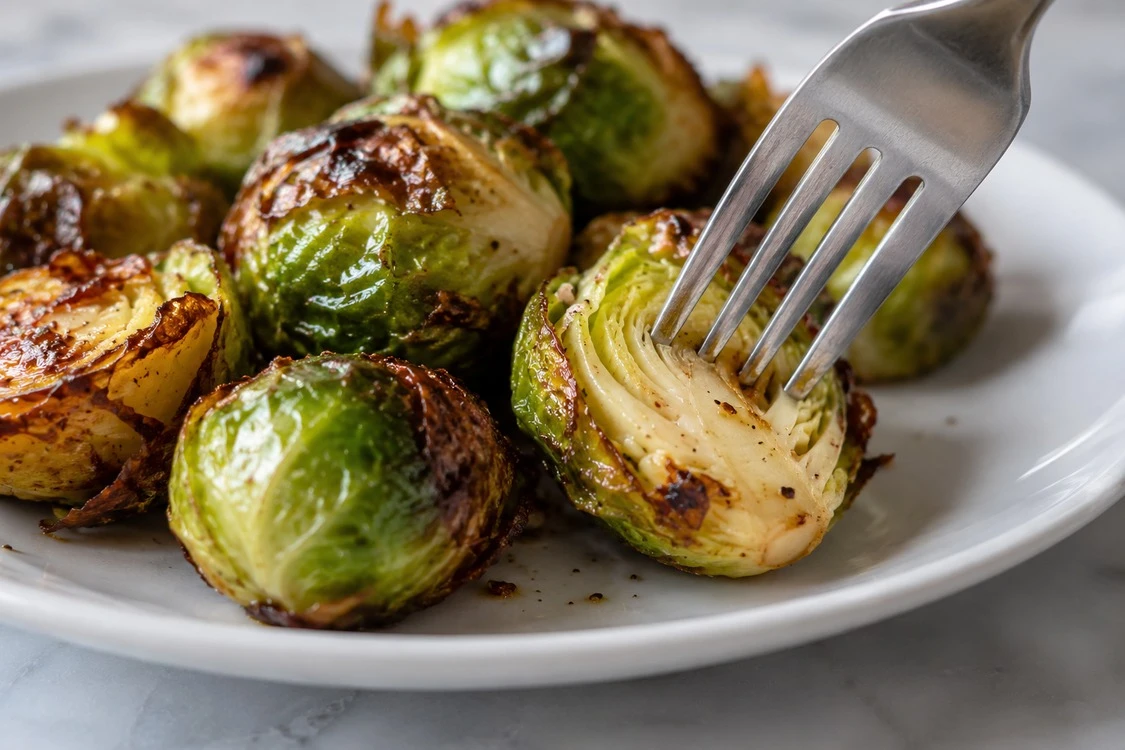
The main difficulty is the whole-head structure. Outer leaves can brown or soften while the middle remains firmer than intended. A cooking time copied from another bag or appliance may therefore give an attractive surface without the desired bite. Establish the process using the actual product, load and serving condition. Quality checks such as fork tenderness complement the required preparation instructions; they do not establish microbiological safety on their own.
Read the pack and look at the largest heads
Begin with the product information. Confirm whether the bag contains whole heads or a cut form, whether it is seasoned and whether the instructions call for cooking from frozen. Follow the stated preparation and handling directions. If developing a commercial meal, obtain the supplier's specification and use the food business's validated process. The word frozen does not reveal every preceding treatment, and a reference to blanching does not by itself mean the product is ready to eat.
Next, look at the size range. Whole sprouts are layered buds with a denser centre and base, so the distance from the outside to the middle matters. A batch containing a broad range of head sizes may give mixed results under one setting. The smaller heads can become soft while the larger ones still resist a fork at the centre. Size sorting or a more suitable supplied range can sometimes solve the problem more effectively than repeatedly increasing the cooking time for the entire batch.
Do not select only a small, attractive head when checking progress. Include several heads from the larger end of the actual batch and take them from different parts of the tray or basket. Equipment can heat unevenly, and food position changes the exposure to hot air or contact heat. This is especially important when moving from a small development sample to a fuller production load. A method that works with a handful may behave differently once the space is crowded.
The frozen condition is another variable to record. Loose heads, clustered heads and a product that has partially thawed during preparation do not start in the same state. Avoid making an unplanned thawing step part of a method that is supposed to begin from frozen. If the pack directions allow or require a different starting condition, use it consistently. Handle any remaining product according to the label and the site's cold-chain procedure rather than leaving the open bag beside the equipment.

Whole heads in a wet raw-material reference photograph. Confirm the frozen form and size distribution from the offered sample.
For a useful comparison, weigh the load and note the equipment, vessel and starting condition. The purpose is not to create paperwork for a simple meal. These details explain why one result differs from another. "Air fryer for twenty minutes" is incomplete when one trial used a shallow layer in a preheated basket and another used a dense load in a cold appliance. The same principle applies to a commercial oven, a covered pan or a microwave container.
At GreenLand, we would ask where the sprouts are being served before suggesting a sample evaluation. A freshly cooked side dish, a chilled prepared meal and a hot-held buffet portion have different final conditions. Decide which one the trial must represent. Then identify the preferred centre texture and surface appearance. This gives the cook a clear endpoint and prevents a successful immediate tasting from being mistaken for approval of a much longer holding or reheating sequence.
Check the centre as well as the outside
Surface colour is an incomplete doneness signal. Dry heat can brown an exposed leaf before the heat has produced the preferred texture in the centre. Conversely, a steamed head may remain relatively pale while becoming tender throughout. Treat appearance and internal texture as separate observations. This makes it easier to choose a method because neither a browned surface nor a soft outer leaf is being asked to answer a question it cannot resolve alone.
A practical quality check is to remove a representative head, handle it safely and probe through the dense central region. Compare the resistance with the intended finished bite. Cutting a safely handled cooked head lengthwise provides another view of the layers and centre. Do not judge only a loose outer leaf that cooks more quickly than the intact head. Nor should a knife be forced through a rock-hard frozen sprout in an attempt to accelerate the process; choose a suitable supplied cut or a safe preparation method instead.
The preferred resistance is application dependent. A side dish may benefit from a head that keeps its outline while yielding readily to a fork. A meal that receives a later heating stage may need a different intermediate texture, developed through the complete process. An approval description such as "soft outside, firm core" is useful as an observation but does not specify whether the result is acceptable. Add the intended serving point and a reference to the desired final bite.
When a large head remains too firm but the outer leaves are already dark, more intense surface heat is unlikely to be the best adjustment. Reduce the pressure on the exterior and allow the centre to develop under a suitable method. Depending on the product directions and recipe, a gentler stage or a moist heating stage followed by a dry finish may be worth testing. This is a proposed method-development approach, not a universal instruction to add water to every appliance or vessel.
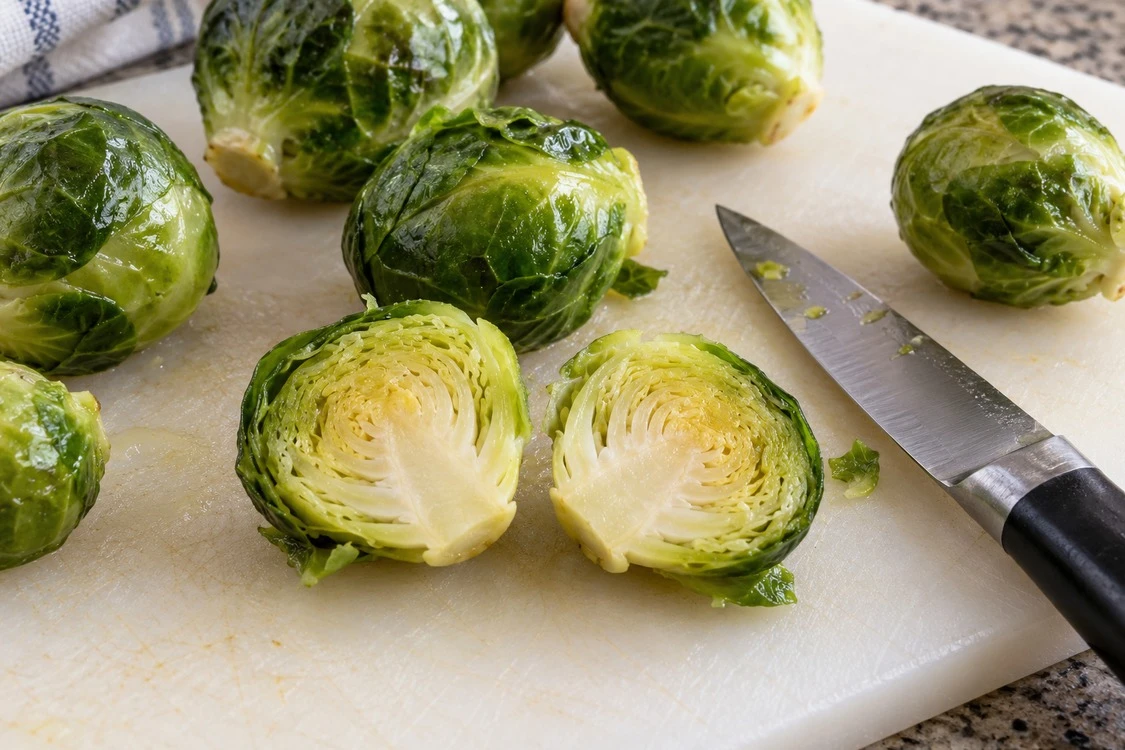
Illustration: Inspect a large head through its centre after the required cooking procedure.
An uneven batch also deserves a closer diagnosis before changing the timer. If only the largest heads are firm, size variation may dominate. If heads at the back of a tray differ from those at the front, loading and equipment distribution deserve attention. If all heads have a firm centre and soft outer layers, reconsider the heating sequence and target texture. Record the pattern. A single average score can hide the useful distinction between a few outliers and an unsuitable process for the whole lot.
Keep safety validation separate from this sensory work. A fork test indicates resistance, and a cut face shows structure; neither demonstrates that a product has met a required pathogen-control process. Follow the pack instructions and any validated time-temperature requirements established for the food and operation. Where temperature measurement is part of that process, use the prescribed sampling and measurement method. Do not replace it with a statement that the heads look cooked or are steaming.
For repeatability, document the finished condition with plain language and representative photographs. A photo can show browning, intactness and the exposed centre, while a short observation records fork resistance and eating texture. Keep the serving temperature and evaluation timing consistent enough to make comparisons meaningful. This combination is often more useful during early development than a long numerical score sheet whose categories have not yet been defined by the team.
Use an oven or air fryer for a browned surface
An oven and an air fryer both offer ways to expose the sprouts to hot air. They are useful when the desired dish includes browned leaves, but their results depend on air movement, loading, vessel geometry and equipment performance. Air-fryer settings, basket loading and the stage at which oil is applied all affect the surface result. Compare these conditions with the actual pack and equipment before fixing a cooking instruction. Those differences are a reason to establish a method for the actual bag and appliance, rather than present one number as reliable for every kitchen.
Start with the label's directions and the equipment's operating instructions. Where preheating is part of the chosen method, perform it consistently. Arrange the heads so that the intended air exposure is possible. A single loose layer behaves differently from a deep pile because neighbouring heads and accumulated moisture change the surface conditions. If capacity requires several loads, compare that approach with a larger oven trial rather than assuming a crowded basket will reproduce the result of a small test.
Frozen heads release moisture as they heat. A wet surface does not brown in the same way as a sufficiently dry one exposed to hot air. The practical task is to let the heads heat and the surface lose enough moisture without over-darkening delicate outer leaves. Avoid using added oil as a presumed cure for every pale or wet result. First consider whether the load, vessel and heating sequence allow moisture to leave the surface as intended.
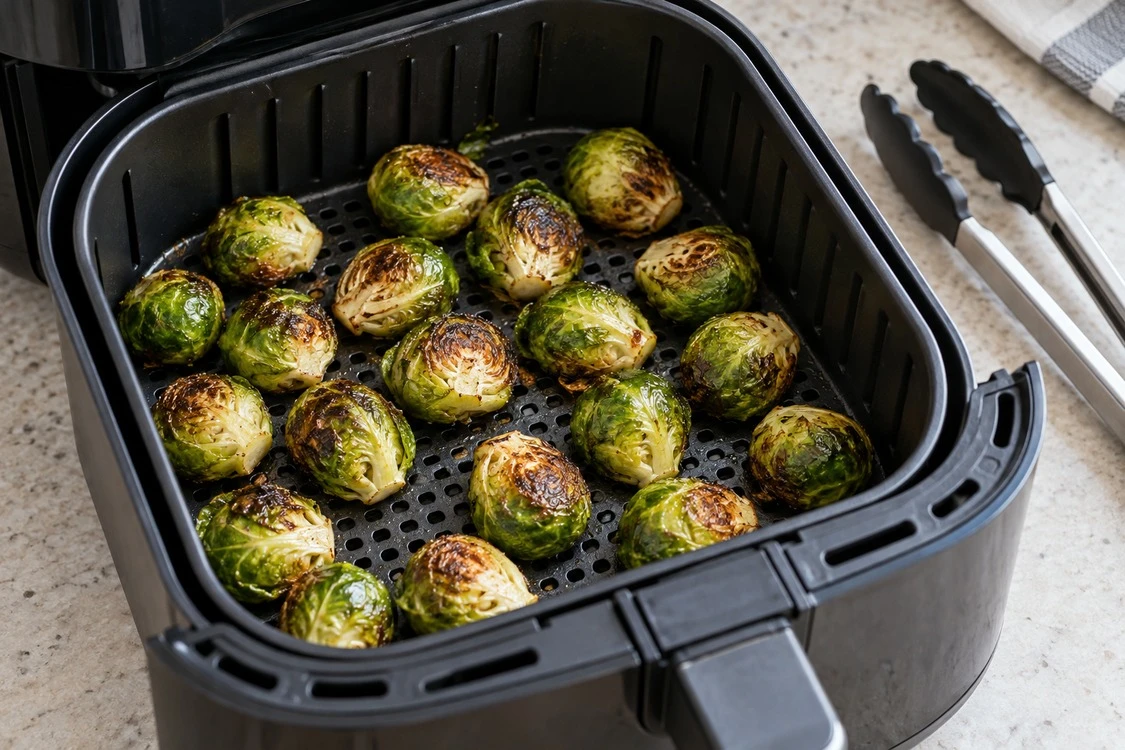
Illustration: A shallow load leaves room for hot air around the heads.
A modest, evenly distributed coating of oil may be part of the recipe, but its amount and timing should be tested with the actual product. Oil can be applied before heating or after an initial heating stage; compare how evenly it coats the surface in the chosen method. These are culinary choices, not evidence that one sequence is universally superior. Seasoning also behaves differently on an icy, wet or relatively dry surface. Evaluate how evenly it remains on the finished heads and whether loose seasoning collects in the vessel.
Turn or redistribute the heads as the selected method requires, using suitable utensils and the appliance instructions. Examine the underside as well as the top. Contact with a hot tray can create a different surface from the side exposed mainly to air. With an air fryer, basket shape and airflow can produce their own pattern. The objective is a repeatable distribution of colour and centre tenderness, not identical colour on every leaf of a naturally irregular head.
Check the centre before deciding that an attractive brown surface means the batch is ready. If the centre is acceptable but the surface is pale, a controlled finishing adjustment may be appropriate. If the surface is already dark and the centre is too firm, reconsider the earlier part of the method. Extending the same aggressive finish may create more dark leaves without producing the best overall bite. A two-stage approach can be explored, provided it fits the product instructions and operational controls.
Finally, assess the actual service condition. A freshly browned head may lose surface crispness when covered, sauced or held in steam. A recipe developed for immediate eating should not promise the same exterior after transport in a closed meal container. Test the container, delay and sauce that will be used. For a foodservice operation, a slightly different finish that remains pleasant at service may be more useful than a dramatic crisp surface that lasts only through the first photograph.
Use steam, water or a microwave for controlled tenderness
Moist heating methods suit applications where tenderness matters more than a dry browned exterior. Steaming, boiling and microwave preparation can all be useful, but they are not interchangeable settings on a single process. Water contact, vessel arrangement, load and heat distribution differ. The Utah State University Brussels sprout guide discusses several cooking methods; use such guidance as culinary context while following the directions supplied for the actual frozen product.
With steaming, allow the equipment to operate as intended and avoid a load arrangement that prevents reasonably even exposure. Check representative large heads and different positions. A head at the edge of a shallow layer may not behave like one buried in a deep load. Condensate and accumulated water can also affect the final dish. After cooking, handle the sprouts so that unwanted surface water does not enter a sauce or turn a planned dry finish into a wet one.
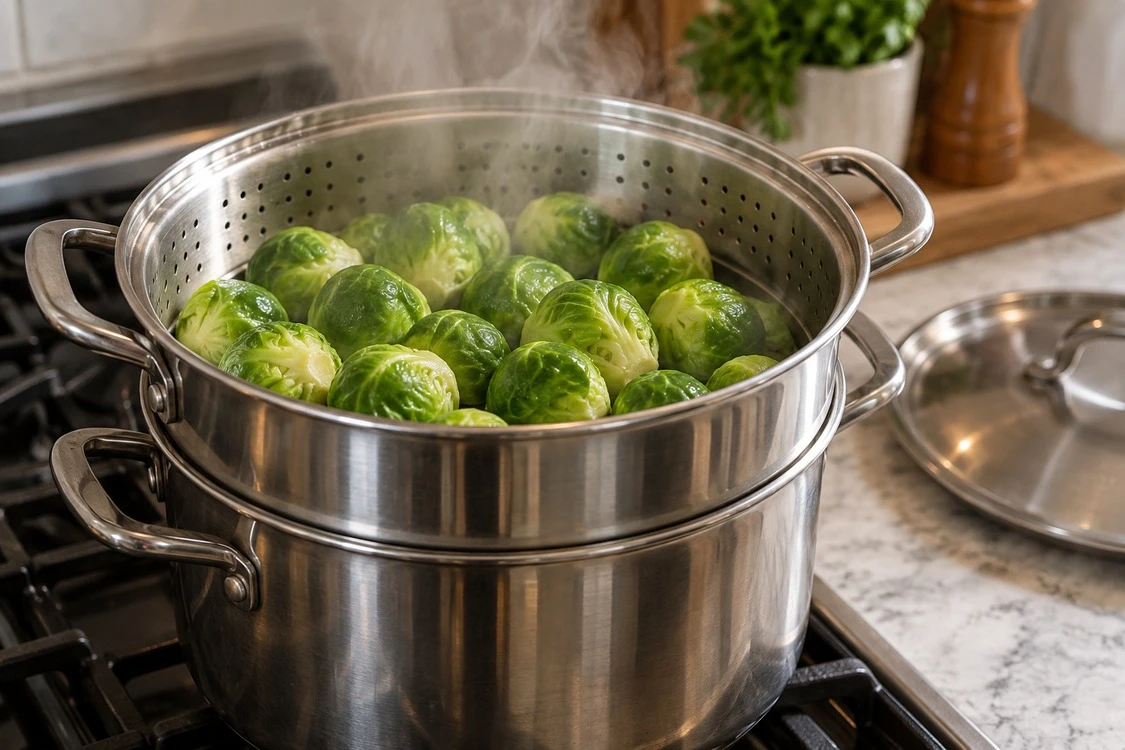
Illustration: Steam supplies moist heat while the dense centres soften.
Boiling places the heads directly in hot water. The amount of product added and the equipment's ability to recover its operating condition affect the process. Follow the chosen directions for timing and avoid silently changing the method between trials. Once the desired and required cooking conditions are met, drain consistently. A very brief drain in one trial and an extended drain in another can change the measured portion weight and the amount of water carried into the plate.
Microwave preparation requires attention to the product instructions, container and load. Microwave-safe covered vessels, any specified added water, redistribution and standing stages should be used as directed. A microwave rating alone does not describe the complete heating pattern in a loaded container. Check more than one head and more than one position when evaluating quality. Do not assume that vigorous steaming at the edge demonstrates that all centres have reached the intended condition.
The advantage of these methods is not that they guarantee a better texture. It is that they can be appropriate tools for reaching a desired internal condition without making browning the central objective. A tender, green, unbrowned head can be exactly right for a sauce-based dish. The same result may disappoint a buyer expecting a roasted side. Define the application before comparing methods, otherwise a successful steamed result may be unfairly judged against the appearance of a roasted one.
Drainage is especially important when the next stage contains sauce or another moisture-sensitive component. Establish a practical, repeatable drain rather than squeezing or pressing heads arbitrarily. Observe whether liquid gathers in the serving vessel after assembly. That observation does not automatically mean the ingredient is defective; it may reflect cooking water carried over, the sauce formulation or the later holding condition. Comparing the product alone with the assembled dish can help locate the source.
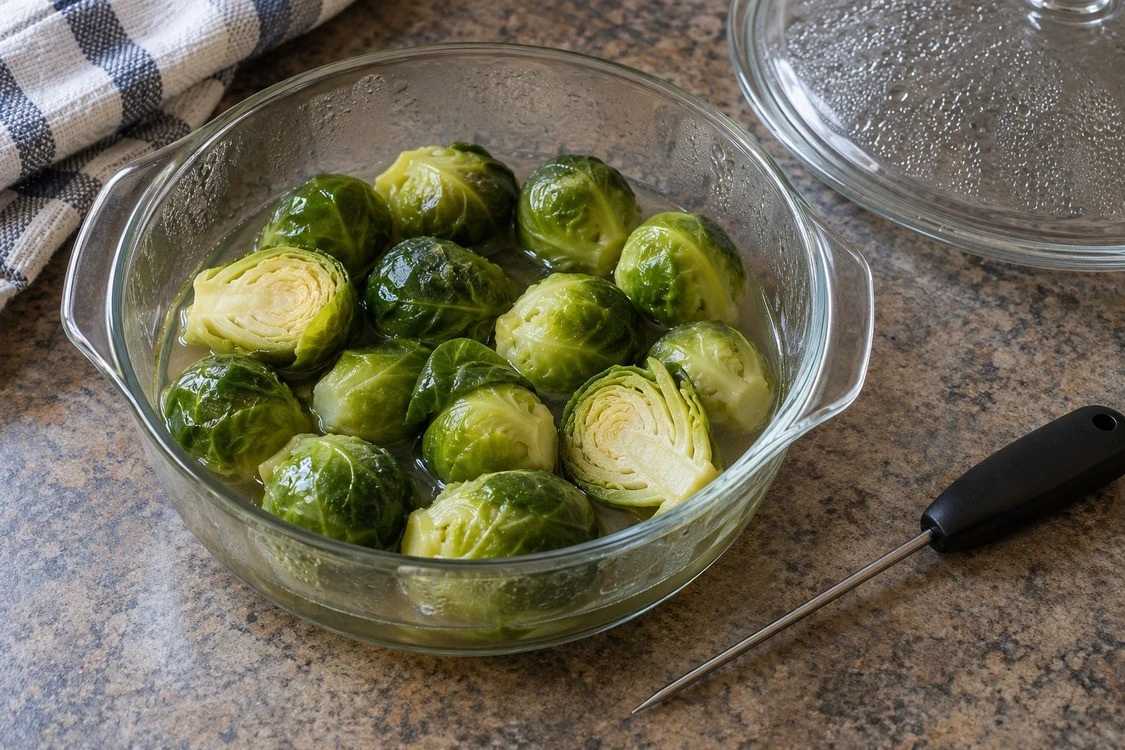
Illustration: A probe beside the open dish is ready for a temperature check. Follow the pack instructions and check several positions.
Avoid cooking every batch until the largest possible head becomes extremely soft. If the supplied range is broad, that approach can sacrifice the smaller heads. A narrower size range, separate handling of different sizes or a revised method may be more suitable. Confirm any operational change with the actual product and required controls. Moist heat is a useful option, but the same principle still applies: judge the whole head and the final meal, not only the ease with which an outer leaf collapses.
Finish in a pan or a complete meal
A pan can add colour, seasoning and contact with other ingredients. It can also create a mismatch between a hot exterior and a firm frozen centre if the method relies only on brief surface contact. Before treating pan-frying as a complete preparation, confirm that the chosen process cooks the product as required and reaches the desired internal texture. For some recipes, a suitable earlier heating stage followed by a short pan finish is easier to control than expecting the pan finish to perform every task.
Prepare the surface condition for the intended finish. Excess water carried from a moist stage changes how the heads contact the pan and how the surrounding ingredients behave. Drain according to the established method and handle hot product safely. The aim is not to dry the vegetable aggressively or press it until it loses structure. It is to make the transition between stages consistent so that browning, sauce consistency and portion weight can be compared from one trial to the next.
Pan loading matters. A few heads with room around them can behave differently from a crowded pan containing other vegetables and sauce. Added ingredients bring their own moisture and thermal load. If the final recipe includes several components, assess them together under the intended sequence. A result achieved by cooking each ingredient separately and assembling it immediately may not describe a production method in which everything is heated in one vessel.
Seasoning should be evaluated at the serving point. Salt, acid, fat and other ingredients alter the flavour impression, while the sauce changes the surface texture. A strong sauce can make a preparation appealing without resolving a firm centre or fragile outer leaves. Keep the observations separate: flavour acceptance, centre tenderness, head integrity and sauce condition. This gives a development team a clearer route to improvement than a single comment that the meal needs more seasoning.
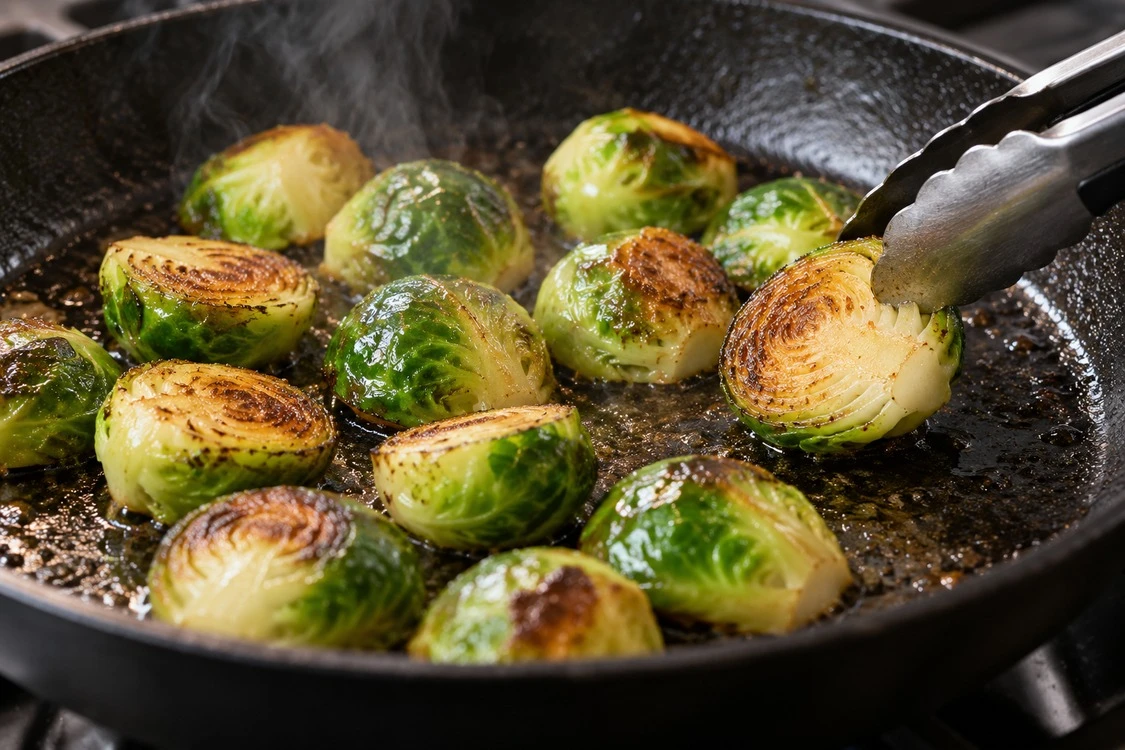
Illustration: Halved cooked sprouts gain colour in a hot skillet after the required heating step.
In a prepared meal, the later heating stage is part of the cooking method. Record the condition of the sprout when it enters assembly, the surrounding ingredients and the final reheating instructions. Test the finished package in the intended way. A head approved before assembly can become too soft after the complete sequence, while a larger head can remain firmer than expected. The final product, not the intermediate tasting, determines whether the ingredient and method are well matched.
The physical arrangement can also influence the result. A whole head partly submerged in sauce is exposed differently from one sitting above it. Several heads clustered in one compartment can behave differently from an even distribution. These are practical reasons to assemble trial meals consistently. They do not justify claiming that a photograph proves uniform heating. Where a commercial product requires a validated heating process, the arrangement and load should be considered within that validation.
We would use a pan or meal trial to answer a precise question: does this whole-head ingredient deliver the expected bite and appearance after the full preparation sequence? If it does not, identify whether size, supplied form, initial cooking or final assembly is the main issue. Changing all four at once makes the next result difficult to interpret. A controlled adjustment provides more useful evidence for a supplier discussion and for the operator who must reproduce the meal later.
Repeat the result at the intended serving point
A repeatable method needs a clear endpoint and enough process detail to reach it. Record the product identity and size description, load weight, equipment, vessel, starting condition and preparation sequence. Include the chosen check for centre texture and the point at which the meal is evaluated. These details should be proportionate to the operation. A development kitchen needs enough information to reproduce its trial; a commercial production process may require additional documented controls.
Evaluate at least the conditions that matter to the customer. For immediate service, that means the plated dish after the usual delay. For hot holding, use the actual holding procedure and a relevant service observation. For a reheated meal, use the finished package and intended preparation. Do not extend a favourable immediate tasting into a claim about an untested holding period. Surface colour may remain similar even while the bite and accumulated liquid change.
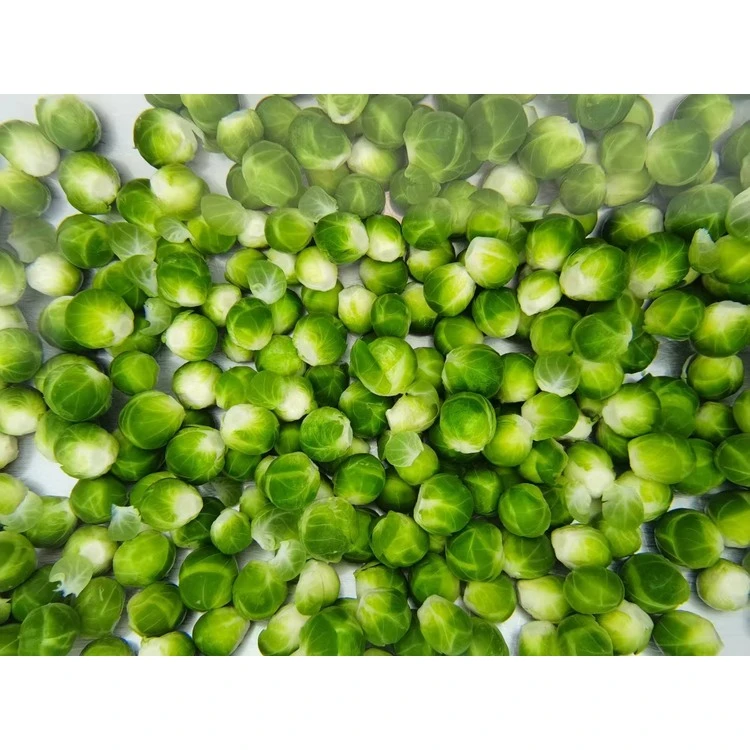
Whole heads in a wet raw-material reference photograph. Confirm the frozen form and size distribution from the offered sample.
When comparing batches, use the same portion and assessment conditions. Counted portions and weighed portions answer different questions. If the kitchen serves by weight, record the usable cooked mass under a defined drainage method. If presentation depends on a head count, also record whether the size range supports that count consistently. Avoid calling every difference in cooked weight a loss of vegetable solids; retained cooking water and drainage can influence the number.
Agree what would make a batch unsuitable for the application. Examples might include too many heads with a firm centre at the selected endpoint, excessive loose leaves after normal handling or a size range that makes portions inconsistent. These should be application-based criteria, developed from the trial and the offered specification. They are not universal defect limits. A different meal may tolerate an attribute that is inconvenient in a counted vegetable side.
If a method changes, repeat the relevant check. A different appliance, larger load, new size range or revised sauce can be enough to alter the result. There is no need to rebuild every observation from scratch, but the changed condition should be tested rather than assumed equivalent. Keep the successful reference and record the reason for the adjustment. This makes troubleshooting more precise when an operator later reports dark leaves, pale surfaces or firm centres.
Cooking frozen Brussels sprouts successfully is therefore a matter of matching the method to the whole head and to the meal. Use the pack directions as the starting point, examine the centre, control the load and judge the product where it will actually be served. Browning, tenderness and head integrity can then be developed as separate but connected targets. That approach produces a usable method for a particular ingredient and kitchen instead of a universal timer that ignores the conditions around it.
Continue reading
Separate drip loss, cooked recovery and piece integrity when evaluating an ingredient in its actual recipe.
Choose a texture test that matches the cooked bite, piece geometry and serving condition you need to approve.
Investigate a cooked-texture change after a documented handling event without treating a stress trial as shelf-life proof.
Source Frozen Brussels Sprouts with GreenLand-food
GreenLand-food is a professional frozen Brussels sprouts supplier and manufacturer in China, providing factory-direct wholesale supply for importers, food manufacturers and foodservice distributors.
Tell us your application and destination. We can discuss product form, specification, packing, quantity, private-label needs and requested documents with your purchasing team.