


What Are Brussels Sprouts? Mini Cabbage Appearance and Frozen Whole-Head Form
Oct 19, 2026
Leave a message

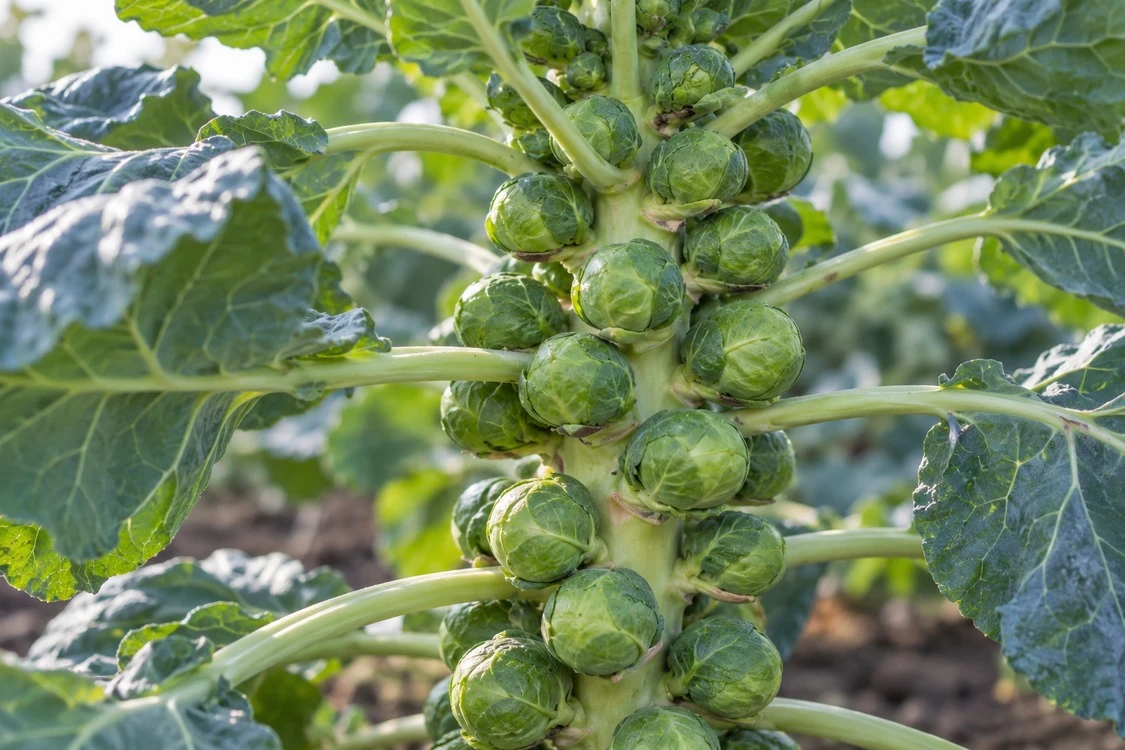
That distinction matters when choosing an ingredient. A whole sprout has outer leaves, inner leaf layers and a relatively dense base and centre. Those parts influence how it looks in a pack, how heat reaches the middle and how it feels in a finished meal. Here we explain the vegetable itself and the practical meaning of whole-head form, so that a product description can be connected to what a buyer will actually receive and use.
Small leafy buds growing along a stalk
The easiest way to understand a Brussels sprout is to see it before harvest. A substantial upright stem carries larger leaves, and the edible buds develop at the points where those leaves join the stem. Several heads grow on one plant. They are not separate miniature cabbage plants planted close together. The University of Minnesota identifies the crop as Brassica oleracea var. gemmifera and describes these small, tight heads in its Brussels sprout growing guide.
The vegetable belongs to the same cultivated species as cabbage and several other familiar brassicas. Selection for different plant structures helps explain why those crops can look so different. With Brussels sprouts, the edible unit of interest is the bud on the stem. With a conventional headed cabbage, the large terminal leafy head is the familiar harvested part. The family relationship explains the resemblance, but the two products are not interchangeable simply because both have layered leaves.
This origin also explains the small cut surface at the bottom of a detached sprout. That is the attachment end, where the head was removed and subsequently trimmed. A modest pale base on a green sprout is therefore normal anatomy, not evidence that a different vegetable has been mixed into the pack. Its condition still matters: the remaining stem can be too prominent for a particular dish, or the trimming can remove so much structure that leaves separate. Identity and acceptable preparation are different questions.
Heads do not all develop at the same position or necessarily reach the same useful size at once. The Utah State University growing guide describes development and harvest along the stalk. For a food buyer, the useful consequence is that a population of harvested heads naturally contains variation. Sorting may reduce that variation for a commercial specification, but the words "whole Brussels sprouts" alone do not describe how narrow the delivered size range will be.
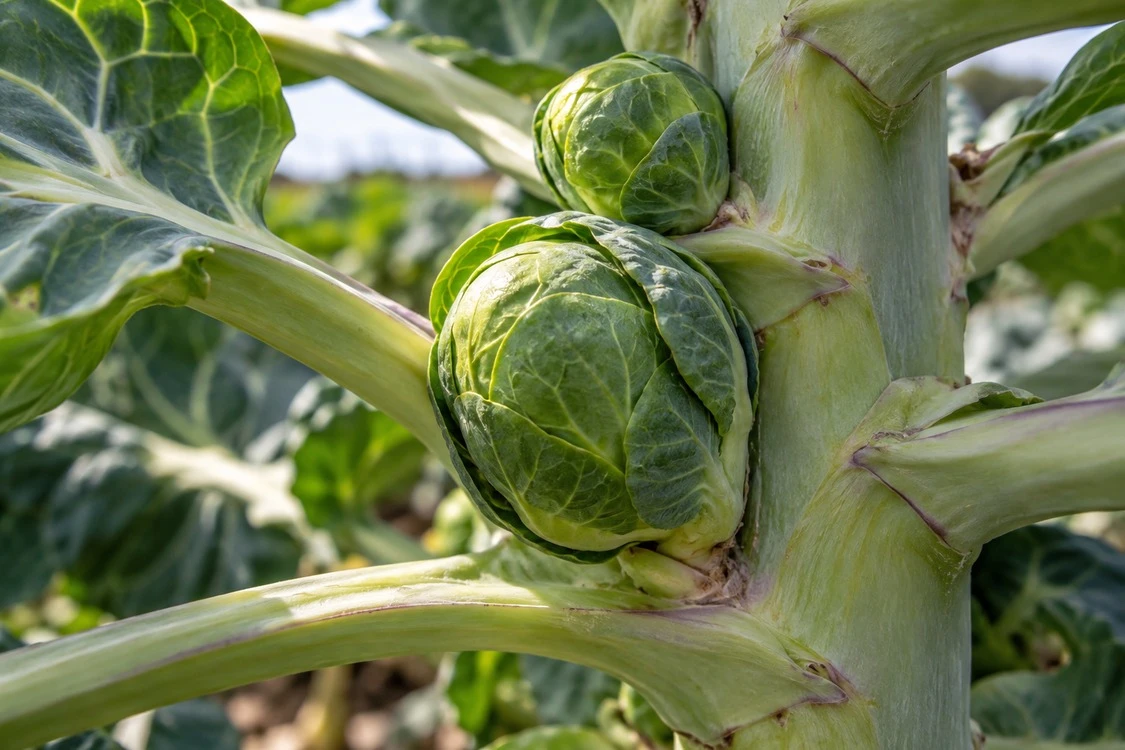
Illustration: Each edible head forms at a leaf junction on the stalk.
A harvested stalk can be an attractive retail presentation, while detached heads suit a bag or a meal ingredient. For a first purchase, ask whether the heads arrive separated from the stalk and how the attachment end is trimmed. A small head with a long stem remnant takes up space differently from a neatly trimmed one. A photograph of the plant explains where the buds grow; the ordered form needs its own description. That distinction lets a buyer recognise the vegetable and ask a useful next question about the pieces entering the kitchen.
For anyone encountering the name for the first time, the useful definition is therefore concrete: many small leafy heads grow along a plant stem, and those heads are the Brussels sprouts used in food. A specification can then move beyond the name to detached whole heads, halves or another cut, followed by size and preparation. Keeping those descriptions separate avoids a common misunderstanding in which a buyer recognises the vegetable but assumes a cut form that the supplier has not offered.
What the leaf layers and core tell you
A lengthwise cut through a cooked or safely prepared head reveals its construction. The outside consists of overlapping leaves. Moving inward, the layers are closer together, with a firmer structural region extending upward from the attachment end. The exact appearance varies between heads. There is no reason to expect every cut face to reproduce an identical pattern, and a highly regular diagram should not be mistaken for the appearance of a real agricultural product.
Those layers give a whole sprout a different eating experience from a loose leafy vegetable. A fork first meets the outer surface, then passes through several layers and the centre. The head can keep a rounded outline while becoming tender inside, or its outer leaves can become fragile before the middle reaches the preferred tenderness. Looking only at the outside therefore gives an incomplete picture of preparation. The form is small, but it is still a three-dimensional piece of food.
The base has a practical role in holding the head together. Removing a dry or excessive stem end is different from cutting deeply into the head until the remaining leaves lose support. For a whole-head application, excessive cutting may reduce the number of intact pieces available for plating. A head with a modest neat base can be more useful than a heavily pared specimen that looks tidy before cooking but breaks apart during mixing. Actual acceptability depends on the dish and the agreed specification.
Compactness is related to this structure but is not identical to size. A small head can be loose; a larger one can have closely held leaves. Similarly, a loose external leaf does not prove that the whole head is structurally poor. It may have been displaced during handling. When reviewing a sample, distinguish a few detached leaves from heads that open extensively or fail to retain their form. Those observations lead to more useful supplier questions than a general statement that the bag looks uneven.
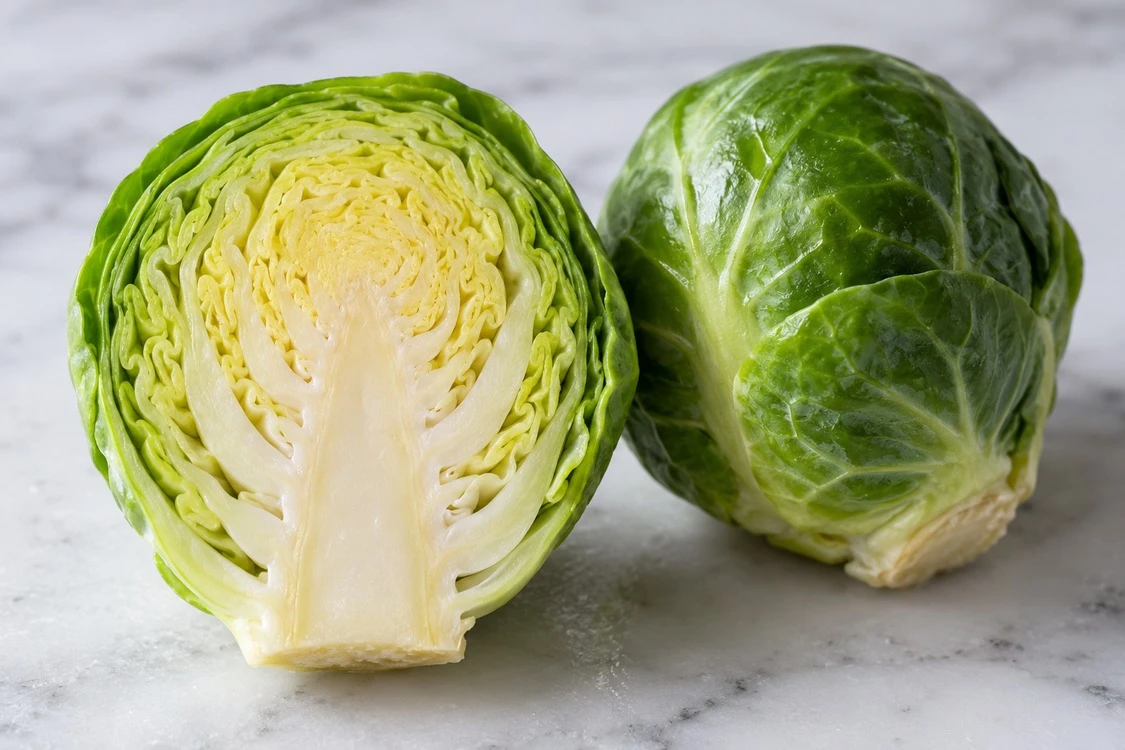
Illustration: A cut head reveals layered leaves around a short central core.
The official USDA frozen Brussels sprout standards use character, trimming, loose leaves and defects among their quality considerations. This vocabulary can help a buyer describe what is visible. It does not automatically assign a grade to any particular commercial pack. If an offer refers to a formal grade, the applicable standard and evidence need to be agreed. A photograph or an informal visual comparison is not a substitute for that assessment.
Understanding the inside also helps explain why a product can be sound yet unsuitable for a particular presentation. A whole head may be inconvenient in a small compartment meal where diners need bite-sized pieces. The same head may be desirable on a vegetable side plate because its layered shape remains visible. Neither application changes its identity. The question is whether the intact structure contributes to the serving format or adds cutting and handling work that another form could avoid.
For a first sample review, a small group of representative heads is more revealing than one attractive specimen. Observe intact heads, then examine prepared cross-sections and the corresponding cooked bite. Include the larger end of the supplied range. Record what the outer leaves, centre and base are doing separately. This simple distinction turns an unfamiliar vegetable into a set of observable features without pretending that a few photographs provide a laboratory measurement of texture.
Taste and texture depend on the finished preparation
Brussels sprouts have a recognisable brassica flavour, often described in relation to cabbage. Individual perception varies, and the finished result depends on the raw material, preparation and other ingredients in the dish. A definition should not promise that all sprouts are sweet, mild or free of bitterness. The Utah State University food guide provides practical selection and cooking context, but a supplier sample still needs to be assessed in the intended recipe.
Cooking method changes the experience because it changes both the surface and the interior. A moist cooking method can produce a tender head without a browned exterior. A hot, relatively dry finish can develop brown areas on exposed leaves once sufficient surface moisture has been removed. These are different culinary outcomes. Pale green cooked sprouts are not automatically underdone, and a dark outer leaf does not establish that the centre has reached the desired tenderness.
The contrast between exterior and centre can be part of the appeal. A browned outer leaf, a softer inner layer and a centre with some resistance can give a whole head a distinct bite. In another application, that same resistance may feel too firm, particularly if the rest of a ready meal is soft. Describing the preferred result as "tender" is therefore a useful starting point, but a retained reference sample or an agreed cooking evaluation makes the word much more specific.
Sauce and accompanying ingredients also alter how texture is perceived. A creamy sauce can coat the leaves and soften the impression of a dry exterior. A lighter dressing may leave the head's own surface more apparent. Whole heads can carry sauce between loosened outer leaves, while a compact centre remains recognisable when cut. These observations help with recipe selection, but they do not imply a fixed sauce absorption rate or a predictable yield advantage for every supplied lot.
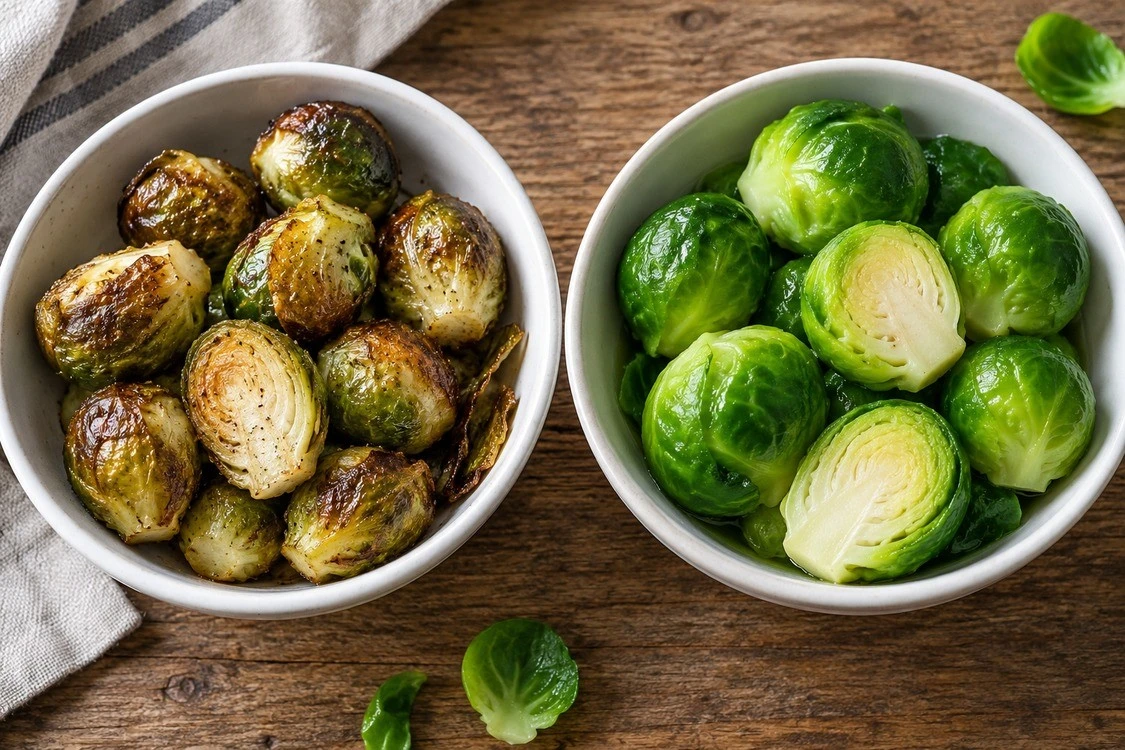
Illustration: Cooking changes the outer leaves and the texture of the centre.
It is useful to distinguish a flavour judgement from a cooking defect. A buyer may find the characteristic flavour too strong for a particular customer group even when the head is prepared as intended. Conversely, a dish may be acceptable in flavour but have a firm centre, excessive loose leaves or a watery surrounding sauce. Recording those points separately makes reformulation easier. Changing the seasoning will not necessarily correct an unsuitable head size, and changing the size will not automatically suit every flavour preference.
Holding and reheating deserve attention when the ingredient is destined for foodservice or a prepared meal. The first taste straight from the pan is only one point in the product's use. A head that retains a pleasing bite immediately after preparation may become softer during the actual holding period. A browned surface may lose crispness after contact with sauce or steam. Evaluate the serving condition that the consumer encounters, with the same container and sequence planned for production.
At GreenLand, we would use these distinctions to frame a sample discussion: what should the head look like on the plate, how much resistance should remain in the centre, and will it be served immediately or reheated? Those questions are more useful than promising a universal taste profile. They also keep the explanation focused on the ingredient. Detailed cooking settings belong in a method developed for the actual pack, equipment and meal, rather than in the basic definition of a Brussels sprout.
What frozen whole-head form means
"Frozen whole Brussels sprouts" describes the shape of the supplied edible units and their storage state. The heads remain substantially intact. They have not intentionally been shredded or divided into halves as the declared cut. Normal trimming does not turn them into a cut product, although the permitted amount of trimming and the treatment of broken heads should be clarified. The phrase does not by itself promise a specific diameter, a particular commercial grade or readiness to eat.
The USDA standard defines its frozen product in terms of clean, sound, succulent heads that have been trimmed, washed, blanched and drained before freezing. That is a useful reference for understanding the established product category. It should not be used to assert the exact process applied to an unidentified pack. A supplier's specification, label and supporting information establish the offered product's preparation, cooking directions and relevant controls. Generic category knowledge cannot replace those records.
Whole-head form and individual separation are separate attributes. If a product is offered as IQF, ask whether the heads can be portioned loose from the frozen pack. A kitchen using a scoop needs a different handling result from one emptying an entire bag into a kettle. Check separation in a representative pack kept under the declared conditions, and record any compact clusters. Crushing a cluster can damage outer leaves, so agree how the operator should handle the offered product before treating forced separation as an acceptable portioning method.
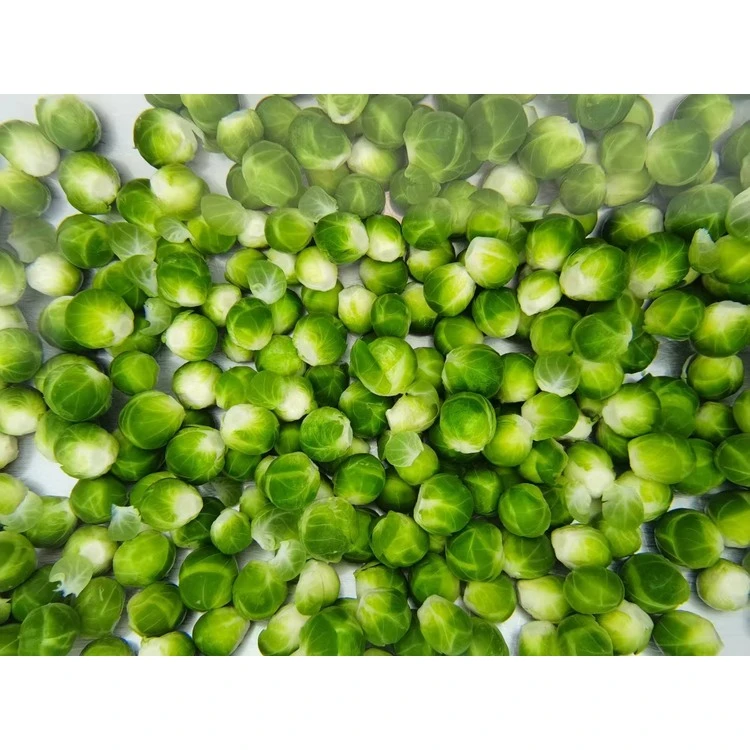
Whole heads in a wet raw-material reference photograph. Confirm the frozen form and size distribution from the offered sample.
It helps to compare three descriptions that are sometimes blurred together: the vegetable is Brussels sprouts; the form is whole heads; the condition is frozen. Additional terms such as blanched, unseasoned, size sorted or individually frozen add information only when they are supported by the actual offer. A purchasing line that includes these distinct attributes is clearer than a marketing phrase such as "premium mini cabbage," which can obscure both the botanical identity and the preparation expected.
Frozen heads are usually being selected for a cooked application. Nevertheless, the word frozen does not establish that a product is ready to eat. Follow the label and the supplier's validated directions for the intended use. A blanching step can be part of preparation for freezing without being evidence that the product has received a complete ready-to-eat process. The practical point is simple: appearance and tenderness are quality observations, while instructions for safe preparation require their own basis.
Packaging adds another layer to the description. A bulk foodservice bag, a smaller retail bag and an ingredient packed for a meal manufacturer may all contain whole heads while serving different handling needs. Consider how much product is removed at once, whether remaining contents stay frozen and how the operator measures portions. The botanical form stays the same, but packaging and portioning can make it easier or harder to use that form consistently in production.
Check the ingredient at the stage where it enters the meal. For an operator adding frozen heads directly to a pan, review the frozen pieces and the finished portion. For a manufacturer using a separate cooking step before assembly, examine the cooked heads before mixing as well as after reheating. The same vegetable may lose loose leaves at either stage. Keeping those observations separate makes it easier to decide whether the supplied whole-head form fits the process, whether a different size is needed or whether the preparation sequence needs adjustment.
Compare size, trim and condition in the pack
Once the identity and form are clear, size becomes a practical variable. Whole heads of different sizes occupy different space on a plate and may require different preparation to reach the preferred centre tenderness. For a counted serving, larger heads also change portion mass. For a weighed serving, the number of visible heads changes. Decide which serving rule matters before treating a size difference as a quality failure.
A size specification should say how the measurement is taken. "Small" and "medium" can mean different things in different offers, so a numerical range, measurement direction and agreed tolerance are preferable when consistency is important. Do not borrow a diameter range from a recipe or another supplier and assume that it is a universal definition. Ask how the lot is sorted and how heads outside the agreed range are assessed. The method is part of the specification.

Whole heads in a wet raw-material reference photograph. Confirm the frozen form and size distribution from the offered sample.
Inspect more than the top of the bag. A few selected heads can show the product attractively while revealing little about the delivered range. A representative sample should include the distribution of sizes and the condition in which the product will be handled. Record whether the review was performed frozen, after a defined preparation or at service. Comparing a hard frozen sample with a thawed one can create misleading impressions of firmness and integrity.
Trim deserves its own observation. Look at the attachment end, remaining coarse outer leaves and any cutting into the body of the head. A neat base and a head that remains intact can be useful together; removing every visible stem feature is not necessarily the right target. The appropriate amount of trim depends on the supplied specification and the intended dish. Photograph representative examples beside a scale if measurement is relevant, rather than relying on close-ups with no size reference.
Loose leaves, broken heads and discoloration should be recorded separately. They have different consequences. Loose leaves may cook more quickly than whole heads and can become a different texture. Broken heads can disrupt a counted portion. Visible discoloration may affect presentation even when the pieces remain structurally intact. A single combined "defects" comment hides these differences and makes it difficult for a supplier to understand which change would improve application performance.
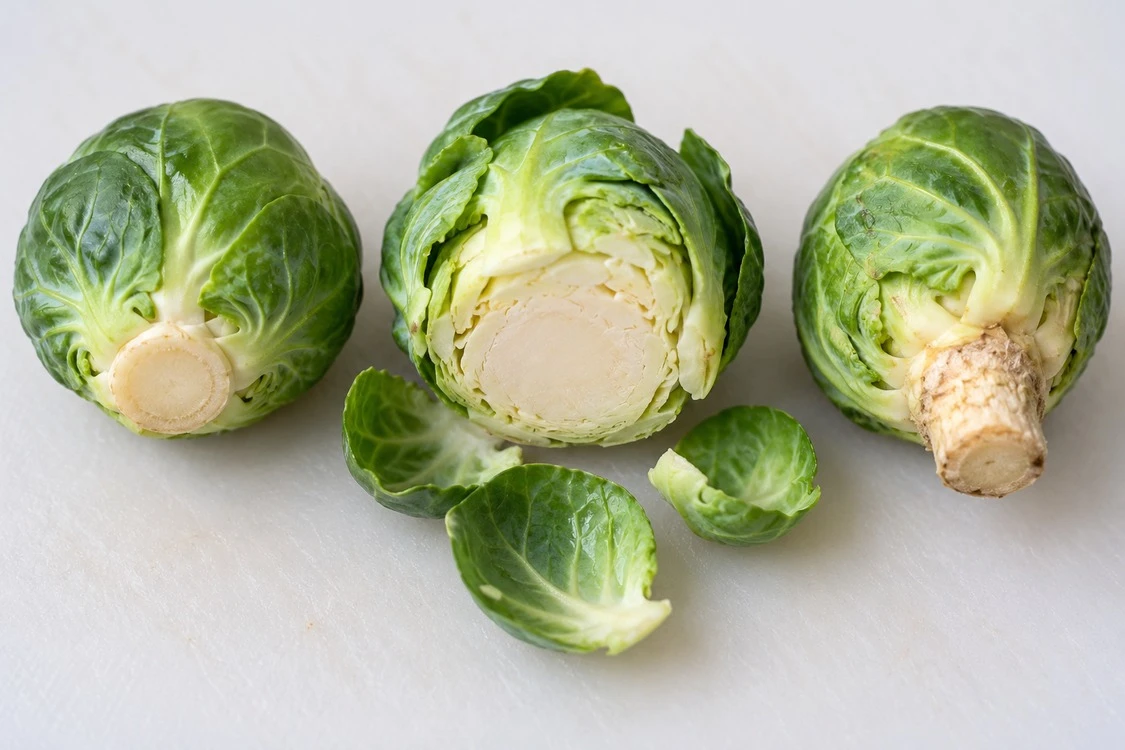
Illustration: Excessive cutting can disturb the base that holds the head together.
Ice and clumping require equally careful interpretation. Document what is present and the condition of the packaging, but avoid diagnosing an entire cold-chain history from one photograph. Where the sample has been transported or opened repeatedly, note those conditions. A fair comparison uses samples handled in the same way. If a concern appears only after a particular storage or preparation step, that information helps identify what needs investigation without prematurely assigning the cause.
We would connect the pack inspection to a small application trial before approving a whole-head ingredient. A narrow size range may be valuable for a counted side portion, while another use may tolerate a broader range if cooked texture and appearance remain acceptable. The aim is to identify the attributes that influence the meal and write them clearly into the offer. More descriptive detail is useful only when it supports a real purchasing or production decision.
Choose the whole-head ingredient for its application
Whole heads make the most sense when their recognisable shape contributes to the finished food. They can form a vegetable side, provide visible pieces in a prepared meal or remain distinct in a mixed vegetable dish. The appropriate size depends on the portion and eating occasion. A compact head that fits comfortably into one mouthful may suit a different product from a larger head intended to be cut on the plate.
For a plated side, consider appearance, count and weight together. A portion made from three large heads can look different from one of the same mass made from several smaller heads. If the menu picture shows a particular arrangement, the delivered size range needs to support it. Count alone may create inconsistent portions, while weight alone may produce variable presentation. A sample trial can establish which combination is practical for the operator.
For a sauced meal, assess the head in the assembled product. The sauce can alter the surface, and the later heating stage can change the inner texture. Check how the head sits in the compartment, whether it is easy to eat and whether the sauce remains as intended. A dry-pan tasting is useful background but cannot answer all of those questions. The whole meal provides the relevant conditions for approval.
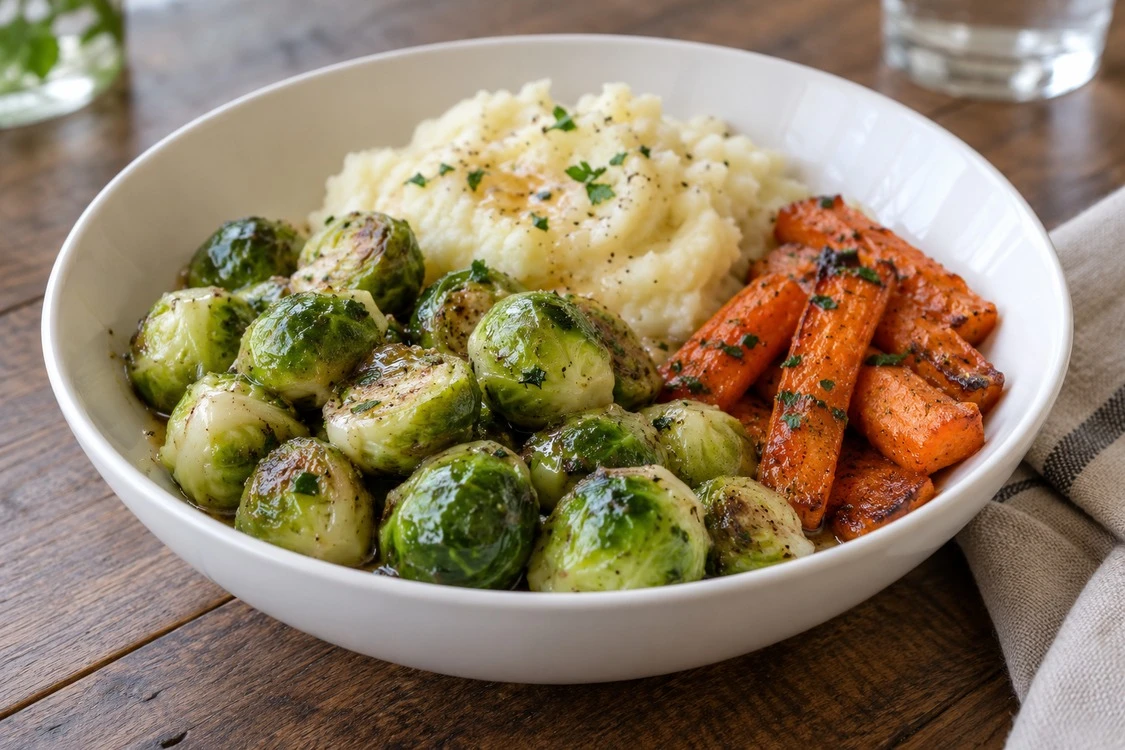
Illustration: Whole heads retain a recognisable shape in a vegetable side.
For a vegetable blend, compare the sprouts with the other components rather than approving each ingredient in isolation. Pieces with very different dimensions or structures may reach the preferred texture at different stages. The whole head may still be appropriate, but the preparation sequence or component sizes may need adjustment. This is an application question, not evidence that Brussels sprouts are inherently difficult to use. The desired result determines whether a whole or cut form is more convenient.
An initial supplier conversation can therefore remain specific without becoming lengthy. Identify whole frozen heads, describe the serving format, give the size requirement if established and explain whether the product will be browned, cooked in moisture, sauced or reheated. Then request the offered specification and a representative sample. Where a requirement is still uncertain, state that it will be agreed through the application trial rather than presenting an untested preference as a fixed technical limit.
The central distinction remains the one visible on the plant: Brussels sprouts are leafy buds, with a layered structure that survives as a recognisable head in the whole frozen form. That structure gives the product its identity and helps explain its practical behaviour. Choosing it well means matching the head size, trim and cooked condition to the meal, supported by the actual product information rather than assumptions drawn from its miniature-cabbage appearance.
Continue reading
See how broccoli, cauliflower and other Brassica oleracea crops share a species while developing different edible structures.
Understand how sorting, preparation, blanching, dewatering and frozen handling fit into the IQF processing chain.
Choose a texture test that matches the cooked bite, piece geometry and serving condition you need to approve.
Source Frozen Brussels Sprouts with GreenLand-food
GreenLand-food is a professional frozen Brussels sprouts supplier and manufacturer in China, providing factory-direct wholesale supply for importers, food manufacturers and foodservice distributors.
Tell us your application and destination. We can discuss product form, specification, packing, quantity, private-label needs and requested documents with your purchasing team.