


How to Preserve Garlic
Jun 29, 2026
Leave a message
Research This Article & Topic with AI
Verify key claims, compare reliable sources, and explore GreenLand-food's practical frozen food knowledge.
Article details and research questions are prepared in the links. Sign-in or sending may be required.
How to Preserve Garlic: Fresh, Frozen and Dried
To preserve garlic well, the first step is to decide how you want to use it later. You may need whole fresh bulbs, peeled cloves, minced garlic, frozen portions, dehydrated flakes, garlic powder or a commercial preserved garlic ingredient. Whole fresh garlic keeps best when it stays dry, intact, cool, dark and ventilated. Peeled or chopped garlic has a shorter life and should be refrigerated for short use or frozen for longer holding. Dehydrated garlic needs low moisture and airtight packing. Garlic in oil needs special caution because fresh garlic in oil is not a room-temperature preservation method.
You may start with a simple question: how to preserve garlic? In real use, the answer depends on the garlic form and the next application. A restaurant may need fast preparation and consistent flavor. A frozen food factory may need peeled cloves or minced garlic that can be dosed cleanly into sauces, stir-fry meals or vegetable mixes. A retail private-label project may need stable quality, clear labeling, cold-chain records and repeatable sensory performance. At GreenLand-food, we always look at the final use first, then match the preservation method to aroma, texture, safety and handling efficiency.
Below, we look at the main practical choices: how to preserve fresh garlic at room temperature, when refrigeration makes sense, when freezing is the better long-hold option, how dehydration changes garlic, why oil storage needs strict control, and how commercial garlic preservation differs from a household kitchen habit.

Garlic preservation works best when the storage method matches the garlic form and the next production use.
Match the Method to the Garlic Form
Whole garlic bulbs are usually preserved by dry storage, not by refrigeration. Keep them in a cool, dark, dry and ventilated place, and do not seal them in a wet plastic bag. Once the bulb is broken, the cloves lose part of their natural protection and the useful life becomes shorter. Peeled cloves should be refrigerated for short-term use or frozen for longer holding. Minced garlic should be treated as a prepared ingredient because the cut surface is exposed to more moisture, oxygen and handling contact.
Freezing is useful when you want longer storage or faster cooking portions. Texture becomes softer after freezing, so frozen garlic is usually better for sauces, soups, stir-fries, marinades, ready meals and processed foods than for raw garnish. Dehydration is useful when you need a dry, shelf-stable seasoning, but the garlic must be thoroughly dried and protected from moisture after processing. Oil is a flavor carrier, not a simple preservation guarantee. Fresh garlic in oil should be made fresh, refrigerated promptly, used within a short controlled period or frozen in dated portions.
For commercial use, the choice becomes more operational. You may need peeled frozen cloves for foodservice, minced garlic portions for sauce production, dehydrated flakes or powder for seasoning blends, or frozen garlic that can be dosed into a ready-meal line without daily peeling labor. The right method should reduce waste, control risk and keep garlic flavor predictable from batch to batch.
| Garlic form | Preservation method | Main control point |
|---|---|---|
| Whole bulb | Cool, dry, dark and ventilated storage. | Keep the bulb intact and avoid moisture. |
| Broken cloves | Short storage in a dry, protected condition or cold storage after peeling. | Use quickly once the bulb is opened. |
| Peeled cloves | Refrigerate short term or freeze for longer use. | Control hygiene, container sealing and dates. |
| Minced garlic | Refrigerate briefly or freeze in portions. | Prevent uncontrolled holding and repeated thawing. |
| Dehydrated garlic | Dry fully and pack airtight. | Keep moisture low after drying. |
| Garlic in oil | Refrigerate promptly for short use or freeze. | Do not treat it as room-temperature storage. |
How to Preserve Fresh Garlic Bulbs
The simplest way to preserve fresh garlic is to protect the bulb's natural structure. A whole bulb has papery layers that reduce moisture loss and protect the cloves. Choose bulbs that feel firm and dry. Avoid bulbs with wet spots, mold, soft cloves, heavy sprouting or a sour odor. Keep whole bulbs in a breathable basket, mesh bag or loosely covered container. A sealed plastic bag traps moisture and can push garlic toward mold or sprouting.
Cool storage is useful, but ordinary home refrigeration is not always ideal for whole bulbs because the refrigerator can be humid and may encourage sprouting once garlic returns to warmer conditions. For household use, a dry pantry or storage room is often better than a refrigerator for intact bulbs. For commercial holding, the storage decision should follow incoming garlic condition, temperature, relative humidity, air circulation, planned turnover and whether the garlic will be sold whole, peeled, frozen or processed further.
Do not wash whole garlic before storage unless your product specification requires a controlled cleaning step and the bulb can be dried correctly. Surface moisture is one of the easiest ways to shorten storage life. If soil is present, brush it off gently after curing or before preparation. Once you break a bulb, use the exposed cloves sooner because the natural protection has already been interrupted.
For commercial receiving, fresh garlic preservation starts when the goods arrive. Your team can check carton condition, ventilation, condensation, sprouting rate, mold, broken bulbs and odor. A lot that arrives warm and damp is already carrying a higher quality risk. A stable supplier program should define harvest maturity, curing, sorting, pack ventilation and transport conditions before the garlic reaches your warehouse.
How to Preserve Peeled Garlic in the Refrigerator
Peeled garlic no longer has the same natural barrier as a whole bulb. Refrigeration becomes useful for short-term holding because the cloves have been handled and exposed. Put peeled cloves in a clean, covered container and keep them cold. Avoid storing wet peeled cloves in a sealed container with visible free water. If the cloves were rinsed, drain and dry them before storage. Use clean utensils and avoid contact with raw meat juices, dirty boards or mixed prep areas.
For a restaurant or central kitchen, peeled garlic should have a date, batch identity and use plan. The goal is not to keep peeled garlic as long as possible. The better goal is to hold it long enough for efficient production while protecting quality and safety. If your kitchen cannot use peeled garlic quickly, freezing is usually a clearer route than extending refrigerated storage. Softening, sliminess, mold, sour odor or discoloration should be treated as rejection signals.
Minced garlic is more sensitive than whole peeled cloves. Cutting increases exposed surface area and releases enzymes that change aroma. A small refrigerated quantity can support daily preparation, but a large container that stays open for days can create quality and hygiene problems. For repeated use, portioned frozen garlic is often a better system.
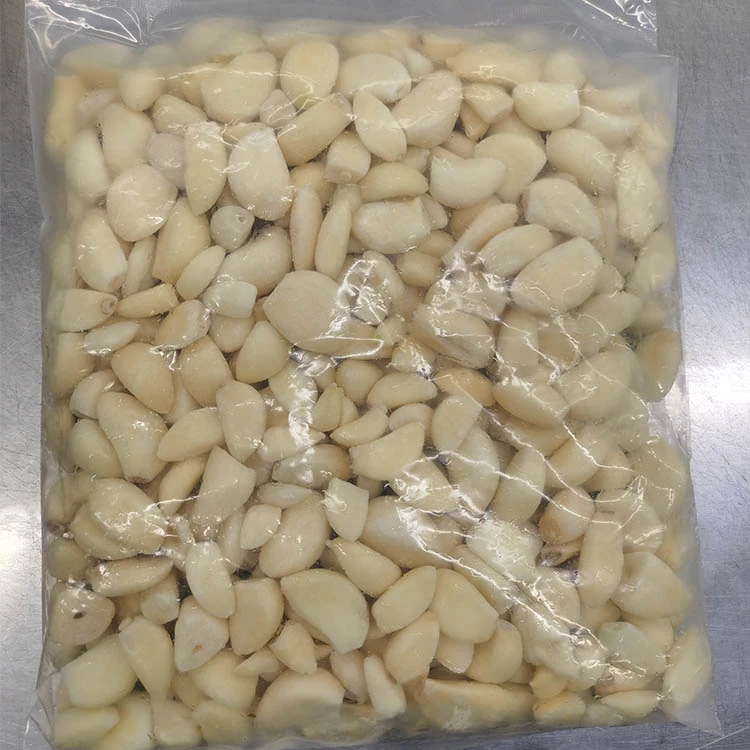
Prepared garlic formats reduce peeling labor when you need stable commercial production.
How to Preserve Garlic by Freezing
Freezing is one of the most practical ways to preserve fresh garlic when the next use is cooking. Whole peeled cloves can be tray-frozen and then packed into sealed freezer bags or boxes. Minced garlic can be frozen in small portions, thin sheets or cube trays. Garlic paste can also be portioned, but the formula should stay simple and clearly labeled. Freezing will change texture, but it can preserve usable aroma and reduce preparation time.
The key is portion size. A large frozen block forces your team to thaw more than needed, which creates waste and repeated temperature abuse. Small portions let the cook add garlic directly to a hot pan, soup, sauce, marinade or ready meal. For foodservice, a standard portion weight supports recipe consistency. For factories, portion control supports dosing accuracy and line speed.
A commercial frozen garlic product is different from a home freezer tray. It should be prepared under controlled hygiene, packed for freezer storage and held through a continuous cold chain. If your production line uses frozen vegetables, sauces, meat alternatives, soups or meal-kit systems, garlic can be handled as part of the same frozen ingredient logic. GreenLand-food's Frozen Garlic range gives you a commercial route when peeling and daily preparation are not efficient. For wider frozen ingredient planning, our Frozen Vegetables category can also support combined sourcing.
Freezer storage still needs discipline. Use moisture-resistant packaging, remove excess air where practical, label the date, keep the freezer stable and avoid partial thawing. For more detail on texture and flavor changes, you can read our related page on whether freezing garlic ruins texture and flavor. Here, we focus on the broader preservation decision.
When receiving frozen garlic, check that it arrives hard frozen, with cartons intact and no sign of heavy frost, thawing water or refrozen clumps. A few surface crystals can appear during frozen storage, but a bag fused into a wet block suggests temperature fluctuation or poor handling history. Our freezer storage page explains the basic logic of protecting frozen food during storage. For garlic, the same discipline helps protect aroma, portion behavior and sourcing confidence. In purchase orders, define storage temperature, packaging, shelf-life term, carton marking, loading checks and arrival inspection so the preservation method continues after production.

Bulk frozen garlic can turn garlic preservation into a controlled ingredient supply system.
How to Preserve Garlic by Dehydrating
Dehydrating garlic removes moisture so the finished ingredient can be stored as flakes, granules or powder. This method is suitable when you need seasoning, dry mix, soup base, sauce premix, spice blend or shelf-stable retail product. Fresh garlic should be peeled, trimmed and cut into even pieces before drying. Uneven thickness creates uneven moisture, and uneven moisture creates storage risk. A dehydrator gives more control than open-air drying because garlic has a strong odor and needs reliable moisture removal.
After drying, garlic must be protected from humidity. Store flakes or powder in airtight packaging, away from heat, steam and direct light. A dry product can clump, darken or lose aroma if it absorbs moisture. For commercial use, we suggest checking moisture targets, water activity where applicable, particle size, color, aroma, foreign matter control, microbial testing and packaging barrier performance. Dehydrated garlic is not just fresh garlic saved for later; it is a different ingredient with a different release profile.
Dehydration also affects flavor. The aroma becomes more concentrated and may feel sharper or more toasted depending on the process. It works well when garlic needs to disperse in a dry formulation. It is less suitable when your recipe needs the juicy bite of a fresh clove or the soft cooked texture of frozen garlic. For product development, compare dehydrated garlic with frozen garlic in the finished recipe, not only in a spoon test.
Garlic in Oil: Useful Flavor, Serious Storage Risk
Garlic in oil is the part where preservation needs extra caution. Fresh garlic is a low-acid food, and oil creates a low-oxygen environment. This combination can support botulism risk if handled incorrectly. Fresh garlic in oil should not be treated as a room-temperature preservation method. Make it fresh, refrigerate promptly at 40°F / 4°C or lower for a short controlled period, or freeze dated portions for longer storage.
Commercial garlic-in-oil products may be different because they can be acidified, formulated and processed under validated controls. That does not mean a home kitchen or restaurant can copy the same shelf-stable claim by simply placing raw garlic in oil. If your business wants a garlic-in-oil product for retail, foodservice or private label, it needs a validated process, ingredient specification, pH or acidification control where applicable, labeling, shelf-life study and food-safety review.
For kitchens, the practical rule is simple: do not leave fresh garlic in oil on the counter. Do not keep an undated jar for casual use. Do not top up an old jar with new garlic. Prepare small amounts, label the date, refrigerate and discard according to the defined short-use rule. For longer holding, freeze small portions. The same caution applies to garlic confit, pesto-style mixtures, garlic-herb oils and other low-acid ingredients submerged in oil.
| Method | Quality advantage | Safety or process limit |
|---|---|---|
| Dry whole-bulb storage | Keeps fresh garlic character with minimal processing. | Needs dry ventilation and good incoming bulb quality. |
| Refrigerated peeled cloves | Convenient for near-term cooking and prep. | Shorter life, requires hygiene and date control. |
| Frozen portions | Longer holding and fast recipe dosing. | Texture softens; cold chain and packaging matter. |
| Dehydrated flakes or powder | Dry formulation stability and concentrated flavor. | Must be fully dried and protected from humidity. |
| Garlic in oil | Strong flavor carrier for cooking. | Fresh garlic in oil needs refrigeration for short use or freezing; not counter storage. |

For frozen garlic, check color, clove integrity, frost, odor and packaging condition before repeated use or repeat orders.
Commercial Garlic Preservation: What Changes at Scale
At commercial scale, the question changes from "how can I save fresh garlic?" to "how do we keep garlic usable, safe and consistent across batches?" The answer may involve curing, sorting, peeling, washing, trimming, freezing, dehydrating, mincing, packaging, cold storage, metal detection, microbiological testing, traceability and customer-specific packing. The right method depends on the final application.
For frozen garlic, freezing speed and pack format affect free-flowing behavior and dosing. Individual quick freezing can help maintain separation and reduce block formation when the product is prepared correctly. The same logic appears in our IQF processing discussion: preparation, freezing speed, packaging and cold-chain control work together. For garlic, we also check clove size, broken pieces, surface frost, foreign matter, odor, free-flowing condition and carton integrity.
For dehydrated garlic, the focus shifts to moisture control, particle size and aroma retention. For refrigerated fresh peeled garlic, the focus is shelf life, hygiene and turnover. For garlic in oil, the focus is validated safety control. For all commercial forms, you should keep the document package clear: product specification, packing list, origin, lot traceability, storage condition, shelf-life information and applicable certificates.

Commercial garlic preservation depends on preparation, packaging, storage records and repeatable cold-chain handling.
Sourcing Checklist for Preserved Garlic
When your purchasing team evaluates preserved garlic, do not look only at the storage method. The more important question is how the product will behave in your real process. Does it need to be chopped? Does it need to melt into sauce? Does it need visible clove identity? Will it go into a frozen ready meal, a chilled sauce, a dry seasoning blend or a hot kitchen line? Each use needs a different answer.
| Sourcing question | Why it matters | What to request |
|---|---|---|
| What is the garlic form? | Whole, peeled, minced, frozen and dried forms perform differently. | Cut size, clove size, particle size or portion weight. |
| How is it preserved? | Storage method affects safety, texture and shelf life. | Freezing, dehydration, refrigeration, oil system or validated commercial process. |
| How will it be packed? | Pack size affects waste, thawing and line dosing. | Inner bag weight, carton weight, pallet pattern and label details. |
| What is the storage condition? | Cold chain or dry storage determines receiving checks. | Temperature requirement, shelf life, loading record and receiving tolerance. |
| What documents are available? | Traceability and compliance protect repeat orders. | Specification, COA where applicable, origin, lot code and certificate scope. |
Need preserved garlic for commercial cooking or frozen food production?
Tell us your target product, garlic form, pack size, cold-chain requirement, application and destination market. We can help match frozen garlic and other frozen vegetable specifications with foodservice, sauce, ready meal, retail private-label and industrial processing use. You can also download our frozen food catalog for a wider product overview.
Download Catalog Send InquiryMistakes to Avoid When Preserving Garlic
Do not store whole bulbs in a sealed damp bag. Do not wash garlic before storage and then leave moisture trapped around it. Do not treat peeled garlic like an intact bulb. Do not leave minced garlic in a warm prep area. Do not keep garlic in oil at room temperature. Do not use an old, unlabeled garlic-oil jar only because it still smells acceptable. Aroma is useful for quality screening, but it is not a reliable food-safety test.
Do not freeze garlic in a large unportioned block if your kitchen only uses small amounts. Do not thaw and refreeze repeatedly. Do not use dehydrated garlic in a high-moisture storage room without barrier packaging. Do not buy a commercial garlic product without knowing whether it is meant for frozen, chilled or shelf-stable distribution. The preservation method and distribution method must match.
For B2B sourcing, the biggest mistake is separating preservation from application. A preserved garlic product is successful only when it performs well in your final recipe. Test aroma release, texture, color, dosage, cooking behavior, storage behavior and customer acceptance before moving from sample to order.
FAQ
How to preserve garlic at home?
Keep whole bulbs dry, cool, dark and ventilated. Refrigerate peeled cloves for short use, freeze minced or peeled portions for longer holding, and dehydrate garlic only when it is fully dried and packed against moisture.
How to preserve fresh garlic without refrigeration?
Use dry storage for intact bulbs. Keep them in a breathable container away from heat, sunlight and moisture. Once cloves are peeled or chopped, refrigeration or freezing becomes a safer and more practical choice.
How do you preserve fresh garlic after peeling?
Place peeled cloves in a clean covered container and refrigerate for near-term use, or freeze them in portions. Keep them dry, cold and dated. Discard cloves that become slimy, moldy, sour or unusually soft.
How can I preserve fresh garlic for cooking later?
Freeze peeled cloves, minced garlic or measured garlic paste portions. Add them directly to cooked dishes when practical. This works well for sauces, soups, stir-fries, marinades and ready-meal production.
For preparation details, see Can You Freeze Peeled Garlic?.
How to save fresh garlic before it sprouts?
Sort out firm bulbs, keep them dry and ventilated, and use broken bulbs first. If you cannot use the garlic soon, peel and freeze the cloves or dehydrate them for a dry seasoning format.
Can garlic be preserved in oil?
Fresh garlic in oil should not be stored at room temperature. Prepare it fresh, refrigerate promptly for a short controlled period, or freeze dated portions. Commercial garlic-in-oil products require validated controls that ordinary kitchen storage does not provide.
Is freezing garlic better than refrigerating it?
Freezing is better for longer holding and portion control. Refrigeration is useful for short-term peeled or minced garlic. Whole unpeeled bulbs usually do better in dry ventilated storage than in a humid refrigerator.
Can garlic be dehydrated for long storage?
Yes. Peel and cut garlic evenly, dry it thoroughly, then store flakes or powder in airtight packaging away from moisture, heat and light. For commercial use, we suggest checking moisture, particle size, aroma and microbiological requirements.
What preserved garlic format is suitable for factories?
Frozen peeled cloves, frozen minced garlic, dehydrated garlic and validated garlic-in-oil systems can all work, depending on the recipe. The decision should follow dosing method, storage condition, cooking process, shelf-life target and destination-market requirements.
Can GreenLand-food supply frozen garlic for commercial preservation needs?
Yes. We can discuss frozen garlic forms, packing, documents and application fit for foodservice, frozen meals, sauces, vegetable mixes and private-label processing.