


Inspecting Frozen Goji Berries for Stems, Broken Fruit and Free Juice
Oct 19, 2026
Leave a message

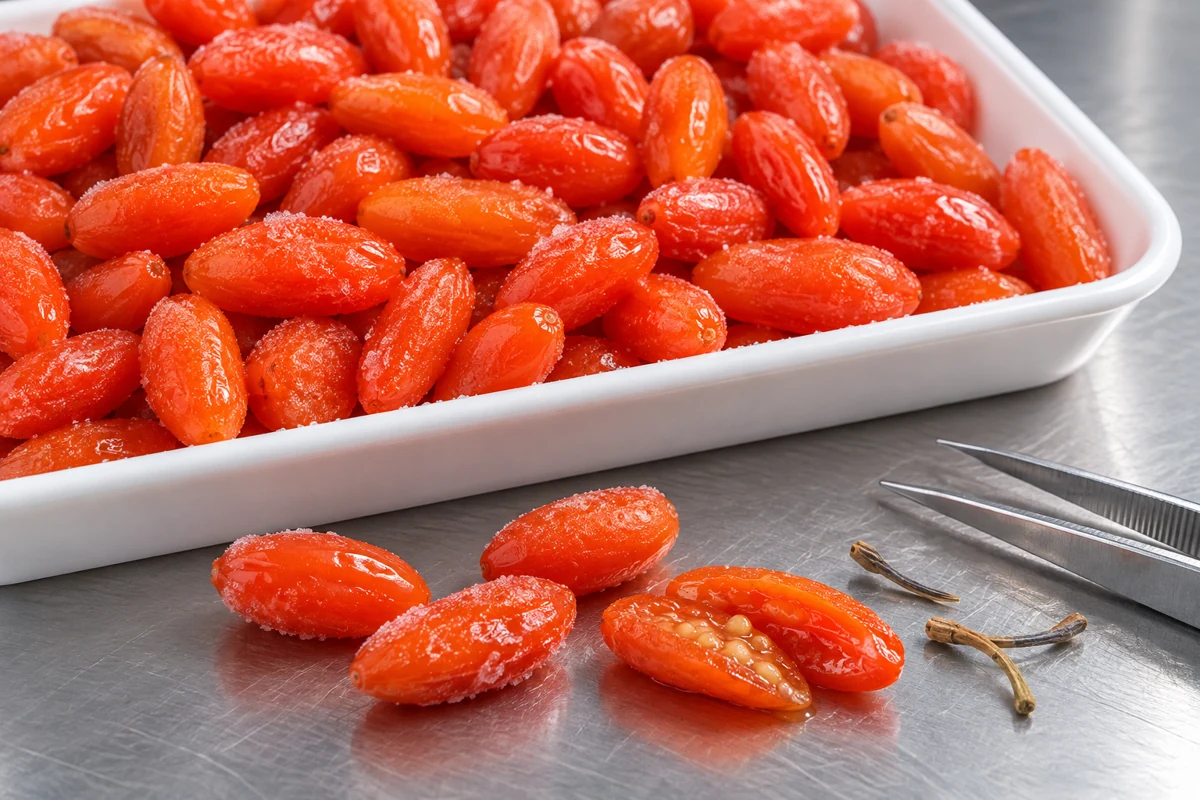
A visible cluster does not establish how a shipment was handled, and a clean-looking berry does not establish microbiological safety. The useful inspection record connects the actual observation to a lot, sample unit, preparation method and written acceptance requirement. It should let the supplier and buyer understand what was found without relying on an attractive top-of-carton photograph or a general statement that the fruit was damaged.
We supply whole frozen goji berries and discuss the agreed grade, pack and sample basis before confirming an order. For a visible-fruit application, recognizable berries may be essential. For a screened preparation, a different broken-fruit allowance may be commercially appropriate. Stem and foreign-material requirements still need explicit treatment in either case. This guide develops a practical quality-inspection approach; the buyer's technical team sets applicable safety criteria and release responsibilities.
Identify the lot and preserve separate sample units
Begin with the material the inspection is meant to represent. Record the product form, lot code, pack size, carton or pallet identities and the point at which the goods are examined. A shipment may contain several production lots or packing runs. If these are combined under one convenient sample label, a later finding can become difficult to locate. Define the decision unit before selecting the sample so the resulting report can support the intended acceptance or investigation.
Choose sample positions according to the agreed plan and the expected sources of variation. The easy-to-reach top of one carton may not represent lower layers, other cartons or another part of a pallet. Pressure, liquid distribution and packing variation can affect the observed condition. The exact number and location of units should reflect the lot and decision; there is no universal carton count that this article can prescribe for every goji shipment.
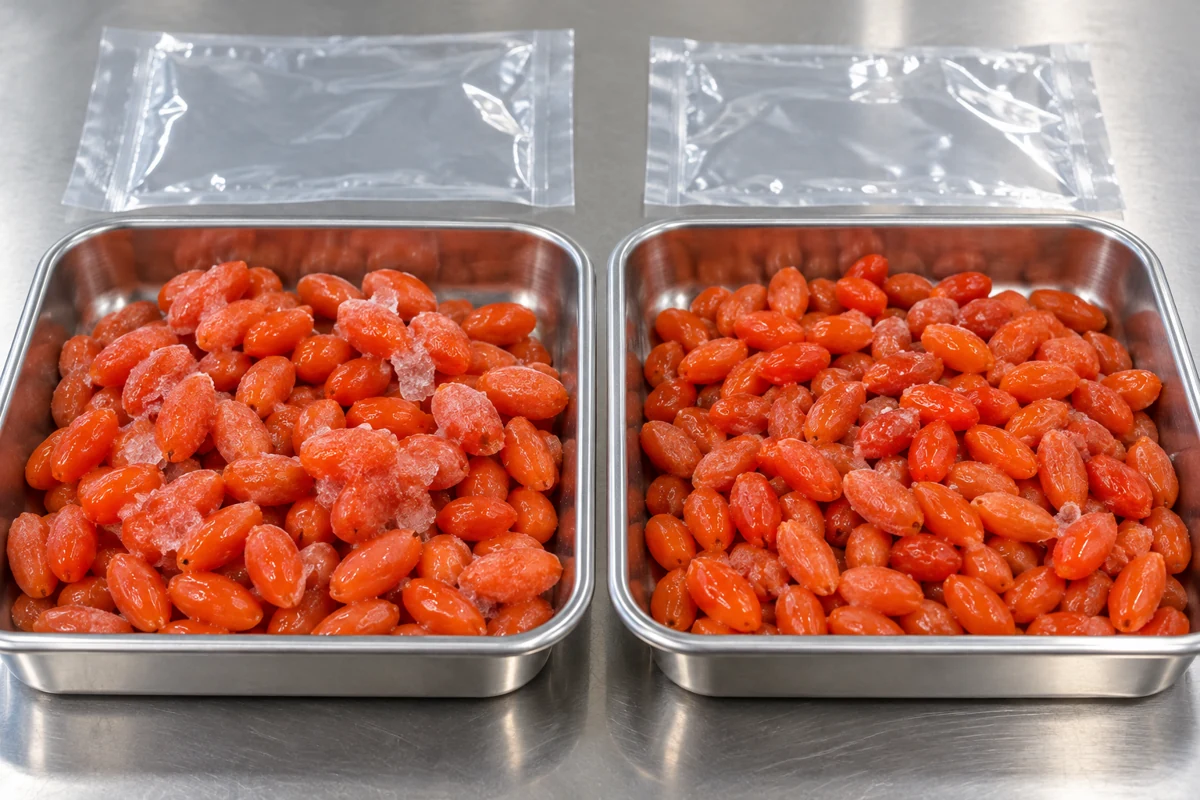
Separate trays preserve visible differences among sample units before any justified combining step.
Keep the selected units separate long enough to inspect their individual condition. If one carton contains substantially more broken fruit or clusters, combining it with cleaner units can conceal the variation. A composite can be useful for a justified lot-level question, but it changes the information retained. Our article on composite samples and individual packs explains why the decision should determine whether material is combined.
Record the condition at opening. Photograph the intact label and pack, then the undisturbed contents where useful. Include enough context to locate the finding within the sample unit. A tightly cropped picture of a stem can show its appearance, while a wider image shows whether it was attached to a berry, lying in a liquid-rich region or isolated during sorting. Preserve both the original condition and the separated finding when the distinction matters to a claim.
Use clean suitable tools and the handling arrangement required by the facility. Keep material within its approved conditions and avoid repeated warming while several people inspect the same tray. Roughly breaking a frozen mass apart can create the very damage the inspection then reports. Describe any separation action used and retain an undisturbed portion when possible. This makes it easier to distinguish incoming condition from a change introduced by the examination.
Plan reserve material before the sample is consumed. A later review may need an identified unopened unit or a separately retained portion prepared under the agreed conditions. The quantity and storage arrangement should fit the question and the responsible QA procedure. A bag of mixed leftovers cannot reconstruct the original carton distribution or its temperature history. Keeping identity intact at collection is usually more useful than trying to recreate it after the first result is disputed.
Inspect the packed frozen condition first
Open the sample and describe what is present before thawing changes its appearance. Look at berry separation, clusters, surface frost, visible frozen liquid, crushed regions and liner condition. Keep these as observations rather than immediate diagnoses. A hard cluster can contain different proportions of intact berries, broken tissue and frozen juice. Its appearance may justify further examination, but it cannot by itself prove a specific transport event or temperature excursion.
The GreenLand-food product reference shows whole orange-red berries in a bulk liner. That photograph identifies the offered form and visible fruit character. It cannot define a shipment's defect percentage, confirm a botanical species for every lot, or establish its handling history. Use the approved specification and actual identified sample for those decisions, with the product photo serving as context rather than an analytical result.

Whole orange-red goji berries shown in the GreenLand-food bulk-liner reference.
Define how free flow will be judged. Gentle movement of a pack, a controlled tray observation or a defined dosing trial can each address a practical question, but they are not interchangeable. State the sample condition, handling and observation. If berries separate only after warming, the result does not establish their ability to dose under the frozen conditions planned for production. A successful manual separation also cannot guarantee performance in a particular hopper or filler.
Inspect the pack alongside the fruit. Broken seals, damaged liners, external staining, leakage or compression can help guide an investigation. Record carton position and any relevant receiving temperature measurements or transport records under the agreed procedure. Avoid assigning the cause from one clue. A packed lot's current appearance and the records of its route need to be reviewed together before the team concludes whether the issue concerns product grade, packaging or handling.
Color deserves a defined reference. Natural orange-red variation, a dull patch, exposed flesh and dark damaged tissue are different findings. Lighting, surface ice and the thickness of the fruit layer can change their appearance in photographs. Compare the sample under consistent conditions and use an agreed range rather than a single unusually vivid berry. Where analytical color is required, specify the instrument and sample-preparation method with the technical team.
Keep the frozen examination distinct from later thaw observations. A berry that looks intact while frozen may reveal a split skin after controlled handling. Liquid can become visible only as ice melts. Record both stages against the same sample identity without replacing the first observation with the second. The sequence tells the buyer what was received in the intended frozen state and what that material becomes under the preparation route relevant to use.
Separate stems and foreign plant parts from fruit defects
Agree what counts as a stem finding. A short pedicel attached to a berry, a loose stem fragment and a larger piece of woody material can present different handling and acceptance issues. Leaf fragments should also have a defined category. Photographic examples help observers apply the same definitions, especially when a tiny attached remnant might be accepted under one specification and rejected under another. Keep the descriptions precise enough to inspect consistently.
Specify the reporting basis before counting. Stems per kilogram of examined material, affected berries per number examined, and foreign-plant-part mass as a percentage are different measures. A sample can have many very light fragments but little total mass. It can also contain a small number of heavier pieces. Choose the measure that matches the application and written requirement, and include the actual examined mass or count with the result.
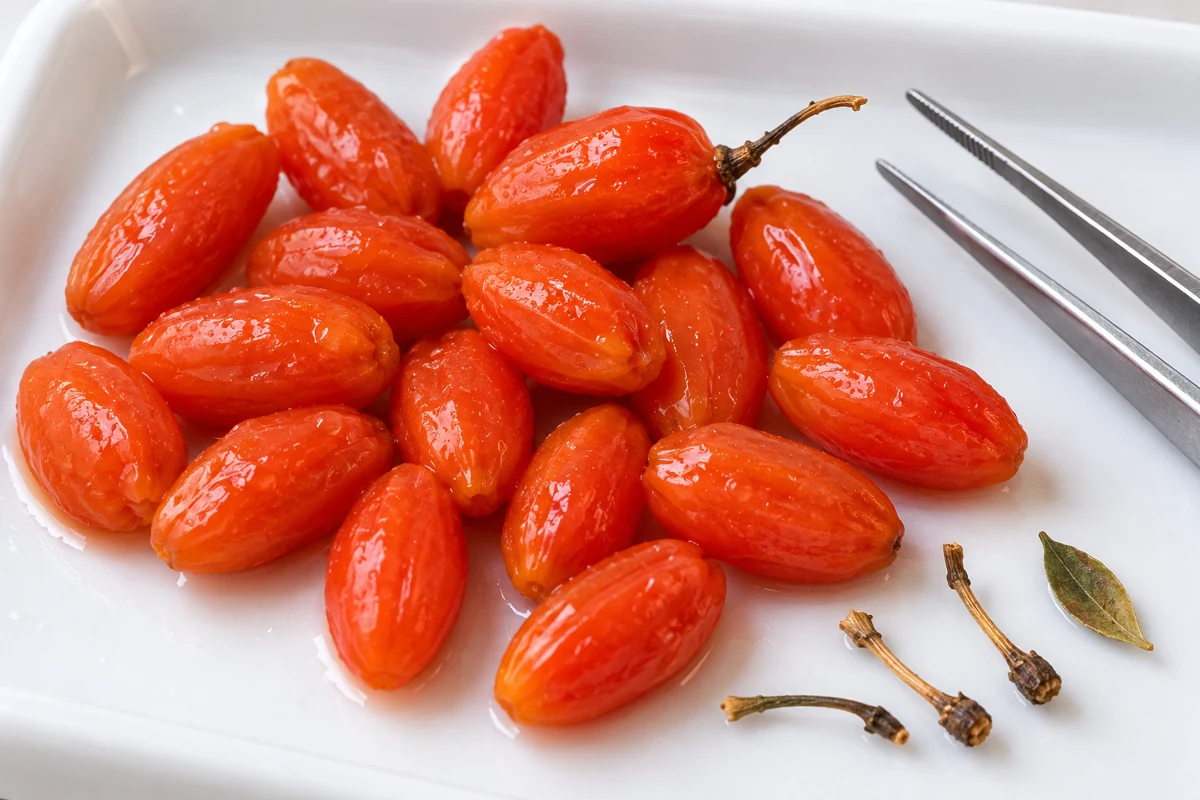
Attached stem material, loose fragments and a leaf fragment need clear category definitions.
Separate attached material carefully so the inspection does not lose its context. If an attached stem is removed, retain it with the relevant sample record and note whether the affected berry is also counted in another category. The agreement should explain whether categories overlap. For example, in a hypothetical 100-berry examination, 12 split berries and two stem-bearing berries do not necessarily mean 14 distinct affected berries: the stem-bearing fruit may already be among the 12. Preserve the separate counts and any combined affected-fruit count. This avoids incompatible total defect percentages from observers using different overlap rules.
For a hypothetical example, finding four loose stems in a 500-gram quality sample corresponds to eight stems per kilogram on that examined-mass basis. It does not mean that eight percent of the berries carry stems. Nor does it establish the precise count in every kilogram of the lot. Report the observation, basis and sampling context together. The example explains arithmetic and should not be treated as a recommended allowance or a GreenLand grade.
Foreign material needs an appropriate QA response based on its identity and the applicable requirement. A naturally occurring plant part and a piece of hard extraneous material may demand different investigation and disposition. Do not let a general percentage for minor fruit defects absorb a finding that has its own exclusion or safety significance. The technical team should define which categories require holding the material, further identification or escalation before commercial acceptance.
Keep the separated findings for review where the procedure permits. Clear photographs on a neutral tray, the original sample identifier and the method used to recover them are more useful than a caption saying poor sorting. The supplier can then examine the same type of finding and discuss a corrective action tied to the actual requirement. A repeated complaint becomes easier to assess when the record distinguishes attached stems, loose fragments and other material instead of changing category names each time.
Define whole, split and crushed berries consistently
Whole-fruit percentage needs a definition of whole. A berry with an intact outline and a small skin opening may remain recognizable in yogurt or compote. A flattened skin with much of its flesh dispersed has a different application value. Decide whether a split berry remains in the whole category, forms a separate class or is included with broken fruit. The choice should follow the buyer's product and be agreed before the inspection result is known.
Use a small set of representative physical or photographic examples to train the judgment. Show intact berries, split but recognizable fruit, collapsed berries and loose fragments under the same observation conditions. Include the sample state because a frozen piece and its thawed counterpart can look different. A reference helps people discuss borderline findings, but it should be supported by words and a repeatable method rather than an undefined visual impression.
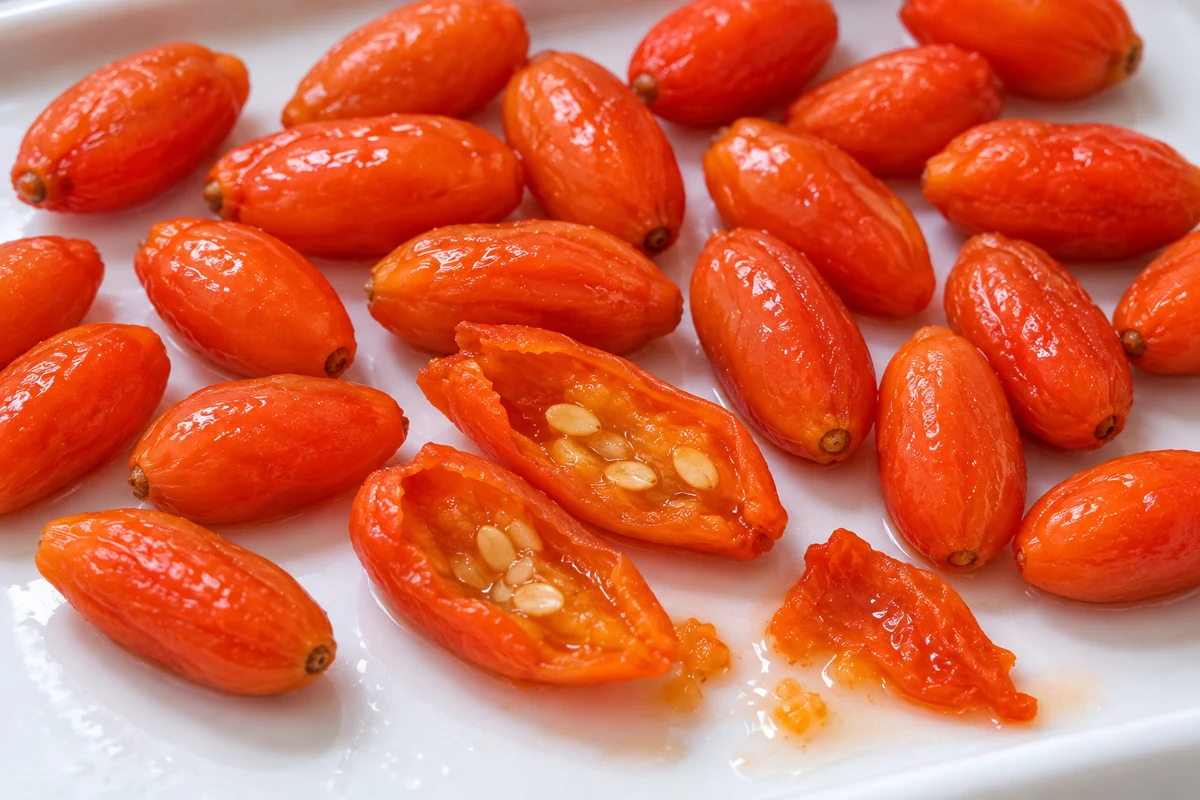
Recognizable whole fruit, split berries and collapsed tissue need a shared classification method.
Choose count or mass deliberately. Counting affected berries can work when individual fruit remains recognizable. Weighing separated fractions may be more practical when there is substantial crushed material, but juice and adhering ice can influence the mass. Neither basis automatically describes the other. A tray containing a few large collapsed berries and many small intact berries can give different numerical impressions by count and by mass, even when both calculations are correct under their definitions.
Consider the physical separation method. Hand sorting, gentle screening and thaw-assisted examination can expose different fractions and can introduce different losses. If thawing is used, explain what happens to released liquid and loose flesh. If the fruit stays frozen, specify how clusters are handled. The method should recover the categories needed for the decision without creating excessive new breakage. Record deviations when a sample cannot be assessed using the normal procedure.
Interpret the result through the intended application. Recognizable fruit may justify a strict requirement in a visible-inclusion product, while a screened sauce may accept more naturally broken tissue if other criteria are met. That commercial flexibility does not remove foreign-material, identity or safety requirements. A lot can meet a broken-fruit allowance and still need attention for stems, abnormal odor, pack condition or another separately specified issue.
Retain the distribution of results among sample units. A satisfactory overall average can conceal a carton that fails the agreed unit requirement. Decide whether the limit applies to each examined pack, an agreed aggregate or another defined decision unit. Preserve the original observations when calculating a summary. This gives the supplier and receiver a clearer route for resolving a localized finding and avoids accepting or rejecting a whole lot on an average whose meaning was never agreed.
Measure released liquid with an agreed thaw method
Define free juice operationally. The liquid collected from a thawed sample under a specified drainage method can include water and soluble fruit components. It may also be affected by surface ice or handling introduced before the test. Calling all of it added water would be an unsupported conclusion. Describe the collected fraction and the conditions that produced it, then use any additional analysis needed to answer a separate composition or adulteration question.
Agree the starting state, sample mass, thaw arrangement, endpoint and drainage conditions. Container geometry, separation equipment, drainage interval and whether fruit is pressed can all affect recovery. A gently drained portion and a squeezed portion answer different questions. The method should fit the application while remaining safe and practical for the responsible team. Do not compare supplier numbers until their sample preparation and reported basis are sufficiently alike.
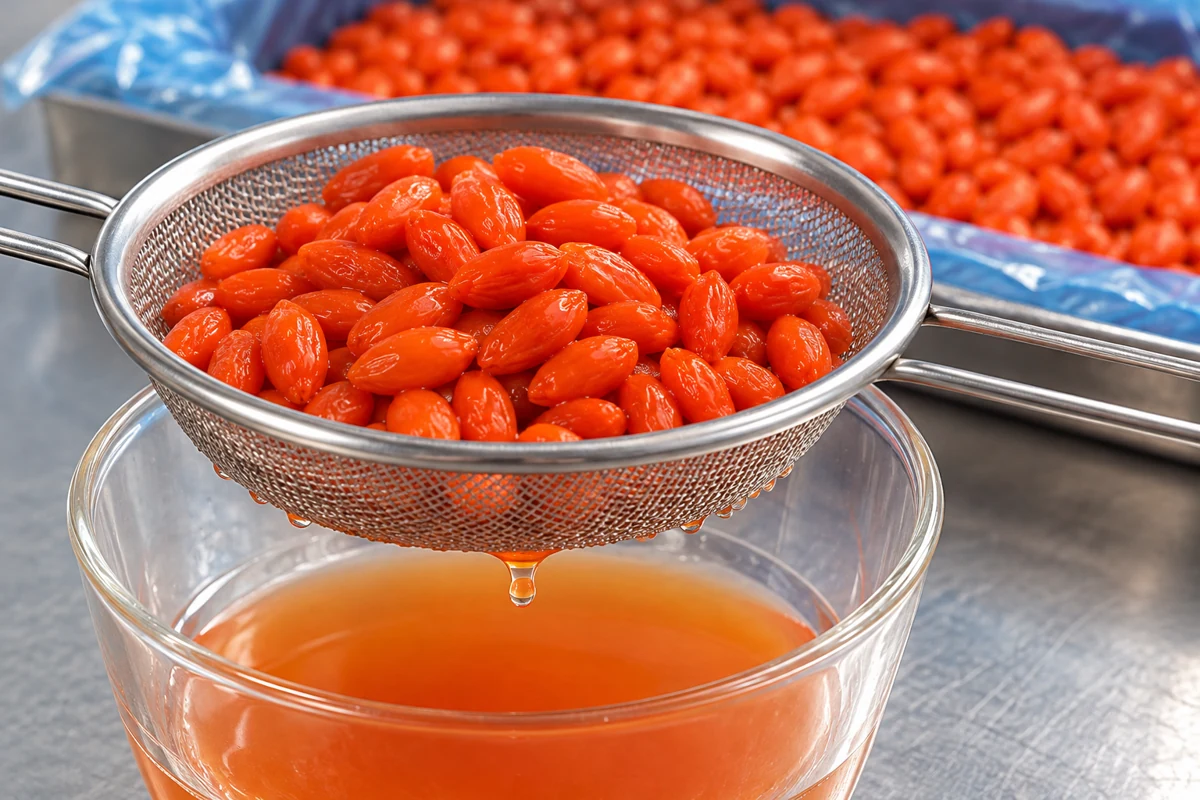
Collect released liquid under the agreed method and retain its connection to the original sample.
Weigh the collected liquid and retained fruit as separate fractions, preserving any unaccounted material in the record. A simple check of recovered mass against input can reveal spills, material adhering to equipment or an incomplete collection. If the procedure adds water or other liquid, record it explicitly. The reported release should not quietly include rinse water or exclude fruit liquid discarded at an earlier stage of sample preparation.
For a hypothetical 1,000-gram input, collecting 120 grams of liquid under the agreed method gives 12 percent collected liquid on the original input-mass basis. Reporting 120 divided by the 880 grams retained gives a different number and denominator. State which basis the specification uses. Those values are illustrative only; they do not describe a tested goji lot, establish a typical release, or provide an acceptance tolerance.
Keep the liquid measurement separate from recognizable-fruit recovery. A sample can release liquid and still leave usable whole berries. Another can retain little free liquid while containing substantial crushed tissue. Assess both where the application needs them. A compote may use the released liquid within its sauce balance, while a bakery or visible fruit mix may handle it differently. The method should reflect what the buyer will actually do with the material after receipt.
The measurement cannot reconstruct the entire cold-chain history. A high release may justify a review of maturity, initial damage, freezing, storage, transport and the test method, but one result cannot identify the cause. Compare the packed observations, relevant records and repeatable application result. The starting state in processing trials also matters when the buyer uses direct frozen loading and has little reason to drain the fruit in normal production.
| Observation | Sample state | Reporting basis to define |
|---|---|---|
| Stems and plant parts | Agreed frozen or prepared portion | Count, affected-fruit count or mass |
| Split and crushed fruit | Defined state and separation method | Fruit count or separated mass |
| Collected liquid | Agreed thaw and drainage method | Collected mass against stated input |
Connect the observations to the intended food use
Interpret stems, fruit integrity and liquid as separate parts of the buying decision. A visible-yogurt program needs acceptable foreign-part condition, recognizable fruit and suitable behavior in the dairy preparation. A beverage route may give more weight to screening and accepted extraction output. The inspection should preserve enough information to make those distinctions. One combined quality score can hide a defect that matters strongly to one application and little to another.
Run an application trial on identified material when the specification depends on performance. Keep the formula, fruit dose and preparation route comparable across lots. If a lot requires extra sorting, draining or a different process to become acceptable, record those changes and their cost. The relevant question is usable output at the required condition. A lot that can be salvaged under a different route has not necessarily met the specification for the original order.
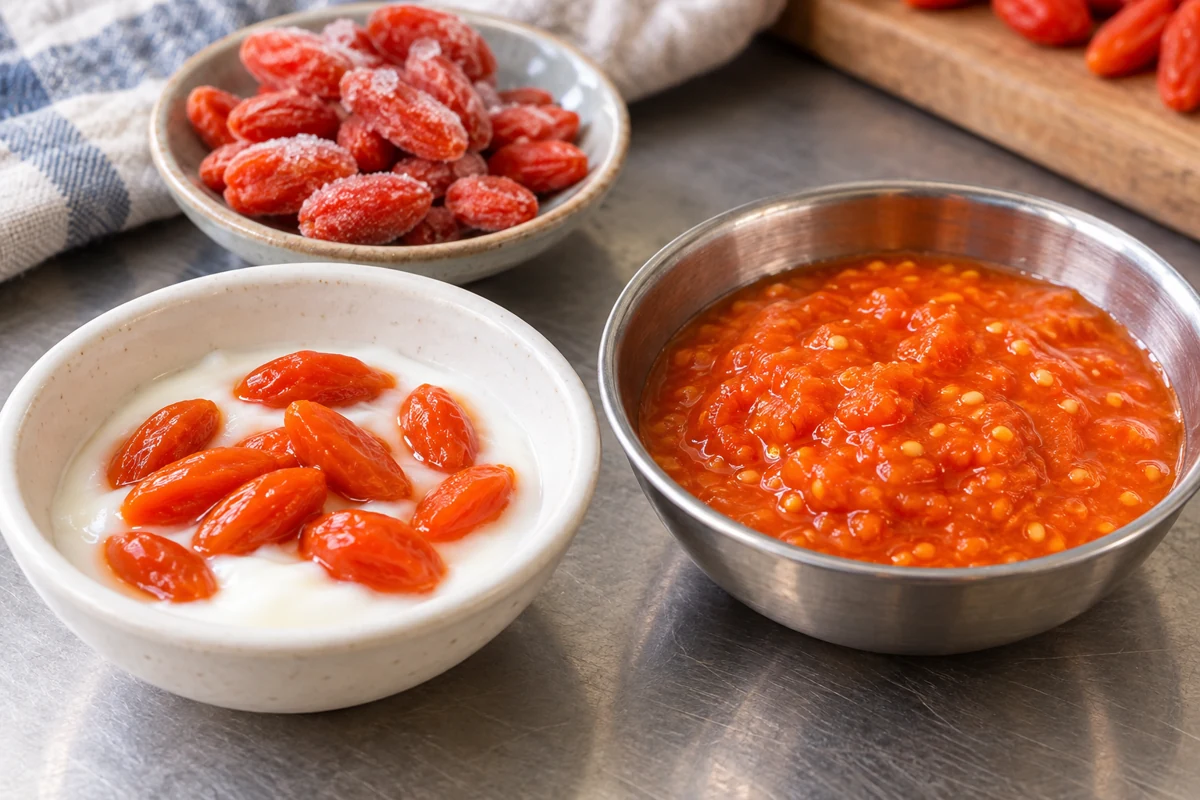
Visible fruit in yogurt and a pulp preparation value different aspects of berry integrity.
Quality inspection and safety release have different evidential needs. Visible defects may guide an investigation, but absence of stems, dark fruit or leakage does not establish absence of pathogens. The FDA explains that freezing does not kill most bacteria. Follow the approved intended-use, process and testing requirements for the actual product, with qualified staff interpreting the results and deciding disposition.
Avoid a causal conclusion that exceeds the record. Juice at the carton base may indicate where liquid accumulated; it does not identify when the berry skin broke. A cluster can be consistent with several handling or material conditions. Document the observation accurately, review supporting records and define the next examination. A defensible claim is more useful when it distinguishes known facts from a proposed explanation instead of attaching a confident cause to a single photograph.
Compare results across lots using the same method and reporting units. If a new inspector changes from counting split berries to weighing collapsed tissue, the resulting trend cannot be read as a straightforward improvement or deterioration. Preserve method versions and any changes in sampling or preparation alongside the figures. This allows repeat-order discussions to focus on actual differences rather than a shift in how the material was observed.
Commercial decisions should acknowledge the scope of the sample. A limited inspection can support the agreed decision under its plan; it cannot establish that every berry in every carton has been examined. When a result is borderline or inconsistent among units, use the pre-agreed review route and relevant technical advice. A later favorable sample should be interpreted with the earlier finding still visible. Keeping both observations preserves the evidence needed to resolve the difference responsibly.
Write a receiving agreement that can resolve a claim
Write the product identity and intended use first. Name whole frozen goji, the packing and the relevant lot boundaries. Then describe each required attribute with its observation or analytical method and reporting basis. Whole-fruit share, attached stems, loose plant parts, clusters and collected thaw liquid should have separate definitions where they matter. The numerical limits must come from the approved specification and commercial agreement, not an assumed universal goji grade.
State which unit the requirement governs. A per-pack visual requirement and a lot-average processing target are different commitments. If an aggregate is used, define how sample units contribute and which findings remain subject to individual review. Identify the relevant sampling arrangement, reserve policy and records. This prevents an average from being used later to override a unit-level requirement that the buyer expected to apply at receipt.
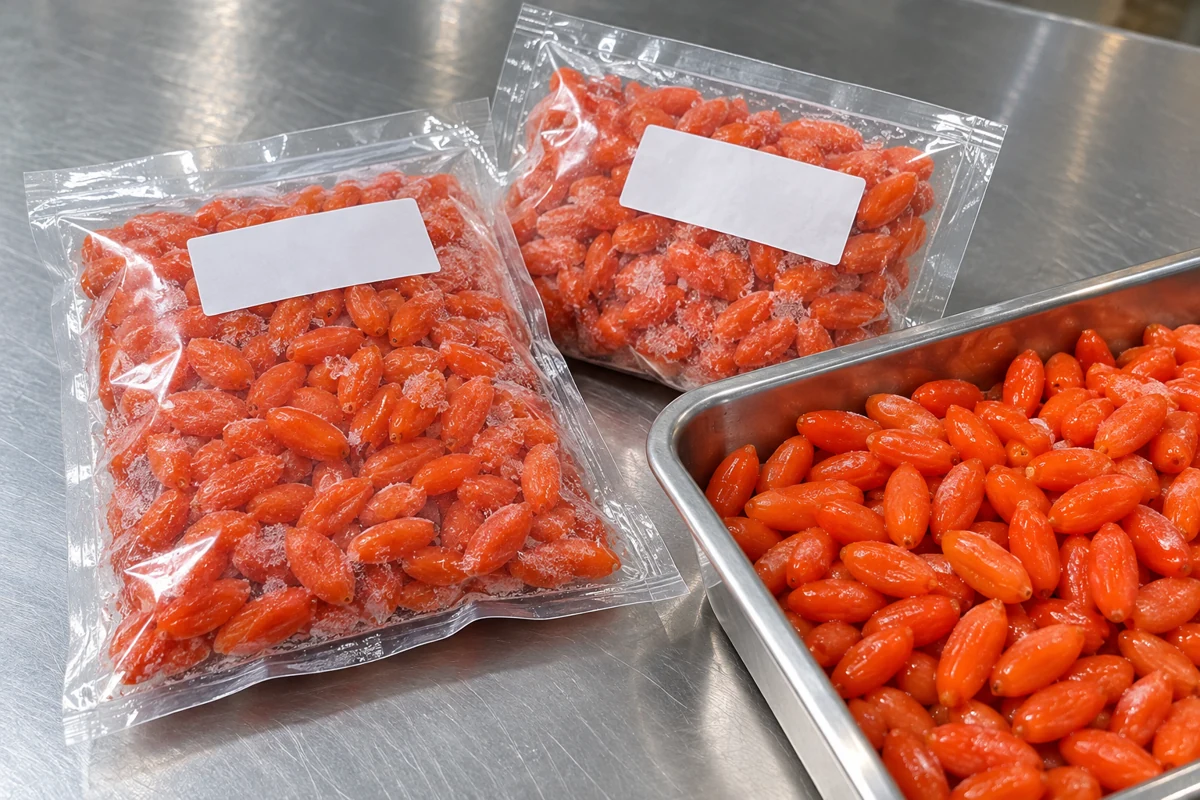
Separate sealed portions illustrate reserve-sample handling; actual identity and records must accompany the material.
Agree how material is held and reviewed when a concern is found. The receiver should preserve lot and carton identity, original photographs, separated findings and relevant condition records under its procedure. Identify who can authorize disposition and what further inspection or testing may be required. A commercial claim about visible fruit condition should not lead to informal changes in a safety release plan or the destruction of the original evidence.
Set a practical comparison route for supplier and receiver. Use the same definitions, sample state and preparation method, and reconcile differences before applying a tolerance. If one party reports count and the other mass, or one drains the sample and the other includes all liquid, the numbers need interpretation before they can be called contradictory. A shared method document and representative examples reduce this avoidable source of dispute.
The shipment file should connect the agreed specification, approved sample, packing details and requested reports to the supplied lot. Relevant treatment declarations, analytical methods and destination requirements need to be named accurately. We confirm those commercial and documentation inputs before supply. A general statement of quality control cannot replace the actual evidence required for the intended product, and a static carton photo cannot stand in for a represented lot inspection.
For repeat orders, review whether the specification still predicts the customer's experience. If accepted raw berries consistently break in the customer's process, the application criterion or handling route may need development. If an incoming defect escapes because its definition is unclear, improve the written method and examples. The best receiving agreement lets both teams observe the same material, report the same categories and reach a decision whose basis remains understandable after the shipment has moved on.
Continue reading about ingredient inspection
Keep unit-level defects visible when a lot average would hide where they occurred.
Review carton position, claim records and reserve material in a different delicate-fruit inspection program.
Distinguish the received frozen condition from the material state used in an application trial.
Source frozen goji berries with GreenLand-food
GreenLand-food is a professional frozen goji berries supplier and manufacturer in China, providing factory-direct wholesale supply for importers, food manufacturers, foodservice distributors, and private-label programs.
Send the product form, specification, packing, quantity, application, destination, private-label needs, and requested documents.