


Baking with Goji Berries: Frozen Whole Fruit vs Dried Berries
Oct 19, 2026
Leave a message

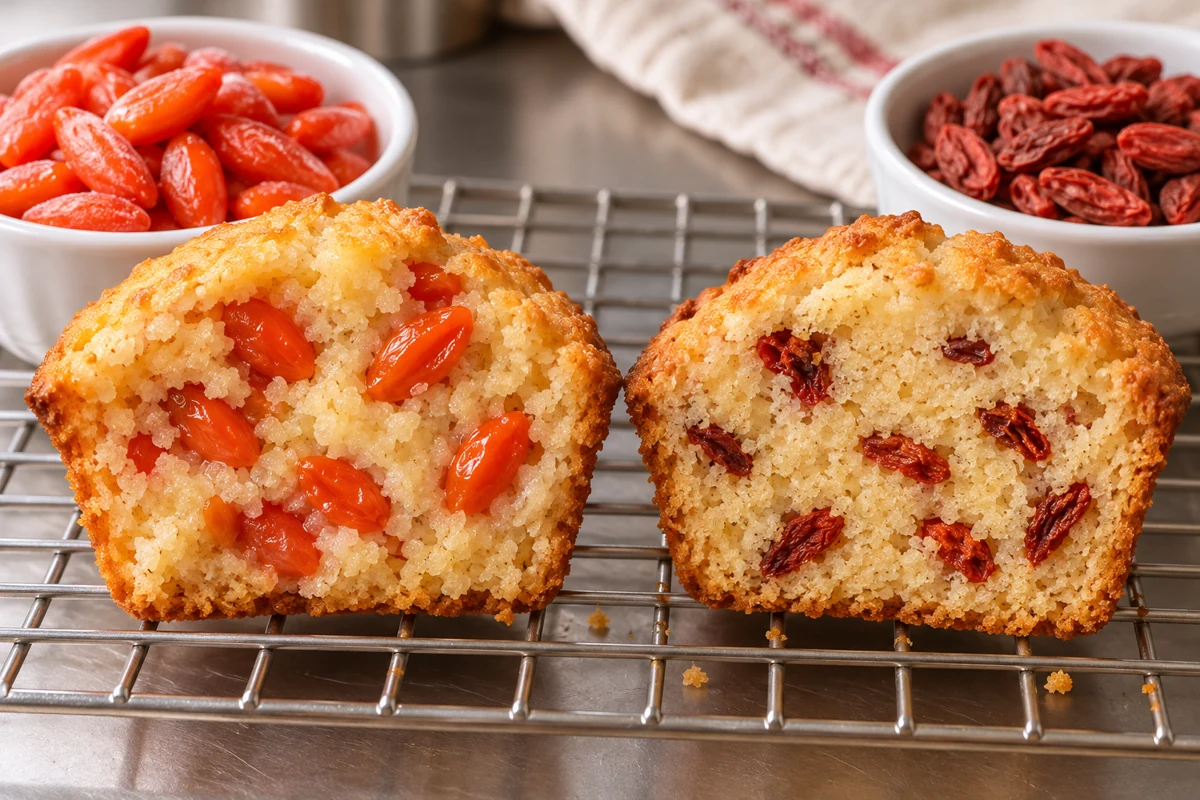
Choose the desired crumb and fruit character first, then compare the two forms in the actual product. A muffin with soft fruit pockets asks a different question from a cookie with chewy pieces or a yeast bread containing dispersed fruit solids. There is no reliable universal fresh-to-dried conversion for all of them. The useful conversion depends on the measured composition of the supplied fruit, what happens to released liquid, and the finished texture you intend to sell.
We supply whole frozen goji berries and discuss their packed condition, whole-fruit share and application with buyers before quoting. Dried berries are a separate comparison material in this guide; a frozen-fruit quotation should not be read as an offer of a dried SKU. A useful bakery trial makes the ingredient choice concrete enough to connect the approved bake with the subsequent fruit order.
Choose the fruit character the baked product needs
Begin with the bite. A whole frozen berry that softens during baking can leave a distinct skin around a moist fruit interior. A dried berry can remain chewy, particularly in a product with limited available moisture or a short hydration period. Whether either is desirable depends on the product. A tender cake may benefit from the contrast of soft fruit and light crumb, while a crisp cookie may lose its intended texture if a wet inclusion changes the surrounding region too much.
The fruit's position also matters. In a deep muffin, berries inside the crumb experience a different environment from berries exposed on a shallow pastry surface. Surface fruit can dry, darken or become tough before the interior reaches the desired bake. A sample that tastes good as a moist central inclusion may perform poorly as a decorative topping. Specify whether the berries will be folded through the mix, placed in a filling or applied at the surface before choosing the comparison method.

Hydrated frozen whole fruit and wrinkled dried berries represent different ingredient states.
Define the flavor expectation in the finished food. Dried fruit often gives a concentrated taste in a small inclusion, while hydrated whole fruit supplies more fruit water at the same added mass. The actual sweetness, acidity and savory or vegetal notes vary with fruit identity and lot. Taste the selected material after the intended preparation and in the finished bake. A description borrowed from a dried-fruit snack cannot predict how a frozen lot will taste in a sweet dairy-rich batter.
Color should be evaluated in the same context. Orange-red skins may remain visibly distinct even when the surrounding crumb changes little. Crushed fruit can disperse color more widely, and exposed fruit may darken during baking. Decide whether the product needs recognizable berries, a uniformly tinted crumb or a combination. Using whole berries to obtain a uniform color may increase skin and seed intensity before delivering the shade the designer expected.
Keep the first product brief specific enough to judge. Describe the desired crumb, fruit visibility, local moisture and bite at the intended serving condition. A sliced cake sold chilled and the same cake warmed before service can give different impressions of the fruit. This description becomes the basis for selecting the ingredient and gives the bakery a useful standard when a later supplier lot produces a different result.
A filled pastry also needs a clear boundary between the fruit ingredient and the finished filling. Whole frozen berries folded directly into batter are different from berries cooked into a sweetened filling before baking. The latter route has already changed water distribution, fruit structure and composition. Describe that preparation before comparing forms; otherwise a claimed frozen-versus-dried bake may actually compare two different filling recipes as well as two fruit inputs.
Inspect the whole frozen berry before mixing
The GreenLand-food frozen goji product reference concerns small whole orange-red fruit. It does not establish a fixed berry count, moisture value or whole-fruit tolerance for every lot. Inspect a representative packed sample for berry size, attached stems, broken skins, crushed material and clusters. These features affect how fruit can be weighed, dispersed and recognized in the finished bake.
Keep the sample in its specified state while inspecting free flow. A frozen mass can contain sound berries held together by surface moisture, damaged berries frozen into released juice, or a mixture. The appropriate response depends on the condition and the order specification. Forcing a cluster apart with rough handling can create breakage during the test, so define the handling used before comparing suppliers or recording a broken-fruit result.

Whole orange-red goji berries shown in the GreenLand-food bulk-liner reference.
Then examine a separate portion after the proposed preparation. If the recipe calls for controlled thawing, collect and record the released liquid. If fruit will enter the mix frozen, assess whether pieces remain separable during dosing and what the cold input does to the mixing condition. The distinction between frozen and thawed ingredient loading is relevant to planning comparisons, although a bakery mixer and a heated kettle require their own operating trials.
For the dried comparison, confirm whether the berries are unsweetened or sweetened, whether any treatment or additive is declared, and how moisture and size are specified. Wrinkled dried fruit, rehydrated dried fruit and frozen whole fruit are three material states. If dried fruit is soaked before mixing, record the soaking method, liquid retained or discarded and final prepared mass. Otherwise the bakery may compare a defined frozen input with an undefined hydrated ingredient.
Fruit identity and traceability remain part of the approval. Ask for the information that affects the actual program, including botanical identity where needed, crop or source-lot reference, packing, handling instructions and relevant destination documentation. A sample sent in a small convenient pouch may not reveal the compression or liquid distribution of the intended bulk carton. Include the commercial pack in the later trial when it can change the berry condition at the mixer.
Check the size distribution against the portion, too. A large berry can dominate a small biscuit, while the same berry may disperse comfortably through a larger cake slice. Counting berries per portion without recording their approximate size can make a later lot seem equivalent even when the mouthful changes. Use the supplied whole-fruit range in the trial, and agree whether unusually small or large berries affect the application's acceptance rather than setting a size limit solely for appearance.
Account for fruit water and solids in the recipe
Equal added mass is useful when the bakery wants to see what a direct substitution does. It is less useful for claiming that the two bakes contain equivalent fruit solids. A hypothetical 100 grams of fruit at 80 percent moisture contains 20 grams of dry matter, while 100 grams at 20 percent moisture contains 80 grams. These numbers illustrate the arithmetic only; they are not measured values for GreenLand goji or a recommended substitution ratio.
Measure or obtain a reliable moisture basis for the actual ingredients when solids equivalence matters. Fruit dry matter includes components beyond sugars, while a refractometer reading estimates soluble solids in the prepared liquid under its method. A Brix value cannot automatically replace a total-moisture measurement for whole berries. Agree which composition result the formula calculation needs and make sure the sample preparation represents the fruit fraction entering the recipe.
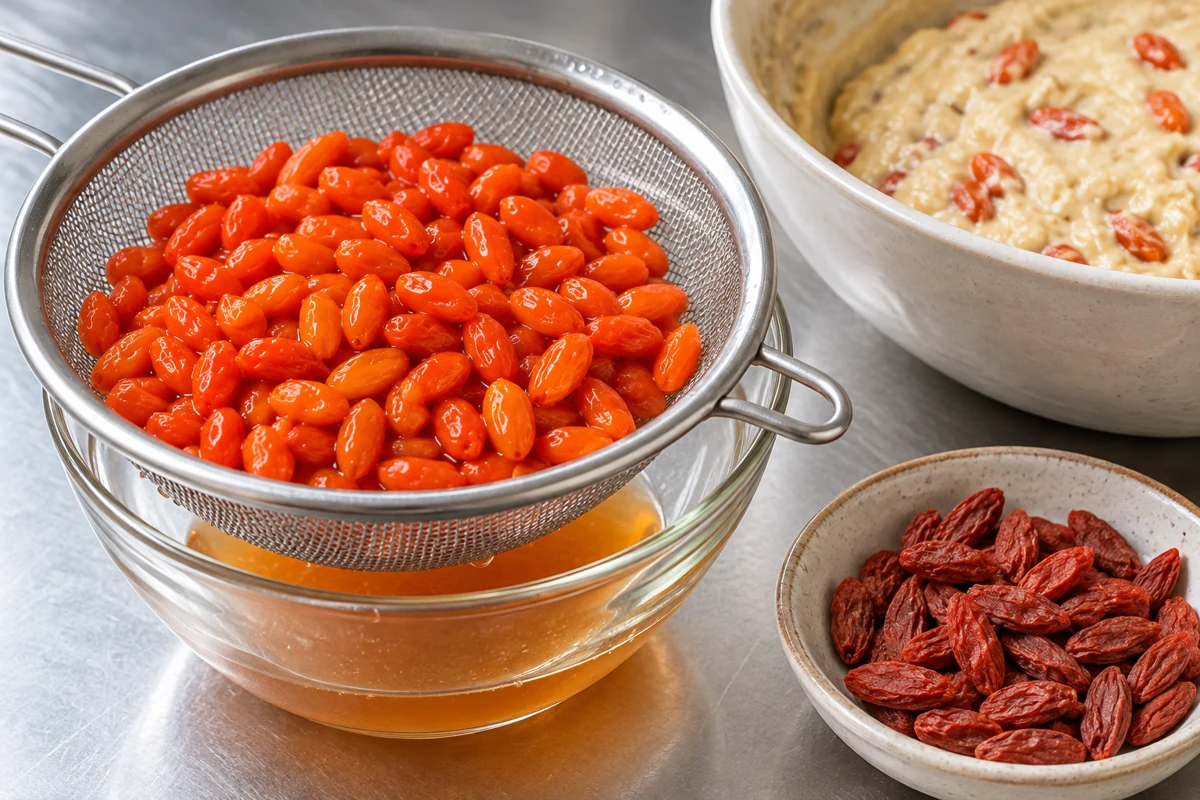
Collected fruit liquid remains a separate input to account for when comparing the bakery formula.
The state of the water also affects the process. Frozen fruit can introduce ice and a cold thermal load; thawed fruit can bring readily mobile liquid; dried fruit can absorb moisture during mixing and holding. Accounting for total water gives a starting mass balance, but it does not predict the rate or location of moisture movement. A batter can have the same calculated water content and still bake differently when the liquid reaches it at a different point.
Treat thaw liquid explicitly. If the intended formula retains it, include it in the ingredient mass and mixing route. If the process drains it, measure the retained fruit and the discarded liquid under a defined method. Draining can also remove soluble flavor and color components. Adjusting the added water by the mass of drained liquid alone may not recreate the original fruit contribution, so verify the finished flavor and crumb rather than assuming a complete correction.
Separate the trial questions before changing the recipe. One comparison can hold added fruit mass constant to examine a direct replacement. A later comparison can use measured fruit solids and an adjusted liquid basis to explore a closer formulation match. Trying to answer both questions with one pair of bakes makes interpretation harder. Keep each variant's complete formula and preparation record so an attractive sample can be reproduced without reconstructing how much liquid was lost along the way.
Prepared dried-fruit yield needs its own account. If a hypothetical 100 grams of dried berries becomes 180 grams after soaking and defined draining, the extra prepared mass came from retained soaking liquid. It does not represent 180 grams of the original dried ingredient. Keep the original fruit and retained liquid identifiable in the formula record. A later change in soaking recovery can then be reviewed as a preparation difference rather than an unexplained change in fruit dose.
| Input state | Water handling question | Finished-product observation |
|---|---|---|
| Whole frozen | Does the formula retain released fruit liquid? | Soft fruit pockets and nearby crumb |
| Dried | How much moisture is taken up during holding? | Chew and crumb after cooling |
| Rehydrated dried | What liquid remains after defined draining? | Prepared inclusion and local moisture |
Protect berries and distribute them through the mix
Whole berries need to reach their intended position without excessive crushing. Record the mixing stage at which they enter, the batch condition, the mixing action and any holding interval before portioning. An early addition can expose the fruit to more work; a late addition may preserve shape but leave an uneven distribution if the mixing route is inadequate. The useful setting is the one that achieves both requirements in the actual equipment.
A small hand-folded sample is a reasonable concept trial. It does not establish performance in a larger mixer, hopper or depositor. Compare berry condition before and after the critical transfers. If fruit remains intact in the bowl and breaks during deposition, changing the bowl mixing time may have little benefit. Conversely, a gentle depositor cannot restore fruit already dispersed into the batter. Keep observations attached to the actual process stage.
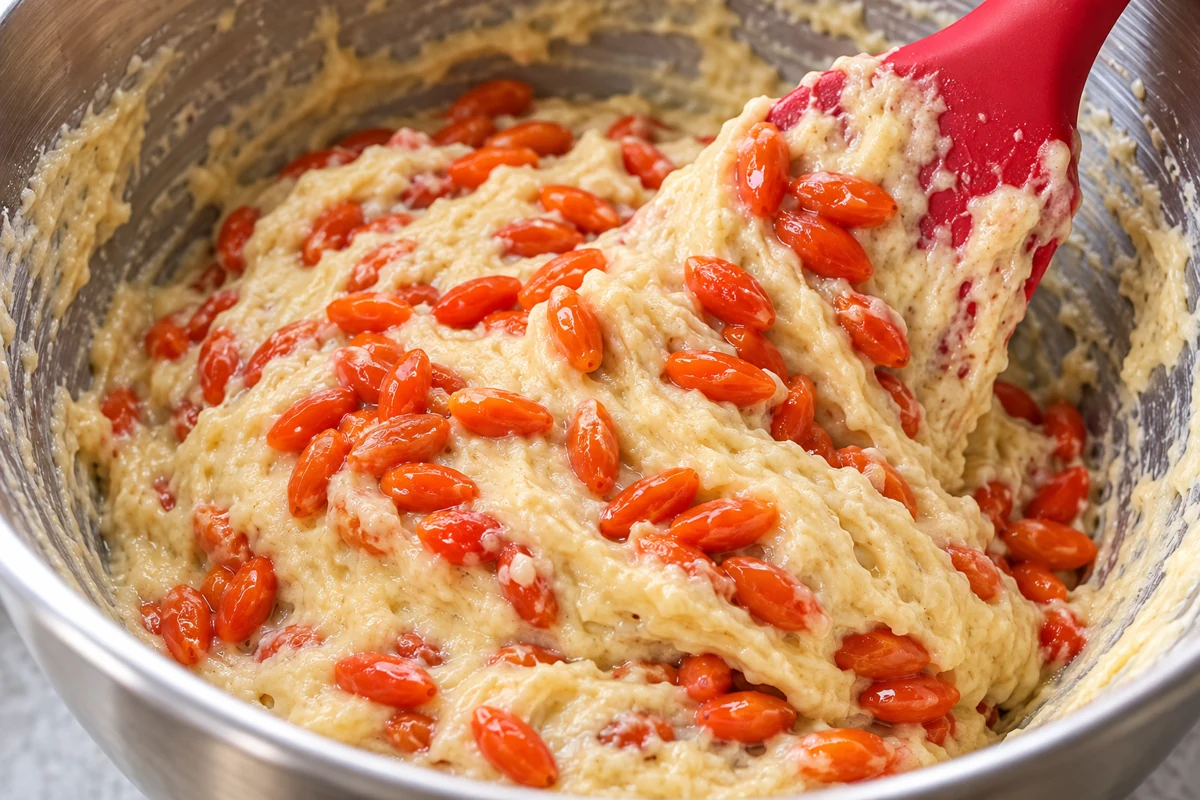
Gentle folding can be examined for both fruit survival and distribution through the batter.
Frozen berries can lower the mix temperature and may create local cold regions until the material is adequately dispersed. The effect depends on dose, berry temperature, batch mass and formula. Avoid assigning a universal extra baking time to frozen goji. Check the batter or dough condition and validate the bake for the product and equipment. A recipe instruction developed for a different fruit size, pan depth or oven is a starting concept rather than a production setting.
Dried berries introduce a different distribution issue when they take up liquid during a holding period. Their apparent size and firmness can change between initial mixing and the last deposited unit. Prepared dried fruit also needs consistent drainage if it is hydrated first. Keep preparation timing aligned across trial batches. Otherwise a difference attributed to fruit form may partly reflect how long one mixture waited before it reached the oven.
Inspect units from distinct parts of the mixing and portioning run. Cutting only the most attractive muffin can conceal a group with very few berries or a cluster of wet fruit at one edge. Use a sampling arrangement appropriate to the batch and decision, preserving individual-unit identity where distribution matters. Compare inclusion pattern, portion weight and local crumb together. A consistent total fruit addition is useful, but customers buy individual portions and experience the fruit within those portions.
Read the bake through crumb and local moisture
Judge the crumb around the fruit as well as the crumb between inclusions. A moist ring or denser region beside a berry can be commercially important even when the center of the product otherwise looks acceptable. It may reflect local liquid release, a cluster of fruit, an insufficient bake for the product or a formulation interaction. A photograph identifies the visible region; it does not establish which mechanism produced it.
Allow the bake to reach the defined evaluation condition before making a texture comparison. A hot muffin can appear softer and wetter than the same muffin after controlled cooling. Slicing at different temperatures also changes the appearance of the cut surface. Establish the cooling and holding arrangement, then use comparable units. If the food is sold warm, evaluate that service condition as a separate endpoint rather than mixing warm and cooled scores.
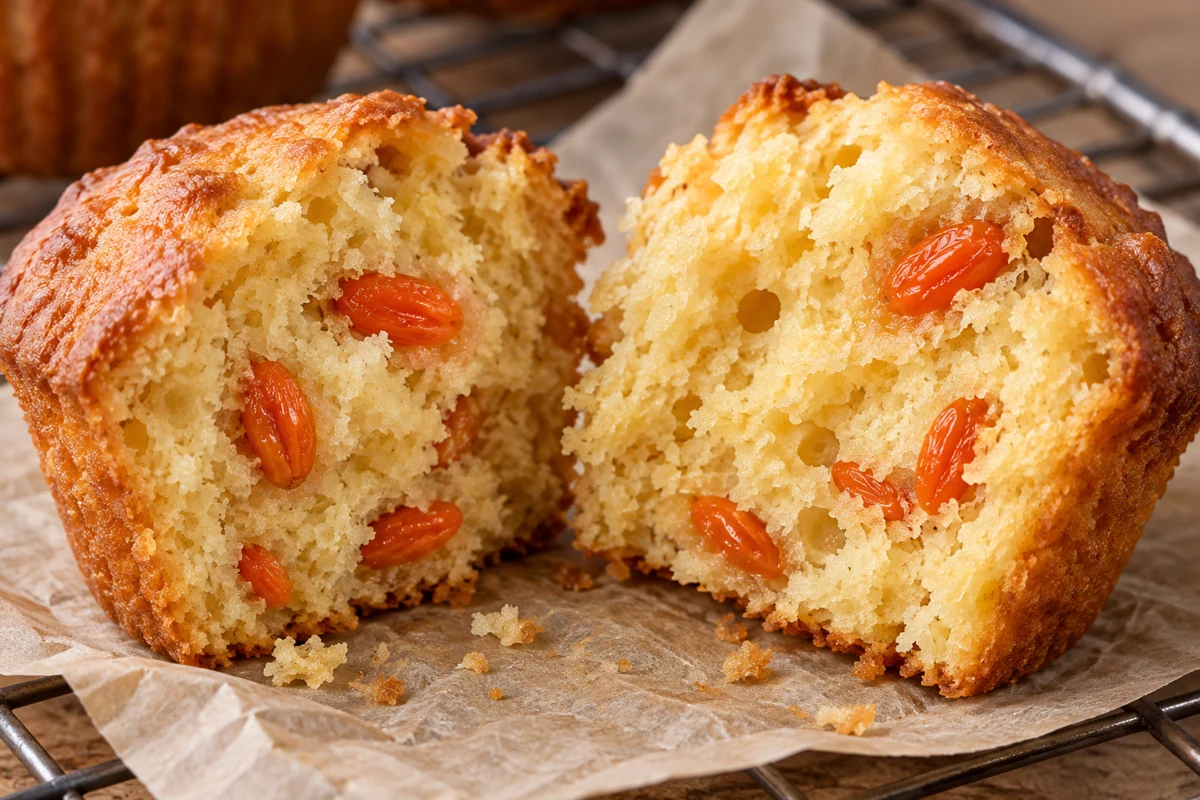
Inspect the crumb immediately beside the fruit as well as the crumb between inclusions.
Look for the fruit's contribution to structure. A collapsed whole berry can leave a soft pocket enclosed by skin, while a dried inclusion may remain distinct and chewy. More widely dispersed fruit solids can change crumb color or firmness without leaving recognizable berries. These outcomes should be compared with the product brief. An even crumb is not automatically better when the concept deliberately promises juicy fruit pockets, and a moist pocket is not automatically acceptable when the pack promises a crisp biscuit.
Keep bake settings and product geometry in the record. Pan material, fill depth, portion size and oven loading can affect the result alongside the fruit. A staged trial can hold those factors constant first and then examine any necessary process adjustment. If a successful frozen-fruit version needs a different fill or bake arrangement, assess its commercial implications directly. A laboratory success that reduces line capacity or increases rejects needs that cost attached to the ingredient choice.
Food safety validation belongs to the complete product and process. Surface color, a dry-looking skewer or the visual condition of the fruit cannot establish a validated commercial bake. Follow the bakery's approved controls and the fruit's handling instructions. The development team can describe crumb, moisture and fruit survival, while qualified technical staff confirm the process and release requirements. Keeping those decisions explicit makes the sensory trial more useful without turning a photograph into safety evidence.
Use a consistent slice position when comparing the crumb. A cut passing directly through several berries can look wetter than a cut through a relatively fruit-free region of the same muffin. Retain enough whole portions to examine distribution as well as selected cut faces. Photographs should state what they show, and the written assessment should describe the range observed, so the most dramatic fruit pocket does not become a misleading representation of the entire batch.
Compare the cooled product and its packed life
A baked product can change after it leaves the oven. Moisture moves among fruit, crumb and the surrounding environment, and the package affects that exchange. Frozen whole fruit and dried berries may therefore show a different ranking after holding than they did on the cooling rack. Plan the comparison around the real selling route: same-day counter service, sealed ambient distribution, chilled storage or another defined program.
Check the berry and nearby crumb at each relevant observation point. A dried inclusion may soften as it absorbs moisture; a wet fruit pocket may spread its influence into nearby crumb; an exposed berry can become tougher. Record the sensory change without assuming a universal schedule. Differences in formula, fruit preparation and packaging can alter the direction and speed of those changes, so the actual product needs its own evidence.
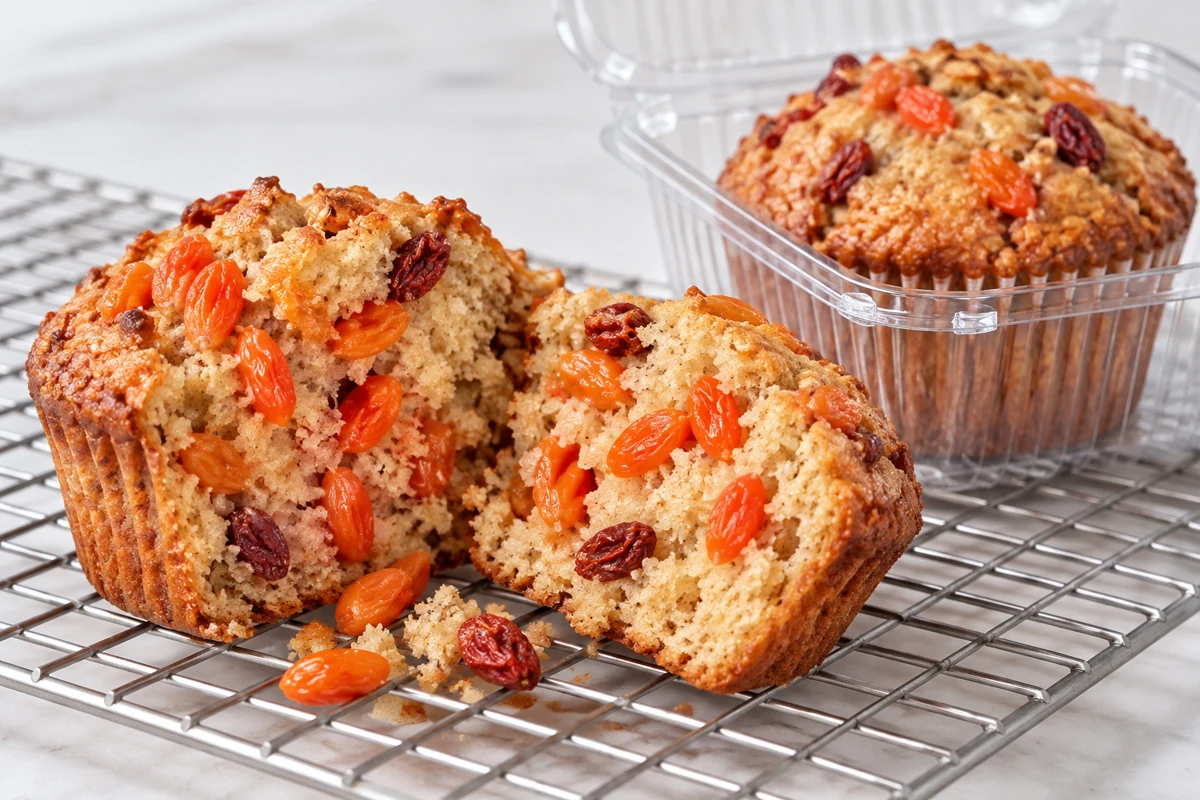
Illustrative mixed-inclusion bake and package; compare frozen-only and dried-only variants separately in the actual holding trial.
Packaging deserves a controlled comparison. Put equivalent products into the intended package at the defined packing condition. A warm product sealed too early can create a different internal moisture environment from a properly cooled product. Package appearance, condensation, crumb softness and fruit texture should be interpreted with that history in view. Changing the pack during the ingredient trial can hide whether the ingredient or the handling change produced the improvement. If a commercial concept deliberately combines frozen whole fruit and dried inclusions, evaluate that combined recipe as its own variant. A mixed-inclusion muffin cannot isolate the effect of either form; separate frozen-only and dried-only batches are needed for that comparison.
For products sold after a further freeze-and-thaw stage, include that route in development. The original fruit freezing and the later freezing of the baked food are separate events within the finished product history. Judge the complete serving sequence, including permitted reheating where applicable. A frozen-ingredient approval made before this additional route cannot establish the appearance or bite that the customer will finally receive.
Commercial shelf life needs a study addressing the whole food, package, storage conditions and relevant hazards. The storage statement for dried berries or frozen fruit does not transfer to the baked product. Request the ingredient information needed by the bakery's technical team, and keep final shelf-life assignment with the responsible food business. The purchasing decision can then compare ingredients on the same intended selling period rather than on unrelated claims about unopened raw materials.
If the product is glazed, filled or assembled after baking, include that step in the relevant comparison. A moist filling or coating can change the environment around the baked crumb and fruit. Approving only the plain cake may miss the texture sold in the assembled product. Keep component and final-product observations connected, which helps the team identify whether a later problem begins in the berry, the bake or the subsequent assembly and holding stage.
Run a useful bakery comparison before ordering
Build the first trial around one familiar base recipe and a plain control. Compare the selected frozen whole fruit with the chosen dried material at a stated added-mass basis, keeping all preparation records. Describe the differences in batter handling, fruit distribution, bake behavior, crumb and bite. The aim is to identify which material best fits the product and what adjustment deserves a second trial, rather than force both into an assumed equivalent dose.
If the initial comparison supports further development, run a measured formulation adjustment. Use reliable ingredient composition to set the fruit-solids and liquid basis, then examine the actual finished product again. Keep any draining or rehydration step repeatable. A ratio that works in one muffin should remain attached to that formulation and process; it should not become a general conversion printed across cookies, bread and pastry specifications.
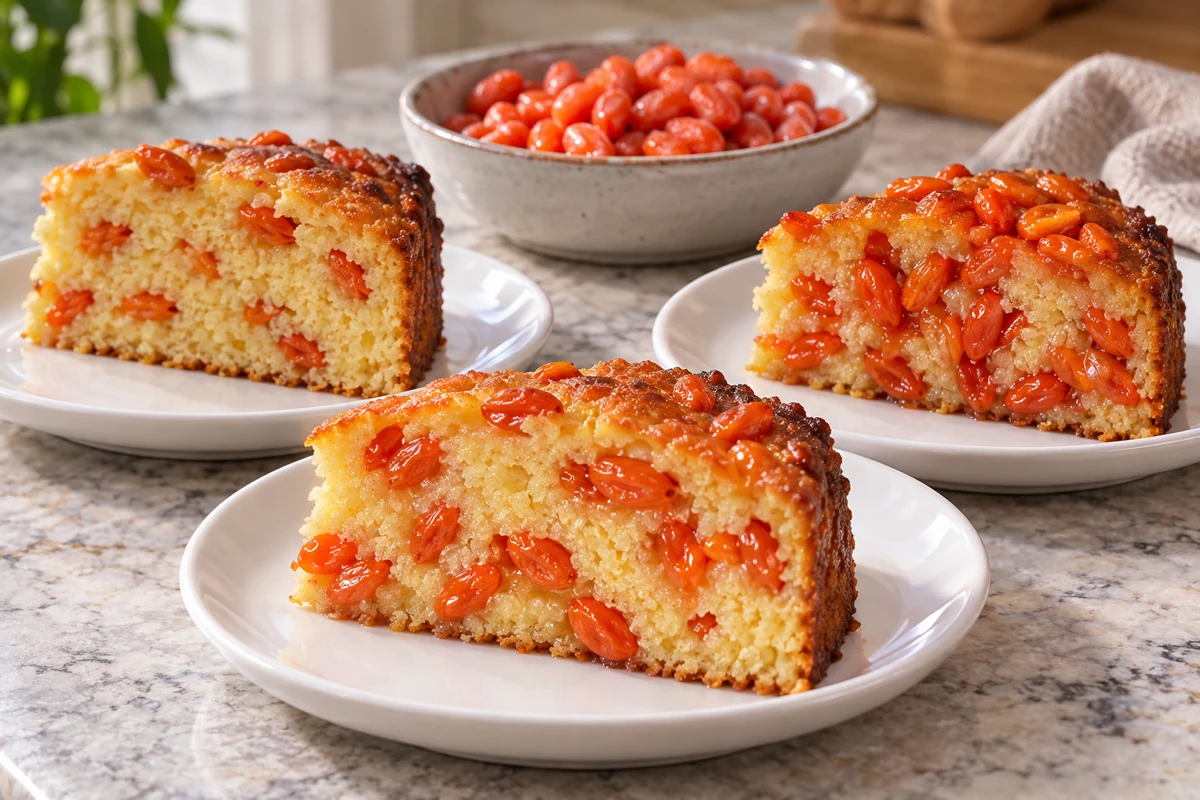
Different visible fruit concentrations and local moisture give a bakery team specific attributes to compare.
Record usable output as well as ingredient input. Count or weigh the portions that meet the agreed appearance and texture criteria, and identify losses from sorting, mixing, deposition and baking where relevant. The useful cost comparison includes those losses, process changes and the accepted finished yield. A lower fruit price may offer little benefit if the bakery must sort extensively or reject more portions because fruit distribution is unstable.
For the frozen order, send the intended baked product, desired whole-berry condition, packing, quantity, destination and relevant technical requirements. The frozen goji supply page provides the starting commercial form, while the approved application trial defines the performance expected from it. We confirm the selected specification and sample basis before treating a tighter whole-fruit grade or alternate preparation as a repeat-order requirement.
Keep an identified reference from the approved trial and a practical method for comparing subsequent lots. Use the same preparation, formula and evaluation condition when a delivery differs, and preserve individual finished units if distribution is the concern. A clear record helps the team decide whether the next adjustment belongs in fruit selection, preparation or bakery processing. That makes the chosen fruit form a reproducible part of the product rather than a substitution that has to be rediscovered with every order.
Continue reading about fruit applications
Follow a different fruit through yeast gas production, retention and the resulting crumb.
Record ingredient starting state before interpreting differences in a processing trial.
Decide when finished portions need separate observations instead of one combined sample.
Source frozen goji berries with GreenLand-food
GreenLand-food is a professional frozen goji berries supplier and manufacturer in China, providing factory-direct wholesale supply for importers, food manufacturers, foodservice distributors, and private-label programs.
Send the product form, specification, packing, quantity, application, destination, private-label needs, and requested documents.