


Goji Berry Compote from Frozen Fruit: Whole-Berry Texture and Sauce Yield
Oct 19, 2026
Leave a message

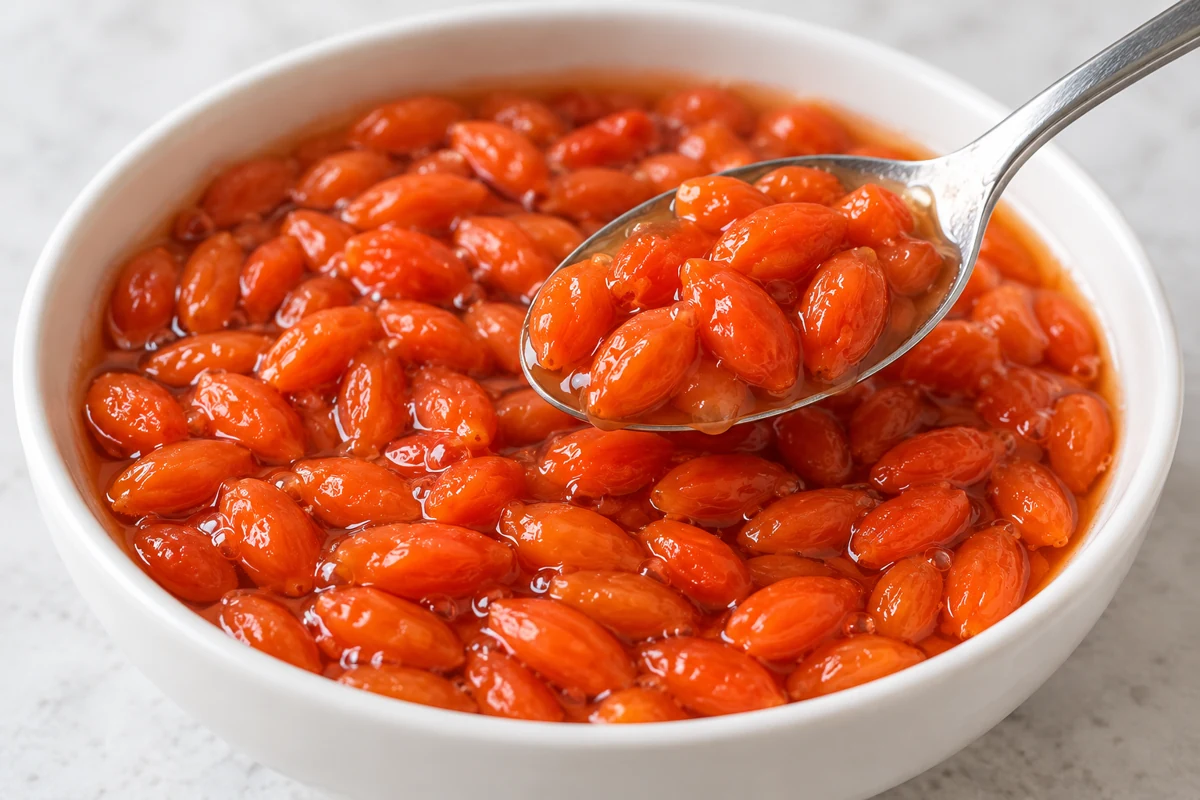
Define the finished compote at its intended serving condition before choosing a cooking endpoint. A spoonable yogurt topping, a pourable dessert sauce and a bakery preparation need different balances of fruit and liquid. Compare yield only after the finished samples meet the same agreed requirements for flavor, sweetness, sauce body and visible fruit. This gives purchasing a meaningful measure of usable output from the frozen ingredient.
The approach here is a development and buying method. It does not prescribe a shelf-stable recipe or a canning process. A commercially sold preparation needs its own validated handling and safety controls. We help buyers describe the whole frozen goji input and the required application result, while the responsible technical team defines the process and release requirements for the final compote.
Define the whole berries and sauce you want to serve
A compote brief needs more detail than a photograph of red fruit in a bowl. Describe how many recognizable berries the customer should encounter, how easily they yield on the spoon, and how the sauce should move at service. The fruit can be soft and still recognizable. A sauce containing loose skins and dispersed flesh has a different character even if its color and overall fruit content resemble the intended product.
Start with the application surface. A topping that sits on yogurt needs to release from its container and spread in a controlled way without flooding the dairy. A dessert sauce may need to pour around a plated item. A bakery filling must perform under its subsequent preparation and holding route. Agree the actual use before judging a sample as too thick or too thin; the same sauce can be suitable for one application and inconvenient for another.
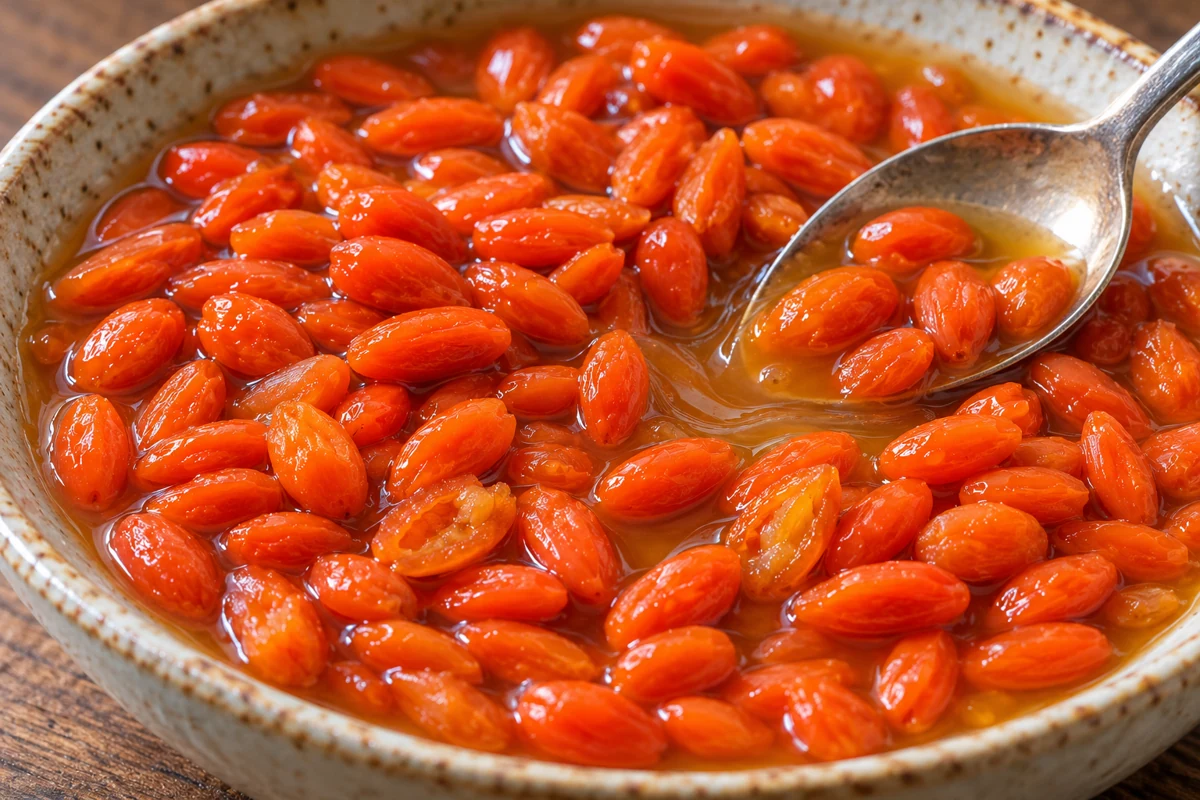
Judge the recognizable fruit and the flow of its surrounding sauce together.
The proportion of recognizable fruit and surrounding sauce should be observable using a defined method. A visual reference is useful for a spoonful, while a controlled separation can help describe the retained fruit fraction. Any separation method introduces its own conditions: mesh, drainage time, handling and sauce carryover change what is weighed. Use it as an agreed operational measure and explain those conditions rather than treating the retained fraction as an absolute biological property.
Taste should include skin, seeds and sauce together. Goji identity, maturity and preparation can affect sweetness and other flavor notes. A sauce that tastes balanced alone can seem more intense when served over a mild base, while a sweet companion can make the fruit taste relatively less sweet. Use the intended accompanying food in the final evaluation and keep a separate assessment of the compote itself for troubleshooting.
Specify the serving temperature and observation interval. Hot sauce can look fluid enough for a pour and then become much less mobile after cooling. Soft berries may also seem different when warm. A product approved at the pan and sold cold has not been evaluated at the same endpoint. Carry a representative portion through cooling and the relevant holding stage before agreeing the target texture or making a yield comparison.
For the first trial, keep the concept narrow enough to learn from. Choose one desired compote style, one representative frozen sample and a controlled preparation route. A small number of purposeful variants is easier to interpret than several combinations of fruit dose, sugar, acid, thickener and cooking intensity changing at once. The output should be a clear description of the preferred fruit-and-sauce relationship and the next variable worth examining.
Check the fruit form and condition before cooking
Confirm that the trial uses whole frozen goji fruit. Dried berries, rehydrated dried berries, puree and sweetened preparations require different material accounts and can give different skin and seed experiences. The GreenLand-food whole frozen goji reference provides the commercial starting form. Exact identity, grade, treatments and packing remain part of the agreed order and its sample record.
Inspect the incoming sample before the pan changes it. Record whole berries, split skins, crushed tissue, attached stems, dark damaged fruit and clusters separately. Existing damage can contribute liquid and dispersed flesh early in the cook. If a trial starts with an unusually intact hand-selected portion, it may overstate the performance of the commercial lot. Use a representative sampling arrangement and preserve the identity of the units that supplied the trial material.

Whole orange-red goji berries shown in the GreenLand-food bulk-liner reference.
Observe whether the frozen fruit can be portioned with the handling intended for production. A small compote batch may tolerate a gently separated cluster, while a repeated dosing operation may need a more consistent free-flowing condition. Avoid breaking the sample forcefully to make it fit the trial. If handling creates new damage, record that condition and consider whether the proposed pack or dosing arrangement needs a separate evaluation.
Choose the quality grade around the finished requirement. A compote designed around recognizable berries may justify a tighter broken-fruit allowance than a fully blended sauce. Some naturally soft fruit can still be useful if its skin and flavor fit the product. The commercial value comes from the accepted output, not a presumed hierarchy of grades. Ask for a sample and quotation that reflect the intended balance of intact fruit, sauce development and sorting effort.
Keep stems and other foreign parts out of the formulation calculation. They need their own inspection and disposition criteria. A description such as processing grade does not permit an undefined amount of plant residue. The order should identify which findings are unacceptable and how any allowed defects are measured. This lets the trial distinguish normal fruit variation from material that should never enter the intended preparation.
Record the pack and cold-chain condition as part of the trial context. A small sample pouch may protect delicate fruit differently from a stacked bulk carton. If compression or juice accumulation could affect performance, include the proposed commercial pack in the later evaluation. Photograph the original opened sample before mixing it, retain lot identification, and keep any abnormal unit separate long enough to investigate its significance rather than blending it out of view.
Keep thaw liquid inside the material balance
Frozen goji can release liquid as it thaws and softens. That liquid is part of the received fruit material unless the agreed process removes it. Record the input mass before deciding how to handle the liquid. If a trial quietly drains it and then reports finished sauce against the original fruit quantity, the result combines drainage loss with cooking and transfer losses. Keeping those stages separate makes the yield easier to explain and repeat.
Retaining the liquid can preserve soluble components within the preparation, but it also changes the amount of mobile water entering the pan. Draining can change flavor, color and the relationship between fruit and sauce. Neither choice is automatically correct. The relevant question is which handling route gives the intended compote and whether that route can be controlled in production. Compare the two only with their preparation conditions and recovered masses documented.
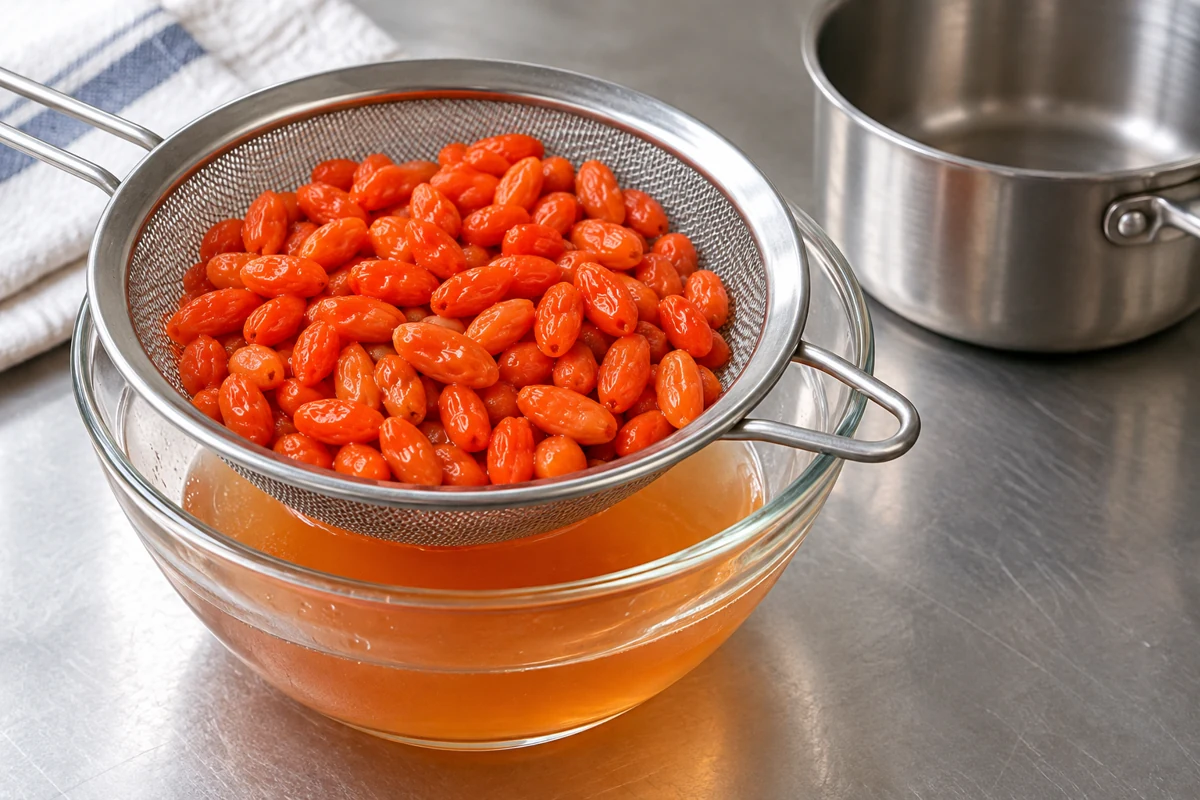
A collecting bowl keeps the released fruit liquid visible before the cooking balance is set.
The thaw method affects the observation. Time, temperature, container depth and handling all influence the fruit's condition at separation. A brief thaw of a shallow sample and a longer thaw of a deep vessel cannot be assumed to produce directly comparable liquid measurements. Define the safe handling method with the responsible technical team, then use the same arrangement when comparing lots. Record the actual sample state at the point of weighing or loading.
Direct frozen loading is another process choice. It changes the thermal load and the way fruit and liquid enter the developing sauce. A pan that contains a small hand-prepared batch may respond differently from a production kettle carrying a deeper charge. Our article on frozen and thawed ingredients in kettle trials discusses why starting condition belongs in the comparison. The goji trial still needs its own equipment and product observations.
Use a mass record that closes as far as practical. Identify received fruit, any material removed before cooking, additions, finished compote and material left in equipment or samples. Evaporation may account for part of the remaining difference, but do not label every unexplained loss as evaporated water. A spill, an unrecorded tasting sample or sauce clinging to a transfer vessel can also change recovery. The trial record should make those contributions visible.
For example, if a hypothetical trial receives 10 kilograms of frozen fruit and removes 1 kilogram during a defined drainage step, the pan receives 9 kilograms of retained fruit material before other additions. Report both the drainage fraction and the finished recovery. Those illustrative quantities are not goji specifications. They show why a claim of yield needs a named denominator and a process boundary before it can support a supplier comparison or a purchasing calculation.
Develop the sauce while protecting recognizable berries
Fruit condition changes as the sauce develops. Some berries may remain plump, some may split, and some may contribute flesh to the surrounding liquid. A compote trial should follow that progression rather than observe only the final pan. If recognizable fruit disappears early, later adjustments to sweetness or thickness will not restore it. Identify when the loss occurs and whether the useful next change concerns incoming fruit, transfer, agitation or heating.
The mixing action matters because a delicate whole berry can be damaged mechanically as well as through its preparation history. Use the least aggressive action that achieves the actual process requirement, and test it in the relevant equipment. A gentle hand stir demonstrates a concept but does not establish a production setting. Record the mixing tool, operating arrangement and material condition so a promising small batch can inform a meaningful scale-up discussion.
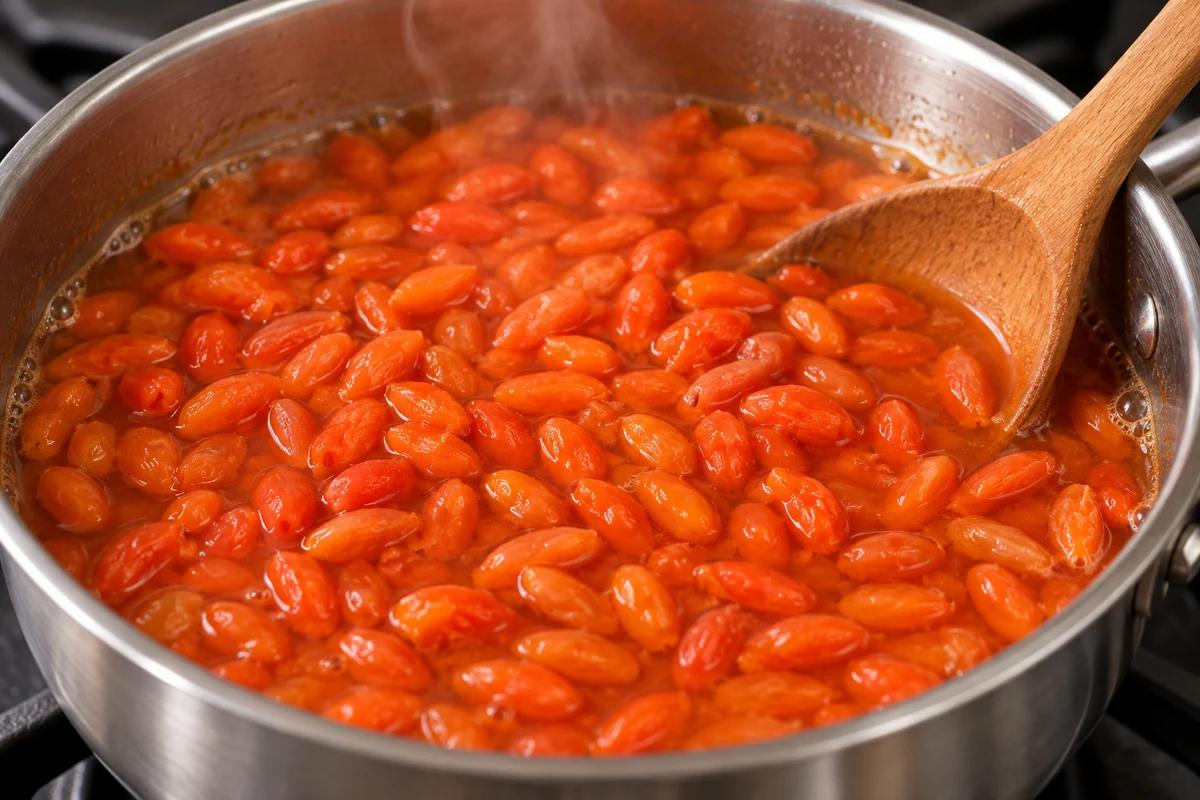
A shallow sauce and gentle handling illustrate the balance between sauce development and fruit integrity.
Sauce development and fruit survival can be assessed on separate portions when the formulation allows it. A development team might explore a prepared sauce base before incorporating a defined whole-fruit fraction, or compare different addition stages under its validated process. These are proposed formulation routes, not universal instructions. Each route changes the heating and handling history of the fruit and needs appropriate safety assessment before a commercial procedure is adopted.
Track the change in fruit visibility using consistent observations. A spoon sample from the pan surface can differ from a sample taken elsewhere if fruit distribution is uneven. Compare portions using the same sampling and serving method, and note the distinction between a split but recognizable berry and a collapsed skin. An agreed reference helps different observers avoid counting every softened berry as broken in one trial and whole in another.
Keep equipment geometry in mind when interpreting cooking time. A shallow pan and a deep kettle can differ in exposed surface, heat transfer, agitation and evaporation. Matching elapsed minutes alone cannot establish an equivalent compote. The relevant endpoint includes the sauce condition and fruit state, together with the validated process requirements. Record the factors that change during scale-up instead of promising that a laboratory timing can be carried directly into a larger vessel.
A product can retain visible berries and still fail on flavor. Excessive concentration can make a modest fruit note too intense, while a weak sauce can leave the inclusion tasting disconnected from its surroundings. Taste safely prepared samples at the agreed condition and compare the fruit and sauce together. Keep the sensory result alongside the physical observations so process development does not optimize berry appearance while overlooking the food the customer will actually eat.
Judge sweetness and sauce body after cooling
Move a representative portion through the intended cooling route before deciding whether the sauce has the right body. A hot sample can pour easily while the cooled product holds a ridge or releases liquid around the fruit. Observe how it leaves the spoon, how it spreads on the intended food and how the berries move with the sauce. Those practical endpoints are more useful than a vague statement that the product is thick.
Sweetness needs to be evaluated with the fruit's actual flavor and the companion food. Added sugar contributes solids as well as taste, so changing it can alter sauce behavior. A formulation adjustment that fixes sweetness may therefore require another texture assessment. Keep a complete formula for each variant and avoid replacing a measured endpoint with an assumed relationship between sugar addition and final consistency.
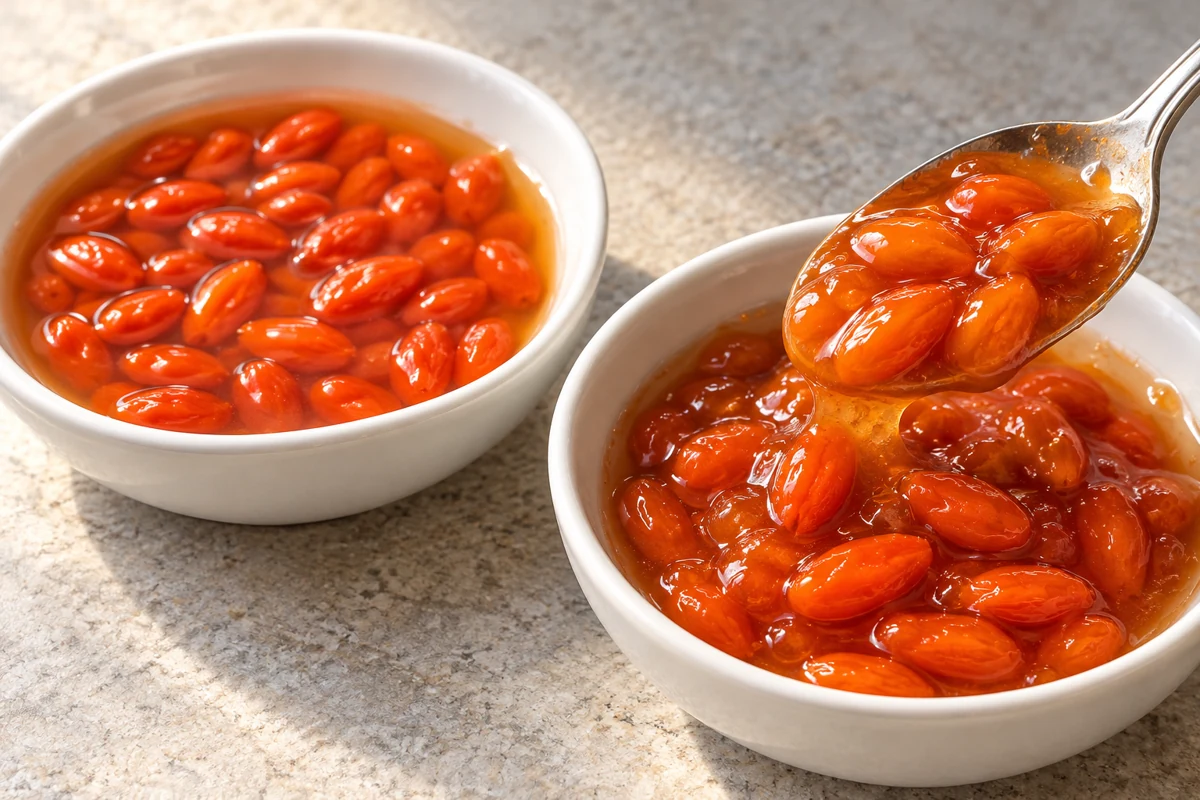
Loose and thicker sauce states need evaluation at the same serving condition; this is an illustrative comparison.
If soluble solids are measured, define the sample preparation. A reading from separated sauce does not necessarily represent the whole compote, which also contains fruit skins, seeds and flesh. Temperature, homogenization and the instrument method belong in the record. Use the value for the purpose it actually supports, and avoid presenting one refractometer result as a complete measure of fruit content, total solids or safety.
Acidity also has several meanings. pH and titratable acidity describe different aspects of the preparation and should not be treated as interchangeable. A pleasant tang does not establish a safe process or a particular pH. If acid addition is part of development, measure the relevant properties in the actual finished preparation and have qualified staff assess the process. Whole berries and sauce can make sample preparation especially important for obtaining a representative result.
Any thickening ingredient should be evaluated within the complete formulation and label requirements. The fruit's natural contribution varies, and an extracted goji polysaccharide or isolated pectin study does not establish how a whole frozen lot will set a sauce. Follow the ingredient supplier's suitable application guidance and the plant's validation procedures, then test flavor, flow and fruit distribution again. A thicker sauce can conceal a low recognizable-fruit share if the evaluation looks only at spoon coating.
Finally, observe the cooled compote over the relevant holding study. Record free liquid, fruit settling, skin toughness and flavor changes separately. A sample that looks stable immediately after cooling may behave differently after transport or use by the customer. Product safety and commercial shelf life require their own evidence for the final preparation, package and storage route. This article's development observations do not establish an ambient-stable compote or a safe home-canning recipe.
Calculate yield at the agreed finished condition
Begin every yield statement with the input and output it compares. Finished compote per kilogram of received frozen fruit is one measure. Retained recognizable fruit per kilogram of received material is another. Saleable filled product after transfer and packing is a third. Each can be useful, but they answer different commercial questions. State the process boundary and the accepted product condition before comparing the numbers.
Added ingredients make the denominator especially important. Sugar, water, prepared sauce and other ingredients can increase finished mass independently of fruit recovery. A compote batch weighing more than its starting fruit does not demonstrate exceptional recovery of whole berries. Report the formulation alongside the output, including any removed liquid or sorting waste. This allows purchasing to see whether a higher yield comes from recovered fruit, added material or a different concentration endpoint.
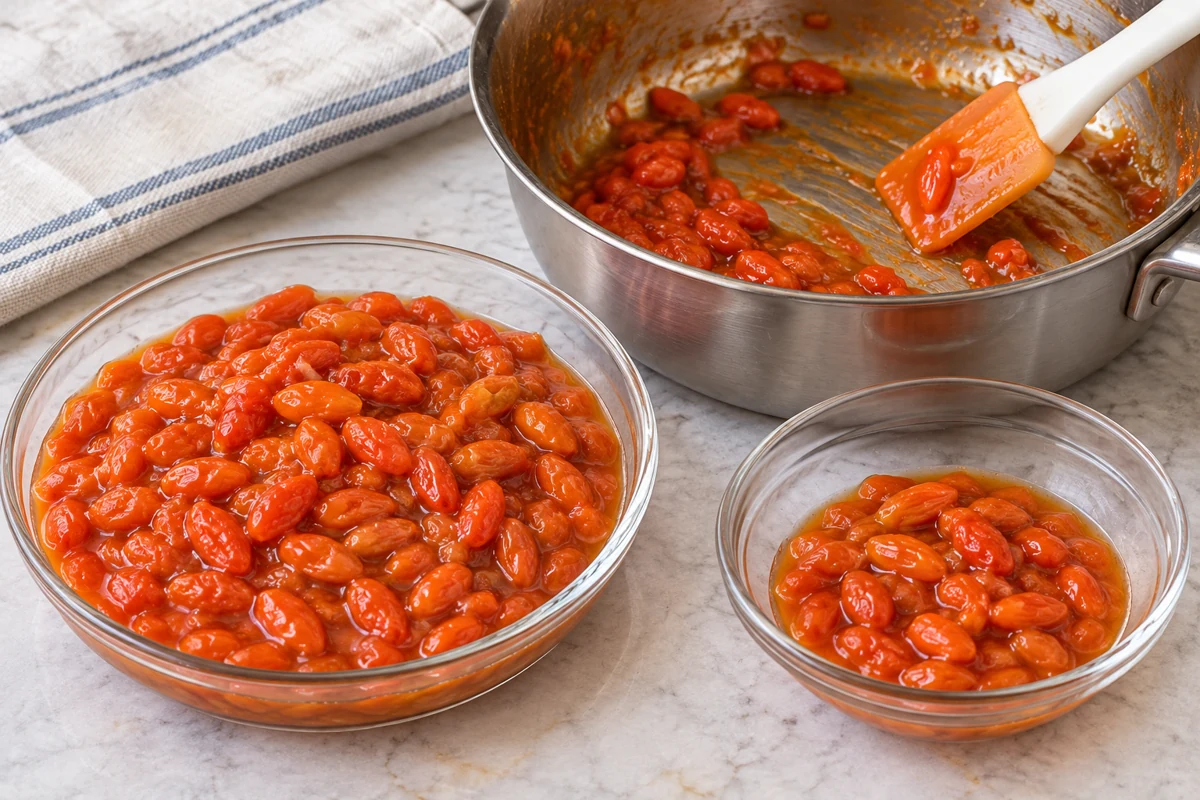
Recovered compote and material remaining in the pan belong to different points in the yield account.
Consider two hypothetical trials, each using 10 kilograms of frozen goji. One produces 14 kilograms of acceptable compote, while another produces 16 kilograms with a thinner sauce and fewer recognizable berries. Their finished weights cannot establish which fruit is the better purchase because the endpoints differ. If both are reformulated to the same agreed serving condition, the subsequent output and ingredient cost become more useful for comparison. The example illustrates a decision method, not performed results.
Separate cooking recovery from transfer recovery where the distinction affects cost. Sauce left in a pan, fruit retained in a line and samples removed for quality checks can reduce the filled output. A thick preparation may have an attractive kettle weight but a poorer filling recovery than a slightly different formula. Use the empty vessel's recorded tare when weighing recovered material, and define whether a final scrape or rinse belongs in the accepted transfer. Rinse water that cannot enter the finished recipe cannot be counted as saleable sauce. If the customer purchases filled packs, the accepted packed quantity is the relevant final boundary.
Calculate cost per accepted output using the actual inputs and losses. Fruit price is one component; additions, sorting, process time, transfer loss and rejected packs may also matter. Keep the method consistent when comparing supplier lots. A lower whole-fruit share may be commercially acceptable for a blended sauce but expensive for a compote whose selling point is recognizable berries. The specification and the cost model need to describe the same product.
Retain enough identified material and records to review an unexpected yield. If one sample drains more liquid or produces more collapsed fruit, repeat the agreed method before interpreting a small difference as a lot failure. Consider sample variation, weighing accuracy and handling history. When the decision is close to an agreed limit, the purchase agreement should define how a further review is performed. A favorable repeat result cannot explain the first difference unless the sampling and preparation records remain available.
| Output measure | What enters the reported output | Question answered |
|---|---|---|
| Recognizable fruit recovery | Retained fruit under the agreed separation | How much visible fruit remains? |
| Finished compote recovery | Fruit, retained liquid and formula additions | How much accepted preparation is made? |
| Accepted packed recovery | Filled product meeting the agreed endpoint | How much saleable output is delivered? |
Turn the compote trial into a supply specification
The raw-fruit specification should identify the whole frozen form, relevant fruit identity, appearance range, broken-fruit basis and foreign-part limits. Connect those attributes to the approved packed sample and the actual trial method. Where berry size or maturity affects the desired compote, describe the relevant observation rather than assuming that a brighter orange-red lot will always give a better result. Color alone cannot predict sauce yield or skin perception.
Include the processing route needed to interpret the application result. The buyer may not need to disclose a proprietary recipe in full, but the supplier needs enough context to understand the fruit condition expected after preparation. Explain whether the product will retain thaw liquid, use direct frozen loading or include a separate preparation stage. If the trial changes, update the application record before treating its outcome as the repeat-order benchmark.
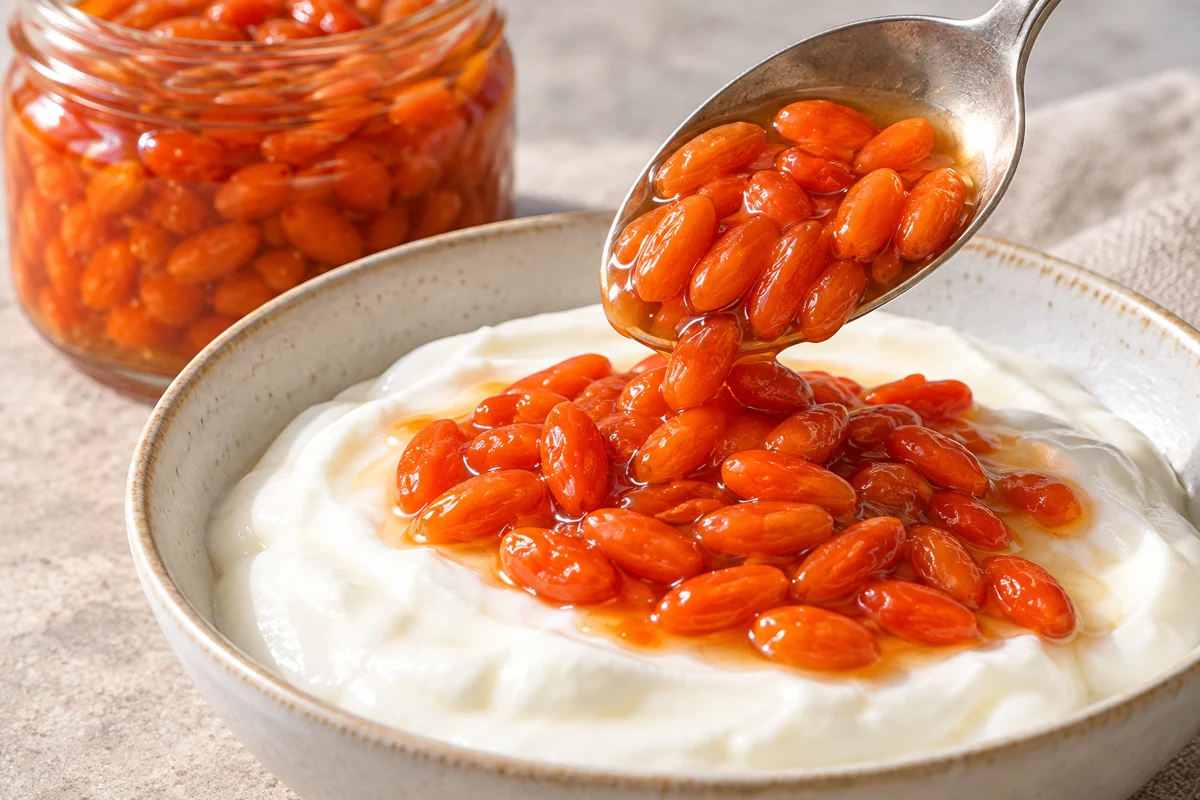
The same compote also needs to work on the food it will accompany.
Packing should protect the agreed fruit condition and fit the dosing operation. Confirm the net weight, liner, carton and handling route, including any smaller packs required for the program. A large pack can change thawing or portioning logistics, and compression can affect the lower layers. Test the commercial pack where those factors matter. A quotation based only on fruit kilograms can miss the practical cost of preparing each batch for the kettle.
Request documents that answer the actual technical and destination questions. Lot identification, the agreed specification, ingredient or treatment declarations and relevant analytical reports should describe the supplied material. A generic certificate cannot establish the safety or performance of a particular compote recipe. The buyer's QA team should identify the required criteria, sample basis and processing responsibilities before the order is confirmed and the final product is released.
For the finished compote, retain a reference at the agreed serving condition and define how it will be replaced as it ages. Photographs help preserve appearance, but they cannot preserve aroma, skin bite or sauce flow. The approval record should therefore include the written sensory and physical criteria and the observation method. Keep the fruit supplier lot, development batch and packed result connected so a later difference can be traced to the right material and process stage.
We discuss whole frozen goji supply around the application, volume, packing and destination. A clear compote trial lets that discussion focus on recognizable fruit, usable recovery and the records needed for repeat supply. When a lot or process changes, compare it under the same method before revising the agreement. The resulting specification gives the buyer a practical way to judge the next batch of fruit against the compote it is intended to become.
Continue reading about fruit applications
Track released juice and additions before judging a fruit preparation at its intended use level.
Compare pulp, retained material and cooled pourability through a different fruit-sauce route.
Understand why starting frozen state and loading arrangement change a kettle comparison.
Source frozen goji berries with GreenLand-food
GreenLand-food is a professional frozen goji berries supplier and manufacturer in China, providing factory-direct wholesale supply for importers, food manufacturers, foodservice distributors, and private-label programs.
Send the product form, specification, packing, quantity, application, destination, private-label needs, and requested documents.