


King Oyster Texture Trials: Stipe Position and Cut Direction Are Different Variables
Oct 09, 2026
Leave a message

Research This Article & Topic with AI
Verify key claims, compare reliable sources, and explore GreenLand-food's practical frozen food knowledge.
Article details and research questions are prepared in the links. Sign-in or sending may be required.
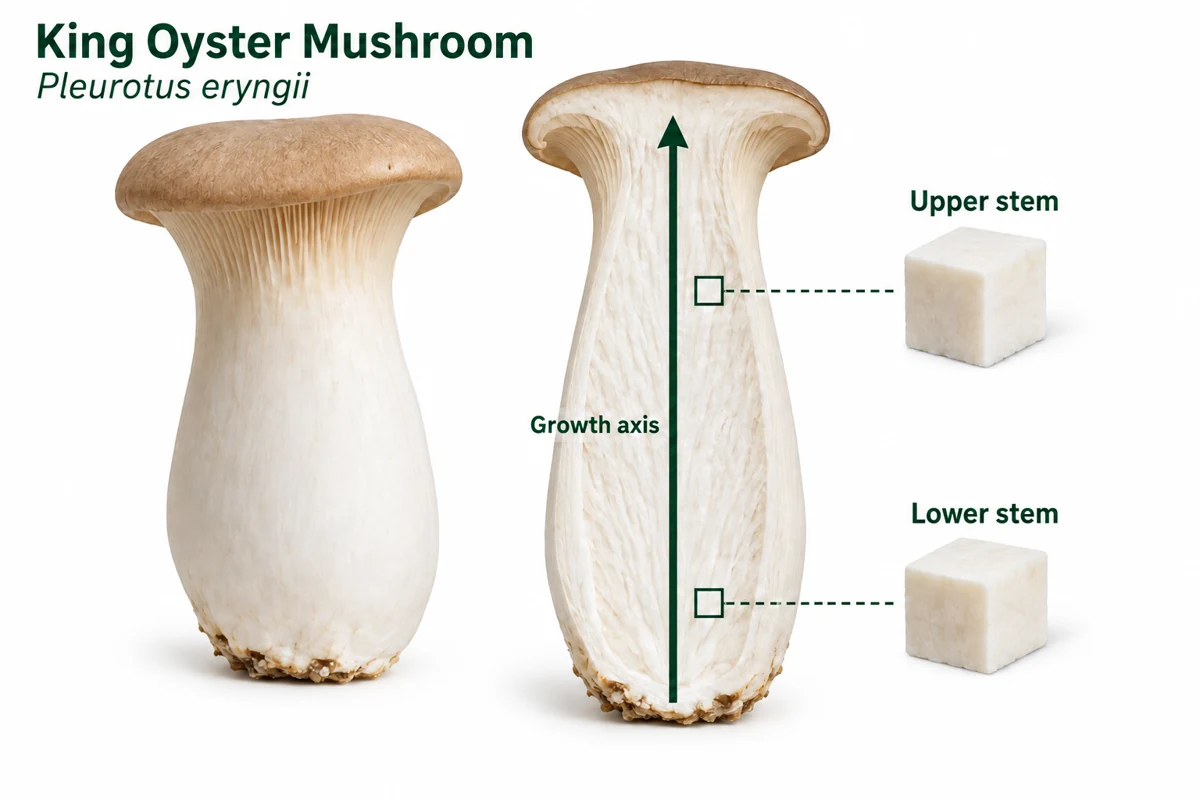
Consider a reconstructed GreenLand-food purchasing question: a buyer moves from rounds to planks and notices a different bite. The rounds were taken mainly from one stem portion, while the planks came from another. We would ask for the sample map before recommending a cut change. The difference could belong to position, direction, preparation or their combination. An original compression study provides a reason to separate these variables, but its fresh and boiled tissue samples do not establish a texture ranking for current commercial frozen packs. The final approval needs the offered material and the intended cooking process.
Locate the sampled part of the stem
King oyster mushroom has a substantial stipe that can supply several commercial cuts. A photograph of two finished pieces may show their shape and thickness while hiding where they originated. A round near the cap and a piece near the basal end can therefore enter a comparison under the same product name without sharing the same source position. Identify the sampled portion before cutting whenever position is relevant to the question. Once pieces are mixed, the information may be difficult or impossible to recover from their appearance alone.
Define upper and lower positions on the actual sample plan. Upper refers toward the cap, and lower toward the base, but a purchasing trial still needs a practical rule for the boundaries. Different stems can vary in length and taper, so an informal instruction to take an upper piece may produce different sampling across operators. Use a photograph or annotated stem map to show the intended portions. Record how cap material, the basal trim and any middle section are handled. Those decisions belong to the comparison rather than to an assumed industry-wide definition.
Avoid comparing a selected cylinder from a uniform central area with miscellaneous ends from a production bag. That trial can help describe two real inputs, but it does not isolate cut direction. Selection has also changed the sampled tissue and possibly geometry. Record whether pieces were selected for appearance, size or intact condition before the trial. A comparison intended to represent the delivered pack should use a representative selection; a mechanistic comparison may deliberately select matched tissue, with that narrower scope stated. The two purposes require different interpretations of the same resulting bite.
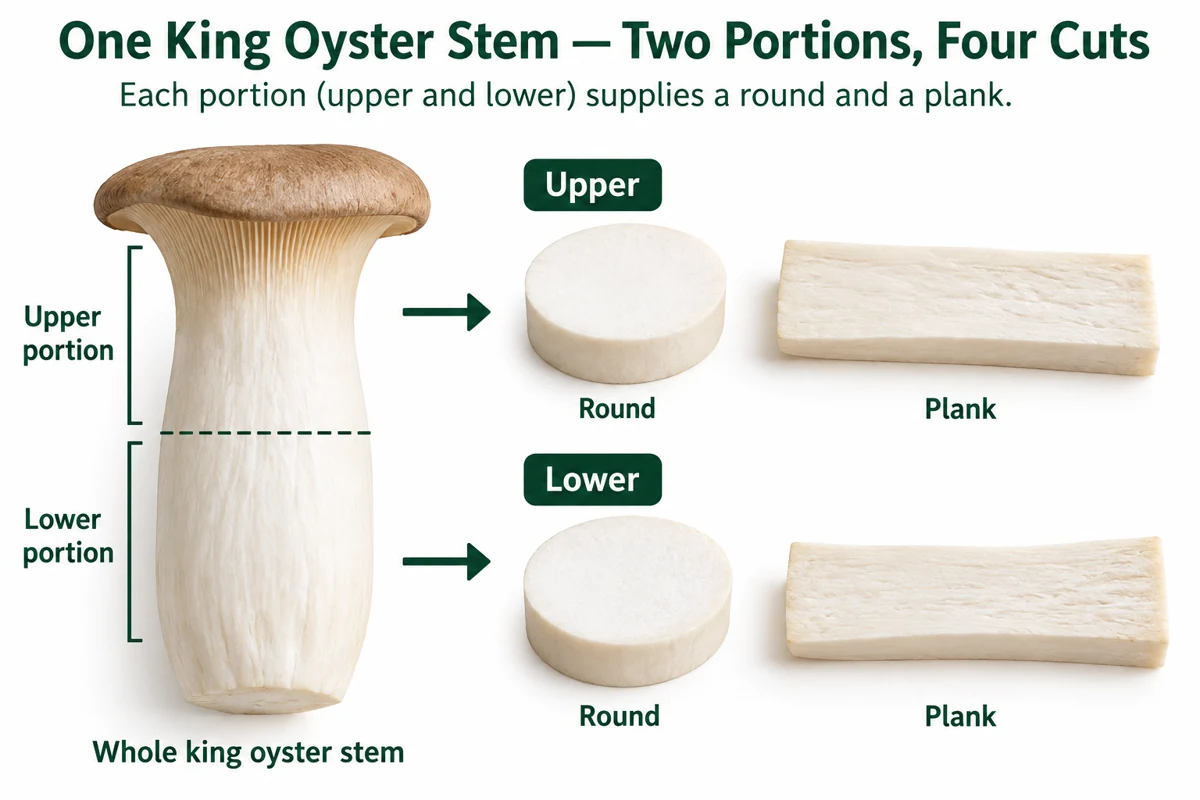
Both portions can supply both cut forms; form alone does not identify source position.
Where whole stems are available for development, photograph and identify them before making the comparison cuts. Keep each stem code linked to its upper and lower samples. This allows the testing team to compare positions within the same mushroom or to balance positions across a group of mushrooms. Multiple pieces from one stem are related observations, so do not treat their number as automatically equivalent to independent source samples. A texture specialist can help decide the sampling and replication needed for the particular inference the buyer intends to make.
For a delivered frozen cut, source position may no longer be identifiable. Say so in the record rather than assigning upper or lower labels by guesswork. The buyer can still assess the actual pack in the intended recipe and define a useful acceptance outcome. A separate development trial using traceable whole stems may help investigate the reason for a difference, subject to availability and the preparation route. Application approval and causal investigation can proceed with different sample plans, provided the report explains what each plan can establish.
The GreenLand-food king oyster mushroom range is the starting point for discussing whole, sliced, strip or other offered forms. We would confirm the current form, stem dimensions, thickness range and sample availability against the enquiry. A source-position trial may require material arranged specifically for development; ordinary product photography does not prove the position represented by every piece in a carton. Put any special sampling requirement into the sample request so purchasing and the supplier agree what the test material is meant to represent.
Keep position separate from direction
Position and direction answer different questions. Position identifies where the sample came from along the stem. Direction identifies the orientation of a cut, a compression load or a bite relative to the stem's growth axis. They should occupy separate fields on the sample map. A phrase such as longitudinal upper slice can contain both facts, but the testing record should still separate them. This makes it possible to determine whether a comparison changed one factor or two, and prevents an attractive finished shape from concealing an uncontrolled source difference.
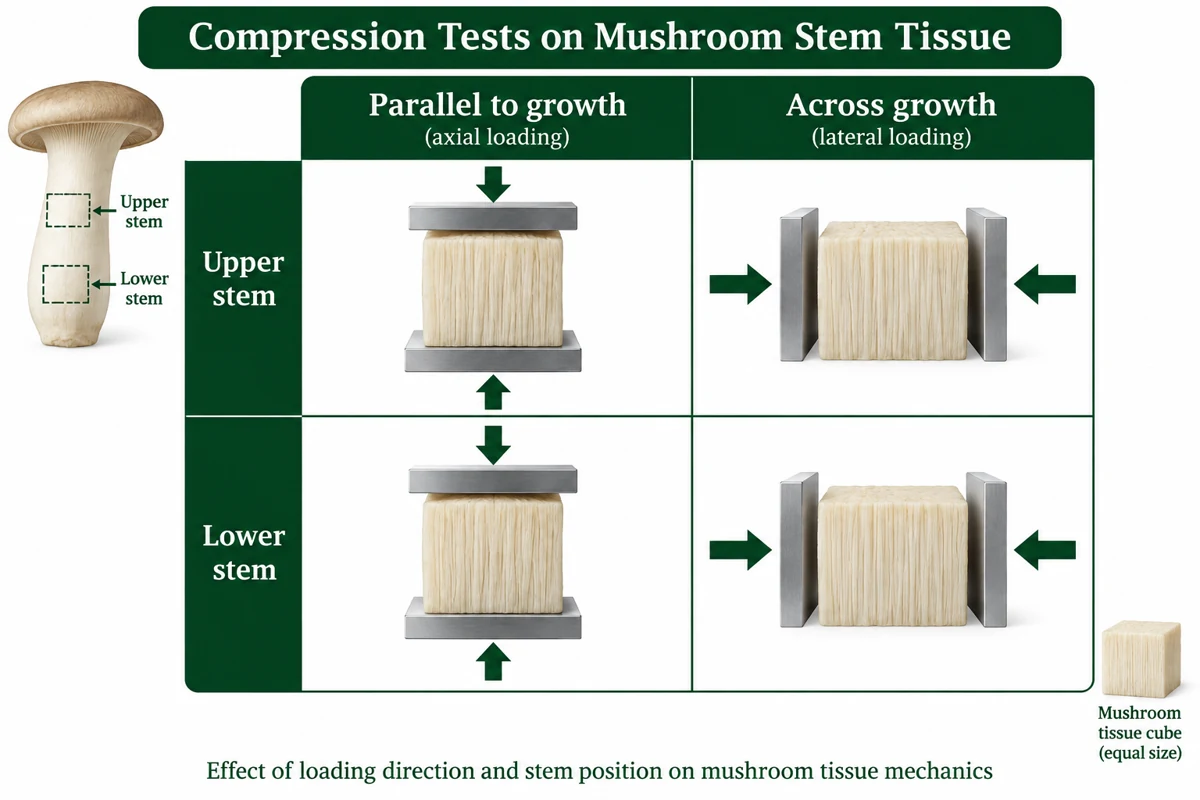
Crossing position with loading direction avoids calling both changes one texture effect.
A balanced investigation includes both directions at each chosen position. For example, the upper portion supplies samples for one orientation and its counterpart, and the lower portion supplies the same pair. Comparing orientations within the upper portion then addresses a different contrast from comparing upper and lower portions at one orientation. The NIST description of factorial designs explains the underlying principle of including the combinations of factors. Its design principle can guide the sample map without prescribing mushroom texture values or a fixed commercial protocol.
Geometry must be matched within an instrumental contrast. Changing sample height, width, shape or contact area can affect the mechanical observation even when the tissue source is held constant. A round and a plank may intentionally have different geometry because they are real menu portions. That makes their cooked comparison commercially meaningful, but it broadens the reason for the difference. If the question is specifically about material direction, prepare comparable test geometry and define the loading orientation. If the question is finished portion performance, assess the actual forms and describe the conclusion accordingly.
Cut direction also needs to be distinguished from probe direction. A sample cut along a stem can later be loaded across it, depending on how it is placed in the instrument. The trial record should identify the growth axis in the sample, the cutting plane and the direction of force. A simple photograph of the mounted sample often explains more than a shorthand label such as vertical test. Confirm that the laboratory and the developer use those labels consistently. A mismatch can make two nominally similar results describe different physical actions.

The whole stem provides the position reference that a cut sample needs to retain.
Preparation belongs alongside the two main variables. Raw tissue, boiled tissue and a cooked frozen portion have different histories. If one orientation is tested after one preparation and its counterpart after another, position and direction are no longer the only differences. For a controlled development comparison, match preparation, equilibration and testing state within each contrast. For a product comparison that intentionally uses different customer processes, document them explicitly. The result can still help select a finished product, while remaining unsuitable for attributing the difference to cut direction alone.
The reconstructed buyer's rounds-versus-planks question can now be translated into two manageable tasks. First map the actual samples and identify any position imbalance. Then arrange a follow-up that supplies both forms from comparable positions, or uses comparable tissue geometry for an instrumental direction test. The first task may explain why the initial claim was too broad; the second provides new evidence. We would ask for both the original comparison and the planned application so the sample request addresses the unresolved variable instead of simply repeating the same confounded trial.
What the original compression study establishes
Read the mechanical endpoint as carefully as the source position. A reported maximum force describes a feature of the test response; work over a displacement interval describes another. Sample dimensions, probe geometry and the part of the response selected for analysis belong to each value. If a customer's two reports use different outputs, a common firmness heading does not reconcile them. Ask the laboratory for the endpoint definition and the mounted-sample orientation before comparing the figures. This review can identify a measurement difference without claiming that the offered mushrooms changed their underlying tissue structure.
The original king oyster compression paper examined cubes from upper and lower stipe portions in raw and boiled states. It used planar compression and wedge intrusion with defined orientations, and examined tissue structure. It reported directional differences and a positional difference within a specified direction, together with differing fibre arrangements. This supports treating position as a variable in its own right. The experiment concerned fresh and boiled tissue; its loads are not acceptance limits for commercial frozen king oyster mushrooms.
Planar compression and wedge intrusion apply different physical actions. A broad contacting surface compresses the sample, whereas a wedge concentrates the action along a different contact geometry. A result from one action should therefore remain associated with the relevant probe and orientation. Even if both outputs are loosely called firmness, that label does not make their values interchangeable. Read the method together with the sample geometry and the result being reported. A buyer who wants a finished bite criterion should decide which observation relates to the intended use before selecting an instrument output.

Planar compression and wedge intrusion impose different mechanical actions.
The tissue images help interpret the mechanical findings, but they do not turn the article into a direct view of a customer's delivered lot. Microscopy records samples prepared under its own method. In this paper, preparation for imaging should not be confused with a commercial freeze-dried mushroom product. Nor should a tissue structure seen in the research be presented as an inspection photograph from GreenLand-food. Use the study to explain why positional and directional effects can coexist, while keeping the current product's evidence separate from the published material.
This separation also prevents over-reading a plausible mechanism. A difference in fibre arrangement can be consistent with a difference in mechanical response, while the observed firmness reflects several aspects of tissue and preparation. The procurement decision does not require inventing a single molecular cause for every texture result. It requires identifying the comparison that supports the claim. If a report only shows upper and lower portions loaded in one direction, it cannot establish the full effect of changing direction across the entire stem. The untested combinations remain questions for follow-up.
The study is also different from an application trial in which a consumer chews a cooked portion. The instrument imposes a defined action on a prepared sample. Eating involves portion geometry and the finished recipe. A development team may use an instrumental comparison to investigate a tissue difference and then assess the intended bite separately. Agreement between those observations can be useful, but it needs to be demonstrated under the actual preparation. The original paper does not provide a universal conversion from a compression load to the sensory success of a round or plank.
Use a concise evidence statement when discussing the paper internally: the original comparison establishes that source position and loading orientation can both matter under its methods. It does not decide which offered frozen cut will work best on the customer's line. That statement keeps the research relevant while protecting the commercial decision from an unsupported transfer. Retain the paper reference and method summary beside the proposed pilot. A colleague reviewing the sample approval should be able to see which part is published observation and which part is a new application question.
Test the offered frozen cut under the customer process
Include the sampling unit when deciding whether a difference is repeatable. Several cubes from one stem help describe that stem; they do not by themselves represent variation among independently supplied mushrooms. Similarly, several portions from one cooking run do not reveal variation between separate runs. Preserve the stem or portion grouping and the preparation identity in the record, then repeat at the level needed for the decision. A large count of pieces can otherwise create more apparent evidence than the actual number of independent material or process comparisons supports.
Start the application trial with the form that will enter the customer's operation. Whole stems cut by the buyer and supplied pre-cut pieces create different handling routes. They may also preserve different amounts of source-position information. Confirm the actual offered form, size range, packing and preparation history with GreenLand-food before assuming that a development sample represents the quotation. If the customer plans to cut rounds from whole stems, the cut map and trim handling should be included. If it buys planks, the agreed specification must describe the delivered plank geometry.

A visible cut measurement describes geometry; it does not certify a texture ranking.
Use the customer's intended cooking and serving state for the practical comparison. Pan cooking, a sauce-based process and reheating in a ready meal create different conditions around the mushroom. This article does not prescribe one cooking method for all applications. It asks the developer to record the chosen process, the portion size and the state at which bite is judged. Keep those conditions comparable within the planned contrast. A sample tasted immediately after cooking should not silently represent another sample evaluated after a different holding or reheating route.
Separate visual portion acceptance from texture acceptance. A round may meet a plate presentation target while its cooked bite falls outside the desired range. A plank may be attractive in a stir-fry yet produce more breakage than the line can tolerate. These are useful commercial observations, but they describe different outcomes. The GreenLand-food guide to scallop-style rounds extends the portion and usable-stem questions. Here, retain the source-position and orientation records alongside those application outcomes so the reason for any proposed change remains assessable.
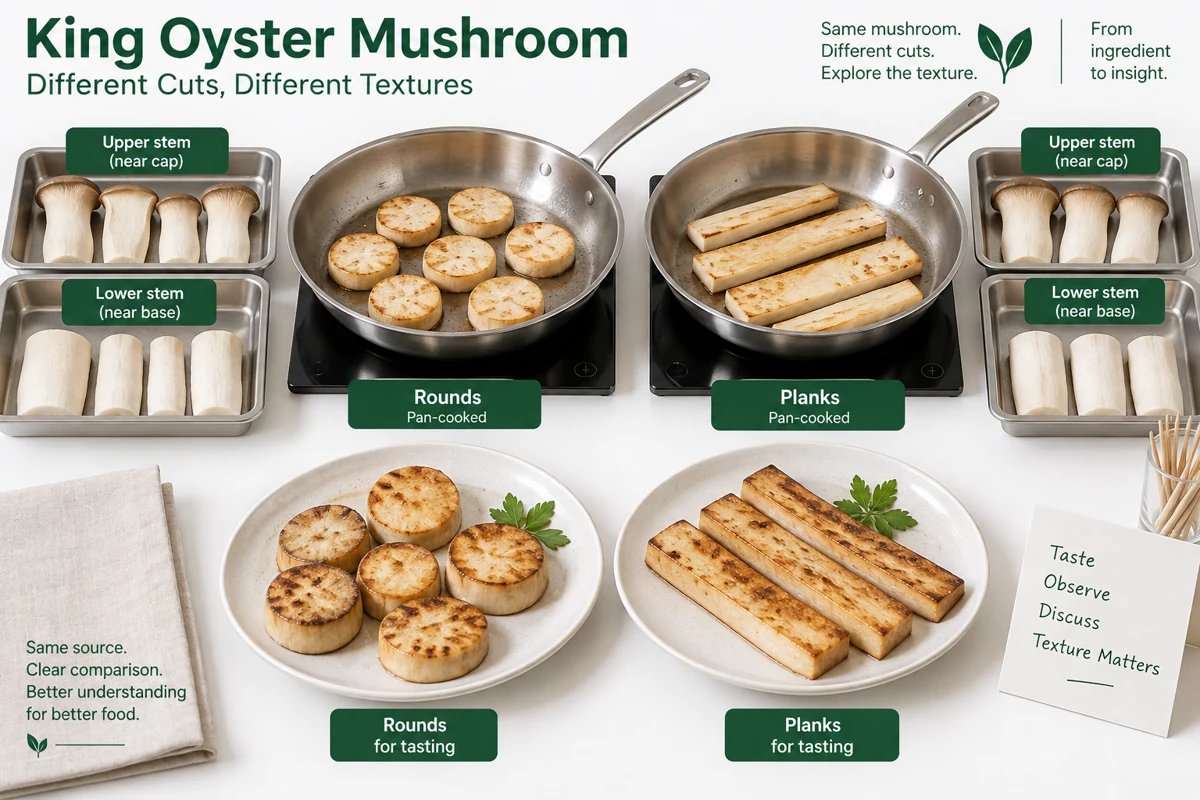
Compare the offered cuts in the intended cooked application; the illustration shows no measured ranking.
Record losses and sample selection before tasting. If broken pieces are removed from one arm and retained in another, the comparison no longer represents the packs on an equivalent basis. The same issue arises when one operator chooses the neatest rounds while another takes planks at random. Decide whether the trial examines selected matched pieces or representative delivered portions, then apply that decision consistently. A useful supplier comparison needs an agreed sampling rule as well as a cooking method. Otherwise, the preparation team may unknowingly determine the result through selection.
Where position can be tracked, keep source codes through preparation and cooking. Coded serving portions can reduce expectations attached to a shape or supplier label, while the technical record retains the map needed for later interpretation. If appearance is an intentional part of the judgement, state how it is evaluated rather than treating the trial as fully blind. Describe bite attributes in language the customer can use, such as the required tenderness or resistance after its process. An unexplained hardness score leaves purchasing without a clear picture of the acceptable finished product.
At GreenLand-food, we would request the intended use, the original trial or report, source-position information, cutting and loading orientation where available, and the basis for each result. Add the offered form, thickness or dimensional tolerance, quantity, destination and requested documents to the enquiry. We can then confirm a relevant sample and specification rather than promising that a cut label alone delivers a particular bite. The customer remains responsible for validating its cooking and serving process, with supplier evidence describing the ingredient that enters it.
Attribute the change only as far as the comparison allows
An unmatched initial trial should be reported as unresolved for causal attribution. It can still show that the two tested products behaved differently under the recorded recipe. The limitation concerns the reason assigned to that difference. A statement that the tested planks had a different bite is narrower than a statement that longitudinal cutting caused the change. If source position also changed, the second statement exceeds the evidence. Keep that distinction clear in purchasing discussions because a corrective action based on the wrong cause can produce another inconsistent sample.
The follow-up should address the missing contrast. If the initial rounds came from upper portions and planks from lower portions, include both forms at both positions where practical. If geometry prevented a clean instrumental comparison, use comparable tissue samples for the mechanistic test and retain actual portions for the application test. Those two trials need not deliver the same kind of result. Their combination can explain a tissue effect and still assess whether the sold portion works. State the goal of each before testing so the team does not change the interpretation afterward.
A positional effect under one orientation does not guarantee the same effect under every orientation. Likewise, a direction effect at one position should not be extended automatically to the whole stem. Examine the relevant combinations before simplifying the conclusion. When a position and direction combination behaves differently from what their separate effects might suggest, discuss the interaction with the testing specialist. The commercial record should identify the observed combination and its preparation rather than compressing it into a general claim that the mushroom is harder or softer after a cut change.

A balanced follow-up retains both positions within both cut forms.
For routine purchasing, it may be unnecessary or impractical to specify the source position of every delivered piece. The application may instead need a representative finished-pack outcome within an agreed dimensional and quality specification. That is a valid commercial route when the buyer understands what it controls. Keep the mechanism investigation in the development record and the usable acceptance method in the order specification. The slice styles and yield guide covers broader form selection; the present decision is whether the proposed causal explanation is supported.
| Comparison | Factors retained in the comparison | Permissible attribution |
|---|---|---|
| Upper rounds versus lower planks | Position and cut form change together | Difference between the two complete alternatives; either factor remains unresolved |
| Upper versus lower tissue at one loading direction | Direction and test method stay defined | A positional comparison under that direction and method |
| Both positions tested in both directions | Position and loading direction can be compared separately | Evidence for the tested combinations; frozen cooked cuts require application confirmation |
Preserve the approved reference, sample map and application method for subsequent change reviews. A change in stem size range, offered form, thickness or customer cooking route may warrant a new comparison even when the species stays the same. Decide which changes are relevant to the customer's texture requirement and communicate them before the next sample is judged. The agreed method should explain sample selection, preparation, serving state and the outcome required. This gives the supplier and buyer a common basis for following up a difference without relying on recollection of a previous tasting.
The reconstructed GreenLand buyer can therefore move forward with a concrete request: confirm the offered frozen form, supply samples suited to a balanced source-position comparison where available, and evaluate the actual cooked portions against the intended bite. Report the initial rounds-versus-planks difference as an application observation until the follow-up supports a narrower cause. Choose the cut on its demonstrated performance in the customer's process, and retain the position and orientation evidence that makes the decision explainable. The next order then rests on a sample approval that both purchasing and quality can repeat.
Frozen King Oyster Mushrooms: Slice Styles, Yield, Applications
How slice styles and cooking conditions affect a cut-selection discussion.
Can Frozen King Oyster Mushroom Stems Make Scallop-Style Rounds?
A cooked round application with its own preparation and texture endpoint.
Frozen Mushrooms Specifications Guide for Buyers (Template)
The published specification guide for frozen king oyster mushroom supply.
Source frozen king oyster mushrooms with GreenLand-food
GreenLand-food manufactures frozen king oyster mushrooms in China. We fill factory-direct wholesale orders for importers, food manufacturers, foodservice distributors, and private-label programs.
Send your required product form, size specification, packing, quantity, application, destination, private-label needs and requested documents. Include the reports or trial conditions being compared and the basis for each result so we can discuss an appropriate sample for your process.