


Making Mixed Berry Compote and Dessert Sauce from Frozen Fruit
Oct 19, 2026
Leave a message

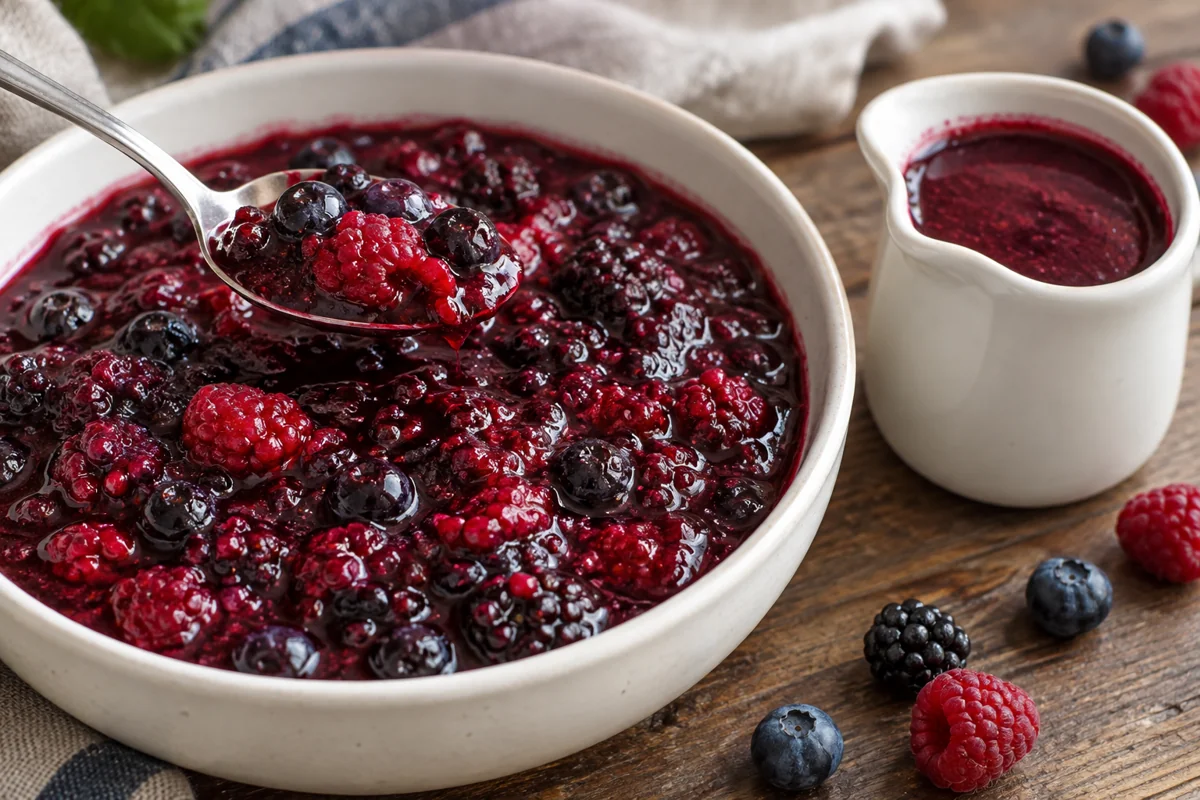
For foodservice and manufacturing, the important controls are the berry blend, finished weight, retained fruit pieces, seed level and portion behavior. These determine both the eating experience and how much usable sauce a batch produces. We suggest defining the finished application before choosing the frozen form. A whole-fruit blend for visible compote pieces and a blend intended for strained sauce can have different purchasing priorities, even when both are described as mixed berries.
Define compote, blended sauce or strained sauce
Compote usually means cooked fruit with recognizable pieces in its own sweetened juices. For a mixed berry preparation, some fruits may retain their outline while others soften into the surrounding sauce. A blended sauce deliberately reduces the particles, but it can still contain seeds and fine skin fragments. A strained sauce removes some of those solids through a defined sieve or screen. These are useful working descriptions for a recipe brief, even where menu terminology varies.
Decide what the customer should see on the plate. A breakfast bowl can suit soft whole blueberries and raspberry fragments, while a fine dessert garnish may need a smooth line that passes through a small nozzle. A cheesecake topping might sit between those extremes, with enough body to stay on the slice and enough fruit identity to look generous. Naming the dish is more informative than asking for a thick berry sauce without describing its use.
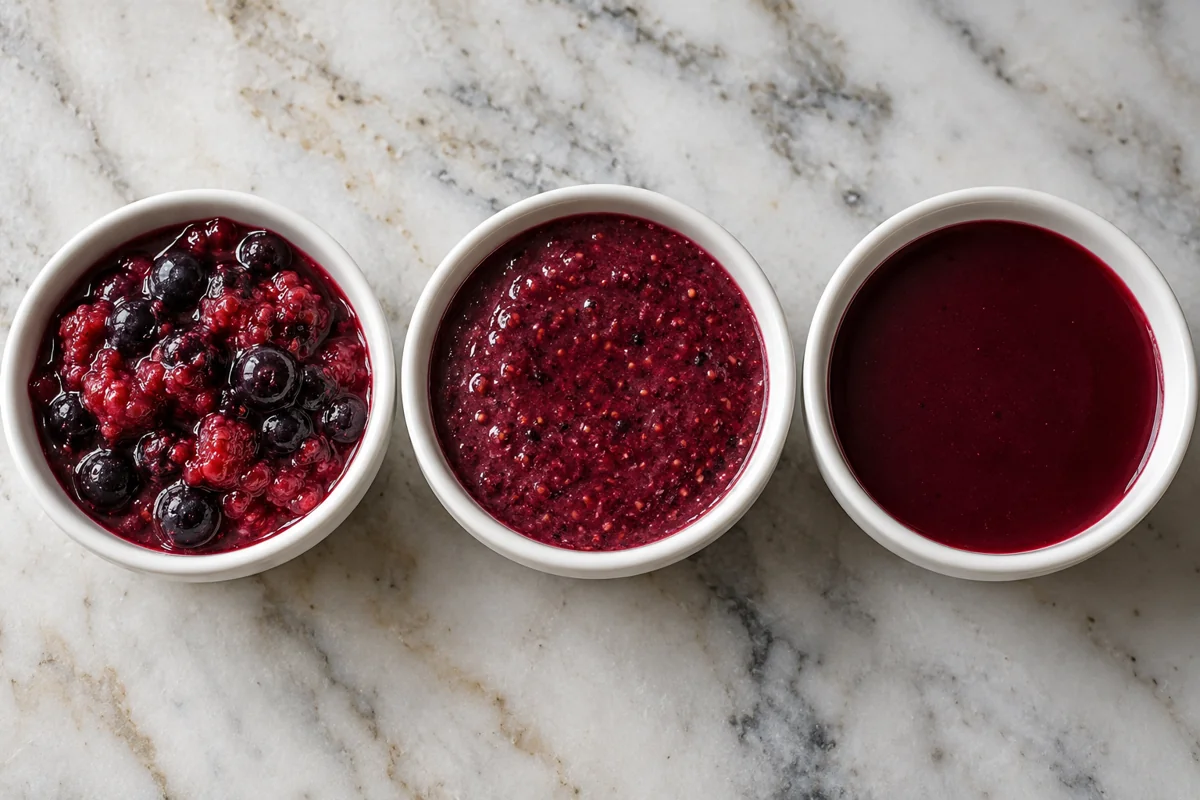
Chunky, blended and strained berry preparations compared.
The recipe-author pages for frozen berry compote and small-batch mixed berry compote show familiar stovetop applications. Their short cooking methods are useful starting references for home-scale preparation. The larger commercial question is whether the same texture and yield can be repeated in the intended vessel, at the intended batch size, after cooling and service. A time from a small saucepan does not answer that question.
| Preparation | Visible structure | Useful acceptance check |
|---|---|---|
| Chunky compote | Soft recognizable fruit in sauce | Piece recovery and spooned portion consistency |
| Blended sauce | Fine fruit particles with possible seeds | Smoothness, color and flow |
| Strained sauce | Reduced seeds and skins | Screen specification, recovered weight and nozzle passage |
| Prepared commercial topping | Supplier-defined fruit and texture system | Ingredient declaration and performance in the actual dessert |
These categories should also guide the choice of equipment. A gentle spoon or paddle can preserve more pieces than an immersion blender. A fine sieve can create a smoother sauce but retain more pulp than a coarse one. The equipment choice is therefore part of the product definition. If a buyer approves a hand-strained sample, the production team should know which screen and method created it before expecting a larger process to match.
Compote is not automatically a shelf-stable preserve. A jar is a container, and the appearance of a sealed lid does not establish a preservation process. For a fresh dessert sauce, follow an appropriate cooking, cooling and refrigerated or frozen storage procedure. If ambient storage is required, the formulation and process need specific qualified assessment. A menu term such as coulis, compote or jam does not supply that evidence.
Choose berry components for flavor and visible fruit
Each component contributes something different to a mixed sauce. Blueberries can provide dark color and small recognizable pieces; raspberries contribute a characteristic aroma and many small particles when they break down. Blackberries bring their own seed and skin texture. Strawberry cuts can give larger soft pieces and a different balance of flavor. The final effect depends on the proportions, maturity, form and cooking method, so a mixed-berry name is only the beginning of the specification.
For a compote, consider the size of the serving spoon and the expected portion. Large strawberry pieces can make one spoonful mostly strawberry while another contains smaller berries and sauce. That may be attractive in a rustic dessert but awkward in a tightly portioned yogurt cup. A smaller agreed cut can make distribution easier. If large pieces are desired, define them deliberately and inspect the finished portions rather than relying only on the incoming fruit appearance.

Raspberries, blackberries and blueberries in a mixed berry sample. Confirm component ratios and cuts for the order.
For a blended or strained sauce, whole-fruit appearance may carry less value than flavor, color and recoverable solids. Broken berries can be suitable where the process already breaks down the fruit, provided their identity, quality and handling meet the agreed requirements. This does not mean every damaged or poorly handled fruit is acceptable. Distinguish an approved processing form from deterioration, foreign material or an unsuitable ingredient history.
Taste the sauce with the food it will accompany. A berry mixture that seems sharply tart on its own may work well with a sweet cheesecake, while the same sauce may overwhelm plain yogurt. Conversely, a sweet sauce can disappear against a rich dessert. Make the sensory comparison at the intended portion ratio, and record the dessert or base used. This prevents a supplier discussion from becoming a disagreement between two different serving contexts.
The Natural Grocers compote recipe illustrates the range of warm breakfast and chilled dessert uses. That range is a reason to define the application more closely, rather than to assume one sauce consistency suits them all. A pancake topping can spread and soak into the surface; a plated garnish may need to remain separate. The same fruit can support both, but the finished preparation should be assessed for its particular job.
Confirm added ingredients in the frozen pack. Sweetened berries, berries in syrup and a ready-made compote introduce different amounts of sugar and liquid. The Oregon Fruit mixed berry compote page describes a formulated product with additional ingredients and its own storage declaration. Those characteristics belong to that product. They should not be transferred to raw frozen berries or used to assign a shelf life to a newly cooked sauce.
Manage juice release before deciding on thickness
At the start of cooking, frozen berries may look dry and separate. As they warm, colored liquid collects around them. Give the fruit time to release juice under the chosen recipe method before making a final judgment about thickness. Adding a large amount of water at the beginning can create extra liquid that later has to be removed. On the other hand, some recipes use a defined small addition to support the early heating stage. Keep that addition measured.
Record whether fruit enters frozen, partly thawed or fully thawed. A thawed sample brings free liquid into the pan immediately; a frozen sample releases it over the heating period. Both can be used in appropriate recipes, but their early appearance differs. If the thawed liquid is retained, include it in the formula weight. If the method removes a portion, record how much and why. A casual drain can remove flavor as well as liquid and changes the amount available for the sauce.
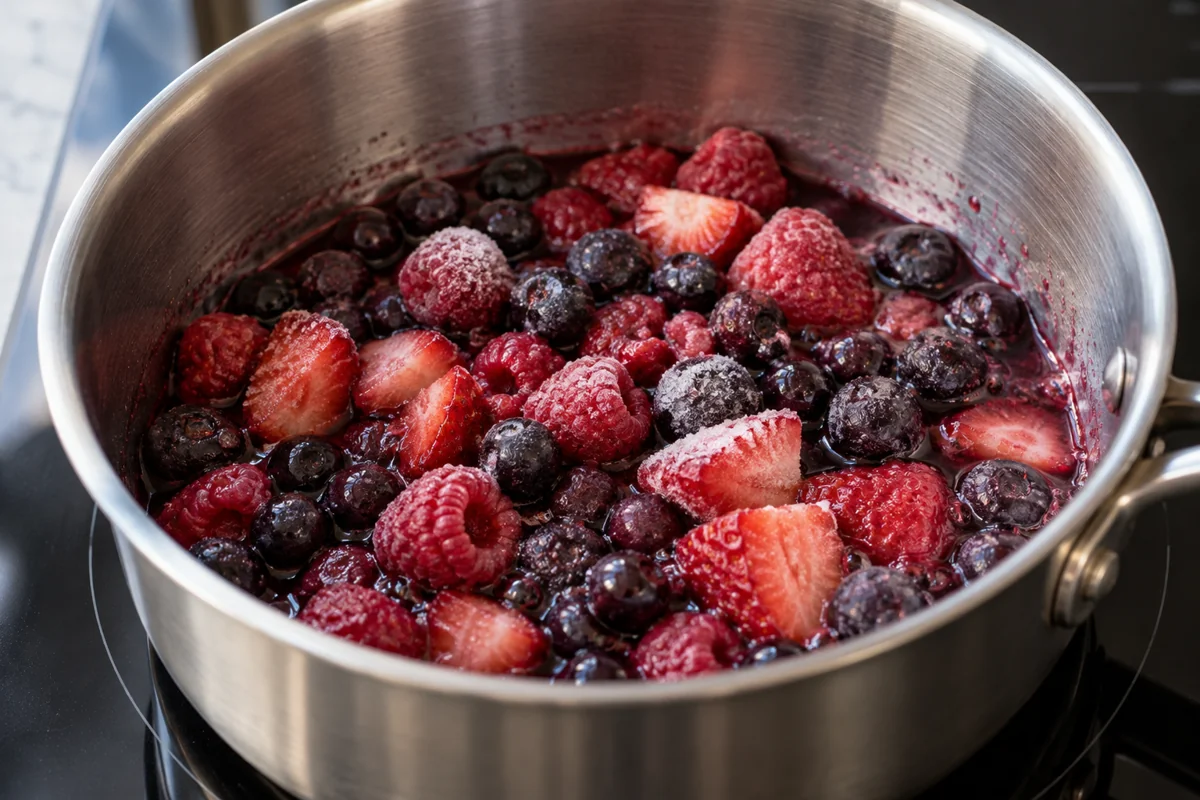
Mixed berries releasing juice as they warm in a saucepan.
Pan geometry affects evaporation. A broad shallow pan exposes more surface than a narrow deep pan at the same batch weight. The heat source, lid use and stirring method also influence the process. A larger batch therefore needs an endpoint that is more useful than simply copying the small batch's minutes. Finished weight, a defined texture observation and the actual serving test can together provide a more reproducible development record.
An illustrative calculation makes the distinction clear. If 1,000 grams of fruit and other measured ingredients enter the pan, the finished batch weight after cooking includes what remains after evaporation and handling losses. If the finished weight is 850 grams in one trial and 720 grams in another, their concentration is different even when the cooking time is identical. These are example numbers, not expected yields or recommended targets. Record the actual weights for the chosen recipe.
Stirring has two jobs: distributing heat and controlling contact with the cooking surface. It can also break fruit. A vigorous stir that is useful for a smooth sauce may destroy the pieces desired in a compote. Choose the utensil and movement to suit the target texture, and inspect the fruit as cooking progresses. Where a more uniform sauce is wanted, make the blending step explicit instead of relying on uncontrolled breakdown during prolonged cooking.
Sugar and acid additions should be part of the formula record. A late taste adjustment may be appropriate within a fresh sauce recipe, but repeated unmeasured adjustments make it hard to reproduce the result or compare fruit lots. For a commercial product, the responsible formulation team should establish the permitted adjustment range and its consequences. Flavor balance, texture and preservation are related considerations, but a pleasant taste does not establish safe storage conditions.
Compare reduction and starch thickening
Reduction thickens a sauce by removing water through evaporation and concentrating the remaining material. It also changes the cooked flavor and the weight of finished sauce available for sale. Starch thickening increases body through a different mechanism and can achieve a desired flow with less evaporation in an appropriate formula. The two methods can be combined, but they should be recorded separately so the result can be understood and repeated.
Begin with a recipe that suits the intended sauce. If it uses starch, identify the exact ingredient and follow its dispersion and cooking directions. A smooth slurry is one common approach for a cook-up starch, while other products have different instructions. Avoid adding dry starch to a hot sauce by guesswork. Uneven dispersion can create lumps that remain noticeable after the surrounding sauce has thickened, and additional blending may change the fruit texture.
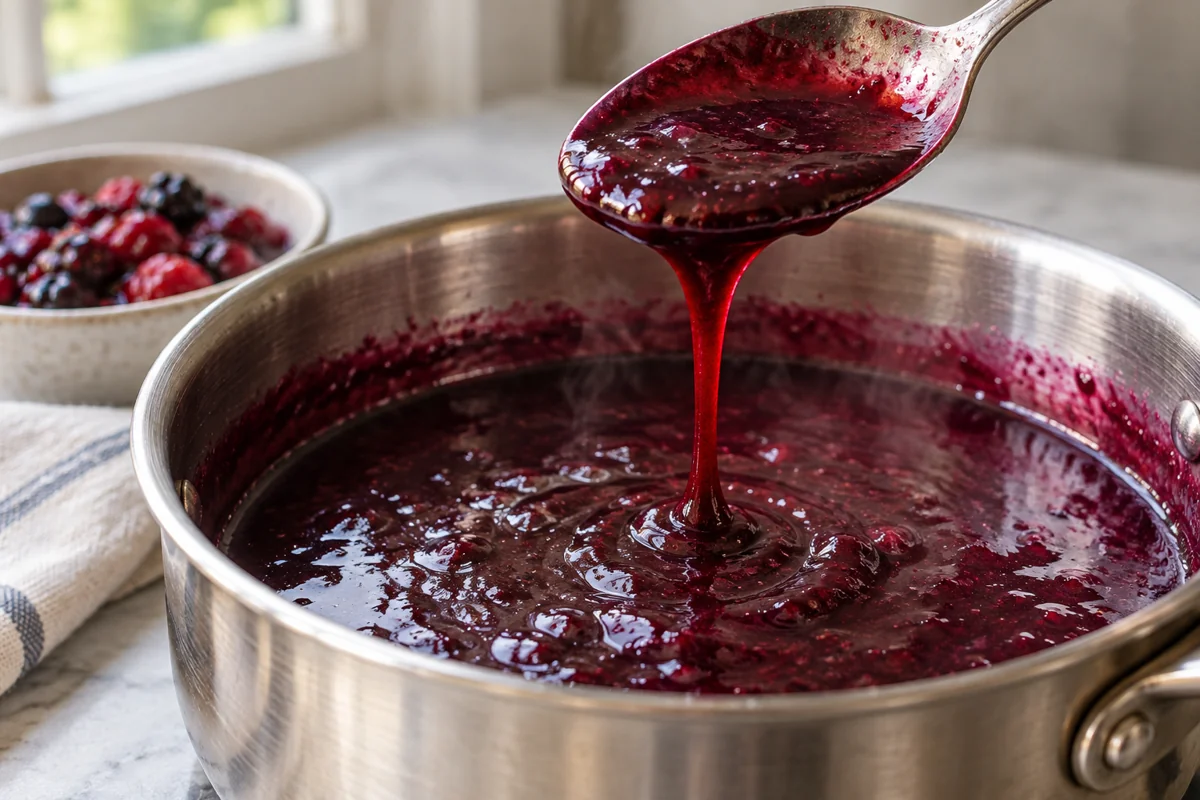
Berry sauce coating a spoon and falling in a continuous ribbon.
The correct amount depends on the complete formula and desired use. A sauce intended to pour from a small pitcher requires a different structure from a topping that should sit on a cheesecake slice. Sugar concentration, fruit particles, temperature and the selected starch all influence the result. A universal spoonful per bag is not a reliable specification when bag weights, blends and sauce styles differ. Use weights and record the finished batch.
| Method | Likely formulation effect | Question for the trial |
|---|---|---|
| Reduction | Less finished weight and more concentration | Does flavor remain balanced at the desired flow? |
| Recipe-specified starch | More body without the same evaporation loss | Is texture smooth at serving temperature? |
| Blending | Smaller particles distributed through sauce | Does seed or skin perception remain acceptable? |
| Straining after cooking | Removal of some seeds, skins and pulp | Is the recovered yield and flavor worth the separation? |
Assess a cooled sample before deciding that a hot sauce needs more thickener. A spoon lifted from the pan gives useful visual information, but the final application may be cold. Use a consistent sample size and cooling method for comparisons. If the sauce becomes too stiff when chilled, the development team can revisit concentration or thickener level. Diluting the whole batch by eye after every cook is a sign that the endpoint needs a clearer definition.
Repeated heating can also change the result. A foodservice sauce may be cooked once, cooled, and later warmed for service. Include that sequence in the trial if it is the intended use, using an appropriate handling procedure. The sauce should be judged after the full sequence rather than only at the first cook. Document any separation, graininess, loss of fruit pieces or change in flow. Those observations help identify whether the formula and process are suitable together.
Control seeds, skins and recoverable yield
A smooth-looking berry sauce may still contain small seeds. Blending reduces fruit particles but does not guarantee seed removal. For raspberry and blackberry blends, the sensory difference can be substantial, especially in a fine dessert sauce or a product dispensed through a narrow opening. Define whether the goal is fewer noticeable seeds, a specified screened texture or a genuinely seedless claim supported by the relevant specification and process.
Choose a sieve or screen that matches the requirement, and record it. A finer screen can retain more particles, but it may also reduce recovery or slow the process. Pressing harder can force more pulp through and change the final texture. The method therefore includes screen size, batch quantity, temperature at screening and the degree of pressing or agitation. A hand-held kitchen sieve and a production finisher should not be assumed to give equivalent results without comparison.
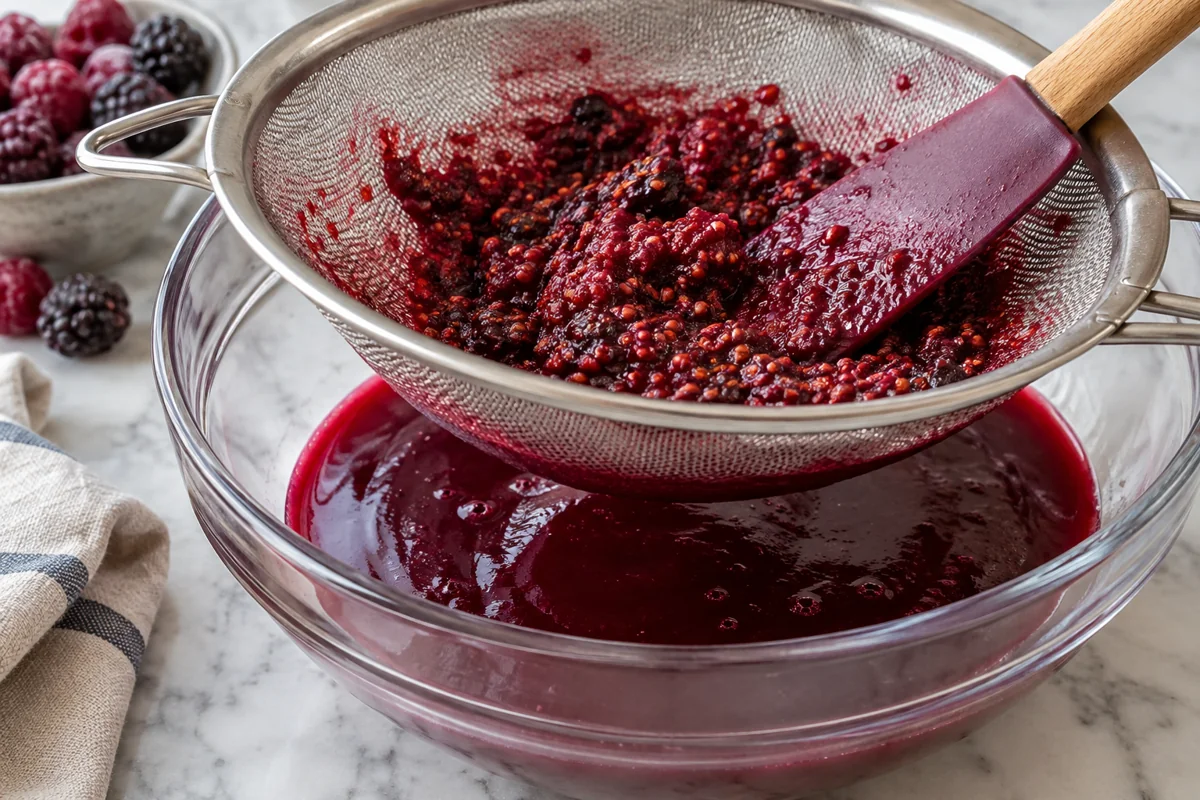
Berry seeds retained in a sieve above strained sauce.
Weigh the recovered sauce and the retained material during development. This makes the cost discussion more realistic. A less expensive berry blend can be less economical if it loses more usable material during straining or takes longer to process. Conversely, a blend with more visible seeds may be entirely suitable for a rustic compote where no screening is planned. The purchasing decision should follow the product's texture requirement rather than a general ranking of fruit grades.
Do not calculate yield from finished volume alone when the sauce contains entrained air or large particles. A measured weight is easier to compare, provided the same stages are included. State whether the yield is after cooking, after blending, after screening or after transfer into the final container. Residue left on the pan and sieve can matter in a small trial, so use the same collection method when comparing samples.
The Sew White mixed berry compote article uses a broad dessert-sauce context. For a commercial brief, make the texture definition more explicit than the menu name. If a smooth coulis is required, test it through the planned bottle or nozzle. If fruit pieces are required, assess their size and frequency in the portion. The name alone cannot establish whether a given seed or skin level is acceptable.
Screening is a texture operation, not a substitute for the ingredient's foreign-material controls or the finished product's safety process. A sieve selected for seed removal does not validate the absence of all hazards. Keep those responsibilities clear in the specification and quality plan. The supplier's raw-material documentation, the processor's equipment controls and the application texture assessment should each address the question they are capable of answering.
Evaluate sauce at its serving temperature
Warm sauce can flow differently from chilled sauce, and the food beneath it changes the impression again. A warm compote poured over pancakes may spread quickly and soften the surface. A chilled sauce placed beside cheesecake should be evaluated for the shape it holds on the plate. A topping layered into yogurt may show color migration or liquid separation during holding. Choose the real application for the final approval rather than relying on a spoon test alone.
Use a defined portion in the comparison. The same sauce can look thick in a small mound and loose when a larger amount spreads across a broad surface. Record the weight applied, the temperature condition and the time before assessment. Photographs taken at a consistent angle help show spreading and separation. They are especially useful when the buyer and supplier are discussing texture remotely, provided the preparation details travel with the image.
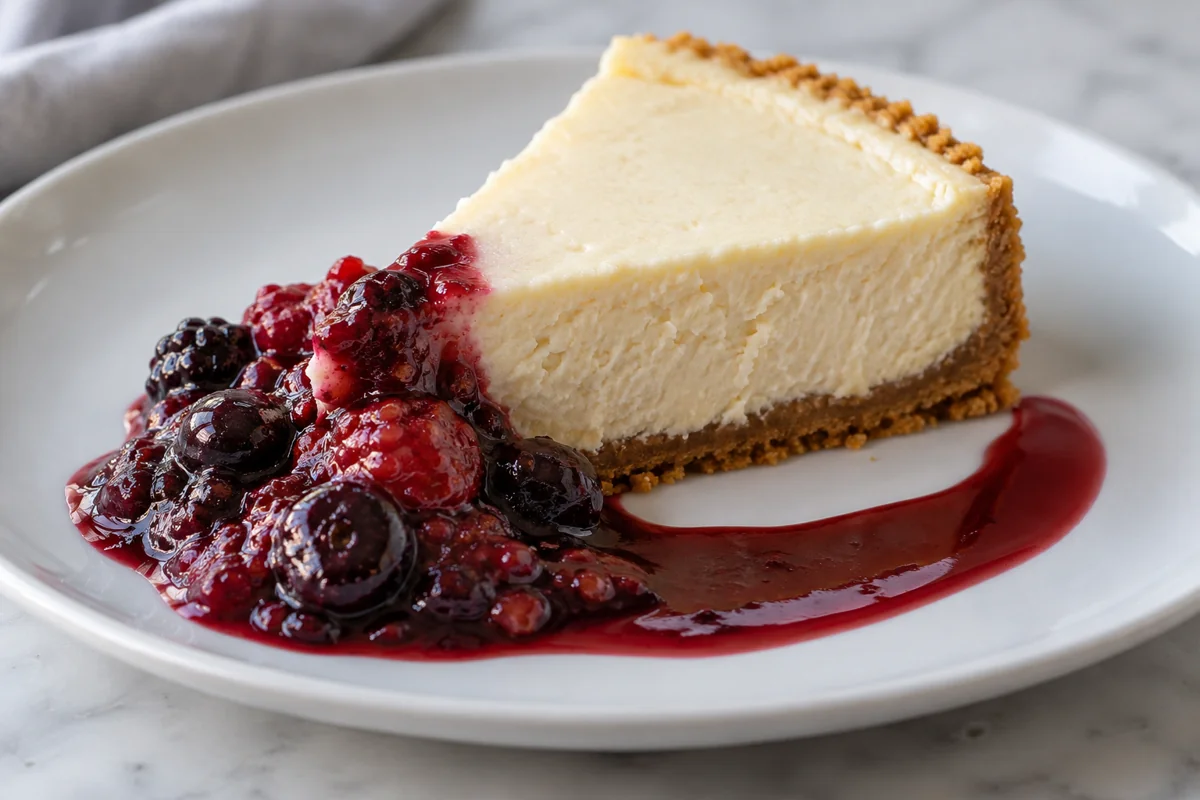
Compote and smooth berry sauce served beside cheesecake.
For chunky compote, examine the ratio of fruit pieces to sauce in several portions. One attractive spoonful from the top of the container may not represent the rest. Gentle mixing before portioning may be part of the service method, but it should be defined so the fruit is not progressively broken during use. A product intended for a pump or dispenser needs a different evaluation from one portioned with a spoon.
Check the interaction with the base. A sauce placed on a cut sponge cake may soak in; a sauce beside a firm cheesecake may remain separate. A frozen dessert can quickly chill the sauce and change its apparent body. These effects are useful when intentional, but they can disappoint when a recipe is moved to a different menu item without a trial. A berry blend can remain the same while the sauce specification changes with the application.
Storage claims require specific support. Recipe pages differ in their suggested keeping periods, and some describe jars in ways that can blur the distinction between refrigerated sauce and shelf-stable preserves. Follow an appropriate validated or authoritative handling method for the actual product and setting. Do not infer ambient stability from sugar, acidity, a hot fill or a closed lid alone. For a commercial product, establish the relevant safety and shelf-life basis with qualified personnel.
If the sauce will be frozen, include thawing and any later reheating in the quality trial. Look for liquid separation and changes in particle texture after the intended cycle. Record the packaging and serving method, because both affect the result. The raw fruit's storage declaration cannot simply become the finished sauce's declaration. The sauce has a new formulation, processing history and package, all of which need their own assessment.
Turn the recipe into a repeatable supply brief
Start the brief with the finished use: chunky breakfast compote, smooth chilled dessert sauce, screened garnish or another clearly described application. State the desired fruit-piece size, seed tolerance, color and flow at service. Include the approximate portion and the base food. Those details help identify whether the buyer needs whole berries, smaller cuts, an approved broken-fruit form or a different component balance.
A practical application trial can follow this sequence:

Mixed berries with strawberry pieces on a sorting surface. Confirm component ratios and cuts for the order.
- Fix the berry blend, incoming weight, added ingredients, vessel and fruit condition at the start.
- Cook to the chosen recipe endpoint while recording additions, evaporation and the finished weight.
- Apply the intended blending or screening method and measure the recovered sauce.
- Cool or warm samples according to the intended service, then compare defined portions on the actual dessert.
- Repeat the preferred result through the planned packing and holding sequence before approval.
This sequence is a proposed development method. It does not imply that GreenLand has performed a customer's sauce trial or validated its storage conditions. The value lies in making the comparison repeatable. If a later lot gives a different result, the record helps the teams distinguish a component change from a difference in cooking loss, screen method or serving temperature.
The raw-fruit specification should identify components, proportions, forms, relevant size limits, broken-fruit allowance and added-ingredient status. Confirm packing and net weight in relation to batch size. A foodservice kitchen using small portions may prefer a different pack from a manufacturer emptying a full carton into a process. Discuss order quantity, destination, lead time and seasonal availability, and agree how proposed substitutions will be reviewed.
We use the buyer's application brief to discuss frozen mixed berry supply and the appropriate sample. Include any required traceability documents, ingredient declarations and lot criteria. If a yield or texture limit is proposed, attach the method used to measure it. A number without its preparation and assessment conditions is difficult to use in a meaningful acceptance agreement.
Keep raw-fruit approval and finished-sauce approval connected. A sample may meet the incoming specification yet require a different sauce formula for a new menu application. Equally, a successful sauce from one hand-selected sample may not establish that the whole commercial pack will behave similarly. The most useful agreement identifies the accepted fruit, the representative sampling method and the finished application criteria, so repeat orders can be reviewed against the product the customer actually serves.
Related reading
How to Make Strawberry Sauce From Frozen Strawberries
Compare the single-fruit sauce method with a blend that has several seed and particle types.
Can You Make Jam from Frozen Fruit?
Understand the additional formulation and preservation questions raised when a sauce becomes a jam.
IQF vs Block Frozen Strawberries: Buyer's Guide
Review frozen formats before defining batch preparation and ingredient handling.
Source frozen mixed berries with GreenLand-food
GreenLand-food is a professional frozen mixed berries supplier and manufacturer in China, providing factory-direct wholesale supply for importers, food manufacturers and foodservice buyers.
Send the berry components, product form, specification, packing, quantity, application, destination, private-label needs and requested documents so we can discuss an appropriate supply brief and sample.