


Mustard Green Cut Leaves: Yellowing, Tough Stems and Defect Sampling
Oct 19, 2026
Leave a message

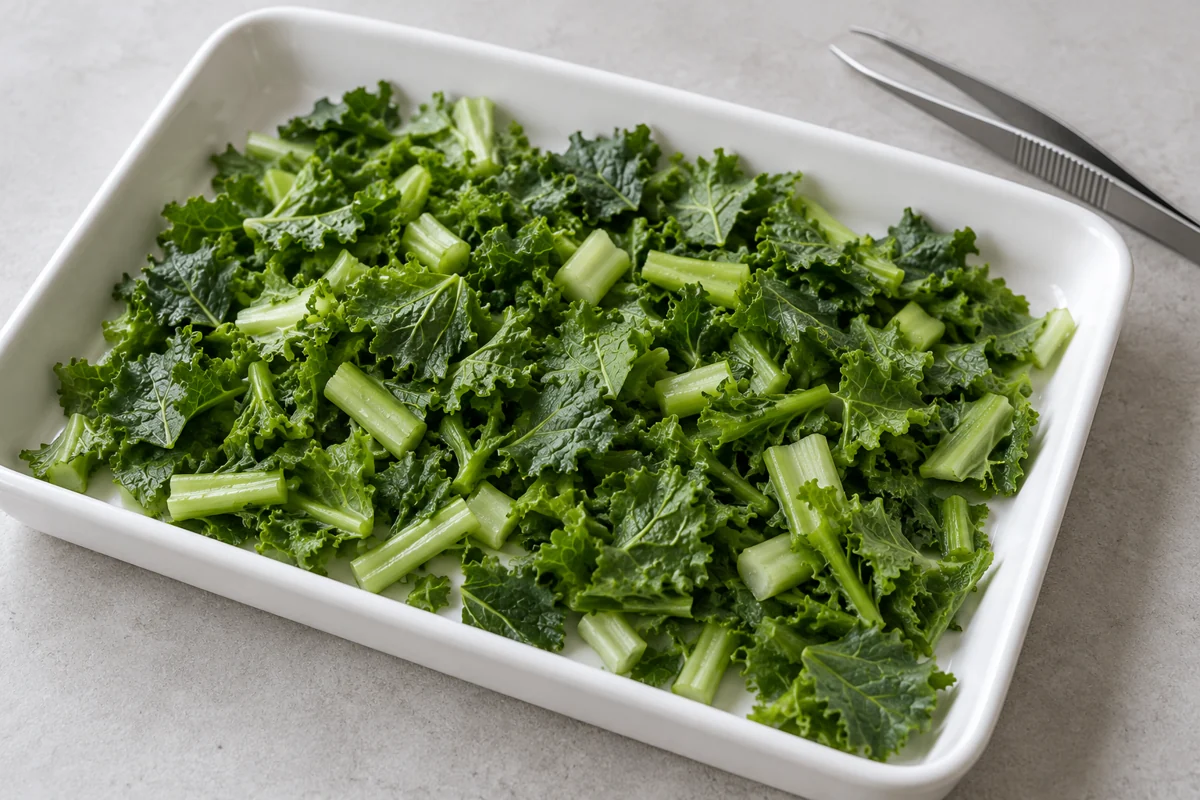
For a buyer, the difficult question is rarely whether one discolored piece exists. It is whether the supplied material will meet the agreed appearance and eating quality consistently, and whether the evidence supports acceptance, investigation or rejection. We recommend settling that question before the first commercial delivery. The practical approach below is a purchasing and quality-review framework; it does not report a GreenLand inspection, assign an official grade or set universal mustard-green defect limits.
Define the product and the assessment state
Start with the item that was ordered. A finely cut ingredient intended to disappear into a filling will not present the same visible leaf shape as a larger cut used in a soup. The product description should identify the green, intended cut, preparation state, permitted ingredients and packing. A photograph can help both parties recognize the intended appearance, but it cannot replace those details. If the purchase order says only mustard greens, the receiving team has little basis for deciding whether a visible petiole is expected material or an unwanted inclusion.
The real GreenLand product photograph shown here depicts a fine cut in a bag. It is an appearance reference for that listing. It does not establish a leaf-to-stem percentage, the size distribution throughout a delivery, the botanical identity of every fragment or a particular processing history. Ask us to confirm the offered specification and sample identity. Avoid building a receiving rule from the most attractive section of a website image, especially when the commercial sample will be prepared differently from the photograph.
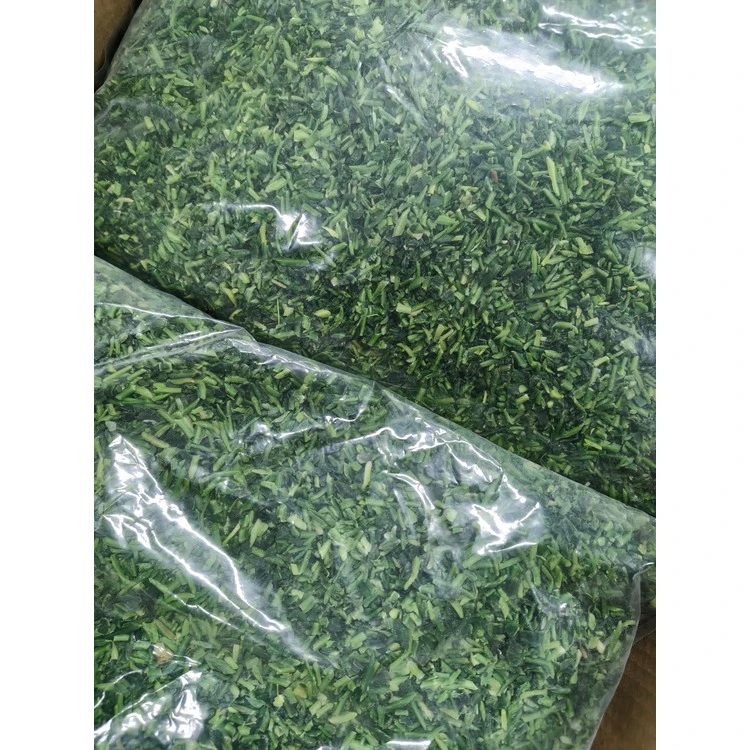
Cut mustard greens pictured in the GreenLand-food product listing; confirm the exact specification for your order.
The USDA frozen leafy greens standard distinguishes product styles and separates several quality factors. Its provisions are useful only when read with their full scope. Fresh mustard and turnip greens have a separate USDA standard, and some frozen stem provisions refer specifically to spinach. Neither provides an automatic mustard stem percentage for your purchase order. If a contract invokes a named grade, identify the exact standard, applicable style and inspection basis, and confirm who will determine compliance. A private appearance requirement should be described as such.
Next agree when each observation will be made. A frozen mass may obscure small leaves. A separated sample reveals shape and color but has undergone preparation. A cooked sample addresses eating quality in a way that a frozen photograph cannot. These observations can all be useful, but they answer different questions. Record the sample condition beside the result, including any separation, thawing, draining or cooking method. Comparing an untouched frozen sample with a heavily cooked reference can produce a disagreement that is really about preparation.
Keep an approved reference with a useful description of its condition and limitations. That might include representative photographs under consistent light and a retained sample managed under the site's procedures. A reference has to remain traceable to a product and approval date. It should not become an indefinite promise that all agricultural material will match one leaf exactly. Describe the acceptable range and the characteristics that matter for the finished food. This gives the receiving team a workable target and gives the supplier a clear basis for responding.
Record yellowing without guessing its cause
Describe yellowing first as an observation. State whether it affects the overall appearance, isolated leaf areas or scattered fragments. Keep pale petiole tissue separate from yellow leaf tissue; a naturally light stem cross-section is not automatically a yellowed leaf. On a fine cut, that distinction may require spreading a prepared sample thinly enough to see its structure. Inspectors who work from a thick, wet heap can classify the same material differently simply because the darker leaves cover the lighter pieces.
Use stable lighting and a neutral background when photographs will support the report. Include a wider view of the sample as well as a close view of the affected material. The close view shows the observation; the wider view helps communicate its context. Avoid changing saturation, using a strong warm lamp or photographing through colored packaging. A phone photograph is useful supporting evidence, but its displayed color depends on the camera and screen. It should not silently become an instrument measurement or an official color grade.
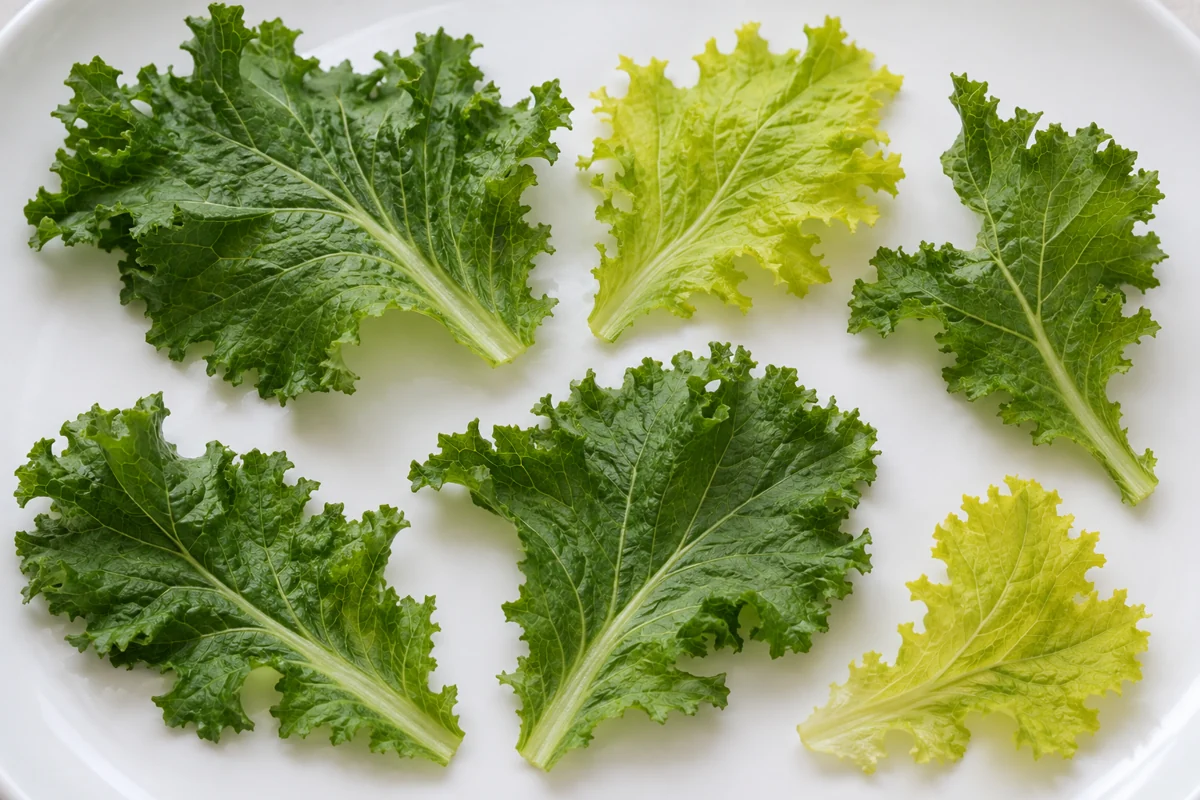
Illustrative color variation. Appearance alone does not establish its cause.
Fresh-produce guidance from NC State discusses more than one possible explanation for leaf discoloration. Oklahoma State's discussion of leafy crucifer diseases also shows that yellow areas can occur in different conditions. Those sources do not allow a buyer to diagnose the cause of a yellow fragment in a frozen bag. The processing and storage history may also need review. Record what is visible and request the relevant records when the pattern warrants investigation. A confident but unsupported cause can send corrective work in the wrong direction.
The acceptance question should follow the agreed method. Is the requirement about overall cooked appearance, a measured blemished area, a count under a defined grading procedure, or an application-specific visual limit? These are not interchangeable. A number of tiny fragments and one broad affected leaf can produce different count results while showing a similar visible area. If the parties have chosen an area-based method, retain the area basis throughout the report instead of converting the result into a convenient but unrelated percentage of pieces.
Consider the intended food when setting a private quality target, while keeping the contract requirement explicit. A clear broth may expose a pale fragment that is difficult to notice in a dark filling. That observation can inform a future specification, but it does not justify changing the acceptance rule after delivery without agreement. If a shipment meets the existing written requirement yet disappoints in the application, document the application problem separately. The useful next step may be a revised grade or reference sample rather than an unsupported defect claim against the original lot.
Assess tough stems after the agreed preparation
Mustard leaf blades and their supporting petioles are different tissues. Some visible stem material can be an intentional part of the cut. The buyer's concern is often a hard or stringy bite, uneven cooking, or pieces that remain conspicuous in the finished portion. Calling every stem a defect hides those distinctions. A more useful description identifies which pieces are objectionable and what they do after preparation. For example, persistent fibers in a smooth filling are a different issue from a tender petiole that remains visible in soup.
Evaluate texture through a defined preparation appropriate to the product. Use the supplier's confirmed instructions and the site's approved food preparation controls. For an application trial, keep the cooking route, batch size, liquid conditions and holding stage consistent across samples. Record deviations rather than quietly correcting one sample until it seems acceptable. Otherwise an apparently better result may reflect extra cooking or a different serving temperature. The purpose is to learn how the material behaves under the process you actually intend to use.
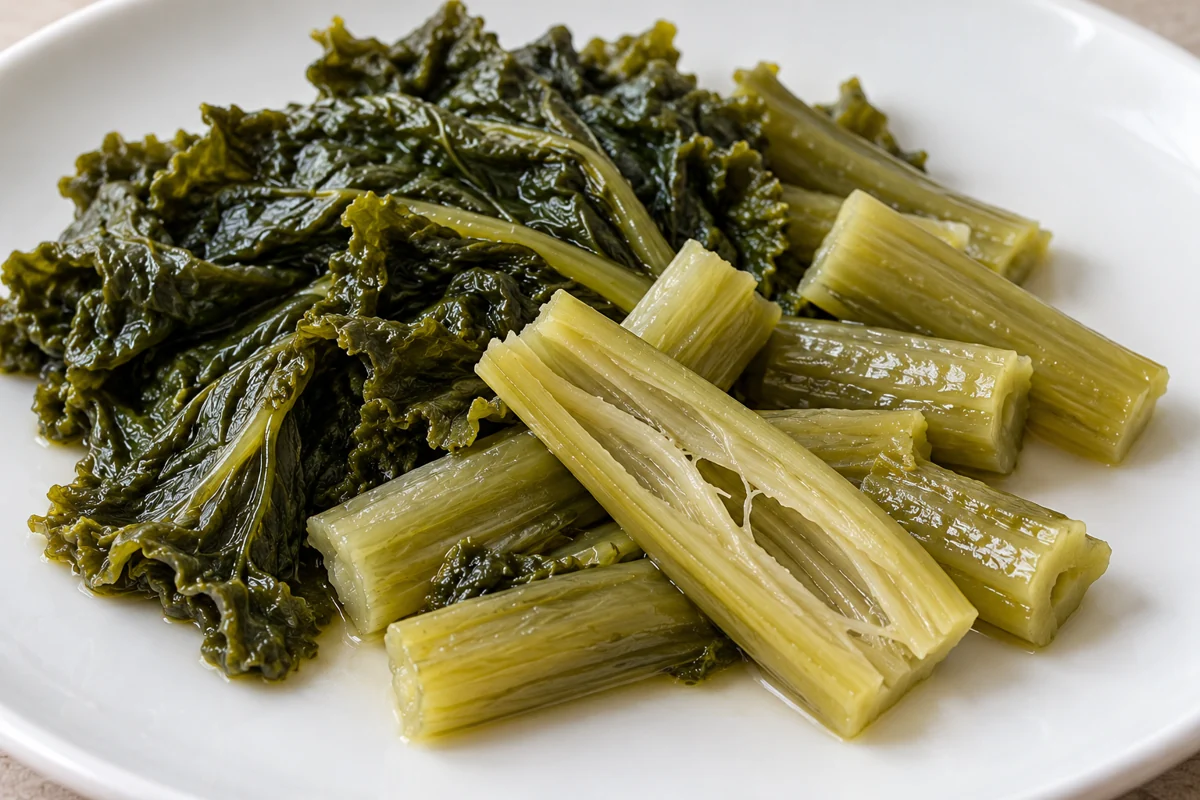
Illustrative cooked tissue; no measured toughness or test result is implied.
Look at both the frequency and the severity of an objectionable bite. A single isolated coarse piece and a sample with widespread fibrous material may require different follow-up, even if both can be described as tough. Preserve the underlying observations rather than reducing everything to one adjective. Where a sensory panel is used, agree the terms and reference examples before comparing samples. Where an instrument method is specified, use its agreed setup and interpretation. An informal fork test can guide development, but it should not be presented as an instrumental texture result.
Cut size also matters to how a stem is experienced. A long petiole segment can create a noticeable strand; a smaller piece may distribute more evenly. Cutting does not guarantee that mature tissue becomes tender. Nor does a photograph reveal how a piece will break during eating. Review the offered cut and the cooked result together. If coarse material remains after the intended process, ask whether a different raw-material selection, trimming approach or offered specification is available, rather than assuming the kitchen can always compensate with more heat.
Keep the quality and process discussions connected. Extending a cook solely to soften stems can change the leaves, liquid and other ingredients. A buyer who approves only the final softness of the toughest piece may overlook the rest of the product. Record whether the leaves retain the desired body and whether the whole portion remains acceptable. We recommend approving the mixed ingredient as it will be eaten, with a separate record of stem observations. That makes a later complaint easier to reproduce and avoids an unsupported promise that every visible stem will behave identically.
Keep plant defects and foreign material distinct
A product description should say which plant portions belong in the ingredient. Leaf blade, petiole, coarse basal material and other plant parts should not be grouped into one vague category called impurities. The categories determine what the inspector records and what action follows. A normal petiole in a mixed cut may be permitted, while an unwanted basal piece may conflict with the agreed specification. Material from another plant raises a different identification question. Describe the actual observation closely enough that another reviewer can understand the distinction.
Do not diagnose an unfamiliar fragment from a low-resolution image alone. Retain the specimen under the site's procedures, preserve its sample identity and ask for competent examination when necessary. Size, texture and shape can help document it, but color by itself is a weak identifier. If the report initially says unidentified plant material, that is more useful than confidently naming a weed without evidence. Update the classification when the identification is supported, and keep the original record so that the sequence of decisions remains clear.
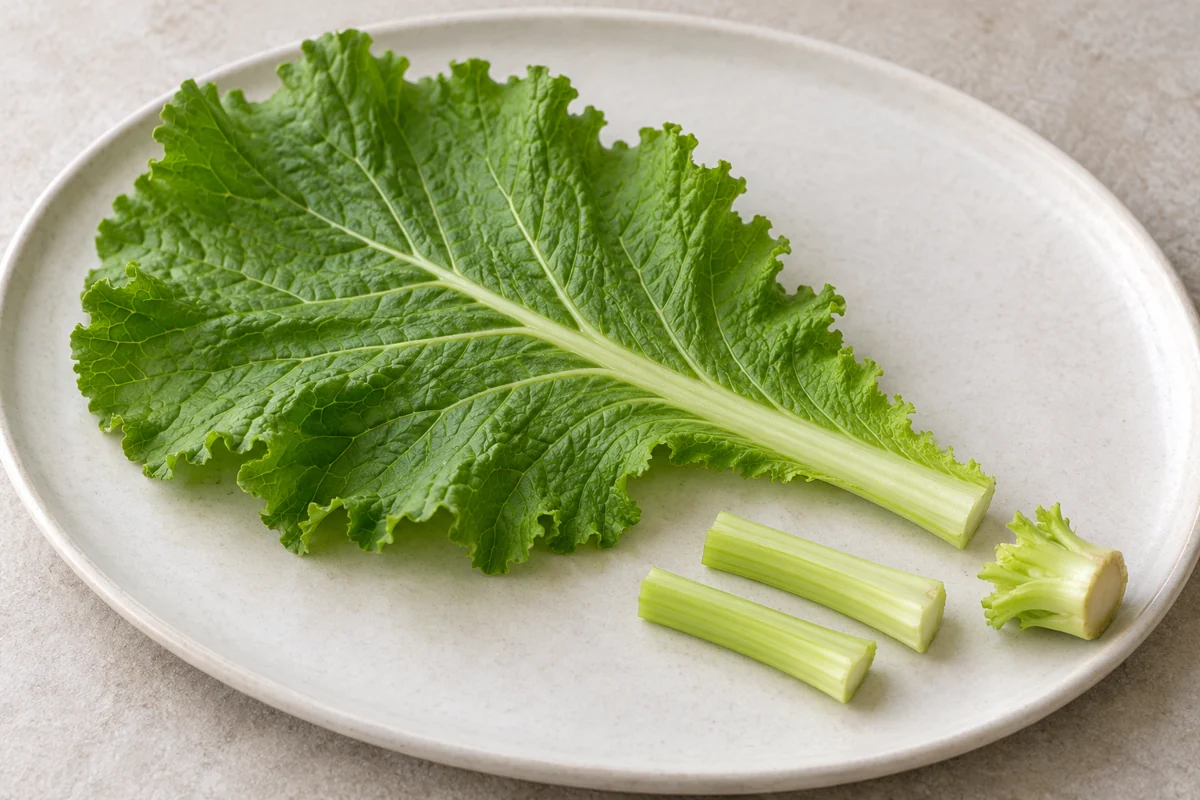
Illustrative plant parts help explain classification; they are not defects found in a supplied lot.
The USDA frozen standard distinguishes extraneous vegetable material and other classified factors, with details that depend on product style. Its definitions should not be replaced by an improvised list copied from fresh greens guidance. If that standard is the contractual basis, follow the applicable classification and measurement procedure. If the buyer uses a separate specification, define its categories explicitly. In either case, an inspector needs a way to distinguish normal product tissue from nonconforming material before a count, length or other measurement can have a consistent meaning.
Non-plant foreign material requires the site's established food-safety and product-control response. Do not fold a potential safety issue into a cosmetic yellow-leaf allowance. Preserve evidence, identify the affected product and involve the responsible quality team. The appropriate investigation and disposition depend on the finding and the applicable controls; this article does not supply a release rule. A visual quality inspection is also not a substitute for the supplier approval, hazard controls and verification needed for the ingredient. Attractive leaves do not demonstrate that every safety requirement has been met.
Make the report useful to the supplier without turning it into a collection of alarming close-ups. Show the suspected material in context, include the sample and lot identifiers, and record how it was recovered. If washing, sieving or separating was part of the method, describe it. Keep recovery observations distinct from conclusions about the entire shipment. This allows the supplier to compare the finding with the relevant raw-material, sorting or packing records and helps both teams decide whether additional evidence is needed before determining the extent of the issue.
Draw samples that represent the identified lot
Define the lot before deciding how to sample it. Record the product code, production or packing identifiers, quantity and the physical units included in the decision. A delivery can contain more than one lot, and a pallet position is not necessarily a production boundary. If different lots are combined into one inspection result, an affected portion may be diluted by unrelated material or an acceptable portion may be rejected without a clear basis. The receiving record should allow the result to be traced back to the units it represents.
Choose the sampling plan before opening the most convenient bag. The plan needs to address how units are selected across the defined lot and how many are examined for the intended decision. Accessibility, suspected variation and the purpose of the inspection all matter to its design. Use the applicable contractual or inspection procedure and have the responsible quality team resolve missing details. Picking a clean-looking bag from the top of a pallet is not evidence that the rest of the lot has the same appearance.
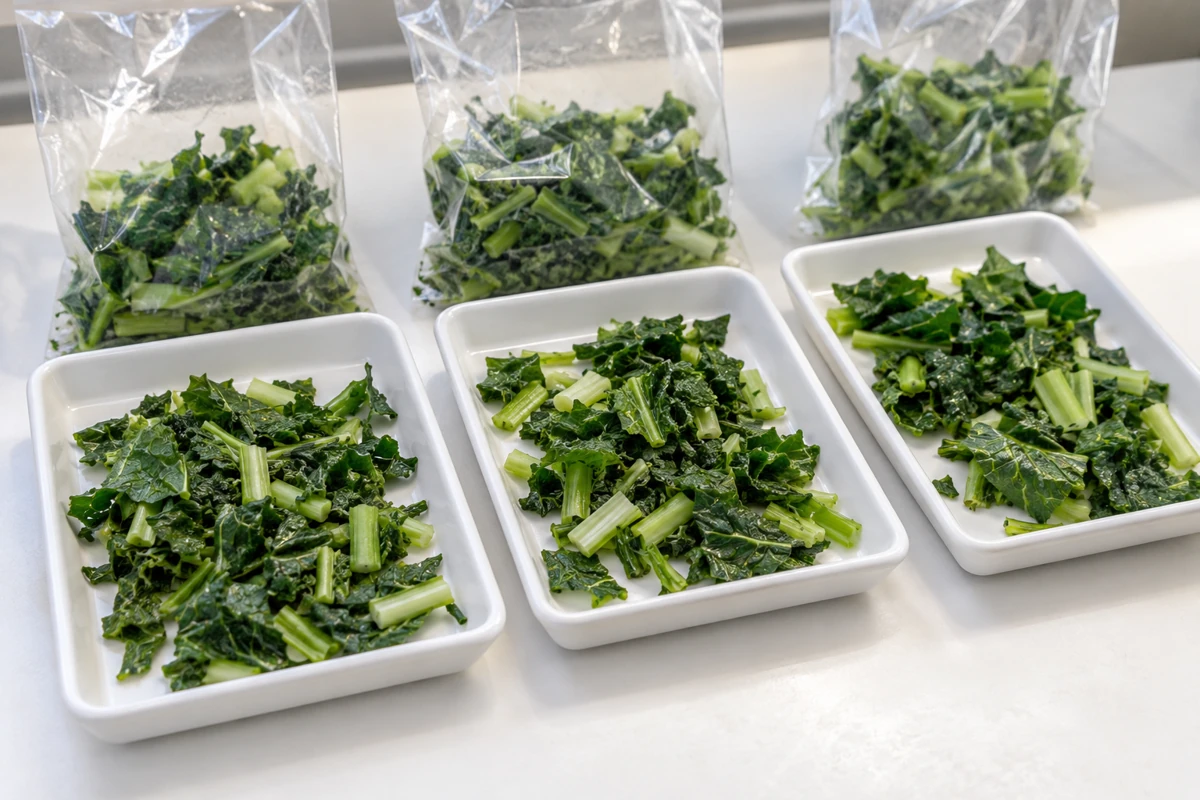
Illustrative separate samples, not a performed lot inspection or prescribed sample count.
Keep sample-unit size separate from sample size. The first describes the amount examined as one unit; the second concerns the units selected for the sampling exercise. A published mass for examining a frozen leafy-green style does not, on its own, tell a buyer how many bags to draw from a shipment. The USDA standard directs lot sampling to the governing inspection framework. Read the linked procedure in full if it is being invoked. Do not copy one small mass into a receiving form and assume that it constitutes a complete acceptance plan.
Preserve the identity of separate samples when the objective is to understand variation. A composite can be useful under a method that calls for it, but mixing all selected material removes information about where a concentration occurred. Record which bag or unit produced each observation before any permitted combination. For development work, this can reveal whether an issue is consistent or concentrated. For formal acceptance, the chosen plan determines how results are combined and interpreted. Neither an attractive composite nor one extreme close-up should replace that agreed decision method.
Control sample handling so the examination does not create a new source of variation. Use suitable clean tools and containers, maintain the required product conditions before preparation, and record the relevant handling sequence. Select portions according to the method rather than skimming only large pieces or loose fragments. Fine cuts can separate physically during handling, so an apparently convenient scoop may not resemble the whole container. These details are modest, but they are often what makes a supplier's repeat examination comparable with the buyer's first result.
Measure defects before deciding acceptance
A useful inspection form puts the observation, measurement basis and decision in separate fields. For yellowing, that may mean a description of the affected tissue followed by the result under the agreed method. For texture, it means the preparation and the actual cooked observation. For unwanted plant material, it means identification and the applicable measurement. Keeping those fields separate prevents a conclusion such as poor quality from becoming the only surviving record. Another reviewer should be able to understand how the conclusion was reached without repeating the entire conversation.
Use a denominator that belongs to the method. Percent by mass, percent of pieces, aggregate area and defects per examination unit describe different things. A result cannot be compared with a limit expressed on another basis unless the specification provides a valid conversion. Fine cutting makes this especially important: one affected leaf may become many small pieces. Counting those pieces without an agreed rule can make the result depend more on the cut than on the amount of affected tissue. State the basis beside every reported number.
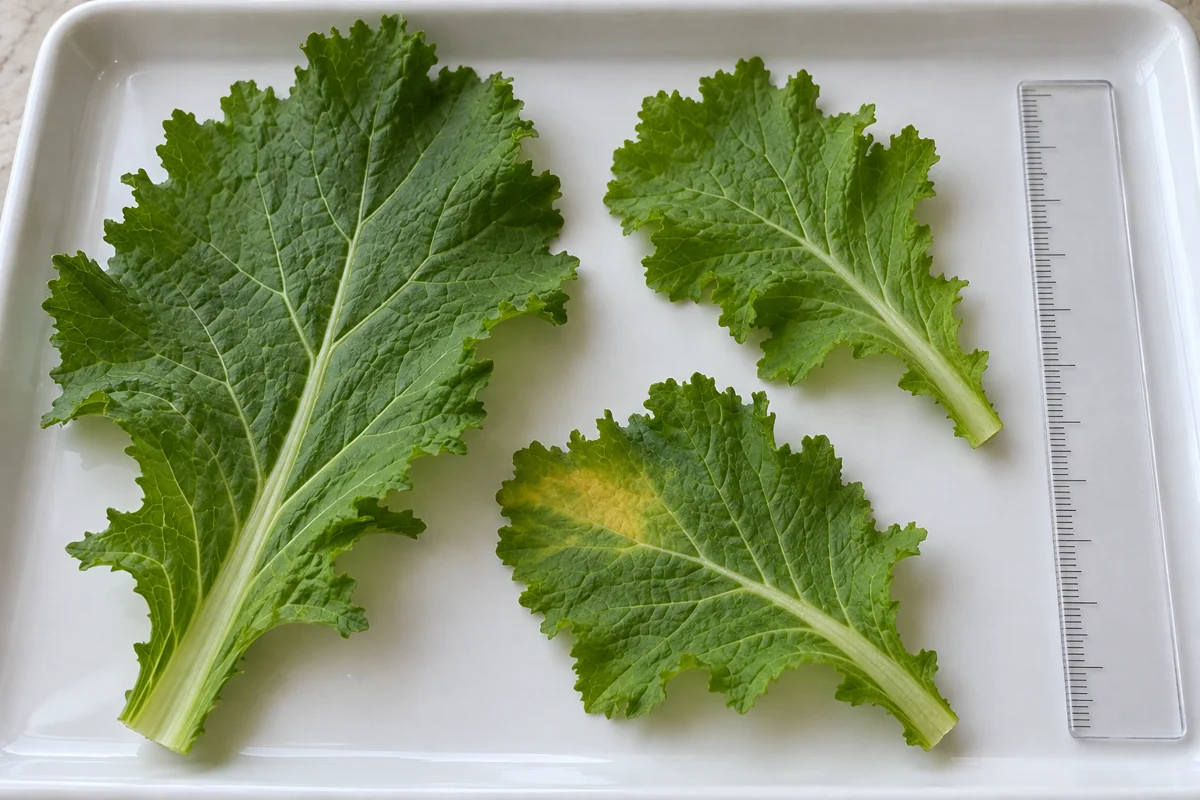
Illustrative area observation. No numerical measurement or acceptance result is shown.
An AQL is not simply a permitted percentage of bad material in every shipment. It belongs to an acceptance-sampling framework with defined units and decision rules. If the contract invokes one, use the complete applicable plan and its interpretation. Do not translate a grade table into a universal rejection percentage for mustard greens. Equally, do not assume that staying below an informal cosmetic target settles a separate safety concern. Quality, contractual acceptance and safety disposition need their appropriate rules and responsible decision-makers.
Agree how borderline findings will be handled before they become a commercial dispute. The procedure might identify a review authority, a retained-sample comparison or an additional examination under a specified rule. It should also say how conflicting results are reconciled. Repeatedly taking new samples until one passes is not a neutral way to resolve disagreement. Retain the original result and any later results, with the reason for the additional work. That record helps distinguish genuine lot variation from a preparation or classification inconsistency.
For a new product, a trial inspection is a useful way to test the specification itself. Give the same written method and representative material to the people who will use it. Compare how they classify pale petiole, yellow leaf, coarse tissue and unfamiliar fragments. Resolve ambiguous descriptions before the commercial order. This is a proposed method-development exercise, not a claim that GreenLand has performed a particular test. A specification that two trained reviewers can apply consistently is more valuable than an impressive list of limits that leaves the basic categories undefined.
Close the loop with a usable supplier report
Send a report that connects the finding to the order and the intended use. Include the agreed product description, lot identifiers, sampling procedure, sample condition, preparation method and observations. Add representative photographs and the underlying measurements where available. Explain the practical effect: an appearance mismatch in clear soup, persistent fibers in a filling, or a finding that requires separate investigation. This is much easier to act on than a message saying that the greens are too yellow or contain too many stems with no defined basis.
Ask for evidence that addresses the finding rather than a generic assurance. Depending on the issue, the useful response may be clarification of the supplied grade, comparison with the retained sample, review of the relevant production records or a proposal for further examination. Do not assume that every record exists in a particular format or that a website photograph proves a control was effective. Confirm the documents needed during supplier approval and ordering. That makes the later review more efficient and sets realistic expectations on both sides.
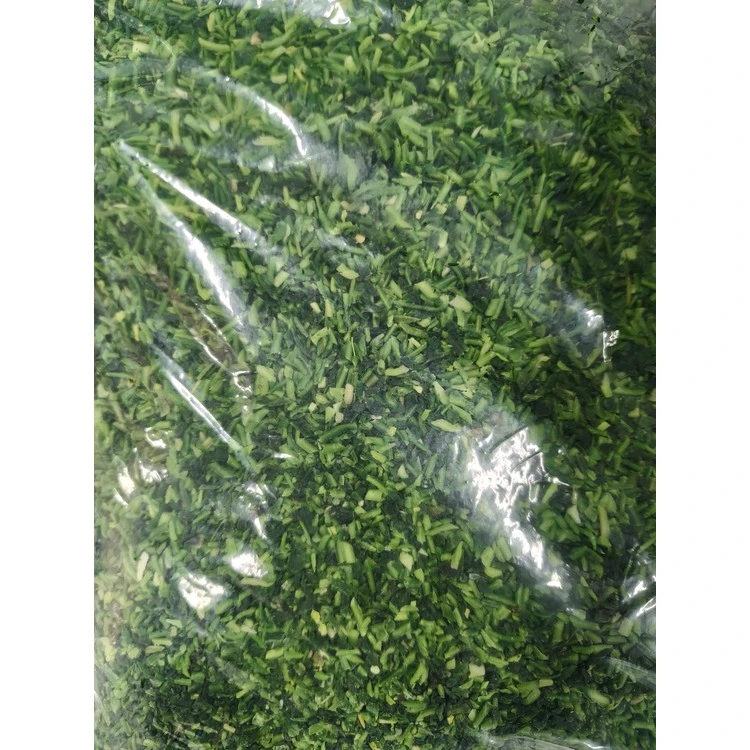
A second view of the cut mustard product. Use representative lot records alongside appearance references.
A short reconciliation note can prevent a useful investigation from becoming a new source of confusion. Identify which facts both teams accept, which observations remain disputed and which evidence would resolve them. If the buyer and supplier prepared samples differently, repeat the comparison under the agreed method before attributing the difference to the product. If the samples came from different lots, preserve that distinction. The note should name the person responsible for the next action and connect the eventual decision to the original lot record, so the commercial team does not have to infer the outcome from scattered photographs and messages.
Separate disposition of the current lot from prevention on later orders. The current decision should follow the contract, applicable controls and available evidence. A future change might involve a different cut, a clearer stem description, a revised appearance reference or an additional agreed verification point. Record which change is being approved and when it takes effect. Otherwise a corrective discussion can leave purchasing, production and receiving with different versions of the requirement. A useful revision should be specific enough that the next delivery can be assessed without reopening the same debate.
When you contact us about frozen mustard greens, send the application and the quality concern together. We can use the offered product details and representative sample discussion to establish what needs confirmation for your order. The two real product photographs in this article remain appearance references; the inspection scenes are illustrations. Neither substitutes for actual lot evidence. The aim is a clear, repeatable agreement: what material is expected, how it will be examined, what result matters in the food, and who makes the decision when the evidence falls outside that agreement.
Continue reading about frozen leafy ingredients
Compare tender petioles and coarse stem material in another leafy ingredient, while keeping the mustard specification separate.
Extend the mustard-specific observations into a broader receiving, retained-sample and review procedure.
Source frozen mustard greens with GreenLand-food
GreenLand-food is a professional frozen mustard greens supplier and manufacturer in China, providing factory-direct wholesale supply. We help your purchasing team confirm the offered cut and preparation state against the intended application.
Send the product form, specification, packing, quantity, application, destination, private-label needs and requested documents, together with the cooked texture and flavor your team wants to approve.