


Can You Eat Spinach Stems?
Sep 24, 2026
Leave a message
Research This Article & Topic with AI
Verify key claims, compare reliable sources, and explore GreenLand-food's practical frozen food knowledge.
Article details and research questions are prepared in the links. Sign-in or sending may be required.
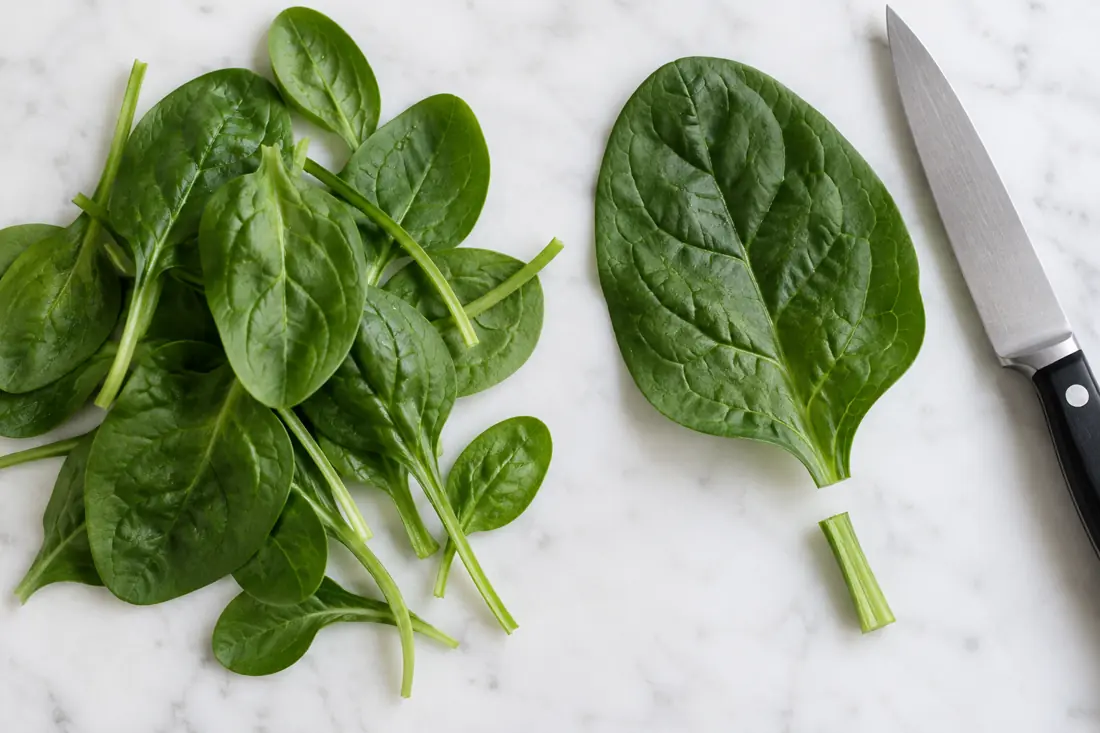
This distinction matters when spinach arrives already chopped and frozen. You cannot trim individual stems after they have been cut into a commercial pack. We supply different frozen spinach forms for foodservice and processing, and the buyer should agree on cut size and acceptable leaf-to-stem balance before approving a sample. A smooth filling, a visible leafy side dish, and a soup with small green pieces call for different results even when the ingredient label says only "spinach."
Which spinach stems are pleasant to eat
The slender petiole joining a young spinach leaf to the plant is usually tender enough to eat with the leaf. In a bag of baby spinach, the stems often have little more resistance than the leaves themselves. Wash the spinach according to the product instructions and use it in salads, sandwiches, quick sautés, or cooked fillings. If the cut end is dry or discolored, remove that small piece for appearance and texture. There is no reason to strip every tender petiole from an otherwise sound bunch.
Mature spinach has larger leaves and may have longer, thicker stems. The lower part can feel fibrous because its structure is built to support more leaf mass. A mature stem may soften in heat while still pulling into strings when chewed. That is a quality concern in a tender salad or a smooth dip, even though the stem is safe to eat when the produce has been handled properly. The upper portion near the leaf can be more pleasant than the base, so a single all-or-nothing rule wastes useful food.
Use a quick tactile check. Bend a representative stem near its cut end. If it snaps easily and feels juicy, it is a good candidate for a raw or lightly cooked dish. If it folds without breaking, splits into long fibers, or resists a knife, trim the lower section and reassess the rest. Then taste a small piece in the intended preparation. Raw tenderness and cooked tenderness are related but not identical; a stem that seems coarse raw can be acceptable after chopping and cooking in a sauce.

Which spinach stems are pleasant to eat visual explanation.
Leaf variety, harvest maturity, storage, and hydration affect what you encounter. A label such as "baby spinach" describes harvest stage, but the range within a bag can still vary. At the other end, a mature bunch can include some stems that are perfectly useful after trimming. Judge the actual lot instead of relying only on a category name. A purchasing team should apply the same principle to frozen product: inspect a representative sample rather than assuming every cut spinach pack carries the same stem ratio.
Stems have a different role from the root crown and the tough basal cluster sometimes left on a whole bunch. Root crowns can be prepared deliberately as a separate vegetable, but they demand thorough cleaning and a different cooking approach. This article concerns the petioles attached to spinach leaves and the short stem pieces that may appear in cut spinach. Keeping those parts distinct prevents a practical trimming question from becoming a misleading blanket claim about every part of the plant.
Trim, cut and cook mature stems
Start by removing any gritty, damaged, or dried ends. Wash a mature bunch carefully because soil can collect near the leaf bases and folds. Drain it well before cutting. For a leafy dish, align a few leaves, fold them lengthwise if useful, and trim the coarse stem base with a knife. A person preparing a small household bunch can do this leaf by leaf. A foodservice kitchen usually needs a faster rule based on stem thickness and the recipe's tolerance for visible pieces.
Keep the tender upper stem when it contributes a pleasant bite. A sharp knife can cut retained stems into short pieces, which makes any remaining fibers less conspicuous and helps them cook evenly. Put those pieces in the pan before the leaves. Spinach leaves collapse quickly; a thick stem needs more time. If both enter together, the leaves may become dull and wet while the stems still feel firm. A brief separate start lets the cook stop when both parts reach the desired texture.
For a salad, do the test raw. A coarse stem will not become tender under dressing, and small cuts do not completely hide a stringy bite. For a sauté, pasta filling, or soup, chopping matters more. Short cuts disperse through the mixture and make portioning consistent. A pureed soup may tolerate more stem than a delicate ravioli filling, but long fibers can still show up after blending. Test the final product with the same mixer, cooking time, and portion size used in service.

Trim, cut and cook mature stems visual explanation.
Stem trimming also affects yield. If a recipe is written by bunch count, two bunches with the same label can produce different usable weights after coarse bases are removed. For repeat production, record the raw weight, trimming loss, cooked weight, and finished texture. That simple comparison is more useful than assuming that a higher stem proportion always means poorer value. Some stem is acceptable and may be desirable in a hearty preparation; excessive fibrous pieces create rework and inconsistent mouthfeel.
Avoid cooking whole mature stems much longer merely to force them soft. Long heating can push the leaves past the quality target and increase water release. When a stem remains unpleasant despite reasonable cooking, the better answer is to trim it or select a different grade. The product specification should reflect the dish. A buyer making a leafy side may allow thin petioles, while a smooth green sauce may request a finer cut and tighter stem tolerance.
How stems behave in chopped frozen spinach
Commercial frozen spinach is commonly washed, sorted, blanched, cooled, cut or portioned, then frozen. The exact sequence and form depend on the offered product. Blanching softens leaf and stem tissue and helps manage quality during frozen storage, but it does not make every thick mature stem disappear. Once the product is chopped, a long fibrous piece may still be noticeable in a smooth filling. The buyer needs to review the offered grade after the same heating or mixing step that the recipe will use.
At GreenLand-food, our frozen spinach in bags page distinguishes loose IQF chopped spinach, cut leaf, portions, and BQF blocks. It lists leaf-to-stem grade as a specification choice alongside cut size and packing. Those are practical controls. A fine chopped format distributes small green pieces through a sauce or filling. A larger cut leaf format preserves more visible leaf shape. A portion or block changes dosing and thawing behavior; it does not, by itself, define the stem content.

How stems behave in chopped frozen spinach visual explanation.
Freezing changes how spinach looks and feels. Ice crystals, blanching, and subsequent heating soften leaf structure. A frozen sample can therefore appear stem-heavy when the leaves are compacted or clumped, even if the cooked recipe looks balanced. Conversely, a pack that appears very leafy from above may contain coarse pieces underneath. Thaw or cook a representative sample, spread it out, and assess stem length, thickness, chew, and distribution across multiple portions. Note the method used so another team can repeat the assessment.
Moisture is another part of the experience. Thawed spinach releases liquid, and a stem-rich portion may seem firmer as leaves collapse. For a filling, drain the sample according to the production method before judging its bite. For a soup, evaluate it in the broth after the intended simmer. Neither "dry-looking" frozen pieces nor a single photograph establishes final recipe behavior. The acceptance test should match the use case.
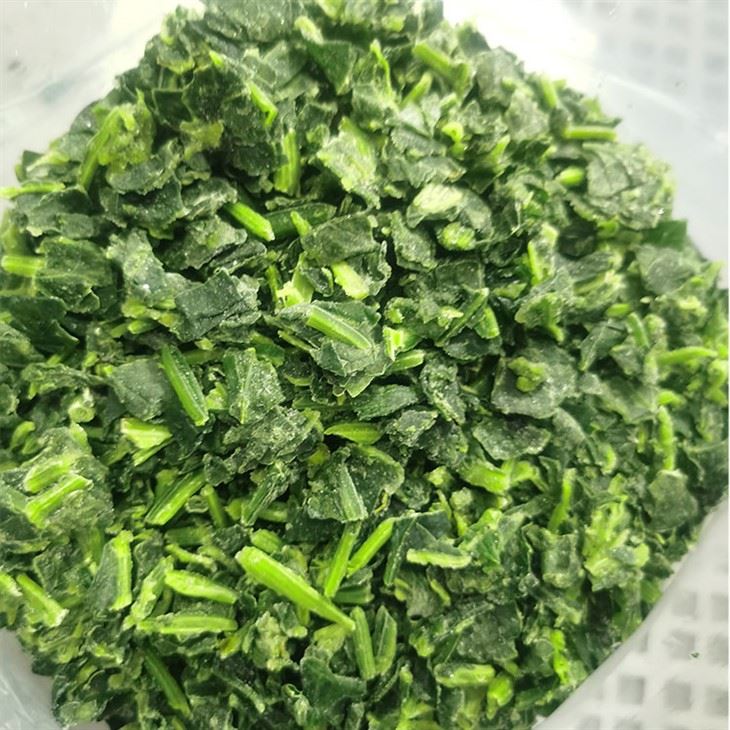
Frozen chopped spinach pieces.
The cut dimensions on a specification should be treated as a range and checked against the actual recipe. GreenLand-food discusses common chopped sizes such as 5 × 5 mm and 10 × 10 mm and longer cut-leaf options on its current product pages. Those options are starting points, not a promise that any one cut is ideal for every customer. A premium visible-leaf dish may benefit from larger leaf pieces and strict stem selection. A blended green sauce may prioritize fine distribution, consistent color, and a controlled drained yield.
Specify leaf-to-stem balance for a finished recipe
The most useful request is a description of the finished bite. "No stems" may be unrealistic or unnecessary when tender petioles naturally accompany the leaves. "No long or tough stems after cooking" is easier to connect to an inspection method. State the maximum objectionable stem length or thickness if it matters, and agree on how a cooked sample will be assessed. A photo reference can help, but it should accompany a written rule and representative lot sampling.
Begin with the application. A spinach and cheese filling needs an even green distribution without long fibers or excess water. A retail chopped spinach pack needs a predictable appearance after consumers cook it. A soup producer may tolerate more small stems while caring more about dosing and consistency. A foodservice side dish may prefer larger leaf pieces but still reject coarse basal stems. The same shipment cannot be judged fairly against all four expectations unless those differences were specified before purchase.
Cut size and stem balance interact. Finer cutting can reduce the sensory impact of a tender stem, but it can also release more juice and change the appearance of leafy pieces. Larger leaf cuts keep their identity on the plate but make any thick petiole more obvious. If a buyer switches from 10 mm chop to cut leaf, the old stem tolerance may no longer produce the same eating quality. Recheck a sample after the change, especially when the recipe is delicate or the ingredient is a visible part of the dish.

Specify leaf-to-stem balance for a finished recipe visual explanation.
Packing and handling can change the assessment as well. Loose IQF product is convenient for small batch dosing when pieces remain free flowing. Blocks may suit larger kettles but require a different thawing or direct-cook plan. A pack with excessive frost, broken pieces, or thaw and refreeze evidence should be investigated under the agreed quality procedure. Those conditions can change moisture and appearance, making a stem judgment less reliable. Keep the product cold and follow its instructions while sampling.
For a commercial order, ask the supplier to confirm spinach form, cut dimensions, expected leaf-to-stem grade, blanching and cooking status, packing, quantity, destination, and the documents required by the market. Tie the approved sample to a written specification and lot identification. Where a product is intended for further cooking, treat it as such; a frozen ingredient's appearance does not establish ready-to-eat status. This kind of agreement gives purchasing, quality, and recipe teams one standard to apply when subsequent lots arrive.
Assess a commercial frozen spinach sample
Take more than one portion from a representative sample and examine the frozen product before heating. Look for the stated form, piece separation, excessive surface ice, unexpected foreign material, and conspicuous coarse stems. Photograph the sample at a useful scale with a ruler or caliper if cut dimensions matter. Record the lot and pack condition. A close-up can document a concern, but it does not replace a representative review of the pack.
Next, prepare the spinach using the actual recipe. For a filling, heat and drain it as the production line will. For a sauce, mix it with the usual equipment and ingredients. For a visible side, cook it for the expected time and plate the intended portion. Assess the spinach after it reaches the state in which customers will eat it. Stem texture, green appearance, released water, flavor, and portion uniformity can all change between frozen inspection and finished food.
For preparation details, see Can Spinach Be Frozen?.
Use a simple acceptance record. Note whether stems are visible, whether any piece remains fibrous, the approximate size of outliers, and whether the issue repeats across portions. Record the drained yield where water control matters. If a sample fails, describe the exact defect and its effect on the dish. "Too many stems" is vague; "several 30 mm coarse petioles remain chewy in a 100 g cooked filling sample" tells the supplier what must be changed. Agree on the sampling and test procedure before it becomes a shipment dispute.
Compare samples by application performance and total usable yield, not purchase price per carton alone. A cheaper pack with more coarse material may increase trimming, draining, or rework. A premium grade with very little stem may cost more than a hearty soup requires. Our role as a supplier is to confirm what the buyer's product actually needs, then align the cut, grade, pack, and quality checks with that use. The best result is a repeatable recipe, not an abstract claim that one spinach form is universally superior.
When the order moves beyond sampling, confirm storage and cold-chain expectations, batch identification, the agreed inspection points, and the documents needed for the destination. Review any private-label artwork or ingredient declaration against the actual offered form. A change in crop, raw material maturity, cut size, or blanching condition may justify a new cooking comparison before the next program is approved. The tender stem you might leave on a baby spinach leaf at home becomes a measurable texture decision in a frozen product specification.
For preparation details, see Can You Freeze Spinach Leaves?.

Assess a commercial frozen spinach sample visual explanation.
A practical receiving and kitchen trial
To make a stem decision repeatable, take a sample from several parts of the delivered lot, not only the top handful. In fresh bunches, compare the longest and shortest petioles. In frozen chopped spinach, thaw or cook a representative pack according to the intended process, then spread a measured serving on a light-colored plate. Look for long stem fragments, dense clusters, and the leaf-to-stem balance that the recipe actually shows. A single attractive photograph from one sample cannot establish how a full order will portion.
Taste the product at three points if the process allows it: immediately after cooking, in the finished recipe, and after the expected service hold. A stem piece that seems fine in a hot pan can become more apparent in a cooled filling. Conversely, a small stem that looks obvious in an uncooked frozen sample can disappear into a sauce without affecting the eating experience. Use the same cut size, seasoning, and heating method planned for production so the trial answers the buying question.
Define an acceptance limit in language that can be checked. "No stems" is often unrealistic for a leaf product and may remove useful edible material without improving the dish. A better standard might address maximum visible stem length, absence of tough basal pieces, even distribution, and acceptable bite after a specified cook. The exact limit depends on whether the output is a leafy side, a chopped filling, or a fine puree. Write down the version that the kitchen approved and keep a reference sample or photograph for later comparisons.
For a ravioli or pastry filling, squeeze the cooked chopped spinach using the method the production line will use, then mix it with the actual binder. Long fibers can interfere with even filling and cutting, while excessive squeezing can change yield. For soup, watch whether stem pieces sink or remain visible after a hold. For a leaf-forward side dish, assess the contrast between leaves and petioles on the plate. These are three distinct applications, and the most tender product for one may be needlessly expensive or too fine for another.
Questions buyers should settle before approving a pack

Frozen chopped spinach and stem pieces beside a measuring caliper.
Ask what spinach form is supplied: whole leaf, cut leaf, chopped, block frozen, or loose IQF. The form tells you how much post-receipt trimming is possible and how evenly it can be portioned. Ask about the cut size and what happens to petioles during preparation. A product description may mention "chopped spinach" without defining the distribution of pieces. A written size or sensory standard helps both supplier and buyer assess the same result.
Check the pack's handling and blanching information. Many frozen spinach products are blanched before freezing, so their texture is not the same as raw fresh leaves put directly into a pan. That treatment can make tender stem pieces acceptable in a cooked dish, but it cannot transform a very coarse basal fragment into a delicate leaf. The purchase specification should address physical pieces and finished bite rather than assuming a preparation step guarantees tenderness.
Request enough samples to test the line's real portion size. A spoonful can miss a few long fragments that become obvious when hundreds of servings are prepared. In a foodservice operation, have the cook who will use the ingredient prepare it; a buyer's desk inspection cannot replace a kitchen trial. Record cooking method, pack size, drained weight if relevant, and any trimming or sorting labor. This makes a later lot comparison much more useful than saying simply that one sample looked "stemmy."
If a visible stem fraction is desirable for a rustic appearance, say so. Stems are not automatically waste. They can contribute structure in cooked spinach, and preserving edible parts can support yield. The point is consistency and suitability: a supplier should know whether the customer wants a leafy, recognizable texture or an almost uniform chopped green ingredient. Requiring a single stem standard for all spinach products would hide those different needs.
Finally, separate a stem complaint from a moisture complaint. Spinach releases considerable water as it thaws and cooks. A filling may be loose because it was not drained to the intended yield, even when its stems are tender. Conversely, a well-drained pack can still contain a few coarse pieces. Test and report the issue precisely. The kitchen can adjust draining; a supplier may need to adjust grading or cutting. That distinction makes corrective action faster and fairer.
Source frozen spinach with GreenLand-food
GreenLand-food is a professional frozen spinach supplier and manufacturer in China, providing factory-direct wholesale supply for importers, food manufacturers, foodservice distributors, and private-label programs.
Send the product form, specification, packing, quantity, application, destination, private-label needs, and requested documents.