


Frozen Mustard Greens in Soup and Noodle Bases: Leaf-Stem Balance
Oct 19, 2026
Leave a message

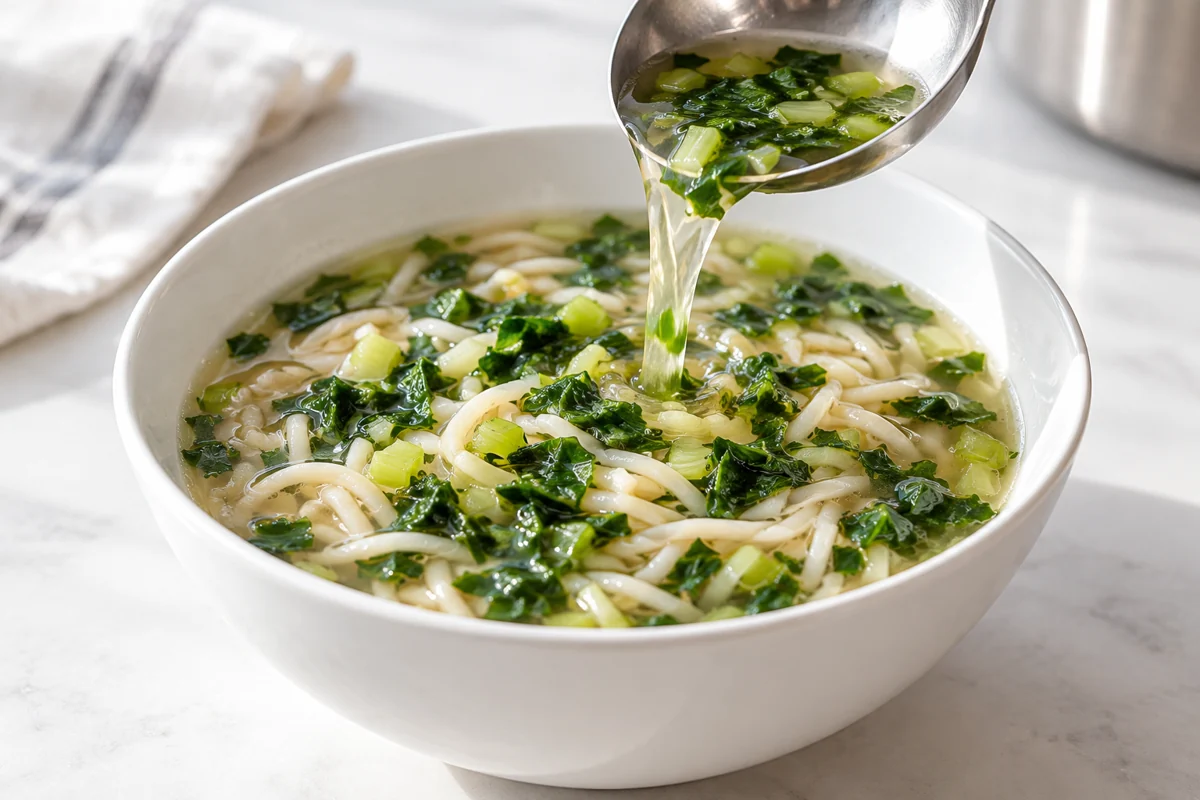
A supplier photograph can show the cut material, but it cannot tell you how every portion will eat. Leaf pieces may fold together while stems remain individually visible, and frozen greens can add liquid as they are prepared. We help buyers turn those observations into questions about the offered mustard grade, sample preparation and order specification. The following method is intended for recipe development and procurement discussion; it does not claim a measured GreenLand yield, a completed soup trial or a validated cooking process.
Set the leaf and stem target for the finished bowl
Begin with the bowl the customer will receive. In a clear broth, even a few conspicuous pale stem pieces can stand out against delicate leaf fragments. In a substantial soup with noodles, mushrooms or other vegetables, the same pieces may contribute a welcome bite. A smooth base has a different target again, because fibers and uneven fragments remain noticeable after blending. Describe the intended leaf coverage, stem visibility and mouthfeel before selecting a ratio. Otherwise, the purchasing discussion can settle on a number without establishing what that number is meant to achieve.
Leaf and stem each contribute to the eating experience. The blade gives visible green material and folds readily when cooked. The petiole provides structure, and a mature or coarse piece can remain chewy after nearby leaf tissue has softened. Tender stems can be useful edible material. The University of Maryland's guidance on leafy greens distinguishes softer leaves from tougher stems and discusses preparation according to their texture. For a commercial frozen cut, the practical question is whether the retained pieces suit the required bowl after its full preparation.
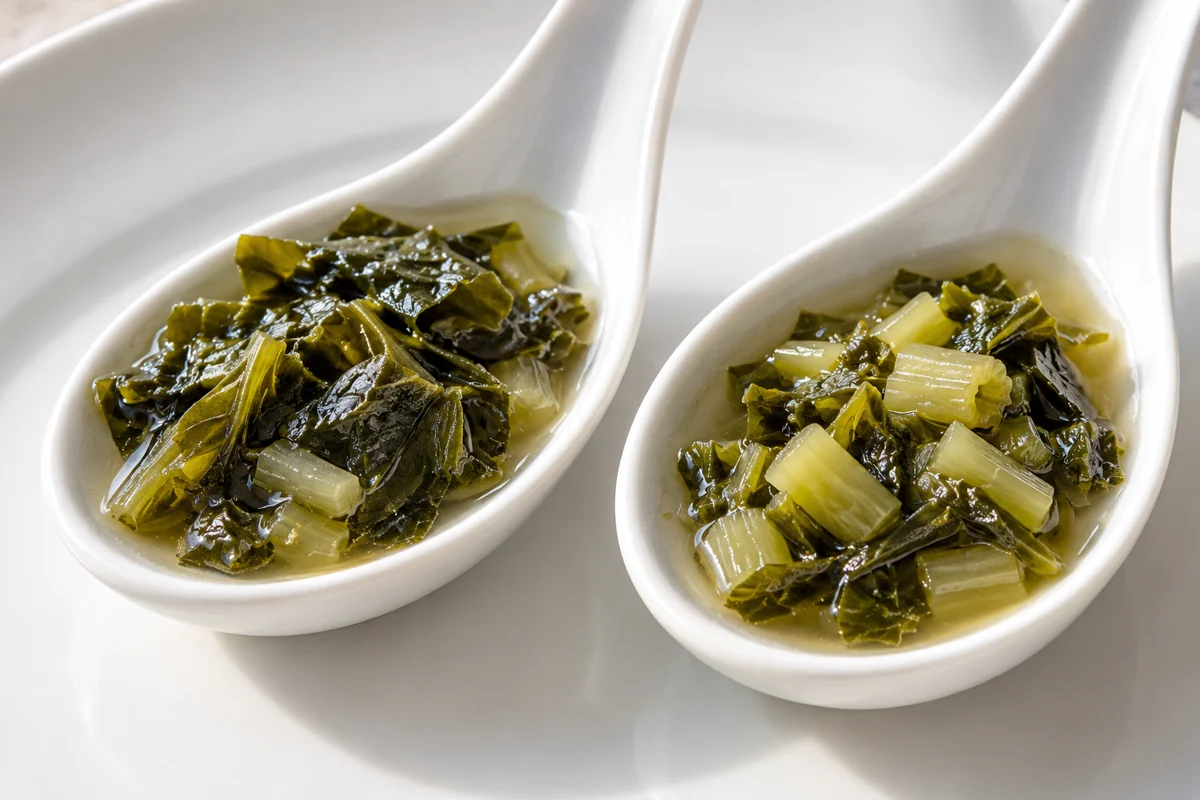
Illustrative leaf-rich and more stem-visible spoonfuls; no measured ratio is implied.
Decide whether the greens are a leading ingredient or a small addition to a concentrated base. If a base is diluted before service, assess the final concentration. A sample that looks generously leafy in the development pan may become sparse after the prescribed water is added. Conversely, adding enough greens to improve appearance can change flavor or portioning. Write down the intended dilution and serving weight with the reference image. That gives the supplier and the kitchen the same end point to discuss.
Keep plain frozen mustard greens separate from pickled, fermented or salted mustard ingredients. Current noodle recipes use these forms in quite different ways, sometimes treating the preserved leaves as a side or seasoning. Their salt, acidity and flavor cannot be assumed for plain frozen cut greens. If the finished soup requires a preserved mustard character, specify that ingredient directly and review its composition. A generic mustard name is not enough to establish whether the material should behave as a vegetable component or as a concentrated flavoring.
At GreenLand-food, the offered cut and its preparation state need confirmation for the order. Start with a sample that matches the actual product description, then decide whether it meets the visual and sensory target. If the kitchen wants larger leaf pieces, a finer cut or less coarse petiole than the sample provides, make that request explicit. A change in grade should be represented by another suitable sample. It is easier to make that decision before production than to compensate for an unsuitable cut with extra cooking in every batch.
Define what the leaf-to-stem ratio measures
A leaf-to-stem ratio is useful only when both parties understand its basis. A proportion judged from the top of a frozen bag is not equivalent to a proportion separated and weighed after preparation. Leaf pieces occupy space differently from compact petiole pieces, and their appearance changes as they thaw or cook. A photograph may show a leafy surface while concealing the mixture underneath. Choose a method that can be repeated on representative material and describe it with the agreed target, rather than treating the ratio as a self-explanatory number.
If a mass-based ratio is needed, define which material is assigned to leaf and which to stem. A leaf fragment can carry part of its central rib, and very fine cutting may make complete separation impractical. Decide how to treat those mixed pieces and any material that cannot be classified reliably. Record the condition in which the sample is assessed, the preparation method and whether liquid is retained or drained. Those choices affect the reported result. A ratio without the method can create apparent disagreements even when two people examine the same product.
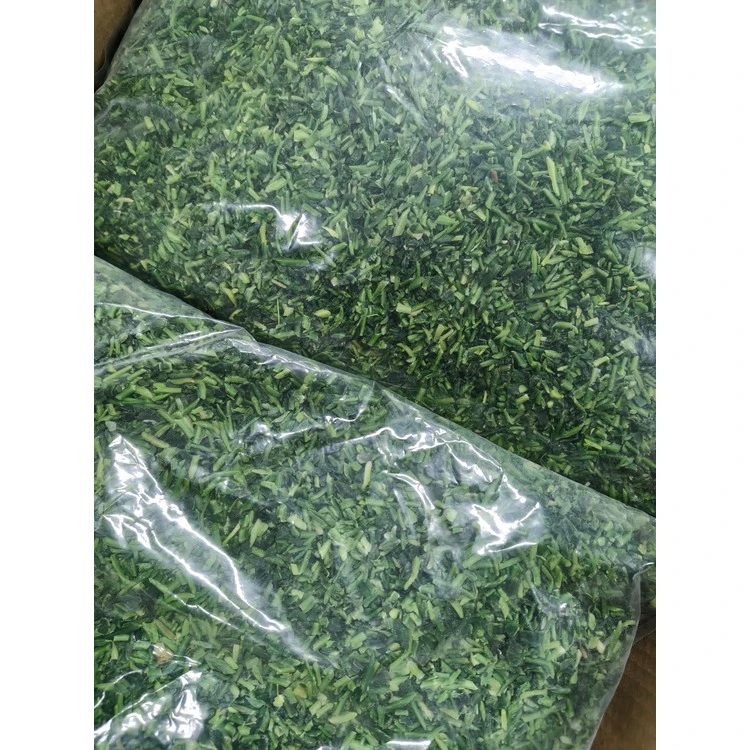
Cut mustard greens pictured in the GreenLand-food product listing; confirm the exact specification for your order.
For some soups, a cooked sensory specification may be more useful than laborious fraction separation. The buyer can define acceptable visible petiole size, absence of objectionable coarse fibers and a representative finished appearance. That does not prevent the supplier from using its own process controls, but it ties purchase acceptance to the actual concern. Choose the simplest assessment that reliably distinguishes acceptable material from a problem for the recipe. If a numerical limit is commercially necessary, establish it from suitable sample work rather than borrowing a value from an unrelated vegetable.
Take samples from more than one position according to the agreed plan. Loose pieces may distribute differently through a pack, and compact product can present a different surface from its interior. Mix or subdivide the material in a way that preserves the intended assessment and follows the product's handling requirements. A single spoonful selected for its attractive leaf content is weak evidence of the mixture. Retain the lot identity and sampling notes so that the quality team can interpret the result and reproduce the method when another delivery arrives.
The real GreenLand product photograph beside this discussion shows cut mustard material in a bag. It helps establish which commercial form is being discussed, while a representative sample supplies the material needed for assessment. Neither the image nor a common product name establishes a botanical test, a fixed ratio or a validated process. Record any unmeasured parameter as an item to confirm. This keeps the buying specification connected to evidence and prevents a promising photograph from becoming an unintended numerical promise.
Match cut size to ladling and noodle texture
Cut length changes how mustard greens travel through a soup and arrive in a portion. Larger leaf pieces can fold into clusters or drape over noodles, creating a more visible vegetable component. A fine cut tends to distribute as smaller green fragments, which may suit a base that is stirred and portioned repeatedly. Stem pieces need their own attention because a short thick petiole can feel quite different from a similarly sized soft leaf. Discuss both the overall cut and the objectionable outliers that matter to the serving experience.
Use the actual ladle, scoop or filling outlet during development. A sample poured neatly from a beaker may behave differently when a cook serves it with a shallow ladle. Examine whether leaf clusters remain behind, whether stems collect in particular servings and whether the utensil lifts the intended amount of solids with the broth. These are observations to make on the proposed formulation. They cannot be guaranteed from a nominal cut size alone because the concentration, other ingredients and mixing method also influence what enters each portion.
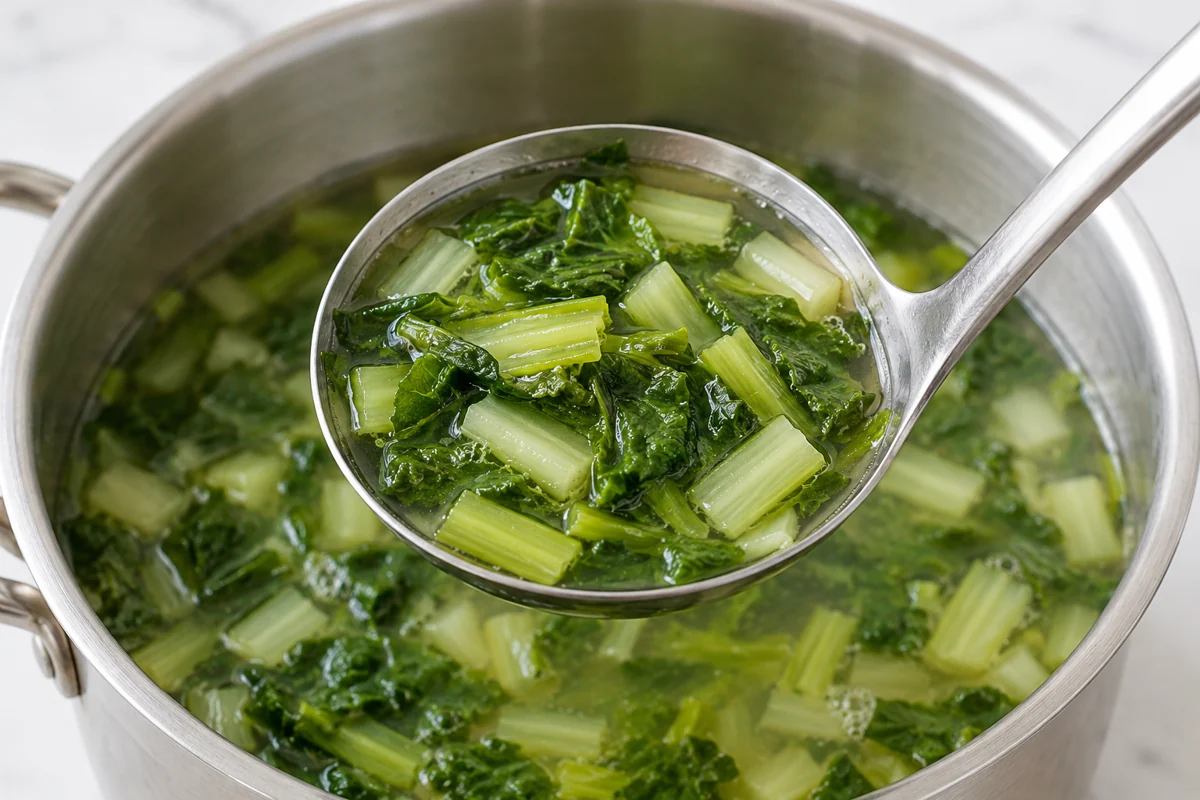
Illustrative ladle assessment. Confirm the offered cut and actual serving behavior with a sample.
Noodles can make distribution harder to judge. Long strands may catch leafy pieces and create clumps, while a fine chopped green may stay in the liquid as noodles are lifted separately. Decide whether noodles are cooked in the base, added during final assembly or portioned into the bowl first. Keep that sequence constant while comparing mustard samples. If the noodle format changes, revisit the serving check. The approved leaf-stem balance should describe the food the customer eats, including the way its components are assembled.
A smaller cut can reduce the prominence of a tender stem, but cutting does not reliably eliminate a coarse fiber. Prolonged cooking may soften some pieces while making the leaf fraction less distinct. If an outlier repeatedly causes an unpleasant bite, discuss grading or preparation with the supplier rather than assuming the kitchen can solve it by changing only the timer. The target should state the finished texture and the method used to assess it. That gives a proposed cut adjustment a clear purpose and a way to be evaluated.
Consider the intended visual identity as well as ease of dosing. A soup sold around visible mustard greens may lose character if the leaf is reduced to very small flecks. A concentrated base may benefit from that same fine distribution. Ask the recipe team to retain photographs of acceptable portions at the actual serving scale, including the amount of broth and noodles. Use those images alongside written criteria. They can make the desired result easier to communicate while leaving measurable dimensions and sensory acceptance to the agreed sample method.
Account for the water entering the soup
Frozen greens contribute both vegetable material and water to a formulation. Some liquid may be released during preparation, and any water used for thawing, heating or rinsing can complicate the accounting further. In a soup, retaining that liquid may be entirely appropriate. In another process, the greens may be prepared separately and drained before entering a concentrated base. Decide which route the product actually uses before evaluating yield. The same frozen ingredient can appear to give different results when one team retains its liquid and another discards it.
Record the frozen input, any added liquid, the prepared greens and the liquid that is kept or removed. Where practical, account for material left in packaging and on equipment. A difference between starting and finishing mass can also include evaporation or handling losses, so it should not automatically be labeled water released by the greens. The aim is a usable recipe balance that another operator can repeat. It does not require claiming that a simple kitchen drain test measures dry solids or an intrinsic moisture property of every lot.
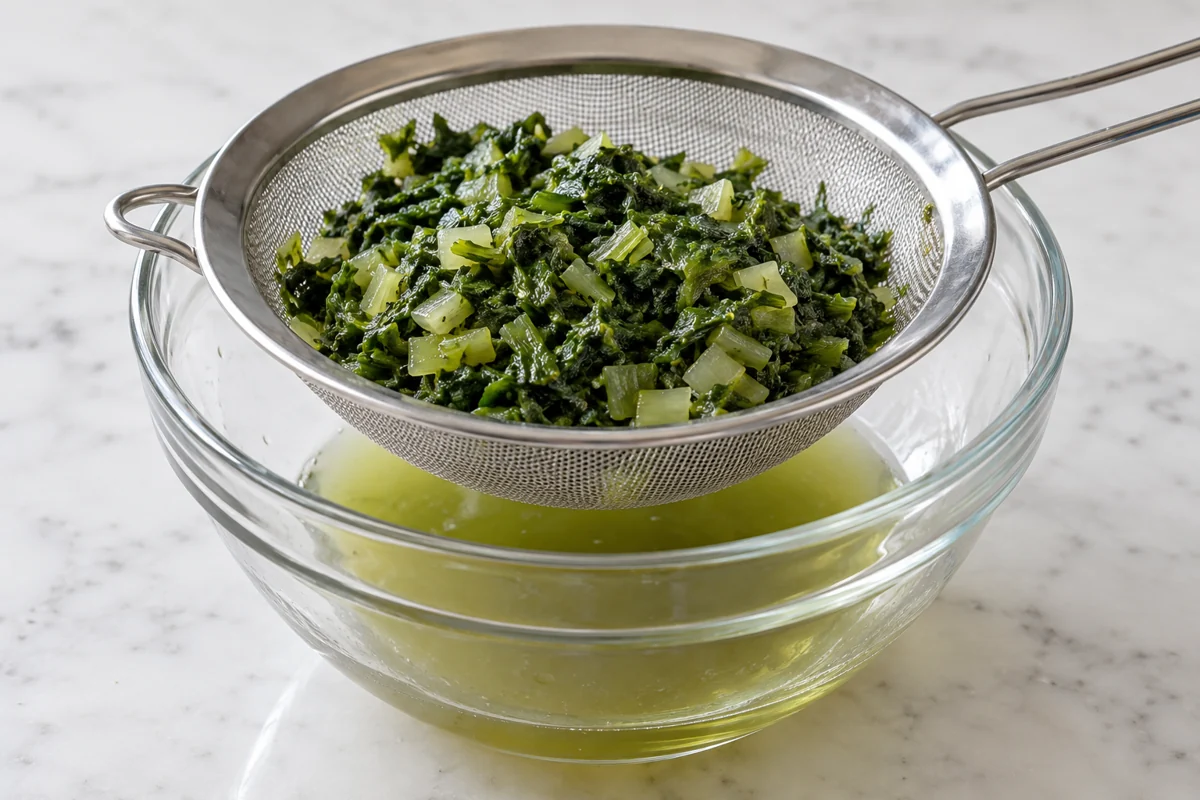
An illustrative draining observation when the recipe uses a defined draining step.
If draining is part of the planned process, define the endpoint. A brief gravity drain, a longer drain and active pressing produce different prepared ingredients. Use the same equipment and method for comparisons, then check whether the resulting solids give the required broth concentration and texture. Excessive pressing may change the leaf structure and usable yield. It may also remove liquid that the recipe could have retained. Select the method for the desired soup, and avoid turning a filling-preparation habit into an unnecessary step in a broth application.
For a base that is diluted later, include all intended additions in the final evaluation. A small amount of unexpected liquid can matter more in a concentrated preparation than in a finished soup with a large water fraction. Taste and inspect the food after the specified dilution, not only at the concentrate stage. Record the concentration and ingredient weights, and adjust one factor at a time. This helps distinguish a mustard dosage issue from a broth-strength issue when the development team compares two samples.
Use cost at the relevant production stage. If the operation buys a frozen mass and uses a drained prepared mass, calculate usable ingredient cost under that defined method. If the whole contents enter a soup, compare the number of acceptable finished portions produced at the required concentration. A high retained mass is not automatically valuable if it simply dilutes the soup beyond its target. Equally, liquid retained in a suitable broth is not automatically waste. The formulation determines which measure tells the purchasing team something useful.
Place the greens in the actual heating sequence
Fresh recipes often separate stems and leaves or add them at different stages. That can be sensible when the cook is handling intact fresh material. A supplied mixed frozen cut arrives with those fractions already combined, so the production method must work with the actual mixture. Confirm the product's preparation state and instructions before choosing where it enters the soup. The development question is how to achieve the required leaf and stem texture within an appropriate process for that ingredient and the finished food.
Do not assume that a frozen pack is fully cooked or ready to eat because its leaves look wilted. The supplier's specification and handling instructions must establish its intended further use. Blanching, when part of the process, serves purposes that do not automatically establish the final cooking requirement for the soup. A recipe developer should coordinate sensory work with the responsible food-safety team so that an attractive texture is assessed within the approved preparation route. Visual color and softness alone cannot verify that route.
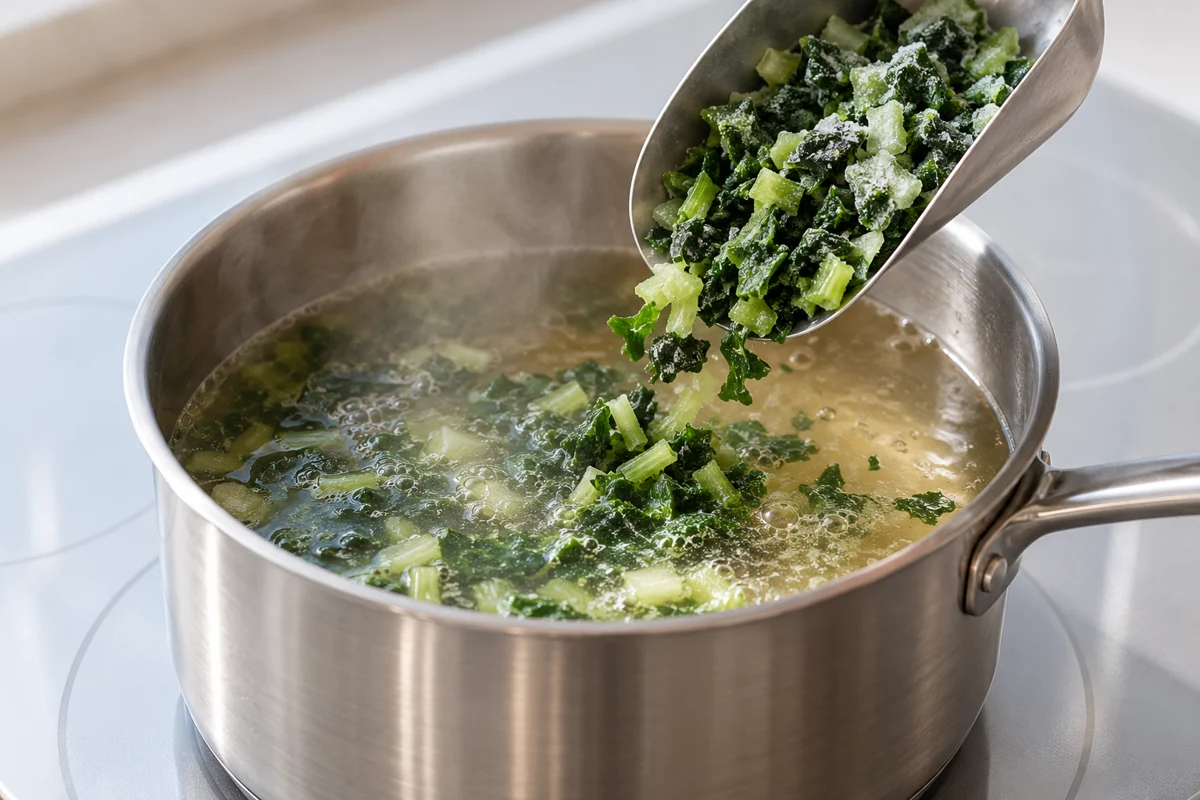
Illustrative addition of a mixed leaf-and-stem cut; the actual cooking route requires product-specific confirmation.
Test the stage of addition while keeping the rest of the recipe controlled. Earlier addition exposes the greens to more of the soup's heating and handling; later addition changes the time available for the ingredient to reach the required state. Either choice needs evaluation with the offered cut and equipment. Record the sequence, batch size and relevant process conditions rather than prescribing a universal number of minutes. Household noodle recipes provide useful ideas, but their small pans and fresh ingredients are not validated instructions for a commercial frozen product.
Include the intended hold or reheat in the quality assessment. A leaf that looks distinct immediately after preparation may become softer during later service, while stem chew can remain prominent. The buyer should define the actual route with its responsible process team and examine the product at the point customers encounter it. Keep observations about texture and flavor separate from the records used to establish safe handling. A favorable taste after a hold does not confirm the adequacy of the process controls.
Avoid compensating for one coarse fraction by repeatedly extending the cook for the entire mixture. If the leaf target is lost before objectionable stems become acceptable, the grade may need to change. That is a useful result from development: it tells purchasing what to ask for. Record the failure with representative pieces and the actual preparation method. A clear explanation that stems remain fibrous under the approved route is more actionable than a general complaint that the soup needs better greens.
Check the first and last portions of a trial
A well-mixed development bowl does not establish how a full batch will portion. Plan an application trial that includes serving from the actual vessel and through the expected sequence. Observe portions near the start, middle and end, using the normal utensil and mixing practice. The exact number of observations should follow the purpose and scale of the trial. This is a practical distribution check; a separate statistically defined plan is needed if the result is to serve as formal lot acceptance evidence.
Keep each observed portion identifiable in the record without changing its preparation. Photograph it at a comparable angle and light level, note the serving mass where that is relevant, and describe visible leaf coverage and petiole concentration. Taste only after the product has received its required preparation. Record whether the greens remain evenly dispersed, whether a late portion contains more stems, and whether noodle handling leaves green material behind. These observations help explain what the kitchen must control during ordinary service.
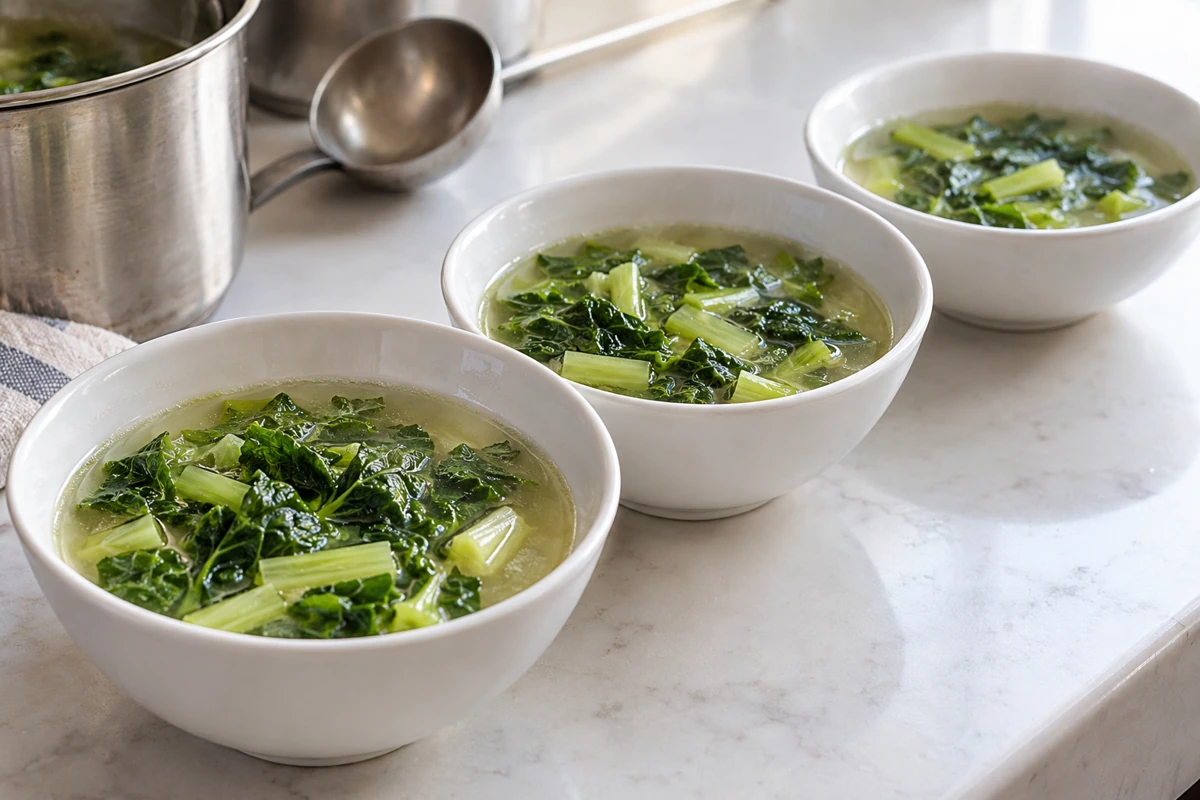
Illustrative portion comparison; these bowls are not measured trial results.
When portions differ, examine the cause before changing the supplier specification. The mixture may need a different approved stirring practice, the serving utensil may select solids unevenly, or the product cut may be poorly matched to the vessel. Change one factor at a time in a repeat trial. If a new cut improves distribution, preserve the revised sample and method details. If mixing solves the problem without changing the ingredient, make the operating instruction clear enough that the improvement can be repeated by another cook.
Compare more than one representative ingredient lot when the program's scale and risk justify it. Natural material varies, and a single development sample may not describe the range the supplier can reliably provide. Agree how the supplier will communicate changes that could affect the approved soup. Those could include a different cut, a change in raw-material condition or another preparation state. The purpose is to understand the workable range and keep subsequent deliveries within it, rather than expecting every leaf fragment to look identical.
Keep a short decision record after the trial. State the recipe version, ingredient lot, preparation route, portion observations and the outcome that follows: suitable as offered, suitable with an agreed adjustment, or unsuitable for this application. Include unresolved questions rather than hiding them behind an overall favorable impression. A buyer can then approve the appropriate next step with the supplier. The same record gives production and quality staff a reference when the commercial shipment arrives and the first full batch is prepared.
Approve a specification the kitchen can repeat
The final specification should connect the offered frozen mustard greens to the approved soup target. Confirm ingredient identity, commercial form, cut description, preparation state and the leaf-stem assessment method. Add the accepted cooked appearance and texture where those are critical to the application. Keep limits for coarse petioles, yellow material and other defects distinct from the desired amount of normal tender stem. A useful edible component and an objectionable defect should not share one vague rejection rule.
The USDA frozen leafy greens standard provides a broader quality framework covering multiple leafy types and styles. Its provisions need to be read in context, including those specifically identified for spinach. A mustard buyer should not convert a spinach stem allowance into a universal mustard ratio. Where a formal grade is requested, use the complete applicable standard and appropriate assessment arrangements. The soup specification can then add the application details that matter to the kitchen, such as acceptable bite and portion distribution after the agreed process.
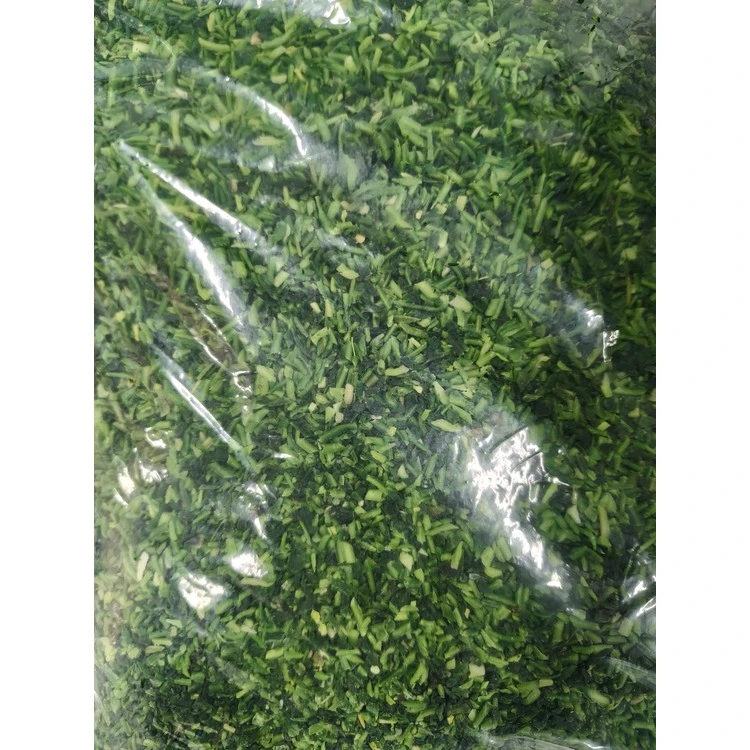
A second view of the cut mustard product. Use representative lot records alongside appearance references.
Match pack size and handling to the operation. Confirm whether staff will use complete bags or repeatedly dose partial quantities, and whether the supplied frozen form permits that practice. Include the inner pack, carton, label identity and lot code in the order discussion. Private-label directions must reflect the confirmed product and destination requirements. If a format change affects dosing or the heating sequence, review it with the kitchen before accepting the replacement as equivalent to the original trial sample.
We use the buyer's application details to clarify the offered mustard specification and the sample questions that need resolution. Send the required soup style, serving or dilution target, intended cut, acceptable stem character, packing and order quantity. Confirm destination, requested documents, storage conditions and the applicable shelf-life statement for the order. Availability and commercial terms need current confirmation. The product photographs support the form discussion; the sample, specification and lot records carry the information needed for an approval.
Keep that approval available where the ingredient is received and used. A purchasing team may negotiate the order, but the kitchen sees whether the leaf-stem balance works in the bowl. When later feedback identifies a change, relate it to the recipe version and the delivered lot. This allows the supplier and buyer to investigate the same material and method. A clear finished-bowl target, a repeatable sample assessment and an agreed cut make frozen mustard greens easier to use consistently in soup and noodle programs. Include the approved ladle and stirring instructions in the kitchen handover so a staffing change does not alter portion distribution.
Continue reading about frozen leafy ingredients
See how tender petioles and coarse stems are distinguished when a leafy ingredient is approved for cooking.
Follow a practical example of keeping prepared solids, released liquid and application performance in one trial record.
Source frozen mustard greens with GreenLand-food
GreenLand-food is a professional frozen mustard greens supplier and manufacturer in China, providing factory-direct wholesale supply. We help your purchasing team confirm the offered cut and preparation state against the intended application.
Send the product form, specification, packing, quantity, application, destination, private-label needs and requested documents, together with the cooked texture and flavor your team wants to approve.