


Preparing Red Currants: Stalk Removal, Seeds and Straining
Oct 19, 2026
Leave a message

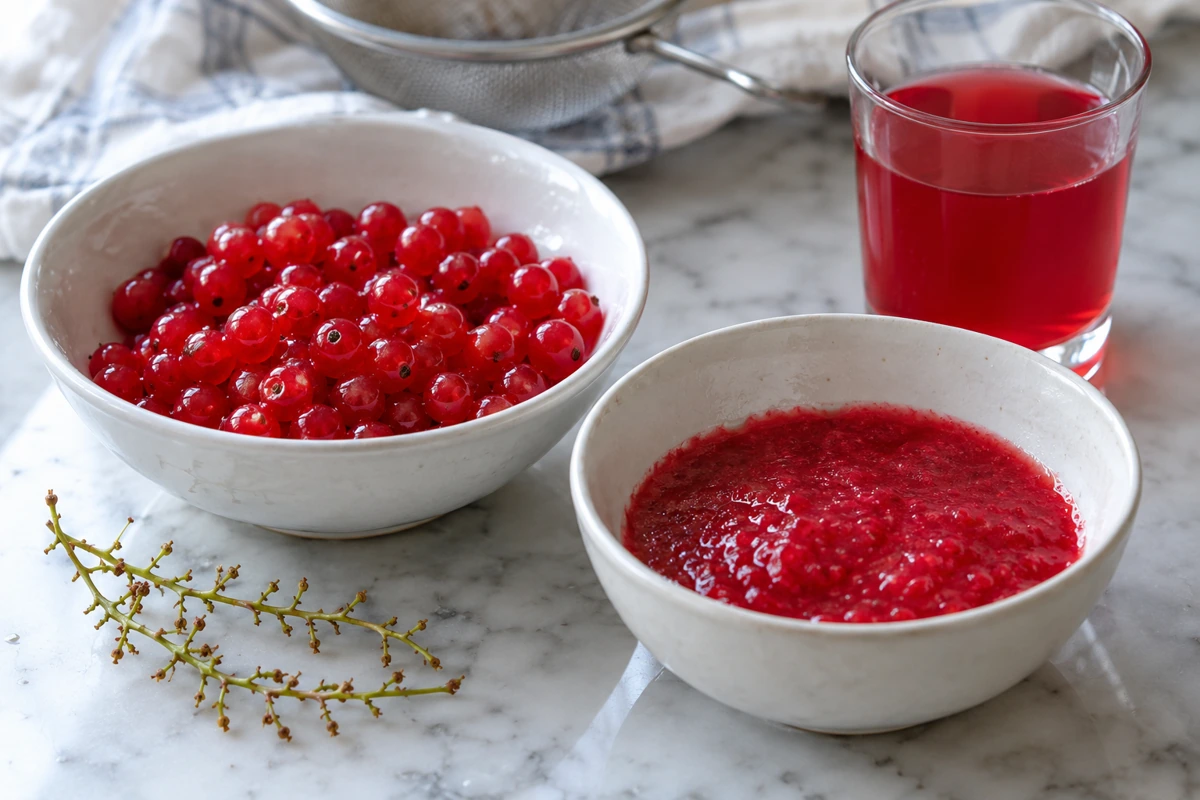
For a bakery or food manufacturer, that distinction belongs in the trial before it belongs in a purchase specification. A seedless sauce may need a different preparation from a whole-fruit cake filling even when both begin with the same frozen redcurrants. This guide follows the fruit from sorting to the desired texture, then explains what to confirm when the starting material is a supplied frozen lot.
Choose whole berries, pulp or clear juice
An intact redcurrant is a small, juicy berry containing skin and seeds. The berries grow along a slender shared stalk, commonly called a strig. When fruit is destined for a cake, topping or visible inclusion, removing that strig and the smaller attached stems is part of making a usable whole berry. The berry itself can remain recognizable. It is not necessary to turn all redcurrants into a smooth preparation simply because their seeds are noticeable.
Pulp is a different endpoint. Crushing or heating breaks the berries down and releases their juice, but the resulting mash can still contain skins and seeds. Screening it separates some of those solids from the softer material that passes through. Depending on the fruit, equipment and method, the output can be a thick puree, a looser pulp or a relatively thin fruit base. Calling every screened output "juice" conceals useful information about texture and recovery.
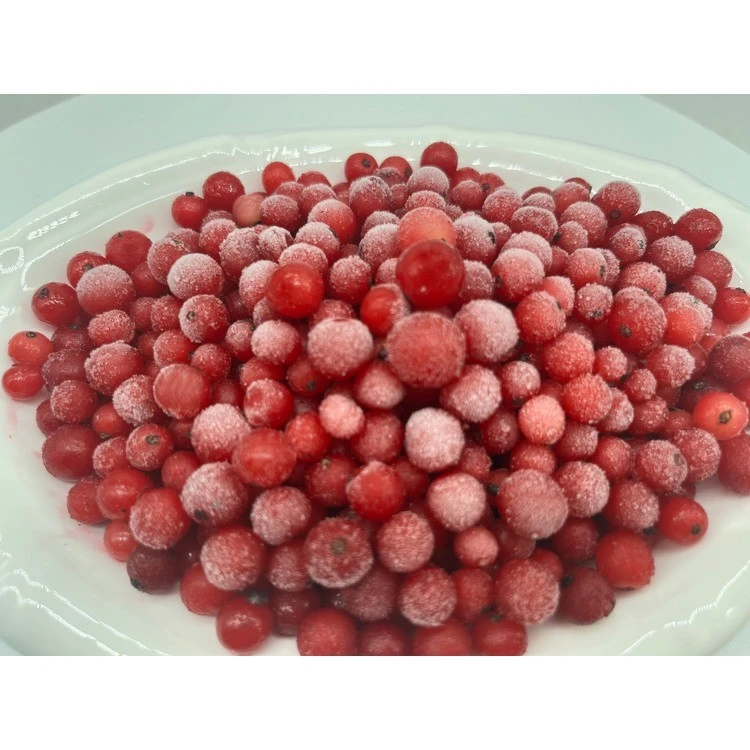
GreenLand product photograph of loose frozen redcurrants on a plate.
Clear juice asks for another separation. Here the intention is to retain much of the suspended material while letting liquid pass through an appropriate cloth or bag. Gravity drainage is slower than forceful pressing, but it serves a different appearance target. A producer who wants a translucent jelly may accept less recovery to keep that clarity. Someone making an opaque sauce may reasonably choose a more generous pulp recovery instead. Neither output is automatically the better ingredient.
Decide the endpoint in the actual food. A spoonful of plain berry mash exaggerates a seed texture that may be unobtrusive in a coarse fruit loaf. The same seed can feel quite obvious in a thin glaze over a smooth dessert. Likewise, a slightly cloudy juice might be entirely acceptable in a dark blended beverage but disappointing in a clear ruby jelly. The relevant comparison is the finished serving, with the intended thickness, fruit dose and storage time.
We treat that decision as the beginning of a useful frozen-fruit enquiry. Our bulk frozen redcurrant page gives the starting product context, but the buyer still needs to say whether the downstream operation requires recognizable berries, screened pulp or clarified juice. A photograph of whole frozen berries cannot establish the texture of a later puree. Recording the target prevents a supply discussion from drifting into assumptions about preparation that neither side has actually confirmed.
| Required output | Main preparation choice | Acceptance point |
|---|---|---|
| Whole berries | Remove stalks and unwanted material | Berry condition in the finished food |
| Screened pulp | Break down fruit and separate retained solids | Mouthfeel and usable recovery |
| Clear juice | Extract and drain through suitable cloth or bag | Clarity and measured juice yield |
Wash and sort with the final use in mind
For fresh redcurrants, look through the fruit before committing it to the batch. Remove damaged, moldy or otherwise unsuitable berries and obvious foreign material. Washing is not a way to make spoiled fruit acceptable, and cooking should not be used to rescue a lot that has already failed the receiving decision. Separating those decisions makes preparation more orderly: first decide which fruit belongs in the process, then clean and prepare that selected fruit.
Use clean equipment and potable water for a fresh-fruit preparation. A gentle rinse is more compatible with delicate ripe berries than rough agitation. The University of Rhode Island currant preparation handout is a useful simple reference for handling this fruit. A colander helps water drain away, but it is not a seed screen and should not be expected to perform both jobs. Avoid leaving a heap of wet berries to sit unnecessarily while unrelated preparation catches up.
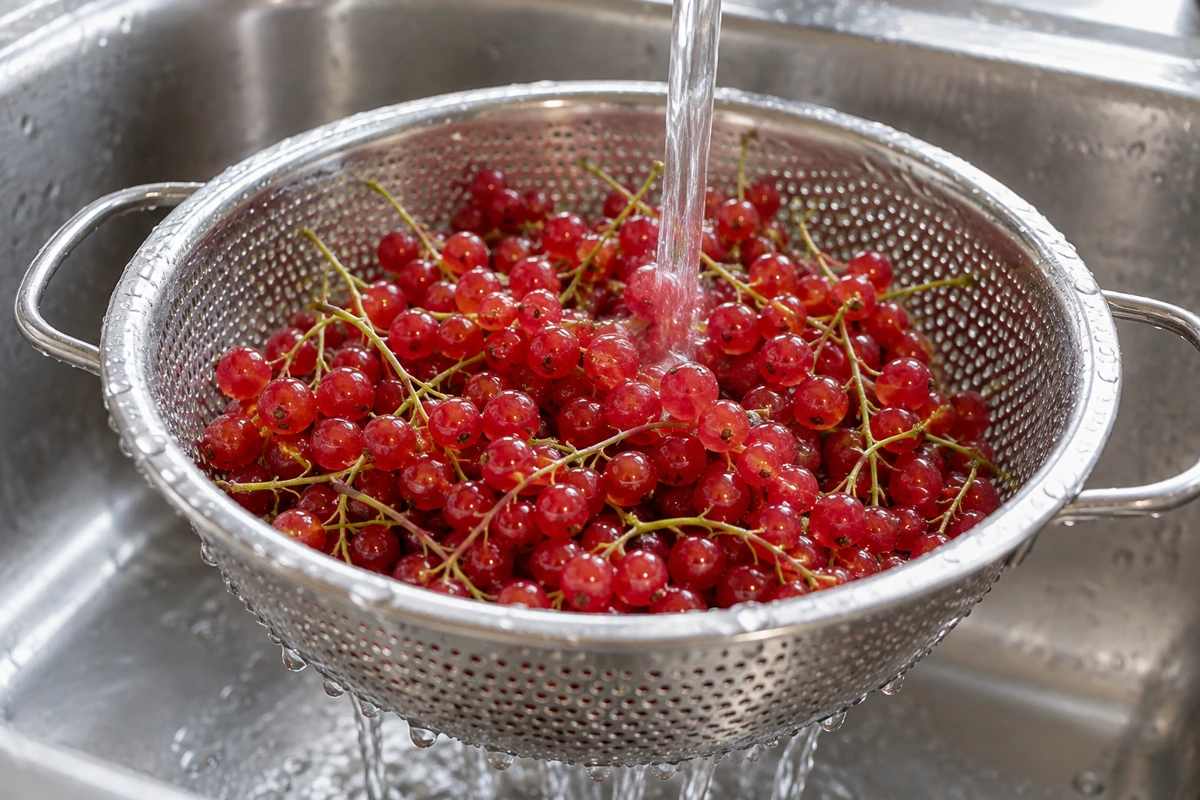
Gentle rinsing and drainage prepare fresh fruit for the next operation. Illustrative scene.
The order of rinsing and removing stalks can reflect how the fresh fruit arrives and how fragile it is. Keeping a cluster supported while gently rinsing it may make handling easier; loose berries require a different approach. The important practical questions are whether the fruit is getting clean, whether water drains effectively and whether the chosen handling is breaking berries before that is useful. There is little value in preserving an elegant sequence if the particular fruit is too ripe to tolerate it.
Surface water matters when the next operation relies on a known fruit weight or loose freezing. Let rinsed fruit drain rather than carrying an uncontrolled quantity of rinse water into the pan or batter. This does not mean drying a delicate berry until it shrivels. It means making a consistent distinction between fruit and freely draining water. In a trial, record whether the measured fruit was just rinsed, drained for a defined period or already supplied frozen and prepared.
Commercial frozen redcurrants need their own handling instructions. Do not assume that a home fresh-fruit rinse is required, sufficient or appropriate for every supplied product. Confirm the agreed preparation, intended use and any cooking requirement with the supplier, then follow the facility's food safety controls. Repeatedly thawing and rinsing a frozen lot can change its juice balance and physical condition. A buyer evaluating yield should therefore distinguish changes caused by the incoming fruit from changes caused by the trial's own handling.
Remove stalks without crushing the whole batch
For whole-berry use, work over a clean bowl or shallow tray so detached fruit has a short fall and stray stalks remain visible. Hold the top of a fresh strig and release the berries gently. Fingers are often sufficient for a small amount. A normal dinner fork can help guide the berries off the stem, but the motion should follow the strig rather than grind through a pile of fruit. Pressure that is harmless to a firm cluster may crush a very ripe one.
A fork is a convenience, not a guarantee of complete stem removal. Some small pieces can stay attached or drop among the berries, particularly when a strig breaks. Inspect the collected fruit afterward and remove what the first pass missed. Looking only at the emptied main stalk gives an incomplete picture. For a visible bakery inclusion, a few seconds spent checking a shallow layer is more useful than assuming that the tool has done every part of the preparation.

Guide berries off the strig gently, then inspect the collected fruit for remaining stalk pieces. Illustrative scene.
The Royal Horticultural Society redcurrant guide describes the fruit as growing in strigs and helps explain why whole clusters are a familiar harvest form. That harvest form should not be confused with the desired ingredient form. Decorative clusters can be attractive in a serving photograph; a loose-berry cake mixture has a different requirement. If a recipe calls for whole berries, establish whether it means intact individual berries or a cluster intended only as presentation.
Frozen berries also change this operation. Fruit that arrives loose and destemmed should be checked against the agreed preparation rather than subjected to unnecessary thawing just to repeat work already done. Fruit frozen on strigs may need a different process. Do not infer the condition of the entire lot from the easiest handful to separate. Examine a representative portion, and distinguish loose small stems from fruit that remains attached to larger stalks. These observations affect handling time as well as appearance.
Some juice-extraction recipes deliberately keep stalks during the initial cooking because the solids will later be removed. For example, Doddington Hall's redcurrant jelly recipe uses that approach within its own method. It is an exception tied to a filtered endpoint, not a general reason to leave stalks in sauce or baked fruit. If the next step only uses a coarse sieve, test what actually passes through. A planned later separation must be capable of achieving the ingredient condition the finished food requires.
- Hold a fresh strig over a clean shallow bowl.
- Release the berries gently with fingers or a fork guided along the stalk.
- Inspect the collected fruit for remaining stalk pieces.
- Move the prepared berries promptly into the intended recipe or packing step.
Decide how much seed texture the food can carry
Removing the stalk leaves the seeds inside the berry. Redcurrants do not have one large stone that can be removed like a cherry pit, and trying to pick seeds out of individual berries is not a practical route to a smooth commercial ingredient. The useful choice is usually between retaining whole fruit or breaking it down and separating unwanted solids. That choice affects appearance, juice release and recovery as well as the sensation of seeds.
Seed tolerance depends on the product around the fruit. A thick, textured compote may carry a small amount of seed material quite comfortably. A smooth pouring sauce can make the same material feel distracting. A fine pastry glaze may reveal it both visually and on the tongue. Before specifying an absolute texture requirement, taste the fruit at the intended dose in the actual base. Otherwise a buyer may pay for a preparation step that adds no value, or omit one the final food clearly needs.
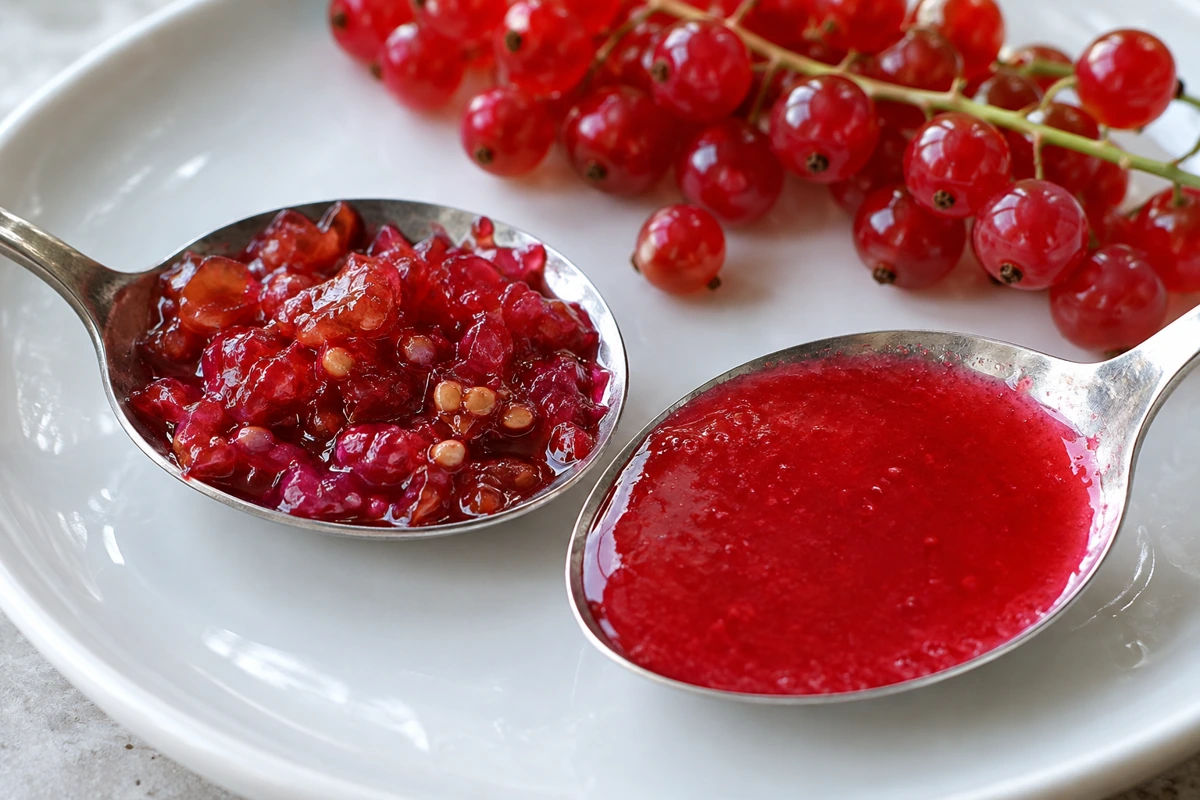
Removing stalks does not remove the small seeds within the berries. Illustrative scene.
Crushing and heating expose seeds that were previously surrounded by intact flesh. They do not make those seeds disappear. Blending can distribute solids more evenly, but a powerful blender is not interchangeable with a separation step. Breaking solids into smaller pieces changes the texture rather than proving their removal. If the specification is intended to exclude seeds, verify the final screened material instead of describing a blended product as seedless because it looks uniform from a distance.
Use sensory observations that another person can repeat. "Too seedy" is a useful first reaction, but it becomes more actionable when attached to a particular application: noticeable hard particles in a thin sauce, visible specks on a pale cheesecake or acceptable texture in a coarse filling. Compare samples at similar serving temperatures and concentrations. A cold thick base can mask particles differently from a warm thin one, so an evaluation made straight from a storage container may miss the customer's experience.
For purchasing, ask how the proposed texture is defined and checked. A description such as screened pulp should lead to a discussion of the actual process and finished acceptance, not an unsupported promise that every particle has vanished. A sample that works in one test kitchen still needs to be related to the intended production process. We would connect a request for redcurrants to the buyer's preparation route first, then confirm which supplied fruit form can be offered and which downstream operations remain the buyer's responsibility.
Screen pulp with a defined recovery target
Screening starts with fruit that can release material through the chosen screen. Fresh whole berries may need crushing or the recipe's heating step before this is efficient; thawed fruit can already be soft and wet. Use the preparation appropriate to the food being made rather than heating every sample to an arbitrary time. Keep the extracted liquid with the fruit unless the trial deliberately measures them separately. Discarding it before screening changes both the yield and the character of the recovered base.
For a small kitchen trial, a supported fine sieve over a bowl allows a clear view of the material passing through. Work in manageable portions and use a suitable spoon or spatula without forcing the mesh out of shape. Retained skins and seeds gradually cover the available surface, so an overloaded sieve can become slow even when the fruit itself is easy to process. Stable equipment matters: the bowl must support the sieve before pressure is applied, and utensils should remain within the food-contact area.
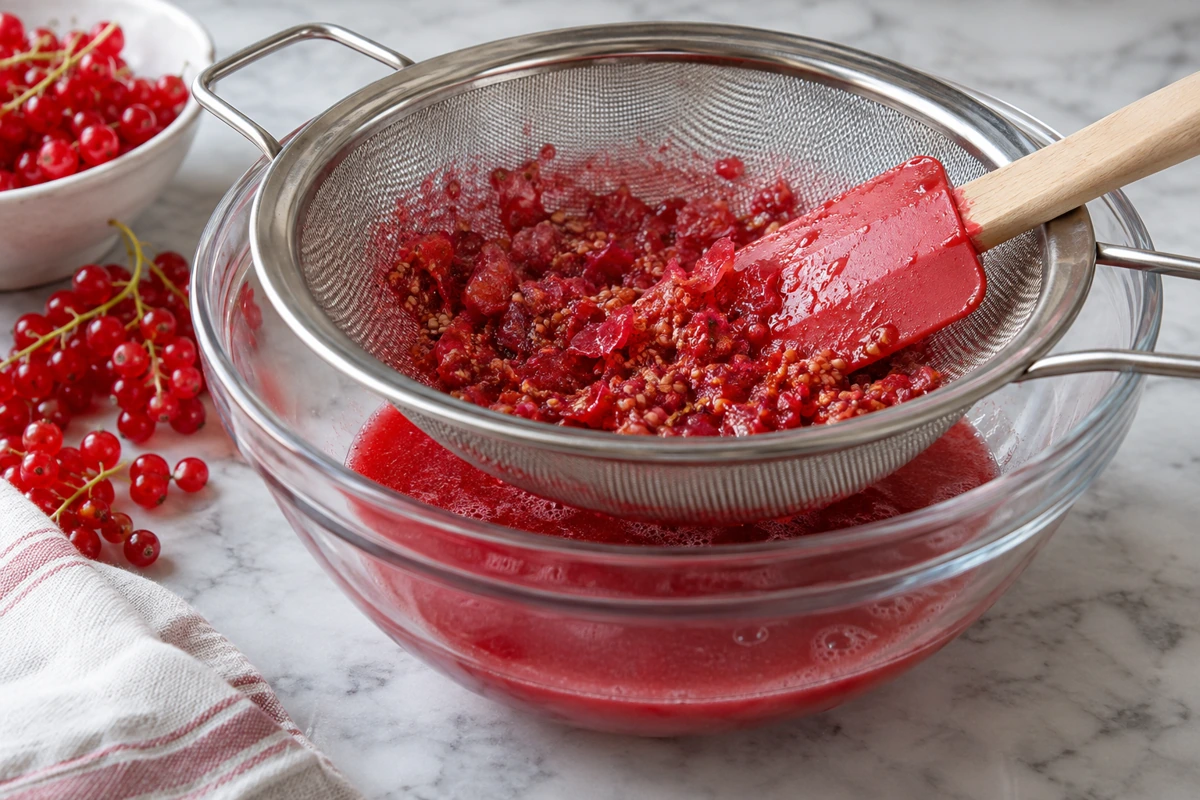
Screening separates retained skins and seeds from recovered pulp. Illustrative scene.
Mesh selection involves a tradeoff. A finer separation can produce a smoother result while retaining more material and taking longer. A more open screen may give higher recovery with a different texture. There is no single screen size that this article can assign to every redcurrant sauce, cultivar, heat treatment and production system. Choose the screen through the finished-food trial, then record enough process information to repeat the result. A named machine alone does not describe the output.
Measure recovery on a consistent basis. Weigh the prepared fruit entering the trial, the recovered pulp and the retained material, allowing separately for any water the recipe intentionally added. Keep incidental losses visible: fruit left in the pan or on the sieve is not the same as solids intentionally removed. An unexpectedly low recovery can then be investigated instead of attributed automatically to poor fruit quality. It may reflect a tighter screen, a smaller trial, extra transfer losses or a different degree of pressing.
The most useful target combines recovery with acceptance. A very high yield that produces an unpleasantly gritty sauce is not a successful result; a beautifully smooth pulp that consumes excessive fruit may also be unsuitable for the product's cost structure. Compare the tradeoff in the finished application, then choose the route deliberately. Scaling up requires another trial because a hand-pressed sieve and production screening equipment apply different forces and residence times. The kitchen test establishes direction, while the production test establishes the usable specification.
A useful way to investigate a disappointing screening trial is to keep the first pass and the material recovered by additional pressing in separate bowls. Taste them in the intended base and compare their appearance. This does not prescribe that they must remain separate in production; it shows whether extra effort is recovering desirable pulp or mainly adding texture the product does not want. If the later fraction is acceptable, the process may be leaving useful material behind. If it is not, the apparent yield improvement has little practical value.
Also look at how the recovered pulp behaves during the next transfer. A material that passes a kitchen sieve may still be too thick for the buyer's dosing arrangement, or it may separate during the holding period before use. Observe that holding stage under the intended controlled conditions. Record whether the preparation needs gentle remixing and whether remixing restores the required uniformity. Screening is not finished successfully merely because a bowl contains red pulp; the output has to remain usable through the next operation.
Let juice drain when clarity matters
Clarity asks for patience as well as separation. A jelly bag or suitable cloth retains suspended material while juice drains into a clean receiving vessel. The support needs to be stable, the bag must remain above the collected juice and the arrangement must protect the food during the recipe's extraction period. A makeshift setup that tips or lets the bag sit submerged in its own output makes both handling and the resulting separation less predictable.
When a clear jelly is the objective, gravity drainage is a recognized approach. The Colorado State University Extension jelly guidance distinguishes clear juice extraction from the cloudier result that can follow squeezing the bag. This is a quality choice with a practical consequence: pressing harder may recover more liquid, but the extra recovery can carry suspended material. The first question is therefore whether the final product values clarity enough to accept that tradeoff.

Gravity drainage favors a clear juice; squeezing changes the recovery and clarity tradeoff. Illustrative scene.
Do not use appearance alone to identify the composition of the liquid. A clear red juice is still a fruit ingredient with variable flavour and concentration; it is not automatically standardized for every jelly formula. Conversely, a cloudy extraction is not necessarily unsuitable for a sauce or other opaque food. Keep the outputs separate during development so the team can see what each route contributes. Mixing pressed juice back into gravity-drained juice removes the opportunity to assess that choice independently.
Record both the quantity and character of the extraction. Note the starting fruit form, any recipe water, the preparation before drainage and whether pressure was applied. Observe clarity in a clean glass at a consistent depth rather than comparing a thin smear with a full dark jar. Check the finished jelly or sauce as well, because dissolved ingredients and cooking can change the appearance further. These details help explain why two batches made from apparently similar berries may look different.
Extraction is only one stage of preserve making. It does not establish a safe shelf-stable process, the correct sugar proportion or a validated heat treatment. Follow an appropriate tested preservation recipe for a home product, or the validated formulation and process for a commercial one. Changing from whole berries to screened pulp or clear juice may alter the ingredient basis of that recipe. Treat the resulting formula as something to verify, rather than assuming that any red liquid from the same fruit can be substituted without consequence.
Agree the preparation of a frozen lot
A frozen redcurrant purchase should describe the starting point for this preparation, not only the fruit name. Confirm whether the offered product is loose berries, a more consolidated pack or another form, and establish the agreed treatment of stalks and foreign material. If recognizable whole fruit matters, the condition after the planned handling is particularly relevant. If everything will be screened, the buyer may care more about flavour, colour, recovery and the effort needed to reach the required texture.
Request a representative sample and run it through the actual route. For a bakery inclusion, assess berries after the intended mixing and baking steps. For a pulp, record the screen and recovered quantity. For a clear juice, use the intended extraction and drainage method. A photograph of the frozen sample is a useful starting record, but it cannot replace those outcomes. The process may reveal a limitation that is invisible while the fruit is hard, cold and packed together.
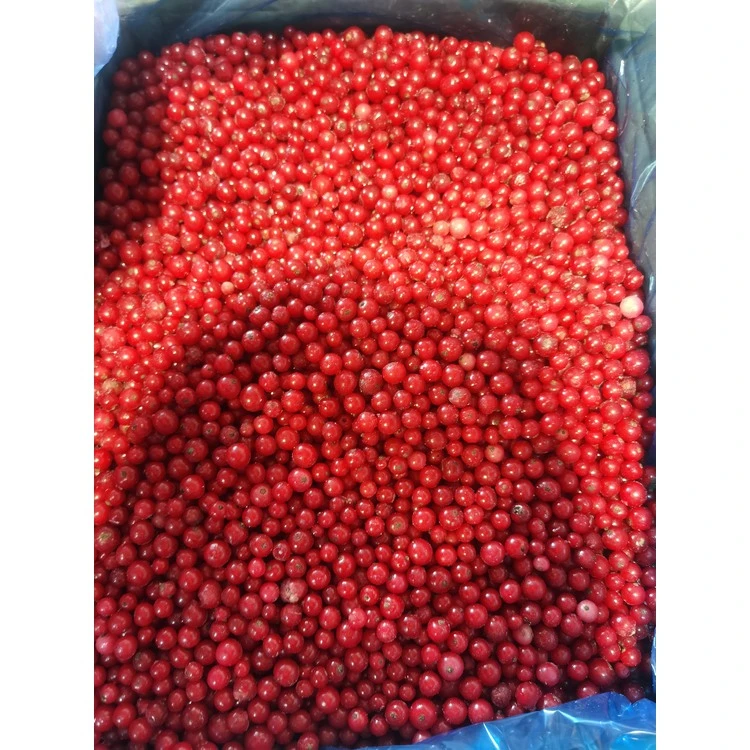
GreenLand product photograph of frozen redcurrants in a lined carton.
Keep labour and waste visible in the comparison. One lot may look economical by incoming weight yet require more sorting or deliver less acceptable pulp. Another may perform well for a sauce but be unsuitable where intact berries are expected. Those differences do not require an invented universal quality grade. They require a clear statement of the application and the same comparison method for the candidate lots. The useful cost is the cost of the prepared ingredient that passes the finished-food trial.
For redcurrants prepared for freezing at home, the National Center for Home Food Preservation currant instructions call for washing and removing stems before the chosen packing method. A commercial supply conversation still needs its own agreed specification, pack format and handling requirements. Do not convert a home method into an unverified description of a supplier's factory. We can discuss the offered frozen product against a buyer's stated needs, while confirming the exact preparation and documents for the proposed order.
For a repeat order, retain a clear description of the accepted result rather than relying on memory of an unusually attractive sample. Photographs can record stalk condition and obvious retained solids; a simple written sensory description captures what the photograph misses. If a disagreement arises, compare the incoming material and the preparation method separately. That makes it easier to distinguish a supply difference from a change in sorting, heating, screening or drainage at the receiving plant.
The final approval should name the endpoint in ordinary language: whole berries suitable for the trialled bake, screened pulp acceptable in the sauce, or juice extracted by the agreed method for the tested preserve. Attach the relevant sample observations and handling conditions. That gives purchasing, production and quality teams the same reference. It also keeps a future change visible: switching screens, thawing differently or pressing the jelly bag is a process change that may deserve another check, even when the redcurrant supplier has stayed the same.
Related reading
Follow blackcurrants through clear and pulpy syrup routes, with attention to filtration and pourability.
Examine the clarity and recovered-colour tradeoff in an industrial blackcurrant juice process.
Distinguish standing liquid separation in a prepared puree from the behavior of whole thawed berries.
Source frozen redcurrants with GreenLand-food
GreenLand-food is a professional frozen redcurrants supplier and manufacturer in China, providing factory-direct wholesale supply for importers, food manufacturers, foodservice distributors, and private-label programs.
Send the product form, specification, packing, quantity, application, destination, private-label needs, and requested documents.