


Snow-Pea Pod Hardening: Harvest Maturity Does Not Describe the Postharvest Trajectory
Oct 09, 2026
Leave a message

Research This Article & Topic with AI
Verify key claims, compare reliable sources, and explore GreenLand-food's practical frozen food knowledge.
Article details and research questions are prepared in the links. Sign-in or sending may be required.
Distinguish initial maturity from later hardening
A maturity description usually records a condition at harvest or receipt. It might cover pod shape, seed development, color or tenderness judged on a sample. Those observations help identify what arrived, but they contain little information about what happened afterward. A pod that passed an initial check has a starting result. Calling that result a lasting texture guarantee would add a claim that the receiving observation did not test. Buyers need both the starting condition and a record of the subsequent journey when later texture is central to the application.
The distinction matters especially for edible pods. The meal contains the pod wall as well as its seeds, so a green appearance does not fully describe the material being chewed. A visual inspection may show an attractive, flat pod while a prepared sample reveals resistance at the wall or seam. These observations can coexist because they describe different properties. For a ready meal, the relevant acceptance point might be the customer's reheated vegetable component, rather than the raw pod seen by the purchasing team before processing.
Imagine a ready-meal buyer asking GreenLand why two initially tender pea-pod samples did not retain the same eating texture after different raw-material histories. This is an illustrative scenario, not a past customer case. Our first request would be the identity of both samples and the records behind the comparison. Were they the same edible-pod type, drawn from the same lot, prepared to the same cut and evaluated by the same method? A difference found after several stages cannot be assigned to one stage simply because that stage appears last on the production record.

Initial maturity describes a starting sample; later texture requires a history. The curves are conceptual, without measured values.
The buyer's phrase initially tender also needs an operational meaning. A person bending an uncooked pod, a panel chewing a cooked pod and an instrument compressing a piece may each return useful information. Their results are not interchangeable. A bend observation could be affected by geometry; a bite could include several tissues at once. We would preserve the original description and ask what the test actually involved before comparing it with a later result. Replacing a vague description with another vague description would leave the original uncertainty intact.
Pod identity should remain visible throughout that discussion. Snow peas are commonly valued for their relatively flat edible pods, while other pea forms have different seed development and wall characteristics. The UC Davis commodity guidance discusses snow and snap pea pods together but distinguishes their maturity cues. That is relevant context for checking terminology, not proof that every named pod type shares one texture trajectory. The primary comparison below uses the authors' own two-type descriptions. We would not relabel either experimental group as a verified commercial sugar-snap cultivar.

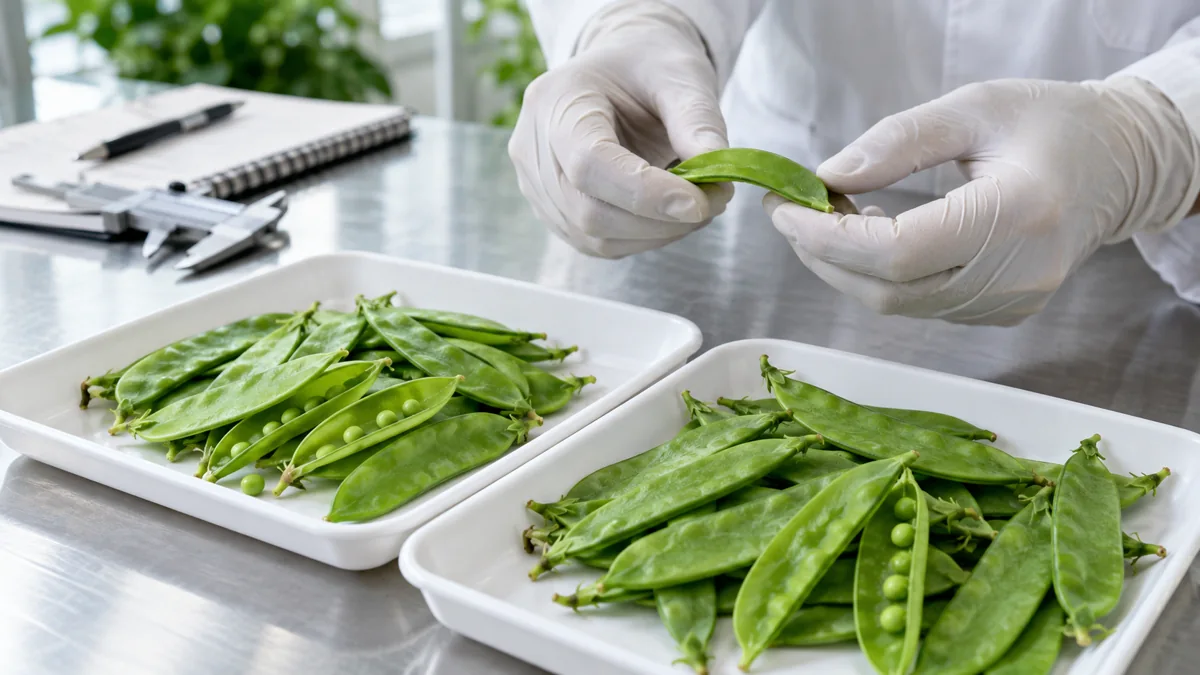
GreenLand product photograph. The pictured supplied form is distinct from any research ingredient or finished formulation discussed here.
History includes elapsed time and exposure as well as a date printed on a form. A receipt date can be precise while an earlier interval remains unknown. If a later texture concern is investigated, those unknown intervals should be shown as unknown instead of converted into a reassuring statement about freshness. A traceable sequence helps compare samples fairly, but documentation alone cannot establish tenderness. The purpose of the record is to make the observed prepared result interpretable and to show which experience the approval covers.
In the illustrative ready-meal comparison, a sensible first conclusion might therefore be narrow: the two samples were acceptable at their respective initial checks, and their later prepared textures differed. That conclusion leaves room to examine pod identity, handling history and processing without prematurely blaming freezing. It also avoids dismissing the buyer's experience because both samples met a maturity description. The original acceptance and the later concern can both be valid observations; they simply refer to different moments and possibly different tests.
What the two-type experiment observed
The original study, Comparison of storage and lignin accumulation characteristics between two types of snow pea, examined fresh market-sourced pea pods selected for similar initial size, maturity and plumpness. The authors followed their large sweet broad-pod and small snow-pod groups during room-temperature holding, with observations from day zero through day eight. Lignin, cellulose and texture measurements were part of the comparison. Small pods showed higher lignin and cellulose and greater chewing resistance. These are findings from those experimental materials under those conditions, rather than measurements of GreenLand frozen snow peas.
The cellulose detail deserves care. In the broad-pod group, cellulose rose during the early part of the comparison and then declined; in the small-pod group it increased across the observation window. A statement that both groups continually accumulated cellulose would misdescribe the reported trajectory. The contrast gives the paper its practical interest: even an initially similar selection did not make later behavior identical. The qualitative diagram preserves the directions without inventing concentrations, presenting smooth curves as measured data or translating the experiment into a commercial holding schedule.
For a buyer, the stronger inference concerns the limits of the initial selection. Similar maturity at the start did not erase every difference between the two sourced groups. That makes the initial descriptor insufficient to explain all later texture observations in this experiment. It does not establish which unmeasured source characteristic caused the difference. A market comparison can expose an association worth investigating while leaving questions about cultivar, growing conditions or earlier history unresolved. We would retain that uncertainty when using the paper to frame a supplier discussion.

Qualitative cellulose directions reported in the fresh holding study: broad pods rose initially then fell, while small pods rose across the observation window. Heights do not represent concentrations.
Chemical composition and chewing measurements also answer different parts of the problem. Lignin and cellulose results describe measured wall-related components; the texture result describes the response of the tested tissue to the authors' method. Their joint behavior can support a wall-hardening interpretation, but it does not make either chemical value a complete sensory specification. A customer may notice a seam, a fibrous wall or an uneven bite differently in a stir-fried component and in a moist reheated meal. The intended food still needs a direct texture evaluation.
The paper is therefore useful for choosing questions rather than copying limits. If a later pod is harder to chew, its initial maturity statement should be considered alongside the subsequent history and the tissue being evaluated. If a composition result is available, its reporting basis and sampled material matter. A result for whole pods cannot automatically be compared with one for an isolated wall fraction. Such differences can make two numbers appear contradictory even when each correctly describes its own sample. We would check that comparability before interpreting a chemical trend.
Repeated observations within an experiment improve the description of those samples, but they do not establish the distribution of all commercial lots. The researchers used biological replication; that does not turn a two-type comparison into a universal prediction for every edible pod. A purchasing specification may need to cover variability across deliveries and the buyer's practical preparation. That is a separate validation task. We would use a retained reference and an identified incoming lot to judge whether a newly observed difference matters for the actual ready-meal component.
There are also wording inconsistencies in the original text around some enzyme naming and descriptions of softening. We have not turned those passages into an enzyme-control recommendation. The clear and useful observations concern the sampled pod groups, wall-related components and texture behavior. Keeping the interpretation at that level gives the buyer a defensible reason to investigate history without claiming a proven biochemical intervention. The study supports the possibility of different later trajectories; it does not authorize a recipe for preventing them in frozen supply.
| Experimental group | Reported cellulose direction | Interpretation boundary |
|---|---|---|
| Large broad-pod group | Early rise, followed by decline | Fresh experimental pods during room-temperature holding |
| Small snow-pod group | Increase across the observation window | Reported direction does not establish an IQF lot acceptance limit |
Understand what the holding experiment did not test
The room-temperature holding comparison did not include commercial IQF processing or frozen storage. That boundary is central when the topic appears in a frozen-food purchasing conversation. The experimental days were observation points used by the researchers. They are not an acceptable holding duration, a shelf-life declaration or a cold-chain instruction. Extending the paper to such claims would require evidence that it does not provide. Fresh and frozen ingredients occupy different parts of the supply sequence, with different questions about handling, processing and intended use.
The study also did not separate every possible contribution to the two groups' behavior. Selecting for similar visible maturity helps make a comparison informative, but it cannot guarantee identical genetic background, field environment or pre-purchase exposure. The authors' group labels remain descriptions of their materials. We would avoid presenting the experiment as a controlled proof that one commercial cultivar is inherently superior for every frozen application. Where a cultivar or pod-type claim matters to a contract, it requires the supplied material to be identified and the claimed outcome to be demonstrated.
A fresh-produce guide can add handling context without closing that gap. UC Davis discusses tenderness and maturity for fresh edible pods, and its restaurant handling answer emphasizes cold and dry conditions for fresh use. University of Florida transport guidance addresses perishable foods and distinguishes fresh cargo from frozen cargo. These sources reinforce the need to read a condition in its proper commodity context. They do not convert the original pea study into a validated frozen-production protocol or provide approval for an altered handling sequence in a customer plant.

The room-temperature fresh-pod experiment stops at its own observations; frozen supply and customer cooking require separate evidence.
A finished meal adds another boundary. Blanching, freezing, cooking and reheating may all lie between an initial raw-pod observation and the final bite. If only the first and last observations are available, the intervening steps remain combined in the result. A buyer can reasonably report that the final sample is too resistant for its intended use. The evidence may still be insufficient to identify which step created or revealed that resistance. Treating the last step as the cause would confuse the order of observations with a demonstrated mechanism.
That distinction can change the supplier's response. In our illustrative scenario, we would first check what can be established from the records and matched samples. If the concern is already evident in material before freezing, a freezer adjustment may miss the relevant cause. If the raw comparison was acceptable but the customer preparation differed, an investigation of the preparation may be more informative. Neither situation should be presumed from the paper. The next observation should be chosen because it can distinguish plausible explanations for that specific comparison.
The absence of a validated holding protocol also means texture evidence must stay separate from food safety. A tender pod is not a safety result, and a tougher pod does not identify a particular hazard. The customer's validated process and applicable requirements continue to govern its food. This article addresses how to interpret a quality difference; it supplies no basis for reducing a safety treatment or extending a raw-material holding period. Keeping those responsibilities explicit prevents a narrow texture study from being used for a decision outside its evidence.
Finally, the paper does not promise that a particular chemical analysis will resolve every purchasing complaint. Measuring lignin or cellulose might be useful in a targeted technical investigation, but it is not automatically the first economical test for a prepared meal. A matched sensory and physical comparison may establish whether the concern is repeatable and where it appears. More specialized analysis can follow when it answers an unresolved question. We would agree the purpose of that analysis before treating an additional report as evidence of acceptability.
Locate the texture change before and after processing
A useful comparison preserves matched material wherever possible. If samples are drawn at different stages of the same lot, the records should identify those relationships. If the buyer instead compares separate deliveries, the change in lot should remain visible. A sample code that survives preparation is more useful than a label such as old and new, because it can be connected with a pod form, a date and an exposure history. The goal is to distinguish a difference in material from a difference in the way material was evaluated.
The first checkpoint is the condition in which the material enters the actual process. A raw-pod observation can record visible identity and the relevant texture, provided the method is described. The next useful checkpoint depends on the investigation: it could be after a preparation step, in the supplied frozen form or after the customer's cooking. We would not demand every conceivable stage for a routine sample review. We would choose checkpoints capable of locating the concern, then retain enough material or records to interpret a result that emerges later.
Preparation must be held comparable for that interpretation. Cut length, whether a seam is included and the portion selected for an instrumental test can affect what is being assessed. A whole pod bitten across the wall is a different specimen from a small trimmed segment. The same applies to the meal context: a loose vegetable sample and a component mixed into sauce may not reach the same prepared state. Describing these differences allows the buyer to decide which is relevant to its acceptance standard rather than assuming every texture score measures the same experience.

Matched samples along the actual process help locate when a texture difference becomes visible. This is a proposed comparison design.
Consider two observations in the hypothetical ready-meal investigation. One raw sample has a resistant seam, while both samples' walls seem acceptable. After preparation, the seam remains objectionable in one meal. That pattern would direct attention toward the particular tissue and its history. A second possible pattern is that neither raw sample shows the later difference, but separate cooking sequences produce visibly different textures. That would justify a matched preparation comparison. These are proposed ways to interpret observations, not reported GreenLand trials or outcomes from the primary paper.
The real product photographs help anchor the discussion in edible flat pods. They show supplied product form and visible pod structure; they cannot verify the tenderness of a photographed lot or the experiment's chemical composition. In procurement, the photograph, specification and application trial each serve a different role. A photograph helps prevent a form mismatch, the agreed description identifies the product under discussion, and a prepared sample tests suitability. Asking one of these items to perform all three roles is a common reason a later concern remains difficult to explain.

GreenLand product photograph. The pictured supplied form is distinct from any research ingredient or finished formulation discussed here.
Instrumental and eating observations can be recorded together when each contributes something distinct. An instrument may help compare repeatable responses in matched specimens, while a buyer's prepared evaluation establishes whether the difference is acceptable in the intended meal. A single threshold should not be borrowed from an unrelated specimen or research method. If the buyer wants an instrumental acceptance limit, it should first establish how that method relates to the texture it accepts. Otherwise a precise number may convey confidence without resolving the practical question.
Reporting the outcome by stage makes the next decision clearer. A comparison can state that the difference was first observed before processing, after a defined step or only in the prepared meal. It can also state that the available samples did not locate the stage. An unresolved result is still useful when it narrows what is known and specifies what additional observation would help. At GreenLand, we would keep the quality discussion tied to those demonstrated facts and the actual supplied form, rather than attribute every later fibrous bite to frozen storage.
Write a history-specific texture approval
An approval should name the texture outcome that was demonstrated and the conditions under which it was judged. For a ready meal, that could mean the identified pod form passed a specified prepared comparison against an accepted reference. The approval should connect the lot or sample with the relevant history and preparation record. This does not require an elaborate claim about every cell-wall component. It requires a clear account of what the buyer actually evaluated, so another person can understand the scope of the decision without reconstructing it from informal messages.
The reference is part of that scope. If it is a retained product sample, its own condition and handling matter. If it is a written description of desired bite, the team needs enough detail to use it consistently. A comparison against a deteriorated or differently prepared reference can obscure the new sample's suitability. We would check the reference basis before describing a difference as a failure. The purpose is to protect the buyer's intended eating experience, not to preserve a comparison whose practical meaning has become uncertain.
Where history varies, acceptance should not quietly assume equivalence. A sample approved after one documented sequence does not automatically qualify all later sequences. If a raw-material interval, product form or customer preparation changes materially, the buyer can decide whether the previous evidence still applies. That decision is easier when the original approval was specific. A statement such as tender snow peas provides little guidance for assessing a change. An outcome connected with identified material and intended preparation gives the quality team something concrete to review.

Texture approval connects an identified pod, its documented history and the intended prepared meal. No numeric acceptance limit is implied.
Chemical evidence can be added without making it the whole approval. For example, a targeted investigation might describe a wall-related composition difference alongside the prepared texture concern. It should preserve the method, sampled fraction and reporting basis. The text should distinguish an observed relationship from a proven cause. That leaves the buyer free to accept a demonstrated meal outcome while continuing a technical investigation, or to decline an unsuitable sample without pretending a single chemical measurement explains every aspect of the bite.
Communication between purchasing, development and quality benefits from this precision. Purchasing may know the supplied form and commercial requirements; development may know the preparation that produces the required meal; quality may hold the sampling and traceability records. None of those records alone reconstructs the whole comparison. Bringing them together can identify a missing interval or a method change that would otherwise remain hidden. In the hypothetical GreenLand discussion, we would ask for the reports being compared and their preparation basis before proposing a next trial.
The final decision can also preserve an unresolved issue. A buyer might approve an identified sample for one use while requiring another evaluation for a longer customer process or different meal. It might reject a texture that is unacceptable without claiming the supplied material violated an untested chemical limit. Both decisions are more defensible when they describe the demonstrated result. The research supplies a reason to take postharvest trajectory seriously; the approval must still come from the actual product and the outcome that matters to its user.
For a snow-pea inquiry, send GreenLand the pod form, intended dish, preparation sequence and the two texture observations you want to compare. Include the relevant sample identities and available raw-material history, along with packing, quantity and destination for the supply discussion. We can then clarify the product scope and the information needed for an application review. The published comparison supports that careful approach: initial maturity is useful evidence, and later texture requires its own history-specific demonstration. Food-safety requirements and the customer's validated process remain independently applicable throughout the decision.
Continue reading about edible-pod sourcing
Review the offered snow-pea form and preparation questions alongside the separate texture comparison.
Check the distinction between edible-pod forms before comparing a named reference with a snow-pea sample.
Review the transport records needed to connect an identified frozen lot with its delivery history.
Source frozen snow peas with GreenLand-food
GreenLand-food is a professional supplier and manufacturer of frozen snow peas in China, providing factory-direct wholesale supply for importers, food manufacturers, foodservice distributors, and private-label programs.
Tell us what you're making and where you need delivery. We'll review the product form and specification with you, then confirm packing, quantity, private-label details and requested documents.