


What Do Mangoes Taste Like?
Sep 04, 2026
Leave a message
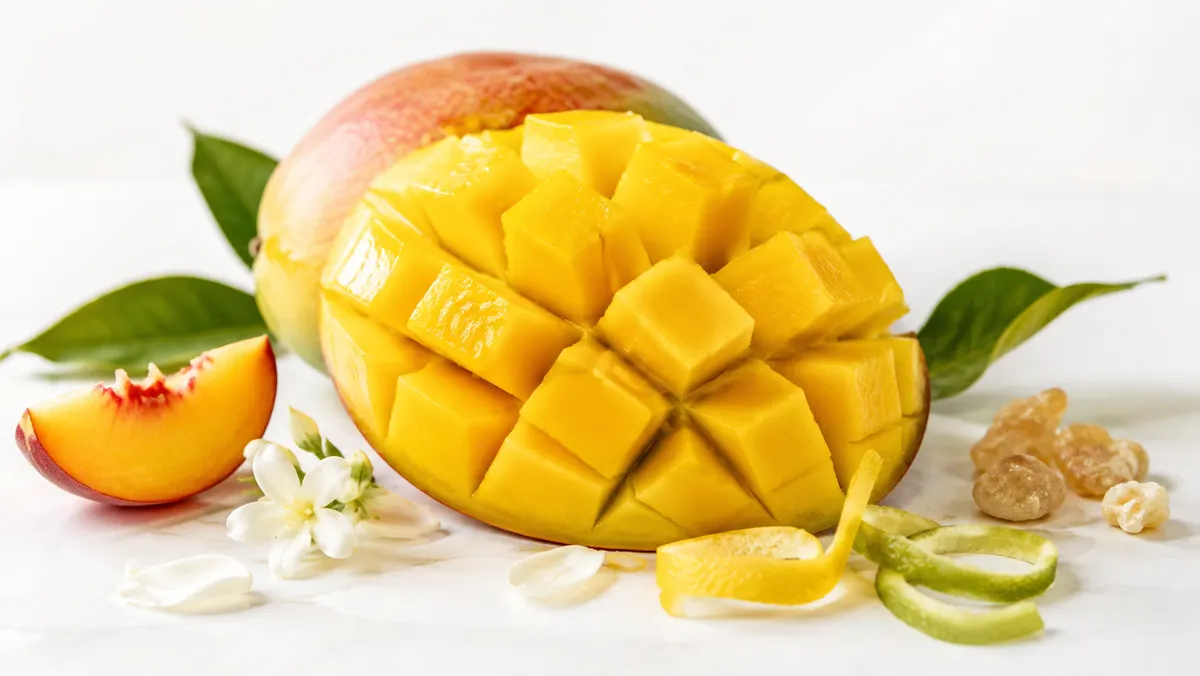
Mango tastes sweet, juicy and tropical, often with peach, pineapple, citrus or floral notes.
The complete taste is a balance of sugars, acids, aroma compounds and texture. Some cultivars are creamy and low-fiber; others are firmer, fibrous or lightly resinous. Under-ripe fruit tastes greener, tarter and starchier, while overripe fruit can become flat, fermented or overly soft. Frozen mango can retain useful sweetness, color and aroma, but thawed pieces soften. Choose chunks or slices when visible fruit matters and puree when smooth flavor delivery matters more than bite.
The Four Parts of Mango Flavor
Sugars create the sweet base, but USDA sensory work shows sugar level also changes how people perceive aromatic notes. A sweeter sample can seem more mango-like even when the volatile composition has not changed in the same way. Keep that scope beside the relevant mango attribute so the purchasing team and the receiving team apply the same meaning.
Organic acids supply brightness and prevent sweetness from feeling heavy. Acid level affects sourness, astringency and even peach-like perception. Two lots with equal Brix can therefore taste very different. Natural and process variation remain possible, so confirm the working range on representative samples instead of relying on a single textbook number.
Volatile aroma compounds create the recognizable tropical character. Depending on cultivar, the nose may suggest peach, pineapple, citrus peel, flowers, melon, green leaves or mild pine and resin. Translate that effect into the intended application, since mango that looks acceptable can still give a different yield, texture or flavor balance.
Texture controls how flavor is released. Creamy low-fiber flesh feels rich and smooth, while firmer or fibrous flesh chews longer and can make green or resinous notes more noticeable. For mango flavor, write the acceptance method, tolerance and evidence type into the approval record before confirming the lot.
How Variety Changes the Taste
Ataulfo or Honey mango is usually described as sweet, creamy and low-fiber with a small stone. Alphonso is valued for intense aroma and rich orange flesh. Kent is often sweet and juicy with relatively low fiber. Record the definition with the mango form being discussed; otherwise a correct general statement can become a poor buying assumption.
For a closer explanation, see What Is a Honey Mango?.
Tommy Atkins travels well and offers firm colorful flesh, but its flavor may be milder and its texture more fibrous than some dessert cultivars. Keitt can stay green-skinned while delivering sweet flesh when mature. Because fruit and process conditions vary, compare several representative units and keep the sample condition with any recorded result.
ITFNet notes that mango flesh ranges from soft and fiber-free to fibrous and even resinous. These are cultivar tendencies, not shipment guarantees, because maturity and crop conditions still move the result. The application trial should use the proposed mango format and inclusion rate, not a convenient substitute with different physical behavior.
A buyer should approve the named cultivar or an agreed sensory range. Marketing labels such as premium tropical mango do not reveal fiber, acid balance, flesh color or suitability for a particular cut. Keep photographs, measurements and documents tied to the same sample code; that prevents an attractive image from standing in for traceable evidence.

Ripeness Moves Sweetness, Acidity and Aroma
Under-ripe mango tends to be firm, pale, starchy and more acidic, with green or vegetal notes. It can work for pickles or savory uses but usually lacks the rounded aroma expected in frozen dessert and beverage products. Link the term to the exact mango format in the quotation because whole fruit, cut fruit and puree may be judged differently.
As a mature mango ripens, starch converts toward sugars, flesh color deepens, aroma grows and firmness falls. The ideal point depends on whether the fruit must survive cutting or will be pulped. A useful planning range is not a lot guarantee; sampling method, product temperature and measurement basis still need to be stated.
Overripe fruit can taste very sweet but lose fresh acidity and structural definition. Fermented or alcoholic notes, internal breakdown and watery tissue are defects rather than an acceptable shortcut to strong flavor. This point matters commercially when it changes portion control, thaw loss, screen retention, blending time or the finished product's appearance.
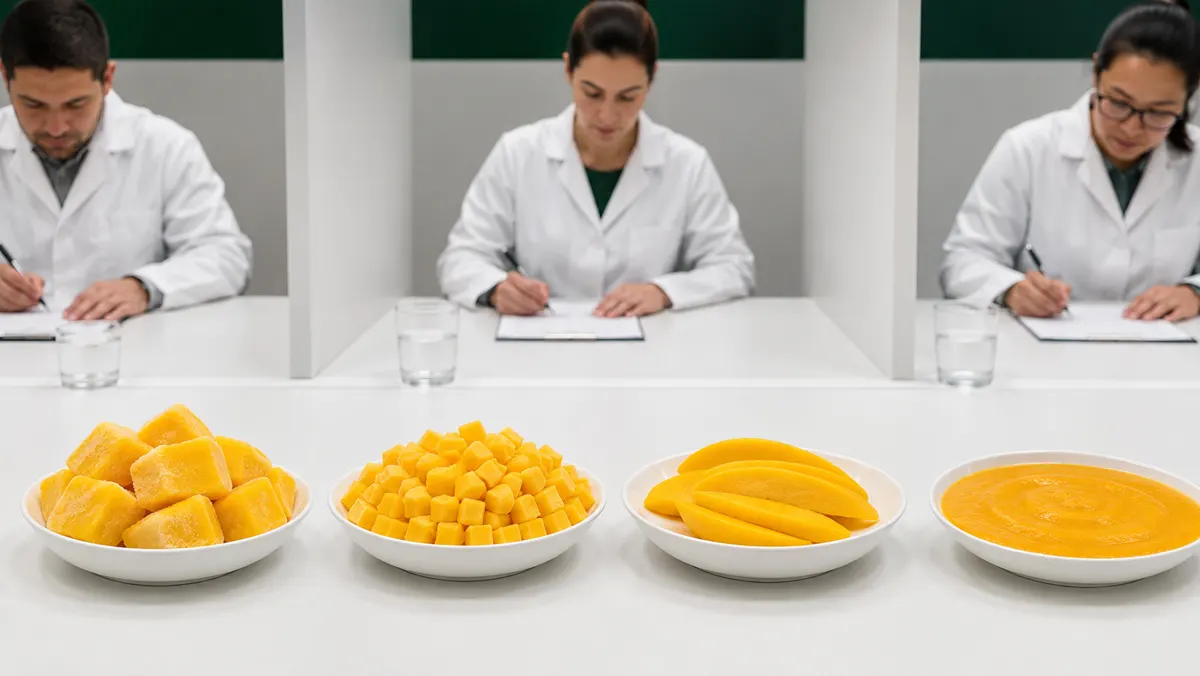
Sensory approval should use several fruit and a repeatable scale for sweetness, acidity, characteristic aroma, off-flavor, fiber and aftertaste. One fragrant cheek cannot represent a mixed lot. If the point can affect release, name who checks it, when it is checked and what happens when the result falls outside the agreed range.
What Fiber Does to Mango Experience
Fine fibers can be nearly invisible yet still create threads during chewing or cling to a screen. Coarse vascular fibers near the stone may form hard stringy pieces if trimming is weak. Put the stated basis into the mango specification wherever it changes how the lot will be sampled, compared or released.
Low-fiber cultivars suit smooth puree, dairy, sorbet and premium dice when the buyer wants creamy mouthfeel. Firmer cultivars can support clean cuts but need checking for stringy tissue. Use the figure as an early estimate, then replace it with sample data from the proposed origin, variety, grade and processing format.
Processing changes the signal. Cutting across fibers, pulping, screening and homogenizing can reduce perceived strands, while a fine beverage nozzle may reveal fibers that a spoon test missed. Ask the product-development team which outcome matters most, then test the mango against that outcome in the real recipe or process.
Specify fiber through a reference sample, screen-retention test or sensory limit. The phrase fiberless is usually relative; buyers should define what visible or perceptible fiber is acceptable. A practical control states the limit and the inspection method together, giving the supplier and buyer one reproducible basis for acceptance.
What Freezing Preserves and Changes
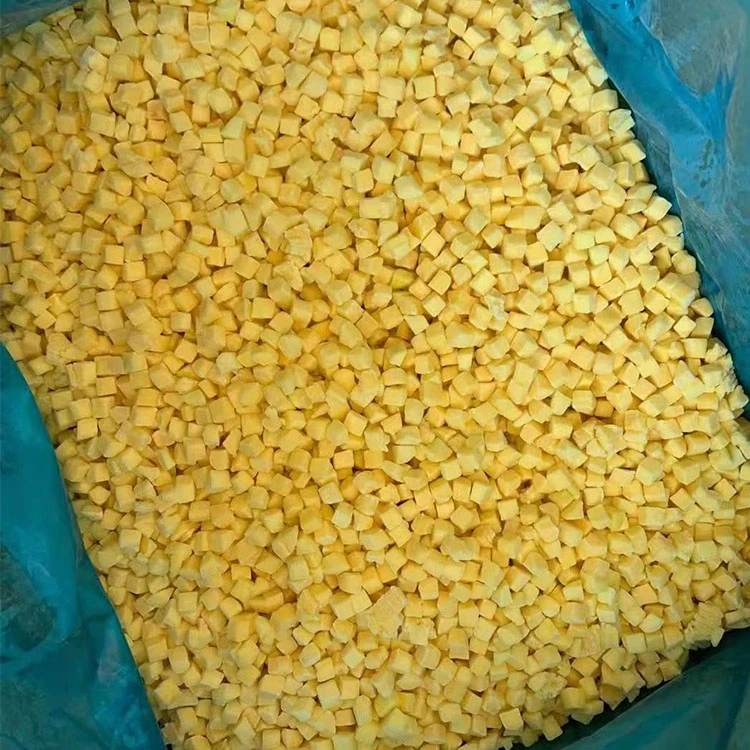
Rapid freezing can preserve much of the fruit's color and aroma at the chosen maturity, provided oxygen exposure and temperature fluctuation are controlled. It does not improve weak raw-material flavor. Treat the definition as a boundary for the mango discussion, then convert the relevant part into a measurable purchase requirement.
After thawing, mango becomes softer and releases juice because ice disrupts cells. Flavor can remain attractive even when the fresh bite is gone, which is why frozen mango performs strongly in blended and processed applications. Where the observation is sensory, have the same approved method and product temperature used for both the control sample and the shipment check.
Long or unstable storage can flatten aroma, darken color, dry exposed surfaces and create clumping. Packaging barrier, headspace, seal integrity and a stable cold chain affect sensory quality over shelf life. Connect the observation to usable yield and finished-product performance so the decision is based on more than the fruit's incoming appearance.
Evaluate both direct-from-frozen and thawed conditions that match use. Smoothies may use fruit frozen, while yogurt, bakery filling or sauce production exposes thaw behavior and released liquid. Where a batch claim is required, request the corresponding lot record or test result rather than extending a general article statement to every shipment.

Choose Chunks, Slices, Dice or Puree by Flavor Delivery
Chunks deliver recognizable mango bites and release flavor gradually in smoothies, fruit cups and desserts. Their value depends on ripe flavor, clean cut, fiber control and whole-piece tolerance. Use the explanation to align the mango brief before samples are requested, particularly when teams use the same word in different ways.
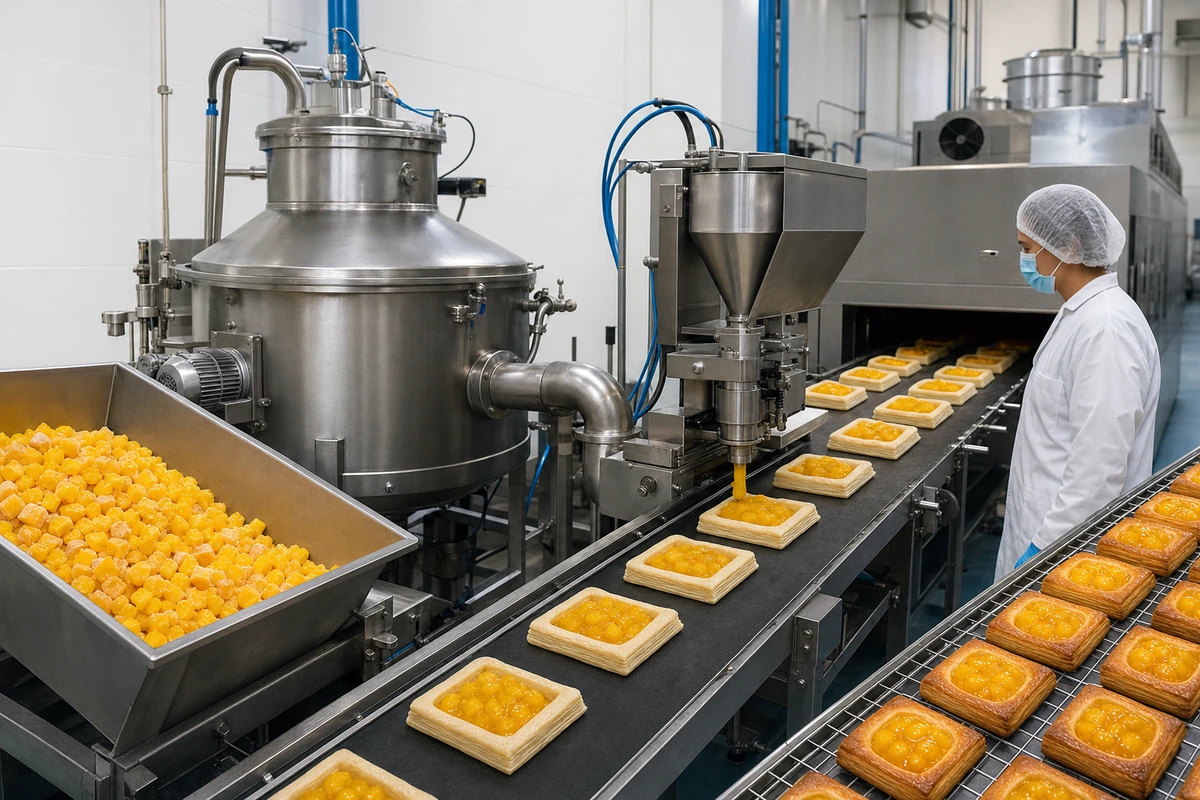
Dice distribute more evenly through yogurt, bakery, ice cream and retail blends. Smaller pieces expose more surface and may soften or bleed faster, so flavor intensity and cut tolerance should be tested together. Variation becomes easier to manage when the range, sample count and test condition are agreed before the commercial lot is packed.
Slices provide a visible premium form for dessert and foodservice but reveal bruising, uneven color and fiber clearly. Thickness and breakage determine whether they survive handling. A small difference can become material at production scale, especially when the mango is dosed by weight or must hold its identity after processing.
Puree gives immediate uniform flavor for beverages, sorbet, sauces and dairy bases. Brix, acidity, screen, color and aroma define performance; a stronger puree is not simply the sweetest one. Close the loop by carrying the agreed observation into the specification, control sample and pre-shipment record used for final approval.
How Mango Flavor Changes a Commercial Frozen-Fruit Decision
A correct factual answer is only the first layer for a commercial order. GreenLand-food supplies IQF chunks, dice, slices, halves, bits and pieces, and mango puree for smoothies, beverages, yogurt, bakery, sorbet, sauces, desserts, fruit preparation, foodservice and retail frozen-fruit programs. The buyer still has to convert the article topic into a measurable requirement. Without that translation, two suppliers may answer the same question correctly while quoting products that behave differently in the buyer's line.
The practical comparison starts with variety, origin, maturity, Brix, acidity where required, flesh color, fiber level, cut tolerance, broken pieces, peel or stone fragments and thawing performance. Some of those points can be checked in a specification or COA; others need a retained sample, batch photograph, thaw test, screen test, cut measurement or sensory panel. We recommend stating the test method and tolerance instead of relying on adjectives such as premium, ripe, smooth or natural.
Format matters just as much as fruit identity. A whole IQF item is bought for piece definition and portioning. A puree is bought for flow, color, flavor and screen condition. Smaller pieces may improve dosing but increase exposed surface. The approval record should therefore name the exact form, not merely mango.
Packing and cold-chain details complete the decision. We review bulk cartons, foodservice bags, retail pouches, private-label packs and puree systems agreed for the product form against net weight, carton strength, label, pallet plan, storage statement and destination-market needs. An acceptable pre-shipment sample does not protect the order if temperature, seal integrity or loading practice changes before delivery.
For application details, see How Are Mangoes Packaged? Fresh, IQF & Puree.
A Repeatable Sample-to-Shipment Approval Process
Use one written comparison sheet for every candidate lot. Record the sample date, product code, crop or production reference, packing, frozen condition on arrival and the method used for each measurement. This prevents a sales sample, laboratory sample and shipped lot from being compared as if they were interchangeable.
Run the application test at the scale that reveals the risk. A visual tray review may be enough to reject serious foreign material or abnormal color, but it cannot predict a beverage screen, bakery bleed, dairy suspension or retail pouch display. Keep the test recipe, temperature, time and pass criteria stable across suppliers.
- Define the intended application and choose from IQF chunks, dice, slices, halves, bits and pieces, and mango puree.
- Write measurable requirements for variety, origin, maturity, Brix, acidity where required, flesh color, fiber level, cut tolerance, broken pieces, peel or stone fragments and thawing performance.
- Confirm the sample identity, lot status and whether it represents current commercial supply.
- Test the fruit frozen, after controlled thawing and in the intended formula where relevant.
- Approve bulk cartons, foodservice bags, retail pouches, private-label packs and puree systems agreed for the product form with label, net weight, carton and pallet details.
- Match the final specification, COA, certificate scope, packing record and loading evidence to the shipment lot.
- Retain the approval result and change-control rule for repeat orders.
The sequence is deliberately simple. It gives purchasing, QA and product-development teams the same reference point, while leaving room for market-specific microbiology, residue, allergen, organic or non-GMO documentation. Not every document is required for every destination, so the buyer should name the governing standard rather than request an undifferentiated certificate bundle.
Before repeat production, define what triggers reapproval: a variety change, origin change, new crop, different facility, altered pack material, wider cut tolerance or revised test method. Small wording changes in a quotation can hide a meaningful technical change. A signed specification and documented sample decision make that change visible.
What to Put in the RFQ
| RFQ field | What to state | Why it matters |
|---|---|---|
| Product identity | IQF chunks, dice, slices, halves, bits and pieces, and mango puree | Prevents a quotation for the wrong physical format. |
| Quality target | variety, origin, maturity, Brix, acidity where required, flesh color, fiber level, cut tolerance, broken pieces, peel or stone fragments and thawing performance | Turns broad quality language into an acceptance basis. |
| Application | smoothies, beverages, yogurt, bakery, sorbet, sauces, desserts, fruit preparation, foodservice and retail frozen-fruit programs | Lets the supplier review particle, texture, color and thaw behavior in context. |
| Packing | bulk cartons, foodservice bags, retail pouches, private-label packs and puree systems agreed for the product form | Connects net weight, handling, private label and loading plan. |
| Compliance | Destination market, required certificate scope, tests and shipment documents | Avoids treating one market's file set as universal. |
| Commercial plan | Trial quantity, annual forecast, delivery window, port and Incoterm | Separates sample availability from scalable repeat supply. |
Send the application before asking the supplier to recommend a form. The same fruit may need a visually intact whole piece for retail, a controlled dice for yogurt, a lower-cost broken grade for jam or a defined screen for beverage puree. A recommendation without the use case is mostly guesswork.
Request current evidence rather than generic marketing files. Useful evidence can include a representative frozen sample, product and packing photos, the draft specification, a batch COA, certificate copies with holder and scope, loading records and a change-control note. Availability depends on the order stage and agreed commercial terms.
For a broader product view, use the GreenLand-food frozen-food catalog. For product-specific forms and current order planning, review our frozen mango supply page and send the actual specification rather than only the article keyword.
How to Read the Numbers, Pictures and Supplier Claims
Every number in a fruit article has a scope. A weight can describe one fruit, a household cup, a drained sample or a sealed pack. A season can describe flowering, harvest, packing, shipment or arrival. A particle size can describe a screen opening rather than the particle that remains in a finished formula. When mango flavor matters to a purchase, copy the definition and test condition beside the value.
Photographs also need context. Camera distance, white balance, frost, condensation and lighting can change apparent color and size. A photograph is strong evidence for gross product form, visible defects, packing condition and lot coding, but it cannot prove aroma, firmness, Brix, microbiology, residue compliance or a certificate's scope. Ask what the image shows and what it cannot show.
A certificate is evidence only within its named holder, facility, product or activity, validity period and standard. It should not be used as a universal quality badge. If the order depends on organic, non-GMO, food-safety or customer-program status, match the document to the operation producing or handling the shipment and record how the lot is connected to that operation.
A COA is likewise batch-specific. It can report selected analytical results, but it does not replace the full specification, sampling plan or sensory approval. Check the product code, lot, production date, laboratory or method, units and limits. A result without those identifiers is difficult to compare with the delivered goods.
Supplier language should be resolved into tolerances. Words such as sweet, ripe, smooth, firm, premium, seedless, clean or free-flowing can be useful summaries, but two teams may interpret them differently. For mango, pair the word with a number, reference sample, defect photograph, sensory scale or pass-fail application test wherever the commercial risk justifies it.
Sampling is the bridge between the specification and the physical product. Take enough increments to represent different cartons or pallet positions, keep the sample frozen until the defined test and record any thawing or preparation. If the lot is heterogeneous, an average alone can hide the very pieces that cause line stoppage or consumer complaints.
Scale-up adds another uncertainty. A hand-selected laboratory sample may show the intended result without representing a full production shift. Before a large private-label or industrial program, ask whether the sample is commercial stock, a pilot sample or a target reference, and define what happens if the production lot falls outside the approved range.
Finally, keep claims proportionate to evidence. This article provides a current technical framework and cites the sources used, but climate, regulation, varieties and market channels can change. Current supplier records, destination-market advice and the signed order specification should take priority when the shipment is approved.
Record disagreements instead of smoothing them away. If a sensory panel, certificate, laboratory result and production photograph point in different directions, pause the approval and identify which question each item actually answers. A clear exception note protects the buyer and supplier from turning an unresolved observation into a repeat-order precedent.
Continue the Product Review
For available formats and order discussions, review our Frozen Mango supply page. For related handling and use context, continue with Can You Freeze Mango?.
Frequently Asked Questions
What do mangoes taste like?
Usually sweet, juicy, tropical and floral with balancing acidity and possible peach, pineapple, citrus, melon or light resin notes.
Is mango sweet or sour?
Ripe mango is mainly sweet with some acidity. Under-ripe fruit is more sour and starchy; cultivar and crop change the balance.
Why does mango taste like pine?
Some cultivars contain aroma compounds perceived as resinous, pine-like or terpene-like. A mild note can be varietal; harsh chemical off-flavor is not.
Which mango has the least fiber?
Ataulfo, Kent and some dessert cultivars are commonly low-fiber, but actual lots and tissue near the stone should be checked.
Does frozen mango taste like fresh mango?
It can retain useful sweetness and aroma, but thawed texture is softer and the flavor may feel less bright after long or unstable storage.
Which frozen mango form has the strongest flavor?
Puree delivers flavor most uniformly, while chunks deliver distinct bites. Strength still depends on variety, maturity, Brix, acidity and aroma.
How should buyers compare mango flavor?
Use coded samples at the same temperature and score sweetness, acidity, aroma, fiber, color, off-flavor and application performance.
Can Brix predict mango taste?
It helps estimate soluble solids but cannot capture acidity, aroma, fiber or defects. Use Brix with sensory and application tests.
Source Frozen Mango with GreenLand-food
GreenLand-food is a professional Frozen Mango supplier and manufacturer in China, providing factory-direct wholesale supply for importers, food manufacturers, foodservice distributors, and private-label programs.
Send the product form, specification, packing, quantity, application, destination, private-label needs, and requested documents.