


Whole Frozen Goji Berries in Yogurt: Color, Texture and Fruit Distribution
Oct 19, 2026
Leave a message

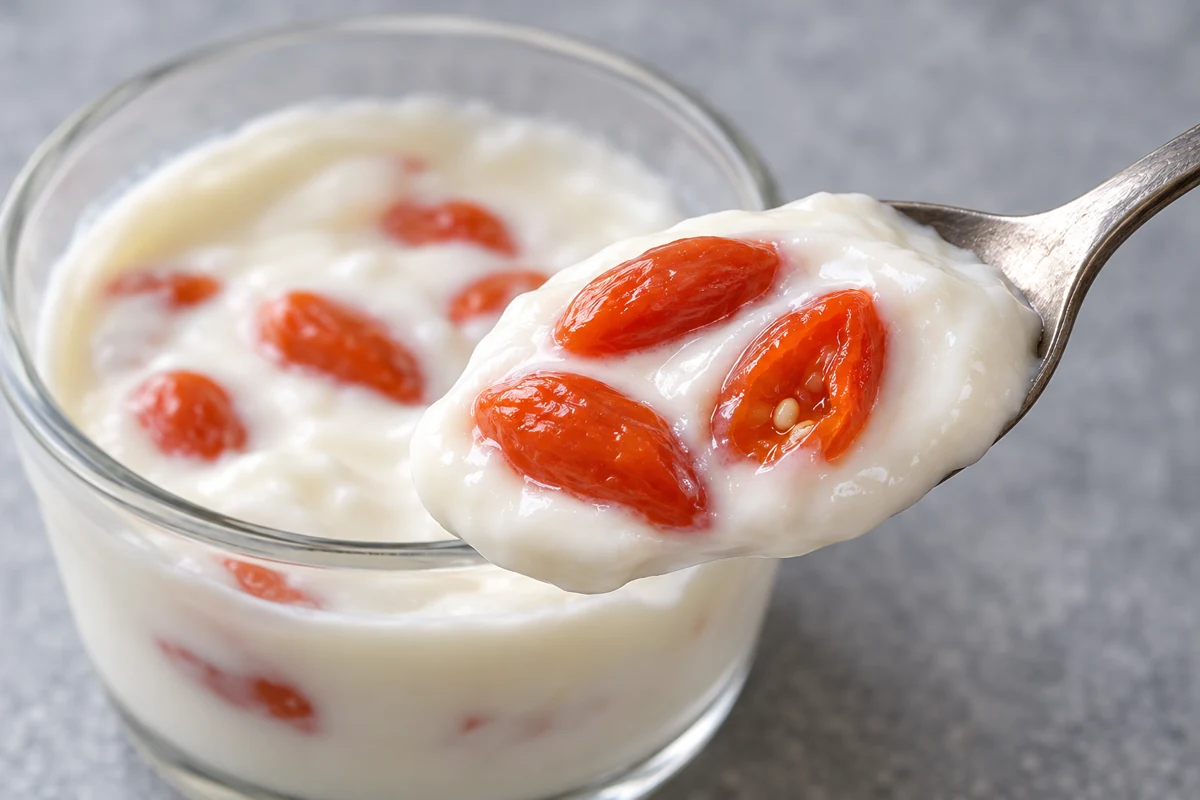
For a commercial yogurt, first confirm the fruit's intended use and preparation route. Frozen whole berries are an ingredient specification; their frozen condition does not establish that they can enter a ready-to-eat dairy product without further treatment. Then evaluate the prepared fruit in the actual yogurt, using the intended fruit dose, package, storage conditions and serving temperature. We help purchasing teams describe the whole-berry input and agree the sample condition before they compare quotes or approve a repeat order.
The useful question is what customers should find on the spoon. A white yogurt containing distinct soft berries, a fruit layer under plain yogurt, and a thoroughly blended orange preparation are different products. Giving them separate appearance and texture criteria makes the fruit trial more informative and prevents an attractive photograph from becoming an undefined acceptance standard.
Choose how whole goji should appear in the yogurt
Start with the intended eating experience. If the label and pack design promise visible whole fruit, define what recognizable means after preparation, mixing, filling and storage. A berry may have a small skin split and still look like goji; a loose strip of skin with most of its flesh dispersed into the dairy is a different inclusion. An approved spoonful and a cut-open cup can help the development team agree that distinction before a supplier is asked for a whole-fruit percentage.
Layered yogurt gives the fruit preparation a separate place in the pack. Its sauce needs enough body to remain where the filling design puts it, while the berries need to release readily onto a spoon. In stirred yogurt, fruit must pass through the blending and filling route and remain distributed within the dairy. A fruit preparation that makes a clean lower layer can spread poorly when stirred through the same yogurt, because the product now asks the sauce to disperse rather than hold a boundary.
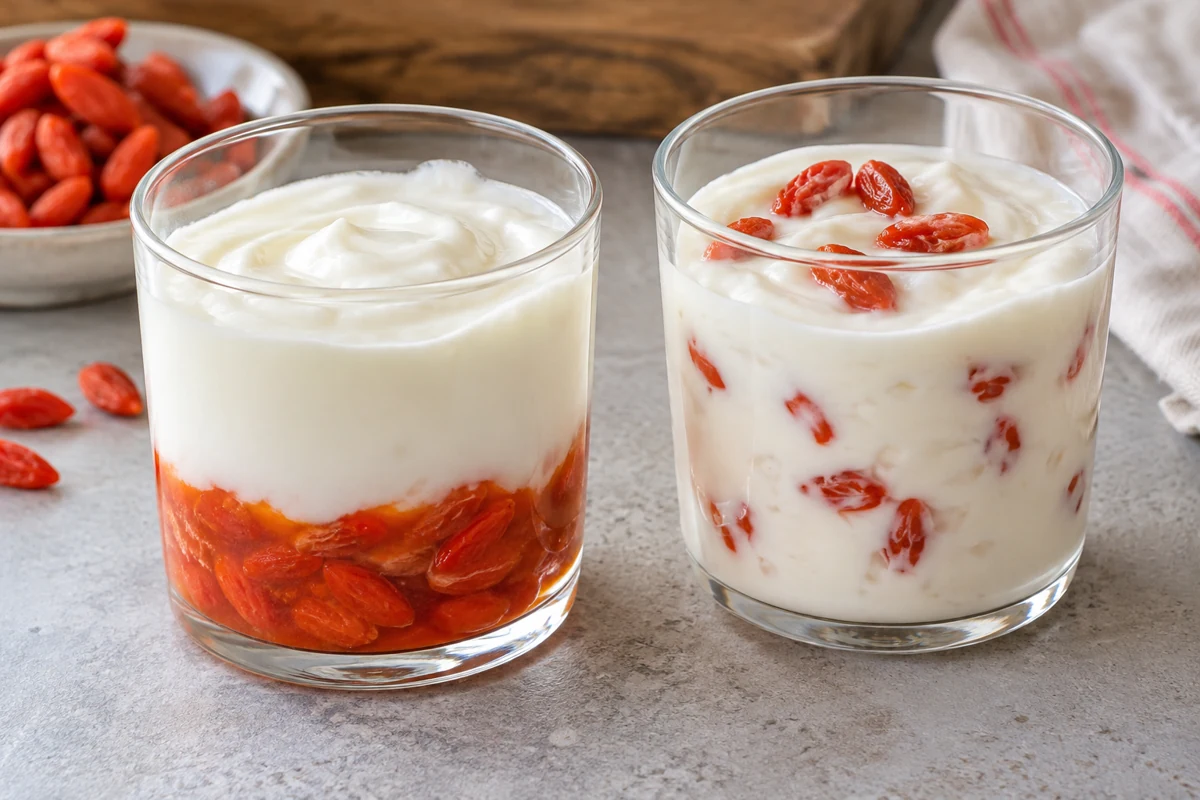
A separate fruit layer and a stirred inclusion ask different questions about sauce body and distribution.
The surrounding dairy also changes the perception of the berry. A thick strained base can make a soft fruit inclusion feel distinct, whereas a thinner drinking yogurt may expose the skin more strongly. Sweetness, acidity, fat and aroma affect the overall impression. Choose the base early enough that a promising berry sample is not approved in one yogurt and introduced commercially into another with substantially different body or flavor.
For the first comparison, use a plain control from the same dairy batch and a small number of clearly defined fruit variants. Keep the package and fill weight comparable. Describe the visible fruit, the dairy around it, and the impression after chewing as separate observations. This proposed trial does not need a large scoring system; it needs enough detail to explain why one formulation is preferred and whether the preference is repeatable.
A photograph taken immediately after hand stirring is useful for discussing the concept, but it has limited value for approving a production route. Fruit can settle during a holding interval, skins can break under a pump, and the first cups can differ from the last. Carry the intended format forward into the process trial so the development team judges the same product that purchasing will specify and operations will fill.
In a layered format, also check the first and last spoonful. A customer can find a pleasant concentrated fruit layer yet little fruit through most of the cup. That can be entirely consistent with the concept, provided the package and serving guidance set the right expectation. A stirred product promises a different encounter. Comparing both formats by the total number of visible berries on the top surface would miss how each is meant to be eaten.
| Yogurt format | Fruit appearance | Performance to examine |
|---|---|---|
| Layered | Recognizable berries in a separate fruit layer | Layer position, sauce release and spoonful |
| Stirred | Recognizable berries within the dairy | Survival through filling and distribution |
| Blended smooth | Fruit dispersed into the base | Mouthfeel, dairy body and flavor |
Qualify the frozen berries before preparing them
The current GreenLand-food whole frozen goji berry reference shows orange-red fruit in a bulk liner. A product photograph helps identify the offered form. The actual lot still needs a sample for whole-fruit share, attached stems, broken skins, clusters and released liquid. Confirm the botanical identity or cultivar when it matters to the program, since the common name alone does not fix skin character, seed perception or flavor.
Inspect the fruit while it is still in its agreed frozen condition before changing it through preparation. Record whether berries separate with gentle handling and whether frozen masses contain recognizable fruit or a substantial amount of juice and crushed tissue. Keep sample units identified so a good portion from the carton top does not obscure a wetter lower layer. A fruit inclusion program can be sensitive to this variation even when the total received fruit mass is correct.

Whole orange-red goji berries shown in the GreenLand-food bulk-liner reference.
Prepare a separate portion through the route planned for the yogurt. If a sauce or other fruit preparation is made, record the received fruit mass, any liquid retained, additions, and the final prepared mass. The dose of whole fruit entering the preparation and the dose of preparation entering the yogurt answer different questions. Describing both avoids treating a sweetened preparation as though its full weight were berries.
Skin and seed characteristics deserve an early tasting once the sample has been made safe for its intended use. Small seeds that are unobtrusive in a cooked sauce may stand out against a smooth dairy base. Soft skins can feel acceptable when each berry remains plump, but loose skins can be more noticeable when flesh has dispersed. Ask panelists to describe these sensations directly rather than folding every complaint into a general texture score.
We confirm the supplied form, packing and order specification against the approved sample. A buyer asking for a tighter whole-fruit allowance or a different preparation should expect a separate discussion of sample selection, yield and price. Neither a general processing-grade description nor a frozen-fruit category listing establishes the exact condition needed for a premium visible-inclusion yogurt. The purchasing record should carry the actual appearance reference and the method used to judge it.
Write the preparation dose with its denominator. Adding 100 grams of preparation to 900 grams of yogurt makes a hypothetical finished mixture containing 10 percent preparation by mass. Adding 100 grams to 1,000 grams of yogurt gives a different finished proportion. If only part of that preparation is fruit, its fruit contribution differs again. These arithmetic examples are not recommended goji doses; they show why a specification should distinguish preparation addition from the fruit content of the final cup. Also record whether the visible-berry assessment counts whole recognizable fruit or weighs a separated fraction. Sauce and dairy left on recovered berries can influence the latter, so a retained-fruit weight needs an agreed separation method before it can support a dose claim.
Read berry color and surrounding liquid separately
Goji can provide a visible orange-red inclusion without turning the whole dairy base a strong red. Judge the skin color, the exposed flesh and any tint in the surrounding liquid independently. A white yogurt with discrete berries may be the intended result. A pale orange blend may also be acceptable, but it describes a different appearance. Trying to achieve a dramatic red dairy color by increasing whole-berry dose can create unwanted seed, skin or flavor intensity.
Released fruit liquid can produce a localized tint near a split berry. That observation does not by itself identify the source of a clear liquid layer elsewhere in the cup. Fruit liquid, sauce separation and dairy whey can contribute different appearances. Look at the prepared fruit on its own, the plain yogurt control, and the combined sample under comparable lighting. This helps the team decide where to investigate before changing stabilizers or rejecting the berries.
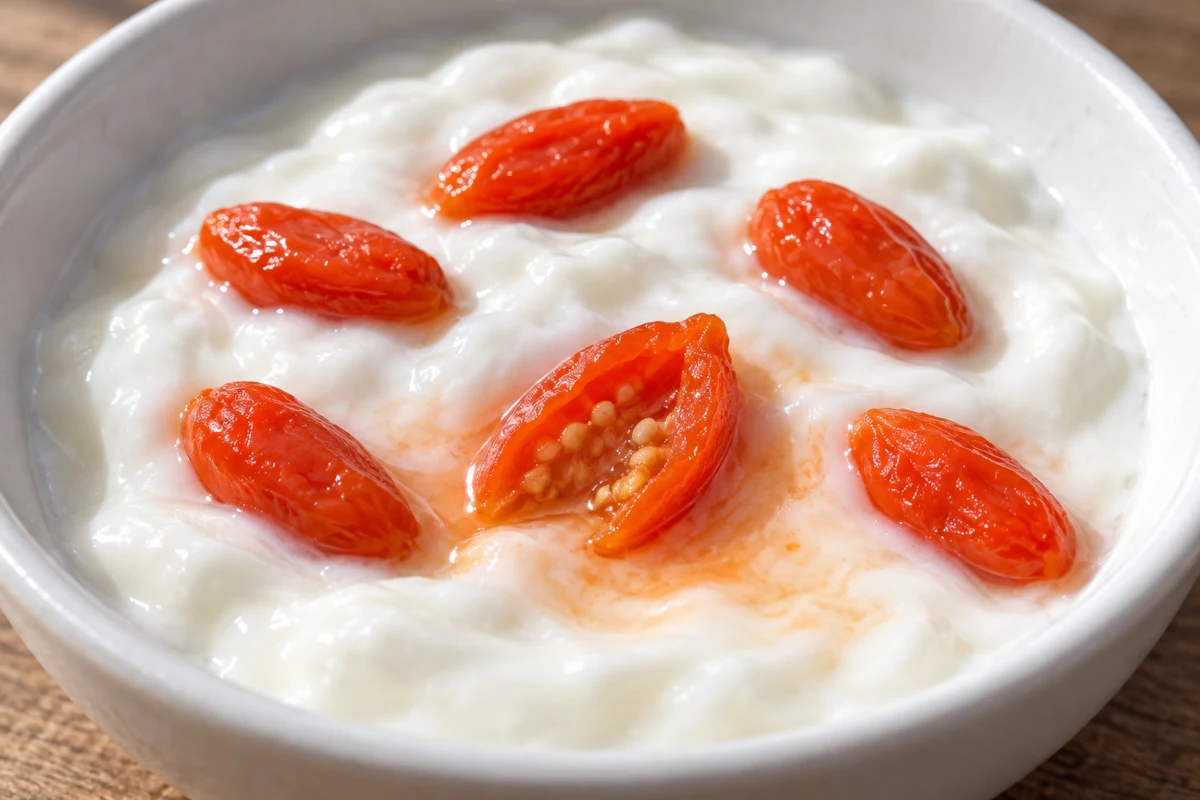
A localized orange tint beside split fruit is a different observation from the yogurt body as a whole.
An original study of berry pulp in probiotic yogurt used goji that had been stored frozen and then blended into a sweetened, heated fruit preparation. It assessed properties including color, pH, viscosity and water holding. Those methods show useful evaluation domains, but the material was prepared pulp. Its results cannot establish how untreated whole berries will behave in a different yogurt or validate a commercial process for them.
Use the same cup geometry, fill depth and viewing conditions for appearance comparisons. Strong backlighting through a thin glass container can make fruit look more brilliant than it appears through an opaque retail pack or on a spoon. A photograph can preserve a reference, provided it includes the observation conditions. For a color-critical program, agree an instrumental or controlled visual method with the technical team and retain the physical reference under a defined replacement policy.
Follow the color through the intended storage study. Record whether the skin becomes dull, whether colored liquid spreads, and whether the dairy changes independently. Opening the cup changes its surface and may disturb the liquid, so use appropriately prepared units for each observation. Keep sensory acceptance separate from any analytical measurement: a change that an instrument detects may be commercially unimportant, while a small concentrated liquid ring can be conspicuous to the customer.
Record the location of any liquid ring before disturbing the cup. A ring immediately against a fruit layer and clear liquid distributed over the upper dairy surface are different visible patterns. Opening, tilting or scooping the cup can mix them, making a later photograph less informative. Use separate undisturbed units for appearance and spoon tests where the study needs both, so the act of evaluating texture does not erase the original separation pattern.
Keep the skin, seeds and dairy texture in the tasting
Whole goji gives several textures in the same mouthful. There is the yogurt body, the soft interior of the fruit, the thin outer skin and the small seeds. Freezing, preparation and storage can change how these are perceived together. Establish whether the intended product should contain a soft recognizable berry, a gently collapsed inclusion, or a fruit piece with more resistance. A statement such as good texture leaves these choices unresolved.
Compare fruit portions that have followed the same preparation history. A berry tasted partly frozen can appear firmer than one fully equilibrated in chilled yogurt. A heated berry can retain a recognizable outline while yielding readily under the tongue. A dried berry that has absorbed liquid represents another material condition. Keep those states explicit whenever the development team discusses an alternative input, especially if an earlier concept sample used a different form.
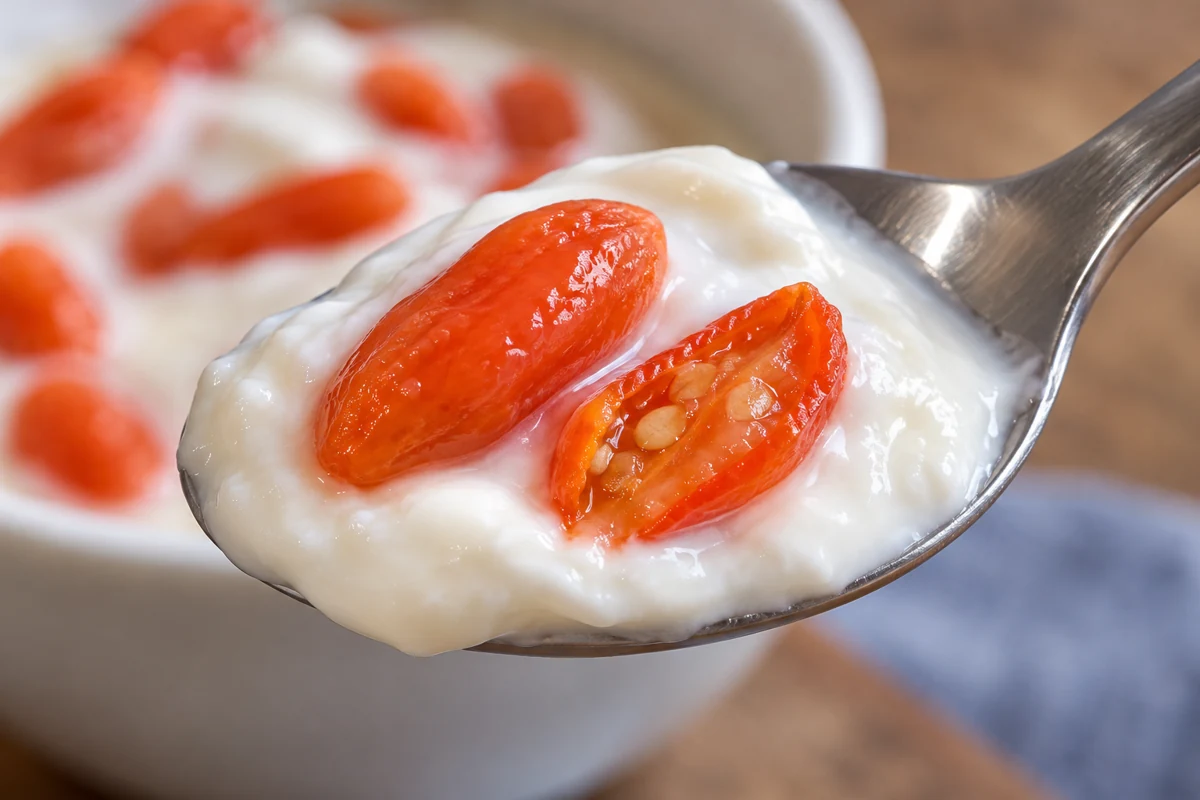
Thin skin, soft flesh and small pale seeds contribute separate sensations on the spoon.
Mixing can change the inclusion before anyone tastes it. Check berries after the preparation stage, after dairy blending, and after filling. If most breakage appears during one transfer, the useful next trial concerns that transfer and its operating conditions. Asking for harder fruit may produce a tougher skin or a less desirable flavor without resolving damage introduced later. Examine the actual equipment route with the operations team before deciding which raw-fruit characteristic needs adjustment.
Evaluate the dairy on its own as well. Adding fruit preparation changes the proportions of milk solids and other ingredients in the finished cup. Depending on its composition, a preparation can contribute liquid, sugar, pulp and thickening ingredients. A lower apparent viscosity after addition does not demonstrate that the berries have damaged the dairy protein network. Compare the formulation basis and the plain control before assigning a cause from a single spoon test.
Write separate descriptions for fruit survival and eating quality. A high proportion of recognizable berries can still deliver an unwanted chewy skin, while very soft berries can taste pleasant but fail the pack's visible-fruit concept. Agree which attributes are required together. A balanced approval record might describe recognizable fruit, acceptable skin and seed perception, and dairy body at the intended serving temperature, with photos supporting the words rather than replacing them.
Measure distribution through mixing and filling
Distribution has both a within-cup and a between-cup meaning. A customer may encounter most fruit at the bottom of one cup, or find substantially less fruit in one cup than in another. Looking at the average fruit addition to the batch cannot resolve either concern. Define the observation that matters to the product: visible inclusions through the cup, fruit in a typical spoonful, or the amount of fruit in each filled unit.
Whole berries make the basis of measurement important. Counting recognizable berries can be helpful for a small pack, but berries vary in size. Weighing a separated fruit fraction can introduce sauce and dairy carryover unless the separation method is defined. Visual scoring is convenient, yet it needs a shared reference. Select a method that the receiving and production teams can repeat and explain its limitations alongside the result.
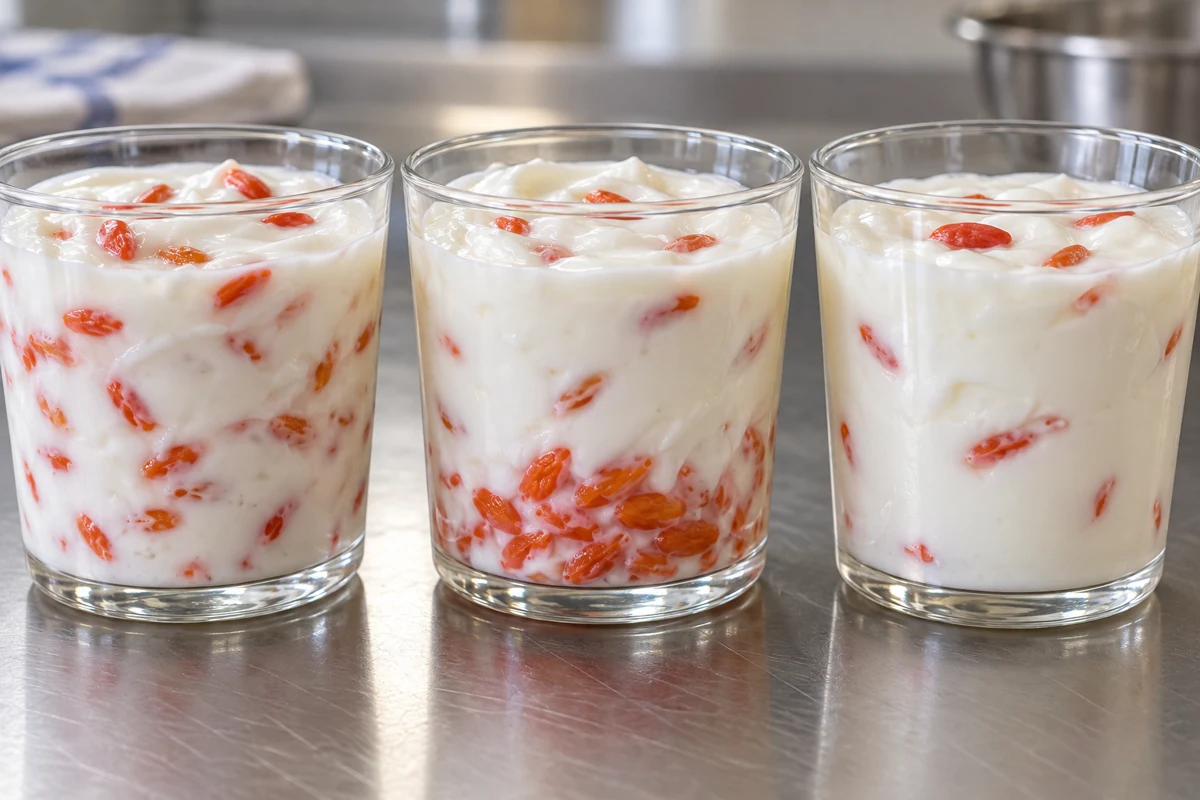
Fruit can appear dispersed, concentrated near the base or sparse among individual cups; this scene illustrates those states.
During a proposed filling trial, preserve units from distinct positions in the run instead of combining everything into one bowl. Early, middle and later units can reveal a change during holding or filling. The exact sampling plan should reflect batch size, process variation and the acceptance question. The difference between individual packs and composite samples matters here because mixing units can remove the distribution information the trial is meant to preserve.
Check the preparation vessel and line as well as the finished cups. Fruit remaining in a vessel corner or accumulating at an outlet can explain a change in inclusion delivery. A visual line inspection should be supported by the actual observations and operating record; an uneven cup does not prove which mechanism caused it. Record holding interval, mixing setting, transfer route and the fruit condition so a useful adjustment can be tested without changing several variables at once.
For an inclusion-sensitive product, compare the cup at filling and after the intended storage interval. A uniform initial appearance does not establish continued suspension, and a photograph of the bottom cannot describe the whole cup. Use consistent viewing or sampling positions. When the desired result is agreed, connect it to realistic operating limits and an approved packed sample. This gives the development, purchasing and operations teams a common definition of what a satisfactory distribution looks like.
As an illustrative quality example, cups with six, eight and ten recognizable berries have an average of eight, but they do not offer the same fruit count. Cups with two, eight and fourteen have that same average and much greater variation. Neither set represents a performed trial or an acceptance proposal. The example explains why an average dose needs accompanying unit observations when consistency among retail portions is part of the buyer's requirement.
Prepare fruit for the actual dairy process
Confirm the fruit's intended use before approving direct addition. A raw frozen ingredient and a prepared fruit component suitable for a particular ready-to-eat yogurt system carry different requirements. Freezing does not establish a pathogen reduction step. The supplier specification, processing record and dairy plant's food safety assessment should make clear what treatment has occurred and what the receiving plant must still do before the fruit reaches the finished product.
The FDA's storage guidance explains that frozen storage restrains microbial growth while organisms can survive. In this application, that means a visually sound frozen berry needs the same intended-use review as the rest of the ingredient system. Appearance inspection, a pleasant taste and absence of visible spoilage do not validate direct addition to a chilled dairy product. The responsible technical team should define the appropriate controls.
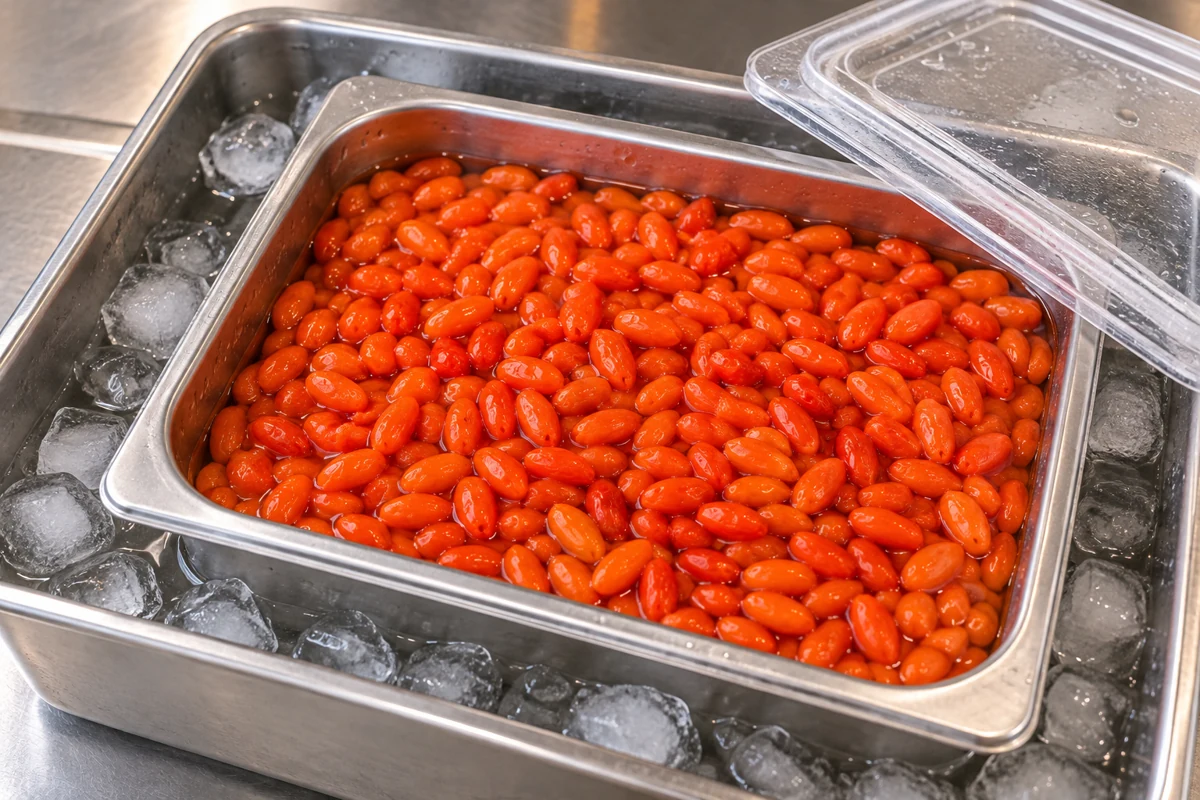
A fruit-preparation pan sits in an ice-water bath. Actual cooling conditions belong in the validated process.
If the development route uses a heated fruit preparation, establish its validated process and subsequent handling for the actual formulation, equipment and package. A temperature and time taken from a journal recipe or another fruit cannot be adopted as a universal production instruction. Whole berries also differ from a homogeneous puree in how material moves and heats. Process validation should address the product that will actually be made, including the relevant worst-case conditions.
Cooling, protected holding and transfer then become part of the same route. A safely processed preparation can be compromised by later handling. Describe how the prepared fruit is protected and how it enters the yogurt system, with hold limits and hygiene controls set by the plant. The commercial order can request relevant preparation and microbiological documentation, but the buyer's QA team must assess whether that evidence fits the intended dairy use and destination requirements.
Keep development tasting inside the approved handling arrangement. A small kitchen trial should follow the ingredient instructions and the facility's food safety procedures, even when its purpose is only color or distribution. Record the preparation used for every tasted variant. If the treatment changes later, repeat the relevant appearance and texture checks, because a process needed for safety can also alter skin integrity, released liquid and how the fruit behaves during mixing.
Clarify responsibility at the fruit-to-dairy handover. The prepared component should arrive with the identity, condition and records expected by the dairy plant, and the plant should know the limits of the supplier's claim. If the buyer makes the preparation in-house, that stage belongs in its own controlled production record. This practical boundary keeps a raw-fruit purchase approval from silently becoming an approval for the component used at the filling line.
Approve the stored cup and the repeat-order specification
Approval should describe the combined yogurt after the relevant manufacturing and storage route. Retain the raw-fruit specification, prepared-fruit formula, dairy base and filling conditions together. This allows a later difference to be investigated against the actual approved product. A supplier's berry sample and a retailer's finished cup belong to different points in that record; both may be useful, but neither can stand in for the other.
Agree the evaluation points within the product's intended shelf-life study. The study should cover the relevant safety and quality questions under the defined package and storage conditions. Fruit color, skin perception, liquid separation, dairy body and distribution can change on different schedules. Avoid a single overall score that hides a failure in a required attribute. Commercial shelf life needs supporting evidence for the complete product and cannot be inferred from the frozen ingredient's storage life.
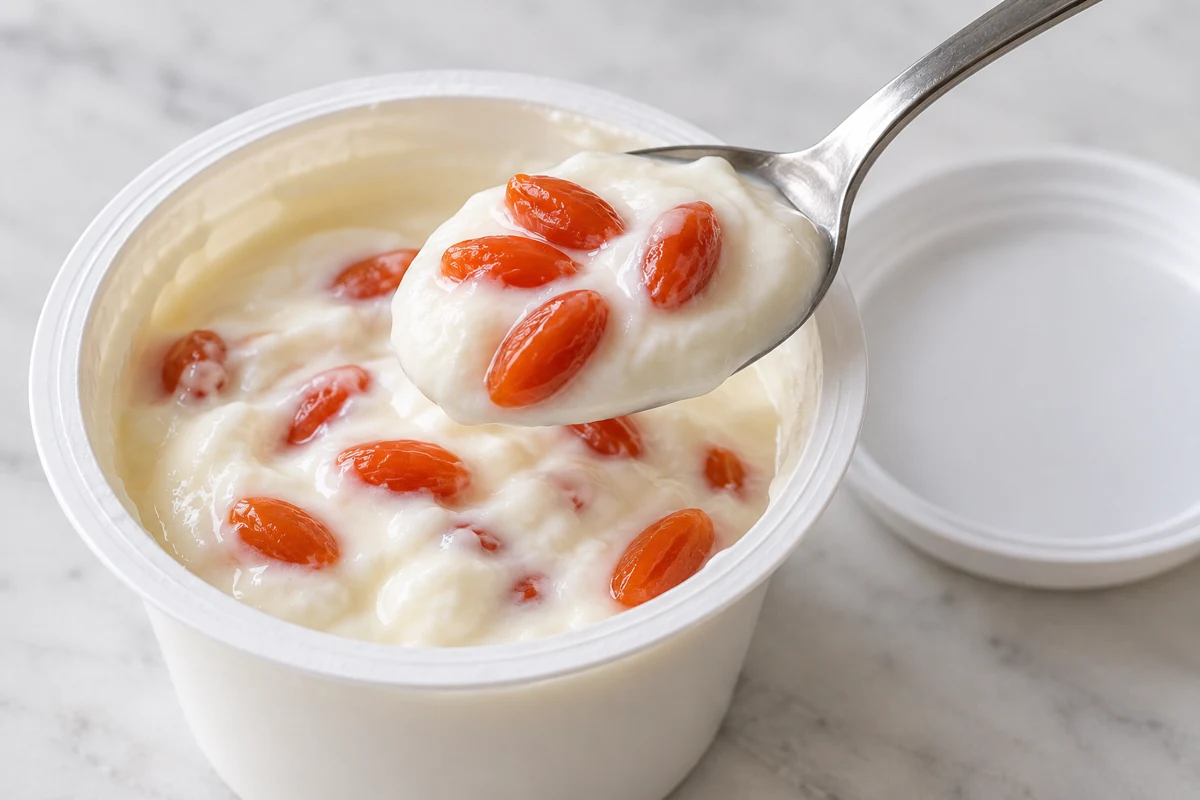
Examine the fruit, dairy body and visible liquid at the intended serving condition.
When comparing supplier lots, keep the preparation and yogurt dose constant for the first pass. If a lot needs a different fruit-preparation recipe to achieve acceptance, record the extra additions, recovery and processing implications. Compare usable cost at the accepted endpoint rather than price per received kilogram alone. A cheaper fruit can require more sorting or a higher dose, while a higher whole-fruit grade may add little value if the final product is intentionally blended smooth.
The order should name whole frozen goji, the agreed appearance and defect basis, packing, quantity, destination and intended yogurt application. Ask for the relevant lot identification, composition or treatment declarations, and reports required by the buyer's technical assessment. Where a cultivar, crop source or preparation difference affects performance, connect it to the approved sample instead of relying on a general description. We discuss those requirements before confirming the supply specification and quotation.
Keep a practical response route for an unexpected cup or incoming lot. Preserve identified sample units, photographs and preparation records, and agree who reviews them before disposition. A change in fruit distribution may call for a process investigation; a foreign-material or safety concern needs its own QA response. The most useful repeat-order standard lets the team identify the question quickly and compare like material under like conditions, while keeping the expected spoonful clear to everyone involved.
Continue reading about fruit applications
Compare how a specified dairy protein form changes strawberry aroma release without changing the fruit dose.
Consider starter function and dairy-base composition when a fruit-yogurt texture problem persists.
Preserve individual cup or pack differences when an average fruit addition hides uneven distribution.
Source frozen goji berries with GreenLand-food
GreenLand-food is a professional frozen goji berries supplier and manufacturer in China, providing factory-direct wholesale supply for importers, food manufacturers, foodservice distributors, and private-label programs.
Send the product form, specification, packing, quantity, application, destination, private-label needs, and requested documents.