


Apple Watercore: Glassy Flesh, Storage Risk and Frozen-Processing Decisions
Sep 28, 2026
Leave a message


What watercore looks like inside an apple
A normal apple cut face is mostly opaque. Light scatters through air spaces between cells, giving the flesh its familiar pale appearance. Watercore changes that view because liquid fills some of those spaces. The affected area looks more transparent, sometimes like a faint amber or honeyed window within otherwise creamy flesh. The pattern often radiates around the core along the fruit's conducting tissue. It may be small and localized, or it may spread toward the skin. The amount seen in one fruit cannot tell a receiving team how much of the rest of the lot is affected.
The skin can give little warning. A pallet may pass a quick exterior inspection while cut samples reveal a very different internal picture. This is why a photograph of a whole apple is weak evidence for watercore, and why a cut face should be shown under consistent lighting. A very severe case may darken the surface, but that visible sign is too late and too inconsistent to be the only sorting rule. If the defect matters to an order, destructive sampling belongs in the receiving plan.

Two cut faces make a localized glassy area easier to recognize.
Look at the location and character of the change before naming it. Glassy areas near the core or vascular bundles fit the typical watercore description. A localized brown patch under a skin impact, on the other hand, may point toward bruising. Soft, wet decay, an abnormal odor or visible fungal growth needs a different investigation. A single photograph rarely shows enough to decide cause, safety or the condition of an entire lot. The inspector should capture both halves of a freshly cut apple, its skin, and an unaffected fruit from the same delivery for comparison.
The term "watercore" can sound like an extra supply of water was injected into a finished product. In fact, the disorder forms while the apple is still on the tree. The clear regions are a tissue condition, not a frozen apple cut or a processing grade. That distinction is particularly useful when a purchaser sees translucency in thawed fruit. Thawing may make the appearance easier to notice, and thawed apple flesh may also lose firmness or release juice. Those post-freezing changes cannot prove that watercore began in the freezer. To investigate, compare any retained raw fruit, cut-face intake records and the same fruit after processing.
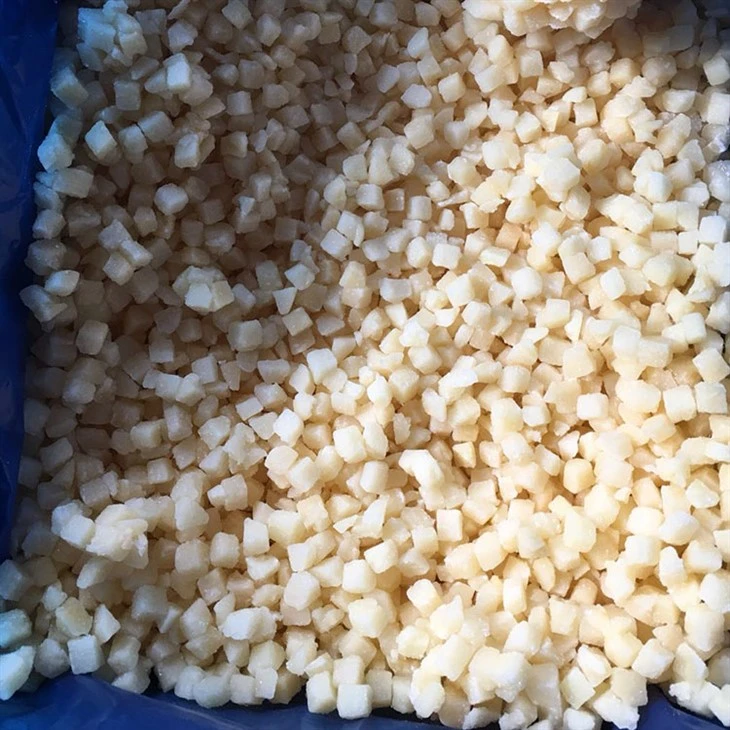
The photographed chunks show a product form, not a watercore diagnosis.
The frozen form also changes what a buyer can inspect. Small dice hide the shape of the original core and vascular pattern; a large wedge may show much more of it. Neither photograph of frozen dice nor a specification that says "white flesh" establishes the cause of an internal mark in incoming whole fruit. GreenLand-food's frozen apple range illustrates why cut form belongs in the discussion. The pictured chunks and dice are real product-form references; they are not photographs of watercore. A buyer evaluating a lot should ask for a current sample of the contracted form and a separate cut-face check of the fruit from which it will be made.
Why cultivar and harvest maturity matter
Apple cultivars differ in their tendency to show watercore, but a cultivar name is a risk clue rather than an acceptance decision. University extension references list varieties including Fuji, Delicious, Braeburn and Granny Smith among susceptible examples, with the mix varying by growing region and source. A named cultivar can also produce fruit with no visible watercore in a particular lot. For procurement, the practical record is the declared cultivar or cultivar mix together with harvest date, growing origin and actual cut-face findings. We cannot infer those details from the variety printed on a consumer carton.
The underlying process helps explain the glassy appearance. Apples transport sorbitol from leaves toward the developing fruit. In watercore-affected tissue, sorbitol-rich liquid accumulates in spaces between cells that ordinarily contain air. The liquid changes how light passes through the flesh. Researchers describe several factors that may influence this accumulation, including maturity, cultivar, fruit size, light exposure, temperature and orchard nutrition. The direct cause is not fully settled, so a supplier should avoid telling a buyer that any single cultivation factor definitely produced the observed pattern.

Watercore originates before harvest, so cut checks begin with the crop.
Watercore is often associated with advanced harvest maturity. Fruit left on the tree for color or sweetness can be more exposed to the condition, especially in susceptible cultivars. That association does not make watercore a sweetness test. A glassy apple may taste sweet, yet a buyer still needs the usual measurements and sensory checks for a frozen ingredient. Conversely, an apple meeting a Brix target may have no watercore at all. If the order is for bakery pieces, drink inclusions or visible fruit slices, sweetness, acid balance, texture and color should each be assessed against their own agreed criteria.
The orchard context matters most when it changes a current purchasing or storage decision. Ask whether the fruit is from a recent harvest or a held lot, whether a pre-storage cut sample was examined, and whether the variety and maturity records can be linked to the delivered lot code. These questions are especially useful if watercore appears only after part of a consignment has entered cold storage. The disorder itself was formed before harvest, although mild visible symptoms may diminish during storage. Later browning is a different development in affected tissue, and waiting to see whether a pattern fades is not a substitute for a receiving decision.
Some markets value the honeyed appearance of selected fresh apples. That consumer preference does not transfer automatically to frozen-ingredient contracts. A bakery that hides the fruit in a cooked filling may view a mild, sound cut differently from a retailer selling visible pale apple wedges. Neither buyer should accept a lot on cultivar reputation or on the phrase "honeyed apple" alone. At GreenLand-food, we would ask the purchasing team to describe the actual cut, final product and appearance tolerance before confirming what fruit can be offered. Cultivar availability and any proposed source lot must be verified for the current order.
Separate a mild observation from internal breakdown
Mild watercore is a visual tissue change with limited clear areas around the core. It is not the same observation as brown, soft or fermented flesh. In the university descriptions, slight or moderate glassiness can sometimes diminish during storage, while severe affected tissue is more likely to develop internal browning and breakdown. The sources use qualitative severity descriptions, not a single industry-wide percentage that can be copied into every frozen apple contract. A buyer should define the acceptable visual condition using approved reference photographs and the intended product format.
The risk grows when large areas of tissue are filled with liquid. Gas movement in affected flesh is reduced. During storage, severely affected areas may brown and develop off-flavors or an alcoholic odor. A cut face that was merely translucent at one checkpoint can therefore be a poor candidate for a long storage program if the condition is extensive. University postharvest guidance advises against placing moderate or severe watercore fruit into long controlled-atmosphere storage. A frozen processor should make its own documented hold-time and processing decision with qualified quality staff; the literature does not provide a universal frozen-product downgrade rule.

Brown tissue needs a different response from a limited clear area.
Inspect with more than sight. A fresh cut reveals the color pattern, but smell, firmness and tissue integrity help separate sound fruit from breakdown. Brown tissue is not necessarily caused by watercore: bruising, other physiological disorders and handling history can also matter. Similarly, an unusual odor warrants investigation rather than an automatic label of "watercore." Keep the affected fruit and an apparently unaffected comparison from the same lot, document when each was cut, and escalate any uncertainty under the site's normal hold and release procedure. Do not use a favorable photograph of one fruit to release a suspect delivery.
Processing is no cure for a defective raw material. Peeling may remove surface damage, but it does not remove a core-centered condition by itself. Dicing may make a pattern harder to recognize once the pieces are separated; it does not change what was present in the fruit. Heat can change apple color and flavor, while freezing can preserve or expose the condition already there. These operations may be appropriate for an approved application after an ingredient assessment, but they cannot replace documented acceptance and food safety controls. A downstream recipe should never become a route for concealing decay or an unexplained off-odor.
A useful disposition discussion therefore has two tracks. One asks whether the fruit is sound under the processor's safety and quality program. The other asks whether its appearance and texture meet the buyer's particular use. Mild clear areas in a firm, otherwise normal fruit may still fail a premium visible-slice specification. An unattractive yet sound piece might be considered for an agreed cooked use, subject to the customer's actual tolerance and trial results. Extensive glassiness with browning or off-odor calls for a hold and qualified evaluation; this article cannot declare such fruit suitable for any use. Writing those tracks separately prevents a commercial appearance concession from being mistaken for a safety concession.
Inspect a representative intake sample
A representative intake sample starts with a traceable lot definition. Record supplier lot code, cultivar or cultivar mix, harvest date if available, delivery date, orchard or packing origin, and any storage history that has been shared. Note the number and location of cartons or bins sampled. Take fruit from different positions in the load rather than only from the first easy-to-reach carton. If the load contains visibly different grades, sizes or packaging dates, treat those as separate sampling questions until their relationship is understood. The sampling plan and any formal acceptance level must come from the buyer's approved specification, not from a figure invented for this article.
Cut fruit in a repeatable way. A cross-section through the center can reveal the radial pattern around the core. A second cut in another direction can show whether the glassy area is confined or extends toward the skin. Photograph the cut face soon after cutting, under neutral and consistent light, beside a fruit from the same lot that looks ordinary. Record the whole-fruit condition as well. If the sample has sat in air long enough to brown from ordinary oxidation, write down the time since cutting so that later reviewers do not confuse a newly exposed surface with internal browning already present at the cut.

Representative cuts and lot records support an intake decision.
Use descriptive language that another inspector can check. "Translucent tissue confined near the core," "glassy area extending toward the skin," "brown tissue within the clear area," and "abnormal fermented odor on opening" communicate different conditions. A vague mark such as "wet inside" does not. A cut-face image can support the description, but the image should include a scale or consistent framing and a link to the lot and sample identity in the private quality record. The public generated images in this article are explanatory examples; they should never be filed as evidence of a delivered lot.
The inspector should connect appearance with the order's intended use. For a visible wedge or slice, compare the current raw cut with the approved appearance reference and a pilot frozen piece. For small dice destined for a cooked filling, examine whether the final process exposes brown tissue, uneven color, or an unexpected flavor after the planned heating step. Test the actual cut size and route. Do not assume that dicing erases all concerns or that a smooth puree accepts every raw-fruit defect. If the same lot is proposed for several uses, each buyer or application can require a different visual and sensory approval.
It helps to preserve a simple comparison record rather than a single pass/fail word. A table can capture the relationship among observation, use and next action:
| Cut-face observation | Further check | Provisional handling |
|---|---|---|
| No visible glassiness in sampled fruit | Continue normal contracted checks for maturity, defects and safety | Judge under the approved product specification. |
| Limited translucency near the core, firm tissue, normal odor | Compare more cuts across the lot and test the intended frozen form | Seek buyer-specific visual acceptance; avoid promising a universal tolerance. |
| Broad glassiness reaching toward the skin | Review storage history, extent across sampled cartons and planned hold time | Hold the disposition decision for qualified QA and application review. |
| Brown, soft tissue or abnormal odor | Investigate breakdown, damage and food safety under the site procedure | Quarantine the suspect material; do not route it to another application merely to use it. |

The real product view helps relate raw-fruit intake to frozen cut form.
This table is a decision aid, not a numeric grade or a formal hazard analysis. A processor's actual sampling plan, laboratory checks, rejection criteria and records must follow its own food safety system and contract. When the original delivery is already frozen, a raw-fruit cut record may be unavailable. In that case, examine retained raw or pre-freeze samples if they exist, review the processing record, and make a limited statement about what can actually be observed in the current frozen product. The absence of raw evidence should be stated plainly.
Decide the destination before freezing
Freezing locks in many qualities of the raw fruit and changes some others. Ice formation can soften apple texture and increase juice release after thawing; the amount depends on the fruit, cut and process. A specification written only for whole fresh apples may therefore be inadequate for a frozen slice or dice order. Watercore adds a particular question: will the glassy pattern, or any later brown area associated with it, be visible or objectionable in the delivered cut and final recipe? The answer should be tested with the contracted format before a large lot is committed.
Visible slices, wedges and large chunks carry a high appearance burden. Their cut faces remain legible in a retail pack, pie layer or fruit garnish. A mild clear area may be a cosmetic failure even when other measures are acceptable. Small dice distribute the fruit into many pieces and reduce the visibility of the original radial pattern, but color variation and sensory defects can still appear after thawing or heating. Puree-like uses shift the emphasis toward flavor, color, texture and recipe performance. These are application differences, not permission to relax the safety or soundness requirement.

Larger pieces make cut-face appearance more prominent.
For a proposed processed use, run a small trial that follows the real route. Cut or sample the fruit as ordered, freeze it, store it for the intended trial interval, and evaluate it at the point where the customer uses it. If the customer cooks the pieces, assess the finished filling rather than only the frozen bag. If the product is served cold, evaluate the thawed color, firmness and released juice. Keep an unaffected control from the same lot or the approved reference product, so differences are not attributed to watercore when they may arise from cultivar, cut size or freezing conditions. The trial must report its actual results; the outline of a trial is not evidence that a GreenLand lot has passed.
Agree the buyer's terms before production. The order can name the product form, cut dimensions, peel status, cultivar or allowed mix, appearance reference, limits for internal browning and other defects, intended application, packaging, sampling method and required documents. If watercore is explicitly relevant, describe the permissible pattern with photographs or a clearly written standard. A phrase such as "watercore free" needs an agreed inspection basis because every apple cannot be cut without destroying the product. Conversely, a vague "watercore allowed" clause leaves the processor unable to distinguish a small clear zone from broad tissue breakdown.
Storage timing deserves its own line in the plan. A lot showing extensive watercore at harvest should not be placed into a long holding route on the assumption that the condition will resolve. If a buyer plans an extended raw-apple storage period before freezing, the pre-storage sample and any later rechecks should be tied to the same lot. If the fruit is frozen shortly after intake, the processor still needs to decide whether the starting material meets the frozen product's quality and safety requirements. Freezing changes time and temperature management; it is not a substitute for the first acceptance decision.
The commercial discussion should stay honest about supply. GreenLand-food shows frozen apple cuts and also explains apple freezing and use. Those pages establish relevant product context, but they do not prove a current cultivar, a watercore-free guarantee, or an accepted level of glassiness for the next crop. We can prepare an inquiry around the needed form and specification, then confirm the actual source, sample and documents for that order. A buyer who sends a cut-face reference and the final application gives the supplier a decision it can verify instead of a defect word it has to guess at.
Watercore begins before freezing, and the meaningful purchasing decision begins before the freezer as well. A receiving team that records the cut-face pattern, separates translucency from browning or odor, and tests the intended product form can make a defensible choice. That record also gives the next buyer a clear explanation of what was accepted and why.
Source frozen apple with GreenLand-food
GreenLand-food is a professional frozen apple supplier and manufacturer in China, providing factory-direct wholesale supply for importers, food manufacturers, foodservice distributors and private-label programs.
Send the product form, specification, packing, quantity, application, destination, private-label needs and requested documents. We can confirm the current source and sample for your order.