


Blueberry Syrup for Coffee: Frozen-Berry Extraction and Latte Compatibility
Sep 28, 2026
Leave a message

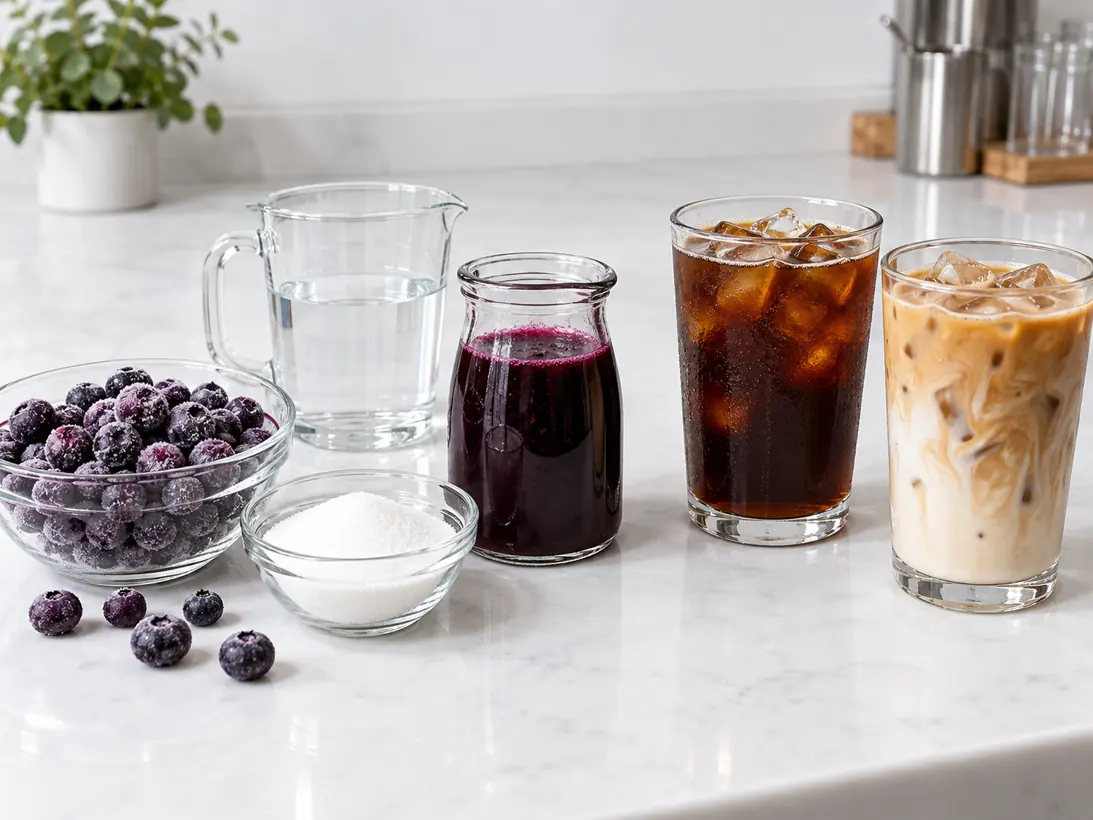
Choose the coffee drink before making syrup
Start with the drink that the customer will actually receive. In black iced coffee, blueberry has to compete with roast aroma and bitterness but there is no milk phase to obscure the view of fine particles. In an iced latte, dairy or a plant-based milk changes the apparent sweetness, color and texture. A hot latte adds temperature as another condition. The same bottle of syrup may be welcome in one cup and look muddy or separated in another. Name the intended coffee, milk brand and serving size before deciding how concentrated or clear the syrup should be.
Write a target serving rather than a vague flavor goal. A cafe team might use a defined mass of syrup in a particular espresso, cold brew or filter coffee and a measured volume of milk and ice. The exact amounts are the cafe's trial inputs; they are not universal recommendations. When comparing candidates, keep coffee strength, roast, temperature, ice mass, milk type and syrup dose constant. Then score the fruit note after the first stir and again after the drink has stood for its normal service time. A spoon sample of concentrated syrup can taste vivid even when the fruit disappears at full-cup dilution.
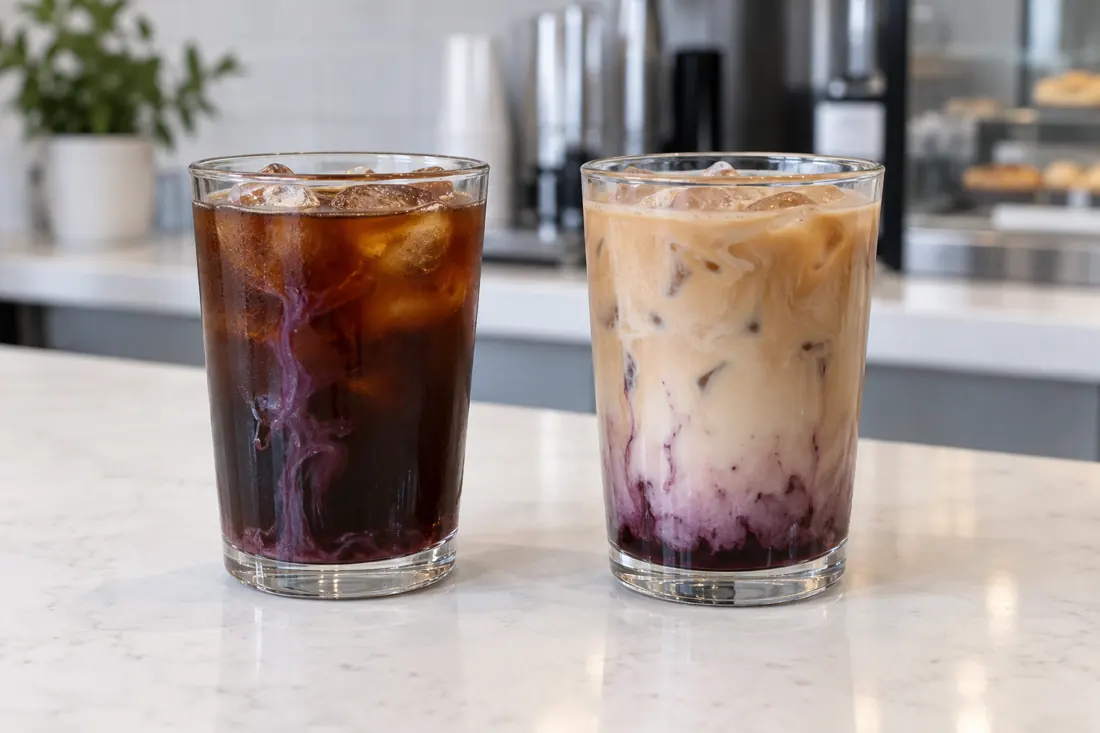
The same syrup looks and tastes different after different cup dilution.
The sensory target needs words that staff can use. Does the drink need a fresh berry impression, a jam-like cooked note or only a faint fruit accent? Is a deep violet streak an intended visual effect, or should the finished beverage look uniform? If the syrup carries fine fruit solids, a clear cup will show them; an opaque cup may hide them but the straw or dispenser can still reveal a problem. Specify the cup and service method alongside the recipe. A barista who pours over ice in a transparent cup sees a different product from a developer who tastes the syrup in a ceramic mug.
Milk-base choice deserves its own line in the trial sheet. Dairy milk, oat drink, soy drink and other alternatives differ in formulation and acidity tolerance. Even two cartons in the same category may behave differently. A blueberry preparation contributes fruit acids, while coffee itself has its own acidity and dissolved material. We should therefore observe the actual chosen combination, not claim that a particular syrup pH will universally prevent curdling. The acceptance question is visible separation, texture and flavor in the finished cup at the intended addition order and service time.
The competitor recipes visible in the current search largely answer a home question: simmer berries, sugar and water, optionally strain, then stir into coffee. That is a useful entry point. Your Dream Coffee's recipe includes frozen berries and a sieve option; Bakerita's blueberry syrup also describes beverage uses. Our pilot goes further because a cafe needs a repeatable drink, predictable dispenser behavior and a clear rule for when a batch fails. The home recipes do not establish GreenLand fruit performance or a shelf life for this formulation.
At the first briefing, separate sensory acceptance from physical stability. A beautiful purple latte may taste too sweet; a balanced black coffee may leave a berry sludge at the bottom. Record fruit intensity, coffee balance, visible flecks, sediment after standing, and any streaks or clumps in milk. Decide which are desirable characteristics and which are defects for the brand. With those conditions set, the extraction method has a purpose. Without them, a team can keep changing sugar and screening until it has a visually attractive syrup that does not work in its actual menu drink.
Extract a repeatable frozen-blueberry base
The frozen fruit should be treated as a weighed ingredient, not a scoop of unknown size. Blueberries vary in berry size, maturity and soluble solids; freezing and thawing can release liquid that belongs to the mass balance. If the fruit is thawed, catch the juice in a clean covered container and return it unless the trial deliberately specifies otherwise. If the berries enter the pan frozen, record that starting state because it affects heating time. A recipe that drains thaw juice one day and retains it the next will produce different concentration even when the nominal berry weight looks unchanged.
The 500 g berries, 250 g sugar and 150 g water baseline gives a practical pilot charge. It is deliberately described by mass so a developer can scale or compare it without arguing over cup volume or berry size. It may be too sweet, too thin or too intensely cooked for a particular drink; that is why the first batch is a benchmark, not an approved recipe. Weigh the empty pan, ingredients and final cooled syrup. The difference helps reveal evaporation and makes subsequent trials comparable. Record any added acid, flavor or other ingredient separately rather than burying it in an undefined "adjust to taste" note.
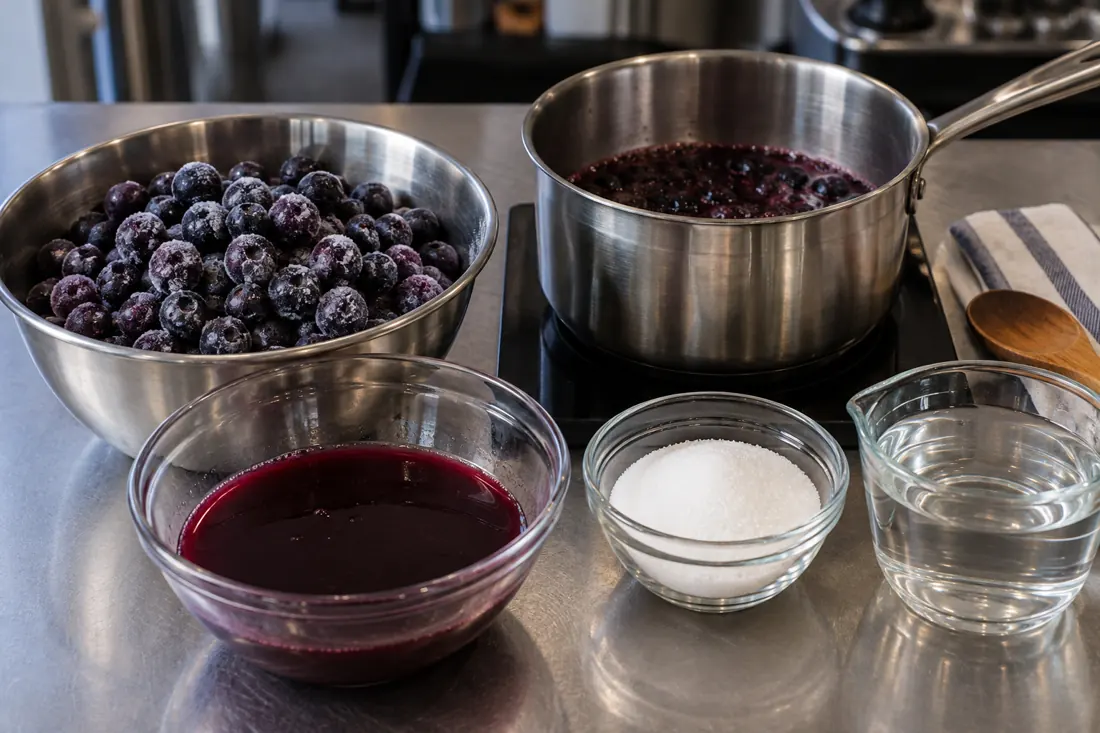
Keep frozen blueberry and released juice inside the recorded mass balance.
Use a controlled heat route that softens berries and dissolves sugar while avoiding unnecessary scorching. A small pilot can be stirred over moderate heat until sugar is dissolved and fruit breaks enough to release color and flavor, then removed according to its recorded temperature and time endpoint. The team should choose a measurable endpoint for its equipment rather than copying a minute count from a different stove. Do not assume that longer heating always gives more useful blueberry character; a cooked note may grow while fresher aroma declines. Taste the result at serving dilution before changing the heat profile.
For repeatability, make the first three observations before any screening: starting mass, cooked mass and the appearance of the softened fruit. Then screen by an agreed method. A fine sieve, a coarser screen and a blend-then-screen route each give different fruit-solid fractions. Mark the screen opening or equipment and the mass of retained pulp. Do not squeeze the pulp in one batch and let it drain in the next without recording the change. Yield alone does not define the recipe; the amount and size of suspended particles can change dispenser flow and cup sediment.
GreenLand's frozen blueberry supply includes product forms that a beverage team can specify for processing. Whole berries and smaller berries may be suitable starting materials if the buyer confirms the grade and supply plan. We discuss berry size, Brix, color, integrity, foreign-material limits, packing and available sample lot before the buyer commits to a test. The first GreenLand photo on this page shows a real blueberry product form; it does not show syrup extraction or prove any cooked yield. Buyers should request a current representative lot and repeat the pilot if the fruit specification changes.

Real product-form photograph; it is not a syrup or beverage trial.
Cooked blueberry color can shift with recipe and use, so a development note should distinguish appearance in the syrup bottle from appearance after dilution with coffee. A dark concentrate may produce only a modest tint in a large black coffee; in milk it may show lavender or gray tones depending on the drink. Use the same lighting and cup in comparisons. Save a photograph immediately after mixing and another after the service interval. Those images help a cafe judge its intended visual signature, but the team should also taste the beverage blind enough to avoid choosing a weaker flavor solely because its color is attractive.
Decide how much pulp the drink can carry
Screening is an application choice. A fine-screened syrup often passes more easily through narrow bottle tips and gives a cleaner look in a clear cup. A pulpy syrup can communicate real fruit and give more body, yet fine skin and seed particles may settle. Neither route is automatically better. Prepare both from the same cooked base so the comparison isolates the screened fraction. Weigh the yield of each and adjust dose by the intended flavor or solids target, then test them in the exact drink and dispensing equipment.
Watch how the syrup moves at the temperature of service. A warm liquid can pour freely while the cooled version clings to a bottle or clogs a pump. Fill the planned dispenser with a measured mass, chill or hold it under the proposed service condition, then pump several servings at the start and after a normal standing interval. Record whether dose mass changes, whether fruit particles collect at the inlet, and whether staff must shake the bottle. If shaking is part of the approved service method, write it into the procedure; do not quietly rely on one attentive tester to rescue an unstable trial.
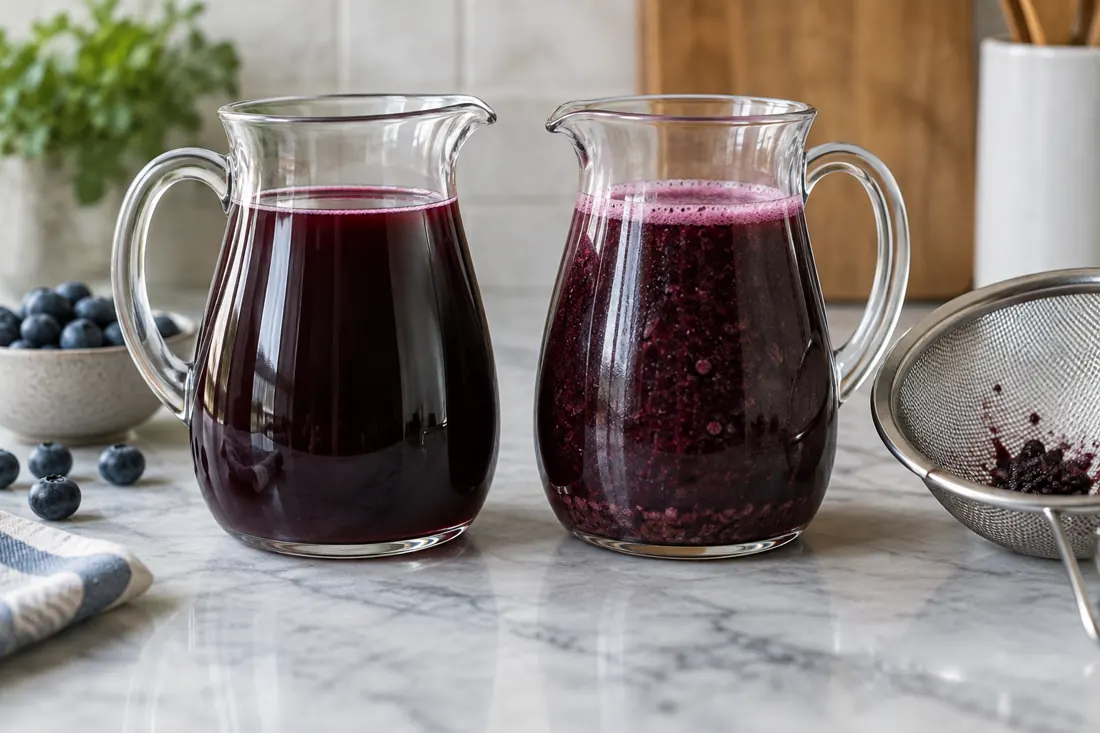
Screening changes both dispenser behavior and visible cup sediment.
Sediment should be evaluated in the cup as well as the bottle. Pour the screened and pulpy variants into matching clear cups with the same coffee and ice. Photograph the base immediately and after the intended time before consumption. A thin layer of berry solids may be acceptable in a rustic drink, while a plug of pulp at the straw may not be. The acceptance limit belongs to the cafe's design and equipment, not to a generic blueberry syrup recipe. Record whether the last sips are overly sweet, grainy or weaker in fruit than the first sips.
A useful trial separates extraction from straining pressure. Pressing soft pulp through a fine screen increases yield but may drive tiny solids into the liquid. Passive draining gives a clearer fraction but leaves more material behind. Blending before screening creates another particle-size pattern. Choose one method and apply it consistently before changing the sugar level. If a team changes all of these at once, a smoother cup cannot be attributed to any one adjustment. The tested screen and handling become part of the formula specification, not an informal kitchen preference.
The GreenLand frozen-blueberry use guide lists several beverage and food routes. Coffee syrup is more specific: the product must survive a particular combination of coffee, possible milk, ice, a dispenser and a service interval. The same fruit may work in smoothies with suspended solids that would be unwelcome in a latte. That is why this article tests two particle routes rather than treating all blueberry beverages as equivalent. A change from whole IQF berries to a different size or grade should trigger a quick screening and flow check even if the nominal fruit mass stays fixed.
When a syrup develops a cloudy layer, identify where it comes from before changing ingredients. It may be fruit pulp carried through the screen, settled fine particles, crystallized sugar, or a separate interaction in the finished drink. Observe the syrup alone and the mixed cup in separate clear containers. Compare warm and cooled syrup. Photograph the bottom and side of each. This small diagnostic set stops a developer from adding more sugar to solve a dispenser problem that actually began with berry particle size, or from blaming milk for sediment already present in the syrup bottle.
Run an addition-order and milk trial
Use the chosen coffee and milk base, then vary only how the same measured syrup enters the cup. In one test, mix syrup into coffee before adding milk. In another, prepare coffee and milk first, then add the syrup. An iced black coffee is a useful reference for fruit flavor and sediment without a milk phase. Keep dose, drink mass, temperature, ice, mixing strokes and observation time comparable. A visible difference does not by itself explain the chemistry, but it tells the developer which route is worth investigating or serving.
The trial can be run in a compact sequence:
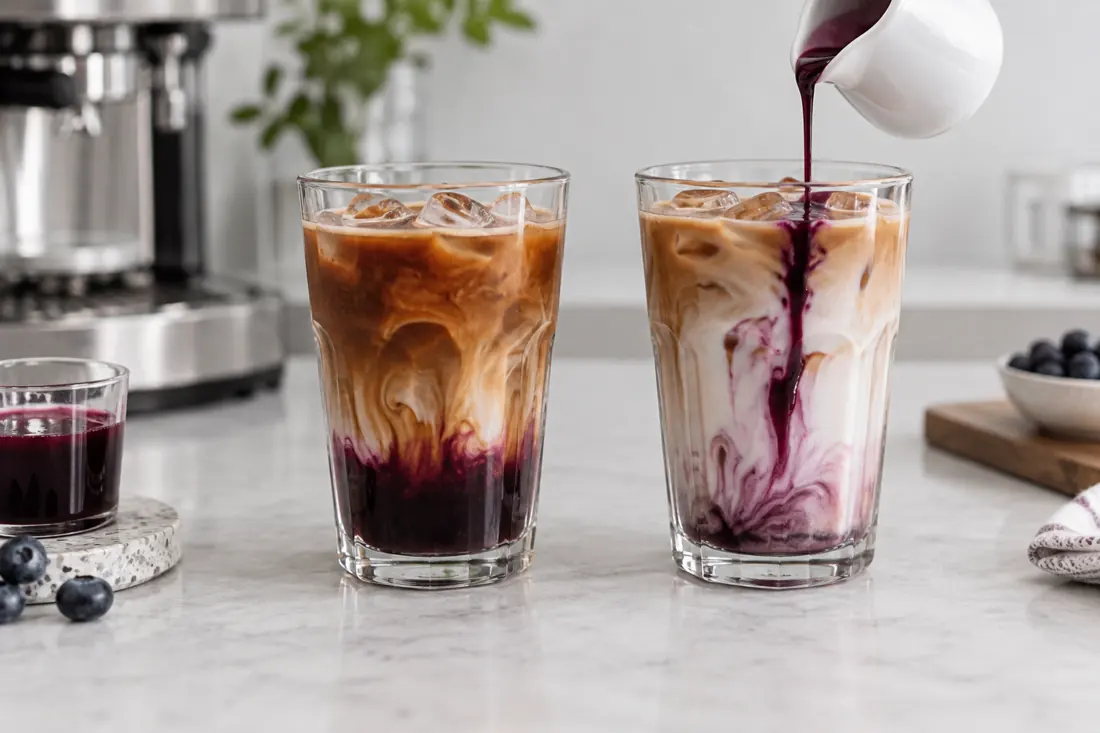
Observe the chosen milk and coffee together rather than promising compatibility.
- Measure one cooled syrup dose by mass and record its screened fraction, batch and serving temperature.
- Prepare equal coffee portions and one black-coffee reference; identify the exact dairy or plant-based milk used for the latte portions.
- Add syrup before milk in one latte and after milk in the other, following a written mixing method and equal final drink volume.
- Record flavor, color, visible flecks, clumps and phase separation immediately, after stirring and at the planned handoff time.
Do not claim that a syrup is "non-curdling" because one cold cup looked smooth. The result may differ with hot espresso, a more acidic fruit lot, a different milk formulation or a longer stand. Conversely, a few purple streaks from incomplete mixing are not necessarily protein coagulation. Look closely at texture, repeat the cup with controlled mixing and compare with the black-coffee reference. If a milk drink develops persistent flakes or grains, stop that formulation route and involve the beverage team's technical staff before making a menu or commercial claim.
The table used in a pilot should name the actual bases and outcomes rather than promise a universal rule. For example, record rows for black iced coffee, the selected dairy latte and the selected oat latte; columns can hold syrup dose, addition point, fruit intensity, sediment at the bottom, visible separation and the time observed. Fill the cells with trial measurements and comments. Do not populate them in advance with "stable" or "unstable." A blank matrix is a useful planning tool only if it is filled during the real cup trial and connected to an approved recipe version.
| Trial cup | Addition point | Record after mixing and at handoff |
|---|---|---|
| Black iced coffee | Syrup into coffee | Fruit intensity, sweetness, visible particles and bottom sediment |
| Selected dairy latte | Syrup into coffee before milk; repeat after milk | Flavor, streaks, grains or separation, and service-time appearance |
| Selected plant-based latte | Repeat both addition orders with named milk | Flavor, settled solids, visible separation and texture |
Taste matters alongside appearance. Coffee bitterness, roast aroma, milk sweetness and dilution all shift how blueberry reads. A syrup that is strong in water may taste flat in espresso; one that feels balanced in black coffee may overwhelm a latte with sweetness. Ask tasters to judge fruit identity, coffee identity, sweetness, aftertaste and the feel of any pulp in a serving at normal temperature. Consider testing at the likely low and high syrup doses rather than a single midpoint. This sets an operating window for baristas, who may vary a pump stroke or pour slightly.
The real use of a frozen-fruit supplier is to keep the input traceable while the beverage developer learns which cup works. We can agree the blueberry form, quality range, lot sample, packing and order needs. We cannot certify that a particular dairy or oat milk will remain smooth with a buyer's syrup and coffee. When a later shipment changes berry size or Brix inside the commercial specification, the cafe can rerun a small cup test against a retained reference. That is more credible than printing a universal milk-compatibility statement based on one attractive photograph.
Set a small-batch specification
Once a candidate cup works, write down the syrup recipe and the service recipe separately. The syrup record needs frozen blueberry lot and form, fruit mass including thaw juice, sweetener and water masses, any other ingredients, cooking method, starting and final mass, screen method, cooled yield and final flow. The service record needs coffee type and mass, milk product if used, syrup dose, ice, addition order, cup size and acceptable sensory and visual outcomes. Keeping both records prevents a successful syrup from being judged in an entirely different drink without anyone noticing.
Acceptance limits should be observable. A developer can define acceptable fruit intensity against a reference cup, maximum visible sediment after a stated time, dispenser dose variation and whether any persistent grains appear in the chosen latte. The precise limits depend on the menu concept and equipment. A clear cup photograph can document appearance, but it should be taken under consistent lighting and alongside the recipe version, batch number and observation time. A purple swirl can be an intended presentation in one drink and an unwanted sign of poor mixing in another.

A serving recipe and a syrup batch record support repeatability.
Use a short controlled batch sheet rather than an elaborate promise. Record ingredient masses and lot numbers, heat endpoint, screened-pulp mass, bottle fill mass, cooling start and finish, storage temperature and the person who released the batch for a trial. If the team changes the berry lot, the screen, a sweetener or the milk, mark a new version. A staff member should not be expected to infer from a marketing photo whether a pulpy syrup must be shaken or whether a delicate latte must be mixed in a special sequence.
Cooling and shelf life are different decisions. Cool a prepared syrup under a written safe process and keep perishable trial material under appropriate refrigeration while the food-safety team evaluates it. The FDA's food-storage guidance advises prompt refrigeration of perishables and refrigerator temperatures at or below 4°C / 40°F, but it does not validate a specific blueberry syrup's shelf life. Sugar, fruit acidity, process sanitation, container, temperature and intended use all matter. Do not borrow a one-week figure from a home recipe as a commercial date code. A cafe or manufacturer needs its own validated safety and quality program before assigning a hold period.
The receiving specification for frozen blueberries should match the development basis. Ask for the confirmed whole or small-berry form, size range, Brix and color expectations, defect tolerance, foreign-material controls, packing, order volume, destination documents and cold-chain plan. The second real GreenLand image shows a smaller blueberry product form, not the syrup in the bottle. A beverage team that approves a syrup with one berry form should check yield and screening again when it shifts to another. The supplier sample must be representative of the commercial order, and any process claims belong to the buyer's validated recipe.

Real small-berry ingredient view; performance must be tested.
For a practical release meeting, put the approved black coffee or latte beside the batch sheet and a rejected reference. Note why one passed and the other failed: too much sediment, weak blueberry after dilution, a milk grain, poor pump flow or excessive sweetness. This is more useful than a single statement that the syrup "tastes good." The approved record gives the cafe a serving method and gives procurement a fruit specification to buy against. It also identifies what must be retested when ingredients or equipment change.
The final decision is therefore a two-part approval. First, approve a frozen-blueberry syrup process that gives a controlled screened fraction and cooled flow. Second, approve that syrup in each named coffee and milk drink at its actual addition order and dose. Do not extend that result to every latte or to an untested storage period. With those boundaries written down, frozen blueberry can be a dependable development ingredient, and the cafe can make a drink its staff can repeat rather than a single successful demonstration cup.
Source frozen blueberry for coffee trials
GreenLand-food is a professional frozen blueberry supplier and manufacturer in China, offering factory-direct wholesale supply for cafes and beverage processors.
Send the blueberry form, specification, packing, quantity, application, destination, private-label needs and requested documents. We can confirm a representative fruit sample for your own syrup trial.