


High-Methoxyl vs Low-Methoxyl Pectin for Frozen-Fruit Preparations
Sep 28, 2026
Leave a message

Define the fruit preparation before choosing pectin
Begin with the product that the preparation must become. A spoonable fruit spread, a glossy layer deposited after baking and a filling that goes through an oven ask for different flow and heat behavior. The label "fruit filling" conceals these differences. A post-bake layer can be added to a cooled pastry; its main demands may be smooth depositing, a clean cut and controlled water release in storage. A baked filling must pass through a heating cycle with the dough, remain in place and still look acceptable after cooling. A fruit preparation for dairy has another set of demands, including how fruit pieces remain distributed and how the fruit phase meets the chosen dairy matrix.
Write the route in ordinary production terms before requesting pectin samples. Where is the fruit added? Is it thawed first, heated from frozen, or blended with a warm syrup? What is the target soluble solids range at filling, and what fruit percentage must appear in the finished recipe? Does the deposit flow through a nozzle or get spread by hand? Will the filled product be reheated, frozen, thawed or held chilled? These questions narrow the candidates more effectively than asking a supplier for a generic "high methoxyl pectin." The same candidate can appear satisfactory in a jar at room temperature and fail when it is pumped through the actual deposit line.
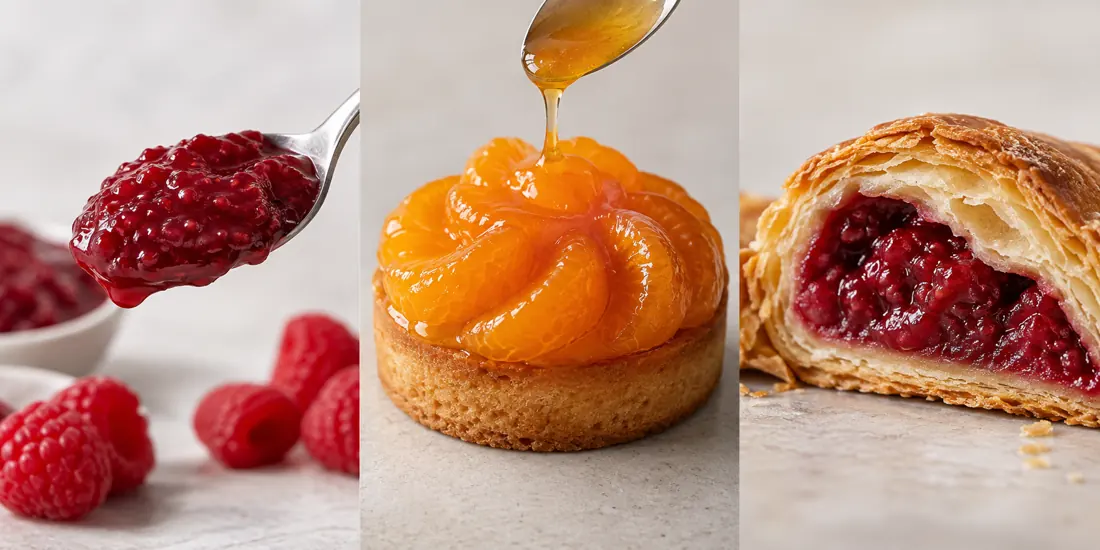
A spread, deposited layer and baked filling ask for different behavior.
It helps to separate a texture target from a product name. "Firm" may mean a slice that stands after cutting, a sauce that clings to a spoon, or a fruit bed that does not migrate into yogurt. Describe what an operator or customer will actually see. A bakery team might specify the amount of filling visible after baking and the absence of a wet ring in the crumb. A fruit-spread team might care about spreadability after refrigeration and fruit suspension in a jar. The test must be anchored to the real serving or assembly temperature; a warm kettle sample can tell a different story from a cooled product.
Use a small formulation brief with the fruit form, target fruit percentage, sweetener system, measured °Brix, measured pH, known calcium sources, process temperatures, deposit temperature, package and intended storage. Record which values are targets and which are measured on the actual pilot batch. If milk, calcium-fortified ingredients or mineral salts enter the system later, include them. Pectin suppliers describe HM, LMA and LMC according to different gelling conditions and application ranges, but their tables cannot know the chemistry of the buyer's complete recipe. The brief turns those ranges into a trial question.
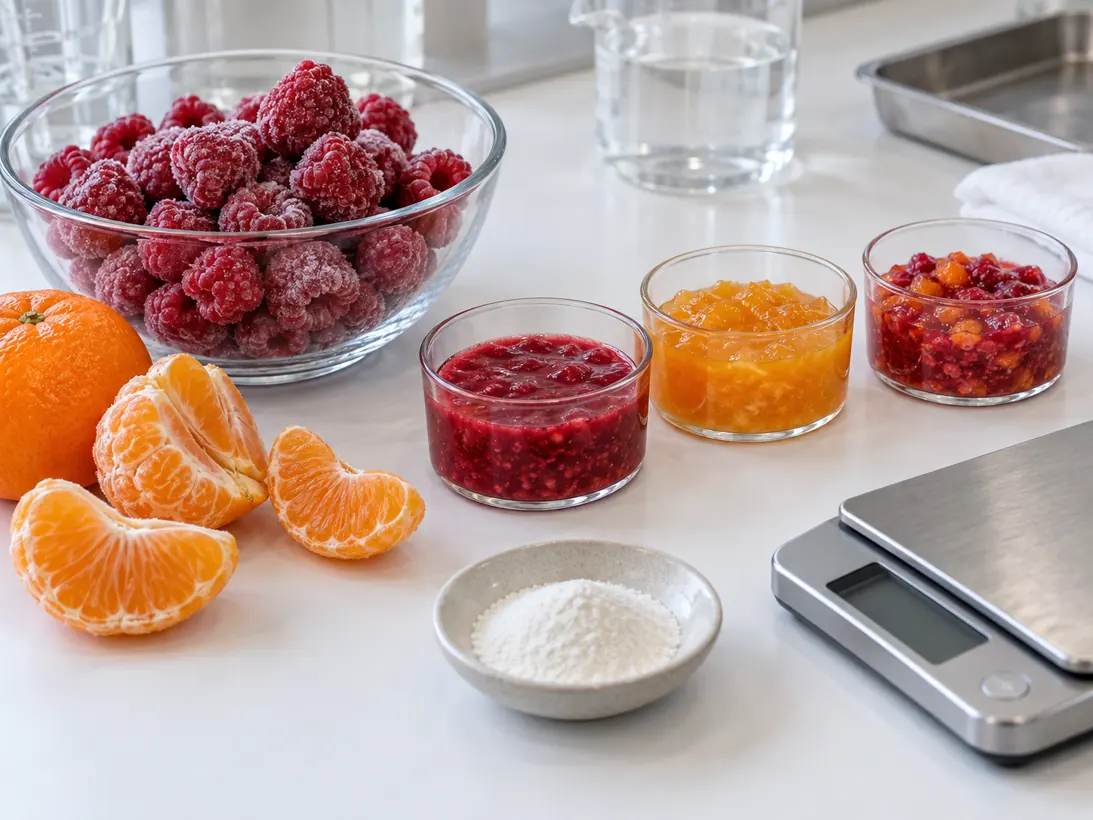
Frozen fruit choice can be application-specific. Whole frozen raspberries make fruit identity visible but may break during stirring and add seeds and released juice to the matrix. Frozen mandarin segments preserve a recognizable citrus piece yet need gentle mixing if intact segments matter. Puree gives a different particle size and liquid distribution from whole fruit. We confirm the contracted form, accepted broken-fruit level and other relevant specifications before a buyer interprets a pectin trial. A successful test with puree should not automatically approve an IQF whole-fruit version.
The first useful comparison is therefore between intended applications, not between pectin labels. Prepare one target product definition for each route and keep the fruit input and method fixed within that route. When the team changes from post-bake to bake-through use, open a new trial record instead of treating an attractive cooled sample as proof of oven stability. This simple discipline prevents a strong ingredient choice from being asked to solve a different job later.
Read HM, LMA and LMC as different specifications
The names describe broad families. HM pectin has a degree of esterification of at least 50%; LM pectin is below 50%. LM then separates into amidated and conventional types. Degree of esterification and, for LMA, degree of amidation give useful orientation, but they do not fully specify a grade's setting speed, calcium sensitivity or viscosity. Cargill's pectin technical page explains why two products in the same family can behave differently. Ask for the actual grade data sheet and application guidance, not just the family name on a sample bag.
HM pectin commonly needs high soluble solids and sufficiently low pH to build a conventional jam gel. That makes it an obvious candidate when a spread already has those conditions. It does not mean HM has no role outside high-sugar jam: suppliers also use selected HM grades for fruit preparations and acid dairy systems. Its performance depends on grade and function. If the target is a lower-sugar fruit filling, substituting the same HM dose from a traditional spread formula is a poor test of the new system; first confirm the target solids and the grade's recommended window.
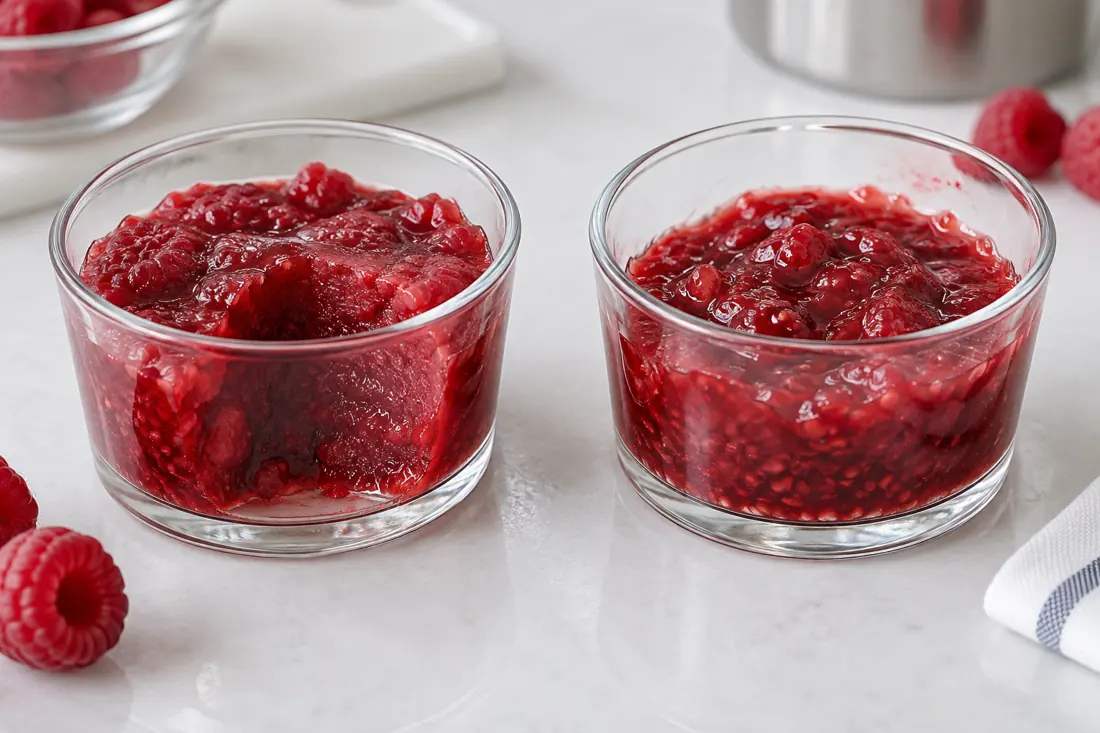
Compare structure in the target recipe rather than by family name alone.
LM pectins respond to calcium, but "LM" does not describe one universal response. Cargill distinguishes LMA, which generally needs less calcium and can be thermoreversible, from LMC, which is more dependent on controlled calcium and can be selected for heat-stable bakery fillings. Cargill's fruit-application guide lists application examples for all three families. These examples give a shortlist, not a promise that every LMA will be post-bake suitable or every LMC will survive a buyer's particular bake. Calcium already present in fruit, dairy or added ingredients and the supplier's recommended salts or buffers can change the outcome.
An R&D comparison should therefore use named grades with documented targets. Put HM, LMA and LMC rows in a trial sheet, then add the candidate's stated soluble-solids range, pH guidance, calcium requirement, dispersion instructions, recommended heat treatment and intended finished use. Beside each row, write the buyer's formula values and the one condition still uncertain. The point is not to fill every cell with a universal number; the point is to make a mismatch visible before a costly pilot. A supplier may propose an HM grade specifically for dairy fruit or an LM grade with a different calcium response than the team expected.
Treat an ingredient table as a comparison aid rather than a substitute for measuring. "High sugar" can mean many formulations, and the fruit itself contributes soluble solids. Likewise, a calcium addition written in grams is incomplete without its ingredient form and the rest of the recipe. A pectin trial should record the mass and identity of each material and the measured pH and °Brix at the relevant point. If a test changes both pectin type and sugar level, it answers whether the whole formula changed, not which pectin family made the difference.
This is especially important when a bakery group compares an attractive post-bake layer with a filling that must remain coherent during baking. The two outcomes have different heat demands. A cool-set LMA candidate may be excellent for the former yet require a separate evaluation before a bake-through claim. Conversely, an LMC candidate chosen for a high-temperature step may produce a texture that is too short, stiff or difficult to deposit for a chilled spoonable preparation. Put the actual deposit and serving texture ahead of a family reputation.
Our raspberry jelly and mandarin marmalade articles introduce sugar, acid and calcium at a recipe level. The present decision is narrower and more technical: choose between HM, LMA and LMC only after the frozen-fruit input and production cycle are fixed. GreenLand-food supplies the fruit, not a proprietary pectin system, so a buyer should take the signed fruit specification and process brief to the pectin supplier's application team.
Account for the frozen fruit entering the kettle
Weigh the frozen fruit and keep its thaw liquid in the mass balance. An IQF raspberry may look dry in a bag but release substantial red liquid as the fruit warms and its structure softens. That juice contains fruit flavor, acids, pigments and soluble solids. Draining it without a record changes the recipe's water and fruit-solids balance. For a comparative trial, label the frozen weight, the weight of retained thawed solids and the weight of released liquid. State whether the juice is returned, partly returned, or excluded. Then use the same rule in every candidate batch.
The water introduced with fruit matters because pectin must be dispersed, hydrated and allowed to interact under a defined concentration. A fixed pectin dose per kilogram of nominal fruit does not create a fixed condition if one fruit lot has a very different thaw yield, or if one operator pours off juice to make the kettle easier to handle. Measure the blend's starting °Brix and pH after fruit and its planned liquid are combined. Measure again at the intended endpoint. That provides context for an apparent weak set or an unexpectedly stiff gel. A meter reading should be taken with the instrument and method appropriate to the sample temperature and composition, rather than copied from a raw fruit certificate.

Released juice is part of the recipe unless its removal is recorded.
Fruit form also affects shear and visible distribution. Whole raspberries may fragment during cooking, making a preparation look smoother and seedier than the starting photo suggests. Segments of frozen mandarin orange can remain visible if mixing is gentle, but broken segments and free juice change the piece-to-syrup ratio. A puree will present a larger share of fine particles to the pectin network. If the finished product is sold for visible fruit, photograph a representative sample after the same stir, hold and deposit steps the production version will experience. A spoonful taken directly from the first heated kettle is not enough.
The commercial fruit specification supports trial repeatability. For each sample, record declared form, piece size or whole-fruit count, Brix range, color, maturity or variety when relevant, broken-piece tolerance, seeds, foreign-material controls, packing, lot identity and storage history. Our frozen fruit range covers different whole, cut and puree formats, so the requested sample should match the planned order. We can provide a current lot sample and confirm these procurement inputs; the R&D team then measures the fruit's behavior in its own formula. The photographed GreenLand fruit on this page shows real ingredient form, not a validated pectin result.

Real frozen raspberries; the photo does not show a pectin trial.
Batch-to-batch comparisons need a reference condition. Use the same frozen-fruit lot when screening HM, LMA and LMC candidates if possible. When a later pilot uses a new lot, keep the approved formula and record the new lot's measured °Brix, pH, thaw loss and piece integrity. A shift in serum release might follow fruit variation, a temperature change or pectin grade variation. Without those records, the team can only guess. Keep a retained sample of the approved fruit preparation under the same storage condition as the new pilot for a direct visual and sensory comparison.
Heating from frozen and heating after a controlled thaw are also different trials. The frozen mass can cool the kettle, extend the time before the mixture reaches its intended temperature and create local dilution while ice melts. A pre-thawed fruit charge has a more uniform starting condition, but its liquid still needs accounting. Decide which route production will use and reproduce it in pilot scale. The exact heating profile should follow the formulation and pectin supplier's instructions; the key procurement point is that a frozen ingredient changes the thermal and water history in a measurable way.
Test addition order and the real temperature cycle
Pectin performance begins before the finished gel can be seen. Powder that clumps on contact with wet fruit may leave undispersed particles and an uneven set. Many grade instructions call for a defined premix, dispersing medium or addition sequence, but the correct procedure belongs to the chosen supplier's technical sheet. Record whether the pectin was blended with part of the sugar, when it entered the liquid, the mixer speed and the temperature at addition. If a formulation uses calcium or buffer salts, record their grade, amount and timing separately. Do not lift an addition order from a different pectin family and assume it transfers.
Run each candidate through the same documented checkpoints while applying that grade's own handling instructions:
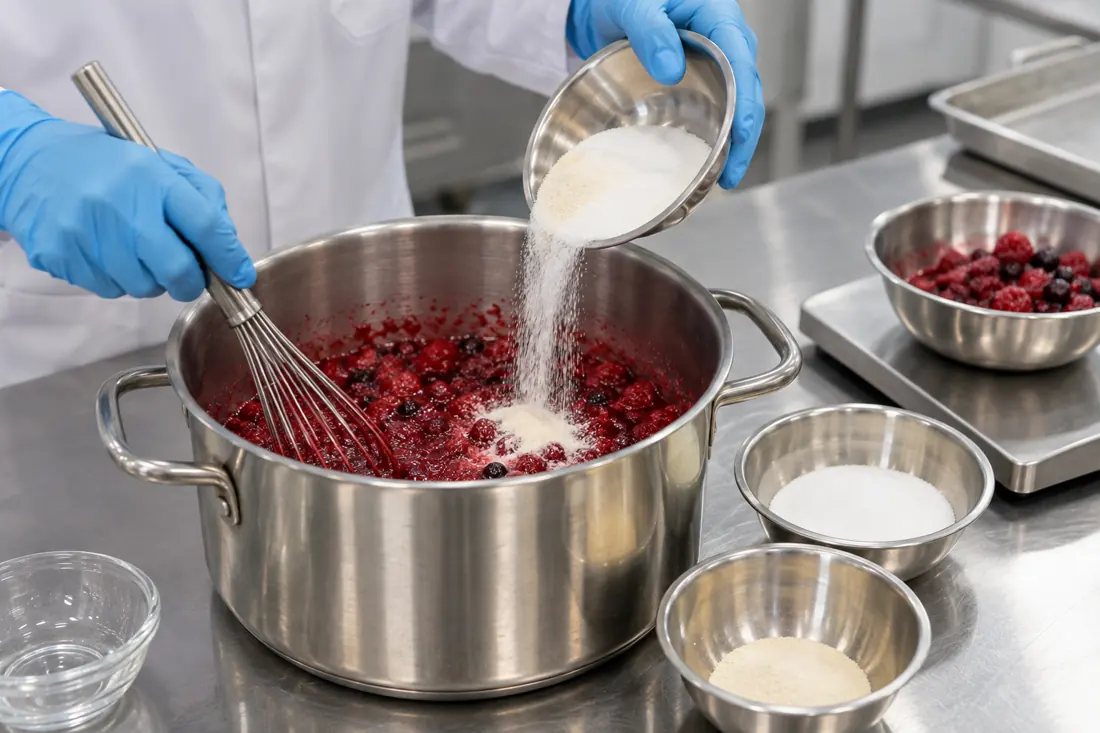
Record the grade-specific dispersion and addition sequence.
- Weigh the frozen fruit, released juice and all other ingredients; note the starting pH and °Brix of the combined fruit phase.
- Disperse and hydrate the named pectin grade as its supplier directs; log ingredient order, mixing and temperature.
- Heat, hold and deposit under the planned production conditions, taking samples at the beginning and end of filling.
- Cool and then apply any planned baking, reheating, freezing or thawing cycle before scoring the final texture.
The trial log should follow the product through all meaningful states: initial mix, heating, hold, depositing, cooling, packaging and planned reheating or freezing. At each point, note whether fruit stays suspended and whether the preparation still flows through the intended equipment. A kettle sample that looks glossy and smooth at high temperature may thicken too quickly before the nozzle; another that deposits easily may bleed serum after a day of cooling. Those are distinct failures with distinct possible causes. The pectin supplier can help isolate whether concentration, calcium, pH, dissolution, shear or thermal history is responsible.
For a bakery filling, use the real filling mass and a realistic bake schedule rather than a spoonful heated alone. The dough, filling depth and cooling route all affect whether liquid becomes visible around the fruit. Evaluate the deposit before baking, the baked product after cooling and a cut face after the intended storage interval. A post-bake layer needs a different test: whether it can be deposited at the planned temperature onto a finished pastry, hold fruit pieces in place and remain spreadable or cuttable when served. The two routes should not share a single "oven stable" checkbox.
If the finished item will be frozen after preparation, add that cycle explicitly. Freeze a packaged sample using the intended method, store it for the planned trial interval and thaw it under defined conditions. Inspect texture, fruit distribution and free liquid after thawing. A good cooled preparation does not by itself establish freeze-thaw stability. Equally, a grade known to be thermoreversible in one supplier example is not guaranteed to return to the target texture after the customer's complete cycle. Record the actual result and the application limit.
Use a simple sampling plan within the pilot. Take samples near the start and end of depositing if the batch waits in a kettle, because residence time may change flow. Mark the sample mass, container size and location. For a fruit layer, check the thickness and visible fruit fraction at more than one position. If there is a continuous line, compare the first, middle and last filled units. These observations reveal production behavior that a beaker test may miss, while remaining small enough for an R&D team to repeat after one controlled change.
One change at a time is not a rigid scientific ritual; it is a way to make the next decision useful. If a candidate fails to set, first verify that the grade was dissolved and used inside its stated pH, solids and calcium window. If it sets but releases liquid on cooling, examine the fruit mass balance and thermal route as well as dose. If it survives cooling but fails a bake or thaw cycle, the original candidate may be wrong for that use even though it was correctly prepared. Write the observed failure beside the exact recipe and processing record so the supplier can propose a targeted revision.
Approve a formulation, not a generic pectin name
Approval should attach to a complete recipe version and a finished-product observation. State the frozen fruit source and form, fruit percentage, full ingredient list, named pectin grade and supplier, dosing basis, added calcium or buffer system, measured pH and °Brix, batch size and process profile. Then state what the preparation is meant to do: spread, deposit, cut, carry fruit, remain in a baked pastry, or tolerate a specified freeze and thaw cycle. A label such as "LM pectin approved" omits almost everything that controls the result.
Use several acceptance measures rather than one impression of thickness. A spread can be assessed at its serving temperature for spoon resistance and surface smoothness. A bakery filling can be cut after cooling to see whether it stays in place and whether the surrounding crumb has a wet halo. A fruit preparation with pieces can be observed for fruit distribution after filling and storage. Serum release can be recorded as a visible ring or a measured amount under a defined test. The method and acceptance limit need to be agreed by the buyer's R&D and quality teams; a photograph is evidence of one sample, not a replacement for a specification.
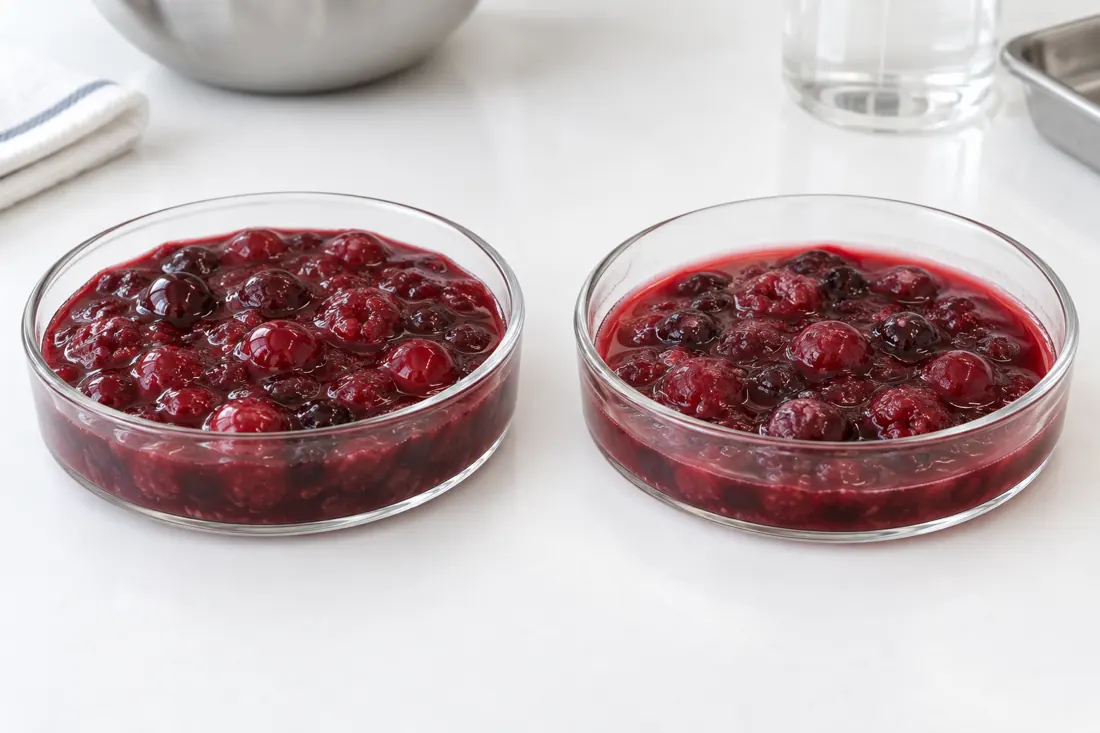
Approval follows measured performance after the intended process cycle.
Make room for sensory and application checks. Pectin can affect flavor release and mouthfeel even if the set is technically strong. Fruit identity should remain clear after heating, and the chosen fruit form should be recognizable if that is part of the product concept. A jam-like firmness might be inappropriate in a yogurt fruit preparation; a glossy, mobile post-bake layer might be inappropriate in a pastry that must be packed upright. The best grade is the one that meets the actual product brief at an acceptable process window, not the one that gives the firmest tabletop gel.
For a commercial transfer, compare the pilot formula with the first production batch under agreed tolerances. Confirm that the incoming fruit form, quantity, packing, lot identification and cold-chain condition match the sample specification. Confirm that the pectin grade has not been substituted. Measure the same pH, °Brix, flow and final-product observations at the agreed stages. If one ingredient changes, identify which approval tests must be repeated. An ingredient certificate documents a material; it does not certify the combined bakery or dairy product.

Real mandarin segments; trial performance requires testing.
The frozen fruit supply can be controlled separately from the pectin recipe. We can confirm available fruit format, Brix expectations, defect tolerance, sample quantity, packing, order volume, destination documents and timing before a buyer runs its formulation work. That helps R&D obtain a representative sample rather than an attractive one-off bag. A later change from whole raspberries to crumbles, or from mandarin segments to puree, should trigger a review of liquid balance and finished appearance. A contract for fruit is not a warranty of how an unrelated pectin grade will gel.
If the product is intended for longer storage, regulatory or microbiological shelf-life approval must be evaluated separately. A successful pectin texture trial does not establish preservation, ambient stability or safety. Oregon State's Pectin Facts emphasizes following the instructions for the specific pectin in home preserves; for a commercial fruit preparation the buyer needs its own validated processing and storage program. This distinction prevents a formulation note about gel strength from being mistaken for a shelf-life claim.
Close the trial with a decision that the next team can use. "Approve grade X in formula 4 for this post-bake raspberry layer, under the recorded fruit input and temperature sequence" is a useful statement. "Use low-methoxyl pectin" is not. Attach sample photos, measurements, deviations and the signed version of the fruit specification. If the result fails, retain the same records; they tell the pectin supplier whether to adjust grade, calcium, sugar, acidity or method, and they tell us whether the fruit input needs tighter definition. That is the practical endpoint of choosing between HM and LM for a frozen-fruit preparation.
Source frozen fruit for your formulation trials
GreenLand-food is a professional frozen fruit supplier and manufacturer in China, offering factory-direct wholesale supply for food and beverage processors.
Send your fruit form, specification, packing, quantity, application, destination, private-label needs and requested documents. We can confirm suitable ingredient samples for your own pectin trials.