


How to Air Fry Frozen Vegetables
Aug 31, 2026
Leave a message
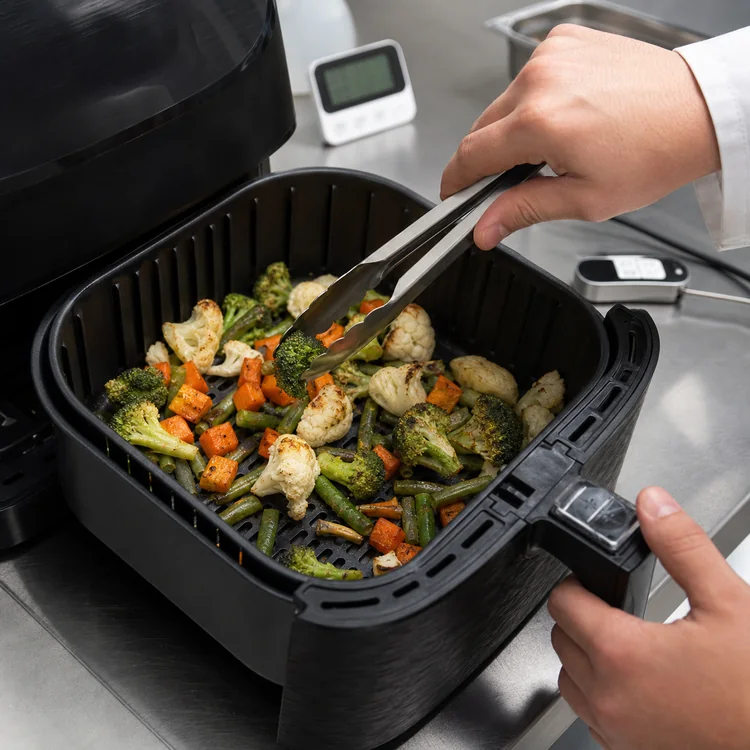
Start hot, leave room for air, and judge the endpoint
For a small household batch, place loose frozen pieces in a preheated basket, add a light oil coating if the product needs it, and air fry at 190–205°C / 375–400°F. Shake or turn after the first wet stage, then check every two or three minutes. Many green beans and small florets finish in roughly 8–14 minutes; thick carrots, Brussels sprouts, large florets, and dense root pieces may need 12–20 minutes. Follow the package and appliance instructions before using any general range.
Do not thaw plain IQF vegetables on the counter. Thawing releases moisture before hot airflow can remove it. Also avoid pouring a full bag into a small basket. A deep bed blocks air, traps steam, and creates the familiar combination of dry edges, pale centers, and soft pieces. A smaller repeatable load is faster than extending an overloaded cycle.
Use the range as a test
Air fryers vary in fan speed, heater response, basket area, and real temperature. Check early and record the result for your model.
Match similar pieces
A thin pepper strip and a thick carrot coin do not share a finish time. Separate incompatible cuts or add the slower piece first.
Let steam escape
Keep the basket shallow and shake after meltwater appears. Browning begins only after airflow can dry the exposed surfaces.
Approve the final use
Foodservice buyers should test cooked yield, color, bite, seasoning pickup, hold time, and performance after the intended service step.
Frozen vegetable air-fryer time and temperature chart
These are first-test ranges for plain, uncoated IQF vegetables in a preheated basket. They are not label instructions and they do not replace a validated food-safety process. Start at the lower time, examine the largest piece, and extend in short steps. A compact oven-style air fryer may behave differently from a deep basket model even when both displays show the same temperature.
The useful endpoint is fully heated, tender at the center, and as browned as the application requires. A dark edge does not prove that a thick frozen center is ready. Conversely, holding a small pea or thin pepper strip until a carrot chunk browns can destroy the smaller component.
| Vegetable style | Starting setting | First check | Main control |
|---|---|---|---|
| Broccoli or cauliflower florets | 195–205°C / 385–400°F | 8–10 minutes; often 10–16 total | Floret diameter and thick stem center |
| Green beans or asparagus | 190–200°C / 375–390°F | 7–8 minutes; often 8–12 total | Diameter, cut length, dry tips |
| Carrot coins, dice, or root pieces | 190–200°C / 375–390°F | 10–12 minutes; often 12–20 total | Thickness and whether the cut is blanched or pre-cooked |
| Peppers, onions, zucchini | 190–200°C / 375–390°F | 6–8 minutes; often 8–12 total | High moisture and thin pieces that dry quickly |
| Brussels sprouts or dense halves | 190–200°C / 375–390°F | 10–12 minutes; often 14–20 total | Center tenderness before outer leaves burn |
| Large-floret mixed blend | 190–200°C / 375–390°F | 9–10 minutes; often 12–18 total | Largest component and size distribution |
| Small peas, corn, or fine dice | Use only if the basket safely contains them | Check from 5–6 minutes | Pieces can fall through or move toward the heater |
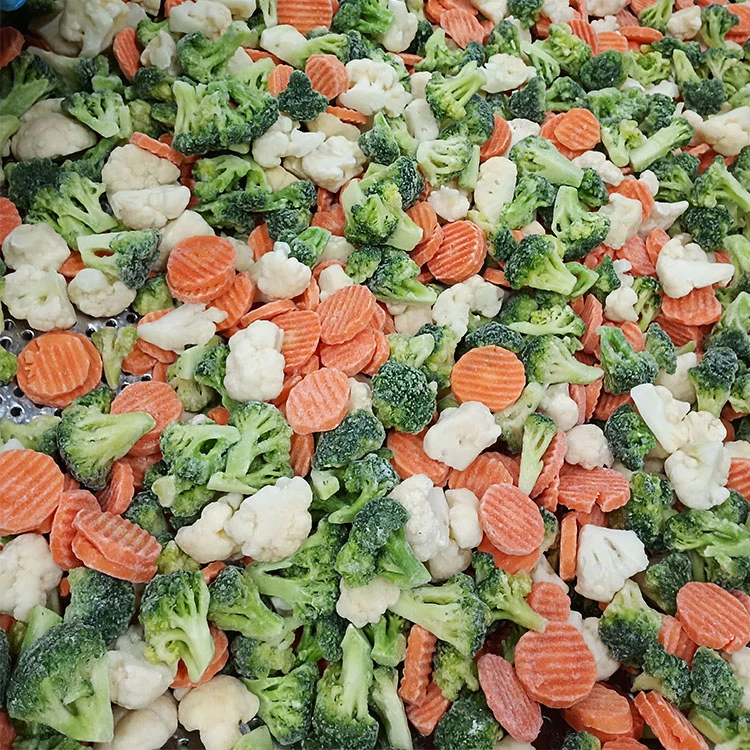
Large florets need center checks, not just brown edges
Broccoli and cauliflower expose a large crown to moving hot air, so the tips can brown while the stem remains firm. Carrot pieces in the same blend may be denser still. Use the largest sound piece as the texture check and turn the basket contents so thick stems do not remain in a cool zone.
A blend becomes easier to air fry when floret diameter, stem length, carrot thickness, and broken-piece tolerance sit inside a workable range. If the bag contains many tiny buds and several oversized centers, no timer can make every piece finish together. That is a specification issue as much as a cooking issue.
A repeatable six-step air-fryer method
Use this as a calibration procedure, not a promise that every bag will finish at the same minute. Record the exact product, frozen weight, appliance model, basket style, temperature, turning points, oil amount, and final result. Once the outcome is acceptable, that record becomes your house method for the same conditions.
- Read the product and appliance instructions. Confirm whether the vegetables are plain, sauced, seasoned, coated, raw, blanched, or otherwise processed. Use the manufacturer's safe operating limits and any package cooking direction first.
- Preheat when your model recommends it. A hot basket begins driving off frost sooner. If the manufacturer does not require preheating, document whether a cold start adds time or changes browning.
- Portion from frozen. Break apart minor loose clumps without thawing. Remove obvious loose ice, but do not rinse the vegetables. Weigh the first test so the load can be repeated.
- Load a shallow layer. Air must reach the food surface and return through the basket. A little overlap can work, but a deep packed mound turns the early stage into trapped steaming.
- Shake or turn after the wet stage. Check around the midpoint. Separate touching pieces, redistribute dense cuts, and look at the basket base. If liquid is pooling, reduce the next load before adding more time.
- Finish by the center and the intended bite. Test the thickest piece. Stop when the product is fully heated and the texture matches the use. Record the actual total time instead of rounding the result to a convenient online number.
If you are unfamiliar with the blend, begin with a conservative portion that covers roughly one basket layer. Increasing the frozen weight changes the result nonlinearly because the extra product blocks airflow and absorbs heat. Doubling the weight can require more than a simple time extension and may never give the same surface dryness.
When should you add oil and seasoning?
Plain frozen vegetables may benefit from a thin oil film because it improves seasoning adhesion and surface browning. They do not need to swim in oil. Start with just enough to coat after tossing; excess oil can collect in the basket and make the surface heavy. Pre-oiled, coated, or sauced products may need no additional oil, so the ingredient statement and package direction matter.
Oil timing depends on the surface. A light spray before cooking works when it adheres to the frozen piece. If oil beads and slides off heavy frost, run a short first stage, shake, then add the measured oil once the surface has begun to dry. This two-stage approach is especially useful in repeat testing because it separates thaw-water removal from browning.
Dry spices can go on with the oil, but fine powders may move in strong airflow or darken before the vegetable center is ready. Salt and wet sauces can draw or add surface moisture. For the driest finish, season lightly before cooking and add salt, acid, cheese, herbs, or sauce at the end. If a retail product includes seasoning, validate distribution after the declared shaking step and after holding-not only straight from the basket.
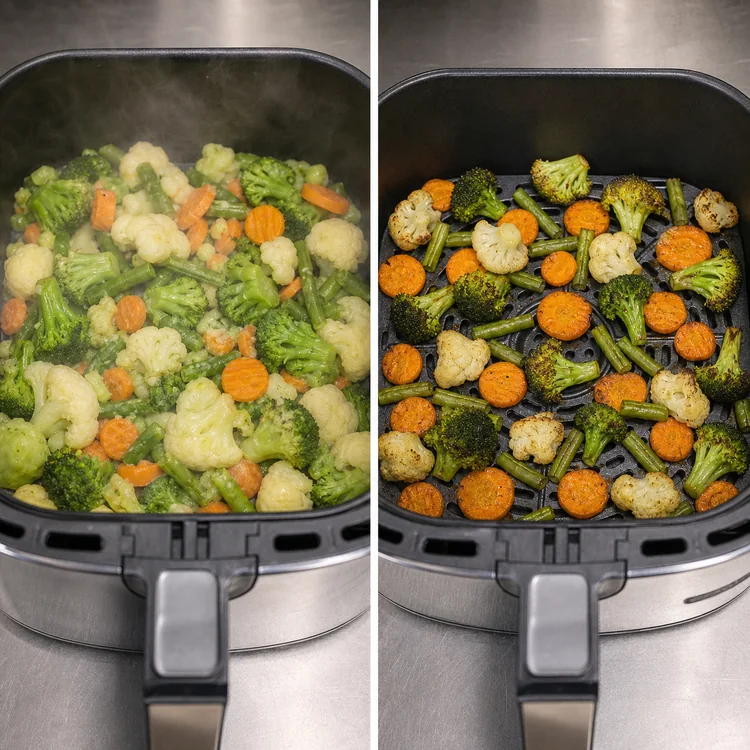
Overloading creates steam before it creates browning
A crowded basket releases a large amount of cold moisture at once. Air channels close, the appliance recovers slowly, and lower pieces sit beneath the steam generated above them. Extending the timer may dry the exposed top while the covered pieces remain pale and soft.
The first correction is usually a smaller load, not a hotter setting. If the basket is already shallow, then check frost level, preheat behavior, cut uniformity, and whether the fan can move light pieces safely. Change one variable per test so you know what corrected the result.
Which frozen vegetables work best in an air fryer?
Broccoli and cauliflower: These are reliable because the crowns expose plenty of surface to the airflow. Use medium, reasonably uniform florets. Very small buds can dry before thick stems become tender, while oversized florets may need a lower temperature or a longer finish. A light oil film helps the crown brown, but inspect the stem center before serving.
Green beans and asparagus: Uniform diameter matters more than a single stated cut length. Thin tips can dry quickly, especially after long frozen storage or when the pack has air exposure. Turn with tongs if shaking damages delicate spears. A moderate starting temperature gives the center time to warm before the tips become brittle.
Carrots, sweet potatoes, pumpkin, and other dense cuts: These usually need more center-heating time. Thin coins or small dice are easier to calibrate than thick chunks. Confirm whether the product is plain IQF, blanched, par-cooked, or coated. Two pieces with the same dimensions can finish differently if their process histories differ.
Peppers, onions, zucchini, and other high-moisture pieces: These soften as their water leaves, so the realistic target is tender with some browned edges-not the rigidity of fresh raw produce. Use a shallow load and stop before the thin edges become leathery. Late salt and sauce help protect the dry finish.
Peas, corn, chopped leaves, and very small dice: These require an appliance-specific safety check. Loose light pieces may fall through openings or move toward the heater. Use only a basket, tray, or approved accessory that safely contains them without blocking the airflow the appliance needs. Do not improvise with paper, foil, or a liner in a way the manufacturer forbids.
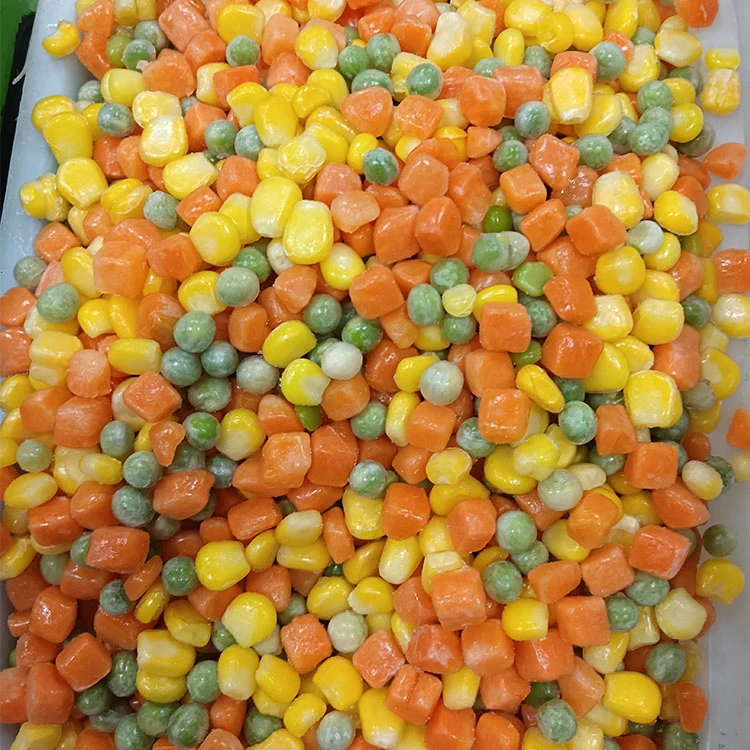
Peas, corn, and carrot dice need containment and a shorter check
A small-cut blend heats faster than a floret mix, but that does not automatically make it a good fit for every basket. Inspect the hole or slot size, the fan position, and the appliance manual. If loose peas or corn can escape the cooking surface, use a manufacturer-approved solid tray or choose a pan, microwave, steamer, or rice application instead.
When the appliance safely contains the pieces, start checking early. Fine carrot dice can darken at the corners, peas wrinkle, and corn loses surface moisture quickly. A wet sauce added at the beginning can hold the entire blend in a steaming phase. For loose, roasted-style pieces, dry first and season near the finish.
Troubleshooting frozen vegetables in an air fryer
Start with the failed result and change one cause. Increasing time, heat, oil, seasoning, and load simultaneously may produce a better basket once, but it does not create a repeatable method.
| Result | Likely reason | First correction | What to record |
|---|---|---|---|
| Soft and pale | Deep load, heavy frost, no preheat, or wet sauce | Reduce the frozen weight and keep the first stage dry | Basket area, load weight, visible liquid |
| Dark outside, firm center | Temperature too high for the cut thickness | Use a slightly lower setting or smaller cut | Largest-piece size and center texture |
| Uneven blend | Incompatible sizes or poor redistribution | Turn more deliberately or split fast and slow pieces | Component ratio, size range, turn time |
| Dry, tough edges | Excess time, long storage exposure, or too little surface fat | Check earlier and review packaging condition | Pack condition, total time, finished yield |
| Seasoning falls off | Applied to a hard frosty surface or blown by strong airflow | Add measured oil and seasoning after the first short stage | Oil timing, pickup, basket residue |
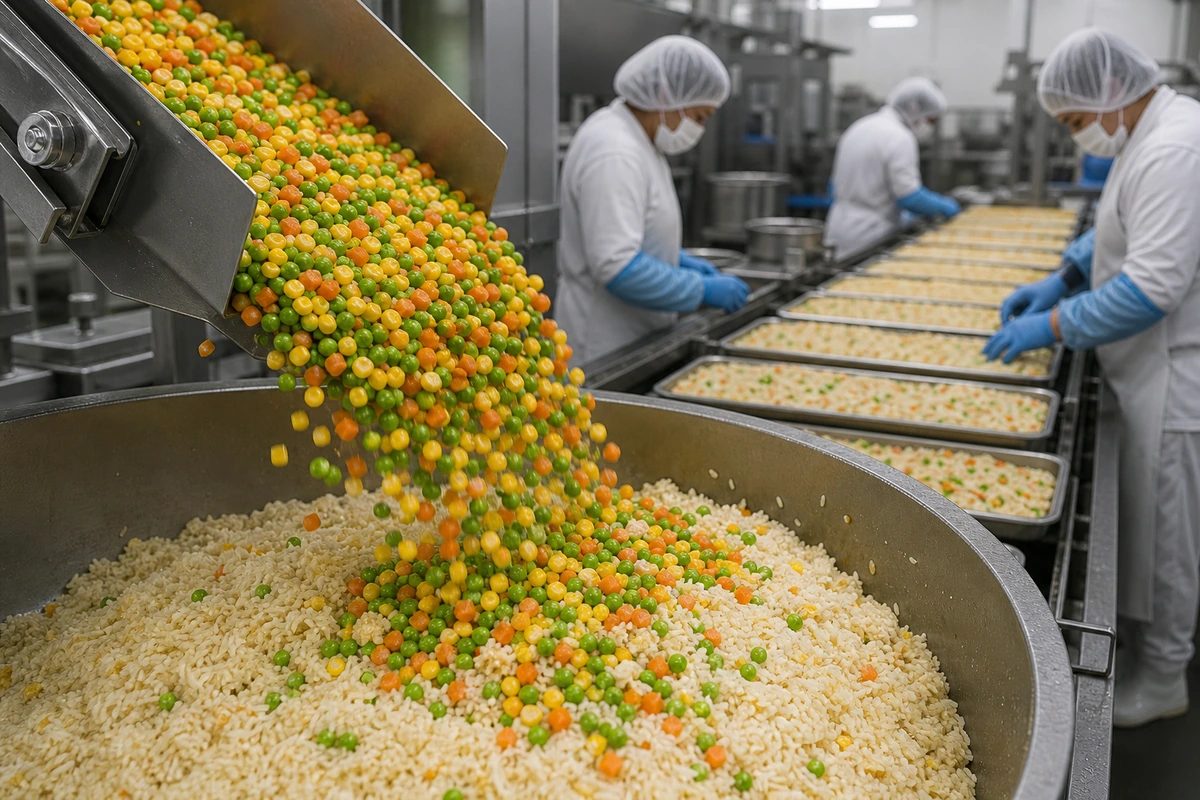
The basket result must survive the next service step
A vegetable that is crisp at the basket can soften during tray assembly, sauce contact, hot holding, chilling, freezing, transport, or reheating. Define where the air-fryer step sits in the process. A restaurant side served immediately needs a different endpoint from a component that enters a meal tray and receives a second heat.
Validate the final eating condition. Record color, center bite, surface dryness, cook yield, seasoning pickup, portion appearance, and the acceptable hold or reheat window. A short par-cook may protect texture, but the required food-safety controls must still be established for the real product and process.
Build a commercial air-fryer trial around six measurements
For central kitchens, quick-service restaurants, convenience concepts, appliance-ready retail packs, and prepared meals, "400°F for 12 minutes" is not a sufficient process description. Record frozen load weight, basket usable area, product depth, actual cut range, turning schedule, and finished yield. Then add the sensory and service endpoints that matter to your operation.
Run at least three repeat loads after the setting appears acceptable. Compare the first and last load when the equipment is used continuously. Fan intake condition, basket temperature, operator delay, and product left outside frozen storage can all move the result. Approve a practical operating window rather than one perfect demonstration basket.
What buyers should specify before approving a frozen vegetable
Air-fryer performance begins before the product reaches the kitchen. Tell us the target vegetable or blend, cut dimensions, portion weight, basket or oven style, cooking instruction, oil system, seasoning sequence, target color, center bite, service timing, pack format, and destination market. If the product will be sold with an air-fryer claim, define the consumer appliance range and the validation evidence expected for the label.
For a blend, confirm the component ratio and tolerances. Changing the ratio changes heat absorption, airflow, visible color, sweetness, moisture release, and cost per serving. A sample that contains more broccoli than the production tolerance may pass while the commercial blend behaves differently. Representative sampling is part of method development.
Confirm the processing state. "Frozen broccoli" does not tell the kitchen whether it is raw, blanched, pre-cooked, coated, seasoned, or ready to cook under a specific label direction. Blanching supports quality and enzyme control; it is not a blanket promise that a frozen vegetable is ready to eat. Follow the package and supplier specification and cook as required.
We also review free-flowing condition, surface frost, broken pieces, color, cut distribution, packaging integrity, and cold-chain history. Those factors decide whether a setting can be repeated. If you need a broader method comparison before choosing air frying, our frozen vegetable roasting guide explains the tray-loading side of the same moisture problem.
Compare candidate blends in the same basket and load
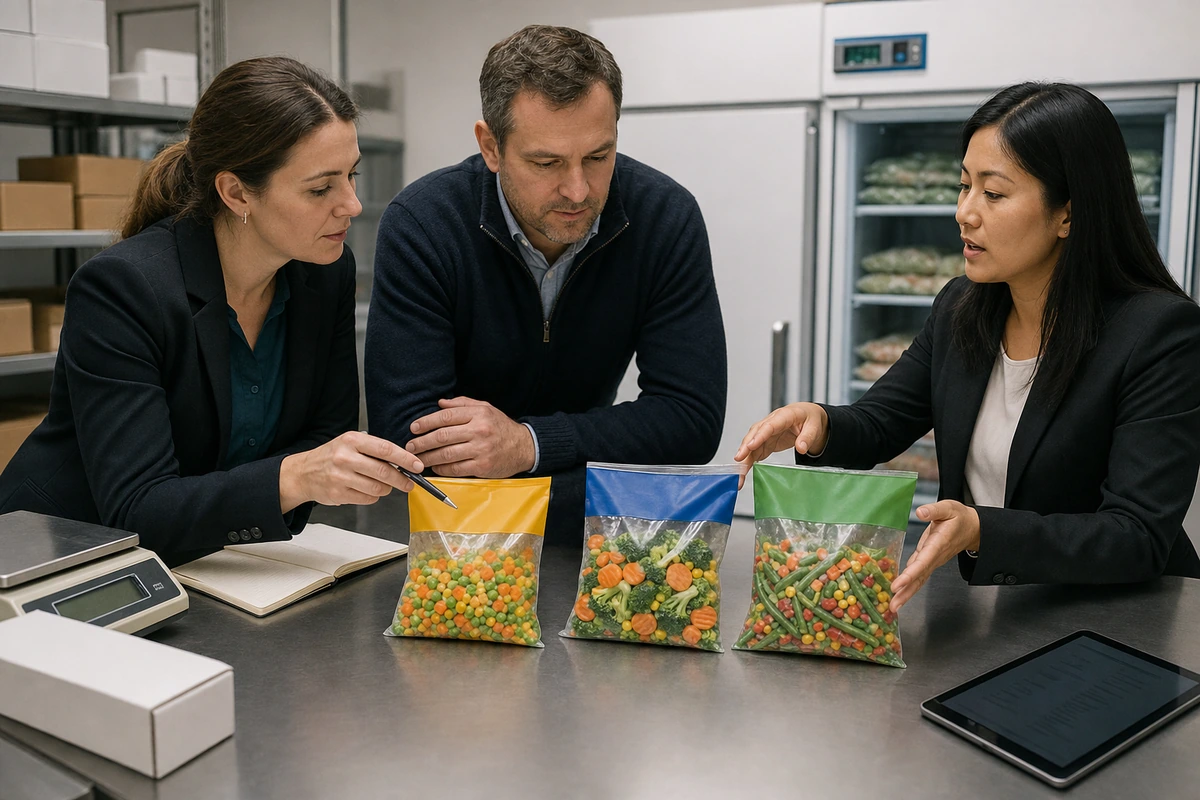
A useful sample trial keeps the appliance, frozen weight, temperature, oil, turning points, and endpoint constant. Score each candidate for separation, visible frost, color, largest-piece tenderness, small-piece damage, finished yield, seasoning pickup, and performance after the intended hold.
If one candidate needs a different setting, test that setting separately and decide whether the operational benefit justifies a second process. The goal is not to force every product into one recipe. It is to choose a product-method pair that the buyer can repeat during real service.
Food-safety and appliance boundaries
An air fryer is a cooking appliance, not evidence that every frozen vegetable is ready to eat. Many vegetables are blanched before freezing for quality, but freezing does not sterilize food. Read the product label, follow its cooking direction, and verify the endpoint required by your recipe, operation, and market. Do not taste a ready-to-cook product while it is still cold in the center.
Do not block air intake or line the basket in a way the appliance manufacturer forbids. Light paper or small food pieces can move in strong airflow. Use only approved accessories, keep the appliance clean, and follow the load and clearance limits in the manual. When cooking multiple products together, use a tested recipe that accounts for the slowest-heating component and prevents raw-food cross-contamination.
Commercial cooking, cooling, hot holding, and reheating controls must follow the operation's food-safety plan and destination requirements. Household time ranges are not a substitute for those controls. If the vegetables move into a chilled or frozen meal after air frying, validate the full cooling and reheat process at the coldest point of the finished unit.
FAQ: air frying frozen vegetables
Can you put frozen vegetables in an air fryer?
Yes. Most plain frozen vegetables can be air fried directly from frozen. Confirm that the basket safely contains the cut, follow the appliance and package instructions, use a shallow load, and check the largest piece for the required endpoint.
Should I thaw frozen vegetables before air frying?
Usually no. Thawing releases water before hot airflow can remove it and makes browning harder. Controlled thawing may be required for a specific coated, sauced, or recipe product, so the package direction takes priority.
What temperature should I use?
Use 190–205°C / 375–400°F as a first-test range for many plain cuts. Dense pieces may benefit from the lower end and more time; medium florets often tolerate the higher end. Calibrate against your appliance and product.
How long do frozen vegetables take in an air fryer?
Many small batches finish in about 8–16 minutes, while dense or large pieces may need closer to 12–20 minutes. Start checking early and use the largest piece, not the clock alone, to judge the finish.
Why are my air-fried frozen vegetables soggy?
The usual causes are an overloaded basket, heavy surface frost, weak heat recovery, a wet sauce added too early, or too little turning. Reduce the frozen weight first and let the early moisture escape.
Do frozen vegetables need oil in the air fryer?
Not always. Plain vegetables often brown better with a thin measured coating. Pre-oiled, coated, or sauced products may need none. If oil slides off heavy frost, add it after a short first stage.
Can I air fry a whole bag at once?
Only if the bag weight still forms the shallow load your appliance can circulate around. In most household baskets, two smaller batches give a drier and more even result than one deep batch.
Can I air fry frozen mixed vegetables?
Yes, when the components have compatible sizes and the basket safely contains them. Use the largest dense component as the check point, redistribute the blend during cooking, and separate tiny pieces if airflow moves them.
How do I keep broccoli tips from burning?
Use medium uniform florets, turn them during cooking, and lower the setting slightly when thick stems lag behind the crowns. Stop by center tenderness and accept that a very wide size distribution needs sorting or a specification change.
What should a foodservice buyer test?
Test the actual frozen load, basket area, cut distribution, oil and seasoning sequence, center bite, color, cooked yield, repeat-load consistency, hold time, and final served or reheated condition.
Need frozen vegetables for an air-fryer program?
Tell us the vegetable or blend, cut size, frozen portion, appliance type, cooking claim, desired color and bite, oil or seasoning system, pack format, volume, and destination market. We can review candidate specifications and coordinate representative samples for your process.