


Whole Brussels Sprouts: Size Grading, Loose Leaves and Core Defects
Oct 19, 2026
Leave a message

For a purchasing team, the useful specification explains how each characteristic is measured, which product state is inspected and how the sample represents the lot. We use those details to connect a whole-bud order with the buyer's actual dish. A restaurant vegetable side, a microwave meal and a mixed vegetable pack may need different limits even when each purchase order says whole frozen Brussels sprouts.
Define the whole bud and the acceptance state
A Brussels sprout is a compact leafy bud with a short stem base and a pale internal core. Whole product should retain the recognizable bud after the agreed preparation and handling. A head with open outer leaves may still be a whole unit, while detached leaves in the bottom of a bag belong in a different observation. Make that distinction before discussing percentages; otherwise two inspectors can count the same contents in incompatible ways.
The processing description also matters. A photograph of wet green buds establishes visible form, but it cannot establish whether the buds have been blanched, frozen, thawed or cooked. Ask for the processing status on the specification and the applicable preparation instruction. Our whole Brussels sprouts product page describes the main offered form and the details to agree for an order. Availability and treatment status still need confirmation for the selected SKU.
Write down the inspection state for each attribute. Frozen examination is useful for free-flowing condition, visible frost, broken pieces and pack contents. A defined thawed examination can make dimensions and cut surfaces easier to assess. A prepared sample reveals center tenderness, leaf toughness and objectionable flavor or odor. These observations answer different questions, so retain their results separately in the sample record.

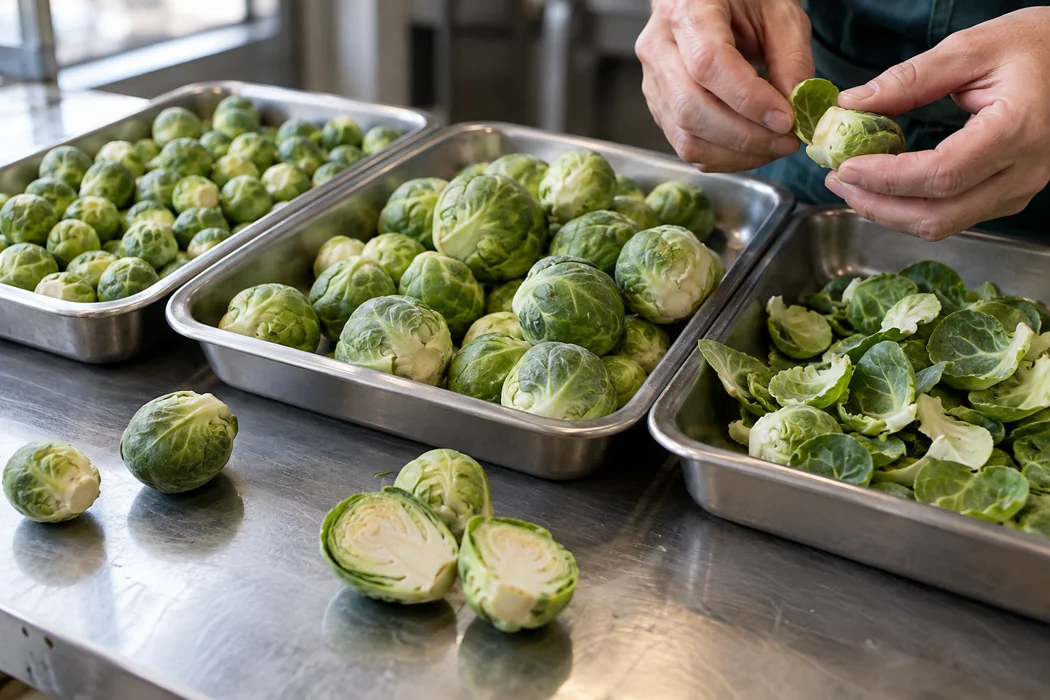
Whole wet Brussels sprout heads show compact leaf layers and trimmed bases; the photograph does not establish processing state.
The USDA frozen Brussels sprouts standard provides a useful vocabulary for quality factors such as character, trim, blemishes and loose material. Its voluntary grade system is a specific framework with its own definitions and sampling provisions. A supplier's unqualified Grade A description does not, by itself, establish that the shipment has been officially graded under that framework. Identify the standard and version when a named grade forms part of the contract.
Fresh produce specifications need equal care. They can help a buyer describe a compact bud or clean trim, but their size ranges, defect classes and tolerances should not automatically become a frozen-product acceptance rule. Freezing, handling and the intended cooking route change what the inspector can see and what the customer experiences. Select an applicable framework deliberately, then document any additional buyer requirements without implying that those additions are universal legal limits.
An approved reference sample is most useful when its written description is complete. Record lot identity, sample date, preparation method and photographs of representative acceptable units. Include borderline examples if both parties agree how to judge them. A single attractive close-up leaves too much uncertainty about the rest of the distribution. Keep the reference accessible to receiving staff and to the person investigating a later complaint.
Measure a size distribution that the kitchen can use
Commercial frozen Brussels sprouts are offered in several diameter bands. The published ranges vary between suppliers, which is why small, medium and large are inadequate purchase descriptions. State the lower and upper boundaries in millimeters, the axis measured, the inspection state and the permitted amount outside the band. If your operation needs a particular number of buds per serving, add a count or portion trial rather than expecting diameter to predict it precisely.
Bud shape is rarely a perfect sphere. A long oval head and a round head may share one width but differ in mass and distance from surface to center. Hold the measurement tool consistently and avoid compressing soft thawed leaves. For example, a supplier may define diameter as the smallest width across the bud perpendicular to its stem axis. That method needs to appear in the agreement if both sides are expected to reproduce it. Record a different method explicitly when the buyer requires one.
Measure a spread of heads from the representative sample, including the smallest and largest ordinary units. An average hides the ends of the distribution. Two lots can have the same mean diameter while one contains closely matched heads and the other combines many small and large ones. A simple record of the units within, below and above the agreed band is often more useful to a production team than a single average printed on a report.

Consistent caliper orientation helps make diameter measurements comparable.
The cooking consequence follows from the whole bud's geometry. Larger heads generally need more opportunity for heat to reach the center, while loose outer leaves can become soft or dry sooner. A narrow size band can reduce that difference, but it does not guarantee identical cooking. Initial temperature, compactness, blanching history and tray loading still affect the result. Test the largest ordinary heads as well as the attractive middle of the sample.
For a whole-bud meal component, compare size with the actual portion. Count the buds in several weighed servings and examine how much space they occupy in the tray. If acceptable weight repeatedly gives an awkwardly small piece count, the grade may be unsuitable for the presentation. A smaller grade can change serving appearance, handling losses and purchasing cost. Assess all three before deciding that the smallest available product is automatically the best option.
Treat a requested size change as a controlled specification change. Keep the previous cooking and portion results, trial the proposed grade and confirm whether the packing or feeding settings need adjustment. We help purchasing teams frame the inquiry around the dish and the process so that a quoted diameter range has a practical purpose. Production availability, order quantity and the agreed sample determine the final offer.
Separate detached leaves from loose heads
Detached leaves are thin, irregular pieces that can collect at the bottom of the bag or carton. They affect the appearance and distribution of a portion differently from an intact but loosely structured head. During cooking they may soften, darken, cling to equipment or disperse through a sauce before the central buds reach their intended texture. Their significance therefore depends on where the ingredient will be used.
A loose head has leaves that remain attached but do not form the compact shape expected by the buyer. It can open further during mixing or reheating. Record that head condition separately from the mass of loose material already present. When the two are combined under a single loose-leaf percentage, a kitchen cannot tell whether it will receive scattered fragments, unstable buds, or both. That uncertainty makes yield and appearance harder to predict.
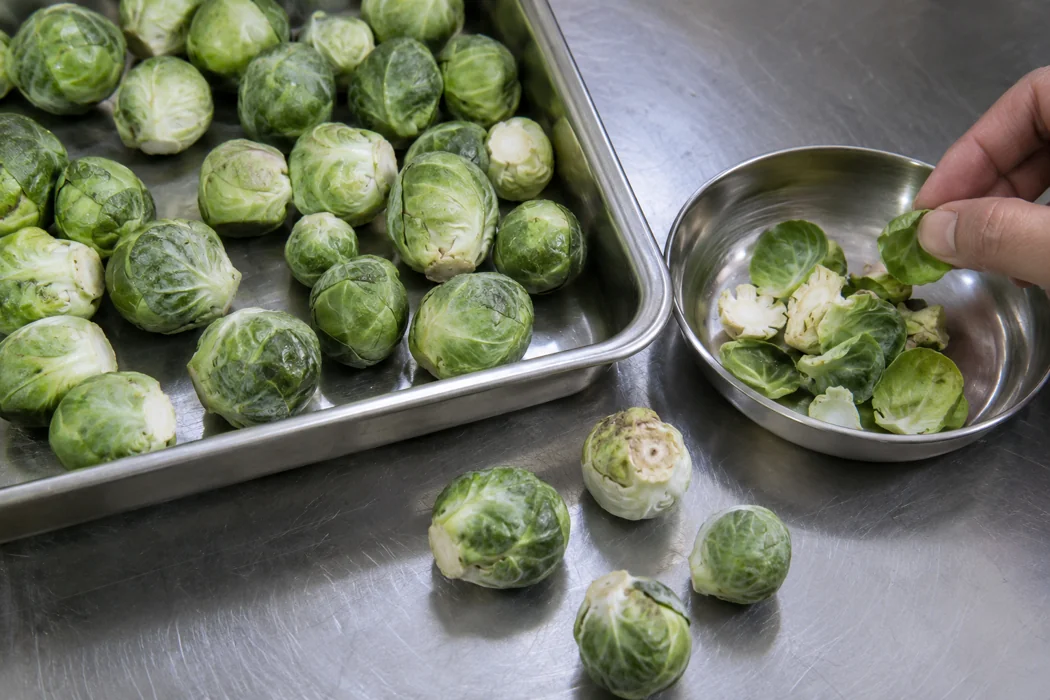
Collect detached leaves separately from complete heads when assessing loose material.
Choose a clear denominator for the detached material. A buyer might agree to separate and weigh it from a defined sample, while scoring head compactness by units. Those are proposed measurement methods, and the contract must specify the details that make them repeatable. Define whether small edible stem fragments belong with the leaves, how adhering ice is handled and when the material is weighed. Avoid comparing a frozen gross weight with a drained thawed weight as if they were equivalent.
Sampling technique can create misleading results. Pouring only the first portion from a large bag may favor whole heads, while taking only the final handful may concentrate fragments. Examine the contents through a representative unloading method and preserve the actual bottom-of-bag observation. If the customer uses a hopper or automatic portioner, run a small feeding trial and inspect early, middle and late portions. Segregation during handling can matter more than the bag-wide average.
For a plated side, detached leaves may reduce the number of complete buds visible to the diner. In a sauced meal, the same leaves may remain edible yet change sauce appearance or distribution. A mixed vegetable product can carry them into neighboring components. Decide what the finished product can accept, then write a limit that supports that result. An allowance chosen only because another supplier uses it may produce a poor match for your line.
Also observe when breakage occurs. Compare the received frozen sample with the material after the buyer's normal transfer and cooking steps. If a large increase appears after aggressive mixing, review the handling conditions alongside the incoming head structure. Keep those observations factual: photographs, sample weights, equipment settings and elapsed handling time. They allow both parties to discuss whether an ingredient adjustment or a process adjustment would address the problem.
Open the bud to assess stem and core condition
The stem base anchors the leaves, so trimming requires a balance. An unnecessarily long protruding stem can be visually awkward or remain firm in the dish. Cutting too deeply into the bud can release leaves and weaken the whole form. Inspect the trimmed base from outside, then cut selected heads lengthwise through the stem axis to see how the external trim relates to the internal structure.
Normal internal tissue is pale and has a recognizable branching arrangement into the leaves. A pale center is not, by itself, a defect. Inspectors should distinguish ordinary anatomy from brown or otherwise abnormal discoloration, damaged tissue, unusual cavities and material that fails the agreed appearance criteria. A photograph can document the location and extent of a finding; it cannot establish a microbiological diagnosis or explain its cause with certainty.
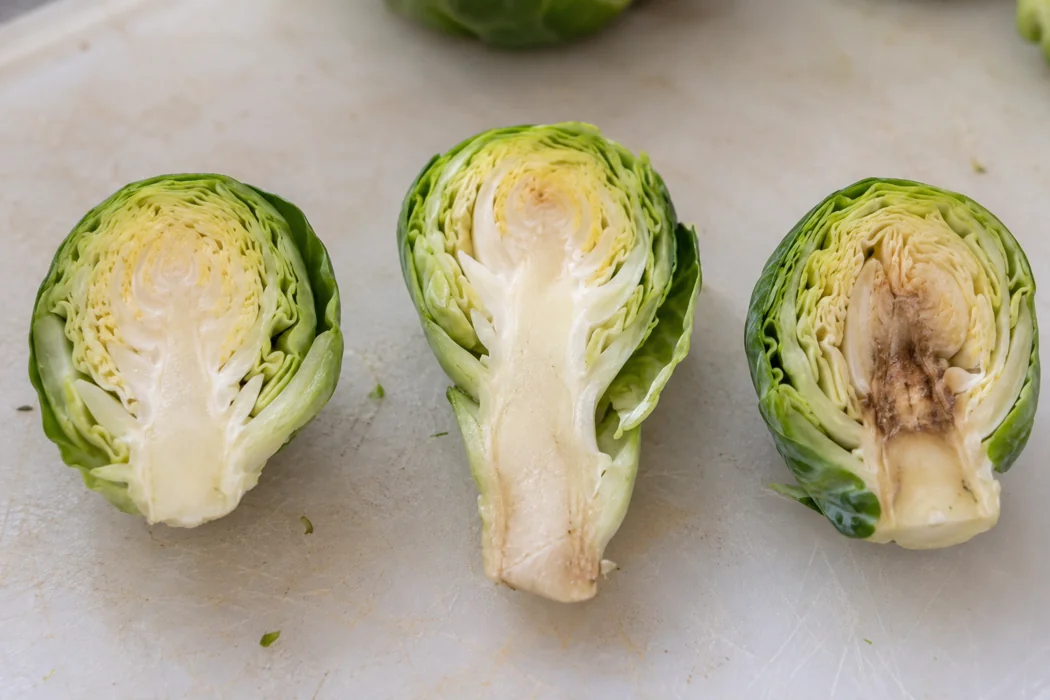
Longitudinal cuts expose the pale core, excessive stem length and internal discoloration.
Choose the cut sample before opening only the most suspicious heads. A random or otherwise agreed representative subset helps estimate the underlying condition, while a separate targeted examination investigates visible concerns. Keep those purposes distinct in the record. If every cut head was selected because it already looked abnormal, its failure rate should not be presented as the defect rate for the complete lot.
Use consistent cut orientation and preparation. A shallow slice across an outer leaf exposes different tissue from a complete longitudinal cut through the core. Thawing conditions also influence how firmly the leaves hold together. Document the method so that a second inspector can reproduce the observation. For a disputed finding, preserve images with scale, lot identification and enough intact heads to show the sample context, rather than submitting only an extreme close-up.
Core firmness needs a cooking check when eating quality is the concern. Prepare the sample using the intended route, then compare the resistance of the center and outer leaves. If the outside collapses before the core becomes acceptable, investigate the size range, initial condition and process together. A darker outer surface after roasting cannot demonstrate that the center is ready. For broader hot-air handling considerations, our frozen vegetable air-frying guide explains how loading and dense pieces affect the endpoint.
Agree the response to severe or uncertain findings before delivery. The receiving team needs a clear hold-and-review route, the evidence to retain and the person responsible for disposition. Do not assume that trimming away a suspect core makes a questionable lot suitable for use. Commercial quality decisions and food-safety decisions may require different expertise and evidence. Keep the material identified until the appropriate review resolves its status.
Read color, compactness and surface damage together
Color is useful when it is assessed under consistent light and alongside structure. A bud can range from deeper green outer leaves to lighter internal tissue without being defective. What matters is the agreed appearance range and whether discoloration affects the finished use. Compare the sample under neutral lighting, avoiding strong colored surroundings or phone filters that make green appear unusually bright.
Separate broad color variation from localized blemishes. A uniformly lighter head, a brown patch, a yellow outer leaf and a dark internal area are different observations. Record where the change appears, how extensive it is and whether it affects one leaf or penetrates the head. Those details help a supplier and buyer judge the same reference examples. A vague description such as poor color provides little guidance for sorting or repeat production.
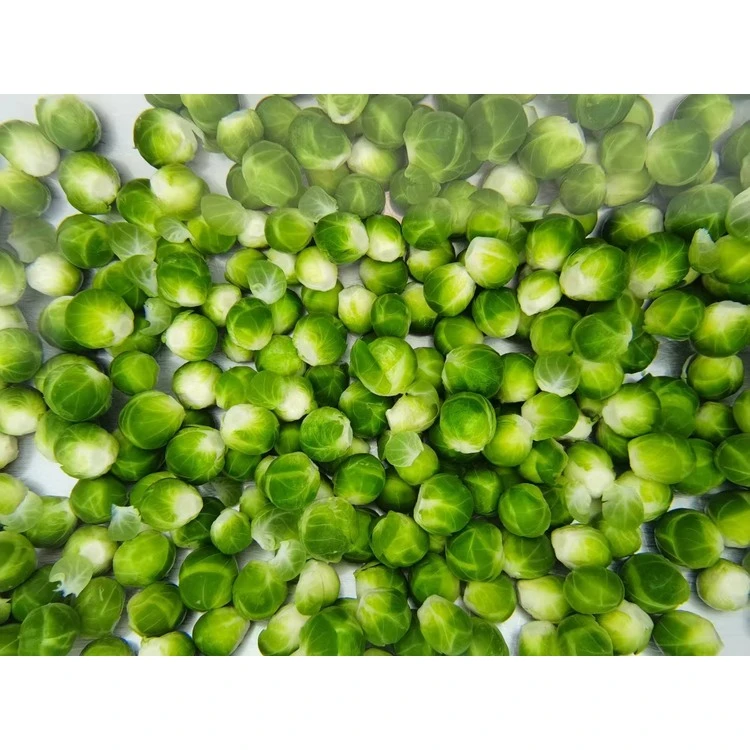
A spread of whole heads makes visible size and leaf variation easier to recognize.
Compactness describes how the leaves form the bud. Firmly attached leaves usually preserve a clearer whole shape through ordinary handling, while open heads may shed more material. Assess compactness without forcing leaves apart. For a thawed sample, use the same preparation method each time; an inspector should not compare a fully softened sample with one that remains partly frozen and then attribute the difference entirely to raw-material quality.
Surface damage deserves its own description. Mechanical cuts, broken heads, torn leaves and visible insect-related injury affect appearance in different ways. Some findings are straightforward commercial defects, while foreign material or evidence of contamination may require a separate safety review. Do not hide a consequential finding inside a generous total allowance for cosmetic variation. The agreed defect system should make important exceptions visible to the receiving team.
The two real product photographs used here show whole wet buds from the corresponding GreenLand product page. They help readers recognize leaf layers, cut bases and variation in head size. They do not prove a frozen storage condition, a grade result or the safety of any shipment. A purchasing decision should use a representative current sample and its supporting records, especially when the visual appearance differs from the online reference.
For repeat orders, maintain the same lighting, camera position and sample presentation when possible. Photograph a reasonable spread on a plain surface before photographing individual findings. This produces a usable comparison over time and reduces arguments caused by different image styles. If the buyer's dish uses sauce or a dark roast, still inspect the plain ingredient first; seasoning can conceal color differences that remain relevant to incoming quality control.
Build a repeatable lot inspection
A receiving inspection begins with the identity of the material being assessed. Record the supplier lot, pack format, number of cases, arrival condition and the specification version. Select samples according to an agreed plan that represents the shipment. An informal handful can reveal a problem worth investigating, but it is a weak basis for declaring the condition of a large lot or applying a statistical acceptance rule.
Choose the plan with the buyer's quality team and the applicable standard in view. Specify which cases are sampled, how much material is taken, whether subsamples remain separate and how results are combined. Standards may use different sample units and acceptance calculations for different characteristics. Avoid lifting a numerical tolerance from a table while omitting the sampling rules that give it meaning. AQL language particularly needs a complete method and a clear purpose.
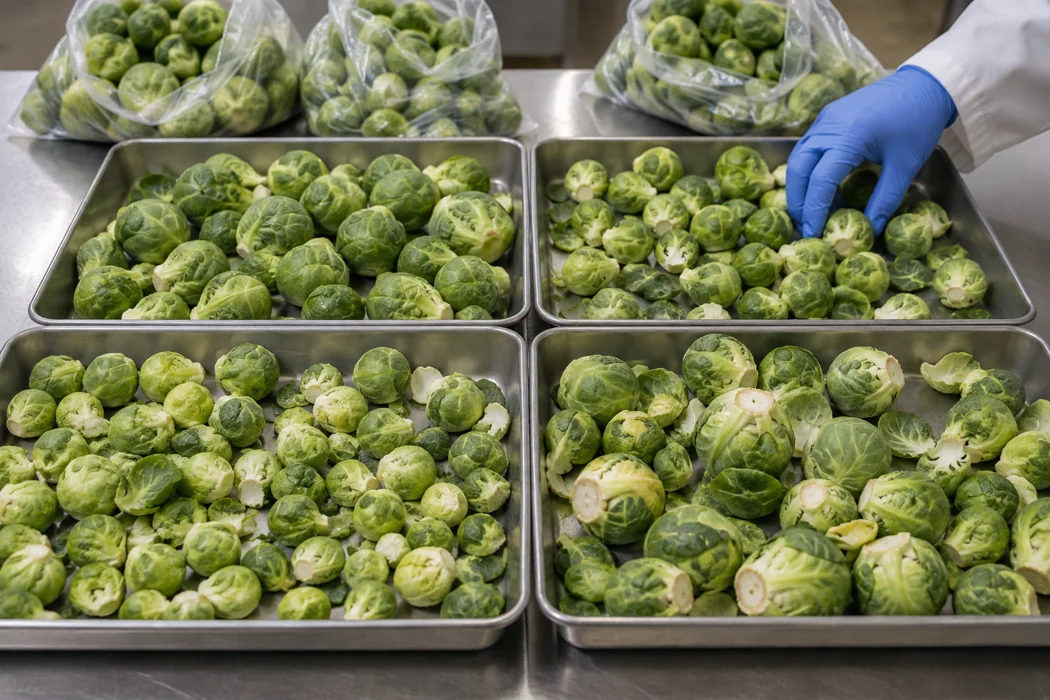
Keep representative sample portions identifiable while examining the distribution of whole heads.
Prepare the work area so that sorting creates an auditable record. Keep whole units, detached leaves and identified defects in separate trays or dishes. Record the initial sample amount, the measurements taken and the denominator for each result. If a head has more than one defect, follow the agreed rule for recording multiple observations. Otherwise total defect counts can change simply because two inspectors use different counting conventions.
Use the inspection sequence below to preserve observations that would disappear after thawing or cutting:
- Check the pack and frozen condition.
- Examine the representative contents.
- Measure the specified dimensions.
- Separate loose material.
- Assess selected cut heads.
- Prepare a cooking sample using the applicable instruction.
This also prevents the cooked result from becoming the only record of a bag that arrived with extensive frost or damaged packaging.
Compare the observations with the current acceptance criteria and document the disposition. If the result is marginal, use the agreed review or resampling procedure instead of taking repeated samples until one looks acceptable. Retain the initial evidence. For a complaint, include lot details, quantities affected, the sampling method, photographs and the preparation conditions. A supplier can investigate a defined discrepancy more effectively than an unexplained statement that the sprouts were inconsistent.
Keep the inspection proportionate to the use while preserving essential controls. A new supplier, a changed size grade or a new meal format may justify a broader qualification trial than a routine repeat order. Once the method is established, train receiving staff with the same examples and equipment. Review trends across lots so that a gradual shift in size distribution or leaf loss becomes visible before it causes repeated production adjustments.
Turn the accepted sample into an order specification
The final specification should connect each agreed characteristic to a method and an intended outcome. State the whole-bud form, processing status, size band, out-of-band treatment, stem trim, compactness, loose material and relevant discoloration criteria. Add the sample preparation and cooking method used for approval. Keep the document specific enough for receiving staff to apply, but avoid adding a long list of measurements that has no effect on the buyer's product.
Application results help explain which controls deserve priority. A portioned meal may depend on the number of complete buds in a compartment and the tenderness of the largest center after reheating. A foodservice side may place more emphasis on uniform presentation after holding. A vegetable blend needs distribution and compatibility with neighboring pieces. Approve the sample at the point of actual service, including any planned storage or reheat stage.
For a frozen product, record the storage instruction and the evidence expected at shipment and arrival. Packaging condition, lot identity and temperature records belong alongside the visible ingredient checks. Frost or clumping can justify investigation, but appearance alone cannot reconstruct a complete temperature history. Agree how a discrepancy will be assessed and which records are needed before the container is loaded.
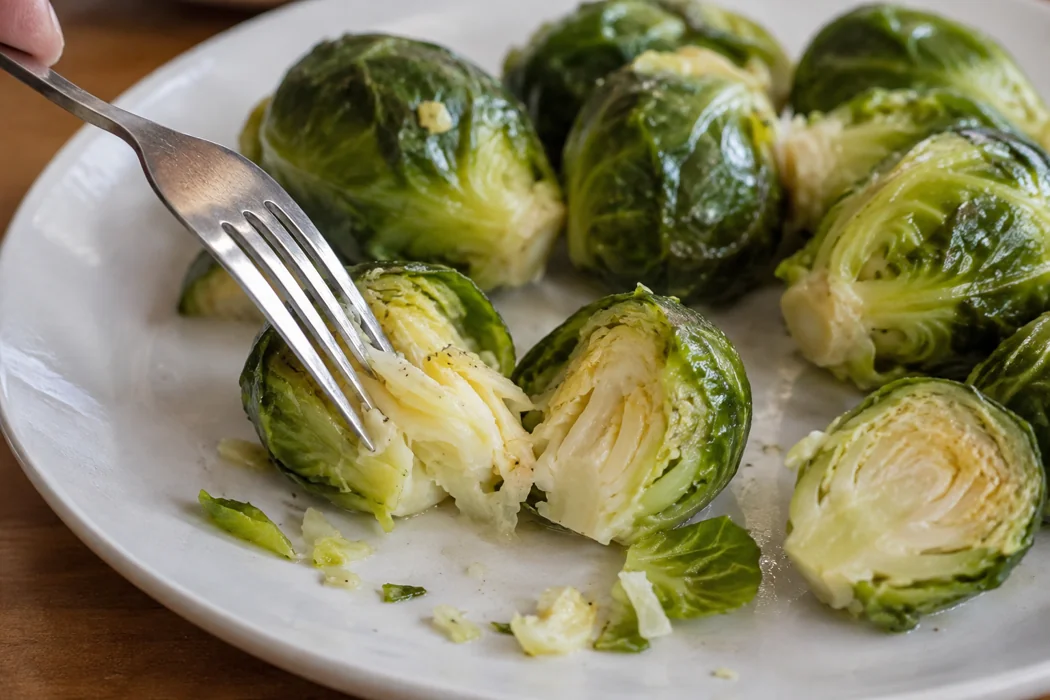
Inspect the cooked center as well as the outer leaves when approving an application.
Packing details should support the approved handling method. Confirm inner-bag weight, carton weight, liner or bag requirements, case marks and pallet arrangements. A large bulk pack can change how material settles and how often it is handled on the buyer's line. If a smaller pack is proposed to improve portioning or reduce open-pack exposure, compare the operational benefit with the change in packing cost and order quantity.
We prepare a quotation around the confirmed form, sample requirements, volume, destination and shipment window. Requested test reports or other documents need an agreed scope and timing; a report should identify the relevant product and lot where appropriate. Private-label artwork must reflect the actual ingredient status and use instructions. A sample approval does not establish an unlimited claim about every future production run.
Keep a controlled record of changes after the first order. If the size band, packing, processing route or intended dish changes, identify which earlier trial results still apply and which need repeating. The most useful purchase specification is one that production, receiving and the kitchen can all interpret in the same way. That shared method turns a promising sample into a repeatable supply decision.
Continue reading
Understand how dense pieces, basket loading and surface moisture affect a hot-air cooking trial.
Explore how the first cooking stage, packing and reheating change the texture of cooked vegetables.
Source frozen Brussels sprouts with GreenLand-food
GreenLand-food is a professional frozen Brussels sprouts supplier and manufacturer in China, providing factory-direct wholesale supply for importers, food manufacturers, foodservice distributors and private-label programs.
Send your required product form, size specification, packing, quantity, application and destination. Include private-label needs and requested documents, together with the preparation method and sample criteria your team needs to evaluate. We will review the available product and commercial details for your inquiry.