


Can You Freeze Celery? Cuts, Texture and Soup Use
Oct 19, 2026
Leave a message
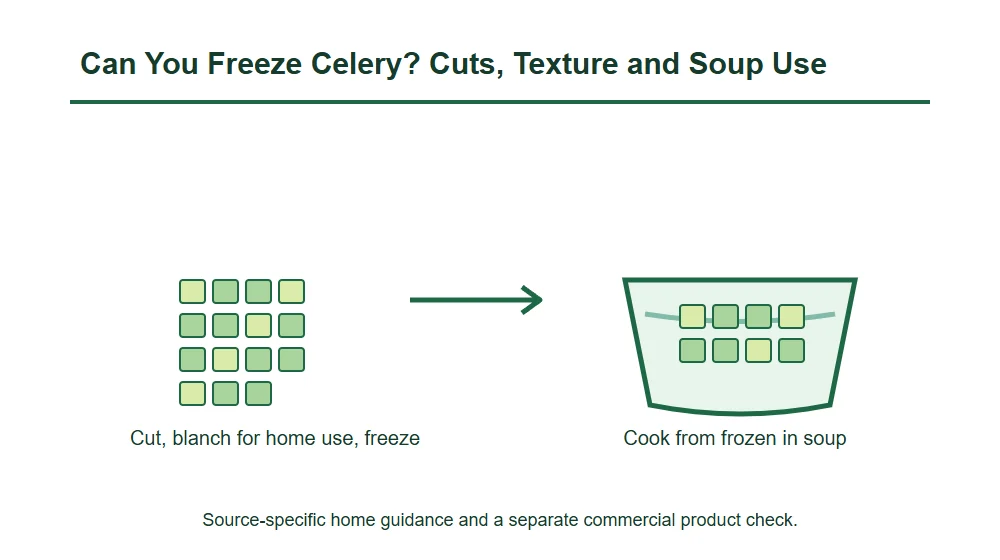
The useful question is less about whether it survives freezing than about the cut, the proportion of leaf and stalk, the amount of surface moisture and the point at which it enters the recipe. A frozen celery dice can save preparation work in a large kitchen; it cannot promise the eating texture of a raw stick.
For a purchasing team, "frozen celery" is still too broad to approve a shipment. We would start with the finished dish, then agree a physical sample and written limits for the cut, leaf share, colour, free-flow condition and packing. The home-freezer steps below answer the common question. The later sections show how to turn that answer into a repeatable ingredient decision without treating a household blanching guide as a factory process specification.
- For the NCHFP home method, water-blanch 1-inch celery lengths for three minutes, cool and freeze.
- Use the thawed celery in cooked dishes; its raw snap will not return.
- For a commercial cut, test leaf share, dice size and free water in the intended recipe.
Can celery be frozen and where does it work?
Freezing is useful when celery is an aromatic cooked ingredient. In a soup base, softened celery contributes flavour and visible green pieces without needing a crisp bite. Diced pieces also distribute through vegetable mixes, savoury bakery fillings, casseroles and ready meals. If the final dish is simmered until the celery softens anyway, the difference between fresh and frozen texture may be small enough for the recipe. Run a cooked trial to judge that difference rather than making the decision from an uncooked frozen sample.
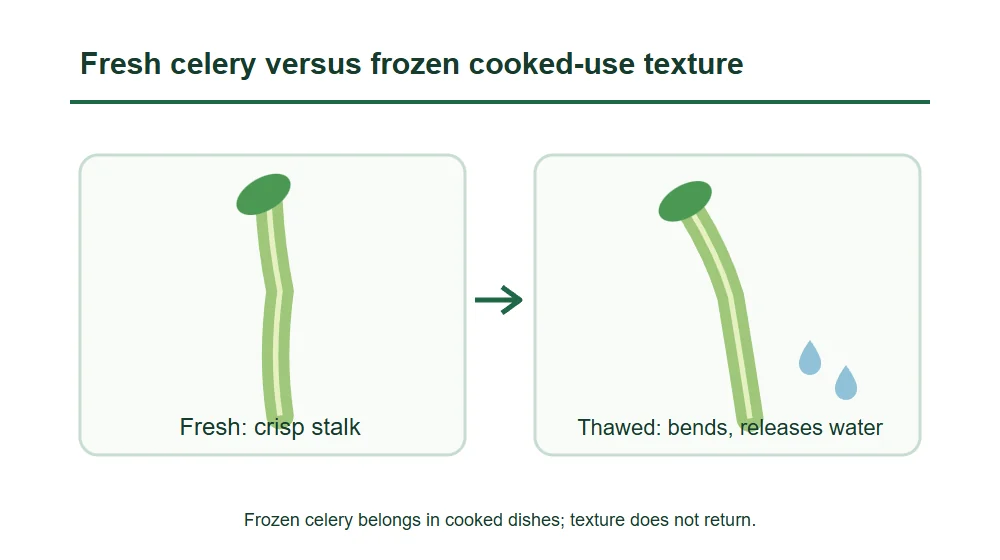
Frozen celery belongs in cooked dishes; texture does not return.
The answer changes for a raw application. A crudité tray, salad or crisp garnish depends on a firm stalk that fractures cleanly. Water in the celery tissues expands as it freezes and the structure softens after thawing. The University of Minnesota Extension explains this general mechanism and notes that celery is not usually frozen for raw-texture uses. It also notes that texture changes are less noticeable in foods cooked before eating. That is a useful boundary: freezing can be a preparation and inventory tool, but it does not preserve fresh crunch.
For a food manufacturer, "works in soup" should still be tested in the actual broth. A clear soup exposes the size and shape of each dice; a thick puréed soup may hide them. An acidic sauce, a long cook or a second heating step can affect colour and softness. A foodservice distributor might need a free-flowing bag that can be portioned repeatedly, while a ready-meal line might tip whole bags into a kettle. These are different handling tests even when the vegetable name is identical.
We suggest an application trial with the proposed lot sample and the same cooking sequence, portion weight and hold time planned for production. Note the celery flavour, visual presence, water released into the dish and the behaviour of any leaf pieces. If a fresh version is the benchmark, cook a control beside the frozen sample. Keep the comparison record; it is more useful for future orders than a general claim that frozen celery is "as good as fresh."
What freezing does to stalks, dice and leaves
A celery stalk contains a great deal of water, but its eating texture also depends on long fibres and intact cells. When ice forms within the tissue, the thawed piece bends and releases moisture more readily. A small dice can remain quite useful because the recipe expects it to soften. A large chunk may expose the change as a limp centre. A thin slice can disappear into a long-cooked sauce. Cut selection therefore changes the cooking result, not only the appearance in a carton.
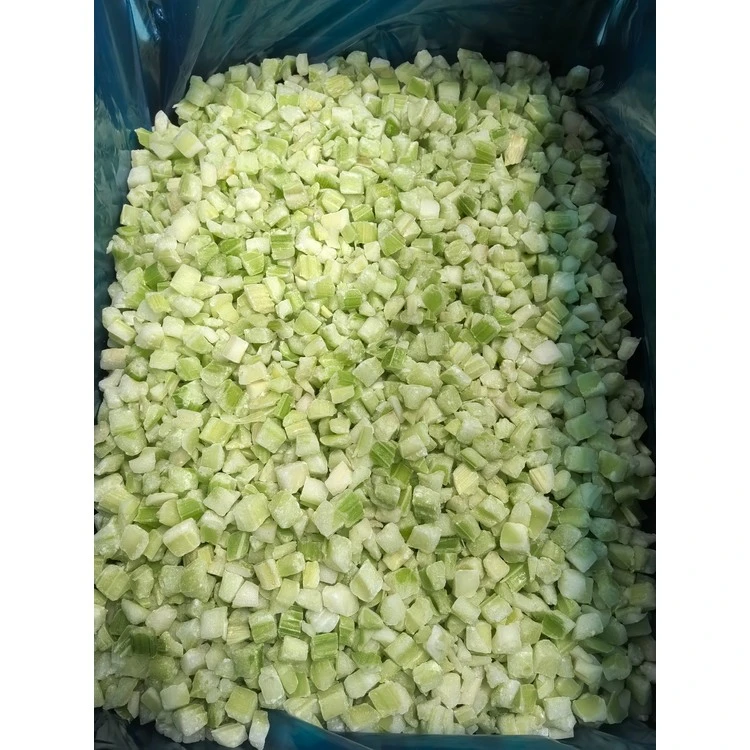
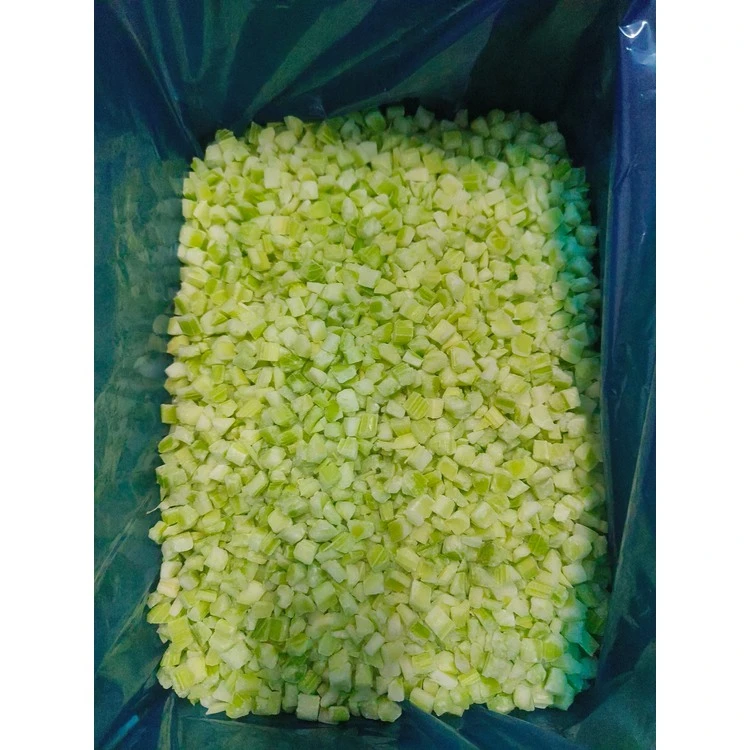
Diced frozen celery in a lined carton.
Leaves introduce a second variable. They can contribute a stronger celery note and a darker green speck in soup or stuffing, yet an uncontrolled leaf fraction changes flavour and appearance between lots. Buyers who want a mainly pale-green stalk dice should say so. Buyers who value a stronger aromatic profile can request an agreed leaf share, then test whether those leaves remain evenly distributed after freezing and handling. A product photo cannot establish the lot-wide ratio; a representative sample and specification can.
Look at the real diced celery photograph here as a product-state reference. The image shows individual cut pieces in a lined carton, but it does not measure the distribution of large and small pieces or prove the absence of a fused mass deeper in the carton. When receiving a sample, empty a measured portion onto a tray, separate natural loose pieces without force, and assess the visible range. Record a few representative images with a scale beside the pieces. That gives the supplier a concrete target if the next sample needs a different cut.
Frost is another distinction worth making. A light surface coating on frozen pieces is not the same as a wet block that suggests a temperature excursion, poor draining or refreezing. Frost alone does not identify which event occurred. If a delivery arrives with heavy clumping, damaged cartons or evidence of thawed water, hold it for a documented review of temperature records, package condition and sample quality. Do not decide from one photograph or assume that a later cooking step resolves all quality and safety concerns.
Choose a cut for soup, sauce or filling
For a clear vegetable soup, decide how visible the celery should be in the spoonful. A fairly regular dice helps a cook balance celery with carrot, onion and other vegetables. A blend can fail visually even when every component is acceptable alone: oversized celery pieces draw attention, while a high fraction of tiny pieces turns the broth cloudy. Agree the target size distribution and the allowance for small fragments with the same cooked reference used to approve the blend.
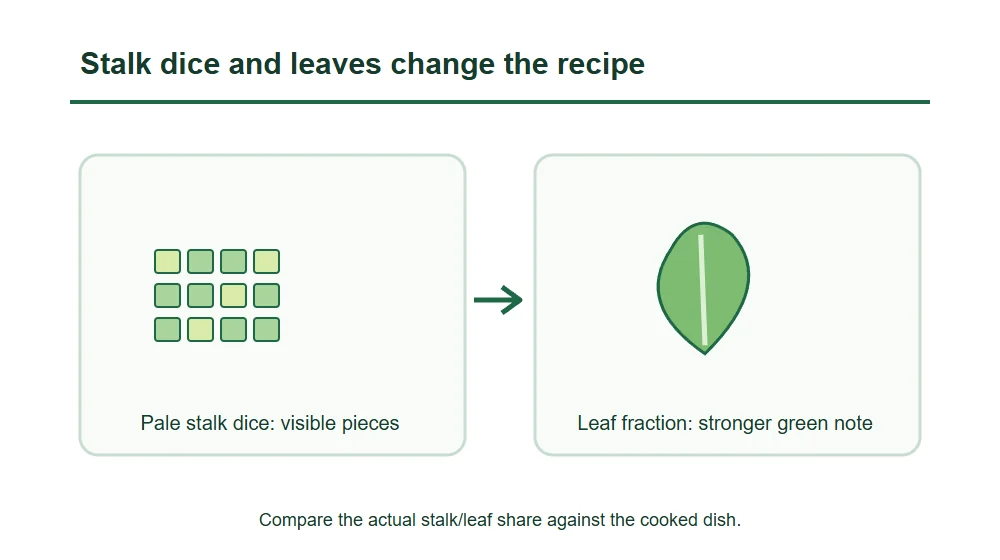
Compare the actual stalk/leaf share against the cooked dish.
For a puréed soup or sauce base, exact dice appearance may matter less than manageable dosing, clean flavour and even cooking. A smaller cut exposes more surface area and can soften quickly. It may also carry more loose fines and liquid if the preparation or draining step is poorly controlled. The commercial decision is therefore a trade-off. Test the ingredient in the actual equipment at the intended addition point instead of assuming the smallest cut gives the best result.
For a filling, a distinct piece may be helpful. In a savoury pastry or vegetable dumpling, however, excess free water can weaken a dough or make the filling difficult to portion. Use a cooked trial that includes the filling's cooling and packing stage. Assess whether the celery is still recognisable, whether water collects at the bottom and whether leaf pieces create dark patches. A supplier can prepare to a cut description, but the buyer must define the acceptable finished eating result.
The second GreenLand photograph is another top-down view of diced celery in a lined carton. It is a separate source image, but it does not show a new plant part or a measured macro view; use it only to compare visible colour and piece variation between two carton views. For a real leaf-share or cut-size decision, spread a physical sample on a contrasting tray, identify leaf pieces separately, and use a ruler or sieve method agreed before the trial. The carton photos cannot establish net weight, microbiological quality or an entire lot's uniformity. A cooked sample alongside these cold views shows whether the visible differences matter in the intended soup or filling.
Discuss the frozen ingredient for your production
Frozen Celery
Soups, sauces and cooked fillings.
Confirm for your order: Offered cut and pre-treatment; draining trial, pack and cooking use.
View product & supply detailsFor a commercial trial, send your required form, application, pack, quantity and destination. We can discuss the offered sample and the order specification with you.
Request Specifications & QuotePrepare and freeze celery at home
For the National Center for Home Food Preservation's tested household method, start with crisp, tender celery stalks without coarse strings. Wash thoroughly, trim, and cut the stalks into 1-inch lengths. Put the cut stalks into boiling water for the specified three-minute water blanch, then cool them promptly, drain well, and pack in a freezer container without headspace. Seal, label with the date, and freeze. The University of Minnesota Extension's home table also gives celery a three-minute water blanch. These are matching home instructions, not two conflicting factory settings. The method is intended for celery that will later be cooked; neither source promises a crisp thawed salad stalk.

NCHFP/UMN home guidance, not an industrial line setting.
Follow the blanch with rapid cooling so residual heat does not continue softening the stalk. Drain thoroughly before packing: water trapped between pieces freezes into bridges and makes it difficult to take out a handful. A home cook who prefers separate dice can trial a thin tray layer before transferring the frozen pieces to a sealed container, but that tray step is a practical portioning adaptation, not a replacement for the NCHFP package instruction. Keep a small batch labelled by preparation date and intended use. If you deliberately skip blanching for an imminent cooked dish, label that as an untested short-use choice and inspect flavour, colour and aroma; do not present it as the NCHFP procedure.
The three-minute figure belongs to the NCHFP and Minnesota home water-blanch context, with their cut and cooling instructions. It is not an industrial celery line's validated thermal setting. A factory must determine the actual cut size, load, water or steam contact, cooling capacity, enzyme target and downstream food-safety plan for its equipment. For a kitchen receiving a frozen commercial cut, ask whether it was blanched and what cooking remains necessary. Freezing does not make a raw product sterile, and a blanch step does not automatically make the supplied ingredient ready to eat. For the household method, cook the frozen celery in soup, stew or sauce rather than testing it as a raw garnish.
Keep the frozen package cold until use. If the recipe can take frozen dice, portion them directly into the heated dish. Repeatedly thawing a large container to remove a handful encourages moisture loss, clumps and inconsistent handling. Smaller packs or a product that remains free flowing make portioning easier. In a commercial kitchen, the pack size should fit the recipe batch and the freezer's opening pattern, not merely the lowest packaging cost per kilogram.
Cook frozen celery without making a watery dish
For a home soup, put a small handful of frozen 1-inch pieces into simmering broth while the slower-cooking vegetables are approaching tenderness. Stir so the pieces disperse, then taste a stalk piece at service rather than relying on a fixed minute count: a fine dice, a thick rib and a previously blanched piece do not reach the same endpoint together. If the soup will be blended, earlier addition can develop an aromatic base; if the pieces should remain visible, add them later and check a spoonful after any hot hold. This is a cooking sequence, not a safety heat treatment for a ready-to-eat ingredient. Follow the dish's applicable safe cooking and handling requirements.
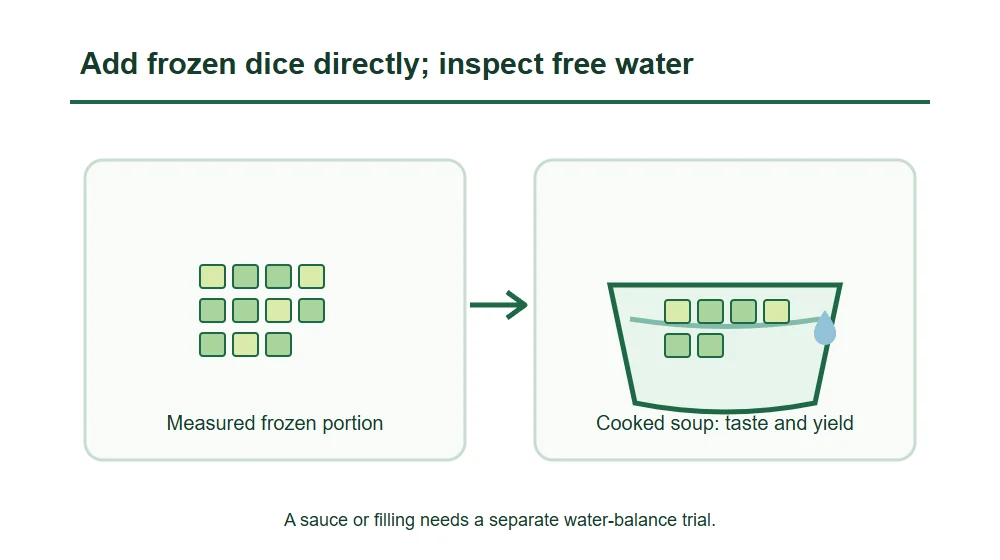
A sauce or filling needs a separate water-balance trial.
A sauce and a pastry filling reveal different water problems. For a tomato sauce, compare equal starting weights of fresh and frozen celery in two small pans, keep the sauce and heating sequence the same, then weigh or observe the finished sauce before reduction. In a filling, cook the celery, cool the filling as the recipe requires, and look for liquid at the bottom before wrapping or portioning. If one batch is wetter, first check how much surface frost entered with the celery and whether the pieces were thawed in a colander. Then change one variable, such as addition point or reduction, and repeat. Do not call a little frost a failed lot without checking the actual recipe result.
Consider the sequence with other vegetables. Carrots, onions, potatoes and celery rarely soften at exactly the same rate. If frozen celery is placed into the kettle with a slow-cooking root vegetable, it may become very soft by the time the root is ready. Adding it later can preserve a visible dice. Conversely, an aromatic base that will be puréed can accept earlier addition. The correct sequence comes from the intended texture and the cut in the approved sample.
For foodservice, test the longest realistic hold as well as the first ladle. A soup that looks balanced at the end of cooking can lose visible celery during hot holding and a second reheat. For chilled or frozen finished meals, include the full heat, chill, freeze and reheat cycle in the trial. Only then decide whether the cut or addition point needs changing. Recording this sequence makes future supplier conversations specific and avoids a vague complaint that the celery became "too soft."
How a commercial frozen celery specification differs
A usable specification begins with identity: celery stalk dice, with the intended treatment and whether leaves are included. Add a reference photograph and an approved physical sample, but give them measurable companions. Define the cut range, allowable small pieces, leaf-share expectation, colour and defects that matter in the application. State whether the product must pour freely from the bag and how that is checked. Packing unit, case configuration and labelling should fit the buyer's warehouse and production line.
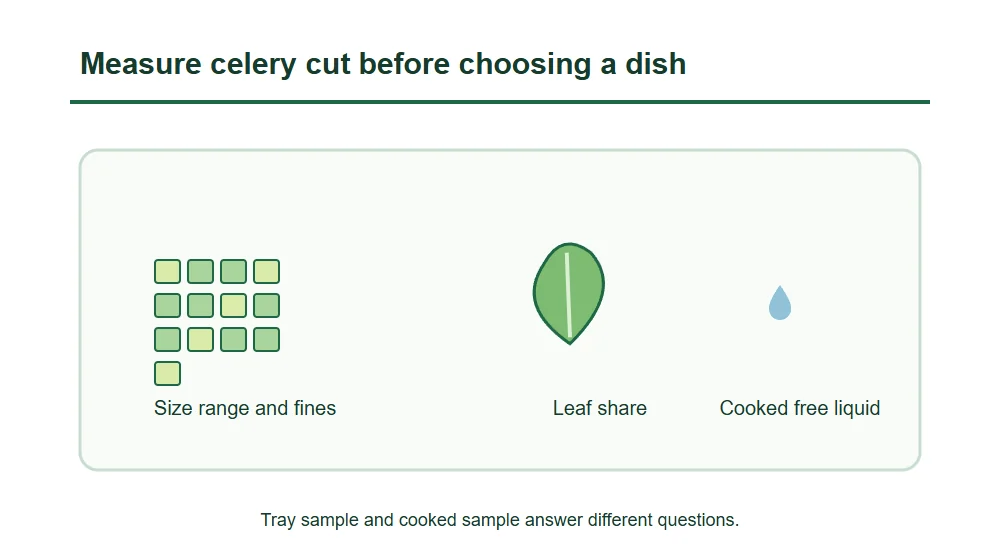
Tray sample and cooked sample answer different questions.
A cut-size check becomes more useful when it is tied to a dish. For a clear soup, photograph a spoonful after the planned hold: the pale ribs should still be visible if visible dice are the selling point. For a smooth soup base, test the ease of measuring from the bag, the flavour after blending and whether long celery fibres remain. For a savoury filling, test the same mass after cooking and cooling and note liquid that would reach the wrapper. Those three endpoints may call for different cuts even when the raw ingredient is all called celery. Record the sample's actual stalk/leaf mix so the next comparison uses the same starting material.
If the piece vanishes in a broth, separate a cut problem from an addition-time problem. Spread a frozen portion on a tray beside the approved sample and compare larger pieces, fines and leaves; then run two small batches in the same broth, adding one portion early and the other near the finish. If both disappear, a larger cut or gentler handling is a better trial than simply adding later. If only the early portion disappears, change the cooking sequence before changing the purchase specification. This small comparison offers a buyer a usable decision, not a claim that GreenLand has already performed a validated production trial.
For repeatability, write a simple celery observation sheet before opening the carton: sample mass, visible leaf mass or count, pieces outside the agreed cut band, and free-flow condition. A size ruler answers whether the dice changed; weighing a drained cooked portion answers a different question. Keep these denominators separate. For example, ten leaves among one hundred pieces is not the same claim as ten grams of leaves in a hundred-gram portion. An agreed written method helps explain disagreement without inventing a legally prescribed sampling plan for celery.
Sample, receive and release a bulk lot
Run one clear-soup test and one thicker application if the customer uses both. The clear soup exposes pale versus green pieces, fines and leaf aroma; the filling or sauce exposes moisture and long fibres. Use the same frozen input mass and cooking sequence for the proposed and reference samples, then photograph the served portion and note liquid left after the planned hold. If the new sample is too leafy, first specify whether that means flavour, appearance or a measured fraction. A supplier can adjust a cut or sorting instruction only when the objection names the observable result.
Second diced celery carton view; not a measured close-up.
On receipt, the buyer can examine the agreed sample units while the shipment stays frozen: note carton integrity, lot code, any liquid staining, and whether a measured portion pours into individual pieces. Then cook a portion by the approved method. A frozen tray comparison answers cut and leaf-share questions; a cooked sample answers flavour, fibre and water questions. When a customer needs a ready meal ingredient, its own process and final meal release remain separate decisions. Document what was opened and weighed so a dispute about a few unusual pieces does not become a claim about an entire lot without a denominator.
A wet block and a carton with a dusting of surface frost call for different reactions. For a wet fused block, photograph the unopened carton and the block, keep the lot frozen, and review available temperature and handling records before any attempt to break it up for a soup. For a little loose frost, inspect separation and cook quality first. Neither appearance reveals whether moisture came from washing, packing or transport. If odour, foreign material or thaw water is present, hold the affected material for the agreed quality decision instead of using heat to conceal the symptom.
Across harvests, the same nominal celery dice can carry a different rib thickness, stringiness or leaf aroma. A sensible seasonal comparison cooks a current sample beside the retained approved reference in a lightly seasoned broth, where the celery note is not buried by sauce. If the current piece needs longer to soften, change one variable at a time-cut, addition point or supplier grade-and document the result. This is more informative than a generic statement that every incoming lot should look identical. The final accepted cut still needs a written specification and lot identity for repeat supply.
Common failures and corrections
A celery dice that disappears in soup may be too small for the cook time, or it may be added too early. First compare the actual cut to the approved sample. If the pieces match, change the cooking sequence and repeat the trial. If they do not match, ask for the cut distribution and a corrected sample. Changing the recipe to conceal a supplier deviation can make future lots harder to manage.
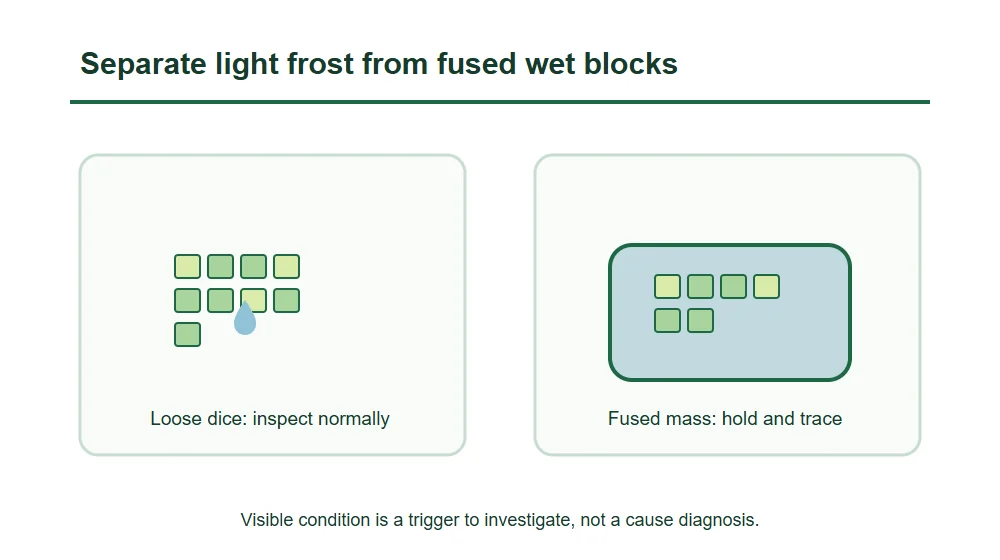
Visible condition is a trigger to investigate, not a cause diagnosis.
An unusually bitter or dark result may be related to leaf share, raw-material maturity, cooking or a combination. Compare the lot with the reference sample and review the exact recipe. Do not diagnose the cause from colour alone. A pale product with weak aroma can also be unsuitable. The practical standard is a defined sensory result in the buyer's finished dish, supported by an agreed physical description of the ingredient.
Large frozen blocks interfere with portioning and may point to wet pieces or temperature fluctuation. Check the package surface, carton damage and available cold-chain records before breaking up the block. If the pack was intended to be free flowing, document the deviation and hold it for disposition. If the customer normally uses a whole block in a kettle, clumping can still hide uneven freezing or handling; the intended use changes convenience, not the need to investigate abnormal condition.
Surface freezer burn, heavy frost and dull colour can arise during storage and handling. The University of Minnesota Extension explains that poor packaging and air exposure can damage frozen-food quality. Keep cartons sealed, use suitable packaging, maintain the agreed freezer condition and rotate by date. When a quality issue appears after arrival, compare dispatch evidence, transport logs and warehouse handling. Assign the correction to the step that actually failed instead of asking the next shipment to solve an unmeasured problem.
Questions buyers ask before an order
Can frozen celery be used in a fresh salad? Its thawed texture is generally too soft for a dish built around crisp celery. A fully cooked dish is a more sensible starting point. If a customer proposes a chilled prepared salad containing frozen celery, trial the complete product and check its food-safety requirements rather than assuming the ingredient will behave like a fresh stalk.
Should celery be thawed before soup? Usually not for the NCHFP-style cooked use: add a measured frozen portion into a heated dish and allow for its cooling effect. A large chilled batch or a thick rib may need a different addition point from fine dice. Taste the piece after the actual simmer and again after a planned reheat. If a recipe calls for draining, do that under a controlled food-handling procedure and record the drained mass so the finished formula is reproducible.
Does "IQF" guarantee every piece separates? No. Individual quick freezing describes an intended processing approach; storage, packing and temperature history still determine what arrives. Put an observable free-flow or clump criterion into the agreed specification and inspect it at receipt.
What should go in a quote request? Send the target cut, leaf preference, application, expected quantity, packing unit, destination, planned order cadence and documents your importer or customer requires. An image of the acceptable cooked result is useful. We can then discuss a matching GreenLand-food frozen celery sample and the records needed to evaluate it.
Compare other vegetables that retain useful form in a hot soup.
Review the broader quality checks behind a frozen vegetable program.
See how cut size and moisture matter in prepared dishes.
Source frozen celery with GreenLand-food
GreenLand-food is a professional frozen celery supplier and manufacturer in China, providing factory-direct wholesale supply for importers, food manufacturers, foodservice distributors and private-label programs.
Send us the product form, specification, packing, quantity, application, destination, private-label needs and requested documents.