


How to Cook Napa Cabbage for Soup and Stir Fry
Oct 19, 2026
Leave a message
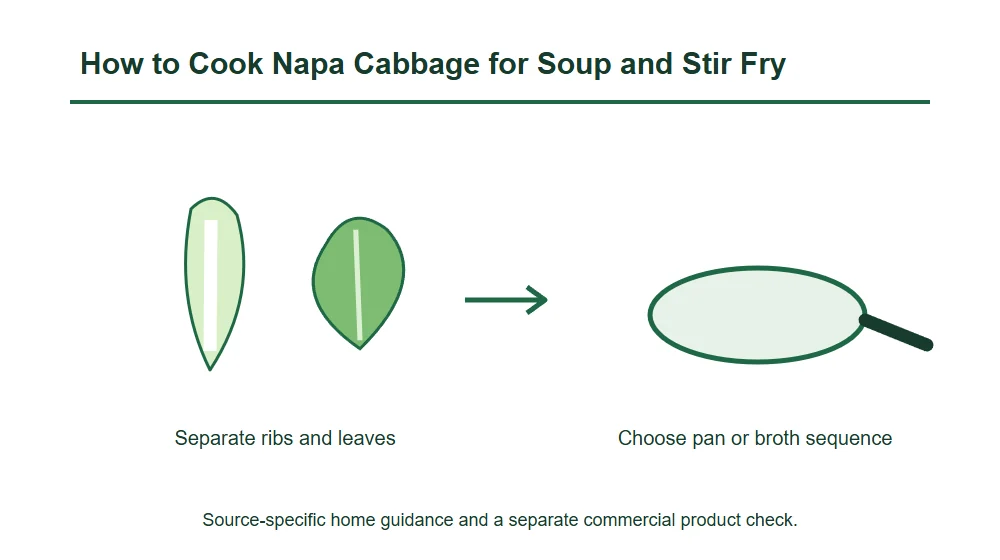
For soup, give the ribs enough time to soften, then add the leaves near the desired finish. The exact minutes depend on cut, quantity, pan or pot, and whether the cabbage starts fresh or frozen. Watch the vegetable in the dish instead of borrowing one recipe's clock as a universal rule.
This distinction matters to a commercial buyer. A bag described only as "Chinese cabbage" may contain a different balance of ribs and leaves from the next bag. That changes water release, appearance and cooking time. GreenLand-food can discuss a frozen cut for cooked applications, but the purchasing team should approve a representative sample in its own recipe and record the leaf-to-rib expectation, cut and packing. The following method begins with fresh napa cabbage because that is what most cooks search for, then explains how to evaluate a frozen ingredient without promising the crispness of a fresh head.
- For fresh napa cabbage, keep pale ribs and green leaves separate.
- A cited rib-only stir fry and a cited rib-then-leaf soup have different cuts, vessels and times.
- Frozen cuts need a separate check for tenderness and water release in the actual dish.
Start with the cooking method and the cut
Decide what the cabbage is meant to do before cutting it. A stir fry often benefits from broad enough rib pieces to remain visible and take up sauce, while the leaves can wilt around them. A noodle soup may need smaller, spoon-friendly pieces that cook evenly and are easy to portion. A dumpling filling needs a fine cut and control of free water. The same head can serve all three uses, but the preparation is not interchangeable.
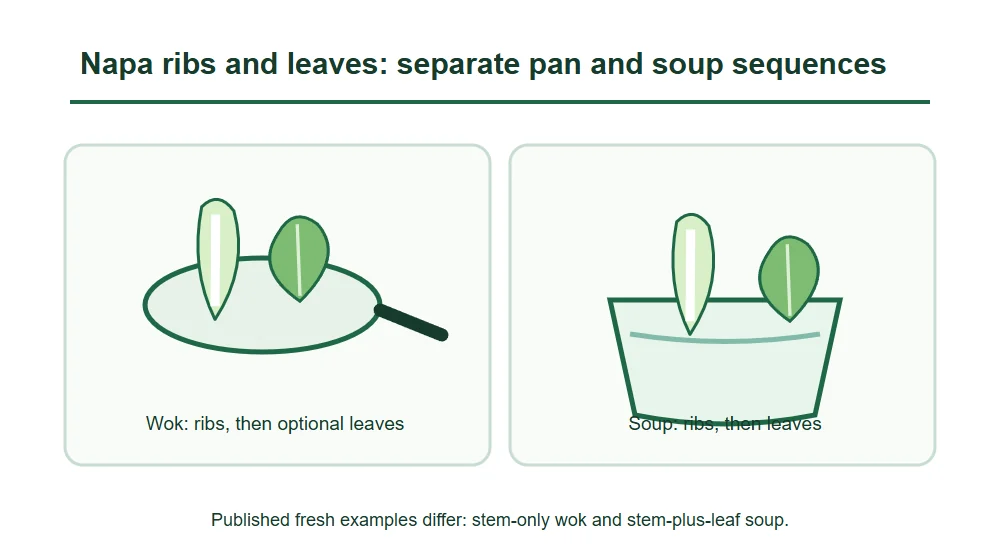
Published fresh examples differ: stem-only wok and stem-plus-leaf soup.
Fresh napa cabbage has tender crinkled leaves attached to substantial pale ribs. The ribs are juicy and denser; the leaves soften quickly. A cook can exploit that difference by separating them. The Woks of Life's hot-and-sour version uses the ribs for a quick pan dish and saves leaves for another use, an instructive example of how a desired finished texture determines the part selected. Other recipes use both, but the order and cut must still reflect the difference.
Choose a cooking vessel that matches batch size. A crowded pan traps steam and makes it hard to develop the lightly seared edges expected of a stir fry. A large soup pot gives the cabbage room to circulate, yet a large volume also changes how quickly the pot returns to a simmer after the vegetable is added. If a cook scales a household recipe up for foodservice, it should test the actual batch rather than multiply the ingredient weights and assume the same timing.
Write down the target result. "Cooked napa cabbage" can mean a rib with slight resistance, a fully soft leaf in broth or finely cut cabbage integrated into a filling. Set a point at which the cook will assess the result: immediately at the pan, after a hot hold, or after a ready meal is chilled and reheated. That single decision prevents an attractive first test from becoming an unsuitable production specification.
Why ribs and leaves cook at different speeds
The rib provides the structure of the leaf. It is thicker, contains more water and takes longer to become tender. The green leaf has much less mass and collapses quickly when heated. If both are added at once in a long simmer, the leaves may lose their visible shape before the ribs reach the desired bite. If both are cut very finely for a filling, the distinction is less visible but still affects water release.
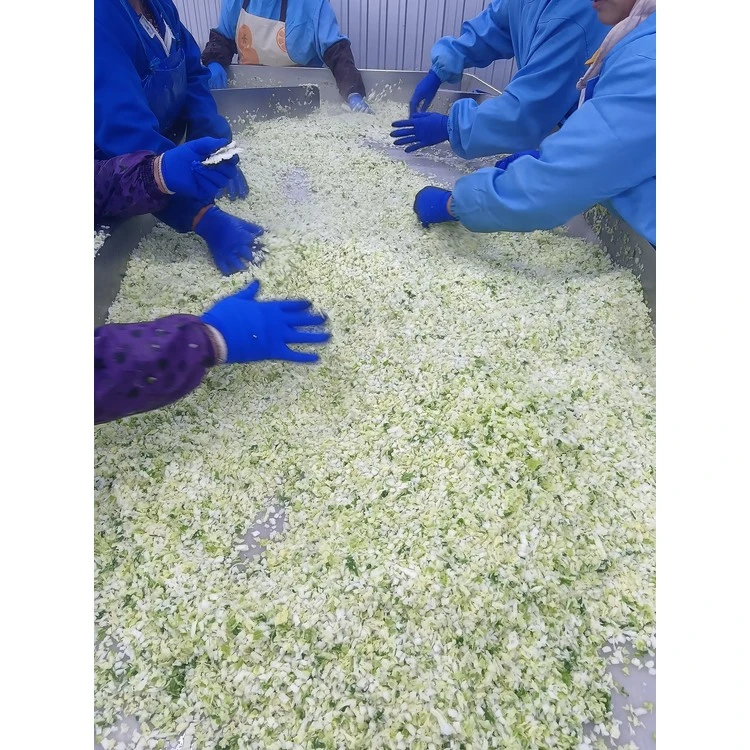
Workers inspecting cut Chinese cabbage.
Inspect the photograph of cut Chinese cabbage as a real product reference. The image shows separated pale and green surfaces, but it cannot tell you the mass ratio of those parts in a packed lot. A commercial sample should be spread on a tray and assessed across several handfuls, not judged from the most attractive photograph. Count or weigh according to an agreed method if the recipe is sensitive to the ratio. Some dishes welcome a leafy appearance; others need stronger rib identity.
Cut direction changes the rib's surface and bite. A diagonal cut exposes a broad face and can hold a sauce well. A narrow crosswise strip cooks faster but may disappear in a long simmer. A large square looks substantial in a prepared meal, yet it needs enough heat penetration. No cut is "best" without reference to the recipe. Agree an approximate target with a physical sample and cooked trial before setting a commercial cut description.
Freezing further changes the leaves and ribs. Ice formation softens the tissues, and the product may release water quickly in a hot pan. A frozen leaf that has already softened during freezing may need a shorter cooking exposure than a fresh leaf. This is why a fresh recipe's timing is only a starting hypothesis for a frozen ingredient. The buyer should test the actual supplied cut at the planned batch size and serving condition.
Prepare fresh napa cabbage for the pan or pot
Start by removing damaged outer material and examining the base and folds for soil or insects. Separate leaves as needed for washing, then drain them well. Water clinging to the surface can dilute a soup slightly and can turn a stir fry into a steam treatment. Drying is especially helpful when the recipe expects a hot pan and concentrated sauce. Work on a clean board and keep the cut produce protected until cooking.
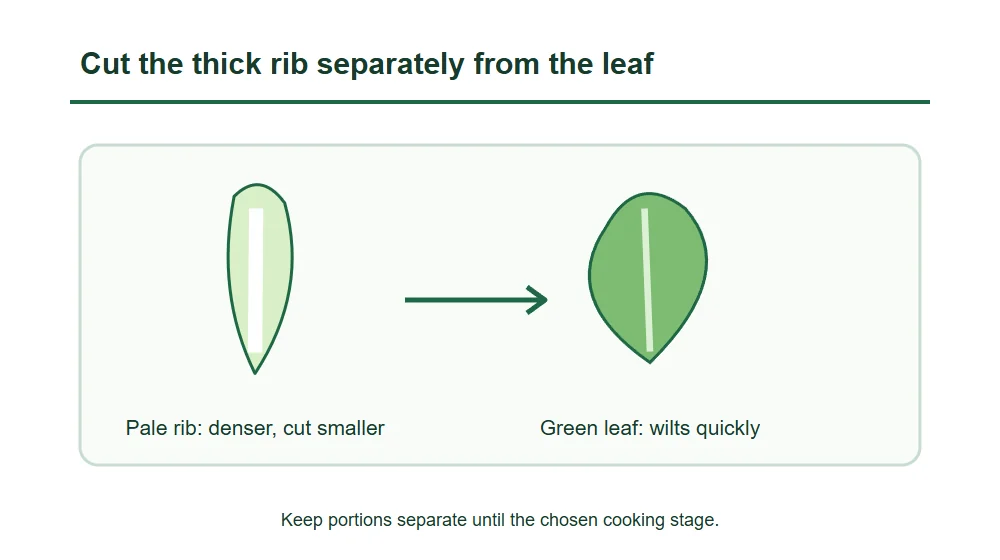
Keep portions separate until the chosen cooking stage.
For stir fry, divide a head lengthwise if that makes it easier to handle. Cut the thick ribs into pieces of similar thickness and keep the green leaf portions in a separate bowl. This allows the cook to add each fraction at the right moment. The exact shape can be adjusted for the dish: diagonal ribs for a broad sauced face, shorter pieces for a noodle bowl, or small dice for a finely mixed vegetable component. Keep a test portion beside the written cut description so different cooks interpret it the same way.
For soup, choose a spoon-friendly cut. Long leaf strips can tangle with noodles; very small fragments may become difficult to see after a hold. If the broth is clear, a consistent cut makes the product look deliberate. If the soup will be blended or heavily thickened, visual uniformity may matter less than the taste and finished water balance. The cut and the cooking point should be planned together.
At home, fresh cabbage can be trimmed just before cooking. A factory or central kitchen needs a different level of control: incoming condition, sorting, wash-water management, cut identification, lot traceability and time before heating or freezing. We can discuss the available GreenLand frozen Chinese cabbage form, but a product photograph is not a substitute for a process description, sample or agreed record package. The buyer's hazard analysis also depends on whether the finished dish will be fully cooked.
Stir fry without steaming the pan
For a fresh, rib-forward stir fry, separate the thick white ribs from the leafy tops, cut the ribs on a diagonal, wash and drain both fractions, and mix the sauce before heating the wok. The Woks of Life's hot-and-sour example uses 450 g of rib/stem only and a hot wok: aromatics cook briefly, then the ribs are stir-fried at high heat for two minutes, followed by sauce for one minute and a cornstarch slurry for about one more minute. Those minutes describe that recipe and pan, not every cabbage. At home, look for pale ribs that bend yet still have a little bite and a sauce coating rather than a pool. If adding leaves, put them in only after the ribs have started to soften and stop when they wilt; that is a different two-part variation, not the stem-only source recipe.
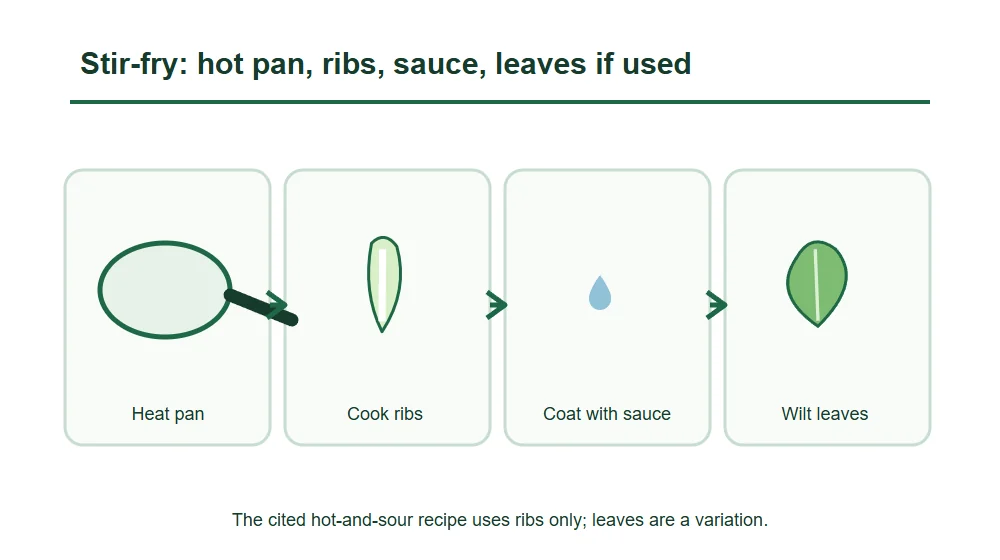
The cited hot-and-sour recipe uses ribs only; leaves are a variation.
Compare a second, soup-oriented method rather than borrowing the stir-fry timer. I Heart Umami's egg-drop soup keeps white stems and green leaves separate: in its 4-quart pot, stems are sautéed for about a minute and simmered in broth for about 12 minutes, then leaves are simmered another three to four minutes. Its starting cut is about 4 cm across the stems and 8–9 cm across the leaves. Those conditions illustrate why the thick rib takes the longer exposure. A smaller soup cut, a full kettle or a previously blanched frozen ingredient changes the heat transfer, so follow the visual endpoints-stem tender with slight resistance, leaf soft but not mushy-when adapting the sequence.
For the fresh wok version, a crowded pan is the common failure. If water pools before the ribs have coloured, remove some cabbage and cook in smaller batches; check that the cut pieces were drained and that sauce was prepared before the vegetable entered the pan. A thickener can bind a little liquid, as in the cited hot-and-sour recipe, but should not be used to disguise thaw water or a heavily iced commercial pack. If the leaves wilt before the ribs are ready, split them earlier next time or choose a narrower rib cut. These are separate corrections: changing the sauce will not fix a rib/leaf timing mismatch.
In foodservice, taste the dish after it has been held for the longest likely service period. Leaves can continue to soften and sauce can become thinner. A ready-meal factory should test the product after its full cook, cooling, packing, storage and reheating sequence. The marketable result is the plate or tray received by the customer, not only the attractive pan at the first minute of cooking.
Build a soup that keeps the cabbage distinct
For a home soup, first prepare a broth and any ingredients that need longer cooking. Keep the pale ribs and green leaves in separate bowls. Add the ribs, stir and simmer until a test piece is nearly tender; add the leaves for the short finishing phase. The cited egg-drop soup provides one concrete reference: roughly 12 minutes for its 4 cm stems after a brief sauté, then three to four minutes for larger leaf pieces in a 4-quart pot. Its white stem becomes slightly translucent and its leaf softens without dissolving. Treat those observations as the endpoint; do not impose that timer on a tiny cut, a different broth volume or frozen pretreated cabbage.
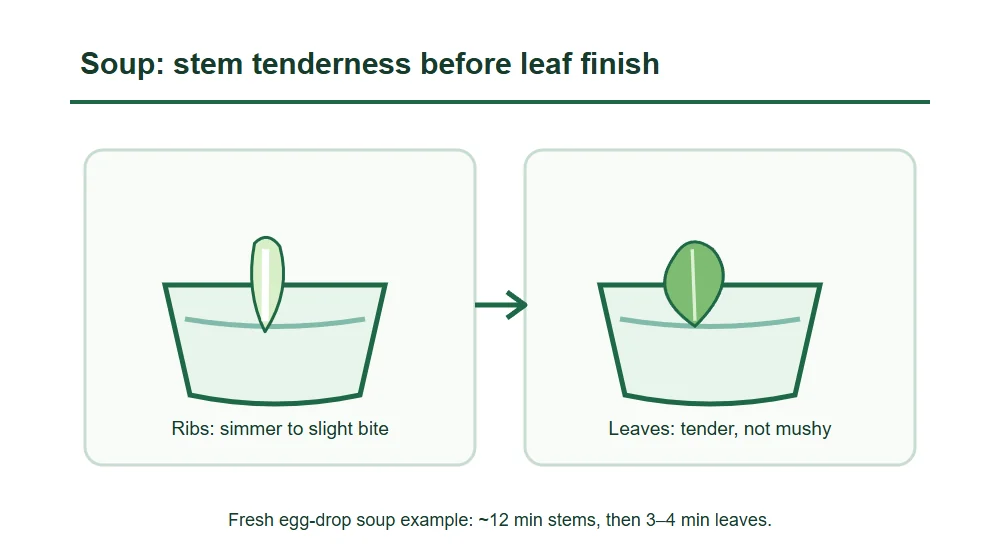
Fresh egg-drop soup example: ~12 min stems, then 3–4 min leaves.
A noodle soup needs one more check. Cook the noodles according to their own instruction and decide whether to put them in each bowl or the broth; they may keep absorbing liquid while the cabbage gives off some. Ladle a bowl immediately and another after the expected service wait. Compare broth level, rib bite and leaf visibility. If the later bowl looks thin or the noodles swell, adjusting the broth or noodle service may solve the problem better than altering the cabbage. If each spoonful contains only ribs or only leaves, gently mix the soup before portioning and inspect whether the starting cut segregated in the bag.
Frozen cabbage starts closer to a soft cooked texture than a fresh head. For a small comparison, make the same broth in two equal saucepans and add equal edible weights of fresh and frozen cabbage, keeping any added water written down. Use the same final serving size. Record the first moment when ribs are pleasantly tender, whether leaves remain identifiable, and free liquid after a brief hold. The experiment is a proposed kitchen comparison, not a published cook time. It shows whether frozen cabbage should enter later, be drained as part of a defined recipe, or be reserved for a longer-cooked soup or filling.
Frozen Chinese cabbage can be added directly to a cooked soup when the product and recipe are designed for that use. Thawing first often releases water that the cook then discards or forgets to measure. If pre-draining is part of the recipe, document the yield and formulation effect. Never assume a frozen cabbage ingredient is ready to eat because it has been washed or blanched; a minimally heated use calls for a product and process explicitly validated for it.
Use frozen Chinese cabbage in cooked dishes
Frozen Chinese cabbage offers portioning and less daily trimming when a kitchen repeatedly makes soups, stir-fry meal components or fillings. It also arrives with a chosen cut. The trade-off is a softer tissue and a greater need to account for water release. The National Center for Home Food Preservation gives a home freezing method for cabbage or Chinese cabbage, but its household instructions do not define a commercial product. For bulk use, request the exact finished state, treatment and sample from the supplier.
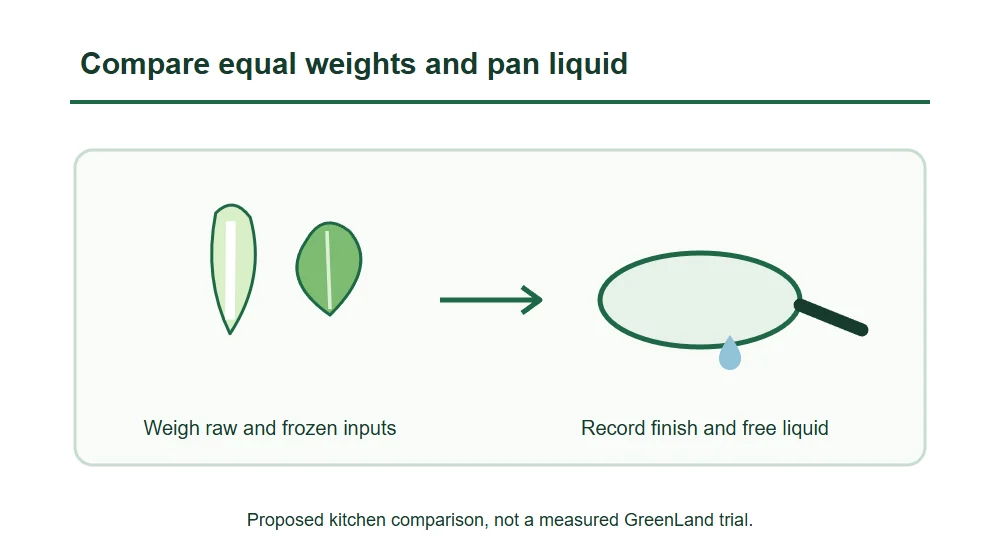
Proposed kitchen comparison, not a measured GreenLand trial.
The second GreenLand photograph shows cut cabbage spread out for inspection. A buyer can use that view to ask about leaf and rib proportions, discoloration or cut consistency. It cannot establish microbiological suitability, the freezing history of the packed carton or the average across production. Inspect a representative sample after receipt, then trial the agreed amount in the recipe. If the portion must pour freely from a bag, define how much clumping is acceptable and check it under the same storage condition used in production.
In a dumpling filling, water control can dominate the decision. Frozen cabbage may soften faster and release water during mixing or cooking. Trial the ingredient after the same thawing or direct-cook practice planned for production; measure filling yield and see whether liquid collects. If the recipe requires draining, note whether the loss changes the intended cabbage percentage. A line that buys by gross frozen weight but loses too much water during preparation may have a higher effective cost than the price suggests.
For a stir-fry component, check whether the frozen product has already received a heat treatment and how that affects the finish. The pan may need to reheat and coat rather than cook a raw vegetable through. Avoid setting a universal minute count. Ask for a product specification and run a line trial at the intended pan load, seasoning level and holding time. GreenLand-food can help match the cut and pack to the planned use; the buyer validates the finished dish.
Discuss the frozen ingredient for your production
Frozen Chinese Cabbage
Cooked soups, stir-fries and fillings.
Confirm for your order: Leaf/rib share and offered cut; pre-treatment, draining and pack.
View product & supply detailsFor a commercial trial, send your required form, application, pack, quantity and destination. We can discuss the offered sample and the order specification with you.
Request Specifications & QuoteSpecify leaf and rib share for production
For a central kitchen using frozen cabbage, choose the cut from the finished dish backward. A clear soup needs spoon-friendly ribs and enough green leaf to remain visible after holding. A quick stir-fry component needs a drier, rib-forward cut that reheats without turning into a wet heap. A dumpling filling can tolerate a fine chop but has to be tested for liquid after cooling. Place equal edible weights into three small application tests rather than judging a bag by a single photograph. Record weight in, any drained liquid, finished yield and the fraction of visible rib versus leaf. These measures tell a processor what to change in the cut or recipe.
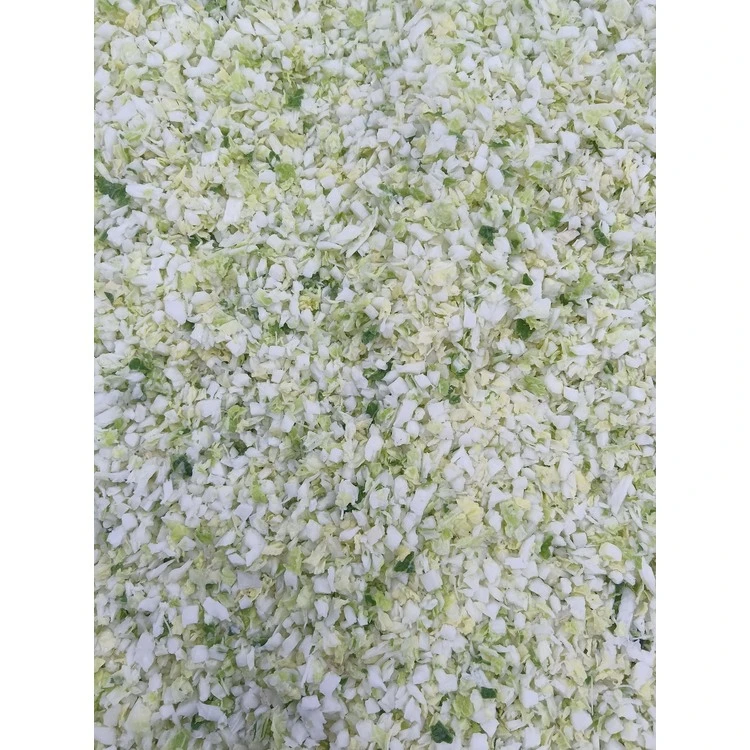
Cut Chinese cabbage spread for inspection.
A useful stir-fry comparison has two pans at the same heat and load: one receives drained fresh ribs, the other the proposed frozen cut. Add the same sauce at the same endpoint, then weigh or estimate pan liquid and photograph the plate immediately and after service holding. A frozen blend with abundant leaf may never behave like the stem-only hot-and-sour recipe; selecting a different cut is more honest than treating its wet result as cook error. Conversely, a soup may benefit from that leaf share. The sample record should include whether the frozen ingredient was raw or blanched, because that changes the remaining cook.
Different destinations may request different documents, but the culinary test should stay tied to the physical cabbage. A buyer needs the exact species/product name, cut form and heat-treatment state before comparing a fresh-head recipe with the supplied frozen shreds. If a pack contains chopped ribs and leaves together, it cannot reproduce a stem-only wok recipe without sorting. For a noodle soup, the same blend may be entirely suitable if the broth and noodle hold are adjusted. Keep customs and certificate questions in the purchasing file; they cannot answer whether the cabbage becomes watery on the plate.
Pack size changes the cook, not just the invoice. A deep frozen block added to a small pan cools the surface and steams the cabbage; several smaller portions can let the pan recover heat between additions. For a soup kettle, a larger bag may be convenient if the whole batch is used at once. In a trial, write down pack size, frozen clumping and how long operators took to portion the cabbage. If the approved sample is loose but shipped bags later fuse, the dish may no longer match the trial even though the cut specification reads the same.
Trial, receive and release a bulk cabbage lot
Before the first bulk order, cook the proposed sample in the actual soup and stir-fry formats if both uses matter. For soup, note the starting broth mass, time to rib tenderness, leaf visibility at service and any change after holding. For stir fry, record pan load, heat recovery, visible water and sauce cling. If the same cut succeeds in one dish and fails in the other, document two product uses or request separate cuts. A request for 'better cabbage' is less actionable than a result showing pale ribs too thick for the intended heating window or excessive fines in the broth.
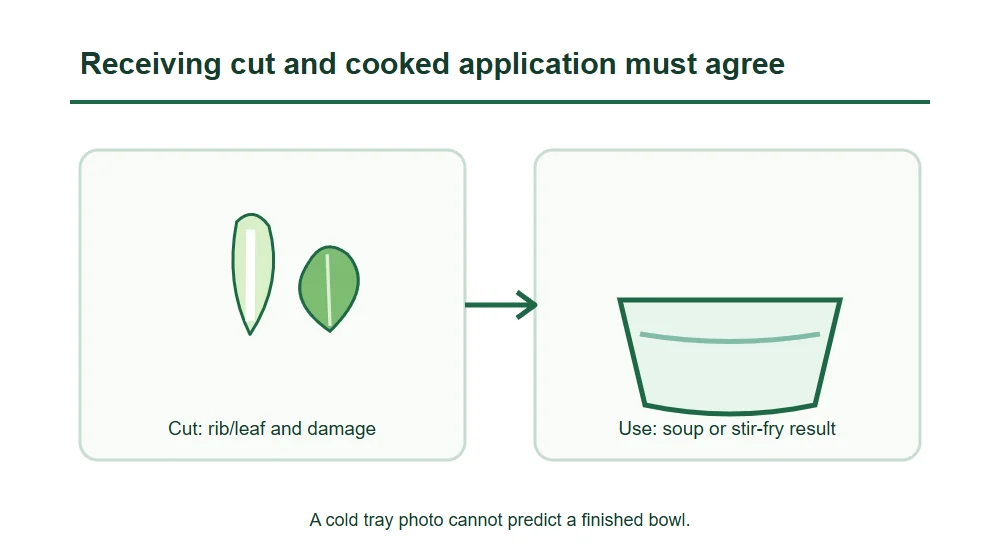
A cold tray photo cannot predict a finished bowl.
When a frozen bag arrives, first inspect whether its pieces still separate and whether the white ribs and green leaves resemble the approved mix. Those observations explain possible cooking variation more directly than a generic carton checklist. Cook a small portion in the exact intended pan or broth, recording the portion mass and vessel. If a few unusually thick ribs remain firm, count or weigh them against the sample denominator before judging the lot. If the product has thaw water, off odour or foreign material, hold it under the agreed receiving procedure rather than trying to cook away the discrepancy.
If a lot has unexpected thawing, foreign material, severe discoloration or an abnormal smell, hold it and preserve evidence. Record codes, photographs, sample location and temperature information. Ask the supplier to investigate the corresponding production and dispatch records, and compare warehouse handling after arrival. Do not send the ingredient to a hot kettle simply because cooking might hide a visible defect. A decision to accept, rework, replace or reject should follow the agreed quality and contract process.
Repeat orders deserve a cooking comparison at the same endpoint, especially when the season changes the thickness of the pale rib. Keep a small reference photograph of frozen pieces beside a finished soup bowl and stir-fry plate. If a new lot is wetter, compare its leaf share and drainage before assuming that the factory altered its blanch. If it is paler but cooks well, a colour discussion may be separate from an application failure. A useful corrective request names the result-such as less water after a two-minute high-heat rib stage-while making clear that the quoted recipe timing is a test condition, not a universal factory tolerance.
If several customer kitchens will use the same product, collect feedback by application. A cut that performs well in noodle soup may be too wet for a high-heat stir fry. One shared SKU can still work, but only after each kitchen tests its own process and accepts the compromise. Where the uses diverge sharply, separate cut specifications may be clearer than asking operators to compensate for every batch.
Questions about timing and substitutions
How long should napa cabbage cook? In one published fresh-rib wok recipe, 450 g of angled ribs are stir-fried on high heat for two minutes, then cooked with sauce and slurry for about two more minutes. In one fresh egg-drop soup, stems simmer about 12 minutes and leaves another three to four. The recipes use different cuts, vessels and endpoints, so their numbers are examples, not interchangeable rules. For your pan or soup, stop when the rib has the desired bite and the leaf is tender without disappearing; retest if using frozen, preblanched or much smaller pieces.
Can frozen Chinese cabbage replace fresh napa cabbage in every recipe? It can serve many cooked applications, but it is a poor one-for-one substitute where raw crispness is the defining feature. In cooked meals, run a trial for yield, water release and appearance. A suitable substitution may still require a change to addition order or liquid formulation.
Should the leaves be removed for stir fry? They need not always be removed. Some recipes deliberately cook both ribs and leaves. Keeping them separate before cooking gives control over the order and final texture. For a commercial frozen cut, specify the ratio instead of discovering it only when a pan is already full.
What should a buyer send GreenLand-food? Send the target cut or a reference photo, intended soup or stir-fry application, leaf/rib preference, pack size, quantity, destination, and requested documents. Tell us whether the product will be fully cooked or used in a more demanding preparation. We can then discuss a representative frozen Chinese cabbage sample for your own line trial.
Plan complementary vegetable cuts for broth and soup production.
Check frozen ingredient quality beyond the cabbage cut.
Compare water-control decisions for prepared meal components.
Source frozen chinese cabbage with GreenLand-food
GreenLand-food is a professional frozen chinese cabbage supplier and manufacturer in China, providing factory-direct wholesale supply for importers, food manufacturers, foodservice distributors and private-label programs.
Send us the product form, specification, packing, quantity, application, destination, private-label needs and requested documents.